

Rolex Submariner
The Rolex Submariner is the dive watch whose real history is read on the surface twice, once in Rolex’s design generations and again in the service parts that later rewrote them.
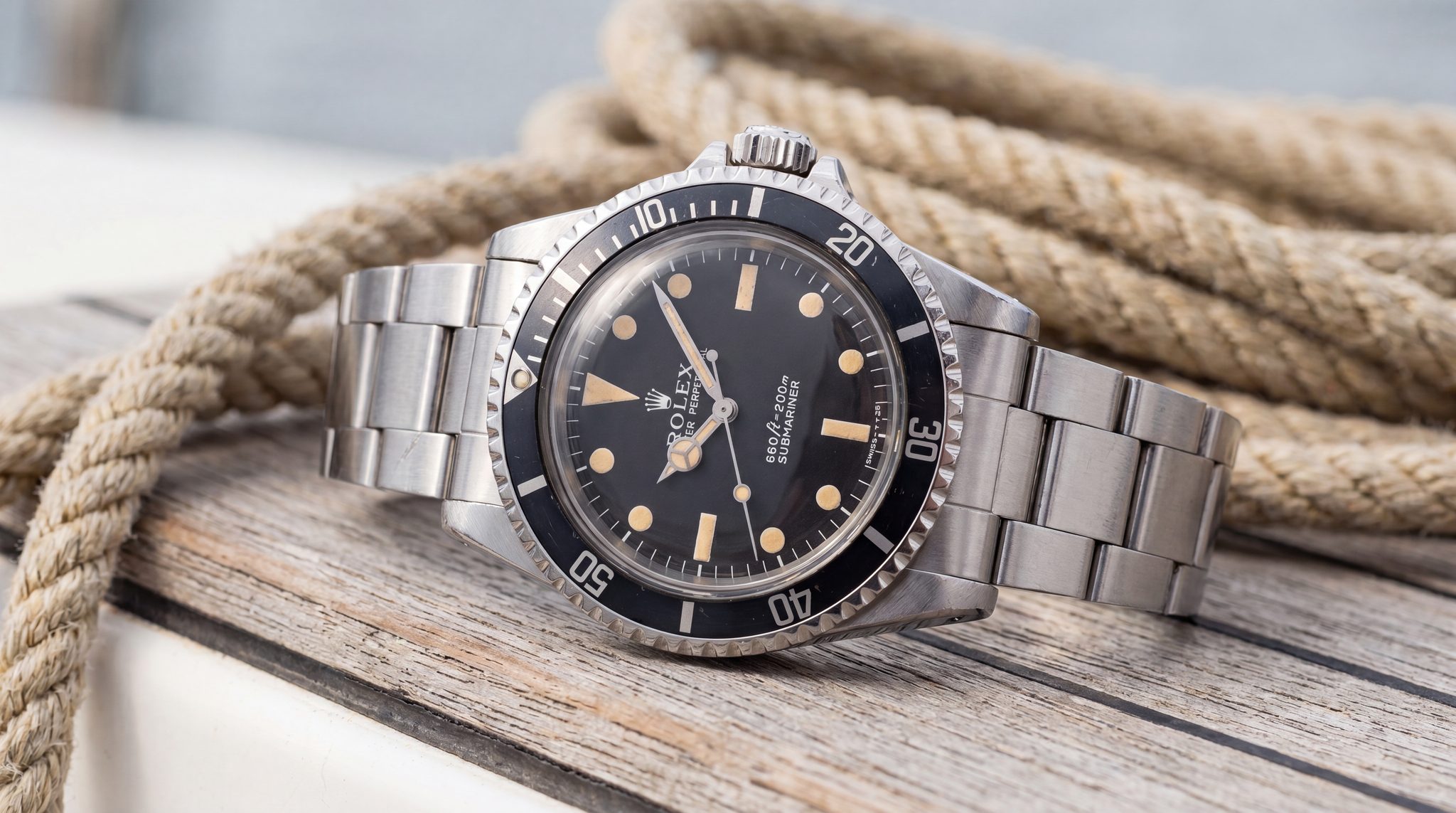
The Rolex Submariner is the dive watch whose real history is read on the surface twice, once in Rolex’s design generations and again in the service parts that later rewrote them. That double timeline is visible as early as the 1960s, where an acrylic-era Submariner Date like 1680 can be separated from a later service replacement by a single line at 6 o’clock, tritium-signed dials versus later “SWISS” service signing.
Rolex created the Submariner as a purpose-built diver’s watch for the postwar rise of scuba and recreational diving, aimed at solving two practical needs at once: reliable waterproofness and an easy way to time immersion intervals underwater with a rotating bezel. Rolex places the launch in 1953, and also states that the first Submariner was waterproof to 100 metres. Many secondary histories point to a 1954 Basel showing as the public debut, which explains why both dates circulate without being truly contradictory.
From the beginning, the line developed as reference families rather than as a single, tidy annual progression. Early production is documented as non-standardized and overlapping, then the long 4-digit era establishes the core shapes collectors now treat as “vintage Submariner.” A permanent split arrives when Rolex adds the date and Cyclops with 1680, creating parallel “no-date” and “date” Submariners that continue to the present. Later, the family’s biggest technical steps cluster into a few clear platform changes, the sapphire and 300 m, quickset era with 16800, the long 5-digit aluminum-bezel period anchored by 16610 and 14060 through 14060M, and then the ceramic-bezel 6-digit era, first with the broader-lug maxi-case generation and then the current 41 mm case with the 3230 and 3235 movement family.
The collector consequence of that arc is that authenticity and value do not live only in reference numbers. Across the Submariner family, Rolex service commonly replaced the very components that define a generation on the wrist, dials, hands, bezel inserts, and bracelets. Modern fakes and frankenwatches exploit the same reality by mixing correct-looking parts across eras. A good Submariner therefore reads as a coherent period object: dial, hands, bezel, and bracelet that agree with one another in style and aging, not merely a case that carries the right engraving. The Submariner’s design is famously stable, but the watch that survives is often a negotiation between what Rolex built, and what later ownership asked Rolex to rebuild.
What each Submariner reference trades for
Median and typical range of recent dealer, auction and Grey Market sales, banded. Indicative, not a valuation; each reference page carries the detail.
23 references across 8 eras
Launch-era first production
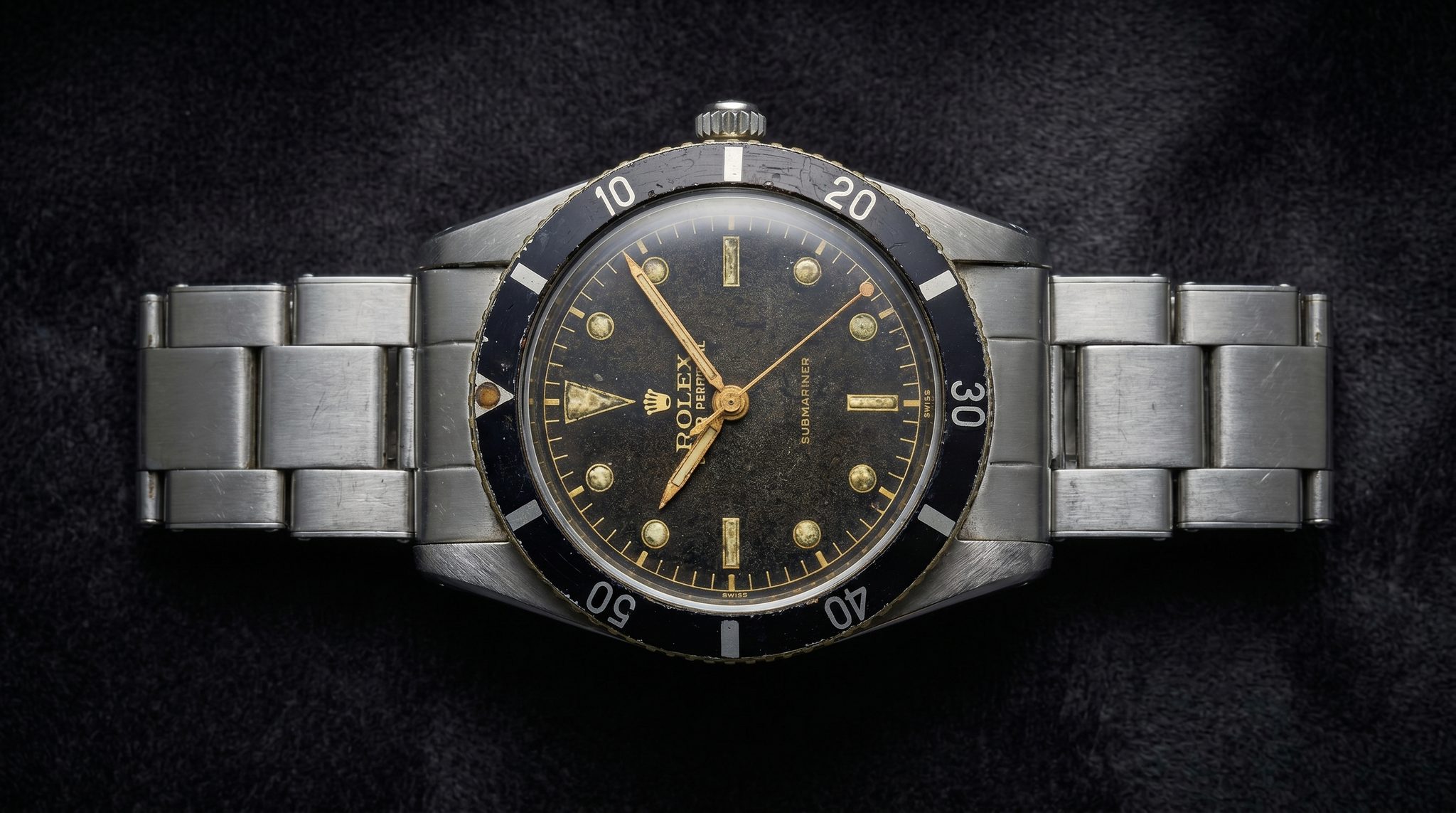
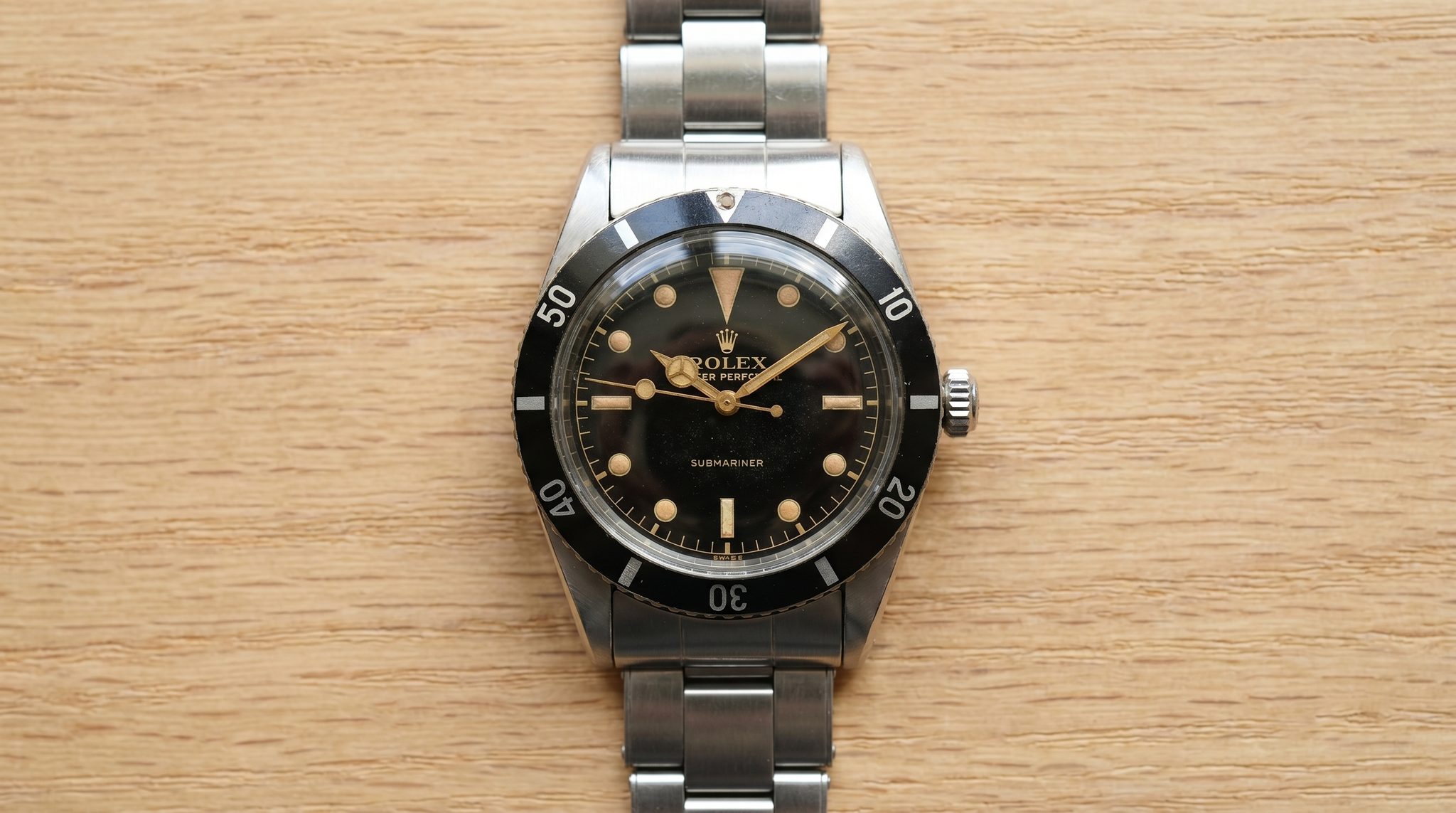
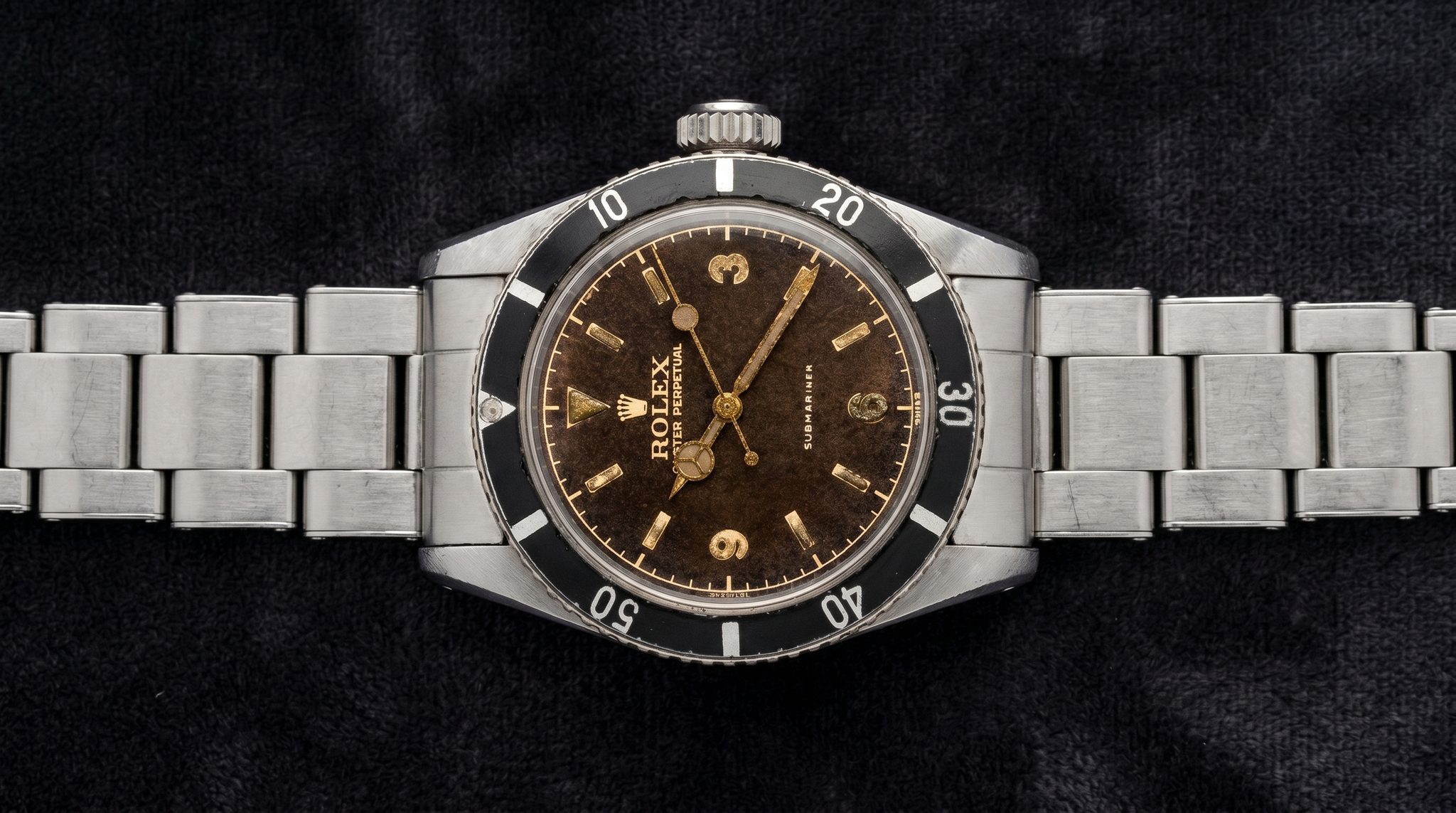
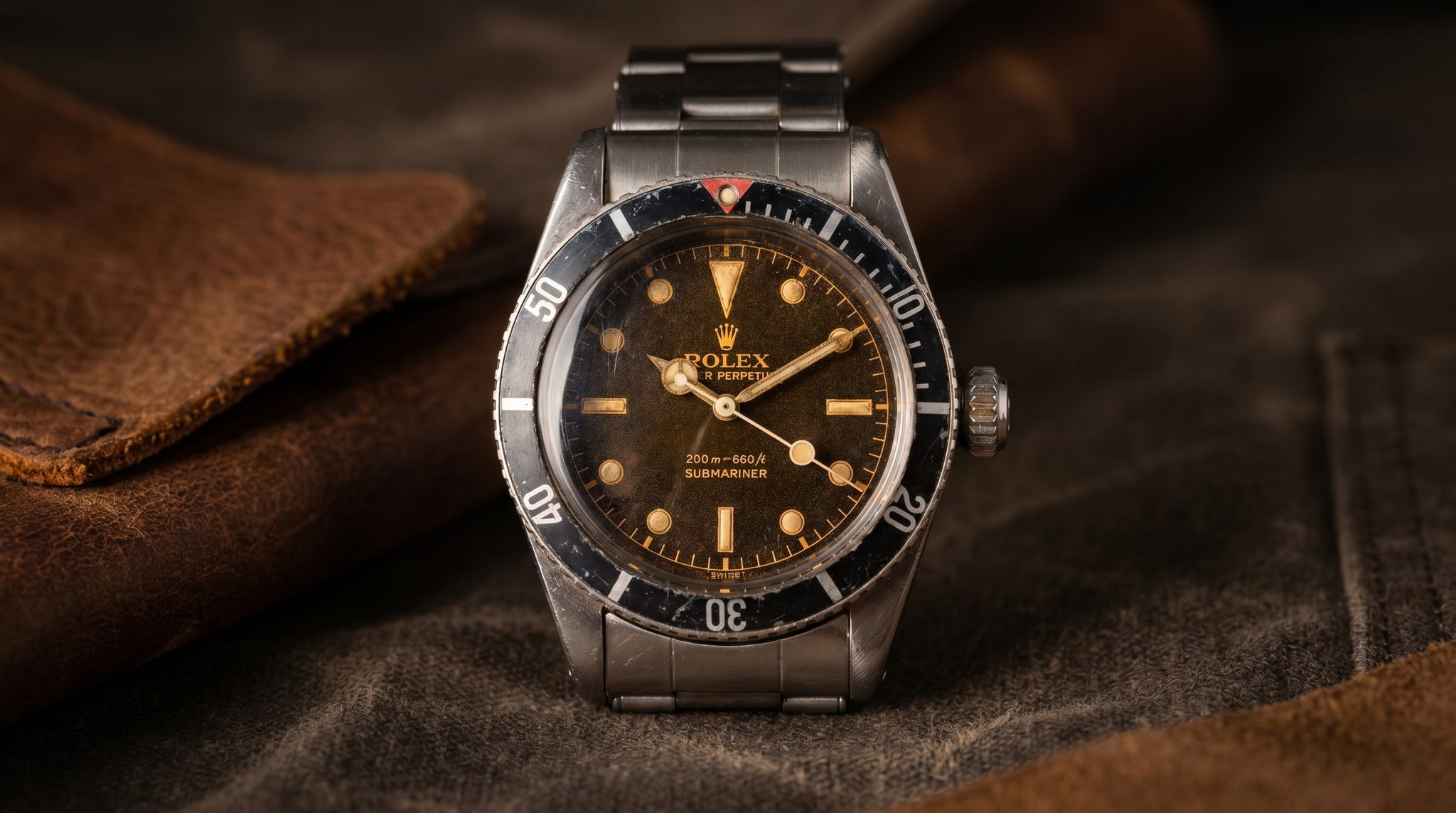
The first Submariners are compact, acrylic-crystal, no-date divers built before the model’s visual rules fully settled. 6204 and 6205 form the earliest public-facing cluster, while 6200 is the big-crown, higher depth-rated outlier that previews the more overtly professional look. What defines the era at family level is overlap and experimentation rather than a single “correct” configuration, which is why these references are evaluated as coherent early sets rather than as one standardized template. The era ends as Rolex moves into a more mature mid-1950s range of small-crown and big-crown references with clearer, repeatable identities.
Guardless small and big crowns
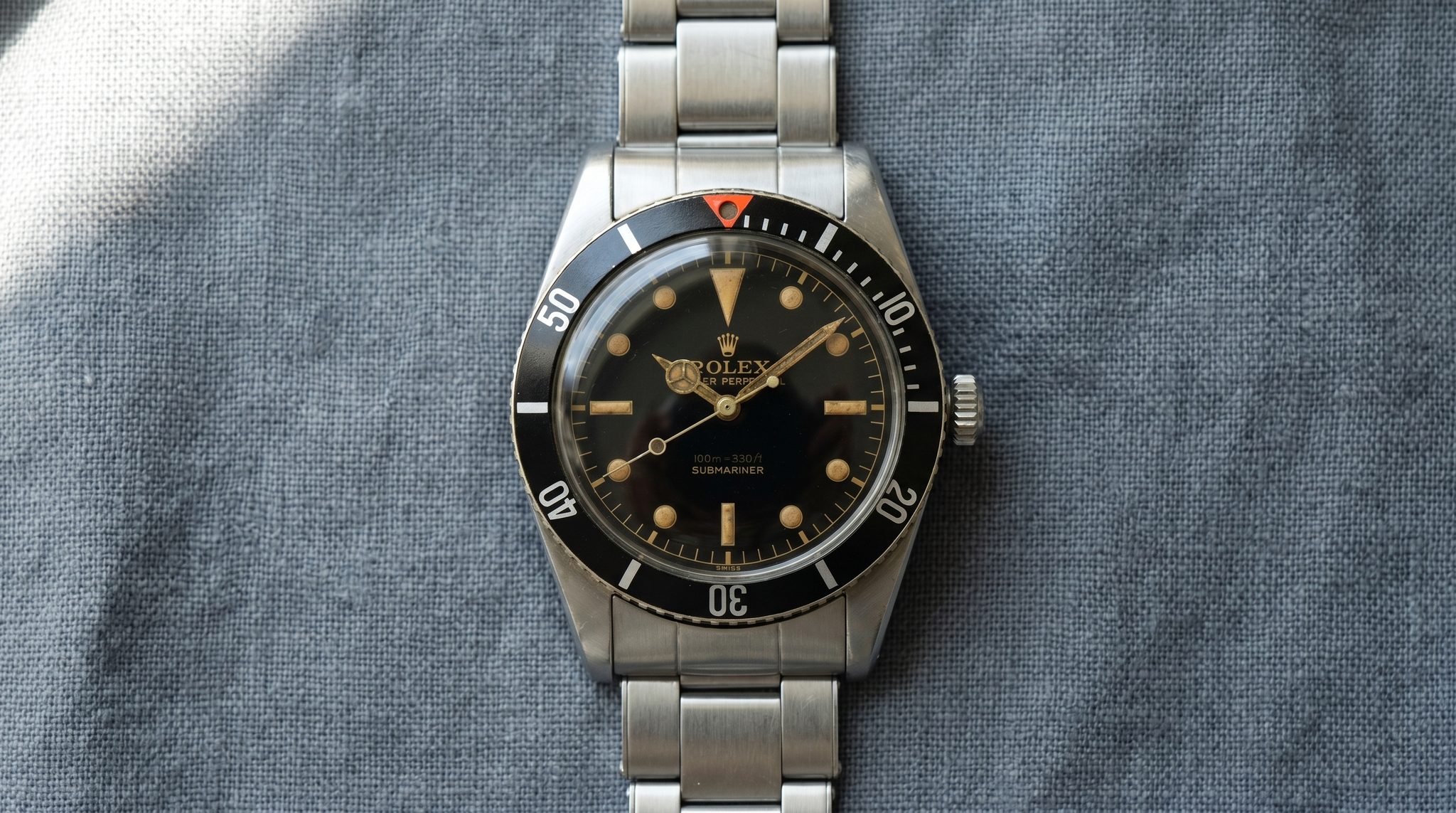
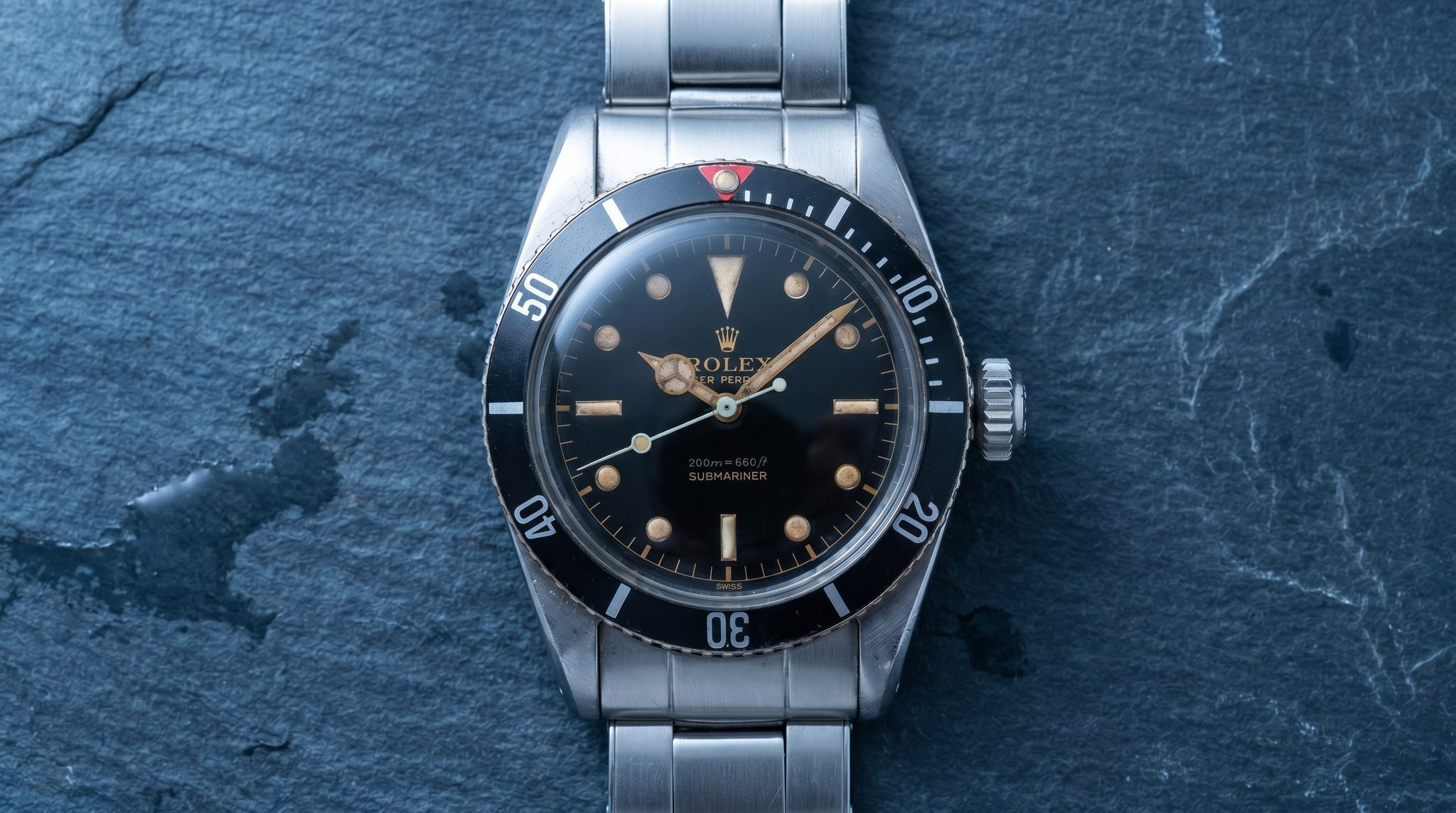
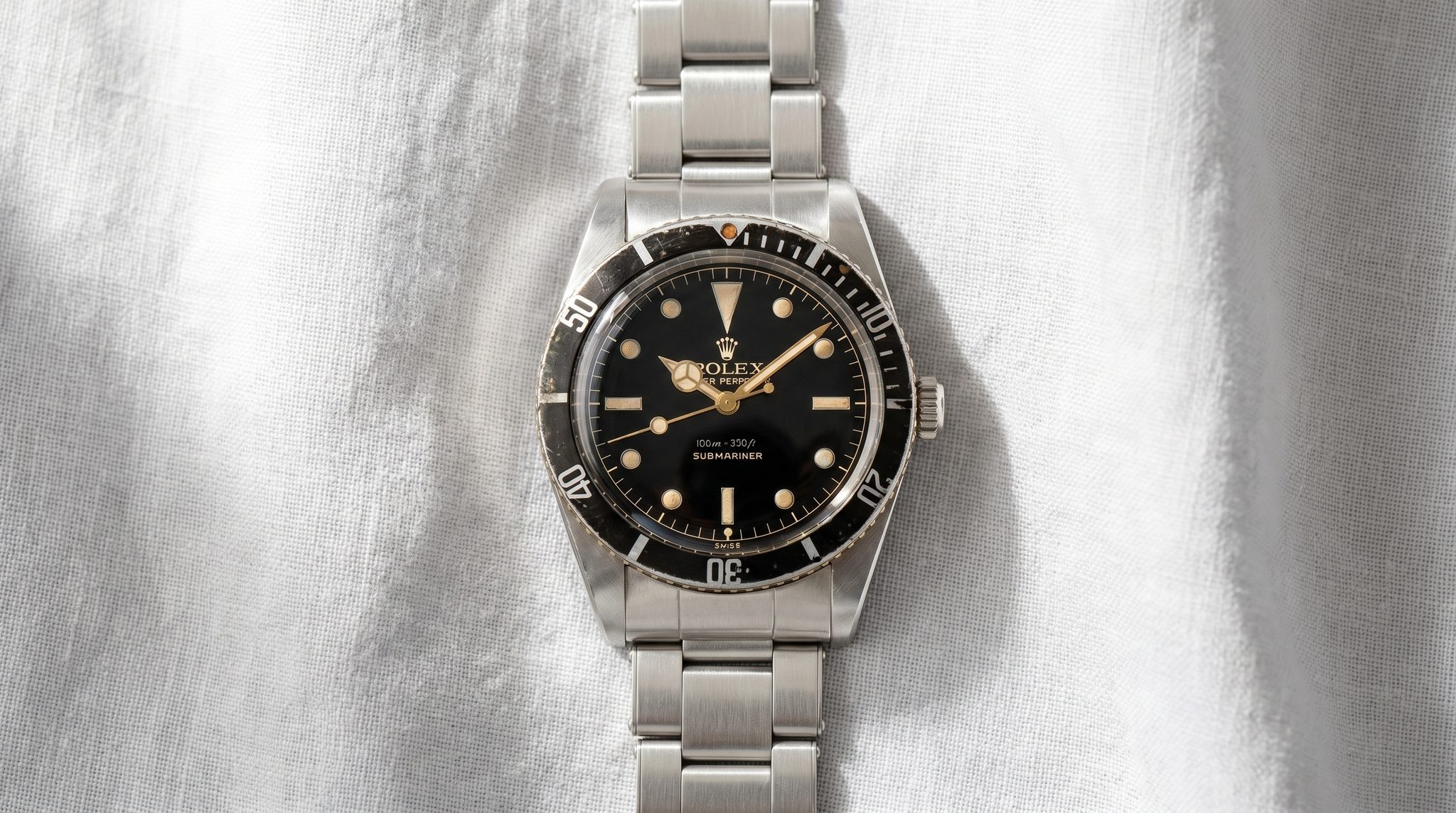
This generation refines the no-crown-guard Submariner into two parallel ideas: a thinner, small-crown 100 m line and a big-crown 200 m line. 6536/1 and 5508 represent the small-crown branch that persists into 1962, even after crown-guard models appear, while 6538 and the short-run 5510 define the big-crown, higher-rated tool-watch silhouette that later became the best-known early Submariner form. Sources describe these steps largely as incremental engineering and product-line refinement, with no single published Rolex rationale for each change. The era gives way once crown guards and a standardized 40 mm, guarded case become the dominant template.
Crown-guard vintage platform
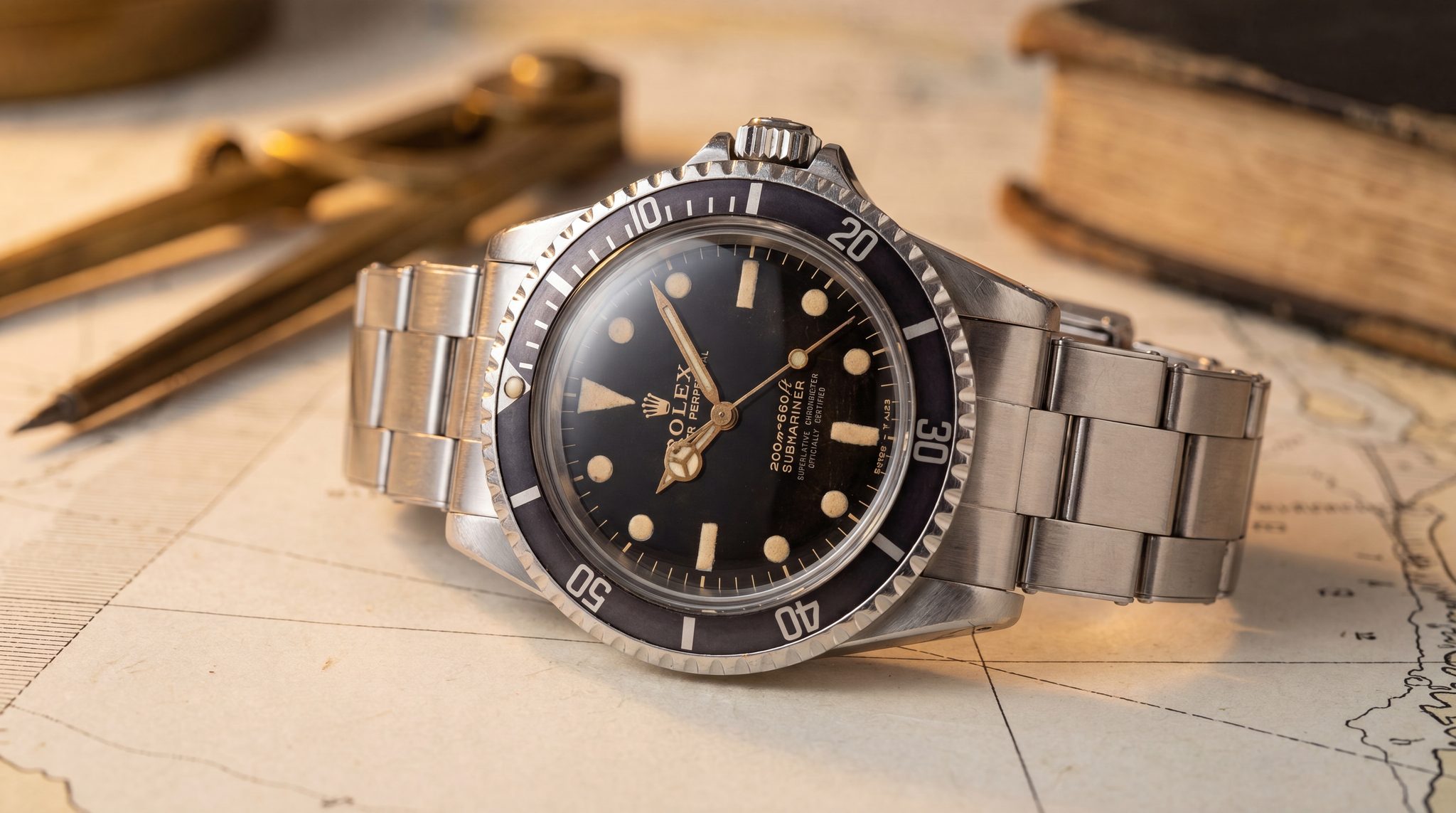
With crown guards, the Submariner becomes the guarded 40 mm form most people recognize as “vintage,” then lives inside that silhouette for decades. 5512 establishes the guarded era in chronometer-oriented form, while 5513 becomes the long-running, simpler no-date counterpart that many guides treat as the archetypal vintage Submariner. What changed most visibly within this long platform was not the reference number but the dial language, finishing and markings that drift over time, while the underlying identity remained a no-date tool watch in steel with acrylic crystal and aluminum bezel insert. The era ends when Rolex’s date models and later sapphire-era changes pull the line toward modern materials and user convenience.
Acrylic Submariner Date begins
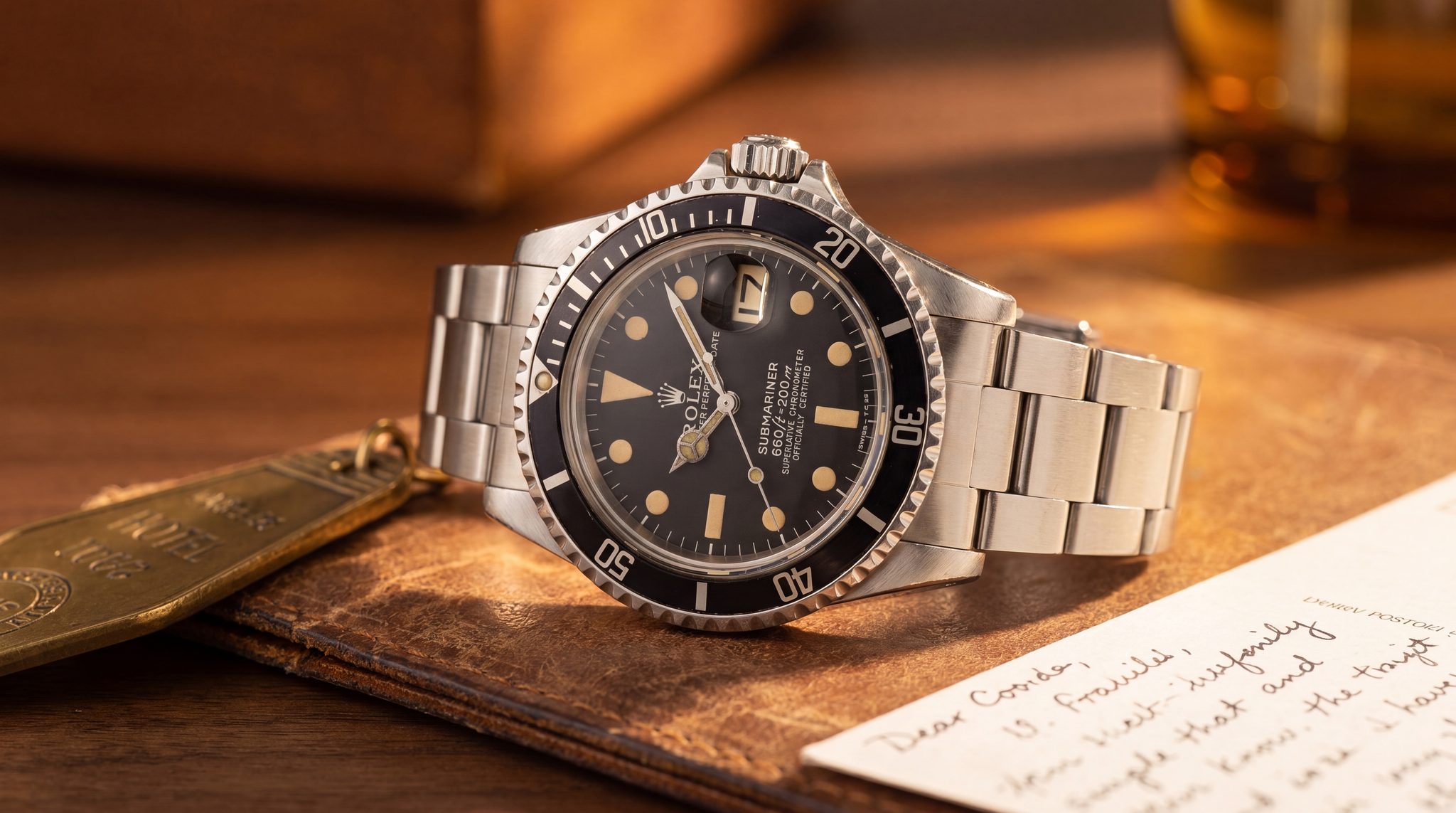
1680 introduces the date window and Cyclops to the Submariner, creating a second, permanent family alongside the no-date line. At the wrist level, this era is defined by the combination that never returns in later Submariner Dates: an acrylic crystal with the Cyclops over the date. Specialist histories frame the change as a functional broadening of the Submariner’s role, moving it from a purely utilitarian diver toward an all-rounder that still retained the tool-watch case and bezel language. The era ends when Rolex migrates the Submariner Date to the modern sealing and crystal platform, moving from acrylic to sapphire and raising water resistance to 300 m.
Sapphire and 300 m transition
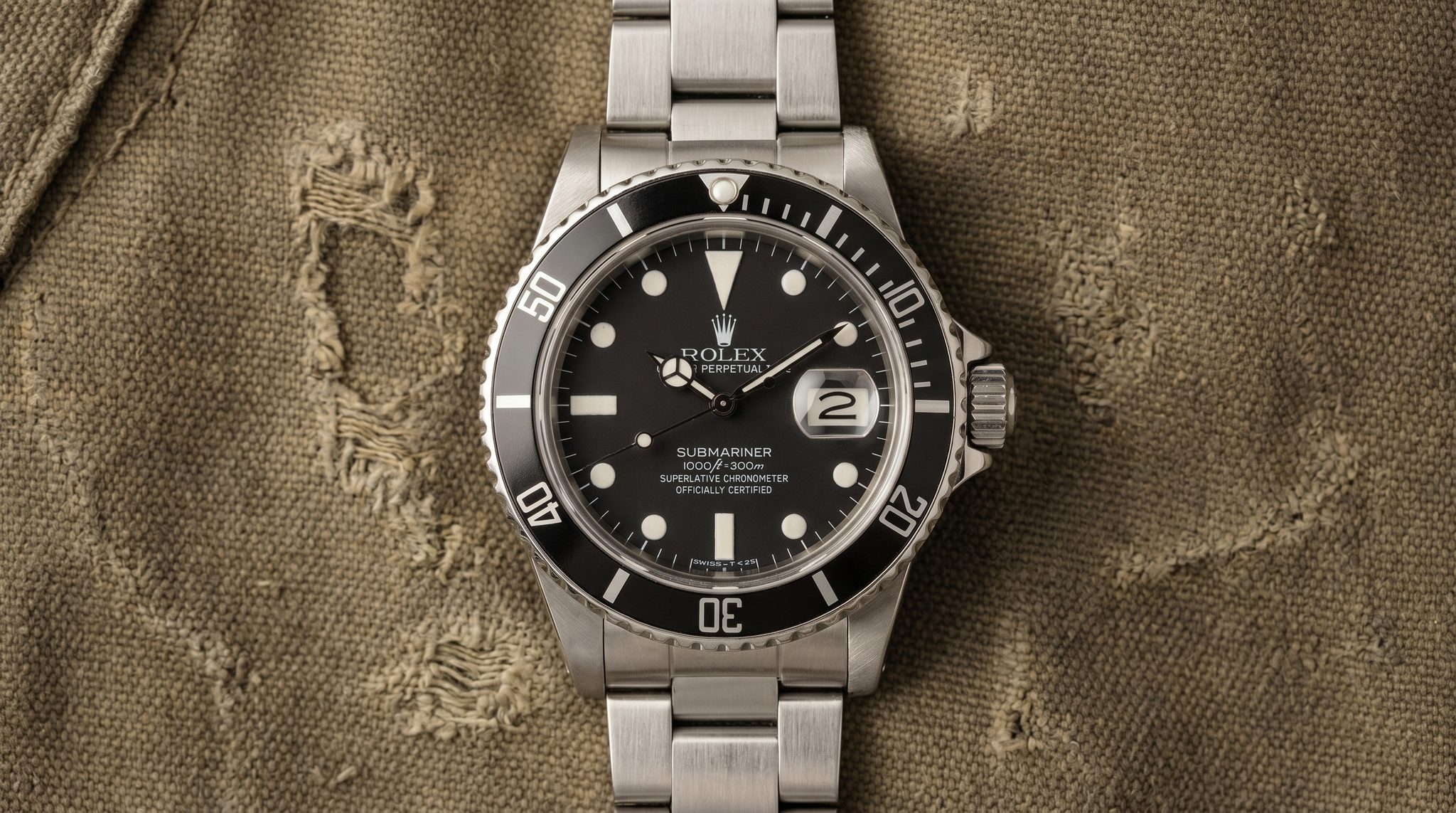
This transitional generation modernizes the Submariner Date’s engineering in a single leap: sapphire crystal, 300 m capability, a unidirectional bezel, and the quickset date era on the 3035 platform. 16800 is the steel bridge reference that also shows a visible dial construction shift across its run, while 16803 and 16808 extend the same modernized architecture into Rolesor and solid gold as material and market expansions rather than movement-driven redesigns. 168000 is the ultra-short “triple zero” variant associated in collector literature with a steel-alloy update, commonly treated as an early move toward 904L. Rolex did not publish a public metallurgy cutover, so the alloy story is best understood as collector reconstruction. This era gives way as 16610 and its siblings turn the platform into the long, stable five-digit norm.
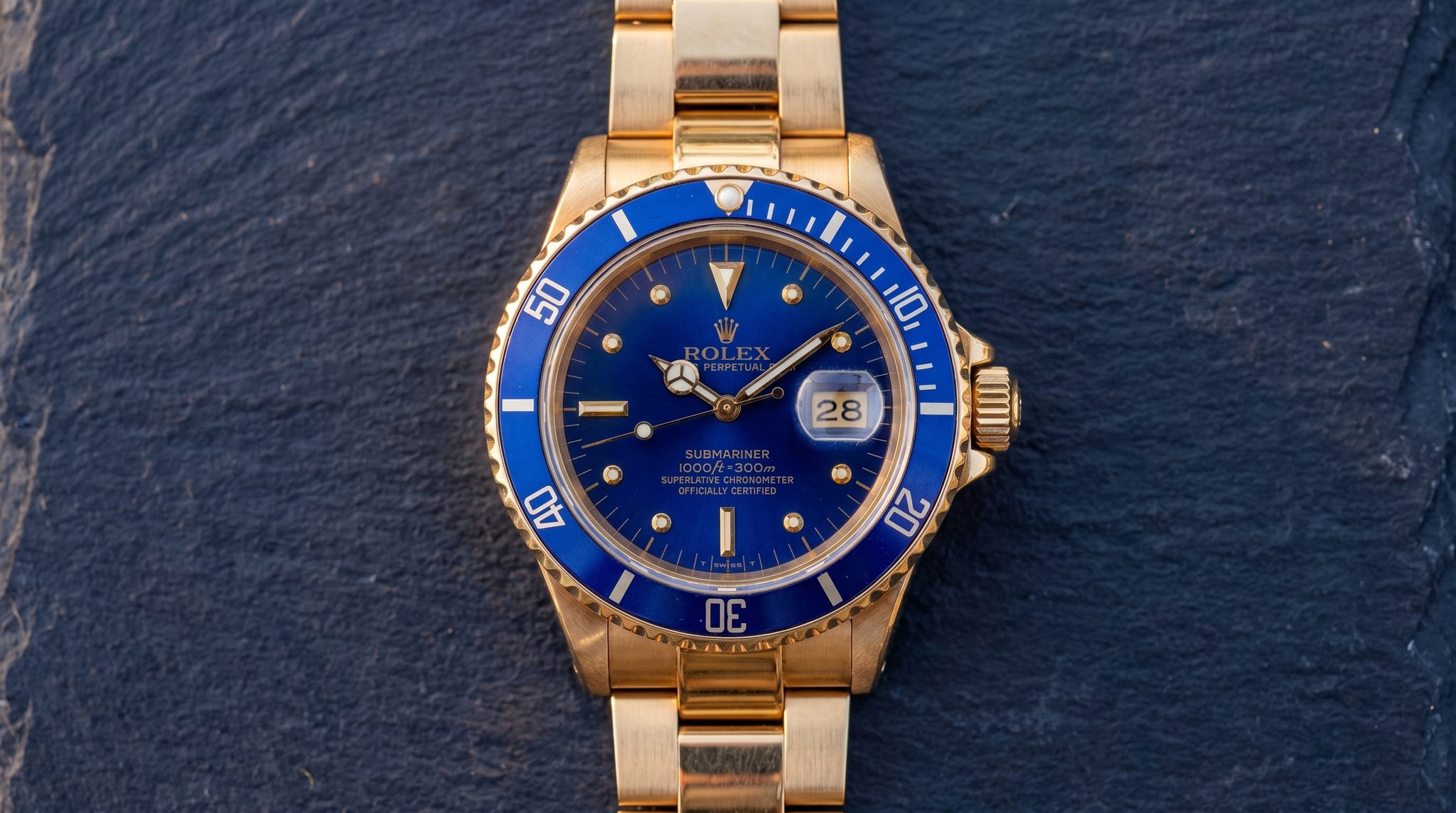
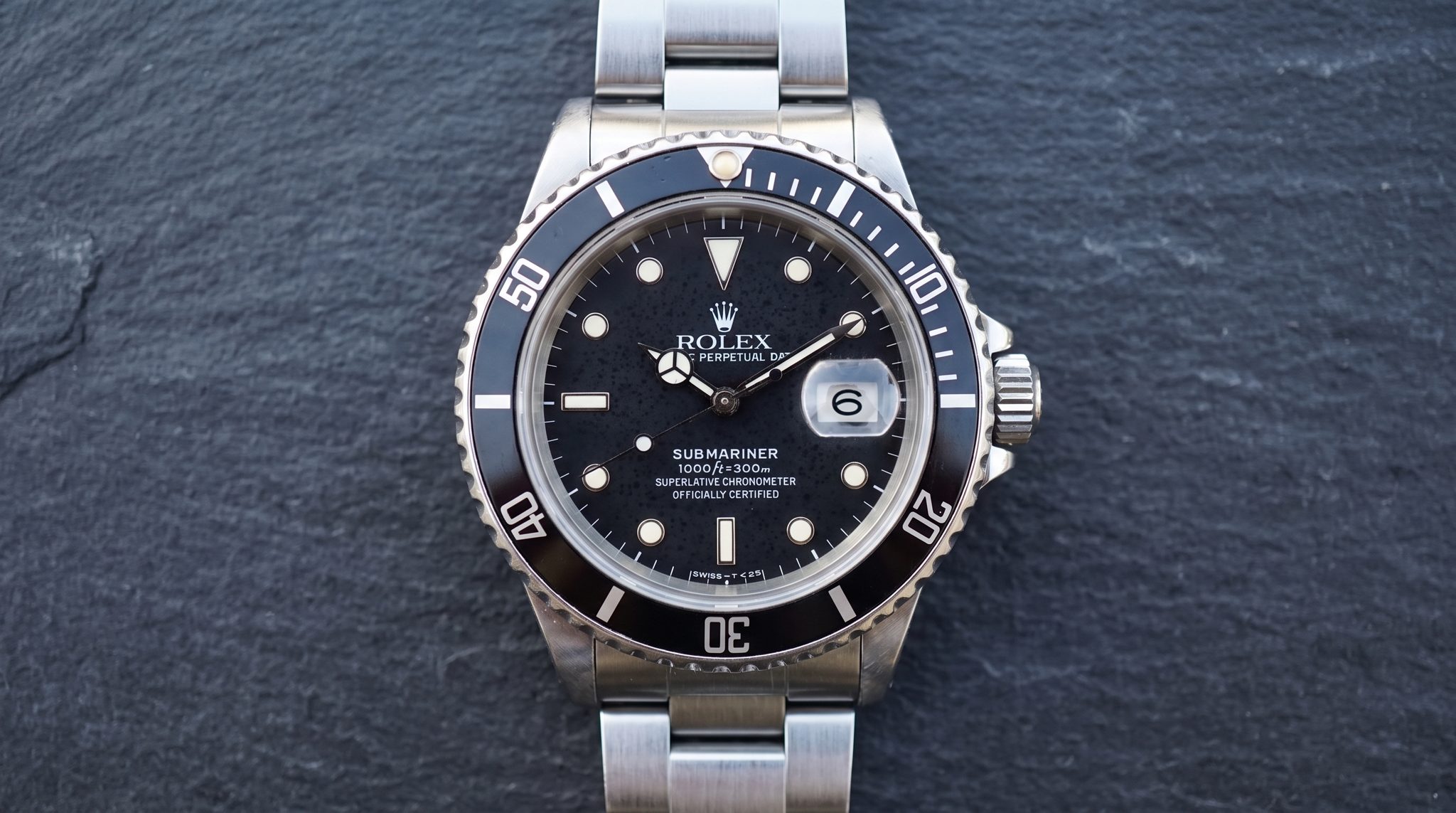
Five-digit modern aluminum era
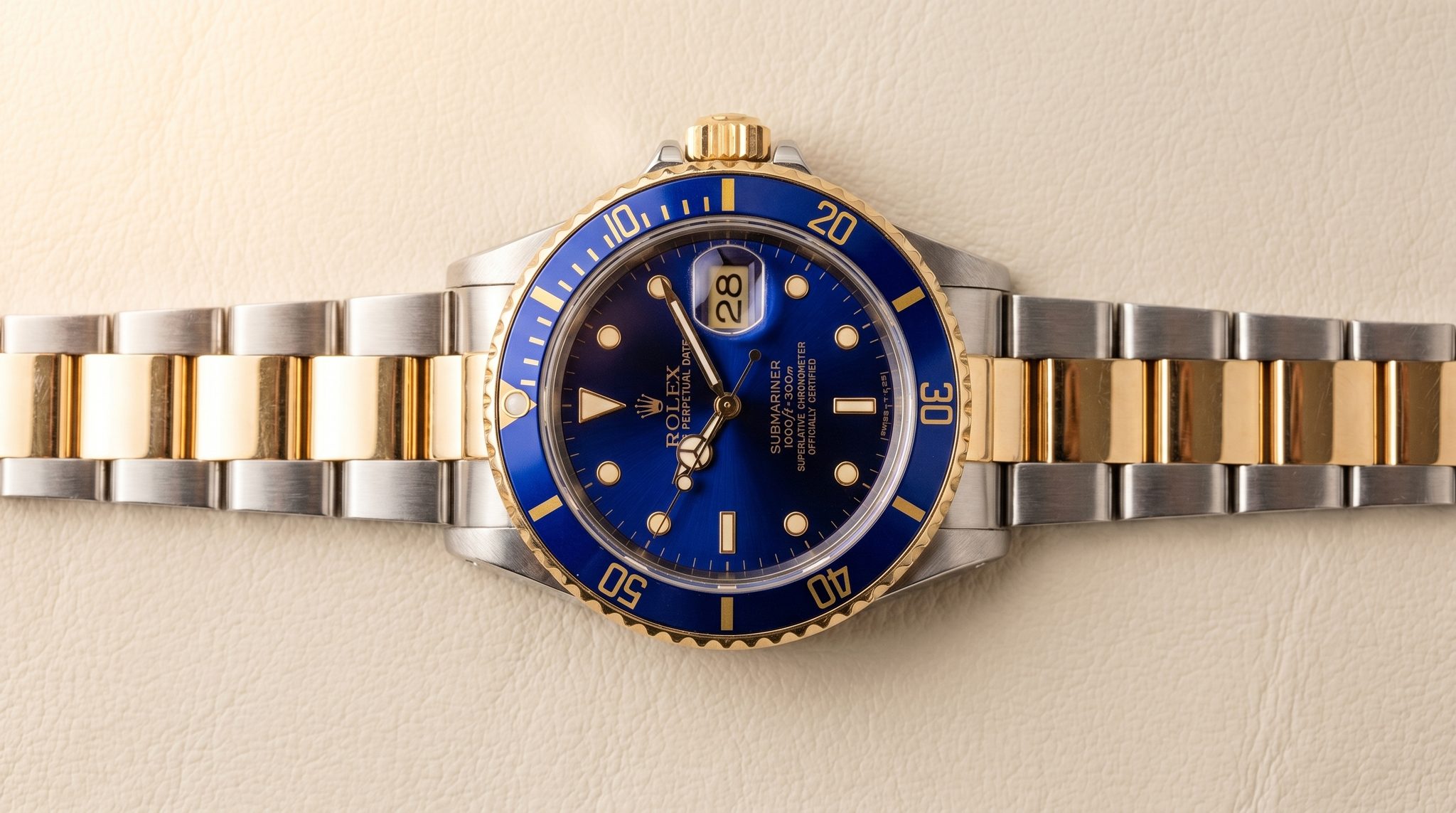
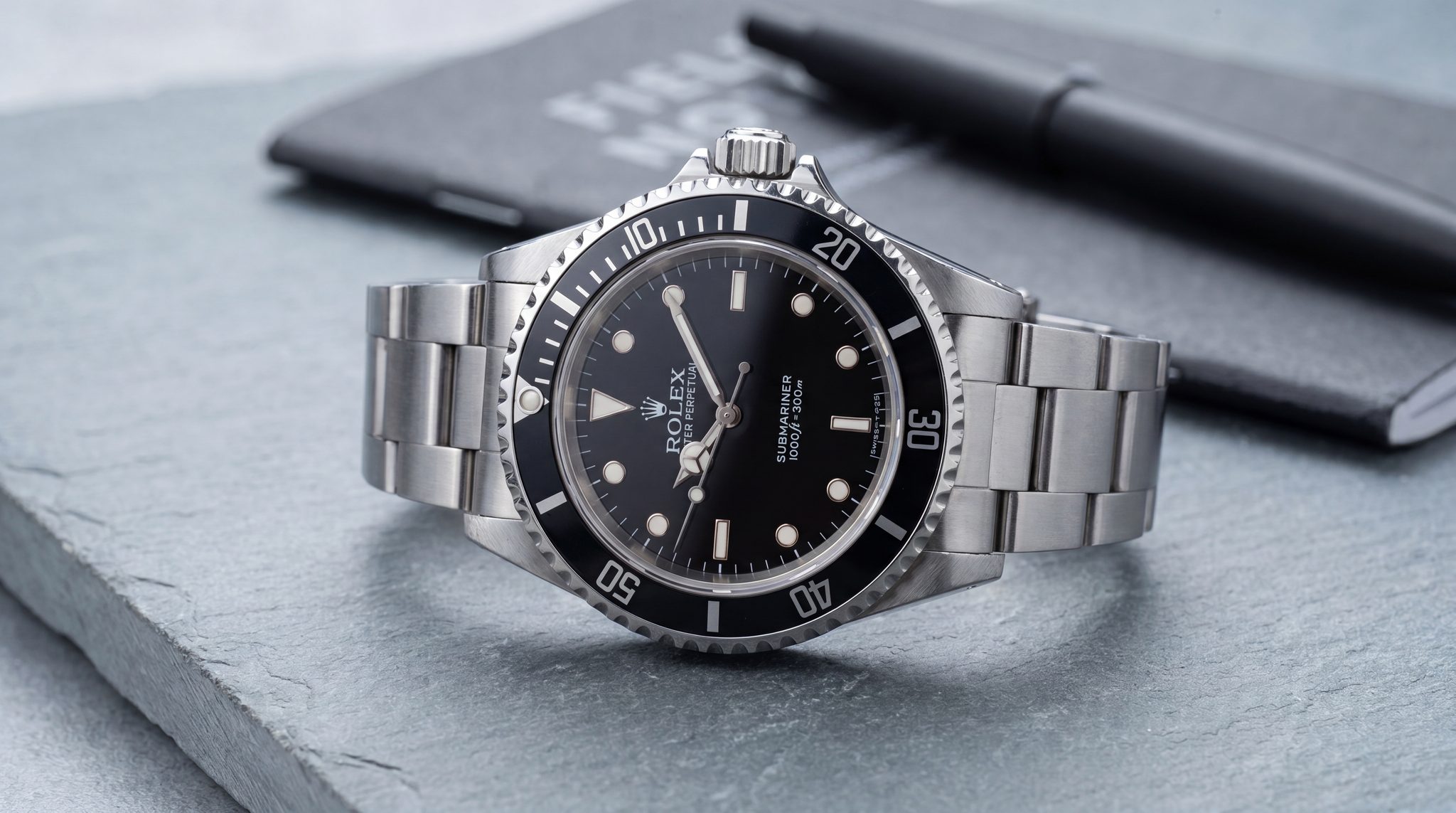
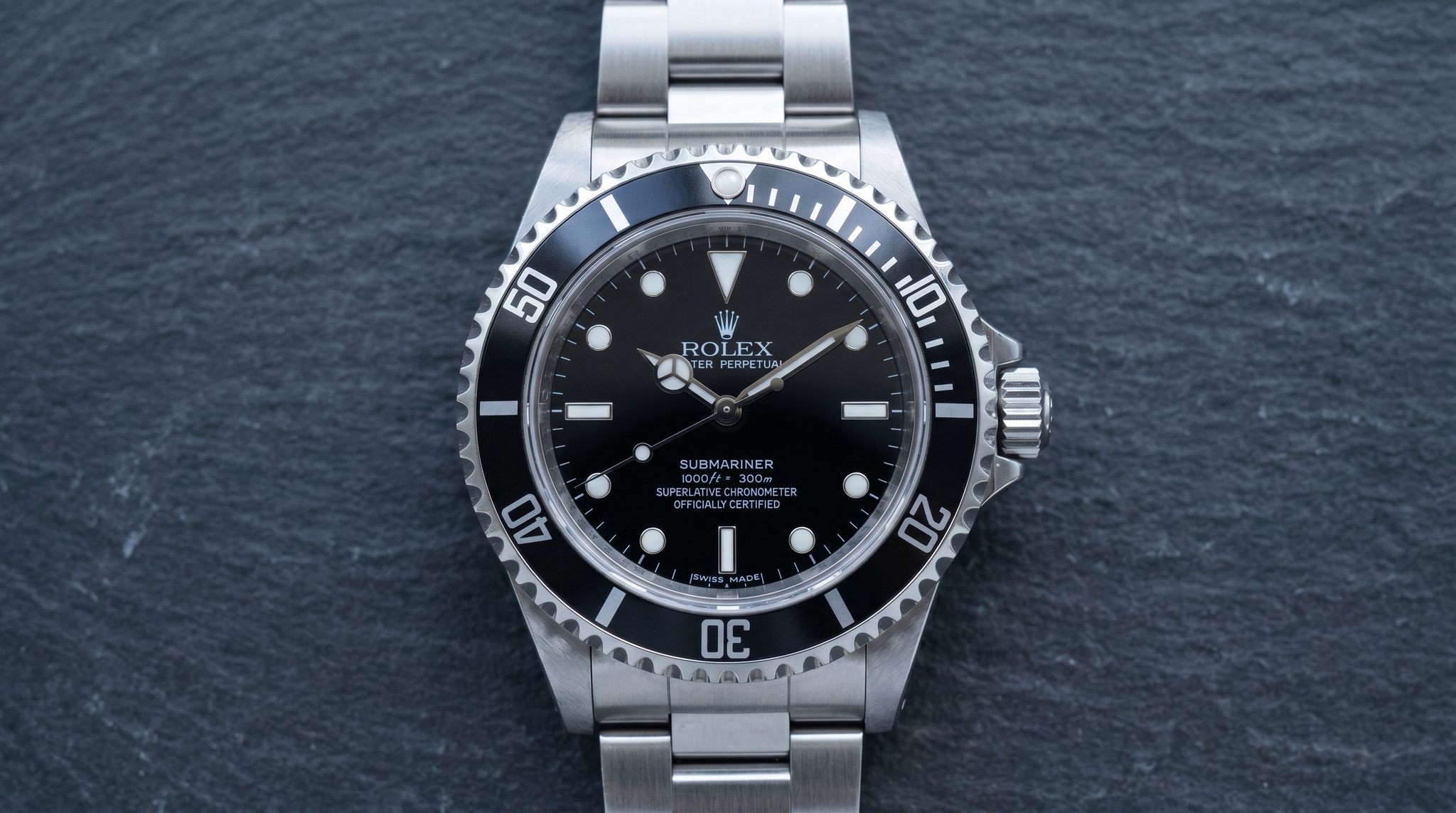
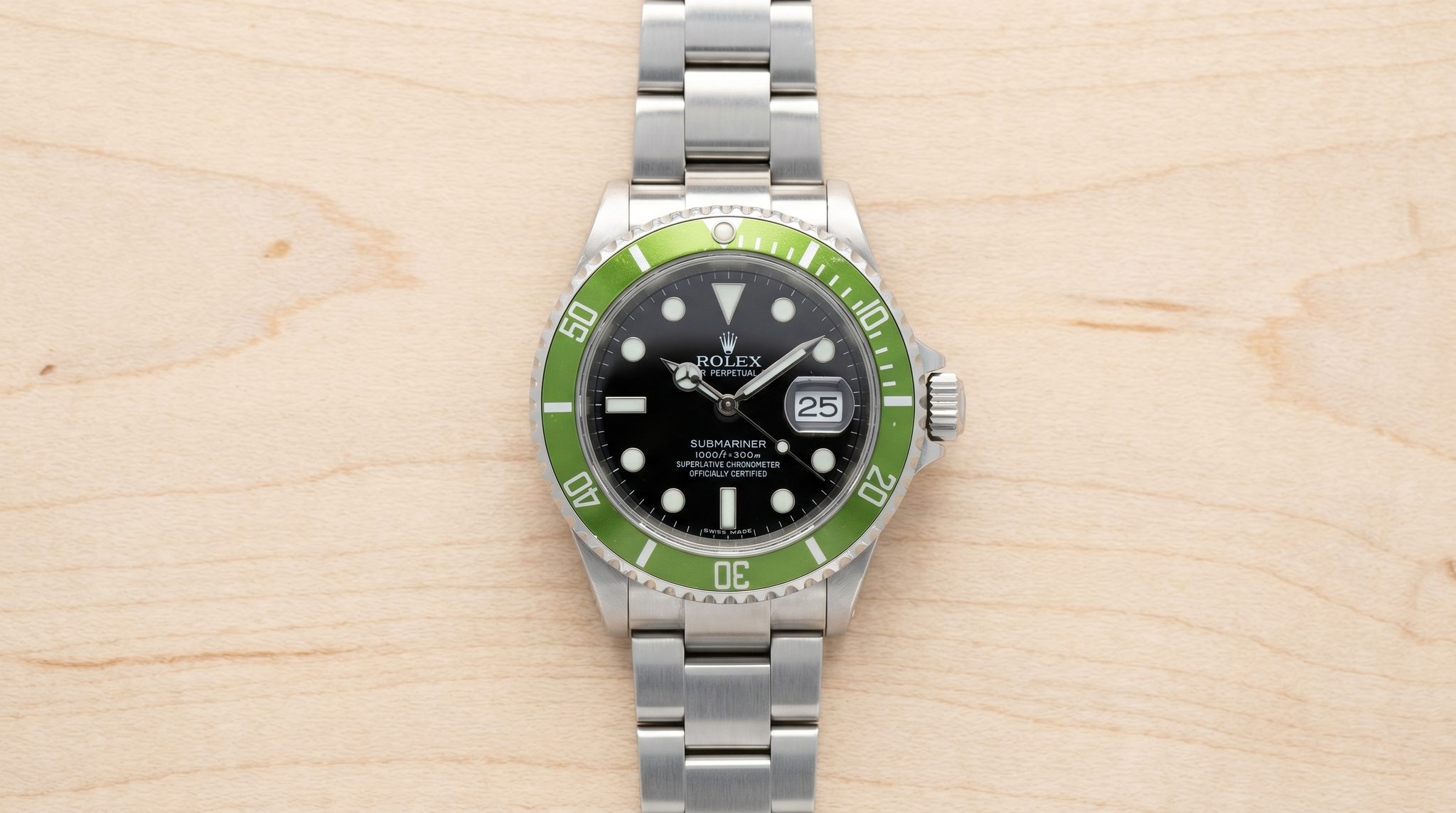
Here the Submariner becomes modern in daily use while keeping the pre-ceramic look. 16610 anchors the steel Submariner Date with the long-running 3135 era and broad market presence, while 16610LV shows how a single colorway can become a collector sub-language within the same chassis. In parallel, 14060 and then 14060M modernize the no-date line with sapphire and 300 m sealing while retaining the cleaner dial, and 16613 carries the two-tone Submariner Date through the same long period of gradual, externally legible changes such as lume-era dial signing and case hardware evolution. The era ends when Rolex replaces aluminum bezel inserts with ceramic and reworks bracelet and clasp architecture in the six-digit generation.
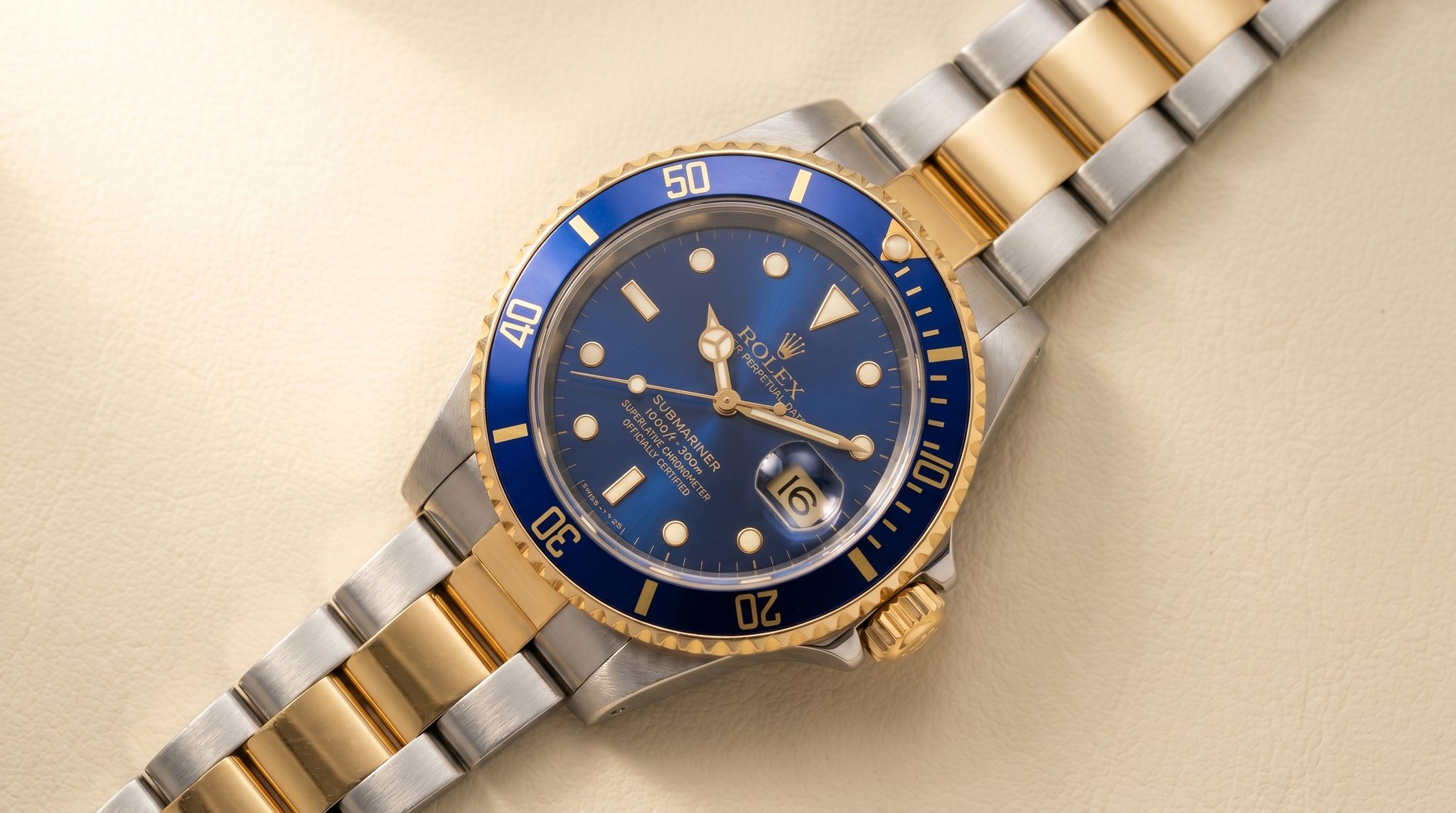
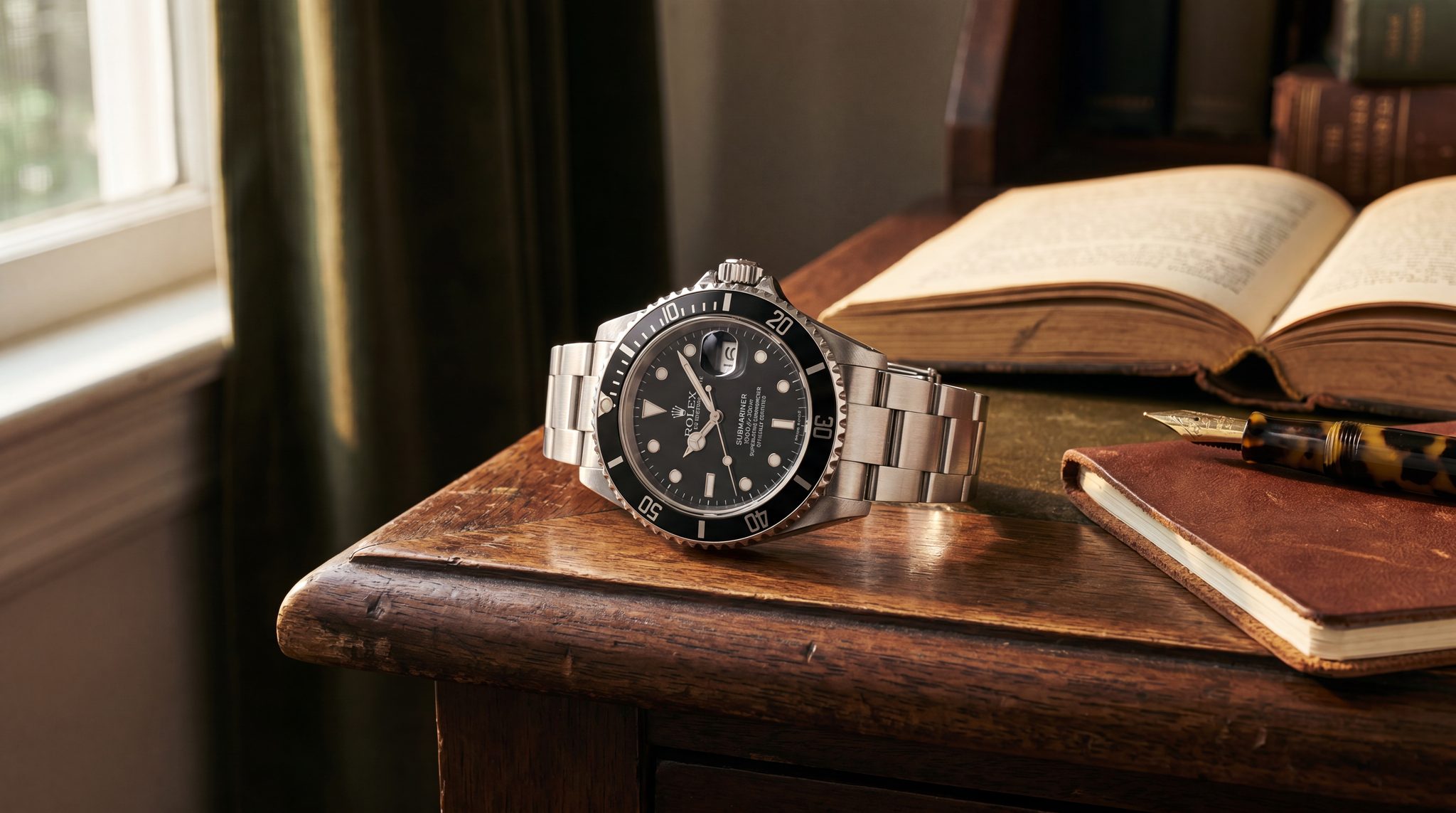
Ceramic maxi-case generation
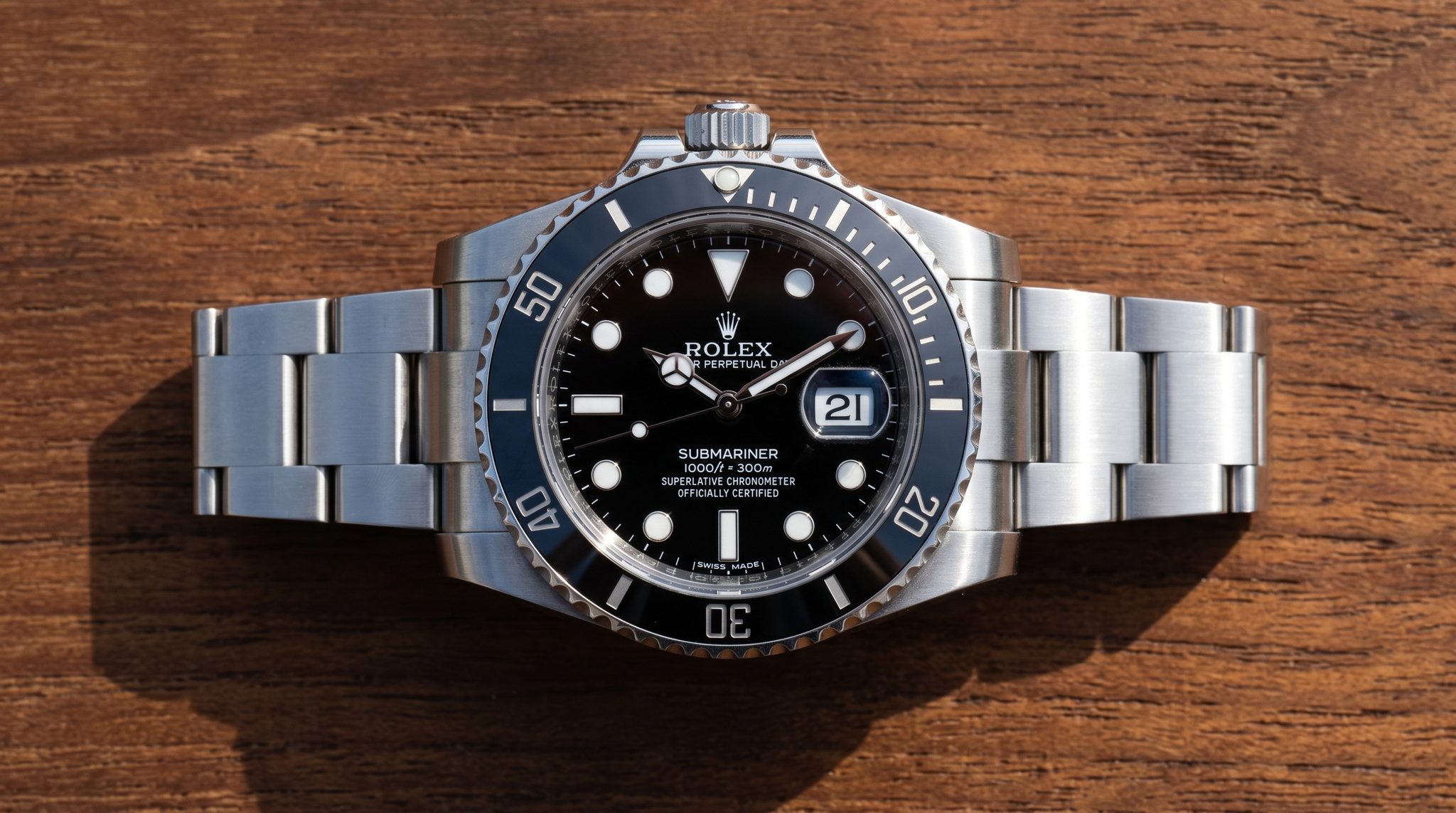
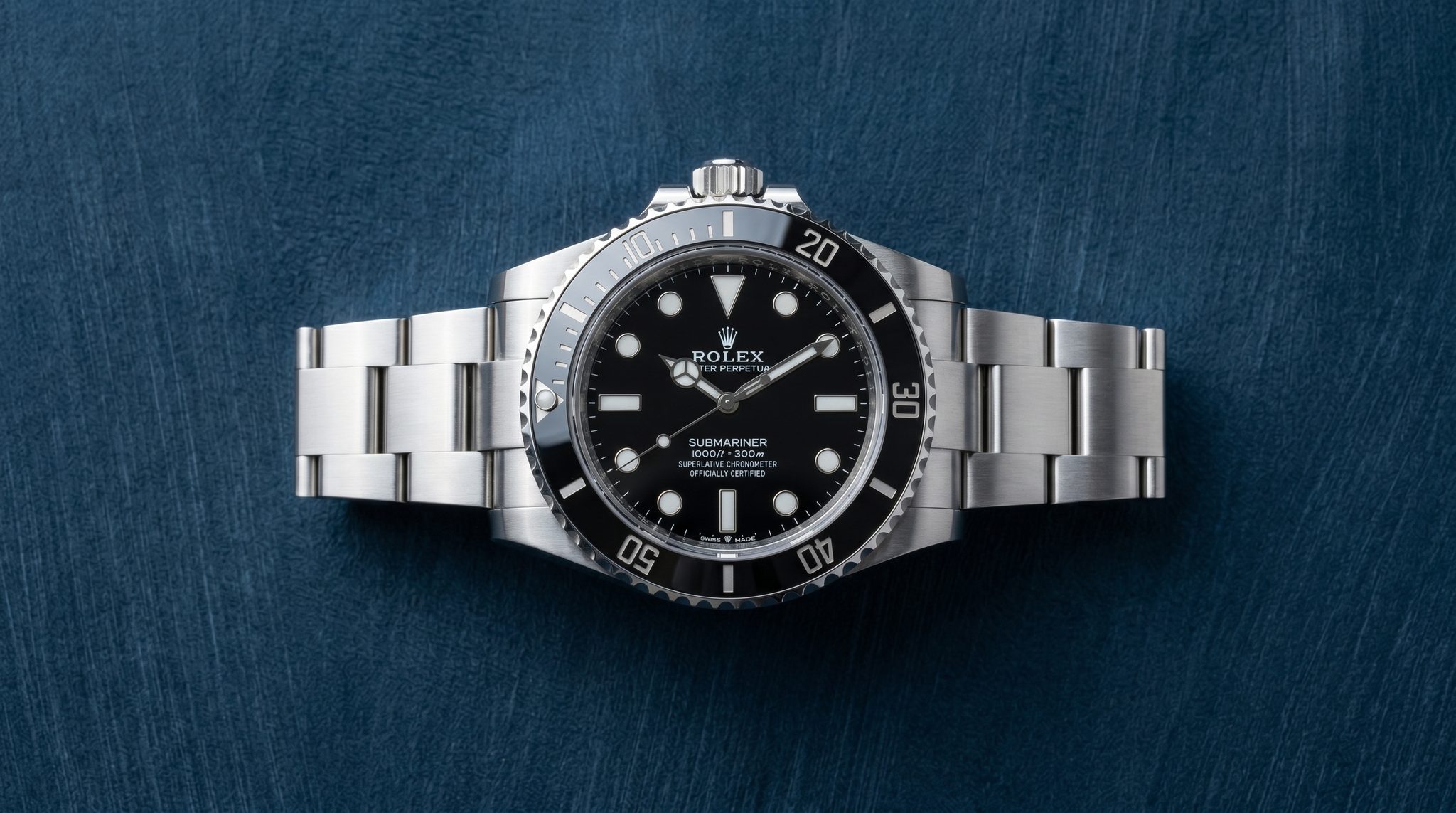
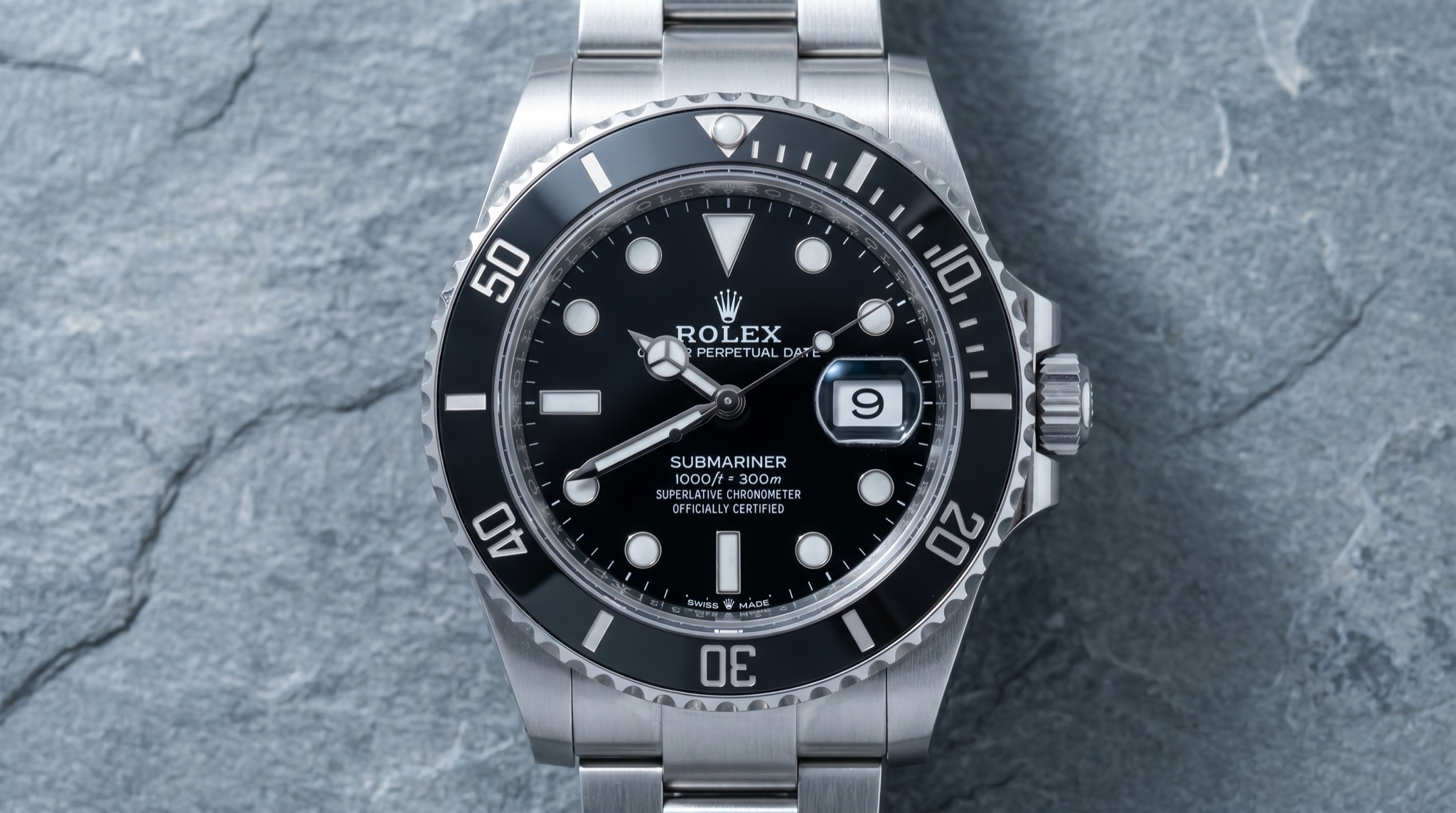
The first ceramic era turns the familiar black Submariner formulas into a more contemporary object: Cerachrom bezel inserts, maxi dial furniture, and the Glidelock-equipped bracelet and clasp. 116610LN does this for the Submariner Date, while 114060 brings the same ceramic platform to the no-date line. The defining change is not a new complication or a new case diameter, it is how the watch resists wear and how it occupies the wrist, with broader lugs and crown guards than the five-digit predecessors. This generation ends in 2020, when Rolex resets proportions and introduces the 32xx movement family in a slightly larger case.
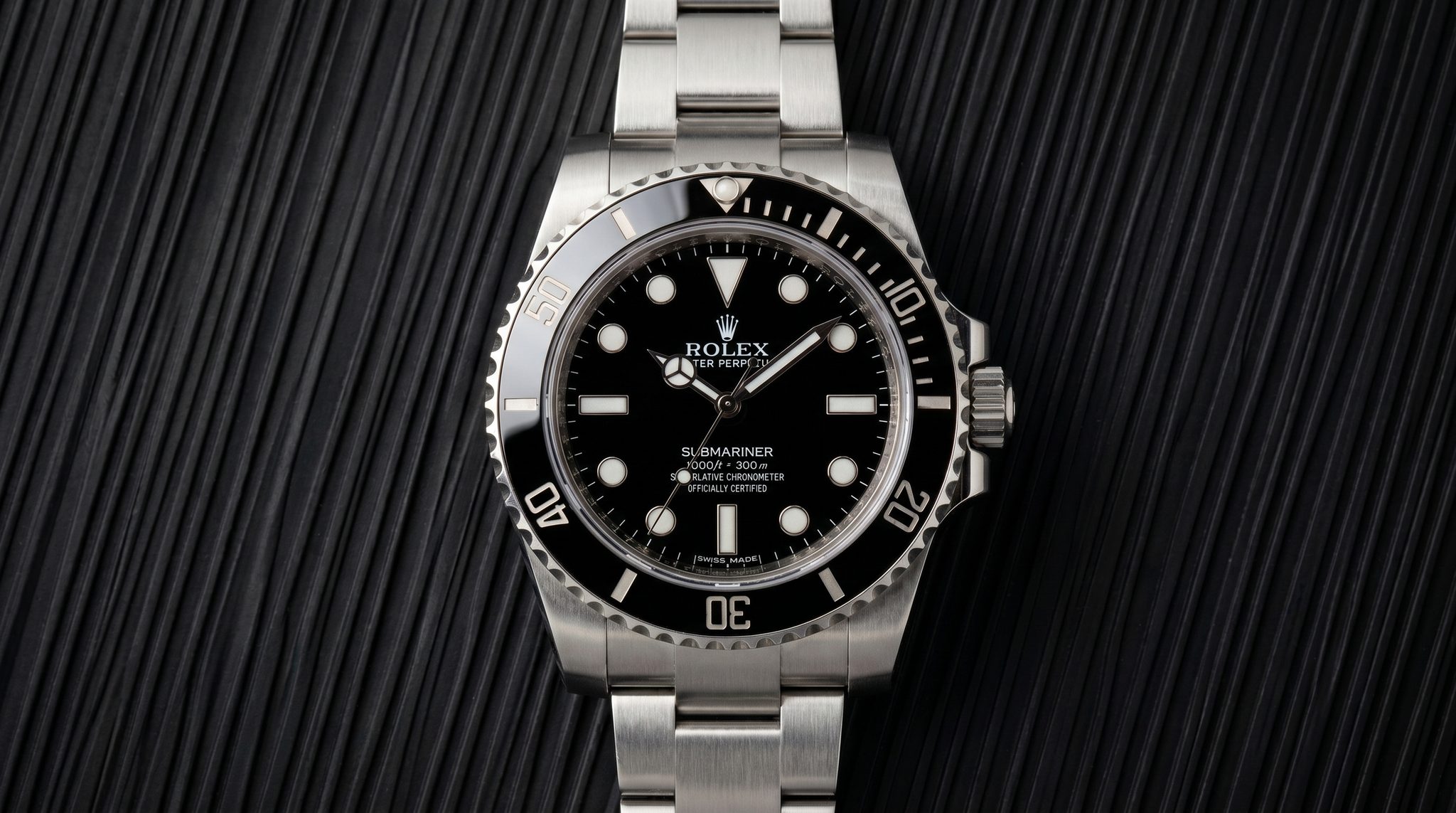
Current 41 mm generation
The current generation keeps the ceramic-bezel durability platform but changes fundamentals quietly: a 41 mm case with slimmer lug proportions than the maxi-case era, and a movement handoff to the 3230 for no-date and 3235 for date. 124060 is the time-only expression, and 126610LN is the date counterpart that remains visually close to its predecessor while being mechanically distinct. Sources frame the shift as a next movement generation paired with a proportion reset rather than a new design language. The most important family-level distinction is that these references are intentionally steady so far, concentrating change in movement architecture and case proportion while preserving the Submariner’s visual grammar.
Which Submariner to buy
For daily wear with the least vintage uncertainty, the modern no-date line is the simplest route: 124060 offers the current 41 mm case and the 3230 movement family while keeping the classic no-date symmetry, and it has not yet splintered into widely recognized sub-variants. If the date is non-negotiable, 126610LN is the same generation in the Date family, defined by the 3235 era and the post-2020 proportion reset.
For a first vintage Submariner that still reads as an everyday object, 14060 or 14060M is often the practical hinge: sapphire crystal and 300 m sealing, but the older aluminum bezel look and the no-date layout that connects back to 5513. If the goal is to own the family’s biggest historical fork in the road, 1680 is the targeted milestone because it is the first Submariner Date and the only one in the acrylic Cyclops era.
For reference-driven collecting, 5513 is the long-form “textbook” because its long run supports deep specialization in period-correct configurations. The Submariner that most rewards patience is 168000, not because it wears differently, but because its appeal depends on verified, coherent transitional details that are easy to lose to service history.
What to check on any Submariner
Across the Submariner family, buying is shaped by a second timeline that sits on top of Rolex’s production eras: decades of service replacement. Dials, hands, bezel inserts, and bracelets are commonly replaced in service, and those are the same external parts collectors use to identify period correctness. Modern counterfeits and frankenwatches concentrate on these swappable surfaces because they can make a watch look like a different era without changing the case.
Common questions about the Submariner
Most collectors start by choosing the family split that has existed since 1680: date or no-date. For a no-date entry with modern durability, 14060M and 114060 are commonly treated as the easiest bridges between vintage feel and modern construction, while 16610 is often treated as the abundant five-digit starting point for the Date line.
- From tool watch to icon, Submarinerrolex.com
- Submariner (official collection page)rolex.com
- The Rolex Submariner: A Reference Historysothebys.com
Show 7 more
- Rolex Submariner history, early referencesmonochrome-watches.com
- Rolex Submariner history, five-digit referencesmonochrome-watches.com
- Rolex Submariner history, modern ceramic referencesmonochrome-watches.com
- Rolex Submariner Ref. 6204 Historybobswatches.com
- Rolex Red Submariner 1680 Reference Guidewatchprosite.com
- Spot a Frankenwatch, pre-owned Rolex authentication primer5dwatches.com
- Rolex Submariner (overview)en.wikipedia.org