

Rolex Submariner 6204
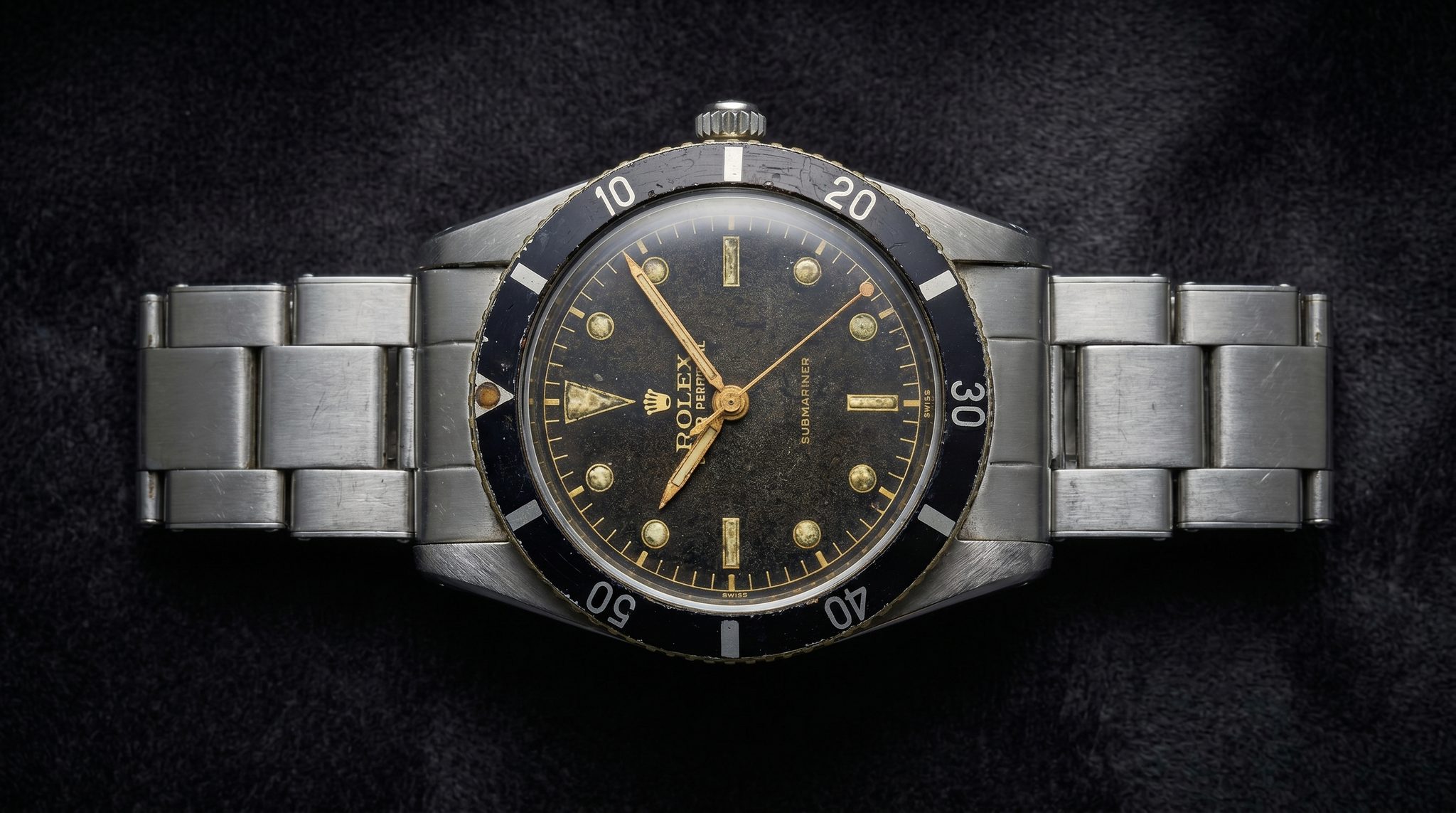
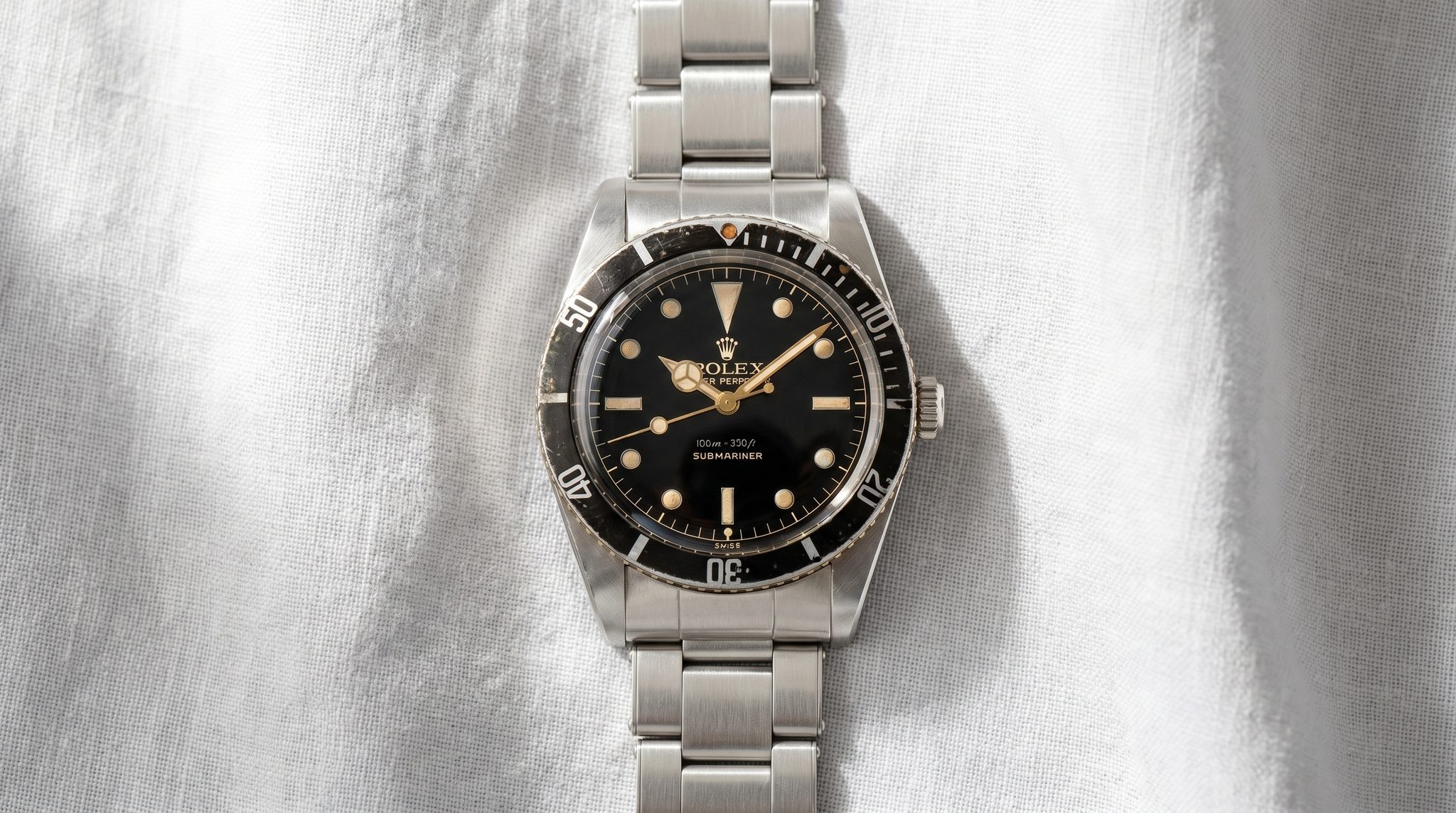
The Rolex Submariner 6204 is the earliest small-crown Submariner most often anchored to a 1954 debut, a short-run reference where dial text, hand sets, and bezel inserts can be original in more than one correct combination.
- Production
- c. 1953–1955
- Case
- Stainless steel
- Diameter
- 37 mm
- Lug width
- 20 mm
- Crown
- 5.2–5.3 mm
- Bezel
- Rotating 60-minute
- Crystal
- Acrylic
- Caseback
- Screw-down “bubble”
- Water resistance
- 100 m / 330 ft
- Dial
- Gloss black gilt
- Movement
- Cal. A260
- Lume
- Radium
The Rolex Submariner 6204 is the Submariner before the model’s visual shorthand fully settled, and the proof is in the hardware: one reference is documented with pencil hands on some examples, two distinct bezel-insert graduation patterns, and dials that can be signed “Submariner,” unsigned, or laid out in the rare split-logo style. In other words, a Rolex 6204 is not defined by a single “correct look” so much as by a small set of early-1950s parts that can legitimately appear in different combinations.
The safest public anchor for the Submariner 6204 is 1954, while broader summaries describe a brief run spanning roughly c. 1953/1954 into 1955, with acknowledged overlap and debate around how the earliest Submariner references (6200, 6204, 6205) were ordered commercially. What is consistent in specialist and auction descriptions is the compact format: a 37 mm stainless-steel Oyster case, a rotating 60-minute bezel, a thick acrylic crystal, and Rolex’s automatic calibre A260. Sotheby’s cataloguing of ref. 6204 examples also documents the A260 as a 19-jewel movement, and period descriptions note the rounded, bubble-style screw-down caseback used to clear the rotor.
The crown is one of the most practical tells when handling an intact watch. Documented examples of the 6204 use a notably small 5.2–5.3 mm crown, and some specialist writing describes this dimension as specific to the 6204 within the Submariner line. That measurement matters because the closely related ref. 6205 is associated with a 6 mm Twinlock crown, so crown size can be a quick reality check before the finer points of dials, hands, and inserts even begin.
Then comes the part that makes a Submariner 6204 review different from later references. The dial, the hands, and the bezel insert are best treated as independent evidence within the same short production window, not as a single staged revision. The most convincing watches are the ones that look assembled by time rather than assembled later: gilt printing that still has depth against a glossy black surface, radium that has aged with the same temperature across dial and hands, and an insert whose typography and luminous pip feel like they have lived on the case for decades, not months.
“Ref. 6204 is early Submariner history told in parts: dial layout, hands, and bezel insert can each be right, but not always in the same combination.”
6204 across c. 1953–1955
Ref. 6204 belongs to the first commercial moment of the Submariner, with 1954 as the safest anchor and a broader c. 1953–1955 window used to capture the messy reality of early production and overlap with neighbouring references. The calendar is hard to pin down because sources use different conventions for “launch” and because the earliest Submariners were not cleanly staged one after another.
What is clearer is how the watch presents in the hand. The dial is described as glossy black with gilt printing and radium lume, but the wording and layout vary, including the rare split-logo execution and more familiar dials that do, or do not, carry the word “Submariner.” The hands are a separate variable: the pencil set, with its straight hour and minute hands and lollipop seconds, is documented as an early configuration, and other hand sets also appear during the run, even if the surviving literature does not reduce them to a single agreed sequence.
The bezel insert creates a third axis of originality. Two graduation patterns are repeatedly described for ref. 6204, one leaving 0 to 15 unmarked and another adding first-quarter minute hashes, and neither pattern can be used on its own as a reliable date stamp.
Zooming out, the 6204 reads like Rolex shipping a real tool watch while still finalizing the Submariner’s own punctuation. That is why the best examples feel internally consistent rather than “perfect,” with dial, hands, and bezel all showing the same kind of age, and why later replacement parts can change not only value but the historical character of the watch.
- 1954Introduced37 mm case, 5.2–5.3 mm crown
- c. 1953 – 1954Split-logo dials“ROLEX” and “Submariner” split
- c. 1953 – 1954Pencil handsStraight hands, lollipop seconds
- c. 1953 – 1955Two bezel inserts0–15 blank vs hashed
- c. 1953 – 1955Dial signing mix“Submariner” present or absent
- c. 1954 – 19556205 overlap6205 uses 6 mm crown
- c. 1955Winds downMost examples dated mid-1950s
6204 against its neighbours
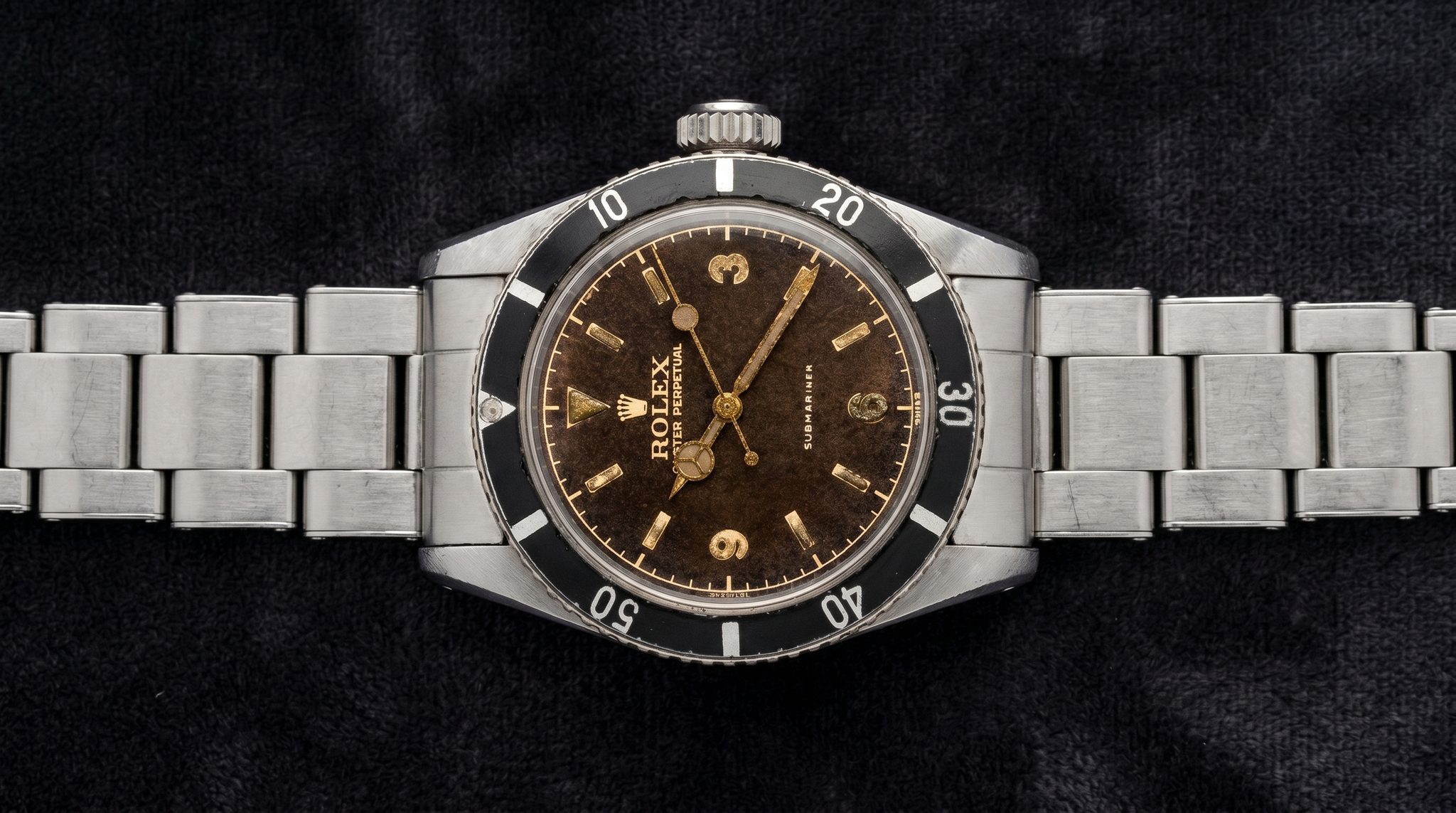
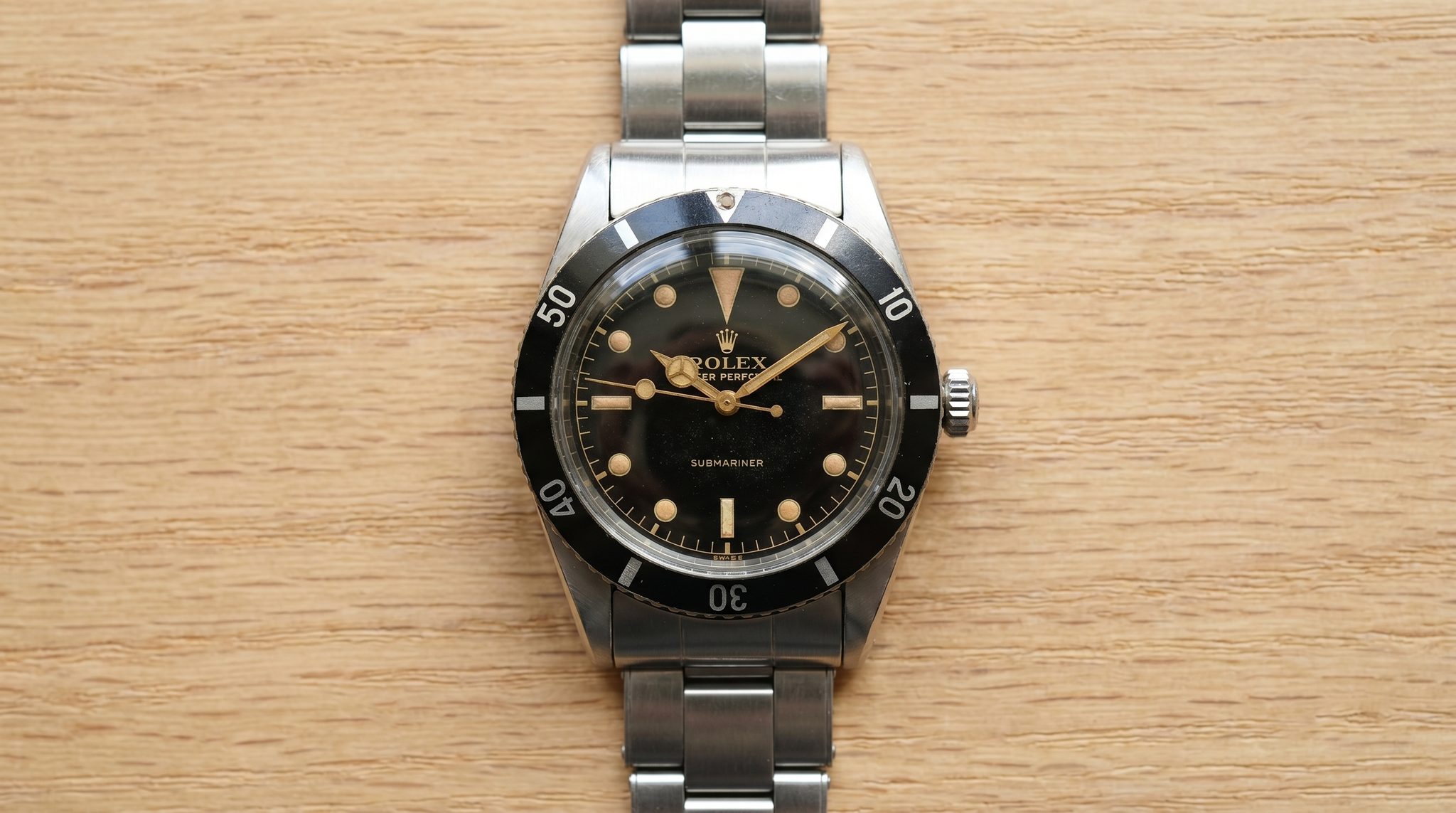
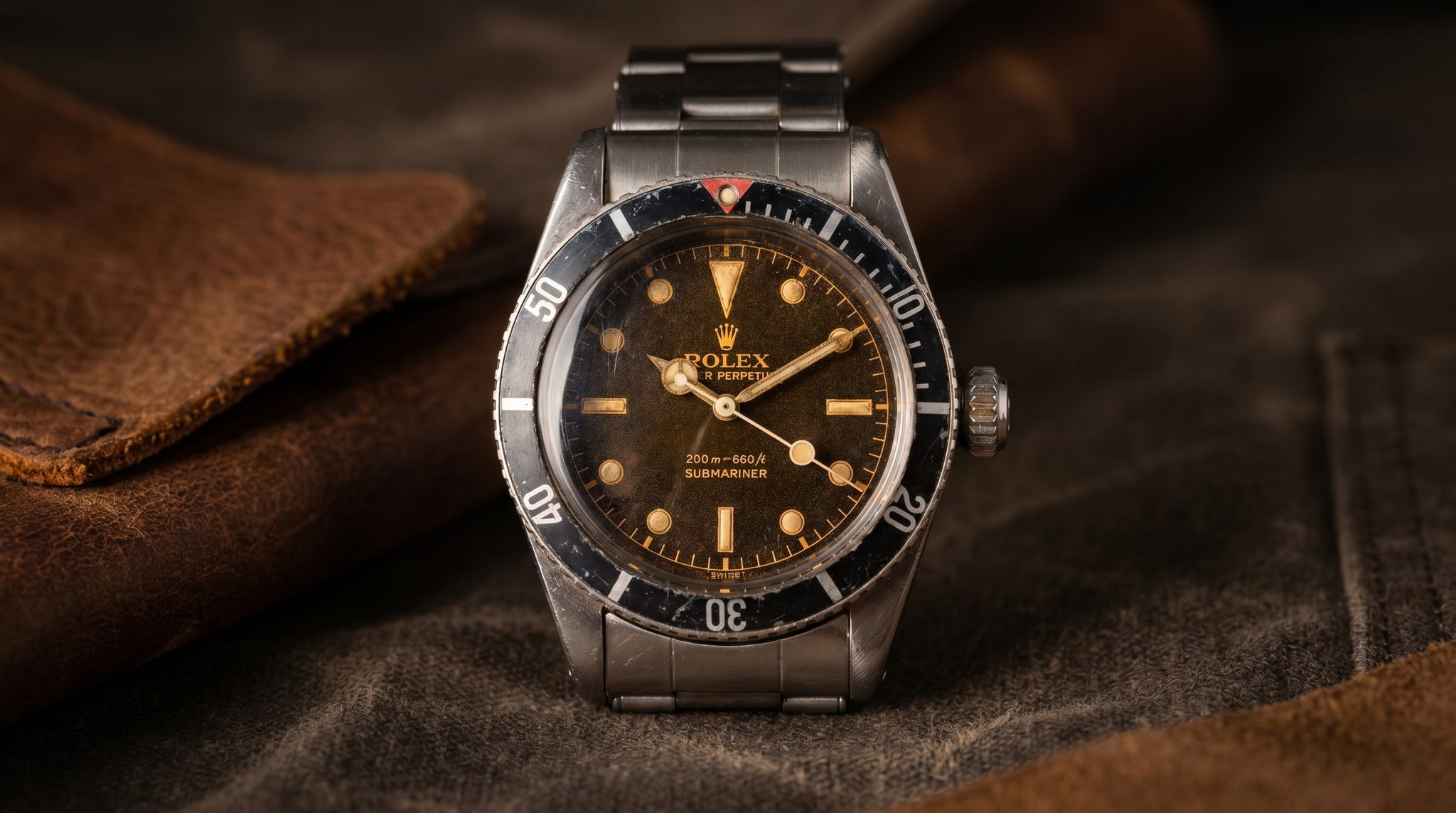
Ref. 6204 makes the most sense when it is framed by its two closest early neighbours. The ref. 6200 represents the big-crown, deeper-rated branch of the same early idea, while the ref. 6205 is the nearest small-crown continuation, sharing the compact proportions but moving to the larger 6 mm Twinlock crown and more consistent Submariner branding seen on many examples.
6202 Conceptual precursor (Turn-O-Graph) From 1953 | This reference 6204 Rolex · focal c. 1953–1955 | |||
|---|---|---|---|---|
| Production | From 1953 | c. 1953–1955 | c. 1954–1956 | c. 1954–1955 |
| Case | Stainless steel | Stainless steel | Stainless steel | Stainless steel |
| Diameter | 36 mm | 37 mm | 37 mm | 37 mm |
| Crown | Screw-down crown | 5.2–5.3 mm | 8 mm (big crown) | 6 mm Twinlock |
| Water resistance | – | 100 m / 330 ft | 200 m / 660 ft | 100 m / 330 ft |
| Movement | Cal. A260 | Cal. A260 | Cal. A296 | Cal. A260 |
| Crystal | Acrylic | Acrylic | Plastic / acrylic | Acrylic |
| Bezel | Rotating timing | Rotating 60-minute | Rotating 60-unit | Rotating timing |
| Dial | Turn-O-Graph text | Gloss black gilt | Explorer 3-6-9 (many) | Often “Submariner” |
| Lume | Radium | Radium | Radium | Radium |
Seven dial generations across the run
The split-logo dial is the 6204 at its most obviously transitional. Instead of the later, familiar hierarchy of text, the dial separates the “ROLEX” and “Submariner” wording into a distinctive layout that specialist writing describes as rare. In person, the effect is less about a single line of print and more about the whole surface: glossy black lacquer that still looks wet under light, gilt text that sits warm against the dark, and radium plots that have aged into a matte, granular calm.
Because the 6204’s dial, hands, and bezel do not share one synchronized changeover, the split-logo layout cannot be treated as a complete “early-spec package.” It has to be evaluated as one component of a coherent watch, alongside period-correct hands, a plausible insert, correct case markings, and the documented calibre A260.
What to check before buying a 6204
Buying a Submariner 6204 is less about finding a watch that matches a single textbook photograph and more about judging whether its individual parts form a believable early-1950s whole. The reference is old enough that service replacement and cosmetic rework are common: dials can be refinished, hands relumed, and bezel inserts swapped, often long before today’s collecting standards existed.
The practical consequence of the 6204’s short, overlapping production is that the dial layout, hands, and insert should be treated as separate questions. A rare feature does not rescue a watch whose other components look out of place, and a “standard” example can be exceptional if its wear and construction feel uninterrupted.
The reward for getting it right is ownership of a Submariner that still feels compact and experimental. At roughly 37 mm with its small crown and bubble back, the 6204 wears like an early tool watch rather than a later archetype, and its best examples preserve the exact kind of gilt-and-radium warmth that later Submariners gradually left behind.
Rolex Submariner 6204 for sale
Auctions on Grey Market run on seven-day cycles, every watch verified before it sells. Browse what's live now, or consign your 6204.
Adjacent in the Submariner family
Common questions about the 6204
Most accounts anchor the Submariner 6204 to a 1954 debut, while broader timelines describe a short run spanning roughly c. 1953–1955. The earliest Submariner references overlap, and sources are not fully consistent on whether dates refer to manufacture, first public appearance, or retail availability.
- Sotheby’s | Rolex Submariner ref. 6204 (A260, 19 jewels)sothebys.com
- Christie’s | ROLEX, stainless steel “Submariner”, ref. 6204 (BREVET marking)christies.com
- Monochrome Watches | The Very First Rolex Submariner, ref. 6204monochrome-watches.com
Show 12 more
- Collector Square | Rolex Submariner ref. 6204 (two bezel versions)collectorsquare.com
- Bob’s Watches | A historical look at the Rolex Submariner ref. 6204bobswatches.com
- RolexHaven (Rolex Vintage Information) | Submariner 6204 from 1954rolexhaven.com
- Everest Bands | The first Rolex Submariner reference 6204everestbands.com
- EveryWatch | Rolex Submariner 6204 (example listing and notes)everywatch.com
- WatchGuys | Rolex Submariner 6204 review: history, features, valuewatchguys.com
- Sotheby’s | Rolex Submariner ref. 6200 (37 mm)sothebys.com
- Christie’s | Rolex Submariner ref. 6200 (A.296 movement)christies.com
- Sotheby’s | Rolex Submariner ref. 6200 (200 m / 660 ft)sothebys.com
- Christie’s | Rolex Submariner ref. 6205 (1954–1955; 100 m)christies.com
- Phillips | Explorer-dial Submariners and radium (context for early 6200)phillips.com
- Sotheby’s | Rolex Turn-O-Graph ref. 6202 (36 mm diameter)sothebys.com