

Rolex Submariner 1680
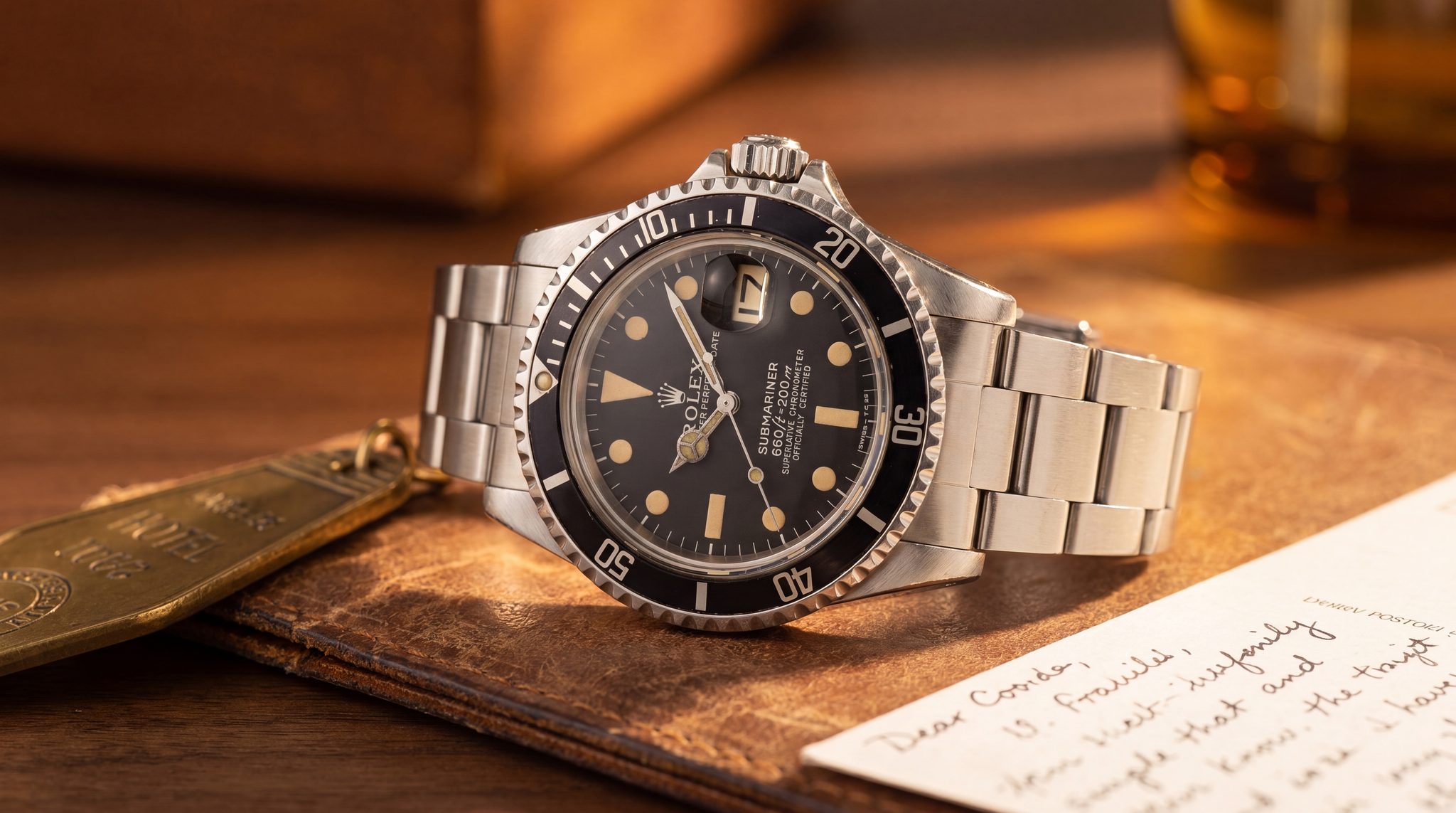
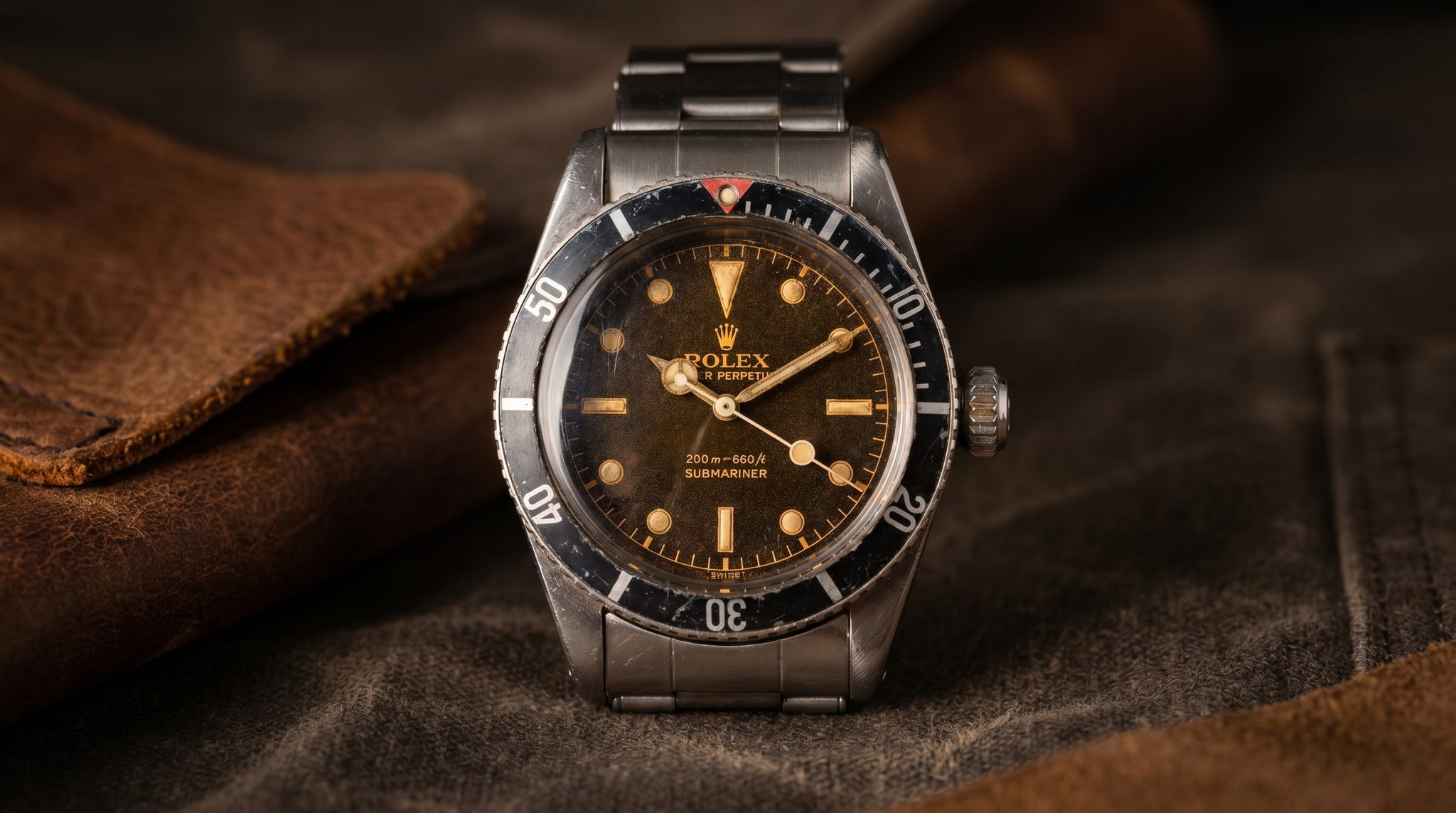
The Rolex Submariner 1680 introduced the Submariner Date and, as the only dated Submariner built around an acrylic Cyclops, it is a reference whose originality is read in dial printing and service-era replacements as much as in the case itself.
- Production
- c. 1967–1979
- Case
- Stainless steel
- Diameter
- 40.0 mm
- Lug width
- 20 mm
- Crystal
- Acrylic, Cyclops
- Bezel
- Rotating (fat-font early)
- Water resistance
- 200 m / 660 ft
- Dial
- Black; red → white
- Movement
- Cal. 1575
- Chronometer
- Dial-marked SCOC
- Lume
- Tritium; Luminova service
The verdict on the Rolex Submariner 1680 is simple: it is the Submariner Date that still lives in the acrylic era, and that one combination makes its most consequential history visible in ink. It is the only Submariner Date built with an acrylic crystal and Cyclops magnifier, and that means a tiny line at 6 o’clock can instantly separate a period tritium dial signed “SWISS – T < 25” from a later service replacement signed “SWISS” only.
Specialist sources place ref. 1680’s production in the late 1960s through the late 1970s (commonly summarized as c. 1967–1979, with some sources extending the tail toward c. 1980). In steel it is the first Submariner to add a date window, powered by Rolex’s cal. 1575 (the date version of the 1570 family derived from the 1530 architecture), in a 40 mm Oyster case rated to 200 m when new.
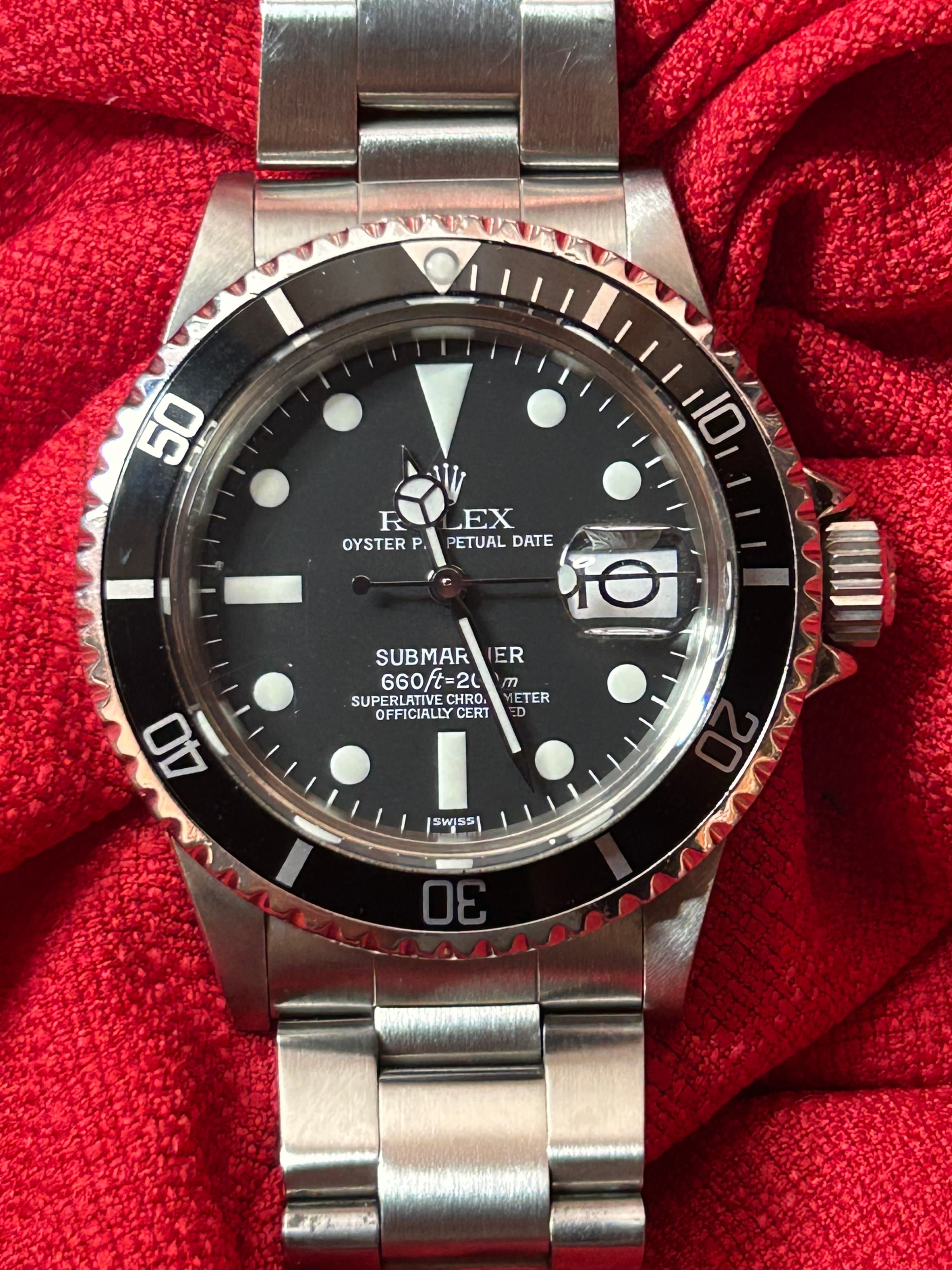
Collectors focus on the 1680 because its defining variations sit where the eye naturally goes: the dial’s “SUBMARINER” line begins in red and later turns white, while the depth rating flips from meters-first (200m = 660ft) to feet-first (660ft = 200m) on its own, independent schedule. Add the realities of routine Rolex servicing, where dials and bezel inserts were often replaced, and the reference becomes a watch that can look perfectly convincing while telling a different story than it did when it left the factory.
“The 1680 brought the date to the Submariner, but its acrylic Cyclops era is why one line of dial text can outweigh everything you cannot see.”
1680 across c. 1967–1979
The 1680’s basic proposition stays steady: a Submariner rated to 200 m when new, now with a date under a Cyclops, and in specialist accounts powered throughout by the cal. 1575. What changes, and what drives most of the reference’s variant taxonomy, is what Rolex and its suppliers printed on the dial and what later maintenance could swap.
Early steel examples are defined by the red “SUBMARINER” line, but two of the most-used dating cues do not move in lockstep. The red line persists as the depth rating transitions from meters-first (200m = 660ft) to feet-first (660ft = 200m), so a feet-first dial can still be an authentic Red Sub configuration. In the mid-1970s the model settles into all-white “SUBMARINER” text for the remainder of production, still on matte tritium dials.
Service adds a second, post-production timeline that Rolex never tied to reference production years in public. Replacement inserts often shift the bezel from early fat-font numerals to later thin-font styles, and replacement dials can be spotted by lume era and the 6 o’clock signature, notably tritium-era “SWISS – T < 25” versus later “SWISS” service signing.
Taken together, the 1680 shows how quickly the “standard Submariner Date” was still being defined in real time: a reference treated today as an archetype, yet split into eras by nothing more than the color of one word and the order of two depth units.
- c. 1967/69IntroducedDate window with Cyclops
- c. 1970 – 1972Feet-first dialsRed dial, 660ft = 200m
- c. 1969 – 1975Red text era“SUBMARINER” printed in red
- c. 1975 – 1979White text era“SUBMARINER” printed in white
- c. 197893150 appearsBracelet stamped 93150
- c. 1979/1980DiscontinuedNext ref. has sapphire crystal
1680 against its neighbours
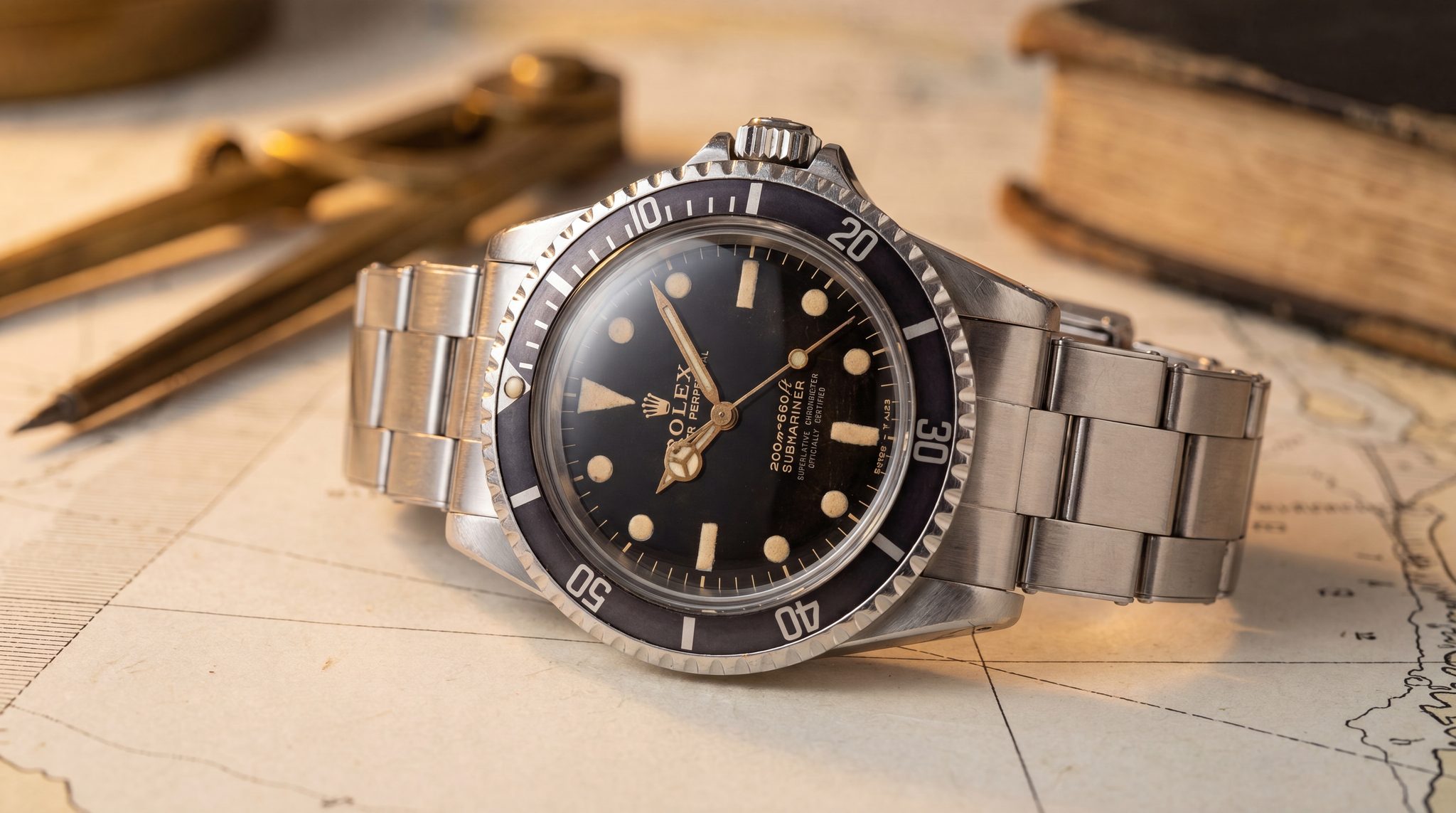
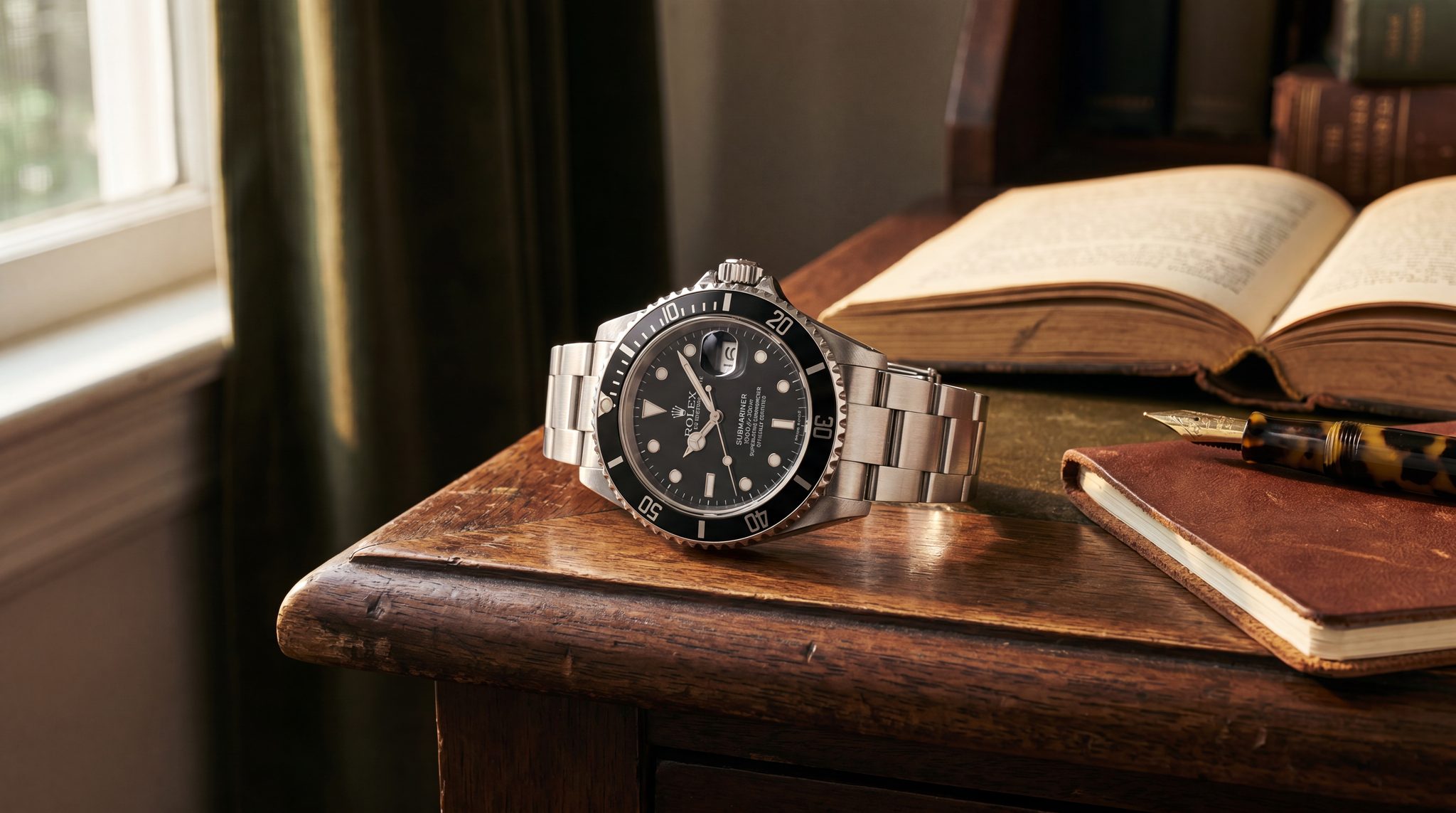
The 1680 makes the most sense when set between the watch it lived alongside and the watch that replaced it. Ref. 5513 shows the contemporary, time-only acrylic Submariner: nearly the same wrist presence, but without the date window and Cyclops that define the 1680’s role. Ref. 16800 is the direct successor that keeps the Submariner Date concept but moves it into the sapphire era with a quickset movement. Ref. 1680/8 shows how the same-generation idea was reinterpreted in yellow gold with “nipple” dials, without participating in the steel red-versus-white taxonomy.
This reference 1680 Rolex · focal c. 1967–1979 | ||||
|---|---|---|---|---|
| Production | 1962–1989 | c. 1967–1979 | 1970s (within 1680 era) | 1979–1988 |
| Case | Stainless steel | Stainless steel | 18k yellow gold | Stainless steel |
| Diameter | 40 mm | 40.0 mm | 40 mm | 40 mm |
| Lug width | 20 mm | 20 mm | 20 mm | 20 mm |
| Crystal | Acrylic (plexiglass) | Acrylic, Cyclops | Acrylic, Cyclops | Sapphire, Cyclops |
| Bezel | Black rotating, 60-minute scale | Rotating (fat-font early) | Rotating, insert black/blue | Unidirectional, black insert |
| Water resistance | 200m / 660ft | 200 m / 660 ft | 200 m / 660 ft | 300 m |
| Dial | Gloss gilt (early) → matte (later) | Black; red → white | Black or blue “nipple” | Matte → glossy (c. 1984) |
| Movement | Cal. 1530, then Cal. 1520 | Cal. 1575 | Cal. 1575 | Cal. 3035 |
| Chronometer | No | Dial-marked SCOC | Yes | Yes |
| Lume | Radium (early), tritium (later) | Tritium; Luminova service | Tritium | Tritium |
Ten dial generations across the run
The earliest steel “Red Sub” dials have a look that feels slightly layered, because the red “SUBMARINER” line was printed over a white under-print. Under light, the red can read brighter and a touch more dimensional than later red dials. These MK1 dials are meters-first (200m = 660ft) and are often described with closed 6s in “660ft,” a small typographic detail that becomes surprisingly legible once it is pointed out.
What to check before buying a 1680
A Submariner 1680 review, in practice, becomes a test of whether the watch still reads as one moment in time. Because routine servicing often replaced dials and inserts, an example can be mechanically sound and still present a surface assembled from different eras. The best purchases are the ones whose dial era, depth layout, lume signature, and bezel style agree with each other.
For steel watches, the two biggest mistakes are treating “Red Sub” as a single configuration and ignoring the service timeline. Red “SUBMARINER” dials exist with both meters-first and feet-first depth lines, and a later service dial can erase the red text entirely while remaining an authentic Rolex part.
Living with a 1680 is living with acrylic: the Cyclops crystal can pick up hairline marks and polish back to clarity, and the matte tritium dial tends to age in a way that turns time into texture. It is the Submariner Date for people who want the calendar function, but also want the reference to show its years honestly, in the typography, the patina, and the small, checkable details that survived on the surface.
Rolex Submariner 1680 for sale
A 1680 is scheduled to open on Grey Market. Every watch is verified before bidding starts.
Each point is a recent dealer or auction sale, banded to an indicative figure. The range shown is not a valuation.
What a 1680 has sold for here
One 1680 has sold on Grey Market, verified before it shipped.
Adjacent in the Submariner family
Common questions about the 1680
Specialist sources place the Rolex Submariner 1680 in the late 1960s through the late 1970s. A common summary is c. 1967–1979, with some sources extending the end toward c. 1980.
- History of the Rolex Submariner Part 2 (55XX and 1680)monochrome-watches.com
- #TBT A Single Owner Rolex 1680 Submarinerfratellowatches.com
- Everything You Need To Know About The Submariner 1680italianwatchspotter.com
Show 20 more
- 1960's Vintage Rolex Submariner Reference Number 1680precisionwatches.com
- Vintage Rolex Submariner 1680 “Red” (video)youtube.com
- The Red Submariner (DRSD dial/serial framework)drsd.com
- Rolex Red Submariner 1680 Full report Reference primerwatchprosite.com
- Rolex Submariner Date 1680 reference listings (technical tab)chrono24.com
- Rolex Submariner Ref. 1680 (Wind Vintage)windvintage.com
- Buying My Vintage Submariner 1680 (bracelet and buying observations)thedeadbeatseconds.substack.com
- Rolex Submariner 5513 (bezel description)christies.com
- Rolex Submariner 5513 gilt dial examplechristies.com
- Rolex Submariner 16800 dial change (matte to glossy)sothebys.com
- Rolex Submariner 16800 diameter 40 mmsothebys.com
- Rolex Submariner 16800 lug width 20 mm listingshop.hodinkee.com
- Rolex Submariner 1680/8 diameter 40 mm (nipple dial)sothebys.com
- Rolex Submariner 1680/8 lug width 20 mm listinganalogshift.com
- Rolex Submariner 5513 lug width 20 mm listinganalogshift.com
- Rolex Submariner 5513 lume era overviewmillenarywatches.com
- Rolex Submariner 16800 bezel insert descriptionbobswatches.com
- Rolex Submariner 1680/8 bezel descriptionbobswatches.com
- Rolex Submariner 1680/8 water resistance 200 m / 660 ft (article)phillips.com
- Rolex Submariner 1680 dial marked “Superlative Chronometer Officially Certified” (auction listing)christies.com