

Rolex Submariner 6200
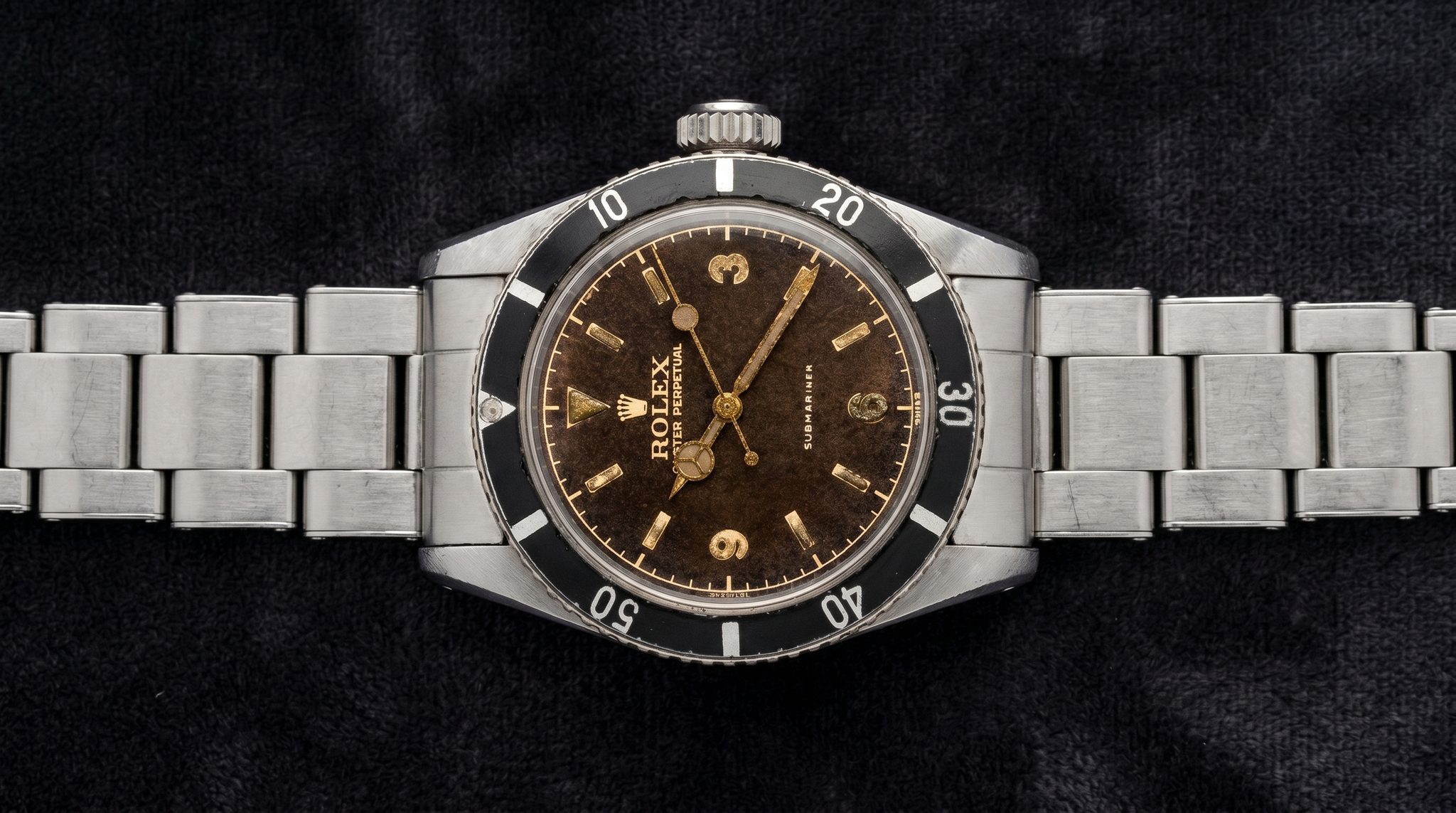
The Submariner 6200 is Rolex’s brief, experimental leap to a 200 m “Big Crown” tool watch, remembered for a 3-6-9 Explorer dial that looks like a prototype that escaped into the real world.
- Production
- c. 1954–1956
- Case
- Stainless steel
- Diameter
- ~37–37.5 mm
- Crown
- 8 mm Brevet
- Bezel
- Rotating timing
- Crystal
- Domed acrylic
- Water res.
- 200 m
- Dial
- Gloss gilt 3-6-9
- Hands
- Mercedes (long)
- Movement
- Cal. A296
- Chronometer
- No (typical)
- Lume
- Radium
The Rolex Submariner 6200 is the Submariner that feels like Rolex skipping a step: a 200-meter Big Crown diver appearing in a tiny serial band around 31.9xx–32.2xx, then disappearing almost immediately. That concentration, coupled with estimates of roughly 300 made and remarks that fewer than 25 have resurfaced publicly, explains why surviving examples are treated less like “a vintage Submariner” and more like a first draft of the professional Rolex tool watch.
What makes the 6200 so singular is how much of the later Submariner vocabulary arrives at once, before Rolex had even settled on how to label it. The watch pairs an oversized 8 mm Brevet crown and a thicker, roughly 37.5 mm steel Oyster case with an Explorer-style 3-6-9 gilt dial and the first Mercedes-style hands seen on a Submariner. Many dials are almost austere, leaving the space above 6 o’clock blank, without a depth rating and often without the word “Submariner” at all.
In production terms, the 6200 sits beside the earliest small-crown Submariners (refs. 6204 and 6205) and points directly toward the later big-crown 200 m line (ref. 6538 in particular). Mechanically, it is also its own pocket in the family tree, using the automatic caliber A296 rather than the A260 found in the small-crown siblings. The result is a reference whose appeal is not only its rarity, but its visible indecision: the same watch can present as pure Explorer-dial minimalism, or as an almost impossibly scarce “Submariner” signed dial, while the underlying architecture remains the same.
“A Submariner built before Rolex decided what a Submariner should say on its dial: 200 meters, an 8 mm Big Crown, and an Explorer 3-6-9 face in a production run that barely registers.”
6200 across c. 1954–1956
Ref. 6200 is usually anchored to 1954 because multiple specialist and auction references tie it to the post-rotation serial block around 31.9xx to roughly 32.2xx. Within that narrow window, Rolex appears to have been testing the “professional” Submariner idea in real time: a thicker, larger steel case and an oversized Brevet crown to support a 200 m rating, paired with a dial that often refuses to explain itself. Most examples omit depth text entirely, and many omit “Submariner” as well.
The most recognizable 6200s carry the glossy black gilt 3-6-9 Explorer layout. In hand, the gilt printing is part of the identification: the text and minute track are not painted on top, they read as warm metallic lines under lacquer, catching light differently than later matte dials. Dial texts above 6 o’clock form the meaningful internal story. Some watches leave the lower half of the dial blank; a much smaller number add “Submariner” above 6; and a single publicly recorded example adds “Officially Certified Chronometer” beneath it. The reason Rolex printed that lone OCC dial is not documented.
One late lesson falls out of this short run. Collectors often talk about the Submariner as if it emerged fully formed, but the 6200 shows the opposite: the features now treated as standard, a big crown, Mercedes hands, and a 200 m capability, arrived while Rolex was still deciding what belonged on the dial at all. That compressed uncertainty is exactly why originality matters so much on surviving 6200s.
After the 6200, Rolex’s big-crown 200 m concept becomes more legible in ref. 6538, which moves to the cal. 1030 and more standardized dial text, frequently including depth ratings. In that sense, the 6200 is both a beginning and an outlier: the professional Submariner idea, expressed in a form that exists in very small numbers and in several slightly different dial voices.
- c. 1954Introduced8 mm Brevet crown, no guards
- c. 1954A296 movementA296 in movement; 6200 caseback
- c. 1954Explorer gilt dialsGloss gilt 3-6-9 layout
- c. 1954Submariner text added“Submariner” above 6 o’clock
- c. 1954OCC anomalyTwo lines above 6, incl. OCC
- c. 19556538 follows6538 case and cal. 1030 era
6200 against its neighbours
Ref. 6200 makes the most sense when framed by the watches immediately around it: the small-crown 6204 that introduced the Submariner to the public, and the 6538 that turns the big-crown 200 m idea into a longer-running, more standardized model. Together they show why the 6200 reads as both a prototype and a landmark.
This reference 6200 Rolex · focal c. 1954–1956 | ||||
|---|---|---|---|---|
| Production | c. 1953–1955 | 1954–1955 | c. 1954–1956 | c. 1955–1959 |
| Case | Stainless steel | Stainless steel | Stainless steel | Stainless steel |
| Diameter | 37 mm | ~37–37.5 mm | ~37–37.5 mm | 37.5 mm |
| Crown | Small crown | Small crown | 8 mm Brevet | 8 mm Big Crown |
| Crystal | Acrylic | Domed acrylic | Domed acrylic | Acrylic |
| Bezel | Rotating timing | Rotating (no-hash) | Rotating timing | Bi-directional, aluminum |
| Water res. | 100 m | 100 m | 200 m | 200 m / 660 ft |
| Dial | Standard layout | Standard layout | Gloss gilt 3-6-9 | Gilt (often depth text) |
| Movement | Cal. A260 | Cal. A260 | Cal. A296 | Cal. 1030 |
| Chronometer | No | No | No (typical) | Offered (2- vs 4-line) |
| Lume | Radium | Radium | Radium | Radium |
Five dial generations across the run
This is the 6200 most people picture: a glossy black lacquer dial with gilt printing, Arabic numerals at 3, 6, and 9, and a triangle at 12, but a striking emptiness above 6 o’clock. On many examples there is no model name and no depth rating, just the minute track and the lower lume plots. The look is unusually clean for a diver, and it is also a practical authentication tell: the absence of text is not a “missing line,” it is a deliberately balanced lower dial.
Within this family, the coronet and the “ROLEX OYSTER PERPETUAL” block at 12 can appear in a small-logo or large-logo style. Sources treat logo size as an independent trait rather than a guaranteed partner to any particular 6 o’clock text, and the tiny sample size means there are no reliable serial cutoffs to date small versus large logos.
What to check before buying a 6200
Buying a Rolex 6200 is less like buying a vintage Submariner and more like verifying a short list of irreplaceable surfaces. With production concentrated in a narrow serial band and values driven overwhelmingly by dial, bezel insert, crown, and hands, the difference between an original watch and a convincing parts assembly is often one component deep.
Start with coherence. A correct 6200 centers on the A296 movement, the oversized 8 mm Brevet crown, and the glossy gilt Explorer 3-6-9 dial family that omits any printed depth rating. The most expensive mistakes happen when one correct element, often the case, is paired with later service-era parts that visually “work” but collapse the reference’s meaning.
The famous premiums are also the most visible in photos. Phillips highlights the rare “Submariner” script Explorer dial as particularly scarce. Bob’s Watches emphasizes the unique OCC dial as a one-off, and Hairspring notes how valuable correct early bezel components have become. These are not minor accessories: a watch can be authentic yet still lose a large portion of its collector value if the insert, crown, or long Mercedes hand set is wrong or mismatched.
Owning a 6200 is living with a watch whose scarcity forces humility. Most examples have seen service, many have been reconfigured over decades, and even honest watches can carry replacements. The goal is not perfection, it is period coherence: a dial, hands, crown, and bezel that look assembled by time, not assembled later.
Rolex Submariner 6200 for sale
Auctions on Grey Market run on seven-day cycles, every watch verified before it sells. Browse what's live now, or consign your 6200.
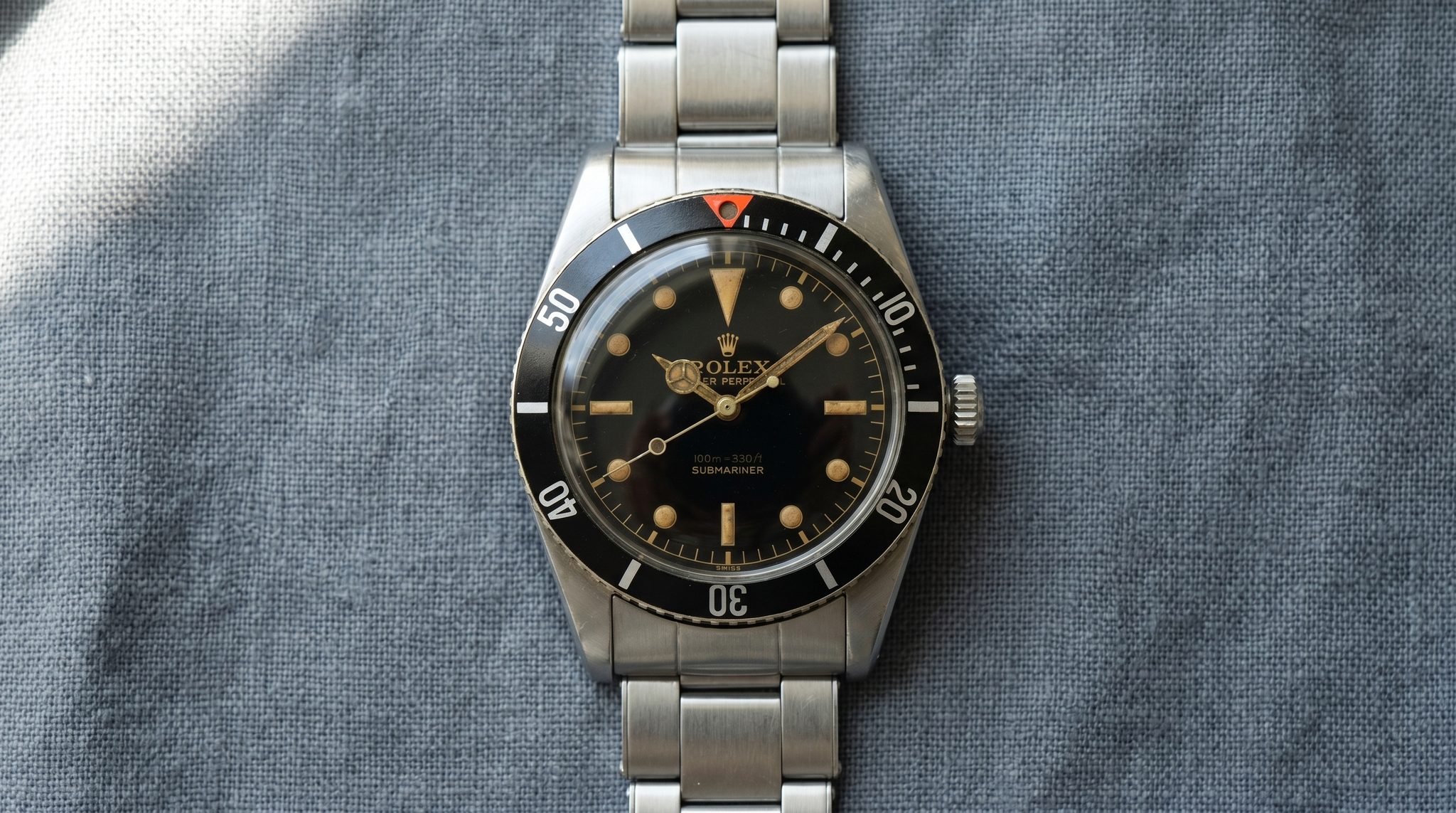
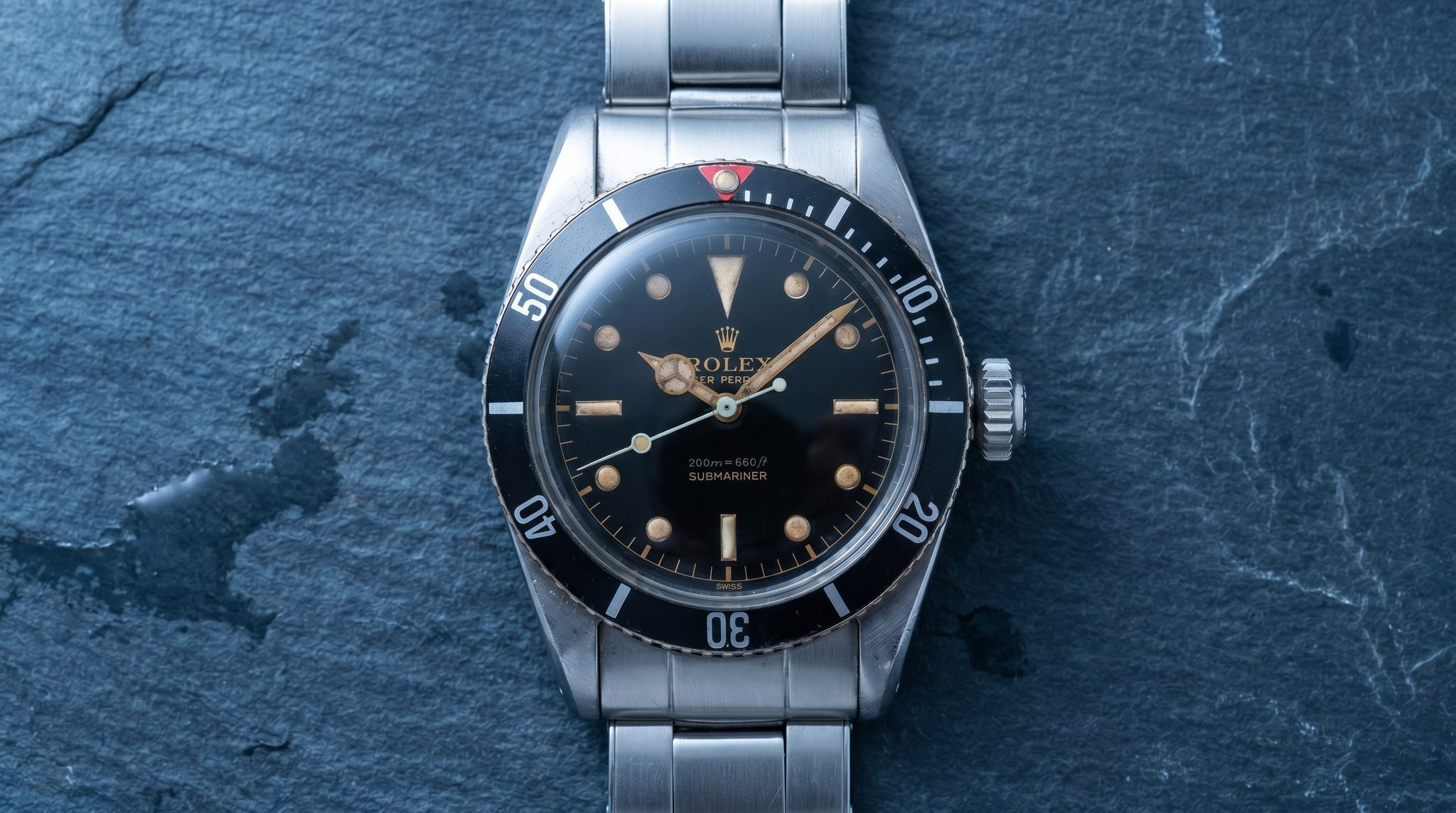
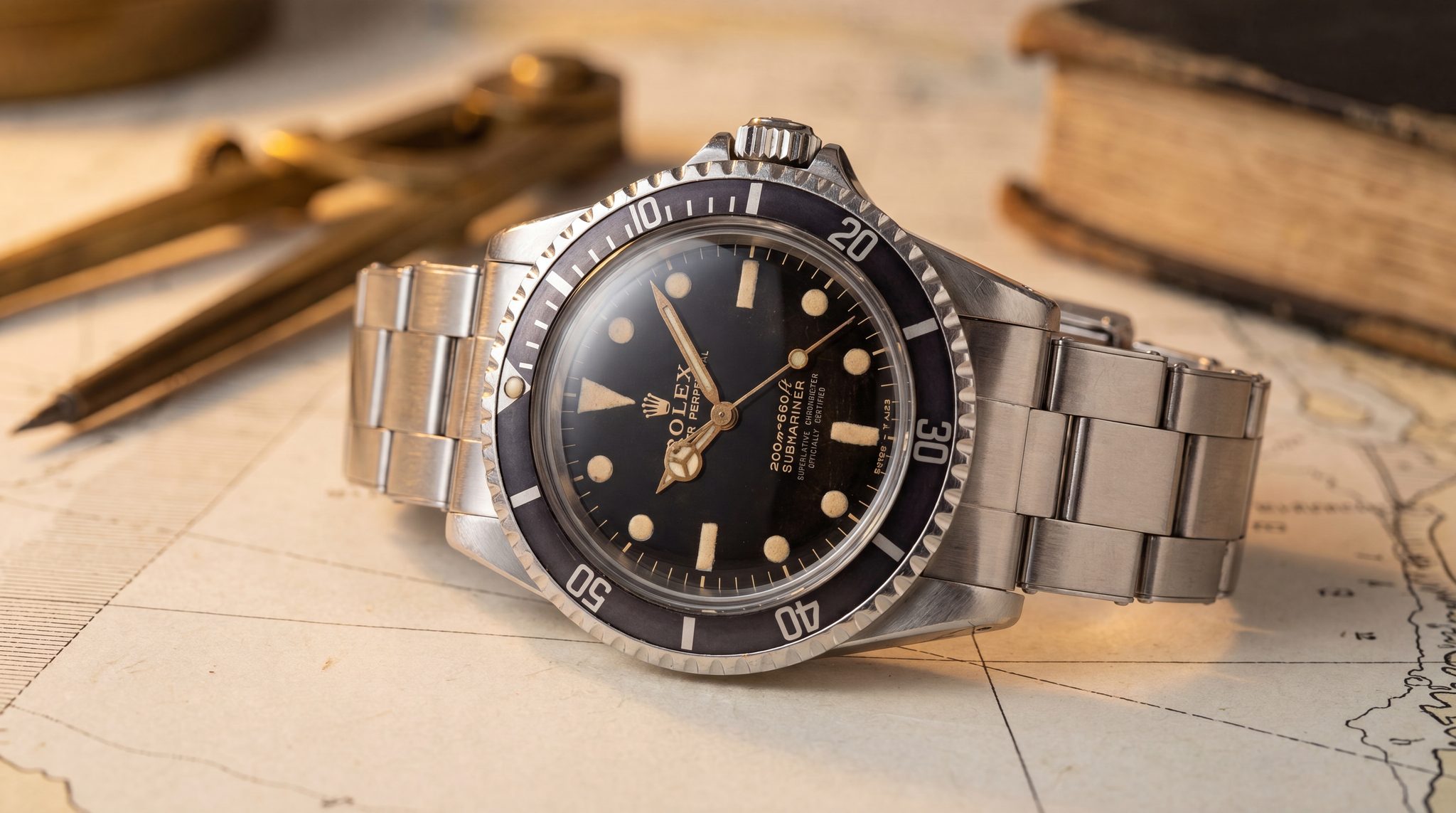
Adjacent in the Submariner family
Common questions about the 6200
The Submariner 6200 is most consistently placed in circa 1954, with watches clustered in a narrow serial band around 31.9xx to roughly 32.2xx. Some dealer attributions cite 1953, but the strongest serial-anchored dating points to 1954 and a very short run.
- Phillips: Discovering a Rolex Submariner Reference 6200 with “Explorer” Dialphillips.com
- WatchProSite: Rolex Submariner 6200 reviewwatchprosite.com
- Bob’s Watches: 6 Quick Facts About the Rolex Submariner 6200bobswatches.com
Show 7 more
- Fratello: Servicing an Ultra-Rare Rolex Submariner Ref. 6200 “King Sub”fratellowatches.com
- Hairspring: ‘King Sub’ 6200 Rolex Submarinerhairspring.com
- Corrado Mattarelli: The 3-6-9 Big Crown Submariner ref. 6200corradomattarelli.com
- Collector Square: Rolex Submariner ref. 6200 listing (example dated 1954)collectorsquare.com
- Monochrome Watches: History of the Rolex Submariner, Part 1 (early references)monochrome-watches.com
- Bob’s Watches (YouTube): Vintage Rolex Submariner 6200 “King Sub”youtube.com
- Bulang & Sons: The Rolex 6200 Submariner from Original Ownerbulangandsons.com