

Vintage Cartier
Cartier is the design-led watch brand that turned a jeweler’s eye into enduring watch families people recognize at a glance.
Cartier is the design-led watch brand that proved a watch can be collected primarily as authored form, not as a contest of tool credentials. In 1904 it made a purpose-built men’s wristwatch for aviator Alberto Santos-Dumont so he could read the time in flight.
From there, Cartier’s watch history reads as an extension of the house’s larger achievement: taking elite decorative taste and translating it into repeatable, nameable objects with stable visual codes. That approach was already visible in the early growth of the firm founded in Paris in 1847 by Louis-François Cartier, then expanded into an international enterprise under the next generations, especially Louis, Pierre, and Jacques Cartier. It is also why the modern collector conversation about Cartier tends to orbit families, not isolated one-offs.
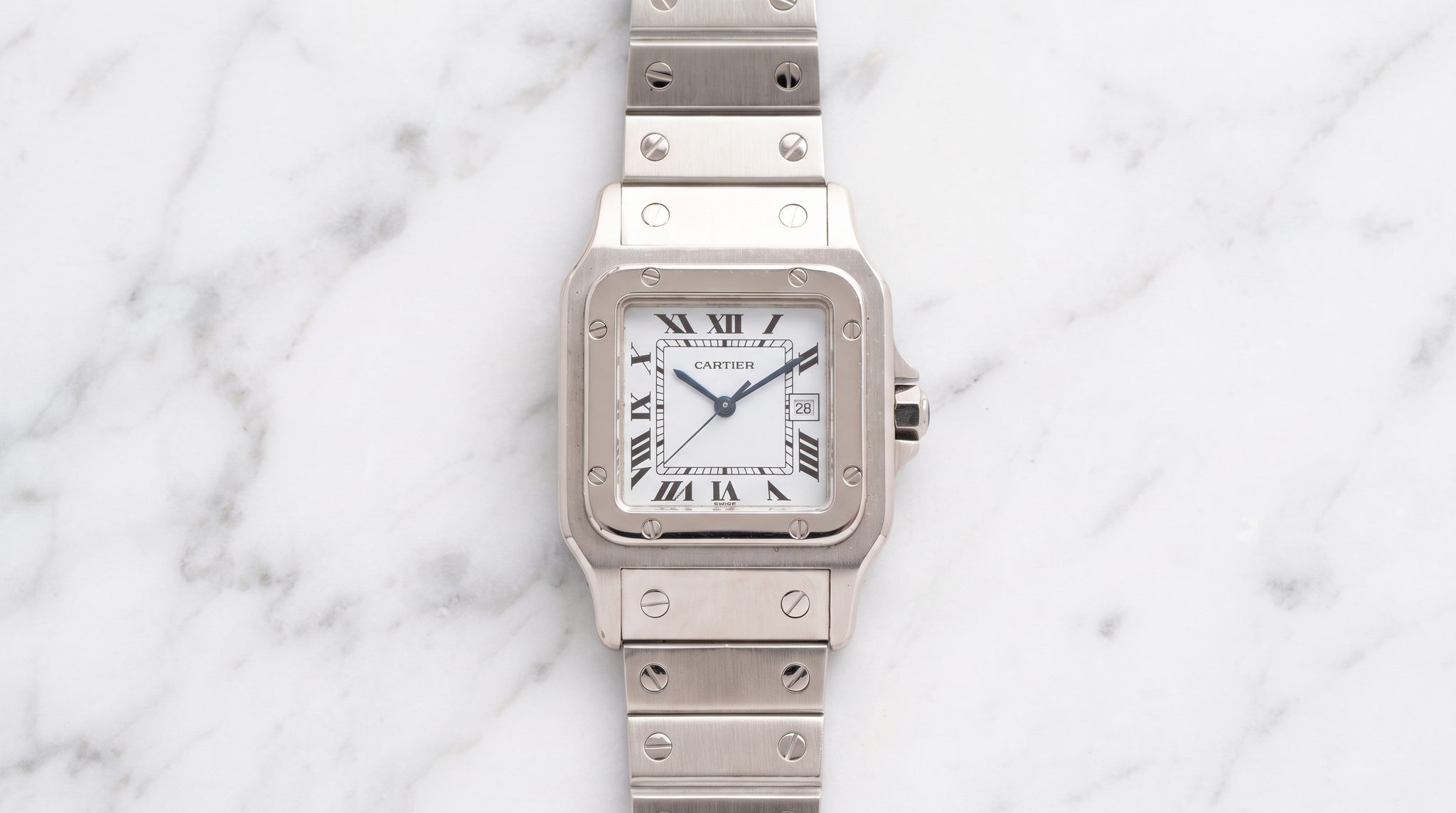
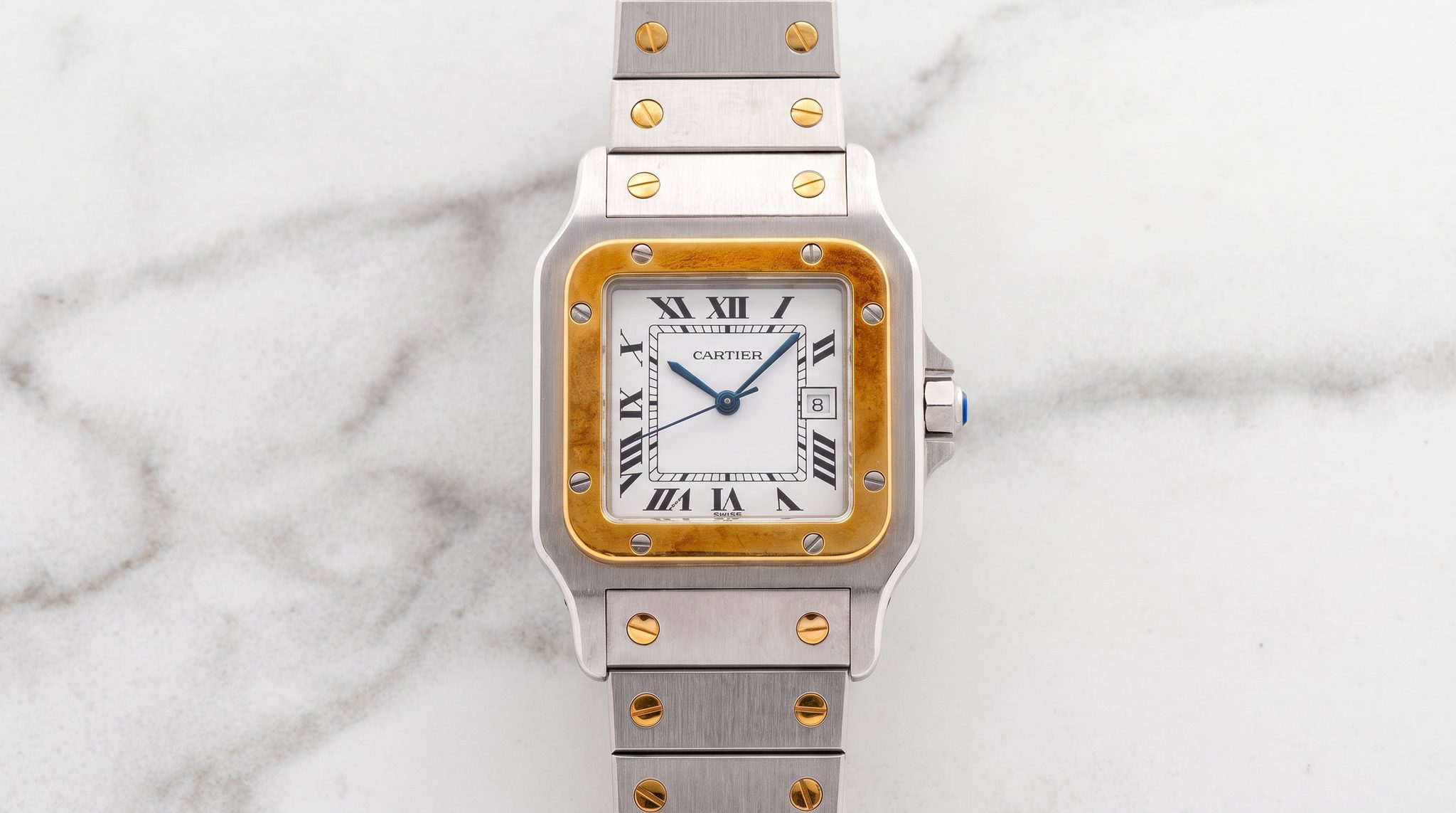
Two early designs anchor that family-first identity. The Santos is remembered as a functional starting point for the wristwatch as an everyday instrument, with a square case and exposed screw motif that makes the engineering idea visible on the surface. The Tank, introduced in 1917, turns the same principle toward geometry, with its rectangular case and parallel brancards forming a strict silhouette that has remained legible across decades. Those two lines explain why “vintage Cartier” is so often discussed in the language of shapes and proportions rather than purely in the language of movements.
Cartier’s later watch identity broadened without abandoning the house style. The Crash, first seen in London in 1967, became the brand’s best-known asymmetrical form, and its origin story remains disputed enough that collectors treat it as design myth as much as documented product history. The Panthère sits at the opposite pole, a bracelet-first jewelry watch whose appeal in recent years has been tied in commentary to the micro-watch trend and fashion-led demand. Across these families, what the market consistently rewards is not a single technical specification but the combination of a distinctive outline, a coherent design story, and period-correct execution.
One zoomed-out way to see Cartier’s importance is that it trained collectors to read watches like industrial design. Where many brands ask you to start with function and then notice aesthetics, Cartier often reverses the order: the shape is the argument, and the details of period, originality, and condition are the evidence.
2 references across 1 model families
How Cartier reference numbers work
Cartier reference numbers do not follow one universal scheme across all eras, and that unevenness is part of why a Cartier reference guide has to start by separating formats. In the vintage period, many pieces carry a long caseback number where the first five digits identify the reference and the remaining digits are the serial, so the reference is embedded inside a longer string rather than standing alone. In a transitional system used on some watches, Cartier employed a “W” prefix followed by seven digits, and in that format the first three characters can point to the model family.
Modern Cartier references are more consistently structured as an alphanumeric code that typically begins with W (for watch). The second character commonly indicates the case material, for example S for steel or R for rose gold, then two letters identify the collection, such as SA for Santos or BB for Ballon Bleu, followed by four digits that serve as a configuration code. A worked example is WSTA0059: W for watch, S for steel, TA for Tank Américaine, then 0059 for the specific configuration. Cartier does not publish a complete, universal digit-by-digit decoder for the final configuration numbers, so those suffixes should be treated as identifiers first and only sometimes as meaningfully descriptive.
Where to start with Cartier
Collecting Cartier is primarily about choosing a design language, then learning how that language expresses itself across eras. The most consistent starting points are the Tank and Santos because they are historically central, visually unmistakable, and broad enough families that a collector can move from an accessible, wearable example into more specialized variations without leaving the line. In the simplest terms, Santos carries Cartier’s functional pioneer identity, while Tank expresses the house’s architectural dress-watch side.
From there, the collecting paths diverge by intent. The Crash occupies a scarcity-led niche where demand is tied to unconventional form and the gravity of the design story more than to breadth of production. Panthère sits closer to jewelry and fashion, and specialist commentary treats its recent popularity as partly trend-sensitive compared with Cartier’s most historically entrenched shapes. Across the market evolution described in auction and editorial coverage, Cartier has been increasingly valued for design authorship and originality, meaning condition and period correctness can matter as much as the name on the dial. That is why the collecting “upgrade” is often not a newer watch, but a more convincingly original one.
Common questions about Cartier
Cartier was founded in Paris in 1847 when Louis-François Cartier took over his master Adolphe Picard’s workshop and store. The firm later became internationally dominant under the next generations, especially Louis, Pierre, and Jacques Cartier.
Show 9 more
- Cartier historytimeandtidewatches.com
- The History of Cartier and the Making of Modern Luxurynaturaldiamonds.com
- Cartier watcheschrono24.com
- Bonhams sees prices rocket for Cartier and Piaget watchesusa.watchpro.com
- Sotheby's Historic Cartier Auction Comes at the Right Timejckonline.com
- Understanding Cartier Watch Reference Numbersluxurybazaar.com
- Cartier Serial Number Lookup and Reference Guidewatch-affinity.com
- A history of Cartier in 10 objectsglion.edu
- Vintage Cartier Watches: A History of Timeless Designmatthewbaininc.com