

Rolex Submariner 5512
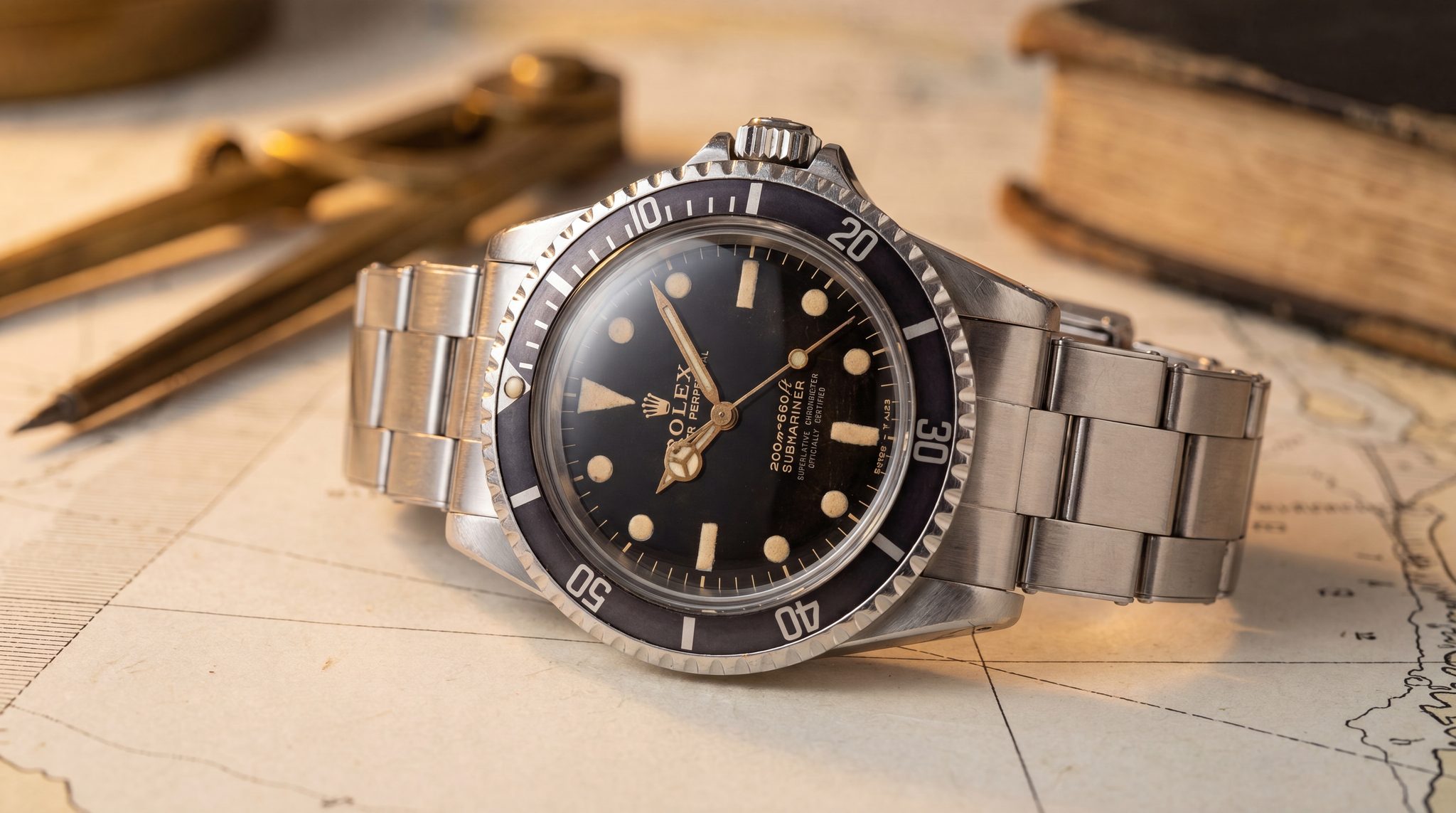
The Rolex Submariner 5512 is the guarded 40 mm Submariner that turned chronometer certification into a visible dial signature, then kept evolving in plain sight through overlapping case and dial generations.
- Production
- c. 1959–1978
- Case
- Stainless steel
- Diameter
- 40 mm
- Lug span
- 47 mm
- Thickness
- c. 14 mm
- Crystal
- Acrylic (plexiglass)
- Depth rating
- 200 m / 660 ft
- Dial
- Gilt → matte
- Movement
- Cal. 1530 → 1560 → 1570
- Chronometer
- Yes (most); early no
- Lume
- Radium → tritium
The Submariner 5512 is Rolex’s most readable turning point in the model’s early history: a watch introduced in 1959 that brought the Submariner into its guarded 40 mm era, then spent the 1960s changing in ways you can still date at arm’s length. One reference can show square crown guards on the earliest cases, sharply pointed guards soon after, and the rounded shoulders that became the long-running template.
Often shortened to the Rolex 5512 or Submariner 5512, it is also the no-date Submariner that becomes Rolex’s chronometer-certified expression of the line. That upgrade shows up most plainly on the dial. Early examples are non-chronometer, typically with the cleaner two-line lower layout, while chronometer-era watches adopt the four-line format that adds “Superlative Chronometer Officially Certified” beneath “Submariner.”
What makes the 5512 unusually teachable is that its case geometry, dial construction, depth-rating order, and luminous material do not move as one package. Glossy gilt dials give way to matte white-print dials around the mid to late 1960s, but with overlap rather than a single cutoff. “200m = 660ft” (meters-first) persists into early matte production even as later matte dials flip to “660ft = 200m” (feet-first). Lume shifts from radium-era “SWISS” signing to tritium signatures such as “SWISS - T < 25,” on a timeline that also overlaps other changes. The result is a reference where the most convincing watches look consistent across several independent clues, not merely correct by reference number.
That coherence matters because the 5512 was sold alongside the cheaper, non-chronometer 5513 from about 1962, in a lineup that split into parallel answers rather than a clean replacement. Low total production figures are often cited for the 5512 relative to the 5513, and the combination of scarcity and visible, datable detail is what turns small differences in printing, guard shape, and lume signature into the things collectors argue over and pay for.
“A single reference that introduced crown guards, then left a trail of datable tells: square to pointed to rounded guards, and two-line non-chronometer dials giving way to four-line chronometer text.”
5512 across c. 1959–1978
The Rolex 5512 enters production in 1959 as the first Submariner with crown guards and the 40 mm, 200 m steel case that becomes the line’s familiar silhouette. The earliest cases show a brief, striking experiment in guard geometry: squared-off blocks that give way to pointed guards, then to the rounded shoulders that persist through most later production. Collector guides commonly describe the square-guard profile as short-lived and impractical in use, but Rolex never published a formal rationale for the change.
Inside, the reference’s other identity shift is certification. Early 5512s use cal. 1530 and are non-chronometer watches, typically paired with the simpler two-line lower dial. Around 1962 the 5512 becomes the chronometer-rated no-date Submariner, associated with cal. 1560 and later cal. 1570, and the dial commonly adopts the four-line layout that prints the certification text under “SUBMARINER.”
Dial construction then adds its own, separate clock. Glossy gilt dials, first with a chapter-ring minute track and later in more open layouts, run into the mid-1960s before matte, white-print dials take over around 1966 to 1967, with overlap rather than a clean cut. Depth-rating order changes on yet another track. “200m = 660ft” (meters-first) persists into early matte production, while later matte dials more often read “660ft = 200m” (feet-first), with the transition typically placed around 1967 but not pinned to a single year. Late in the run, “maxi” matte dials with noticeably larger luminous plots appear in the mid-1970s, a reminder that even the configuration most people think of as the standard 5512 was still being refined well into the reference’s final decade.
One zoomed-out truth emerges from those layers: the 5512 is not just an early Submariner with crown guards, it is the moment Rolex began standardising the Submariner’s modern look while still iterating in public, leaving a reference that can be dated by what it shows rather than what it is called.
- 1959IntroducedGuards flank the crown
- c. 1962Cal. 15601560 stamped on movement
- c. 1965Cal. 15701570 stamped on movement
- c. 1966 – 1969Matte dialsMatte black, white text
- c. 1967Feet-first“660ft = 200m”
- c. mid-1970sMaxi eraLarge tritium hour plots
- c. 1978DiscontinuedLate matte tritium dials
5512 against its neighbours
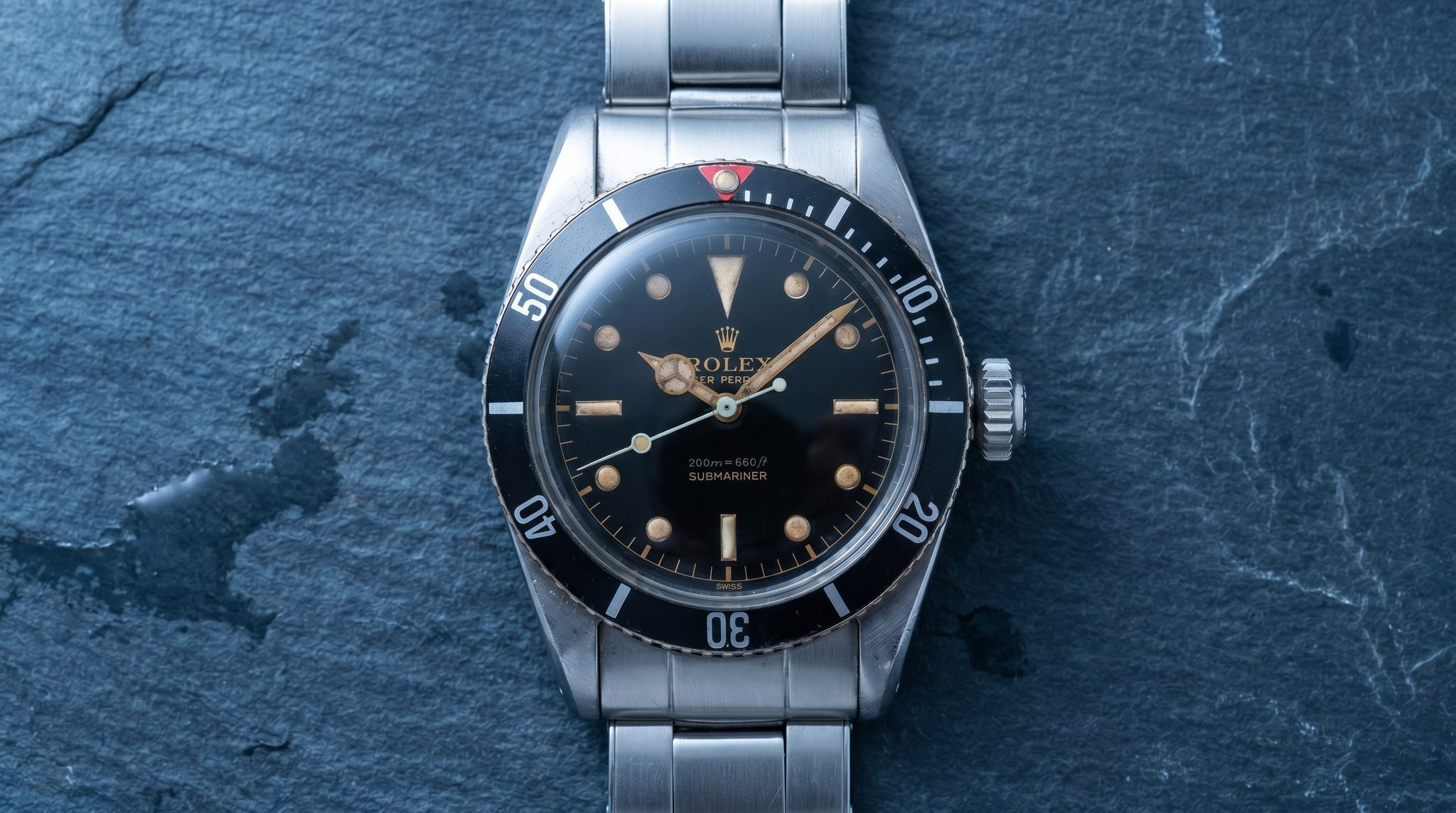
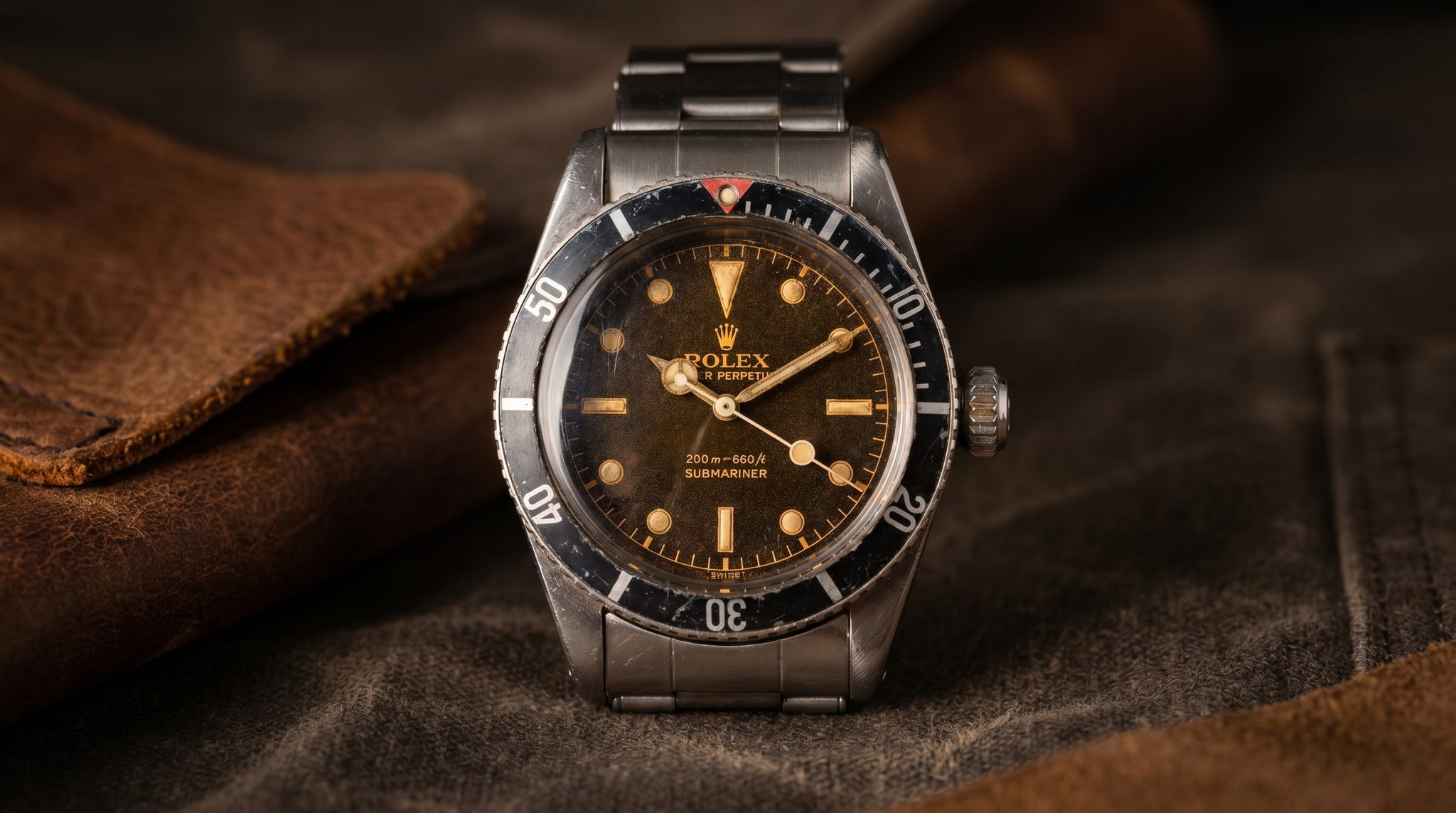
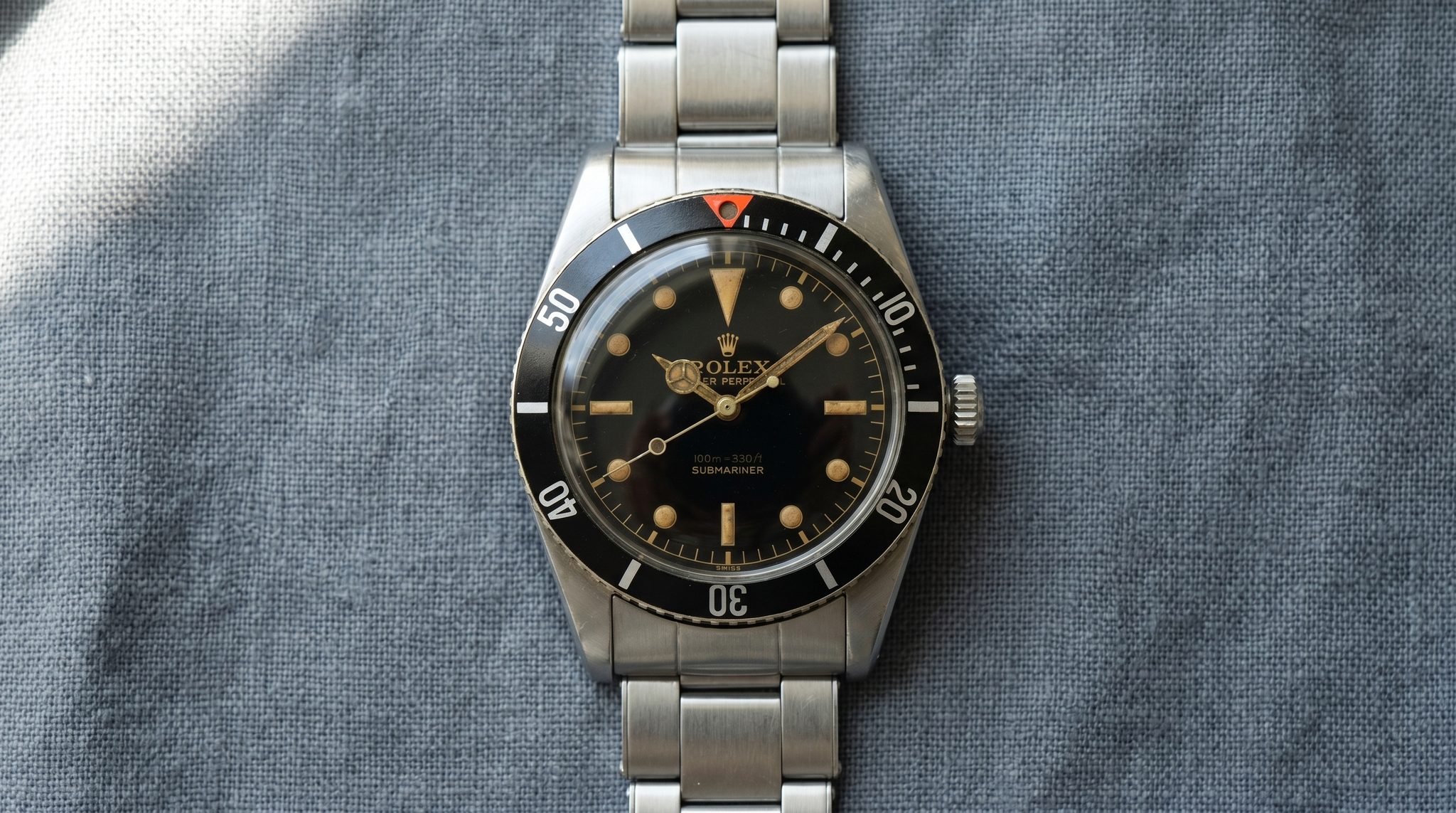
The 5512 makes sense when framed by the watches around it. The 5508 represents the pre-guard Submariner, smaller and typically non-chronometer. The 5513 is the 5512’s closest day-to-day sibling: the same guarded, 40 mm steel Submariner architecture, but positioned as the non-chronometer alternative with the familiar two-line dial. When the 5512 winds down, the date-equipped 1680 is often described as taking over the role of Rolex’s certified steel Submariner, even though the added date window and cyclops fundamentally change the look.
This reference 5512 Rolex · focal c. 1959–1978 | ||||
|---|---|---|---|---|
| Production | c. 1957/58–1962 | c. 1959–1978 | 1962–1989 | c. 1967–1979 |
| Case | Stainless steel | Stainless steel | Stainless steel | Stainless steel |
| Diameter | ~38 mm | 40 mm | 40 mm | 40 mm |
| Crystal | Acrylic (plexiglass) | Acrylic (plexiglass) | Acrylic (plexiglass) | Acrylic (cyclops) |
| Depth rating | 100 m | 200 m / 660 ft | 200 m / 660 ft | 200 m / 660 ft |
| Movement | Cal. 1530 (non-chronometer) | Cal. 1530 → 1560 → 1570 | Cal. 1530, then 1520 | Cal. 1575 |
| Chronometer | No | Yes (most); early no | No | Yes |
| Dial | Gloss gilt (common) | Gilt → matte | 2-line (gilt → matte) | “Submariner” in red (early) |
| Lume | Radium | Radium → tritium | Radium → tritium | Tritium |
Nine dial generations across the run
The earliest Submariner 5512 cases are memorable before the dial is even read. Square crown guards sit beside the crown like blunt shoulders with little taper, a profile that looks almost architectural compared with later guards. Examples from this short window are typically paired with the earliest glossy gilt dials, often with the chapter-ring minute track, and the simplest radium-era signing at 6 o’clock reads “SWISS.”
What to check before buying a 5512
Buying a Submariner 5512 is mostly a test of whether the watch tells one story. Because crown-guard shape, dial construction, depth-rating order, and lume signature each change on their own timelines, many watches look convincing until one detail contradicts another. The strongest examples show period alignment across case geometry, dial type, depth text, and the “SWISS” or tritium signature at 6 o’clock.
Condition matters as much as configuration. On early crown-guard cases especially, heavy polishing can erase the sharp transitions that make square and pointed guards readable. Likewise, the most appealing dials tend to be the ones whose lume and hands age together, without obvious rework.
In practice, the 5512 is bought for two different experiences. Early gilt and chapter-ring watches are collected as early Submariners with visible experimentation, and prices reflect their scarcity. Later matte examples are often the more straightforward way into an original, chronometer-era acrylic-crystal Submariner, and they reward careful selection rather than chasing the rarest name. Either way, the pleasure is the same: a reference whose history is written on the watch, not just on the paperwork.
Rolex Submariner 5512 for sale
Indicative market value from recent dealer, auction, and Grey Market sales: median ≈ $16,500, with a typical $10,250–$24,000 range across 151 comparable sales (updated this week).
Each point is a recent dealer or auction sale, banded to an indicative figure. The range shown is not a valuation.
Adjacent in the Submariner family
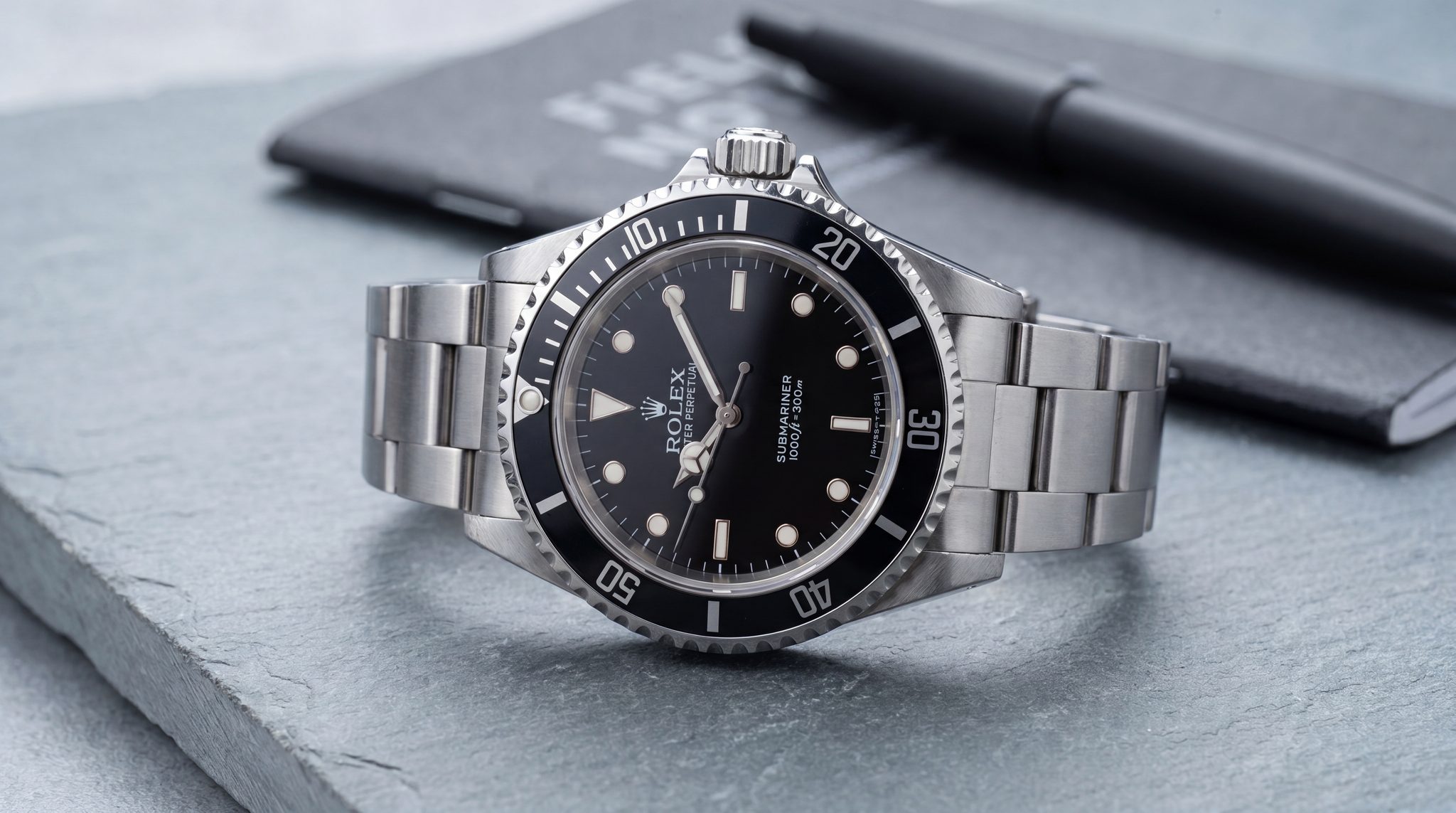
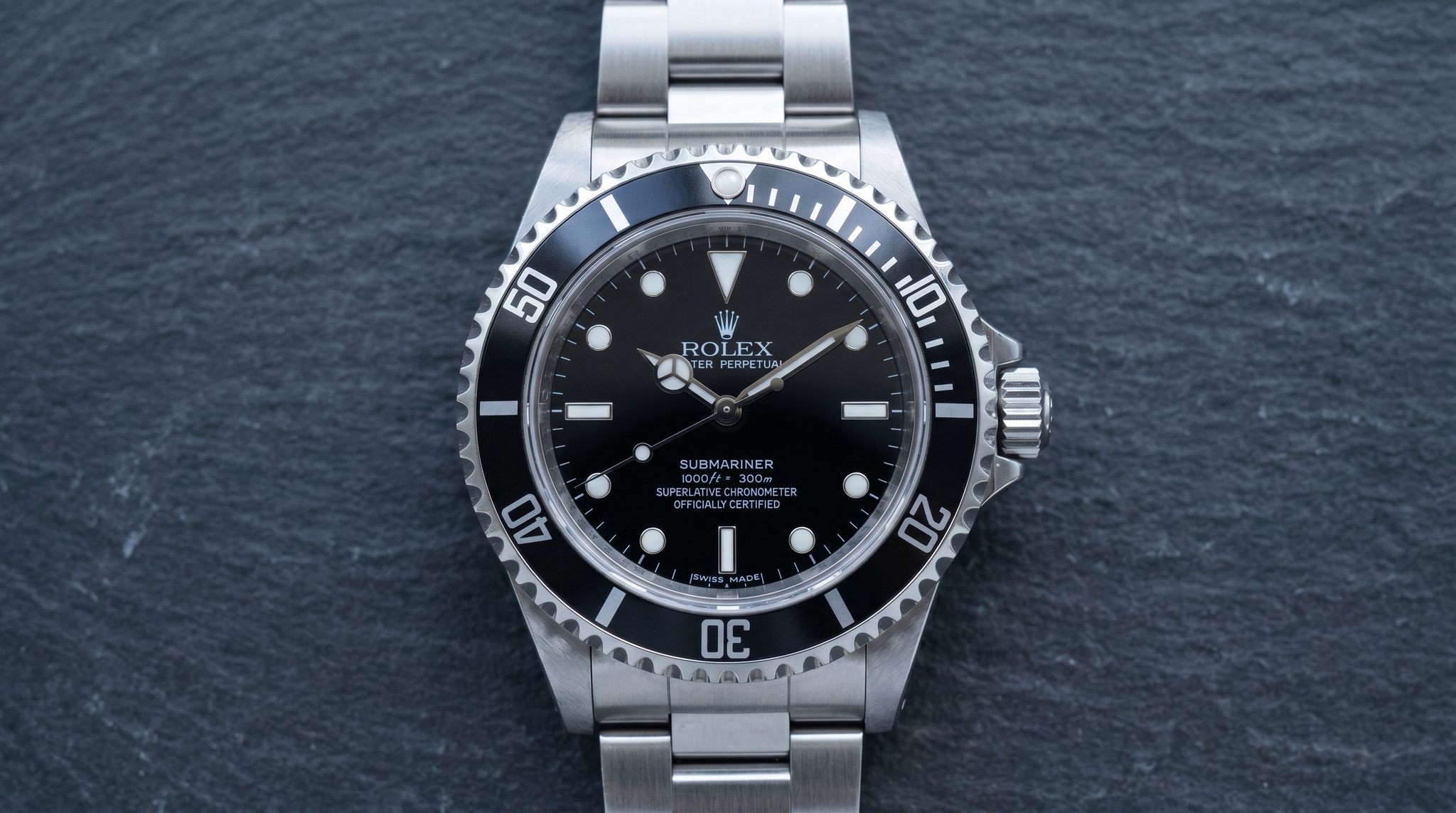
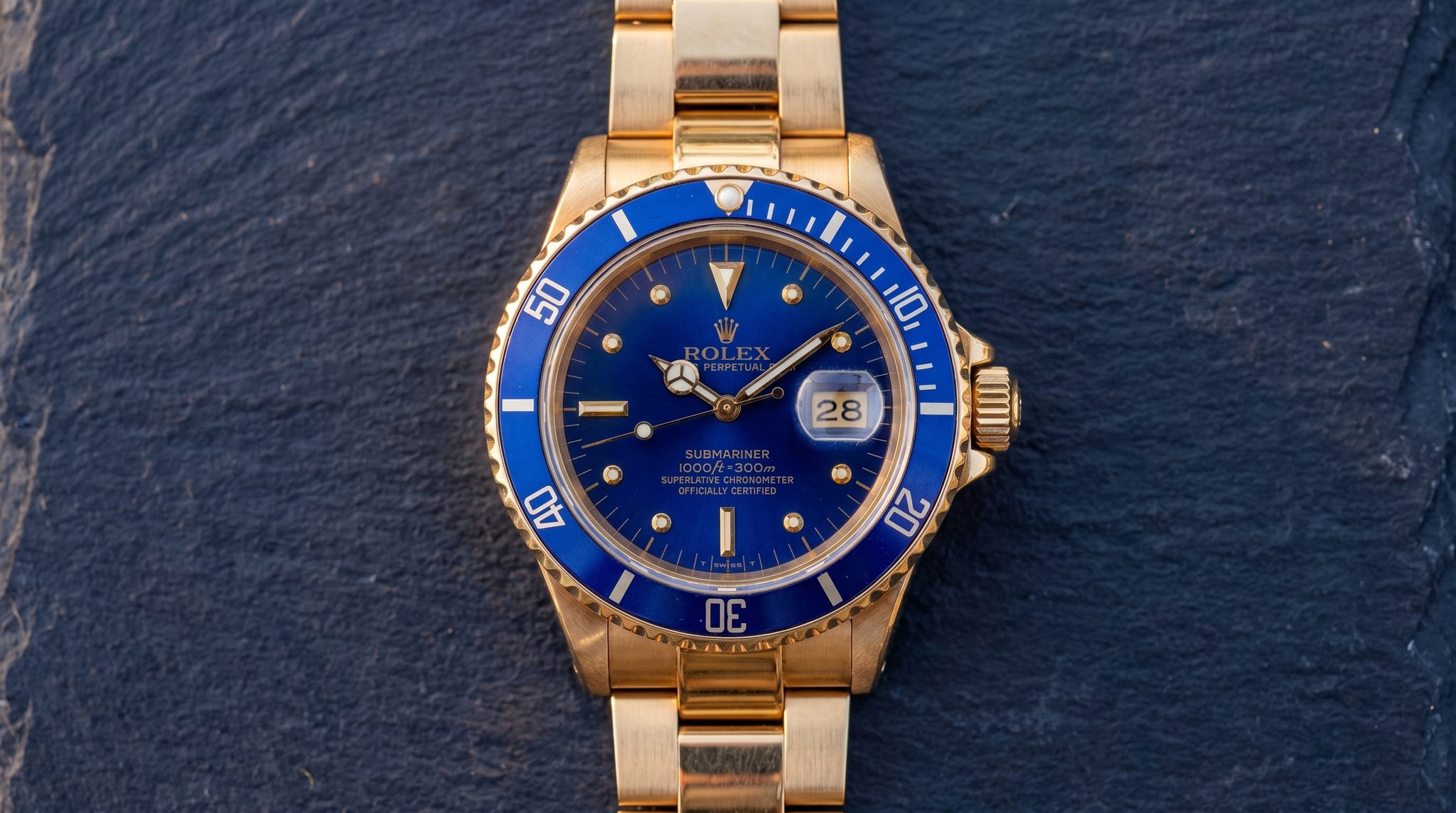
Common questions about the 5512
The Submariner 5512 was introduced in 1959 and is generally documented as ending in the late 1970s. Many references place the end around 1978–1979, while some extend the run toward 1980, so the careful form is c. 1959–1978, with some sources extending the run toward 1980.
- What To Know About The Rolex Submariner Reference 5512windvintage.com
- Vintage Submariners: Reference 5512 and 5513bobswatches.com
- Vintage Series: Rolex Submariner 5512grayandsons.com
Show 7 more
- The Classic Vintage Submariner, The Reference 5512 and 5513monochrome-watches.com
- The Complete Rolex Submariner Collectors Guiderolexpassionmarket.com
- Rolex Submariner 5512 Watcheschrono24.com
- 1966 Rolex Submariner (Ref. 5512) "Meters First"craftandtailored.com
- Single-Owner Rolex Submariner 'Explorer' Dial Ref. 5512 Sells for Over $250,000hodinkee.com
- Reference: 5512bezelbase.org
- Rolex Submariner Ref. 1680 'Red' Reference 1680, A Stainless Steelsothebys.com