

Rolex Submariner 6538
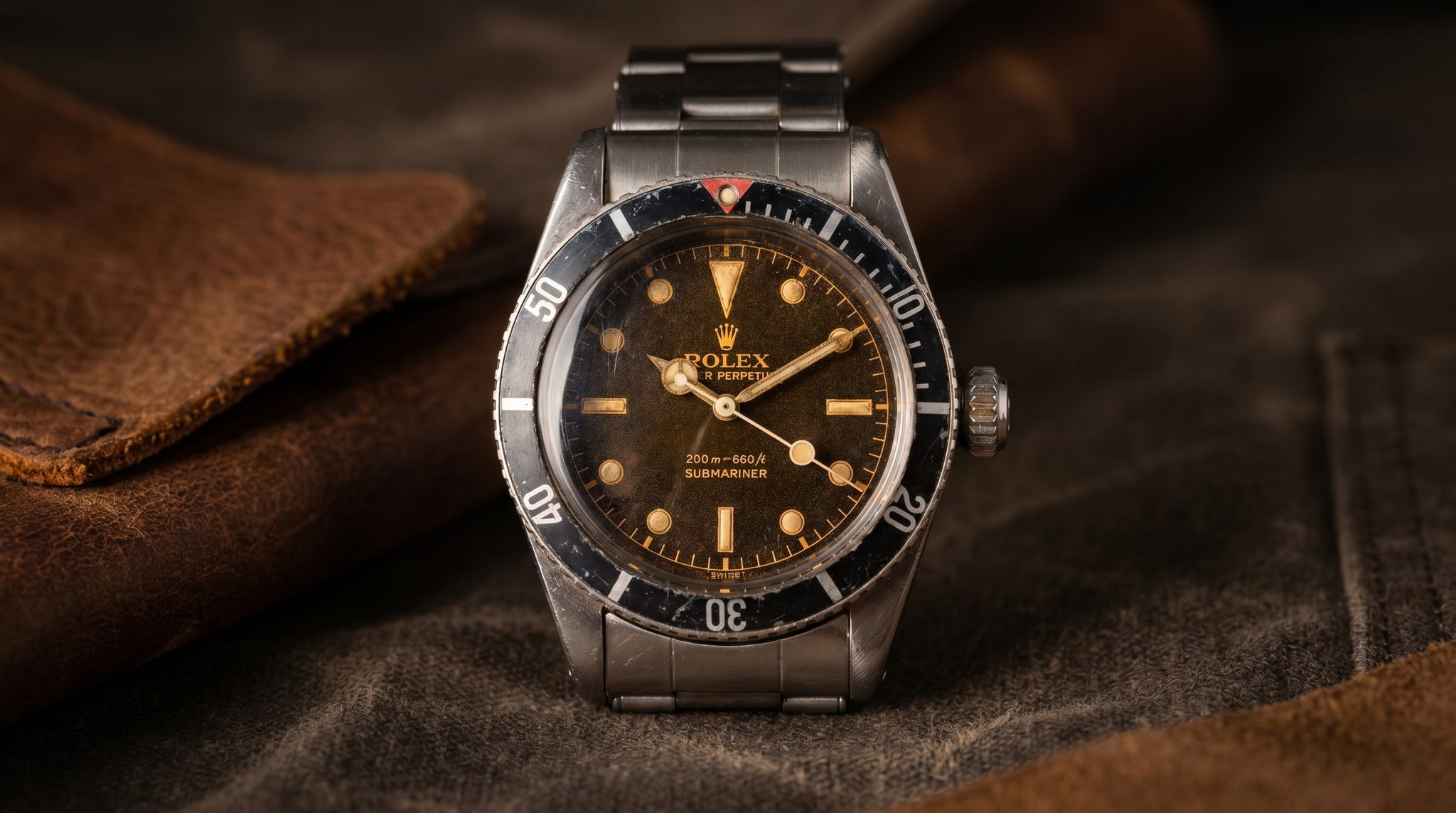
Rolex Submariner ref. 6538 is the mid-1950s 200 m “Big Crown” whose red-depth dials, two- vs four-line text, and period insert styles define how the reference is identified and valued.
- Production
- c. 1955–1959
- Case
- Stainless steel
- Diameter
- 37.5 mm
- Crown
- 8 mm Big Crown
- Guards
- None
- Bezel
- Bi-directional, aluminum
- Crystal
- Acrylic (plexi)
- Depth
- 200 m / 660 ft
- Dial
- Gloss gilt (var.)
- Movement
- Cal. 1030 (18,000 vph)
- Chronometer
- Offered (2- vs 4-line)
- Lume
- Radium
Rolex Submariner ref. 6538 is the watch where a fixed, repeatable core meets a surprisingly busy surface, and that tension is exactly why collectors obsess over it. One vivid tell sits right at the start: a tiny run of early dials prints the depth rating in red, turning an otherwise gilt, mirror-gloss dial into the so-called “red depth” 6538.
Underneath those outward variations, the reference itself is straightforward and consistent. Documented across approximately 1955 through 1959, the 6538 is a no-date, no-crown-guard Submariner rated to 200 m, built around an exposed 8 mm “Big Crown” and powered by Rolex’s in-house automatic caliber 1030.
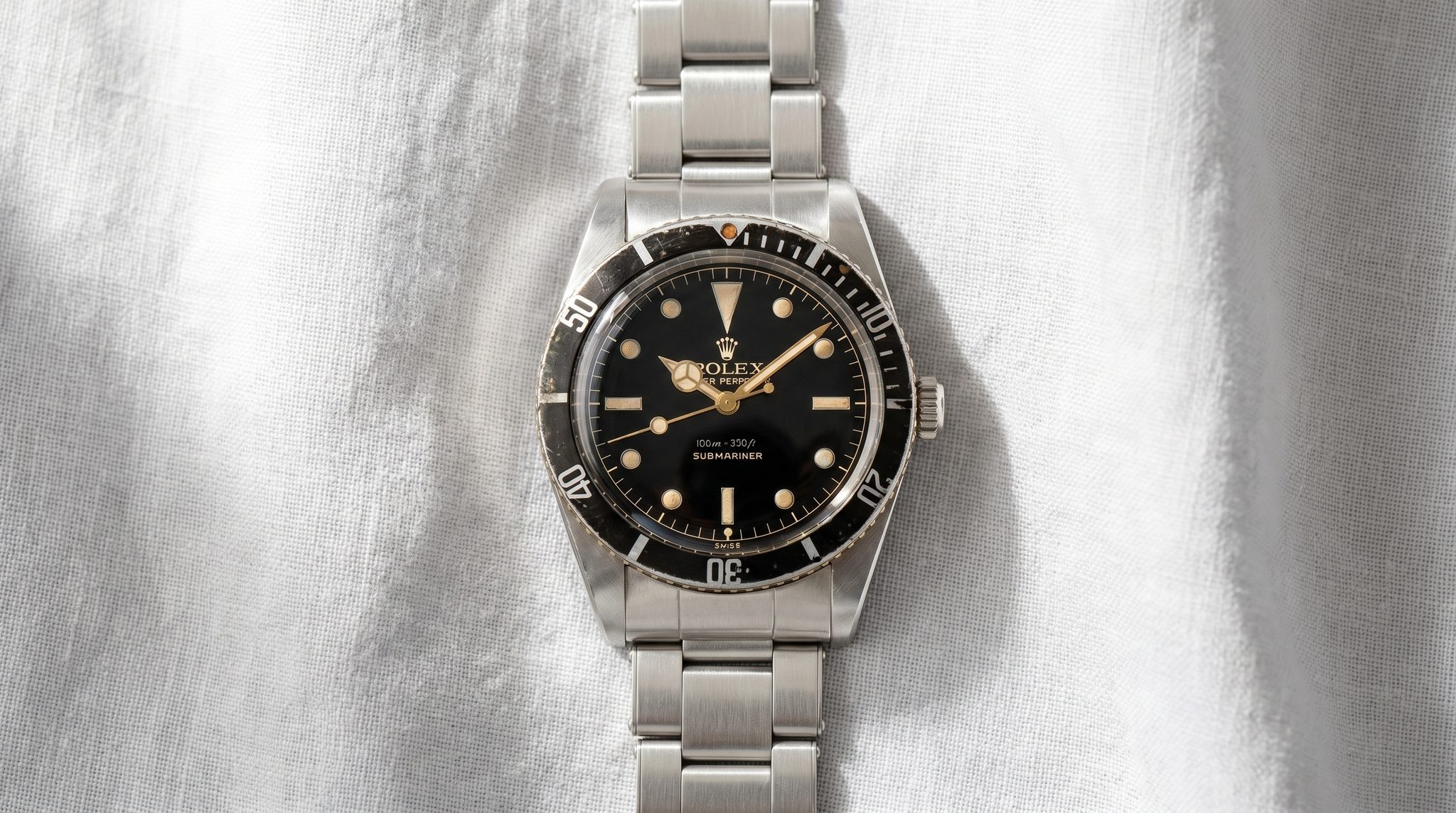
What makes a particular 6538 legible, and what most often separates a coherent watch from a parts-combination, is how independent traits overlap. Rolex offered both non-chronometer and chronometer-certified executions, which show themselves as simpler two-line dials versus the four-line stack that adds “Officially Certified Chronometer.” Separately, bezel inserts changed on their own schedule, including one insert style documented within a narrow third-quarter 1957 serial window. By late 1959, the first crown-guard Submariner, ref. 5512, enters production, and the exposed-crown silhouette of the 6538 becomes a closed chapter in the line’s evolution.
“On the 6538, dial text, early red-depth printing, and period bezel-insert styles are the clearest external clues used to describe originality and desirability.”
6538 across c. 1955–1959
The 6538 sits in the mid-1950s period when Rolex was still iterating quickly on what a professional diving watch should look like, but the reference itself keeps a clear identity throughout its run. Across documented examples from roughly 1955 to 1959, the essentials stay the same: a compact steel Oyster case without crown guards, a prominent 8 mm screw-down crown, a bidirectional timing bezel with an aluminum insert, and a 200 m depth rating. Inside is Rolex’s in-house caliber 1030, a 25-jewel automatic beating at 18,000 vph, and notably without hacking seconds.
Where the 6538 becomes a collector’s watch is in the details Rolex changed without changing the reference number. The earliest dials can announce themselves with red depth printing on an otherwise gilt-gloss dial, a rare flourish that anchors the beginning of the production story. Chronometer certification is a separate axis entirely: some dials add the “Officially Certified Chronometer” text in the four-line layout, while other watches retain the simpler non-chronometer text, and the two executions overlap rather than forming a clean before-and-after split.
The bezel adds a second, independent track. Wind Vintage documents one insert style tied to a narrow third-quarter 1957 serial range, while Sotheby’s describes a late fourth-series block (late 1958 to 1959) around serials 426,000 to 449,300. Taken together, the record shows an early Submariner that already looks like an archetype on the wrist, yet was still being edited in real time at the level collectors now treat as decisive. By late 1959, ref. 5512 enters production with crown guards, and the 6538’s exposed-crown profile becomes a specific, time-bound look rather than the future of the line.
- c. 1955IntroducedNo guards, 8 mm crown
- c. 1955 – 1956Red depth dialsRed “200m = 660ft”
- 1957Insert window306xxx–307xxx serials
- c. late 1958 – 1959Fourth seriesSerial ~426k–449.3k
- c. 1959DiscontinuedCrown guards appear
6538 against its neighbours
The 6538 reads most clearly when set between the first 200 m Big Crown idea and the first crown-guard case. Ref. 6200 shows the earlier, more experimental expression of a 200 m Submariner with a big crown, while ref. 5512 shows what Rolex adopted next: a larger 40 mm case with crown guards and a new movement family that carried the Submariner forward.
This reference 6538 Rolex · focal c. 1955–1959 | ||||
|---|---|---|---|---|
| Production | c. 1954–1956 | 1955 only / 1955–1959 | c. 1955–1959 | c. 1959–1978 |
| Case | Stainless steel | Stainless steel | Stainless steel | Stainless steel |
| Diameter | ~37–38 mm | ~37 mm | 37.5 mm | 40 mm |
| Crystal | Acrylic (Plexiglas) | Domed acrylic | Acrylic (plexi) | Acrylic (Plexiglass) |
| Depth | 200 m | 100 m | 200 m / 660 ft | 200 m |
| Bezel | Bi-directional, 60-unit | Rotating, black insert | Bi-directional, aluminum | Rotating 60-min bezel |
| Movement | Cal. A296 | Cal. 1030 | Cal. 1030 (18,000 vph) | Cal. 1530 → 1560 → 1570 |
| Chronometer | Yes | No | Offered (2- vs 4-line) | Yes |
| Guards | None | None | None | Yes |
Five dial generations across the run
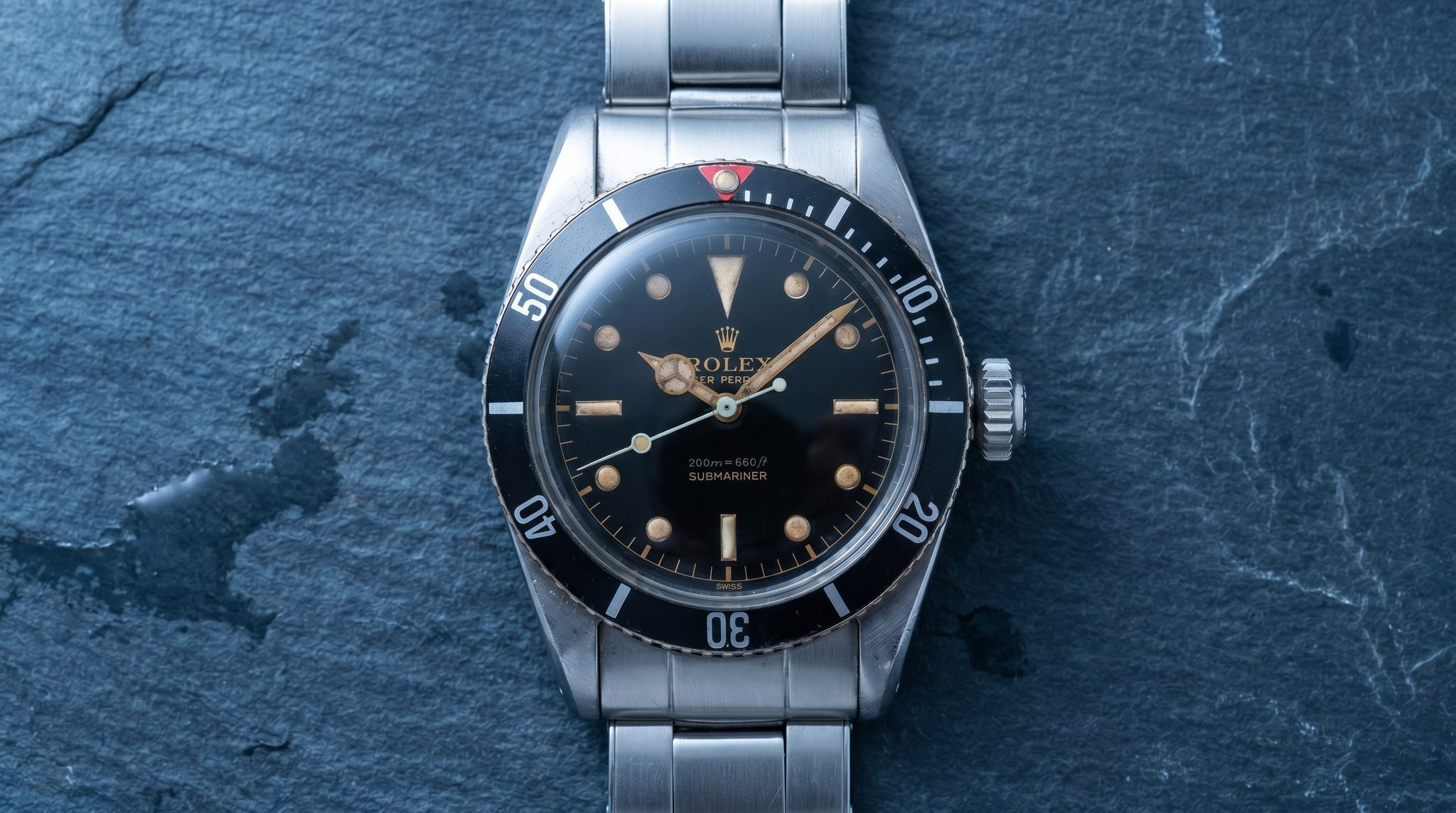
The earliest, most instantly recognizable 6538 dial family is the red-depth gilt. At arm’s length it still reads as a classic glossy black, gilt-printed Submariner, but up close the depth line breaks the gold-on-black rhythm with a red “200m = 660ft.” Corrado Mattarelli documents a 1955 example with this configuration, and Blackbird Watch Manual characterizes the red-depth printing as the earliest and rarest 6538 dial variation.
It helps to treat that red line as exactly what it is: a printing choice, not a promise that everything else on the watch follows a single early template. Chronometer text, bezel insert style, and the smaller typography differences that collectors debate all run on separate tracks, which is why the best examples feel internally consistent in condition and era rather than simply “early.”
What to check before buying a 6538
Buying a Rolex Submariner 6538 is rarely about finding the “right year” and more about finding the right agreement between parts. The reference was produced for only a few years and yet contains multiple independent variables, including early red-depth printing, non-chronometer versus chronometer-text dials, and bezel inserts that evolved on a separate timeline.
Those same components are also the ones most exposed to later intervention. Wind Vintage notes that many four-line 6538s have been relumed, and it also observes that watches from the narrow third-quarter 1957 serial window often carry replacement inserts. The safest purchases tend to be the watches whose dial surface, lume, bezel insert, crown, and case condition look like they have lived together for decades, even if that means choosing a more common two-line configuration over a rarer but compromised example.
In practical terms, the 6538 experience is defined by its documented dimensions and hardware: a compact 37.5 mm case and a prominent 8 mm crown, paired with an acrylic crystal and a bidirectional aluminum bezel. It is unmistakably an early Submariner, but the day-to-day satisfaction comes from originality and condition, because these watches are old enough that the line between honest wear and later correction work is where most of the value lives.
Rolex Submariner 6538 for sale
Indicative market value from recent dealer, auction, and Grey Market sales: median ≈ $20,500, with a typical $19,250–$26,000 range across 5 comparable sales (updated this week).
Each point is a recent dealer or auction sale, banded to an indicative figure. The range shown is not a valuation.
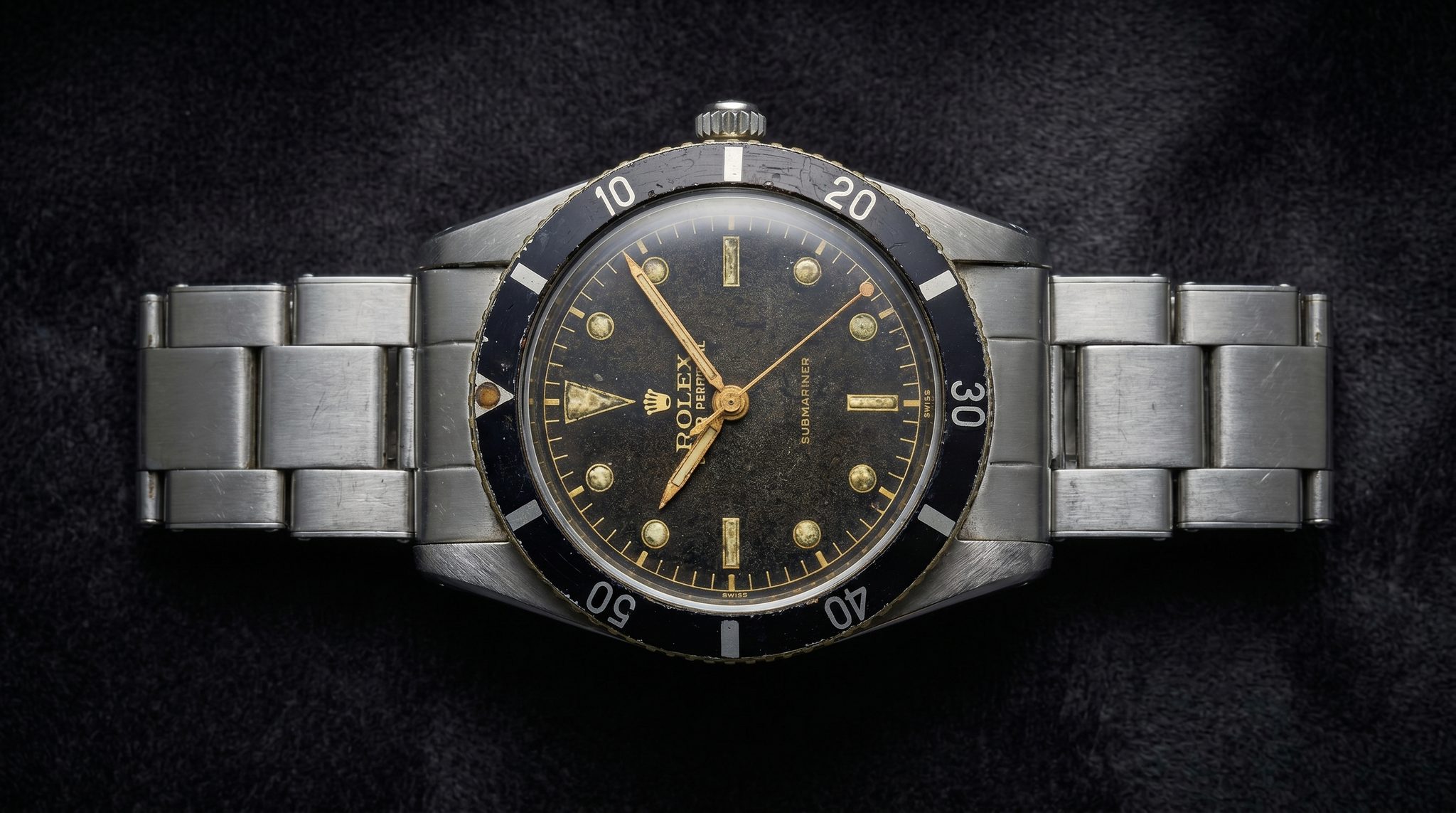
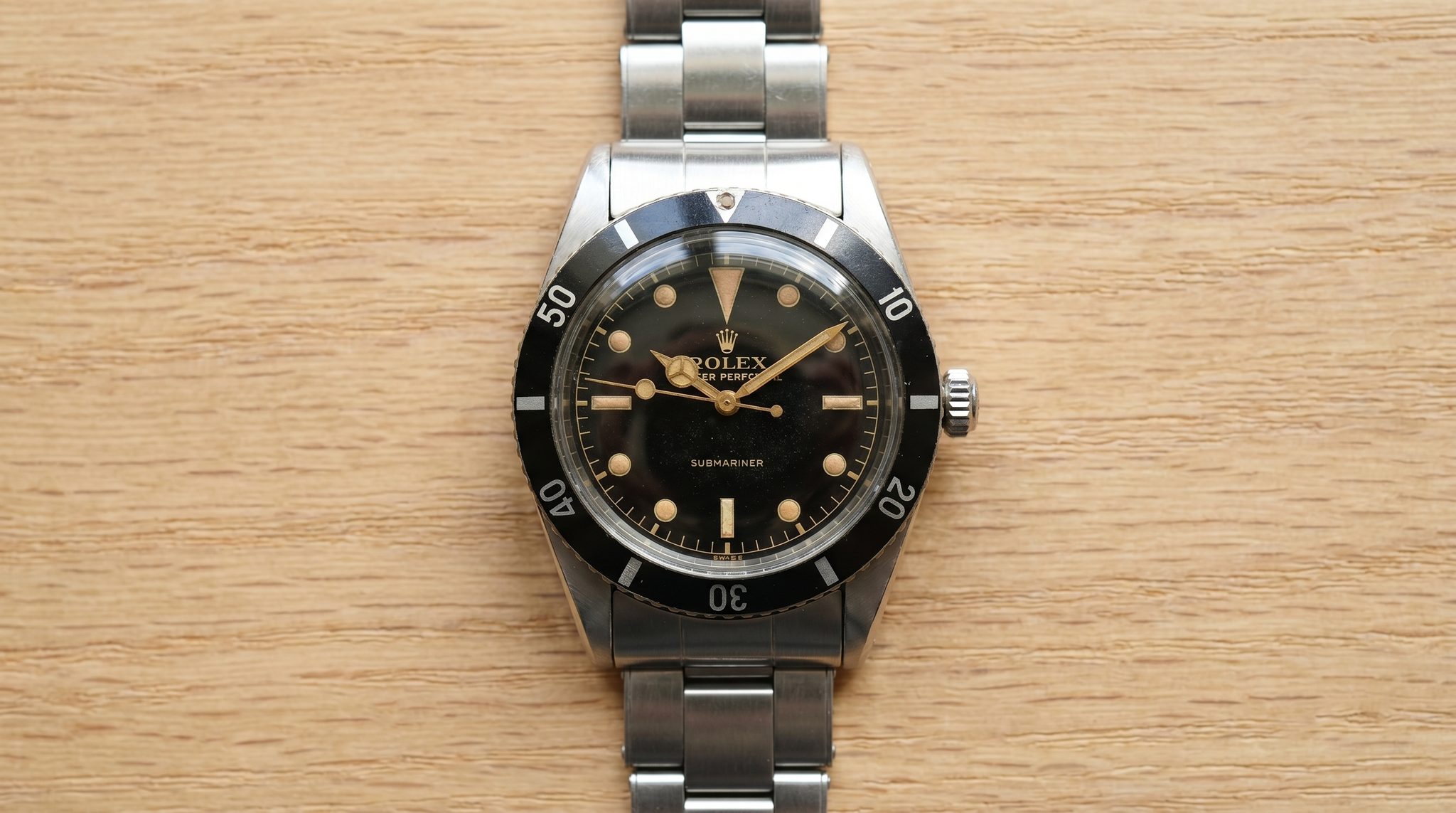
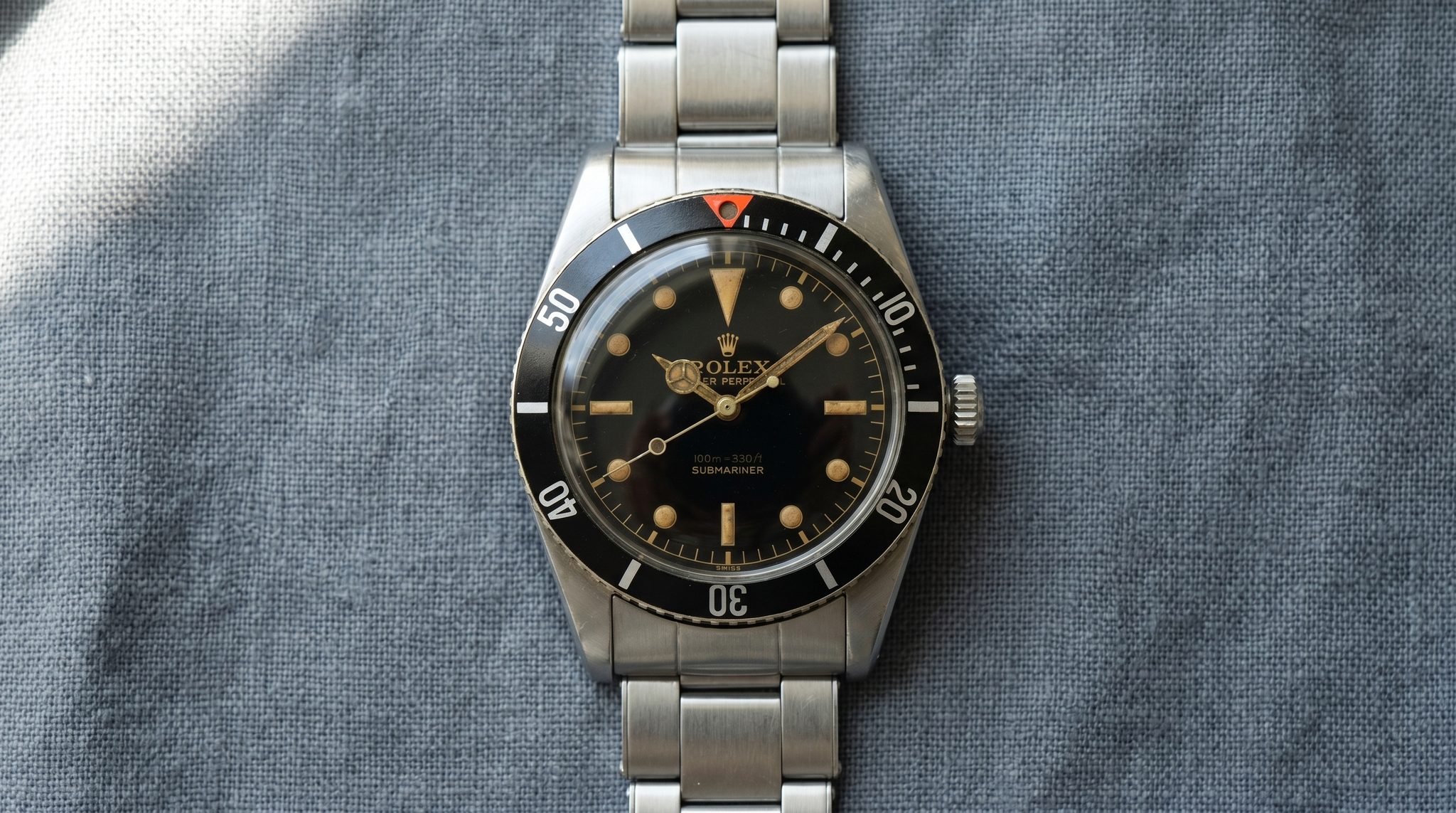
Adjacent in the Submariner family
Common questions about the 6538
Submariner 6538 production years are best stated as approximately 1955 to 1959, with documented examples dated across that interval.
- The Red Depth Big Crown Submariner ref. 6538, Corrado Mattarellicorradomattarelli.com
- Rolex Submariner 6538 aka Submariner James Bond, 41Watch41watch.com
- Rolex Submariner James Bond, Chrono24chrono24.com
Show 16 more
- Rolex Submariner 6538: Complete Buying Guide, Bob's Watchesbobswatches.com
- Unpolished 1957 Rolex Submariner ref. 6538 Big Crown, Craft & Tailoredcraftandtailored.com
- Rolex "James Bond" / "Big Crown" Submariner Reference 6538, Wind Vintagewindvintage.com
- Rolex Submariner ref. 6538 "James Bond" (1959), Watches of Distinctionwatchesofdistinction.com
- The Rolex Submariner ref. 6538 from Dr. No, BeckerTimebeckertime.com
- Rolex Submariner 6538 (Cool Watches in Film), YouTubeyoutube.com
- Rolex Submariner ref. 6538, Sotheby’s (fourth-series context)sothebys.com
- Rolex Submariner ref. 6200 lot description (A.296 movement, bezel), Christie’schristies.com
- Rolex Submariner ref. 6200 crystal (Plexiglas), Bukowskisbukowskis.com
- Rolex Submariner ref. 5512 crystal (Plexiglass), HODINKEE Shopshop.hodinkee.com
- Rolex Submariner ref. 6536/1 movement (cal. 1030), Sotheby’ssothebys.com
- Rolex Submariner ref. 6536/1 movement (1030) example, Christie’schristies.com
- Rolex Submariner ref. 6536 chronometer status note, Hodinkee (Reference Points)hodinkee.com
- Rolex Submariner ref. 6536 crystal (domed acrylic) summary, BezelBasebezelbase.org
- Rolex Submariner ref. 6536 bezel description (rotating, black insert), Christie’schristies.com
- Rolex Submariner ref. 6536 production claim (1955 only), Christie’schristies.com