

Rolex Submariner 14060M
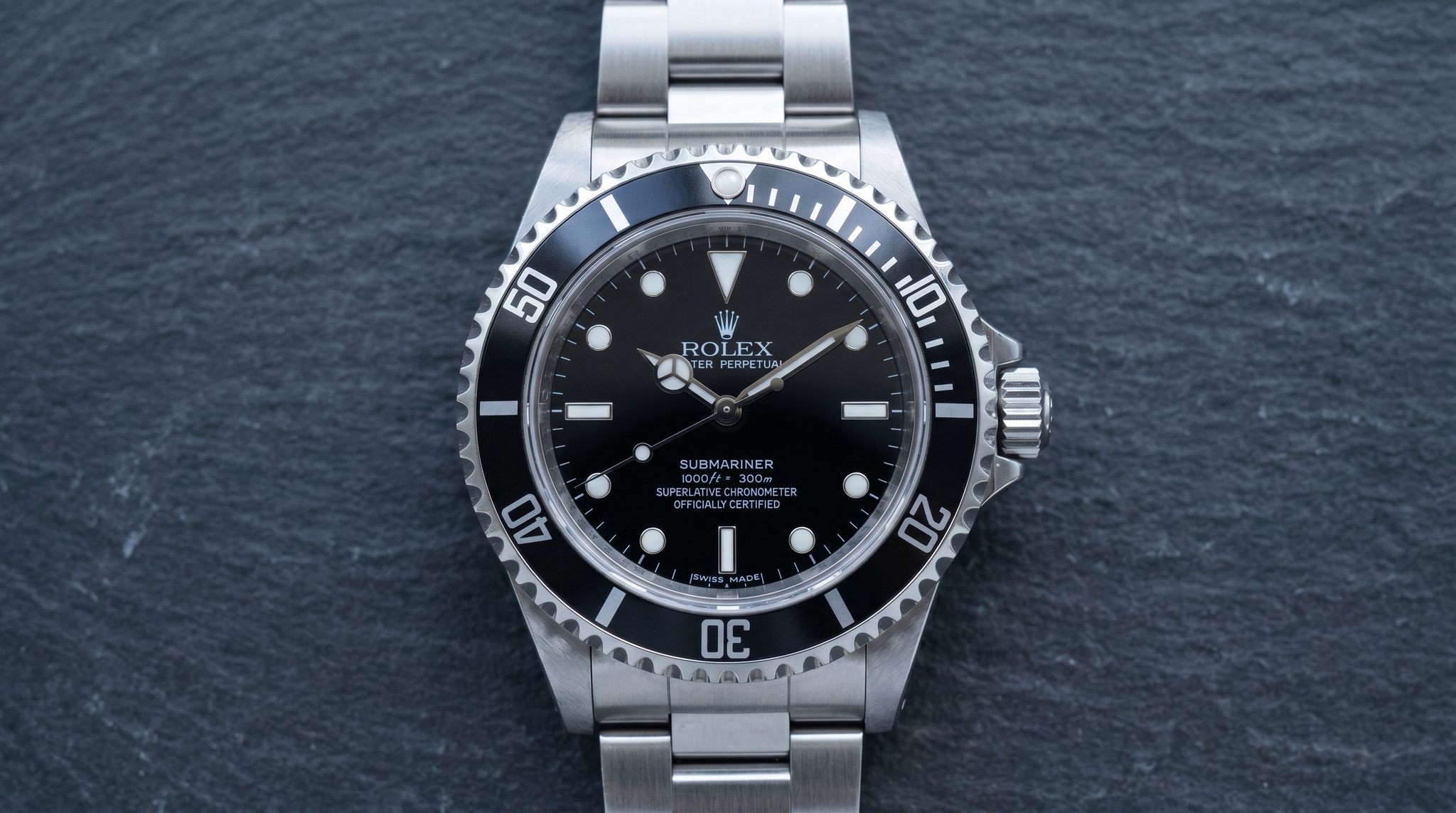
The no-date Submariner that quietly turns modern while still wearing an aluminum insert and drilled lugs.
- Production
- c. 1999–2012
- Case
- 904L stainless steel
- Diameter
- 39.5–40 mm
- Thickness
- ~12 mm
- Lug-to-lug
- ~47.3–48 mm
- Bezel
- Unidirectional timing
- Insert
- Aluminum (black)
- Crystal
- Flat sapphire
- Water res.
- 300 m / 1,000 ft
- Movement
- Cal. 3130
- Power reserve
- 48h
- Lume
- Super-LumiNova
The Rolex Submariner 14060M is the no-date Submariner that changes its identity without changing its silhouette: within a single reference, the dial goes from the spare two-line layout to the four-line chronometer block while the watch keeps its drilled lugs and aluminum bezel insert.
That combination is why collectors treat the 14060M as a hinge in the Submariner story. It carries the cal. 3130 time-only architecture (28,800 vph with roughly 48 hours of reserve) in the classic 40 mm class case, but it also accumulates the visible cues that define late-era Rolex sports watches, namely the COSC dial text on later examples and rehaut engraving on the last ones. The result is a reference whose details matter because they are genuinely datable, and because they are not synchronized. A clean two-line dial tells one part of the story, a four-line dial tells another, and the inner rehaut can tell a third.
Physically, it sits in the familiar proportions of the five-digit Submariner: approximately 39.5–40 mm across, about 12 mm thick, and around 47.3–48 mm lug-to-lug. It is rated to 300 m and wears as a straightforward, time-only diver, with the practical upside that the defining collecting distinctions are legible at a glance once the eye knows where to look.
“A rare Submariner reference where the dial tells you exactly when you are in the run, even though the rest of the watch looks almost unchanged.”
14060M across c. 1999–2012
Rolex did not announce the 14060M as a redesign so much as a continuation with a new engine. The reference is defined first by its movement handoff: the cal. 3130 replaces the earlier cal. 3000 used in the ref. 14060, and brings the modern 31xx layout that collectors often summarize by what you would see on the bench, a full balance bridge rather than the earlier balance cock, plus a larger balance wheel and a Breguet overcoil.
From there, the reference’s most consequential changes are written on the dial. Early 14060M watches keep the spare two-line text, with only “SUBMARINER” and “1000ft = 300m” above 6 o’clock. Later, around 2007, the dial gains the familiar chronometer block, adding “Superlative Chronometer” and “Officially Certified” as two additional lines. The reason for the change is clear in the result, the watch becomes COSC-certified and is now labeled as such, but Rolex did not publish a dated cutoff and the overlap period is part of what makes real watches worth reading carefully.
A separate, later change happens not on the dial face but inside the bezel opening. Late examples adopt an engraved rehaut with repeating ROLEX text and a serial at 6 o’clock, a trait generally placed in the late 2000s for this reference. That timing matters because it means rehaut engraving does not define the “four-line” era by itself: early four-line watches exist with smooth rehauts, and the engraved rehaut belongs to the final iteration.
One small episode in the run captures the whole character of the 14060M: the short-lived “LGF” print anomaly, where the “F” in “1000ft” grows an unusually long bar. It is a microscopic detail, confined to the early four-line period around 2007–2008, but it has become a recognizable tell because it is both visible and time-bound.
Taken together, those shifts show how the 14060M sits between two ideas of the Submariner. It is built in the classic five-digit architecture of drilled lugs, stamped-clasp Oyster bracelet, and aluminum insert, yet it ends with the modern cues that Rolex would soon make standard. The reference is not a single static object across its run. It is a stable platform that gradually accumulates identifiers, which is why careful descriptions of dial text, rehaut style, and typography are more than pedantry for this model.
- c. 199914060M begins3130 movement (caseback off)
- c. 1999 – 2000S-LumiNova era“SWISS MADE” at 6 o’clock
- c. 2007COSC dialsTwo extra lines above 6
- c. 2007 – 2008LGF windowElongated F in “1000ft”
- c. late 2000sRehaut engravedROLEX engraving inside bezel
- c. 2012DiscontinuedAluminum insert ends for no-date
14060M against its neighbours
The 14060M makes the most sense when framed by its nearest neighbors: the ref. 14060 that it updates mechanically, the ref. 114060 that replaces its aluminum-bezel, drilled-lug formula with a ceramic-era case, and the contemporary ref. 16610 that shows what Rolex considered standard in the same period, a date display and chronometer dial text.
This reference 14060M Rolex · focal c. 1999–2012 | ||||
|---|---|---|---|---|
| Production | 1989–2010 | c. 1990–1999 | c. 1999–2012 | c. 2012–2020 |
| Case | 904L stainless steel | 904L stainless steel | 904L stainless steel | Oystersteel (904L) |
| Diameter | 40 mm | 40 mm | 39.5–40 mm | 40 mm |
| Crystal | Sapphire, cyclops | Flat sapphire | Flat sapphire | Sapphire |
| Bezel | Unidirectional timing | Unidirectional timing | Unidirectional timing | Cerachrom, black |
| Insert | Aluminum (black) | Aluminum (black) | Aluminum (black) | Cerachrom (black) |
| Water res. | 300 m / 1,000 ft | 300 m / 1,000 ft | 300 m / 1,000 ft | 300 m / 30 ATM |
| Movement | Cal. 3135 | Cal. 3000 | Cal. 3130 | Cal. 3130 |
| Power reserve | ~48h | ~48h | 48h | ~48h |
| Lume | Tritium → Luminova → S-LN | Tritium → S-LN | Super-LumiNova | Chromalight (blue) |
Four dial generations across the run
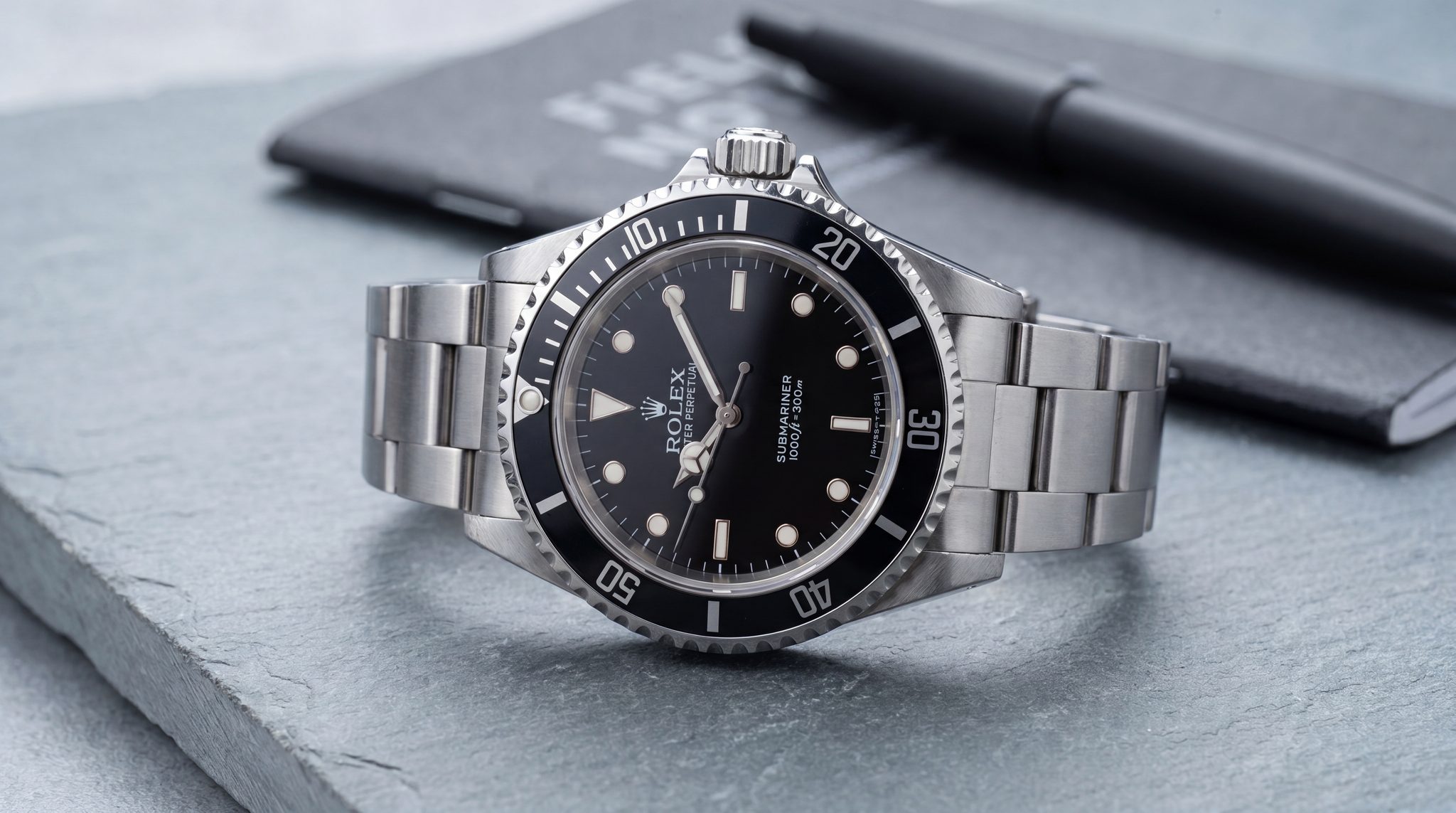
The early 14060M look is defined by what is missing. Above 6 o’clock there are only two lines, “SUBMARINER” and “1000ft = 300m,” leaving the lower half of the dial notably open compared with most modern Submariners. These watches pair that clean layout with “SWISS MADE” at 6 o’clock (Super-LumiNova) and a smooth, unengraved rehaut, so the inner bezel wall reads as plain steel rather than text.
Collectors often read this configuration as the closest modern echo of the long-running non-chronometer no-date Submariners that came before, but with the practical upgrades of a sapphire crystal, a 300 m depth rating, and the cal. 3130 movement.
What to check before buying a 14060M
The 14060M is straightforward to recognize and easy to misunderstand. Its biggest value traps come from parts that can be swapped during service, or during resale, without changing the reference on the paperwork: dials, hands, and bezel inserts can all be replaced, and over-polishing can soften the very case lines that make the five-digit Submariner look sharp.
Because the reference’s defining traits do not all change at once, a believable watch is one whose dial text, rehaut style, and overall wear pattern make sense together. A four-line dial on a watch that is otherwise presented as an earlier configuration deserves a closer look, and any claimed LGF dial should be confirmed by the typography itself rather than by description.
Most buyers end up choosing between two personalities that are both “correct” for the reference. The two-line 14060M delivers the cleanest dial of the modern sapphire era, while the later four-line watches add chronometer text and, at the end, the engraved rehaut that previews the ceramic generation. Either way, the ownership experience is the same core appeal: a time-only Submariner with 300 m water resistance and the cal. 3130, in the classic 40 mm class case that remains slim compared with what follows.
Rolex Submariner 14060M for sale
Indicative market value from recent dealer, auction, and Grey Market sales: median ≈ $7,900, with a typical $6,800–$9,900 range across 176 comparable sales (updated this week).
Each point is a recent dealer or auction sale, banded to an indicative figure. The range shown is not a valuation.
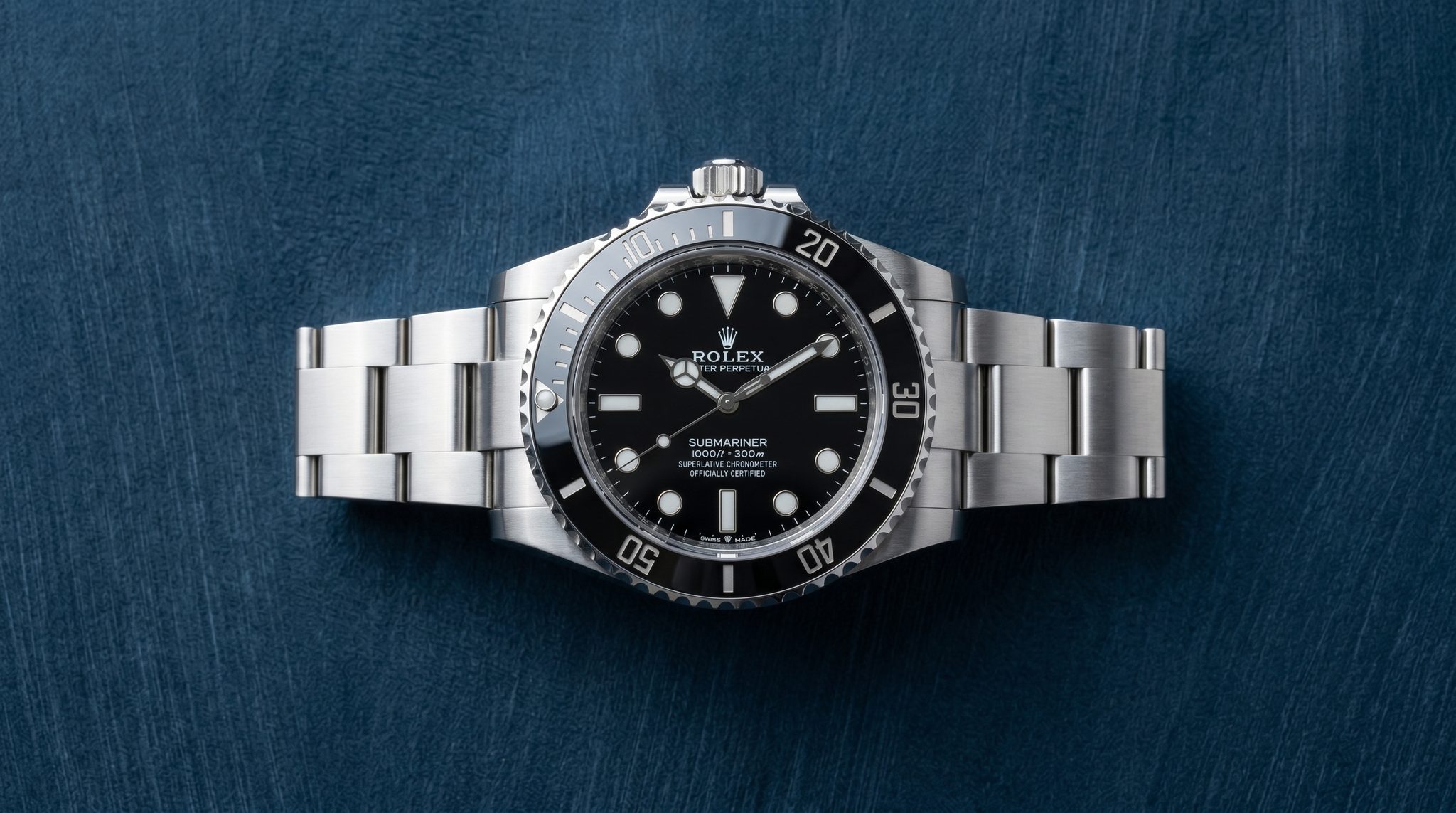
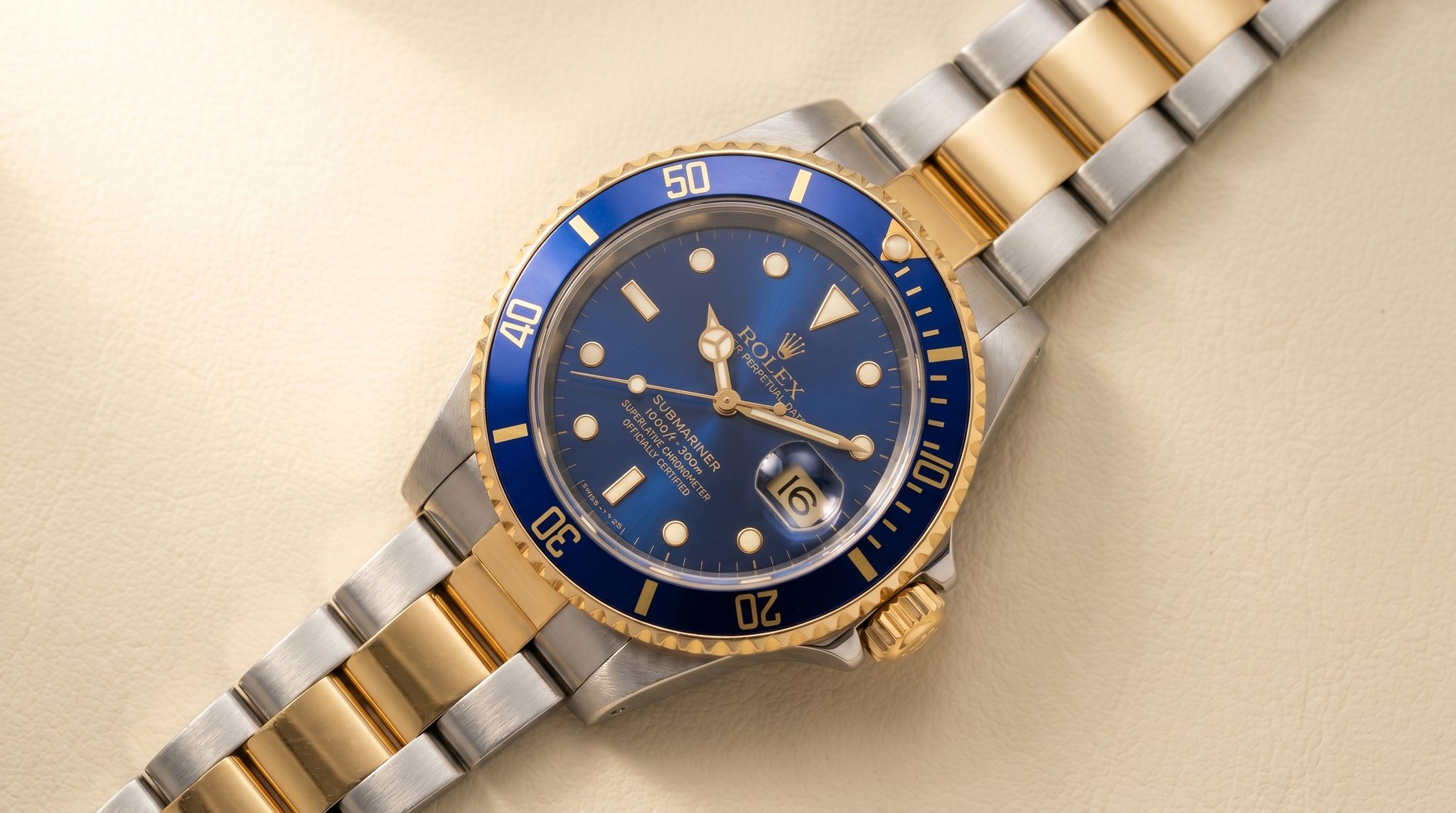
Adjacent in the Submariner family
Common questions about the 14060M
Most specialist sources place the Rolex Submariner 14060M at roughly c. 1999–2012, with documented examples commonly seen from the early 2000s through at least 2011. Rolex did not publish an official public cutoff, so the exact first and last year are discussed as approximate.
- Guide to the Rolex Submariner 14060 and 14060Mluxurybazaar.com
- The Rolex Submariner Ref. 14060craftandtailored.com
- Rolex 14060 Review: Why This Vintage Submariner Still Shinesbobswatches.com
Show 7 more
- Rolex 14060M Submariner (No Date) listings and reference overviewchrono24.com
- Rolex Submariner Ref 14060M, Boxed G277435cwwatchshop.com
- Identifying Future Classic Rolex (1990–2018 era), Part 5: Submariner 14060M and the LGF dialwatchprosite.com
- Ten Years Later, The Submariner 14060M Is Still The Rolex To Buyfratellowatches.com
- Rolex Submariner 14060m Review (video)youtube.com
- Which Rolex Submariner to BUY? 5513, 14060, 14060M, 114060 (video)youtube.com
- Considerations for a modern Submariner purchase (14060/14060M)omegaforums.net