

Rolex Submariner 16610
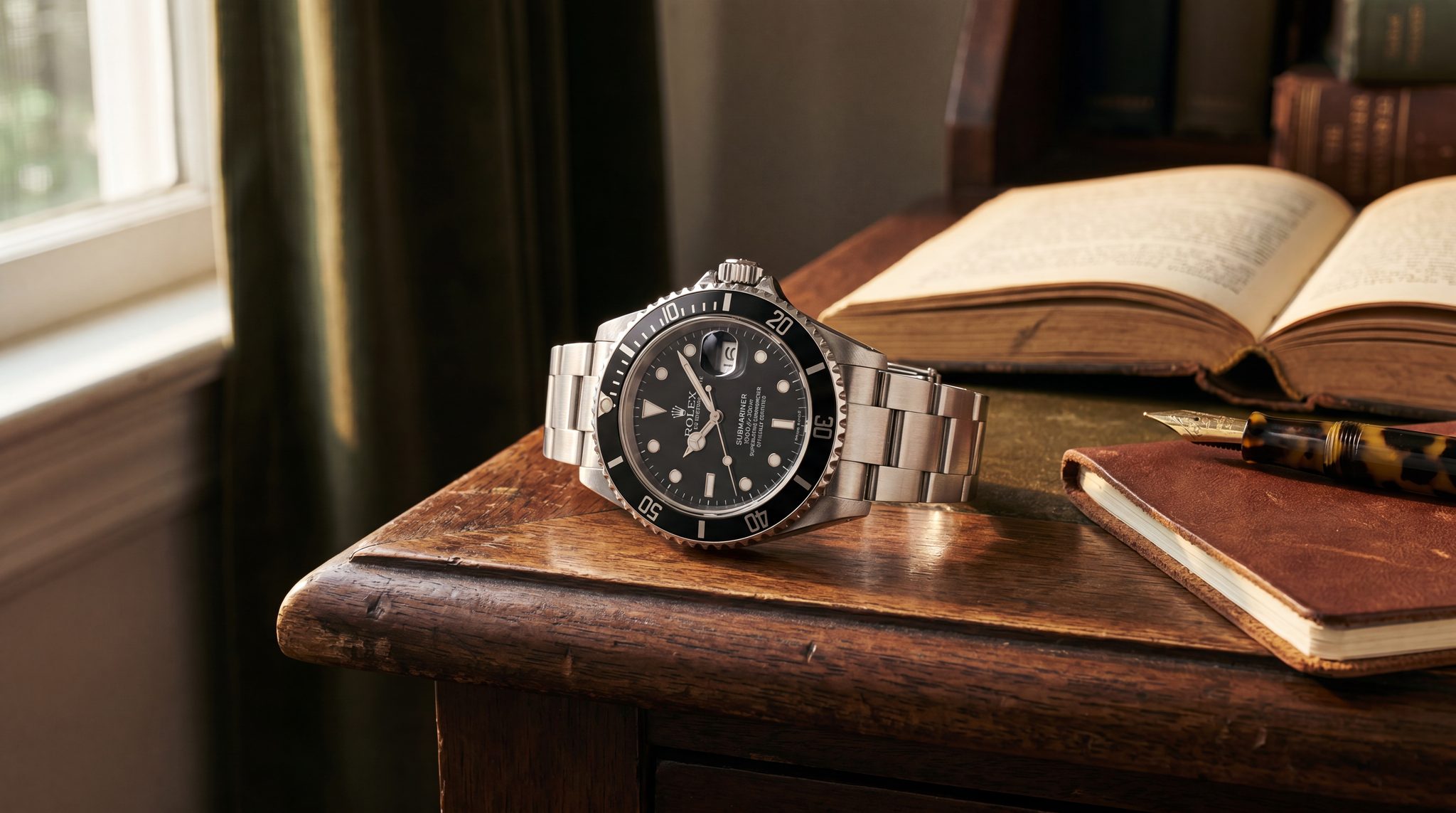
The workhorse Submariner. Twenty-one years. The last of the aluminum-bezel five-digit refs before the modern era began.
- Production
- 1989–2010
- Case material
- Stainless steel
- Case diameter
- 40mm
- Crystal
- Sapphire, cyclops
- Bezel insert
- Aluminum (black)
- Dial
- Glossy black
- Movement
- Cal. 3135 · 28,800 vph
- Lume
- Tritium → LumiNova → S-LN
- Crown guard
- Standard
- Clasp
- Oysterlock
- Water resistance
- 300m / 1,000ft
- Bracelet
- 93150 / 93250 Oyster
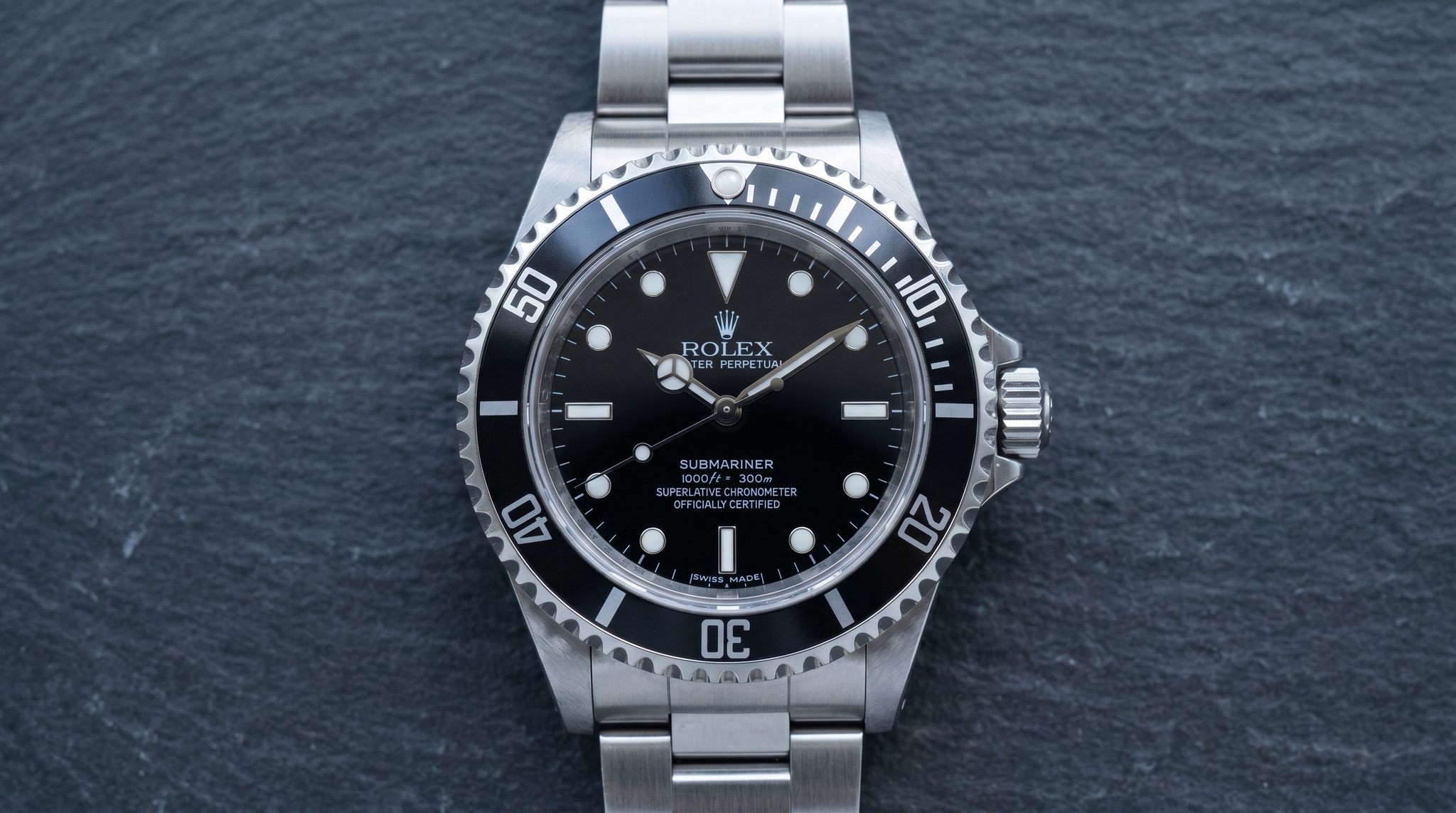
The 16610 is the workhorse Submariner: the one that most defined what people picture when they hear the word "Rolex." Produced for twenty-one years from 1989 to 2010, it bridged the eras Rolex collectors break their references into: the pre-modern five-digit period of aluminum bezels, painted dials, and visible serial numbers, and the modern six-digit period of ceramic bezels and maxi cases that began with its successor in 2010. If you bought a stainless-steel Submariner during the Clinton, Bush, or early Obama administrations, this was the watch.
Mechanically it was the first Submariner to wear the calibre 3135, Rolex's most-produced movement of the modern era, still in service today across the brand's date references. Cosmetically, the 16610 is the last Submariner whose bezel insert fades. That's what makes the surviving examples interesting: the aluminum insert ages, the tritium service-original dials patina, and no two well-worn 16610s look identical. The ceramic-era successors are perfect and immutable; the 16610 lives in time.
“No two well-worn 16610s look identical. The ceramic-era successors are perfect and immutable; the 16610 lives in time.”
16610 across 1989–2010
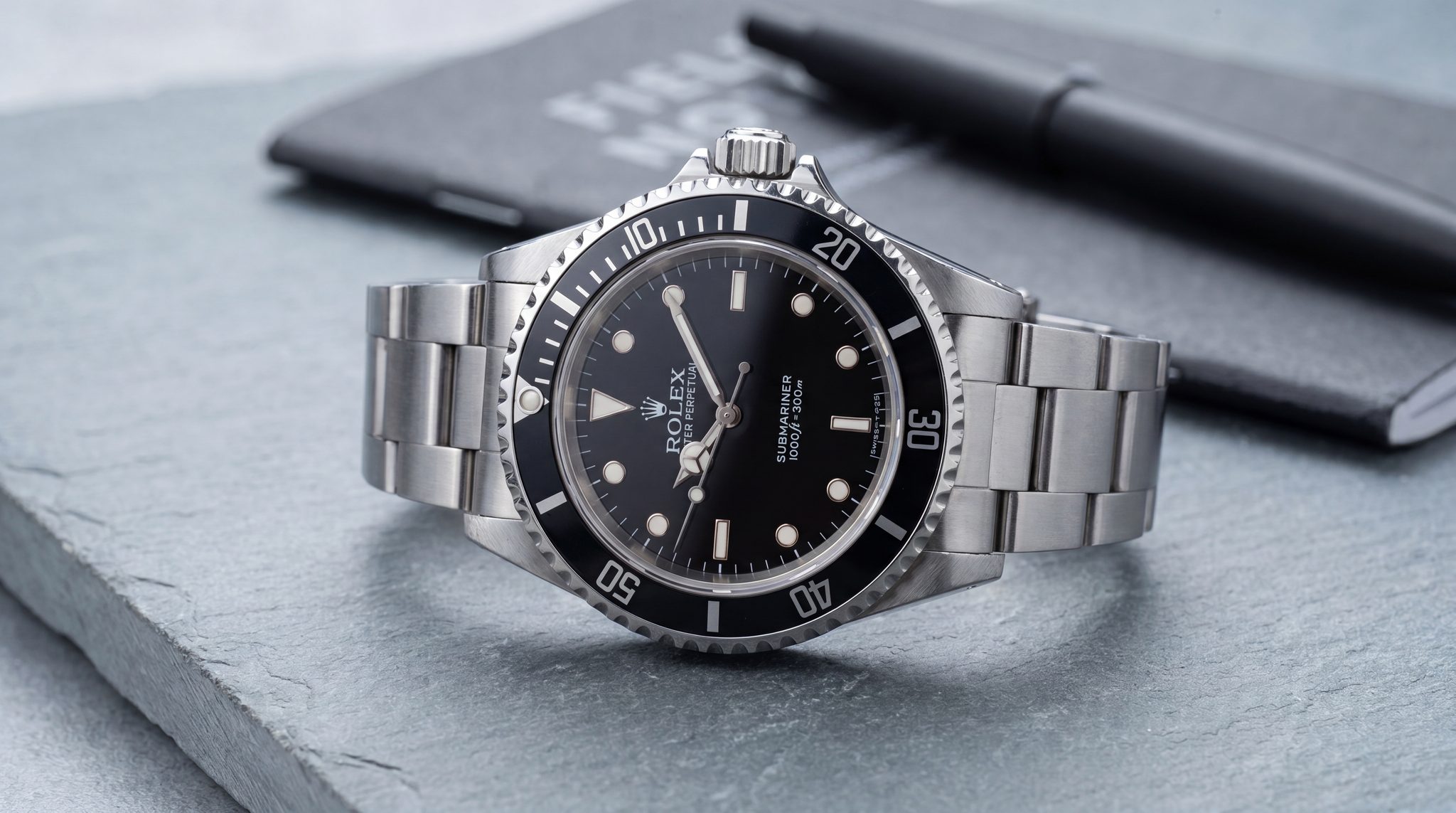
The 16610 was a refinement, not a reinvention. Its predecessor, the 16800 (introduced in 1979, and the first Submariner to wear a sapphire crystal and the 300-meter rating), already had the modern Submariner architecture. What the 16610 brought was the calibre 3135, replacing the calibre 3035 with a thicker mainplate, a larger balance wheel, and improvements to long-term accuracy and serviceability that justified Rolex's then-uncharacteristic willingness to revise a working design.
Across its twenty-one-year run, the changes were small and gradual. The dial lume material moved twice: tritium gave way to LumiNova in 1998, then Super-LumiNova around 2000. Drilled lugs, the small holes drilled through each lug to assist with bracelet removal, disappeared around 2003, a feature collectors miss. Toward the end of production, the reference was sometimes catalogued as 16610T (the T denoting "trizium"), but the underlying watch was unchanged.
- 1989IntroducedSerial-number transition from N-series
- 1998Tritium → LumiNovaDial 6 o'clock changes from "SWISS - T < 25" to "SWISS"
- c. 2000Super-LumiNovaDial marking returns to "SWISS MADE"
- c. 2003Drilled lugs endVisible absence of lug-side perforations
- c. 2003Bracelet end-linksEnd-link reference engraved on inner link
- c. 2007"16610T" sub-refPhysical specifications unchanged
- 2010DiscontinuedReplaced by reference 116610LN
16610 against its neighbours
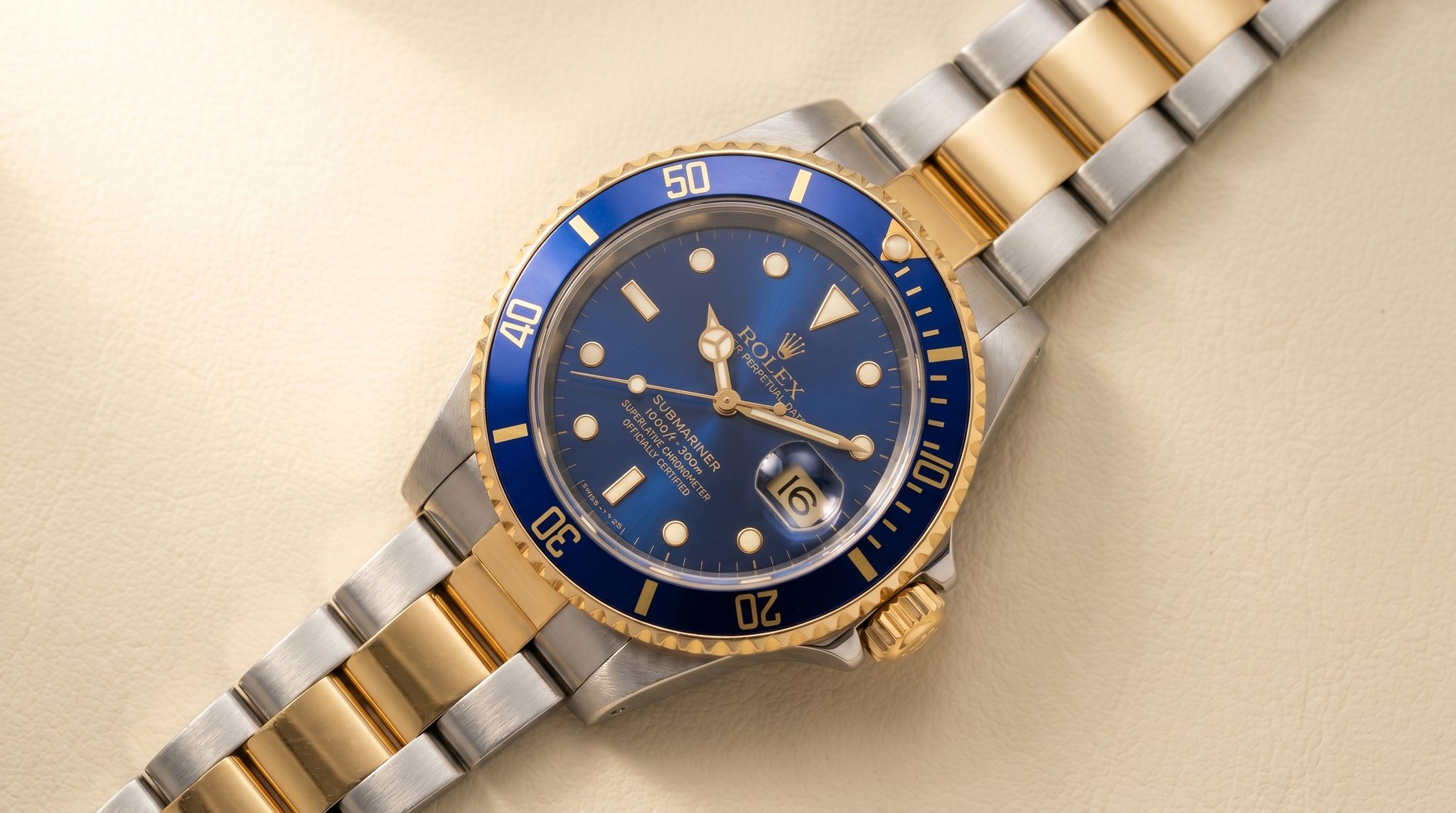
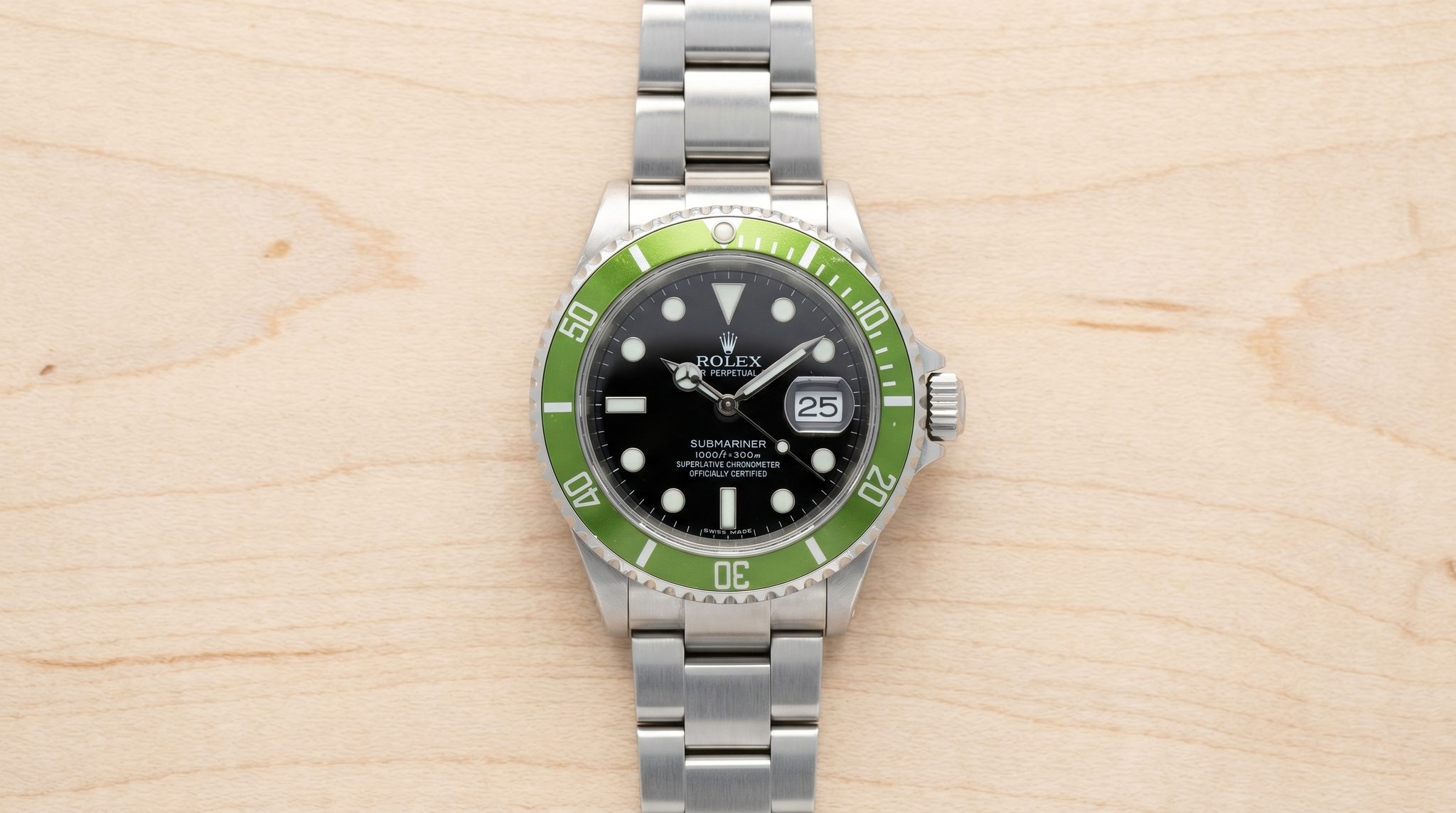
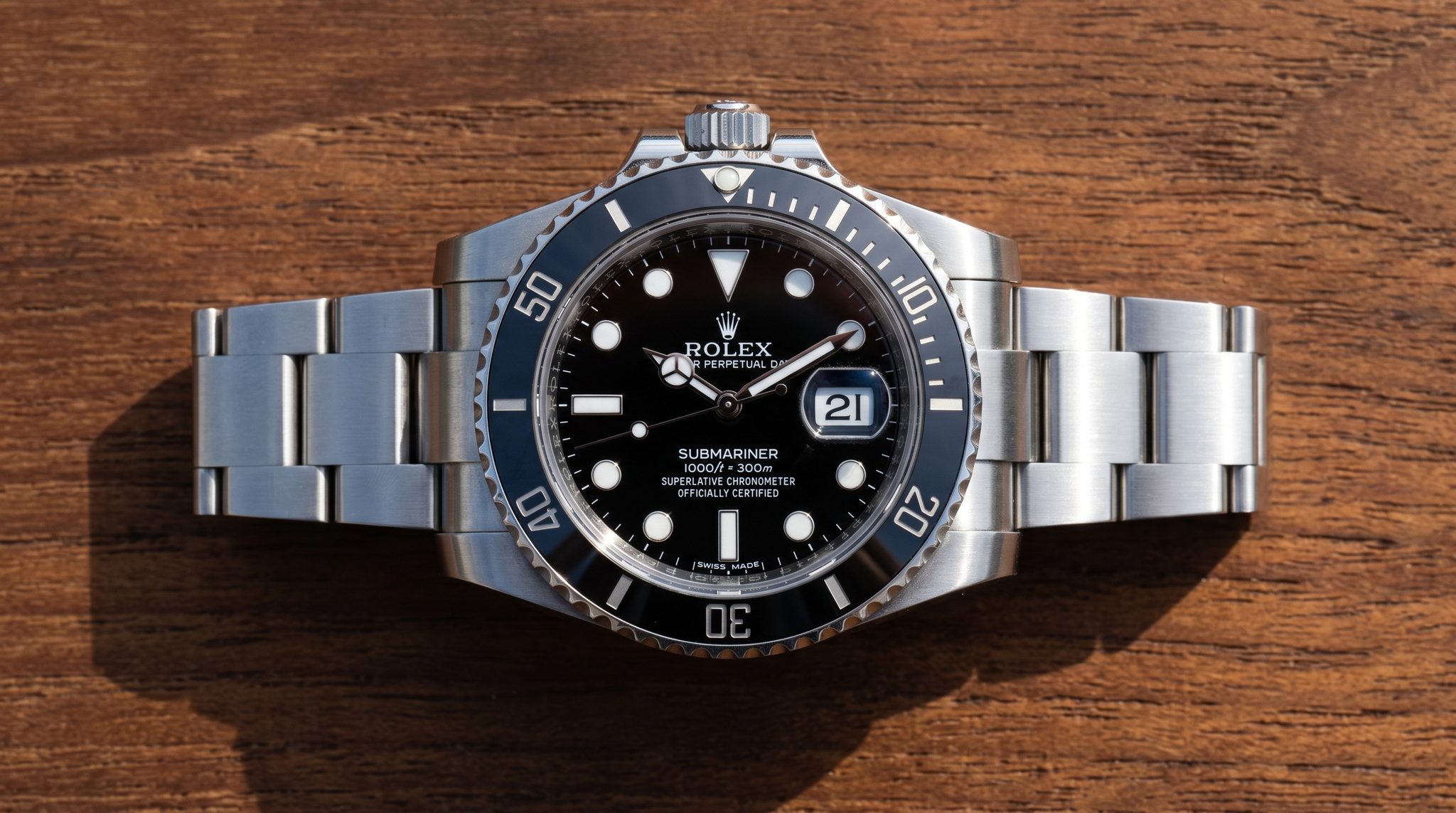
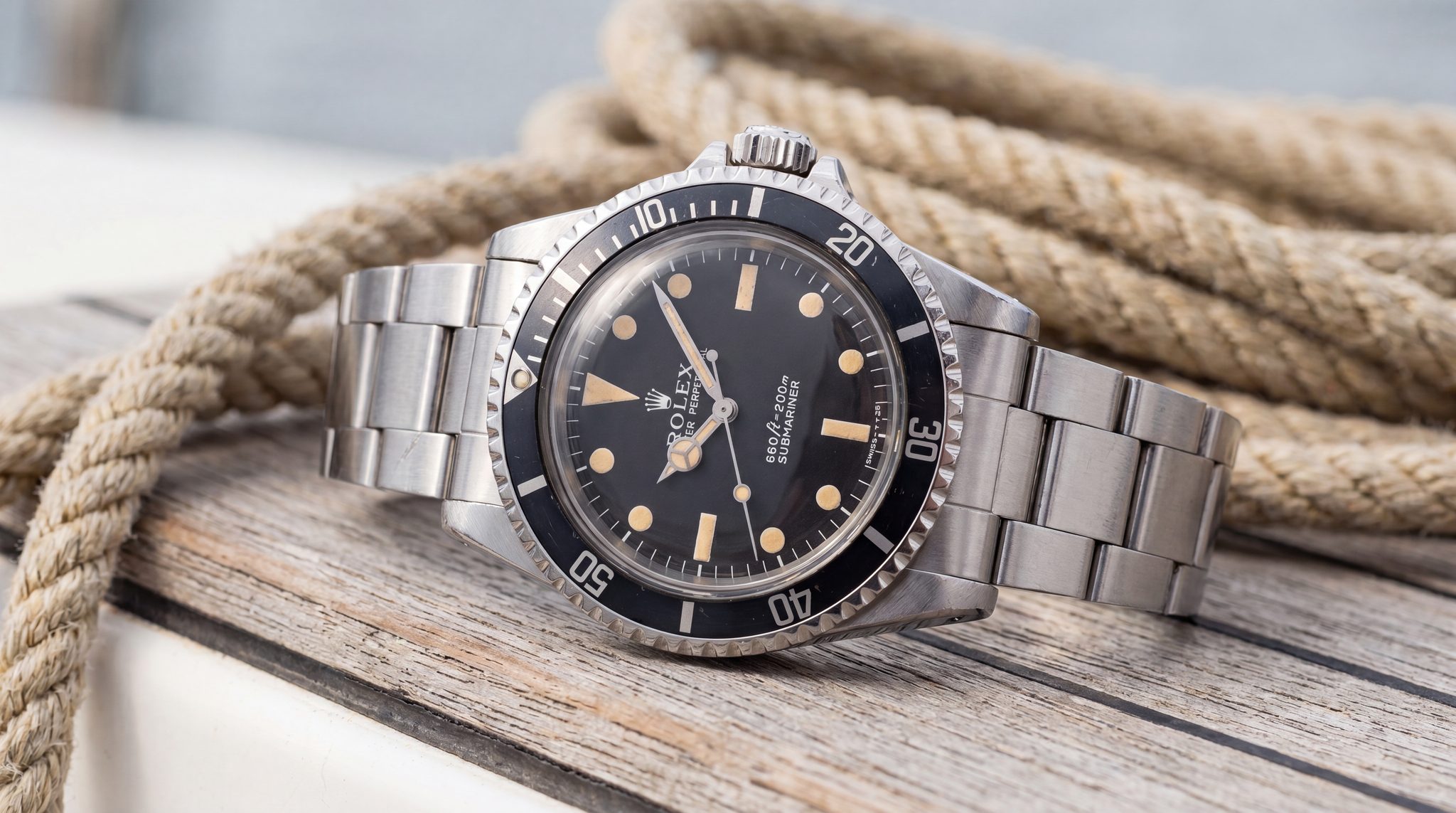
The 16610's three nearest neighbours frame it completely. The 16800 is the immediate predecessor that gave it the modern Submariner architecture; the 16613 is the two-tone Rolesor sibling that ran the identical Cal. 3135 in steel-and-gold for the same twenty-two years; and the 116610LN is the modern successor that ended the aluminum-bezel era. The spec sheet below puts every meaningful difference next to every meaningful similarity; the wider family (the no-date 14060 and 5513, the green-bezel 16610LV) appears under similar references further down.
This reference 16610 Rolex · focal 1989–2010 | ||||
|---|---|---|---|---|
| Production | 1979–1988 | 1988–2010 | 1989–2010 | 2010–2020 |
| Movement | Cal. 3035 | Cal. 3135 (identical) | Cal. 3135 · 28,800 vph | Cal. 3135 + Parachrom |
| Case material | Stainless steel | Rolesor (steel + 18k YG) | Stainless steel | Stainless steel |
| Bezel insert | Aluminum (black) | Aluminum (black or blue) | Aluminum (black) | Cerachrom (ceramic) |
| Dial | Matte → glossy (1984) | Black, blue ("Bluesy"), champagne | Glossy black | Maxi (enlarged markers) |
| Lume | Tritium | Tritium → LumiNova → S-LN | Tritium → LumiNova → S-LN | Chromalight (blue) |
| Crystal | Sapphire, cyclops (first Sub with) | Sapphire, cyclops | Sapphire, cyclops | Sapphire, cyclops |
| Crown guard | Standard | Standard | Standard | ~2× wider |
| Clasp | Oysterlock | Oysterlock (two-tone) | Oysterlock | Glidelock micro-adjust |
| Water resistance | 300m (first Sub with) | 300m | 300m / 1,000ft | 300m |
Four dial generations across the run
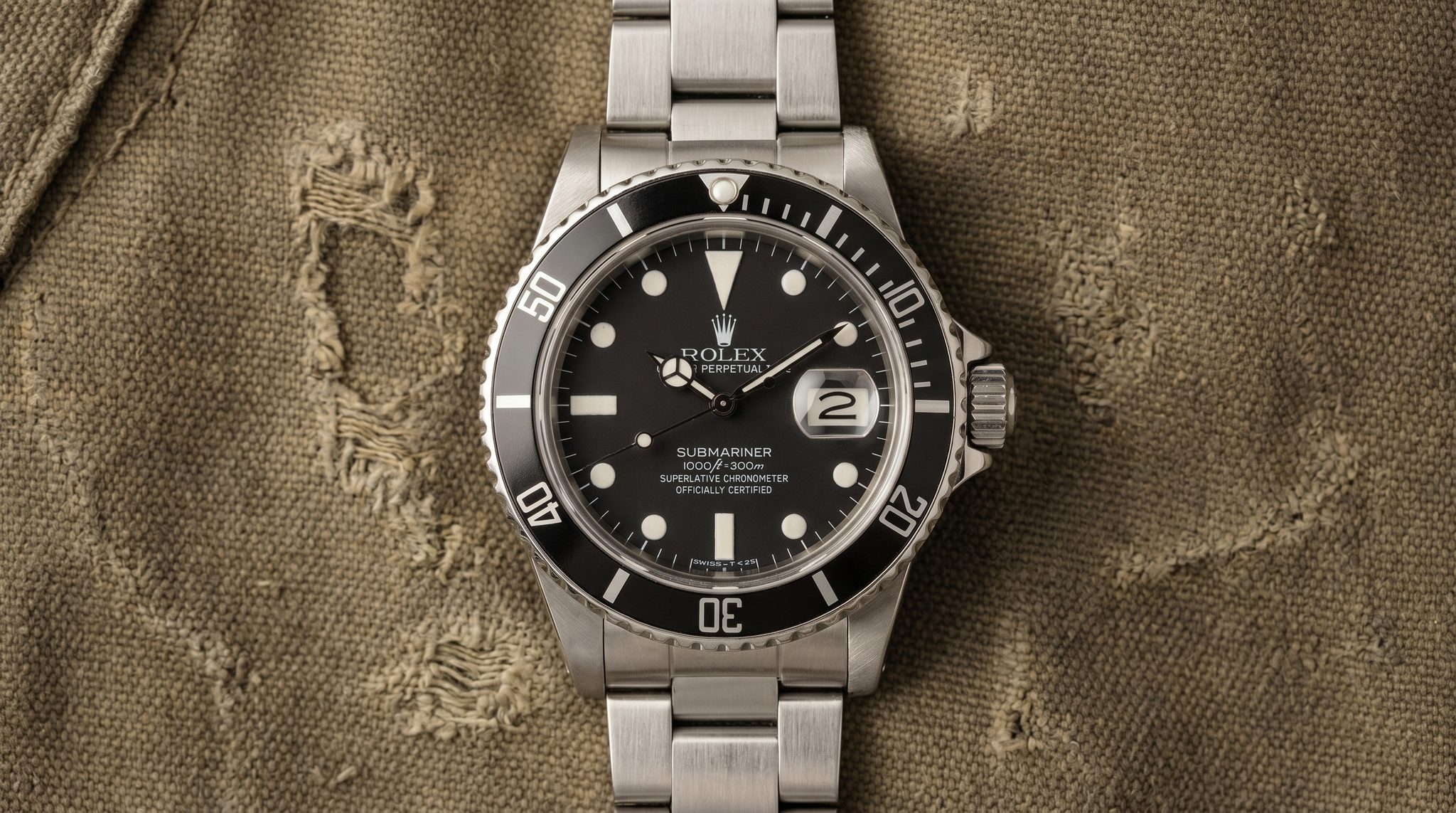
Marked "SWISS - T < 25" at the six o'clock position. The tritium lume on surviving examples has often aged to a warm cream or pale yellow; flawlessly preserved tritium dials are rare and command a premium. Some early tritium dials show "tropical" patina (the matte black surface turning chocolate brown), and these have followed the broader vintage market upward in value.
What to check before buying a 16610
The 16610 is in many ways the safest vintage-adjacent Rolex purchase available: twenty-one years of production created a robust parts ecosystem, the calibre 3135 is straightforward to service, and prices have stabilized in the $7,500–$15,000 range depending on dial generation, completeness, and condition. A few things to confirm before buying:
Rolex Submariner 16610 for sale
Indicative market value from recent dealer, auction, and Grey Market sales: median ≈ $8,100, with a typical $7,400–$9,100 range across 674 comparable sales (updated this week).
Each point is a recent dealer or auction sale, banded to an indicative figure. The range shown is not a valuation.
Adjacent in the Submariner family
Common questions about the 16610
From 1989 to 2010: twenty-one years, the longest single production run of any modern Submariner reference. It replaced the 16800 and was itself replaced by the 116610LN.
- Rolex 16610 (Bob's Watches)bobswatches.com
- 116610 vs 16610 Comparison (Bob's Watches)bobswatches.com
- Submariner History: The 5-Digit Referencesmonochrome-watches.com