

Rolex Submariner 6536
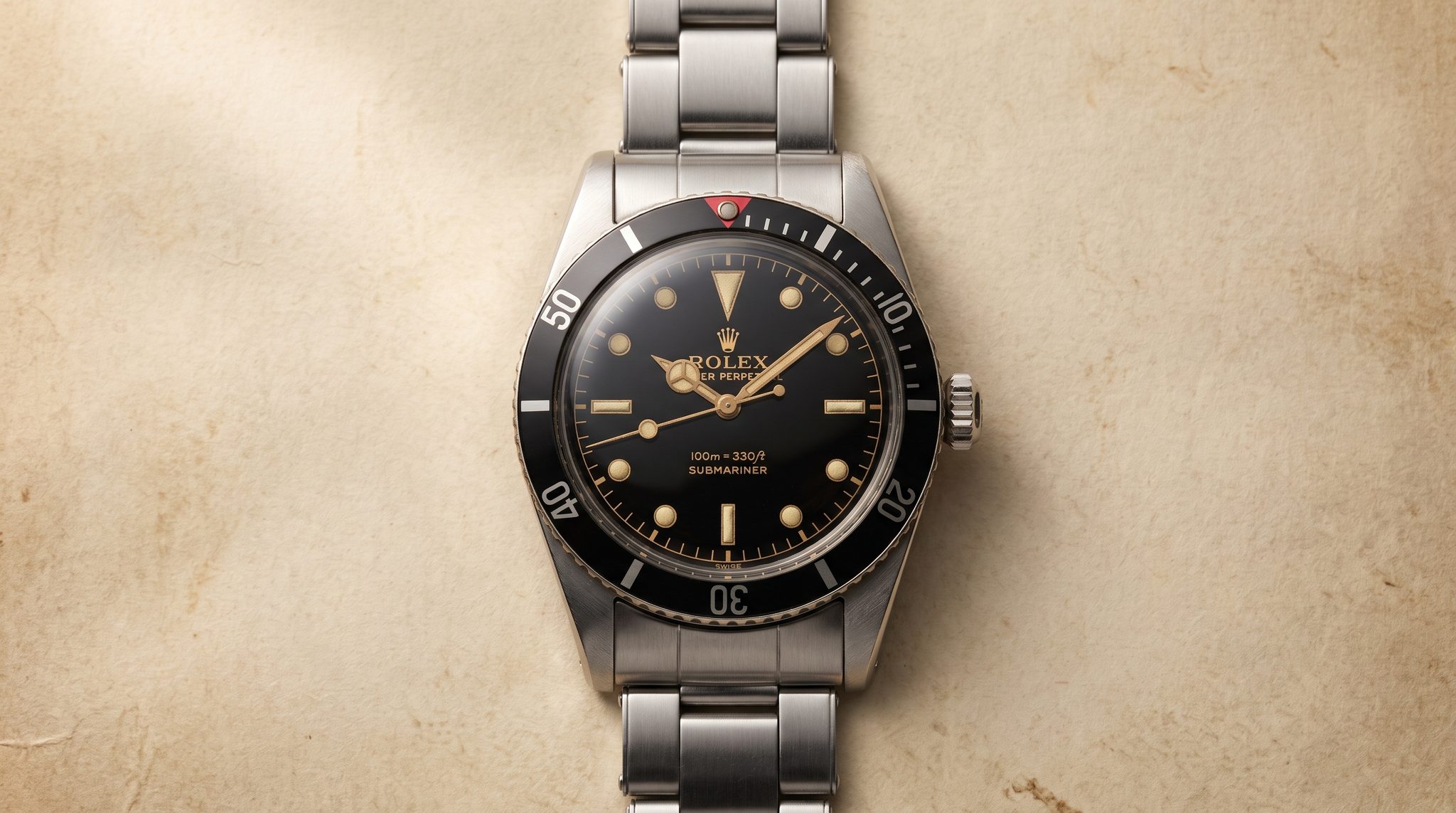
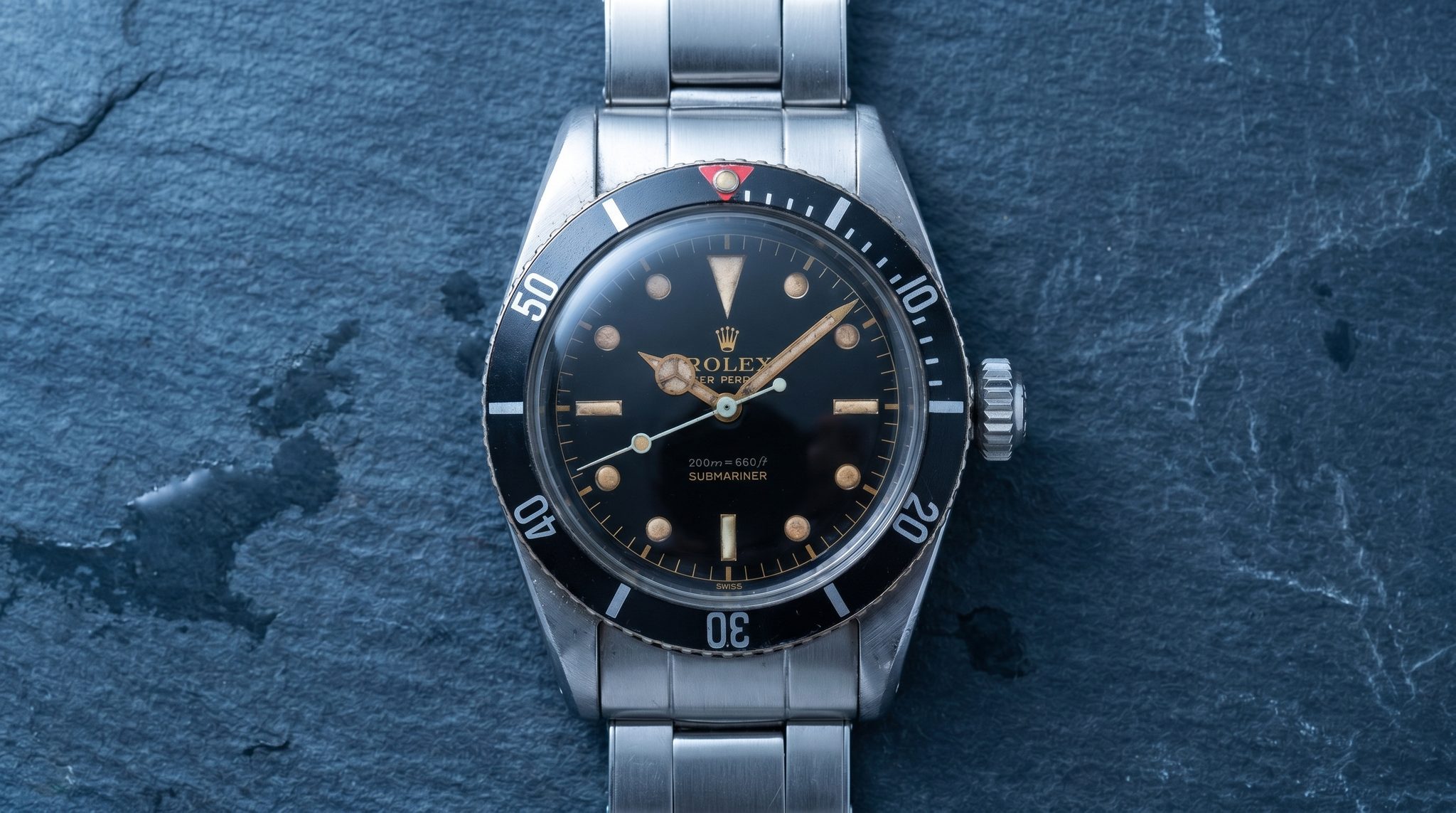
The Rolex Submariner 6536 is the small-crown, no-guard Submariner whose caseback and dial printing show Rolex standardizing the line in real time.
- Production
- c. 1955–1959
- Case
- Stainless steel
- Diameter
- ~38 mm
- Lug width
- 20 mm
- Crown
- 6 mm small crown
- Guards
- None
- Bezel
- Rotating, 60-min
- Crystal
- Acrylic
- Water res.
- 100 m
- Dial
- Black gilt, chapter ring
- Movement
- Rolex cal. 1030
- Chronometer
- No
- Lume
- Radium
The Rolex Submariner 6536 was produced from about 1955 to 1959.
The Rolex Submariner 6536 is the Submariner that makes the early line’s growing pains visible, sometimes literally, in a caseback that reads like a correction. The most vivid expression is the transitional double-reference caseback where “6538” is struck through and “6536” is engraved beneath it, a surviving artifact of Rolex shifting a watch from the big-crown lineage into the small-crown, 100 m branch.
Most collectors meet the reference through a deceptively simple checklist, small crown, no crown guards, gilt dial, and caliber 1030. What makes the 6536 singular is that those traits do not form a single, tidy package across the mid-1950s: the same case generation spans both non-chronometer 6536 and chronometer-rated 6536/1, and much of the dial-variant language repeated online actually belongs to the /1. That is why the defensible way to talk about a “Rolex 6536” is to anchor identity in what Rolex stamped into the watch: the caseback reference and, when present, the struck-through double reference.
Within that framework, ref. 6536 sits as the small-crown companion to the big-crown 6538. Both use the automatic caliber 1030, described in specialist scholarship as Rolex’s first bidirectional automatic, a meaningful step beyond the A260-era movements found in the earlier 6204 and 6205. The 6536 keeps the no-date, time-only layout, but it formalizes the diver’s identity with a 100 m depth rating in the small-crown line, a specification consistently tied to this branch by reference guides and auction cataloging.
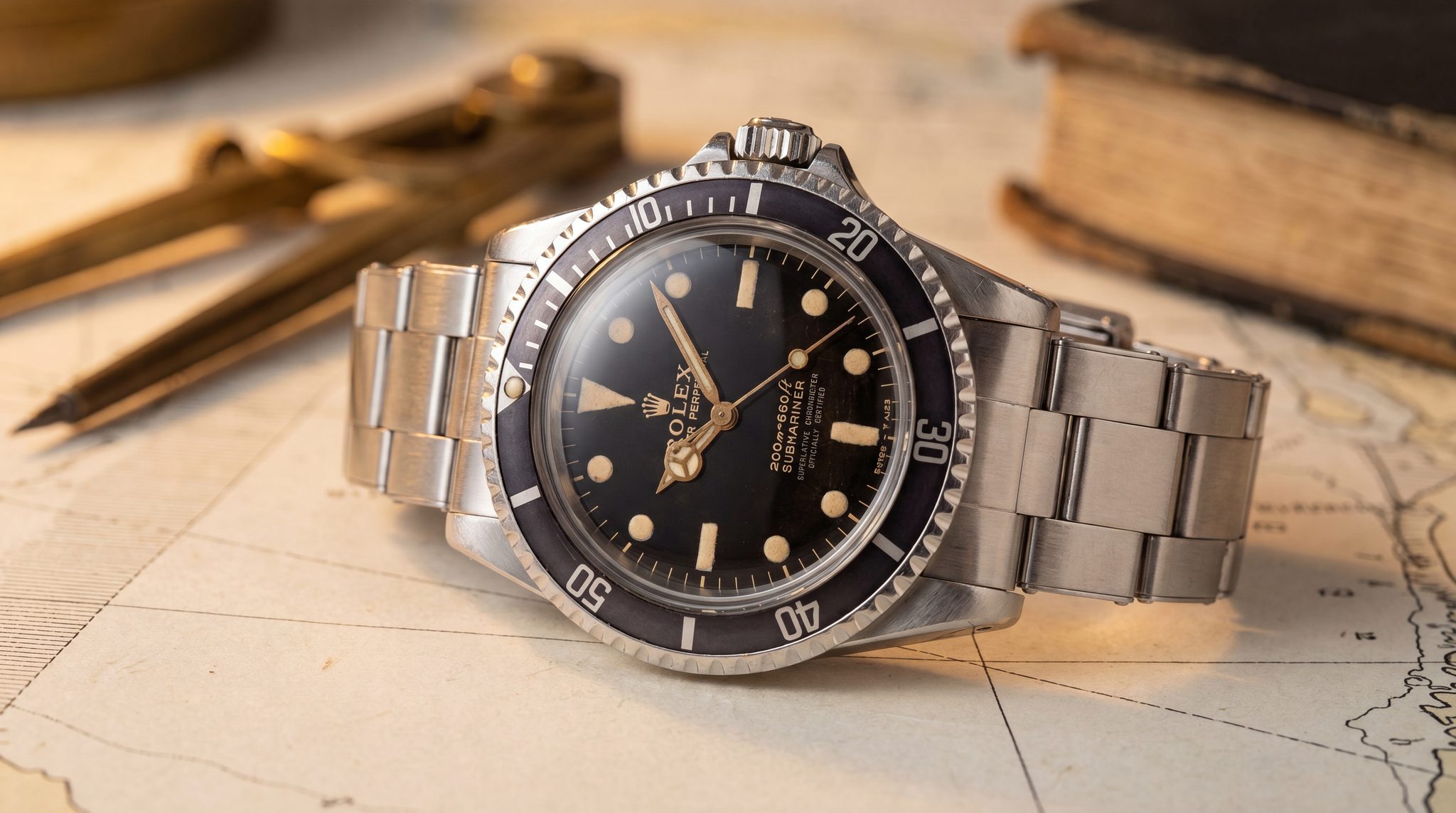
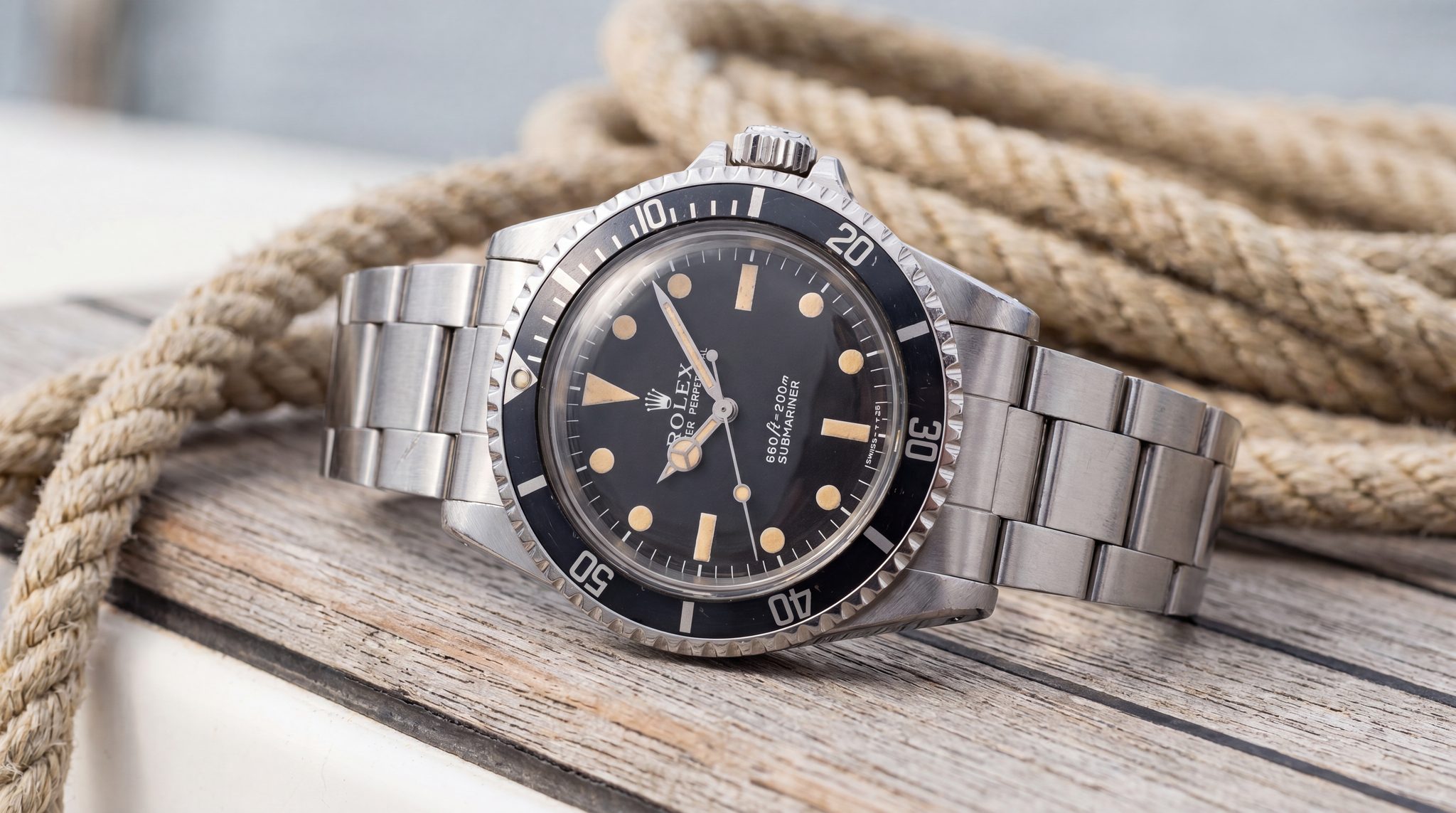
In the hand, the 6536 reads as a compact, pre-guard Submariner, about 38 mm across, with straight flanks and a crown that looks intentionally modest beside the later, more muscular crown-guard silhouettes. The dial architecture that defines the family is the glossy black gilt chapter-ring style: printing that flashes warm under light, luminous plots originally filled with radium, and the tight circular minute track that gives these early Submariners their distinctive, almost instrument-like face.
The unavoidable complication is chronology. Auction-house consensus supports a c. 1955–1959 production era for the broader 6536 line, but the plain “6536” without a suffix is also described in at least one Christie’s note as a one-year, five-digit-serial batch in 1955. The record is not settled, and Rolex did not publish a factory-facing cutoff to resolve it. That uncertainty is part of the reference’s appeal and part of the risk: for this early Submariner, the most important dating tool is not a single headline year range but the ability to read each independent trait, caseback marking, dial printing style, crown, bezel insert, and movement grade, on its own terms.
“On the earliest examples, the caseback can show the story in metal, “6538” crossed out and “6536” engraved beneath, a rare glimpse of Rolex standardizing the Submariner as it was being made.”
Rolex Submariner 6536 production years: c. 1955–1959
Ref. 6536 lives in the tight mid-1950s window when Rolex was still deciding what the Submariner should be. The underlying constants are clear: a steel, no-guard case; a 6 mm small crown; a rotating timing bezel; and caliber 1030, the automatic movement described in specialist research as Rolex’s first bidirectional automatic. Compared with the earlier 6204 and 6205, which used A260-era movements, the 1030 is the technical center of gravity for this generation.
Where the timeline becomes difficult is not the outer shell but the labeling. Auction-house scholarship treats 6536 and 6536/1 as a shared case generation running through about 1959, supported by caseback dates and repeated cataloging. At the same time, at least one Christie’s description narrows plain “6536” to a very short early batch in 1955, distinguished by five-digit serial numbers. The record is not unified, and no public factory memo resolves the split.
That tension is why the most useful chronology for a buyer is feature-by-feature. Transitional pieces with a struck-through 6538 and a newly engraved 6536 are anchored to the earliest phase and show how closely the small-crown and big-crown branches were related. Dial printing evolves within the small-crown family as well, but the most heavily discussed chronometer text and later “OCC” layouts belong to the 6536/1, not to ref. 6536 itself, which is defined as non-chronometer. In other words, the closer a watch gets to the late-1950s “standard” Submariner, the more likely it is to be a /1.
Late in the decade, Rolex’s direction becomes legible: the small-crown line moves toward the ref. 5508 as the next small-crown, no-guard expression, while 1959 also marks the start of the crown-guard era with the 5512, the redesign that sets the template for the next decades. The zoomed-out lesson is that what collectors now call the classic Submariner was not born as a single, frozen specification. In the 6536 period, Rolex was still writing the rulebook, and the surviving watches preserve the edits.
- c. 1955IntroducedCaseback stamped 6536
- c. 1955Transitional cases“6538” crossed-out, “6536” added
- c. 1955 – 1956Dial printingRed vs gilt depth line (family-scoped)
- c. 1955 – 1959Cal. 1030 eraCal. 1030 signed movement
- c. 1957/585508 emergesLater ref. 5508 caseback
- 1959Crown-guards eraCrown guards on 40 mm case
- c. 1959Family ends6536/1 casebacks dominate late
6536 against its neighbours
Ref. 6536 is easiest to understand by triangulating it against the small-crown chronometer variant that followed it in the same case generation, the big-crown sibling that shared its era, and the earlier small-crown Submariner it modernized with caliber 1030. Together these three references show what 6536 is and what it is not: a 100 m, small-crown, non-chronometer Submariner whose identity is defined by reference stamping as much as by design.
This reference 6536 Rolex · focal c. 1955–1959 | ||||
|---|---|---|---|---|
| Production | c. 1954–1955 | c. 1955–1959 | c. 1955–1959 | c. 1956–1959 |
| Case | Stainless steel | Stainless steel | Stainless steel | Stainless steel |
| Diameter | ~37 mm | 37.5 mm | ~38 mm | 37 mm |
| Crown | Small crown | 8 mm big crown | 6 mm small crown | 6 mm small crown |
| Guards | None | None | None | None |
| Water res. | – | 200 m | 100 m | 100 m |
| Crystal | Acrylic | Acrylic | Acrylic | Acrylic |
| Bezel | Rotating timing | Rotating, 60-min | Rotating, 60-min | Rotating timing |
| Dial | Early black gilt | Black gilt (var.) | Black gilt, chapter ring | Gilt, chapter ring |
| Movement | Cal. A260 | Cal. 1030 | Rolex cal. 1030 | Cal. 1030 |
| Chronometer | – | Offered (2- vs 4-line) | No | Yes |
| Lume | Radium | Radium | Radium | Radium |
Three dial generations across the run
The most concrete, reference-level rarity attached to the 6536 is not a dial nickname but an engraving: a caseback originally marked “6538” with that number struck through and “6536” engraved beneath. In hand, it reads like a workshop correction, and it matters because it ties the watch to Rolex’s mid-1950s overlap between big-crown and small-crown production. These pieces are also where the most discussed early-family dial elements cluster, including red depth printing and very early bezel insert styles, but those dial traits should be treated as independent components rather than proof of the reference on their own. The caseback is the anchor.
What to check before buying a 6536
Buying a Submariner 6536 is less about finding the right headline year range and more about proving that every major component belongs to the same mid-1950s story. The reference sits beside, and is often confused with, the chronometer-rated 6536/1 and the big-crown 6538, and the market incentive to mix parts is unusually strong in this generation.
Rolex Submariner 6536 price and value
A Rolex Submariner 6536 sells for about $29,750 at the median, typically $14,000 to $65,000 across 9 comparable sales.
Rolex Submariner 6536 for sale
Indicative figures from recent dealer, auction, and Grey Market sales (updated this week). Every watch is verified before it sells here.
Each point is a recent dealer or auction sale, banded to an indicative figure. The range shown is not a valuation.
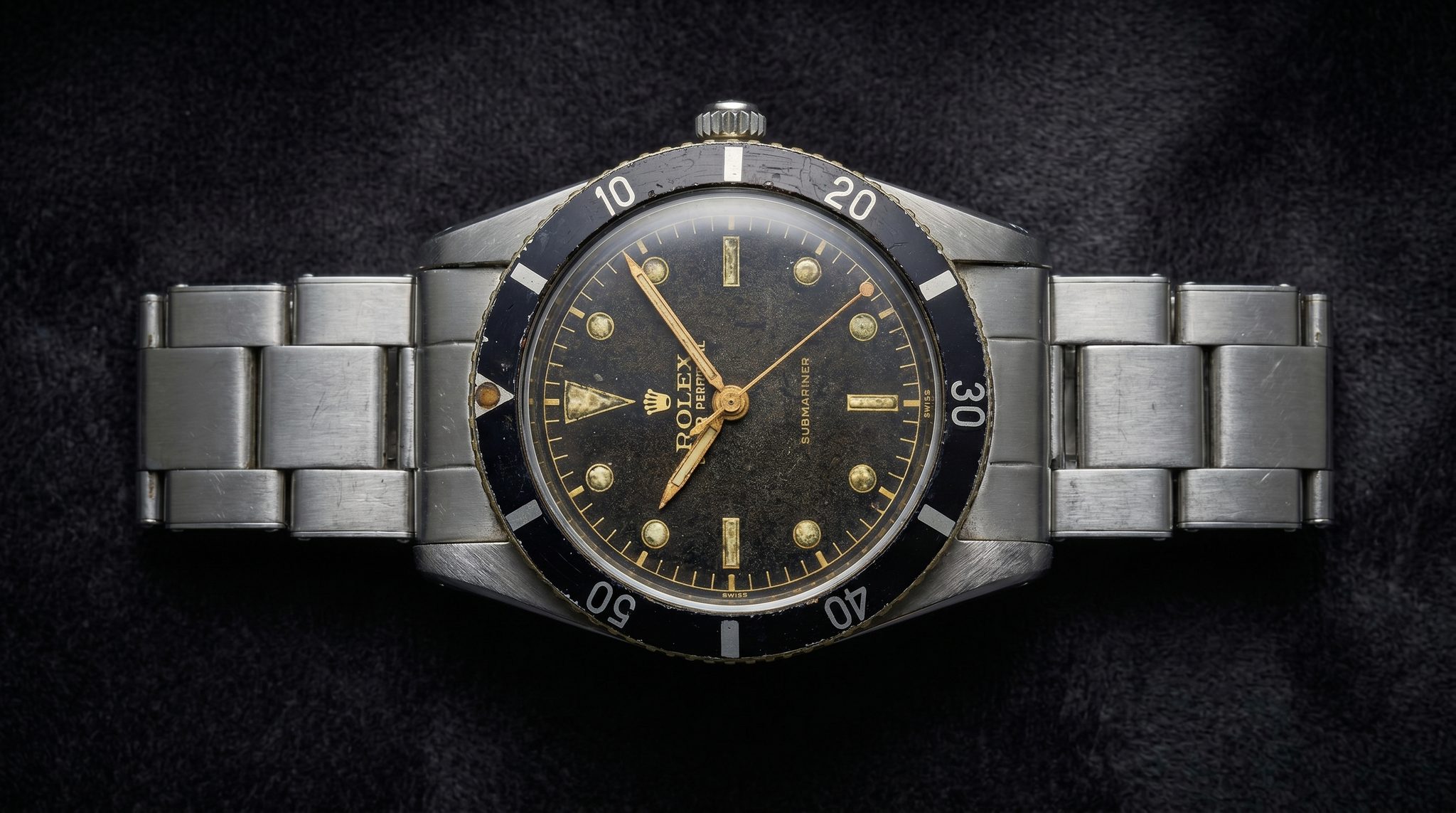
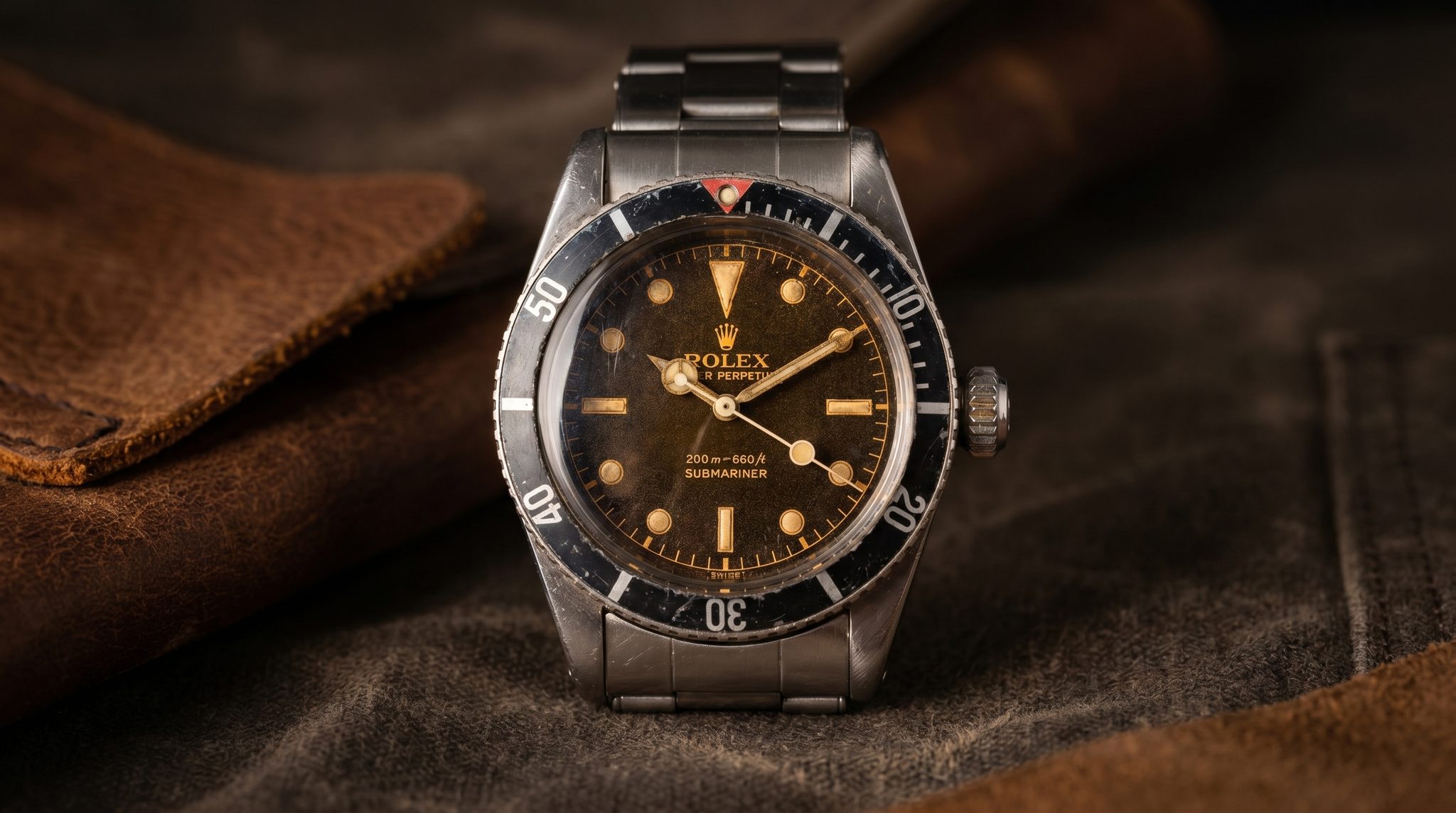
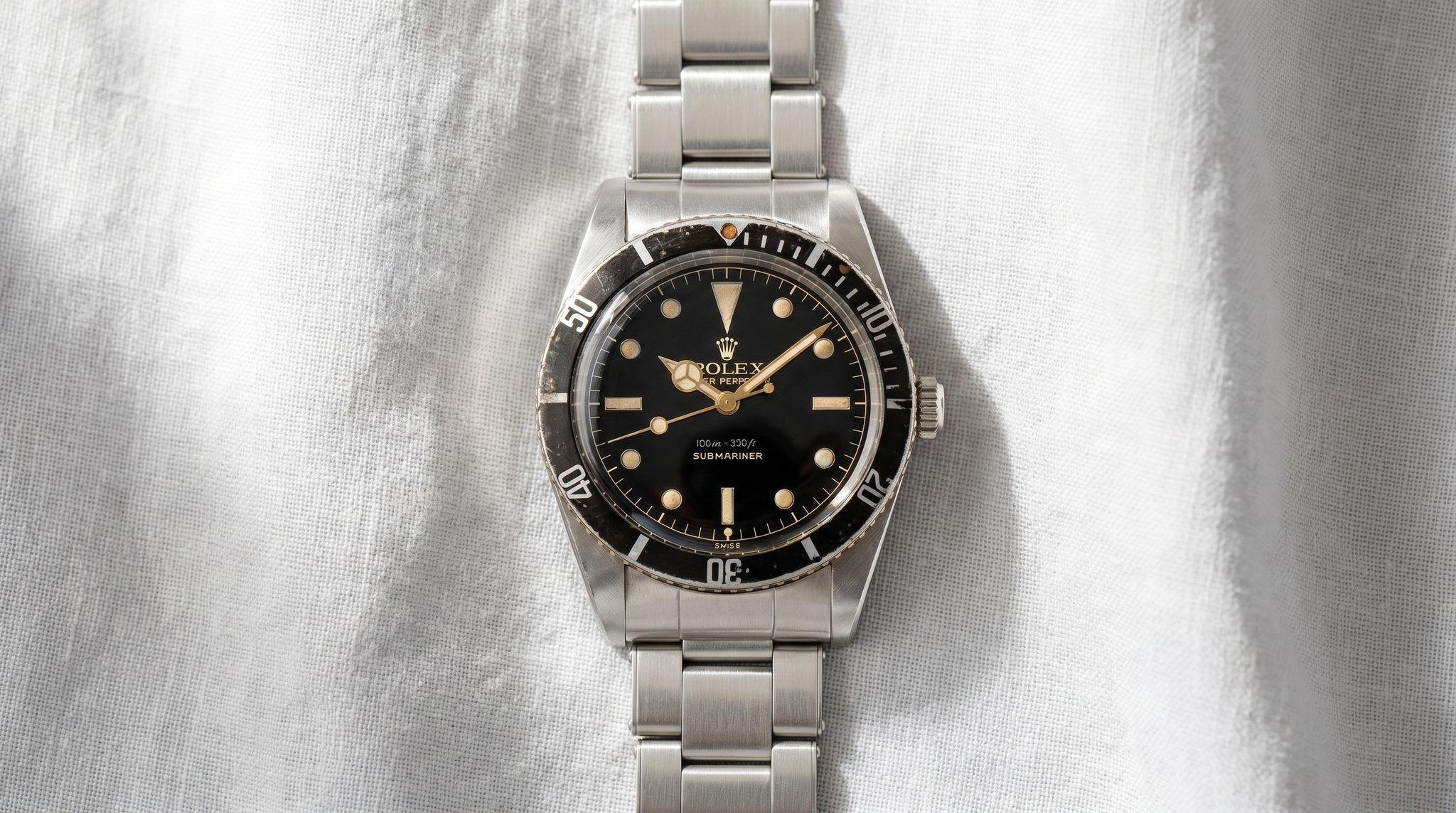
Adjacent in the Submariner family
Common questions about the 6536
The Rolex Submariner 6536 was produced from about 1955 to 1959. Plain ref. 6536 without the /1 suffix is also described in at least one Christie’s catalog note as an extremely short early run in 1955. Because those statements conflict and no factory cutoff is published in the cited material, caseback reference and overall component coherence are the safest way to date an individual watch.
- Bezelbase: Rolex Submariner reference 6536 (production, variants, caseback evidence)bezelbase.org
- Hodinkee Reference Points: Understanding the Rolex Submariner (6536/1 breakdown)hodinkee.com
- Phillips: Rolex Submariner ref. 6536/1 catalog note (production context)phillips.com
Show 7 more
- Christie’s: Rolex Submariner ref. 6536 lot note (one-year claim)christies.com
- Christie’s: Rolex Submariner ref. 6536/1 lot note (replacement relationship)christies.com
- Bob’s Watches: Complete Rolex Submariner history (6536 family placement)bobswatches.com
- Bob’s Watches: Submariner 6536 review / buying guide (overview)bobswatches.com
- Monochrome Watches: Early Rolex Submariner references overview (6536/6538 era)monochrome-watches.com
- Fratello: Rolex Submariner historical overview (line placement)fratellowatches.com
- Andrea Foffi: Vintage Rolex Submariner reference guide (6536/6538/5508 context)andreafoffi.com