

Rolex Datejust
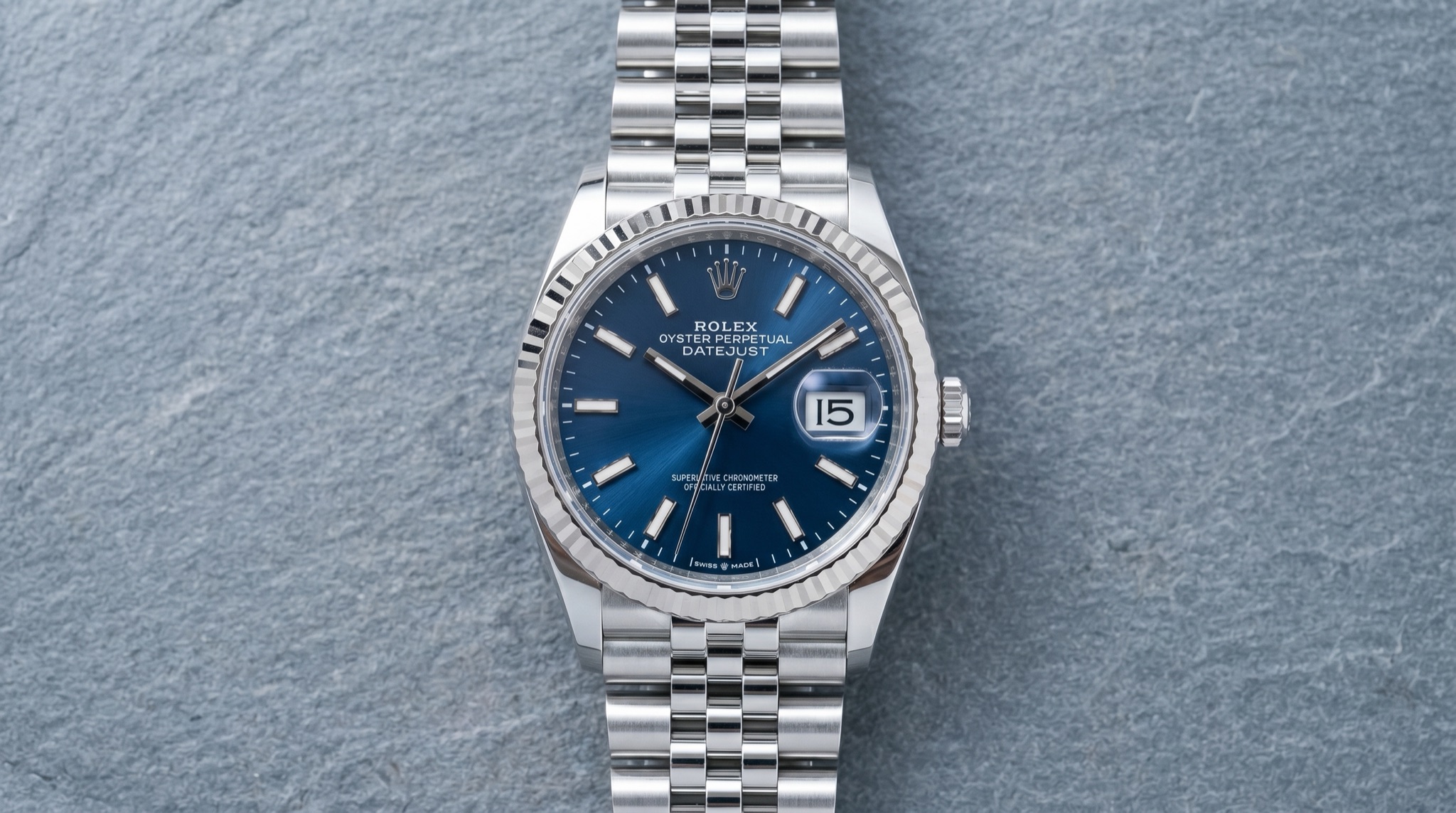
The Rolex Datejust is the everyday prestige watch that turned the date window at 3 o’clock into a modern, waterproof chronometer standard.
The Rolex Datejust is the everyday prestige watch that made the date complication feel like basic equipment rather than a special feature. Rolex introduced it in 1945 for the company’s 40th anniversary with a date displayed in a window at 3 o’clock, launched on the newly created Jubilee bracelet.
That starting point explains the Datejust’s unusual role inside Rolex. It was not built around a specialist brief like diving or racing. Instead, it was framed as a practical response to a faster-moving modern world, a watch meant to be worn all day while bundling Rolex’s core claims into one object: a self-winding movement, a water-resistant Oyster case, chronometer positioning, and a date that could be read quickly. The first reference is widely documented as 4467, initially in 18k yellow gold, which signals that “everyday” in Datejust terms was always meant to include status as well as utility.
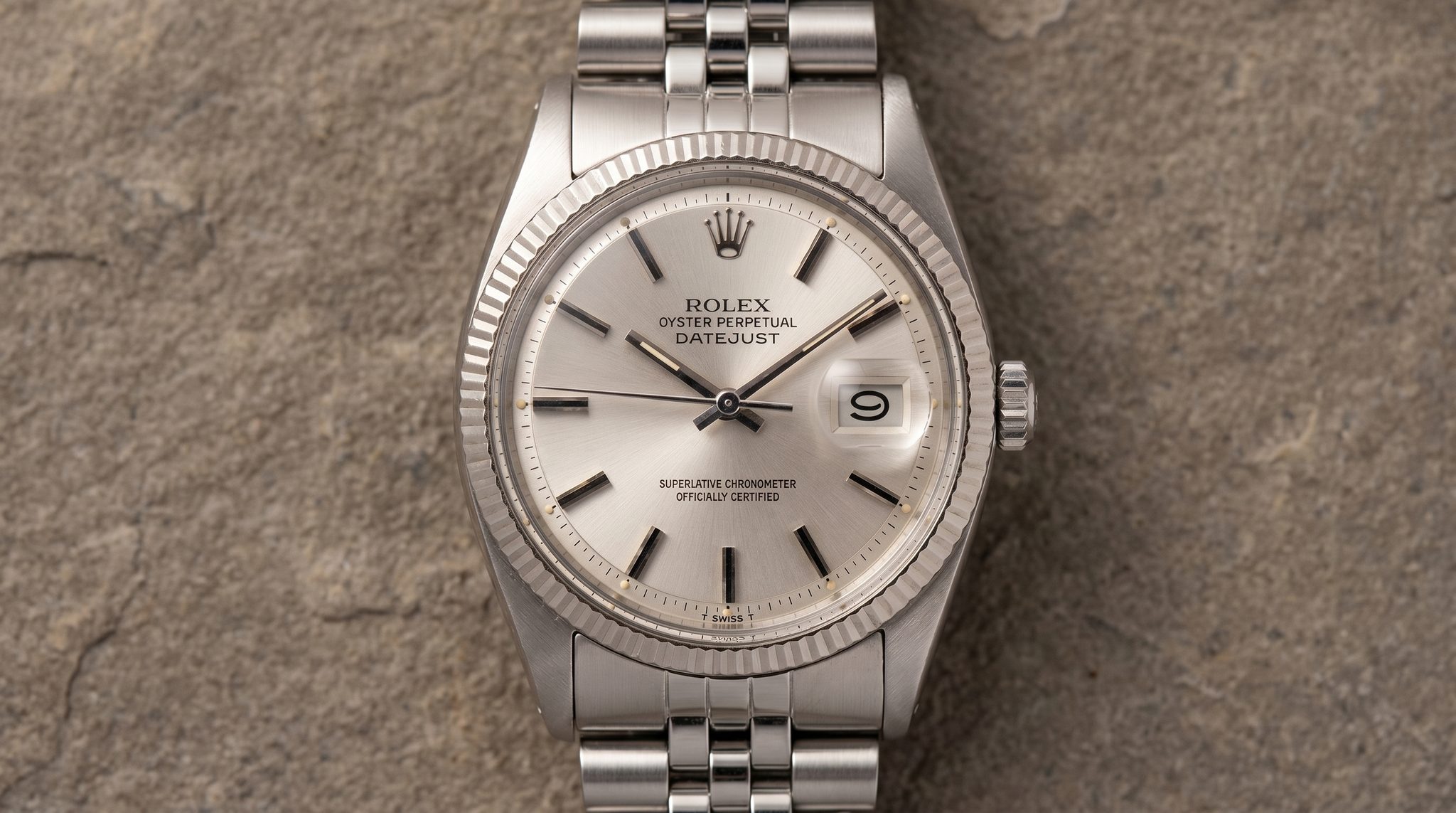
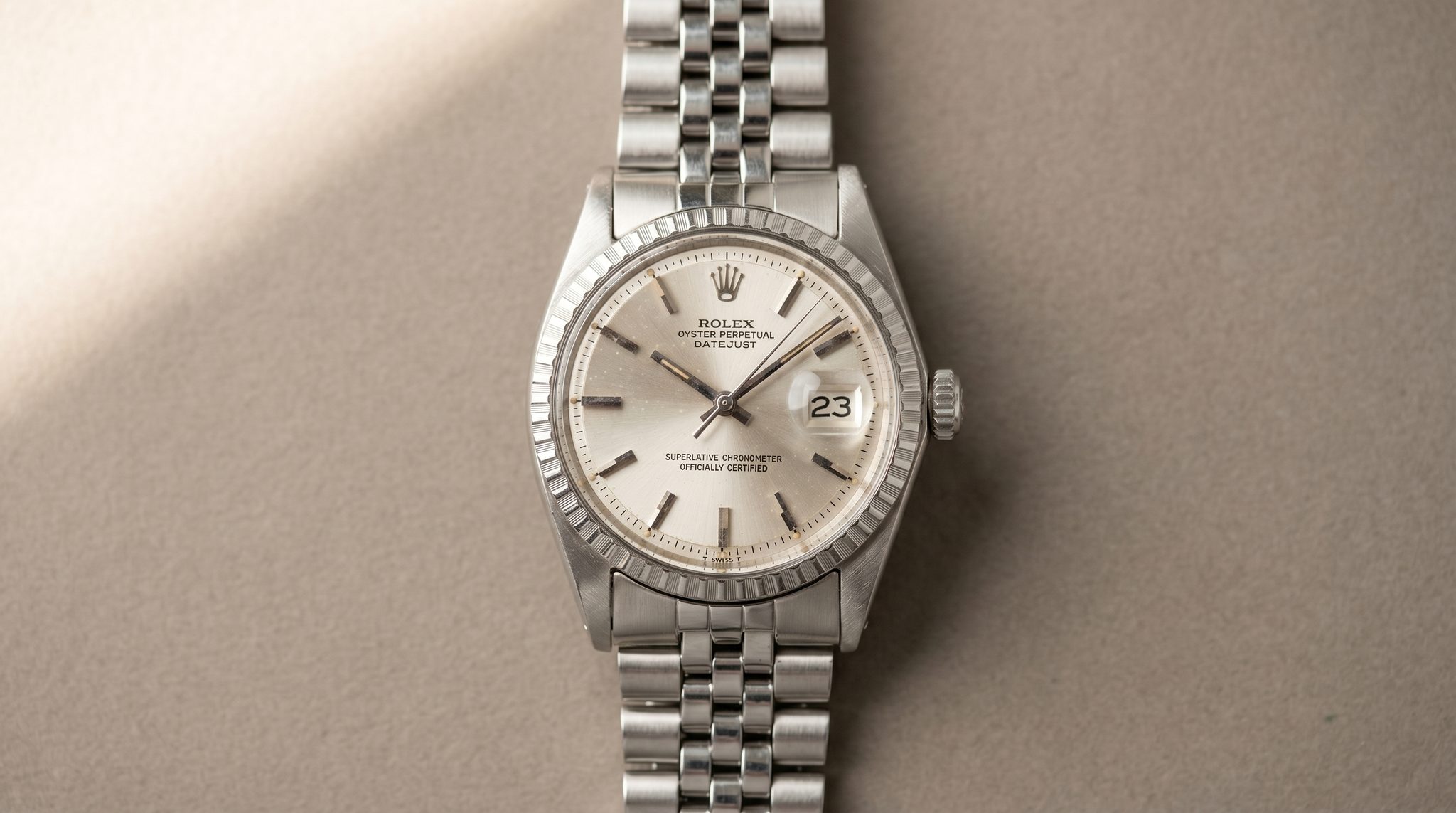
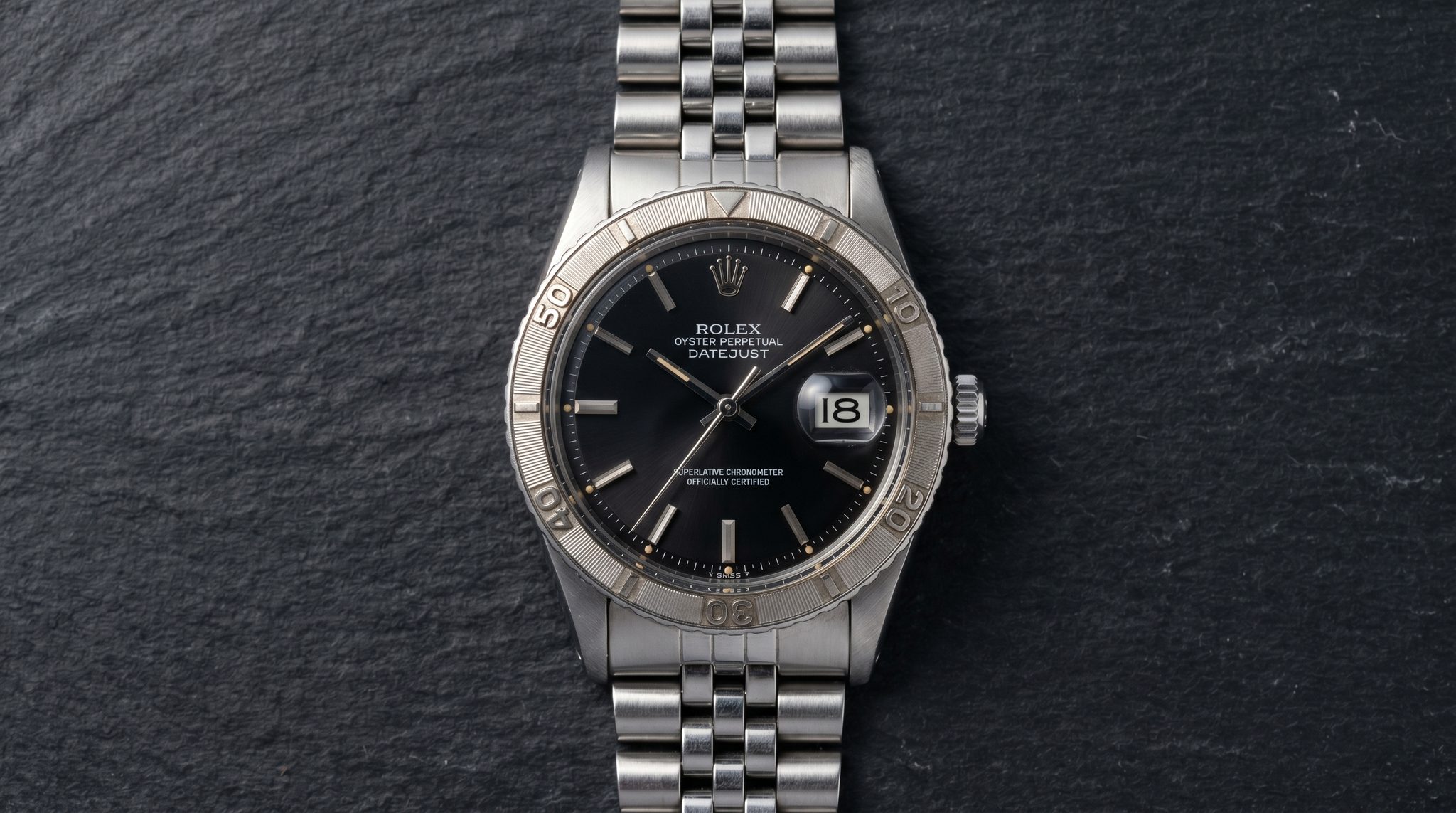
Collectors often talk about the Datejust as if it never changes, but the family’s history is easiest to read as a series of movement and materials handoffs that happen behind a stable face. The visible template stays familiar, a 36 mm or later 41 mm Oyster case, the Cyclops over the date, and bezel choices that immediately telegraph the watch’s intent. A smooth bezel reads as the plainest, most understatement-forward Datejust. A fluted bezel, typically in precious metal, is the line’s strongest signature, it breaks light into tight facets and turns a simple case into something unmistakably Rolex. Engine-turned bezels act like a steel compromise, textured and lively without the precious-metal signal. The Turn-O-Graph references sit apart again, because their bezels are not just shaped, they are meant to be used for timing.
The hinge points that end one era and begin another are mostly documented technical upgrades rather than external regulation. The mid-century 15xx family defines the long acrylic, non-quickset vintage experience. The Cal. 3035 era introduces quickset and a higher beat rate while keeping acrylic, a change driven by convenience and improved timekeeping. The Cal. 3135 and sapphire period turns the Datejust into what many consider “modern” in durability and daily wear, then the six-digit cases add anti-counterfeiting tells like the engraved rehaut and a more substantial bracelet feel. The current Cal. 3235 generation pushes that same idea further with a 70-hour reserve and Rolex’s newer movement architecture.
One zoom-out fact ties these details to meaning: the Datejust’s continuity is not the absence of change, it is Rolex repeatedly upgrading the mechanism and materials while leaving the watch readable at a glance, so the collector learns to date it by what Rolex chose to modernize without rewriting the silhouette.
What each Datejust reference trades for
Median and typical range of recent dealer, auction and Grey Market sales, banded. Indicative, not a valuation; each reference page carries the detail.
17 references across 6 eras
Acrylic, non-quickset 16xx
This is the classic vintage Datejust world: acrylic crystal with Cyclops, a 36 mm Oyster case, and the non-quickset setting routine that defines ownership of early Datejusts. Within this era, Rolex used bezel style to segment the same core watch, fluted for 1601, engine-turned for 1603, rotating timing for the Turn-O-Graph 1625. The defining break is not a case redesign but a usability upgrade. From 1977 onward, the five-digit 16xxx generation arrives with Cal. 3035 and quickset date, ending the need to cycle the hands through midnights to correct the calendar, even while acrylic and the vintage look continue for another decade.
Late acrylic, quickset 3035
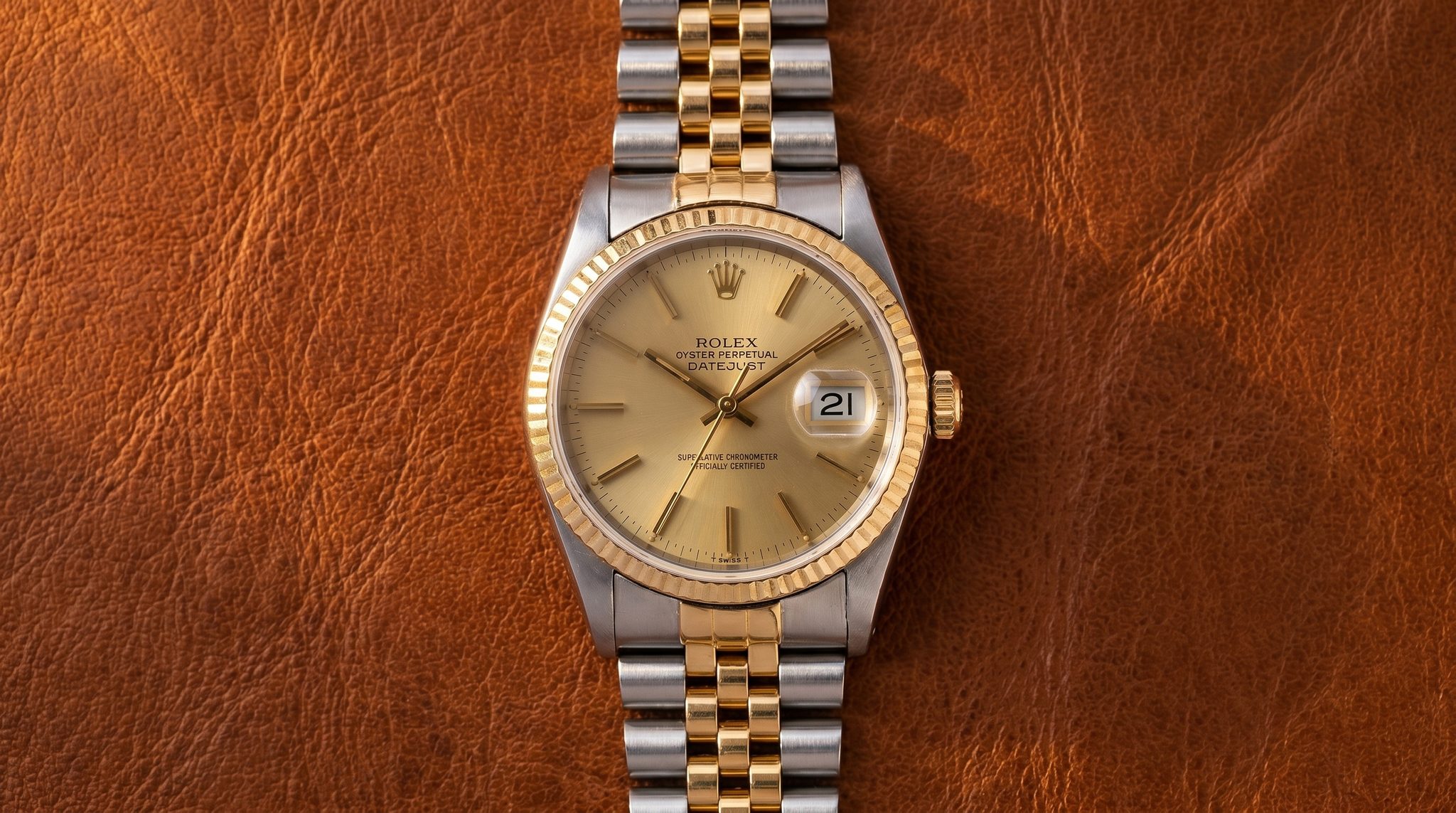
These references keep the late-vintage feel, acrylic crystal and the familiar 36 mm profile, but change the way the watch is lived with. Cal. 3035 brings quickset date and a higher beat rate, a documented technical step toward improved everyday practicality, and it becomes the reason this era exists as its own generation. Bezel choices still do the family’s visible sorting, fluted in Rolesor for 16013, fluted white-gold over steel for 16014, and engine-turned steel for 16030. The era ends when Rolex shifts the mainstream Datejust 36 to sapphire and Cal. 3135 in the 162xx family, a materials and movement update framed as durability and modernity rather than regulation.
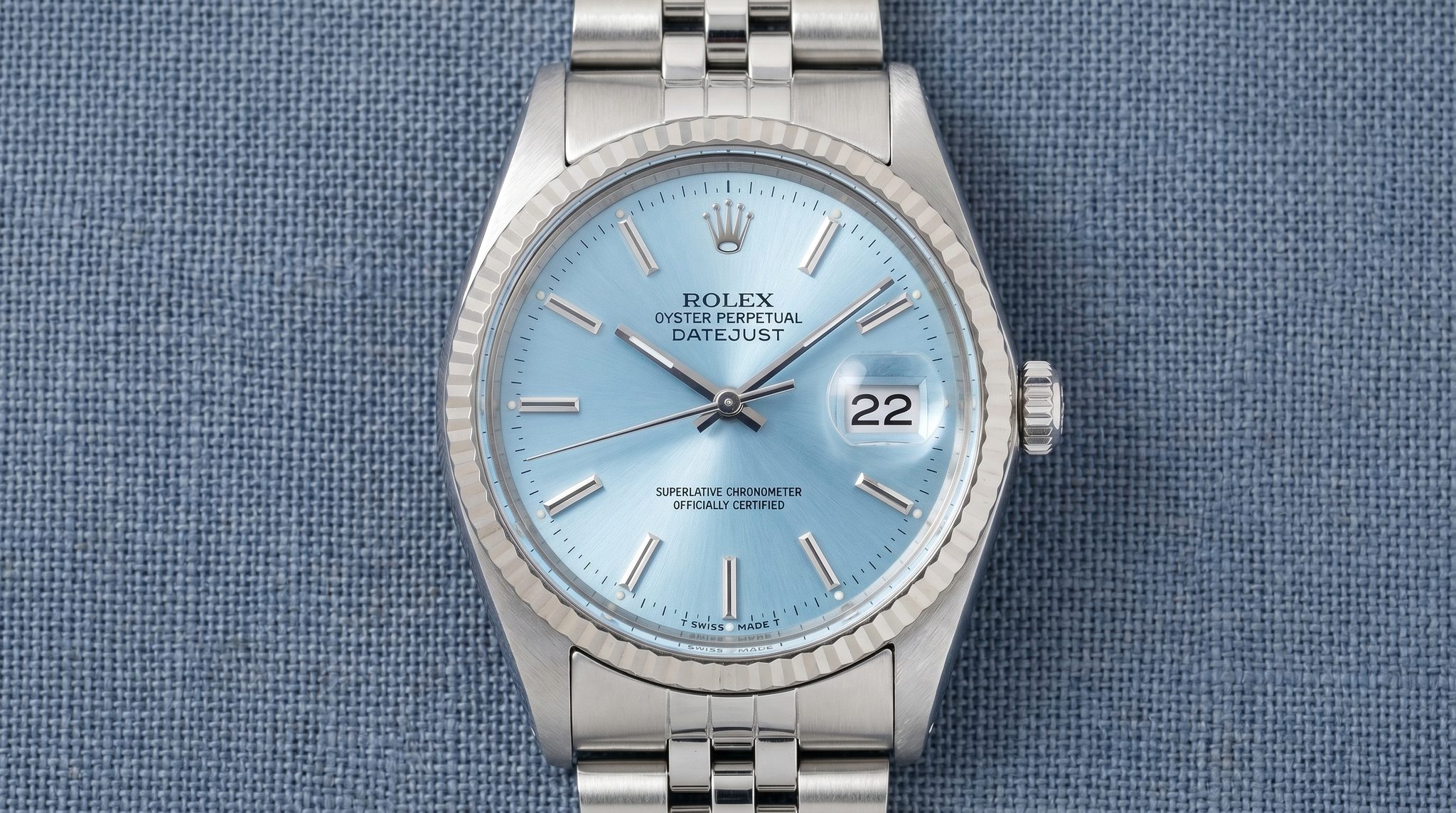
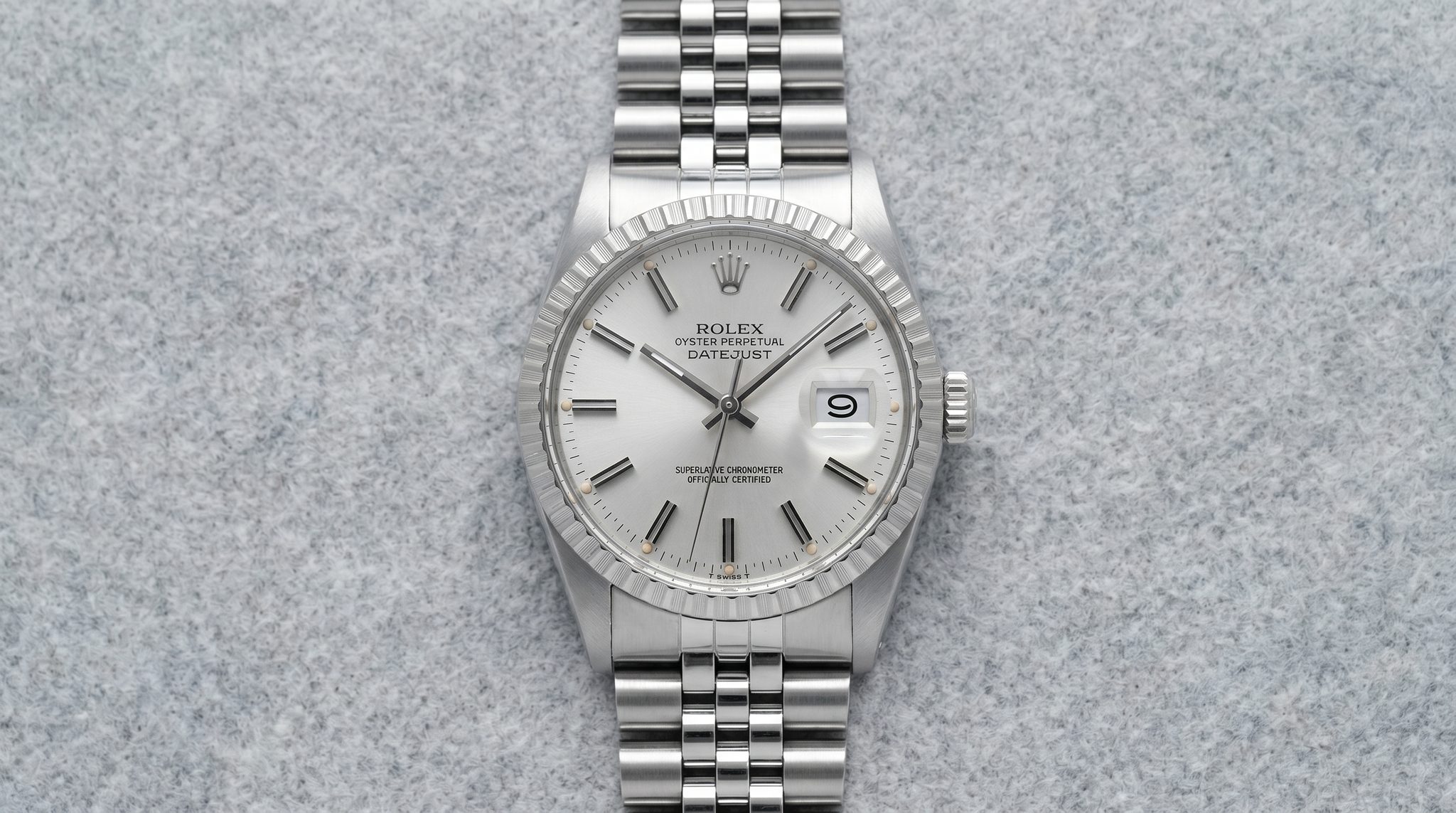
Sapphire five-digit 162xx
This generation is the first broadly modern Datejust: sapphire crystal replaces acrylic, and Cal. 3135 becomes the long-running engine. The result is a Datejust that keeps the familiar proportions and reference logic of earlier watches but adds the more scratch-resistant look and feel that later owners expect. Within the run, certain external tells move independently, especially lume signatures and, late in production, cases with and without drilled lug holes. The reason the era ends is not a single aesthetic reset. It gives way to the six-digit 1162xx period, where Rolex’s emphasis shifts toward a more substantial bracelet feel and visible anti-counterfeiting measures such as the engraved rehaut, while the Datejust’s core concept remains intact.
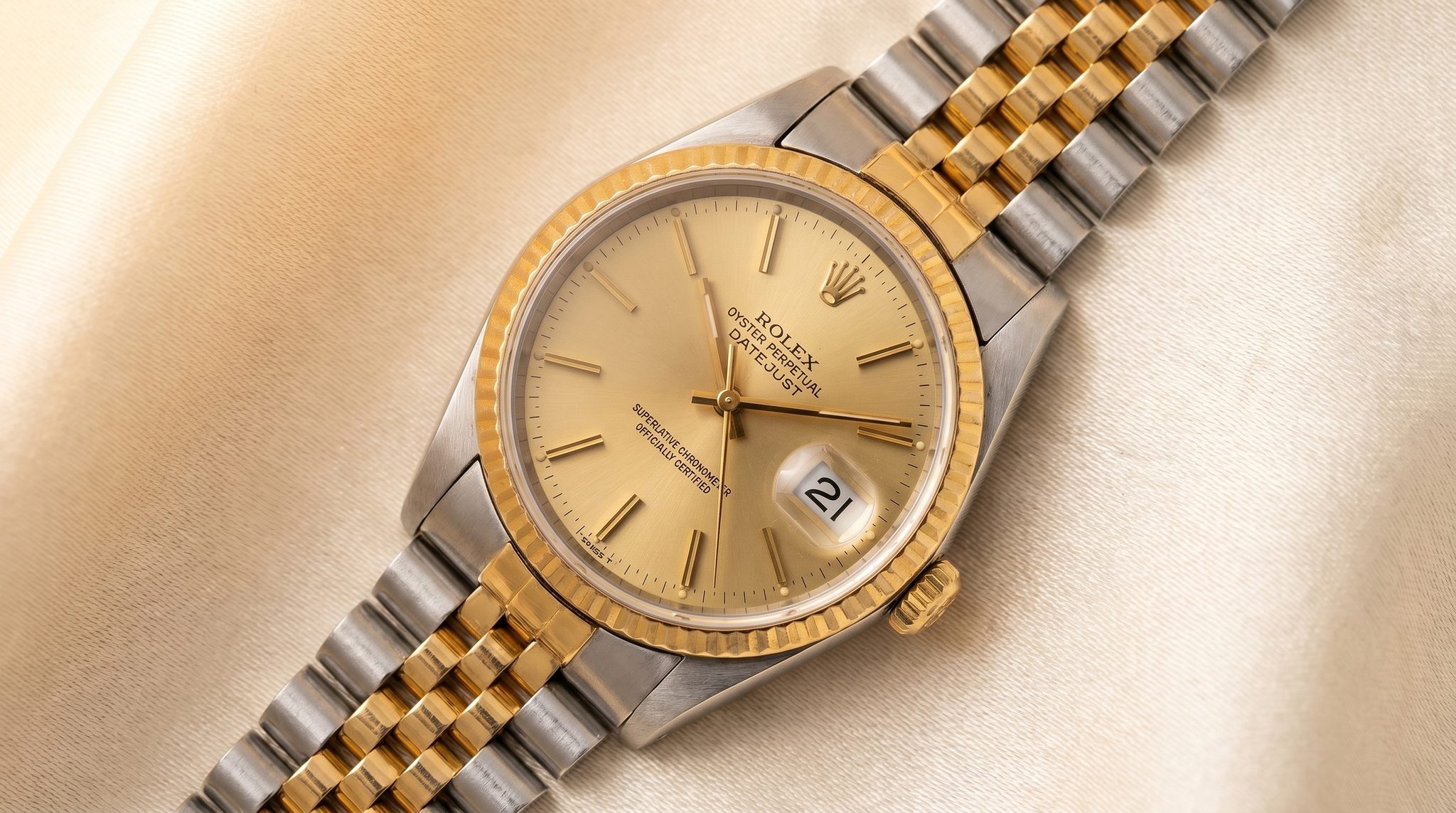
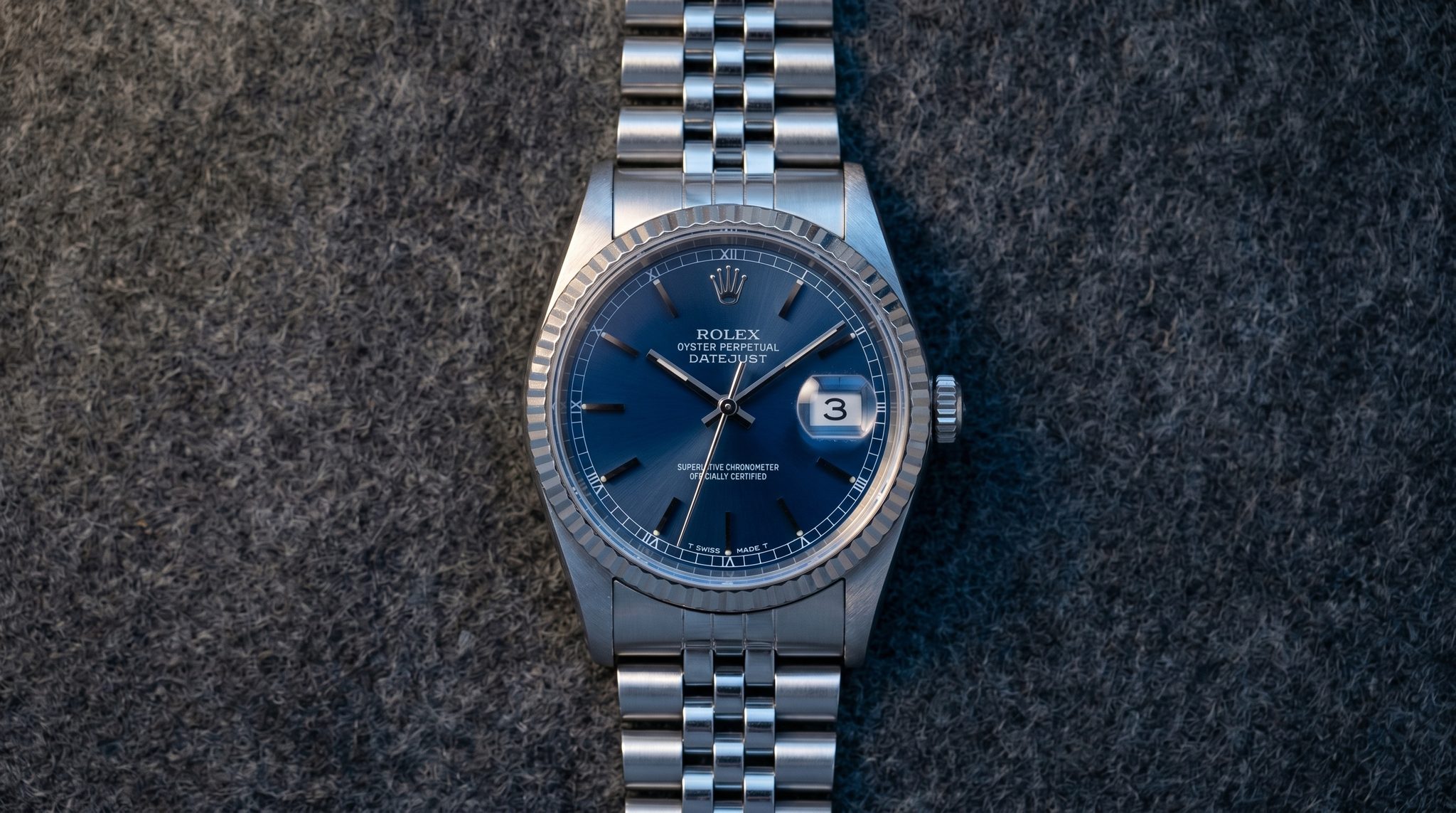
Six-digit modern 36
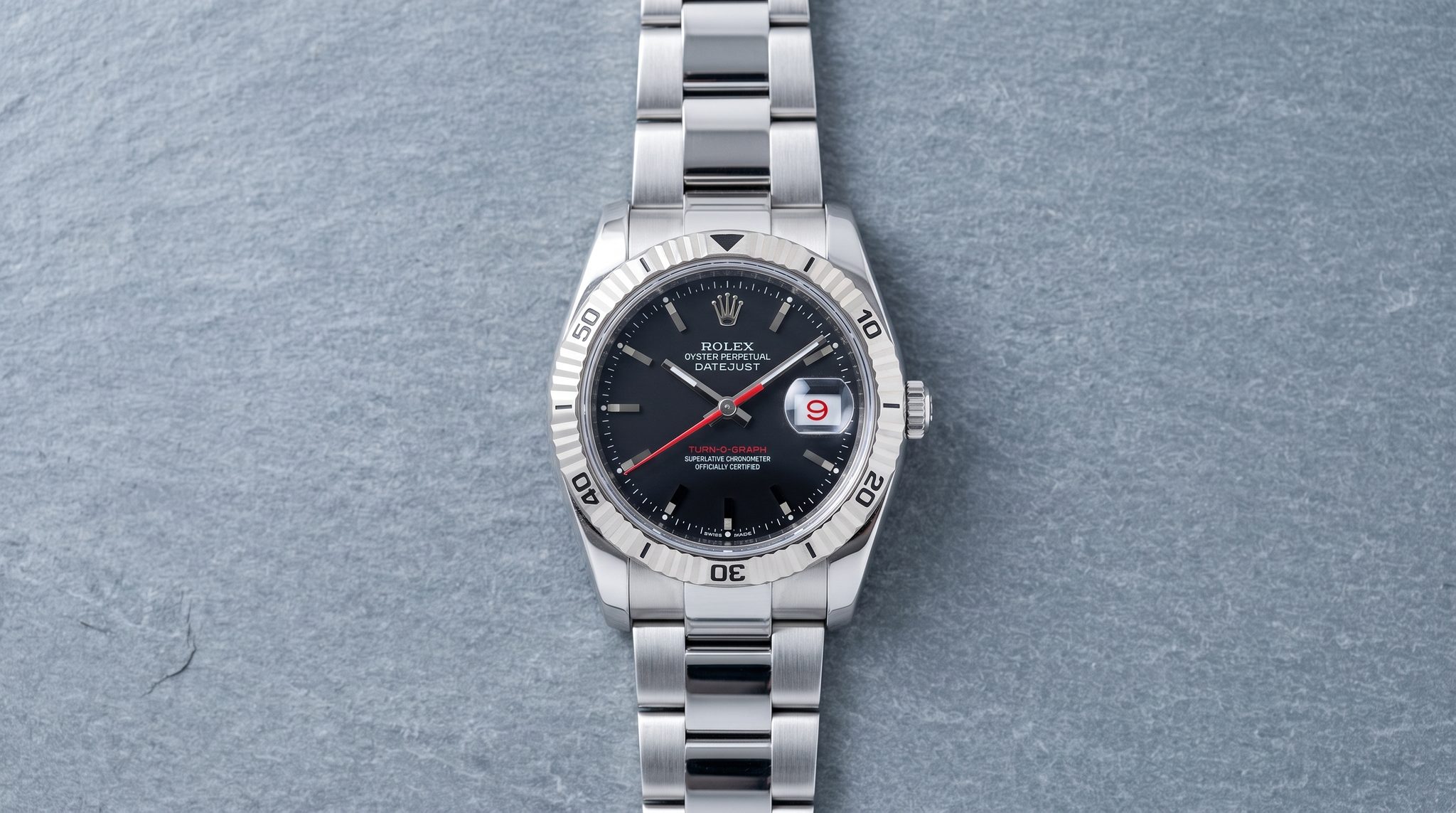
In this era the Datejust becomes unmistakably contemporary in construction and catalog strategy. The 36 mm references remain on Cal. 3135, but the watches are framed as stable platforms offered with wide, overlapping dial and bracelet menus rather than time-sequenced “marks.” The family also shows Rolex’s portfolio decisions in motion. The Turn-O-Graph returns as a modern steel Datejust with a white-gold rotating bezel and conspicuous red accents in 116264, then disappears again around 2011 without a direct successor. The era ends with the movement-led handoff to Cal. 3235 in the late 2010s, when Rolex updates the Datejust’s mechanics and reserve while keeping the outward identity largely familiar.
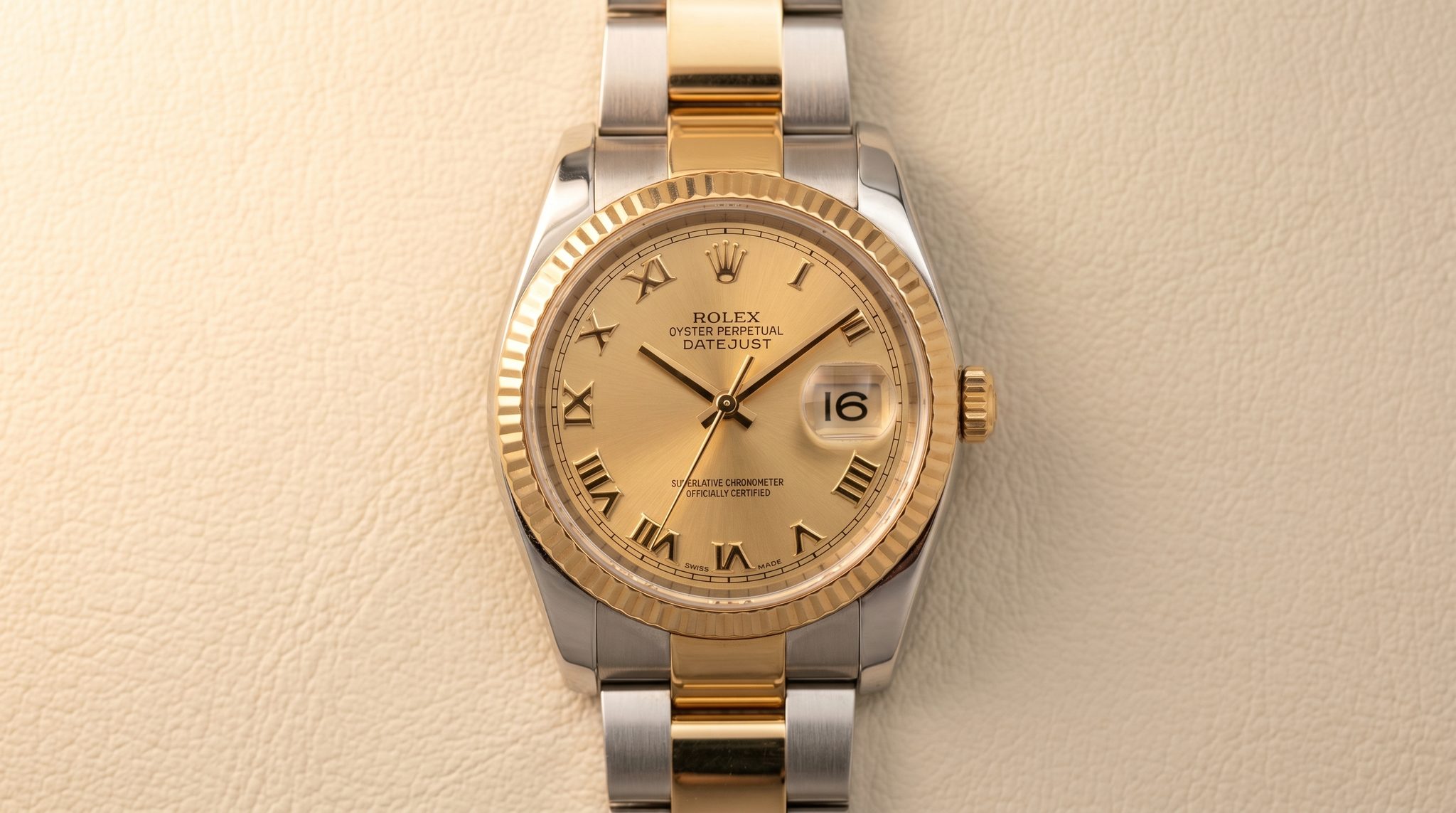
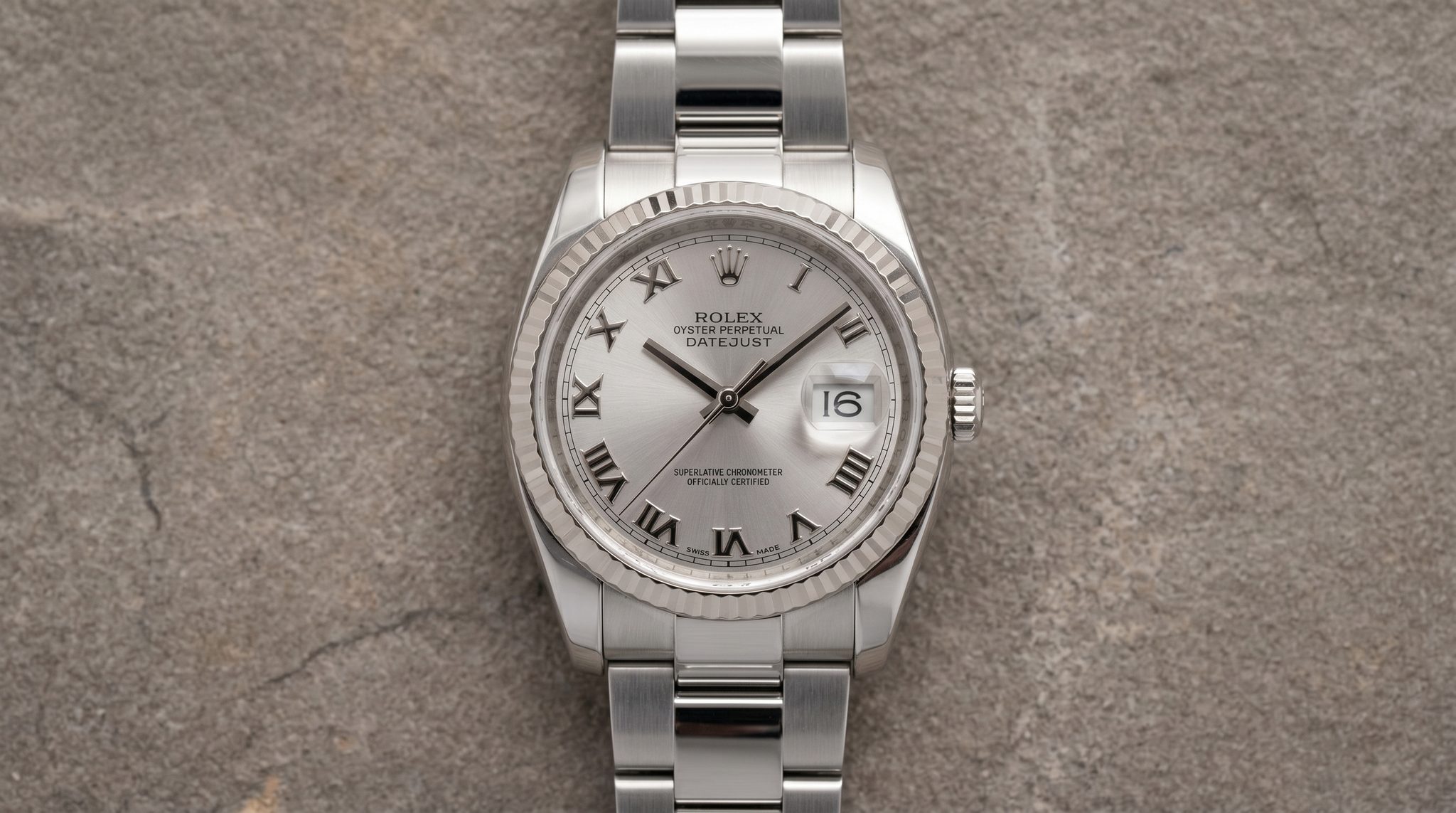
Datejust II to 41
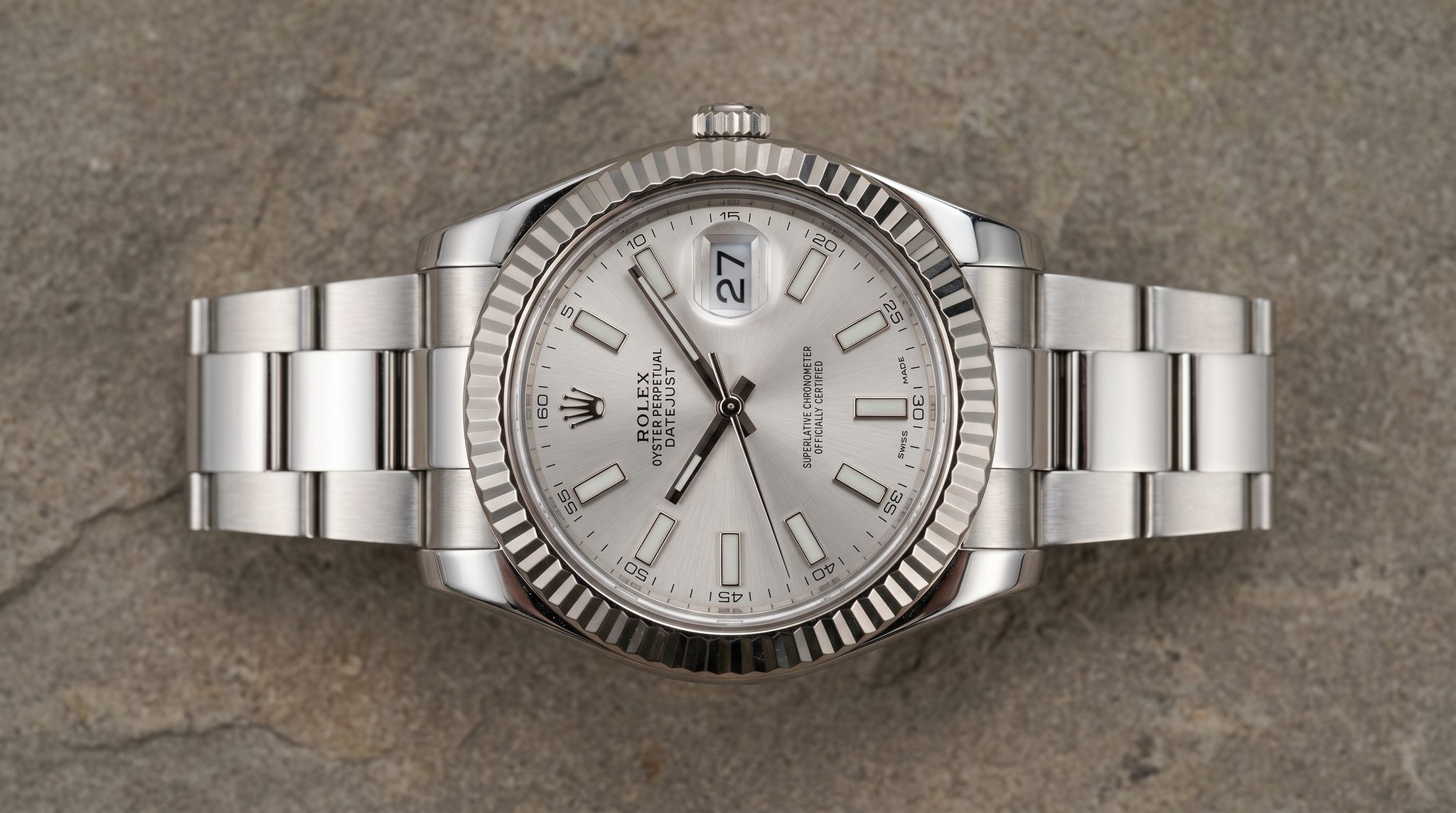
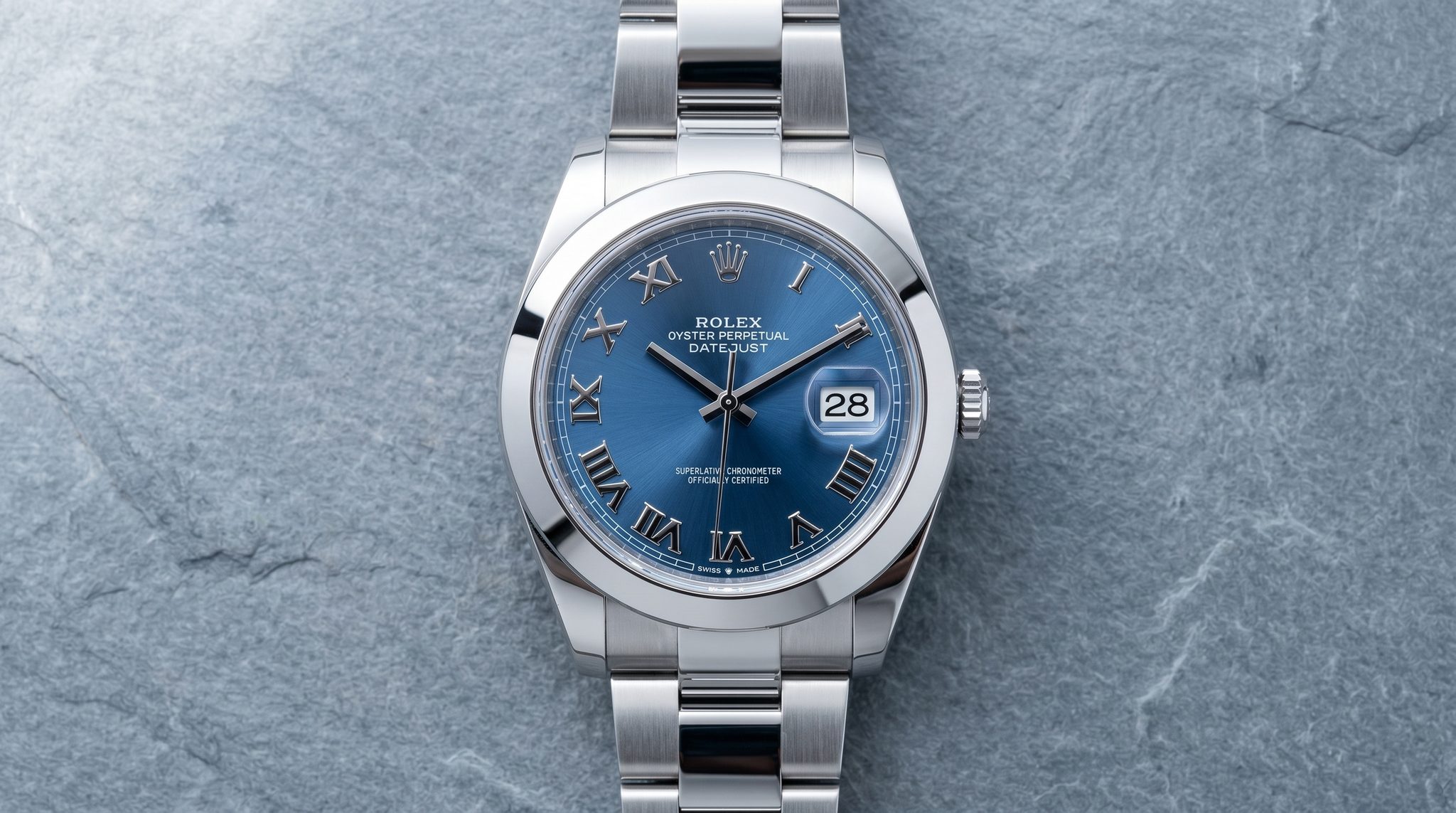
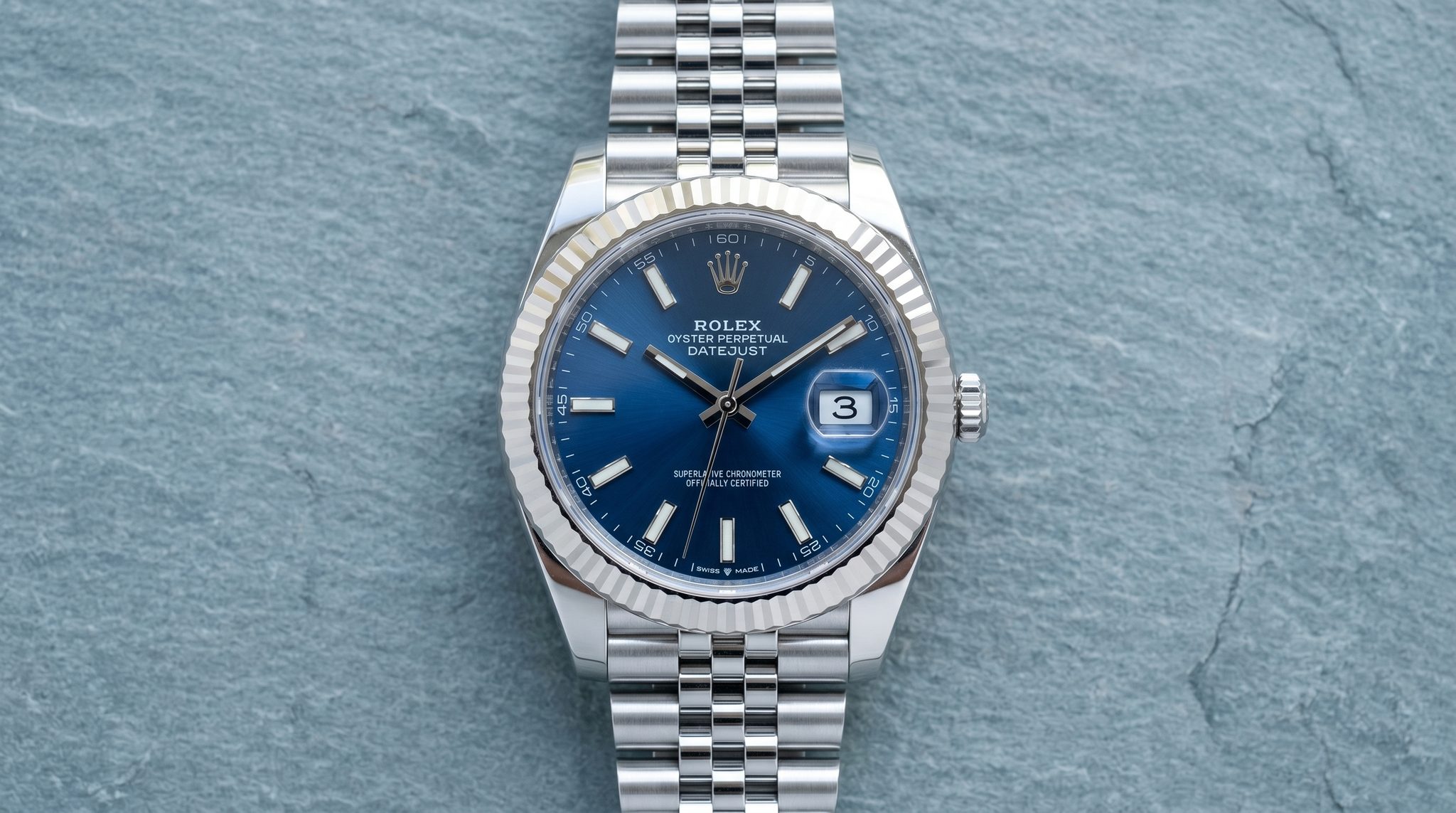
This is the larger-case branch of the family. The Datejust II 116334 establishes the modern 41 mm Datejust concept with a fixed recipe, including a white-gold fluted bezel and Cal. 3136, and it runs as a self-contained chapter until it is replaced in 2016. The Datejust 41 generation that follows is positioned in editorial and dealer coverage as a refinement toward more balanced proportions, and it introduces Cal. 3235 as the defining mechanical update. Within the 41 mm line, the split between smooth and fluted bezels becomes the most immediate way to read intent, with configuration choices, especially dial and bracelet, driving how individual watches are perceived more than mid-run hardware changes.
Current 36, Cal. 3235
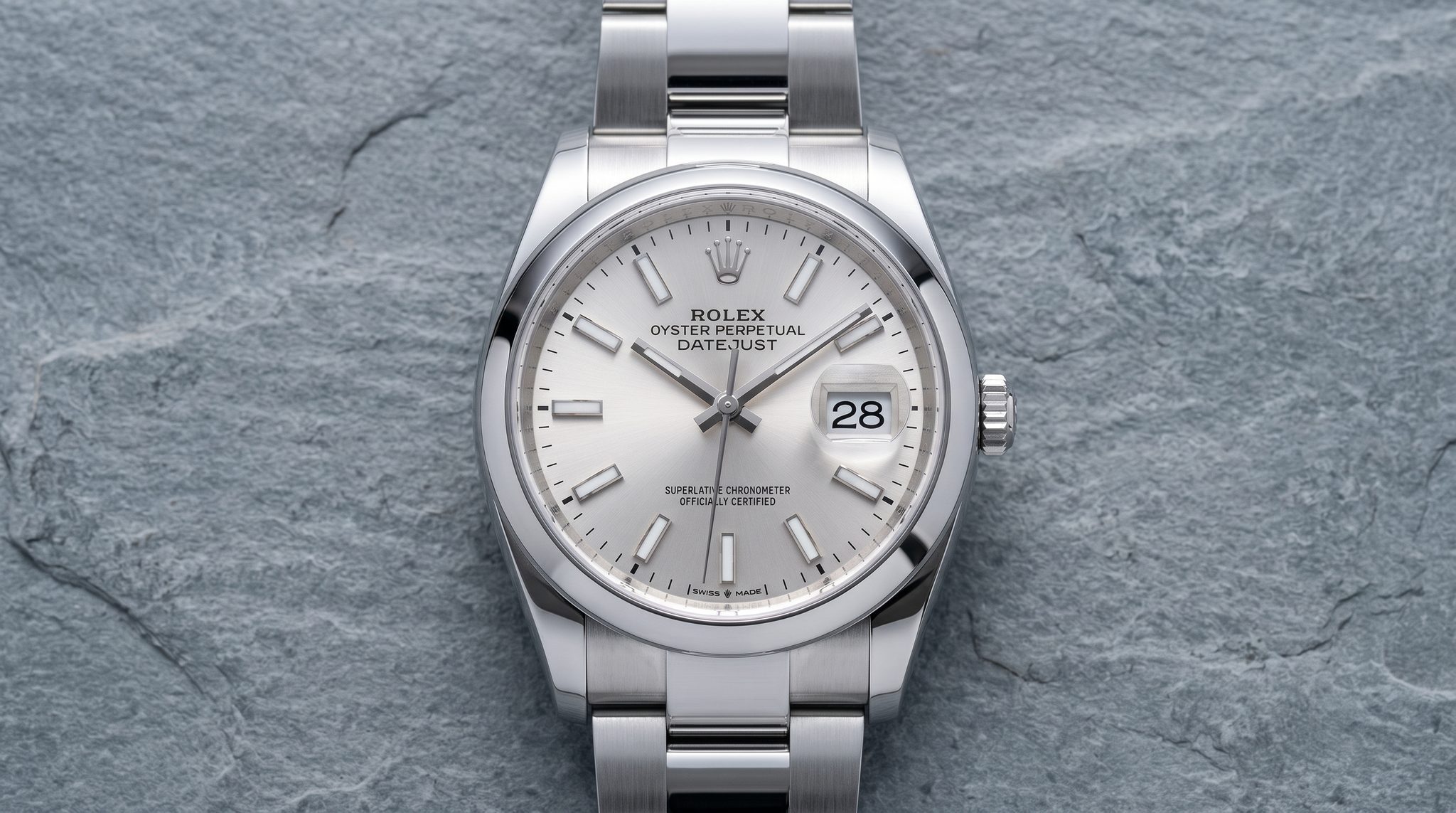
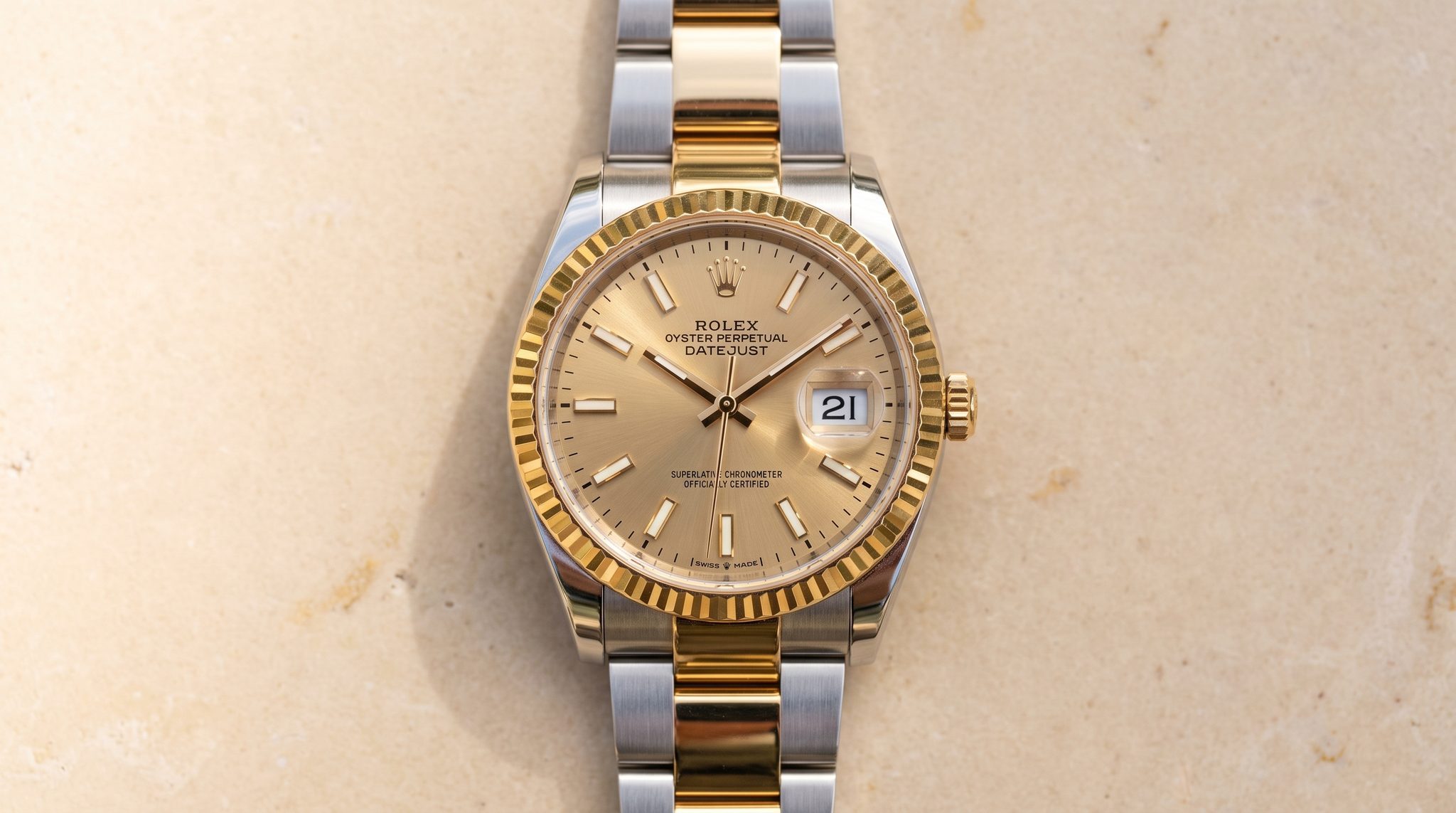
The current 36 mm Datejust generation is defined by the Cal. 3235 movement and its documented 70-hour power reserve, paired to the familiar Datejust architecture rather than a visible reinvention. In practice, the family becomes even more configuration-led. Smooth steel (126200), fluted white-gold over steel (126234), and yellow Rolesor with fluted yellow gold (126233) are best understood as Rolex’s present-day catalog pillars, with dials and bracelets functioning as a menu rather than a timeline. The era has no documented endpoint yet, and there is no published successor reference to treat as a clean closing chapter.
Which Datejust to buy
For daily wear with the fewest vintage compromises, the current Cal. 3235 generation is the most straightforward. 126200 is the understated choice, steel and smooth bezel, it keeps the Datejust idea but avoids the precious-metal signal. If the classic look is the goal, 126234 delivers the modern movement in the fluted-bezel silhouette that has defined steel Datejusts for decades.
For a first vintage Rolex Datejust, 1603 is often the gentlest entry into the 1960s–1970s aesthetic because the engine-turned steel bezel reads utilitarian and the reference’s variety is mostly on the dial, not locked behind rare metal configurations. If the collecting goal is the archetypal vintage expression, 1601 is the reference most often treated as the benchmark because it fixes the fluted-bezel template in the long 16xx run.
For a reference-collector’s target inside the modern catalog era, 116264 rewards patience. It is a short-run, last-of-its-kind Turn-O-Graph, and its rotating bezel and red accents make it the Datejust that most clearly breaks the family’s fixed-bezel norm.
What to check on any Datejust
Buying across the Rolex Datejust family is mainly an originality and period-correctness problem, not a “one spec fits all” exercise. Rolex’s own servicing procedure states that parts not meeting requirements are systematically replaced, which is why genuine service dials, hands, bezels, and bracelets can still reduce collector originality. The Datejust is also a frequent target for dial swaps and parts-mixed frankenwatches because many references share a common visual language and interchangeable components.
Common questions about the Datejust
Rolex created the Datejust in 1945 for the company’s 40th anniversary. It was positioned as a prestige everyday watch that combined the Oyster case, self-winding, chronometer positioning, and a date displayed in a window at 3 o’clock.
- A Watchmaking Iconrolex.com
- Rolex Datejust, From innovation to standardrolex.com
- The Rolex Datejust Modelsnewsroom.rolex.com
Show 7 more
- Servicing your Rolex, Our servicing procedurerolex.com
- The Evergreens, The History of the Rolex Datejustmonochrome-watches.com
- History of Rolex Datejust Watches, A Timeless Legacybobswatches.com
- A Guide to the Rolex Datejustdannysvintagewatches.com
- Datejust, History, Specs and Referencestime-wire.com
- The History of the Rolex Datejustcrownandcaliber.com
- Rolex Datejusten.wikipedia.org