

Rolex Datejust 16220
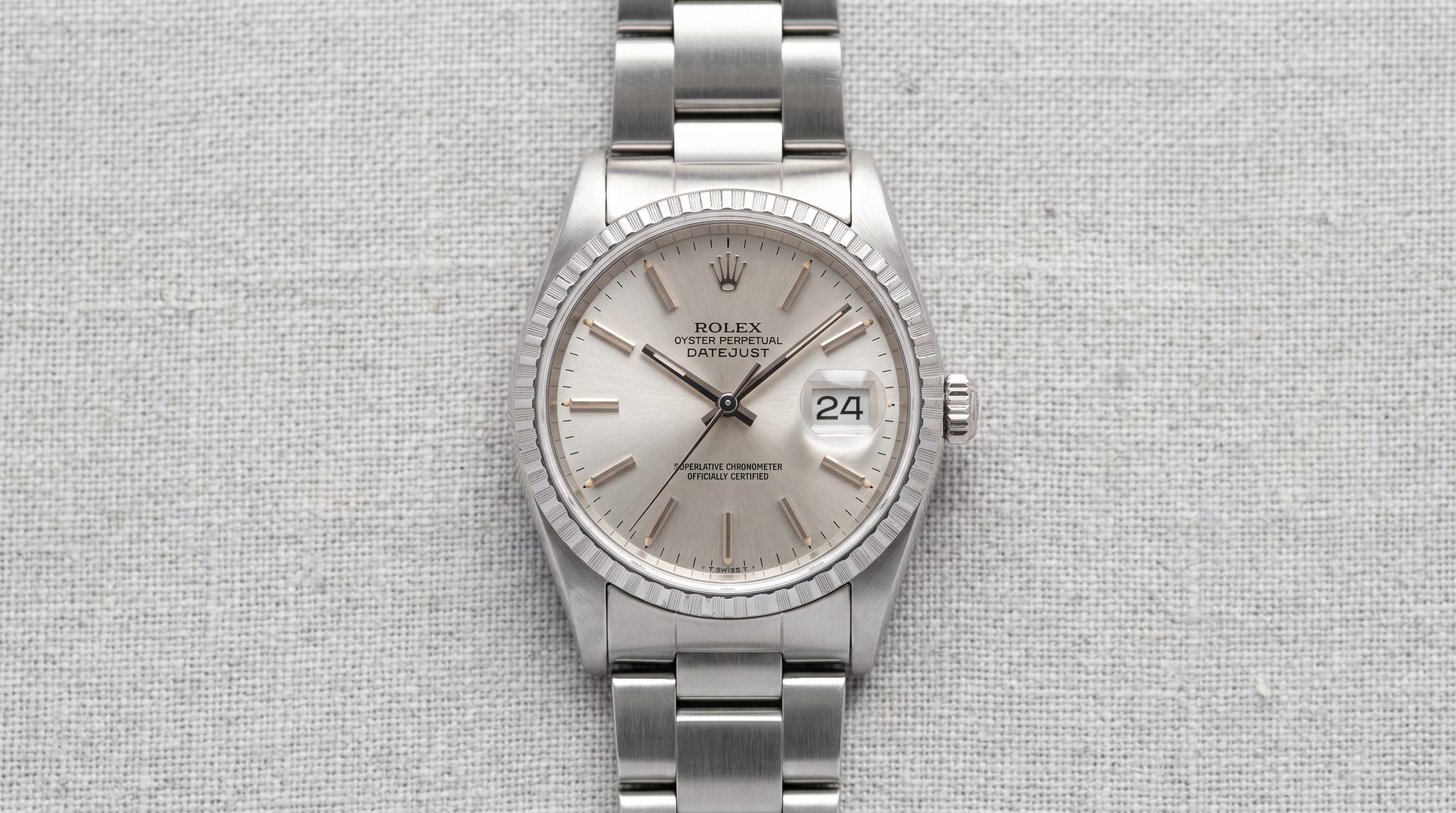
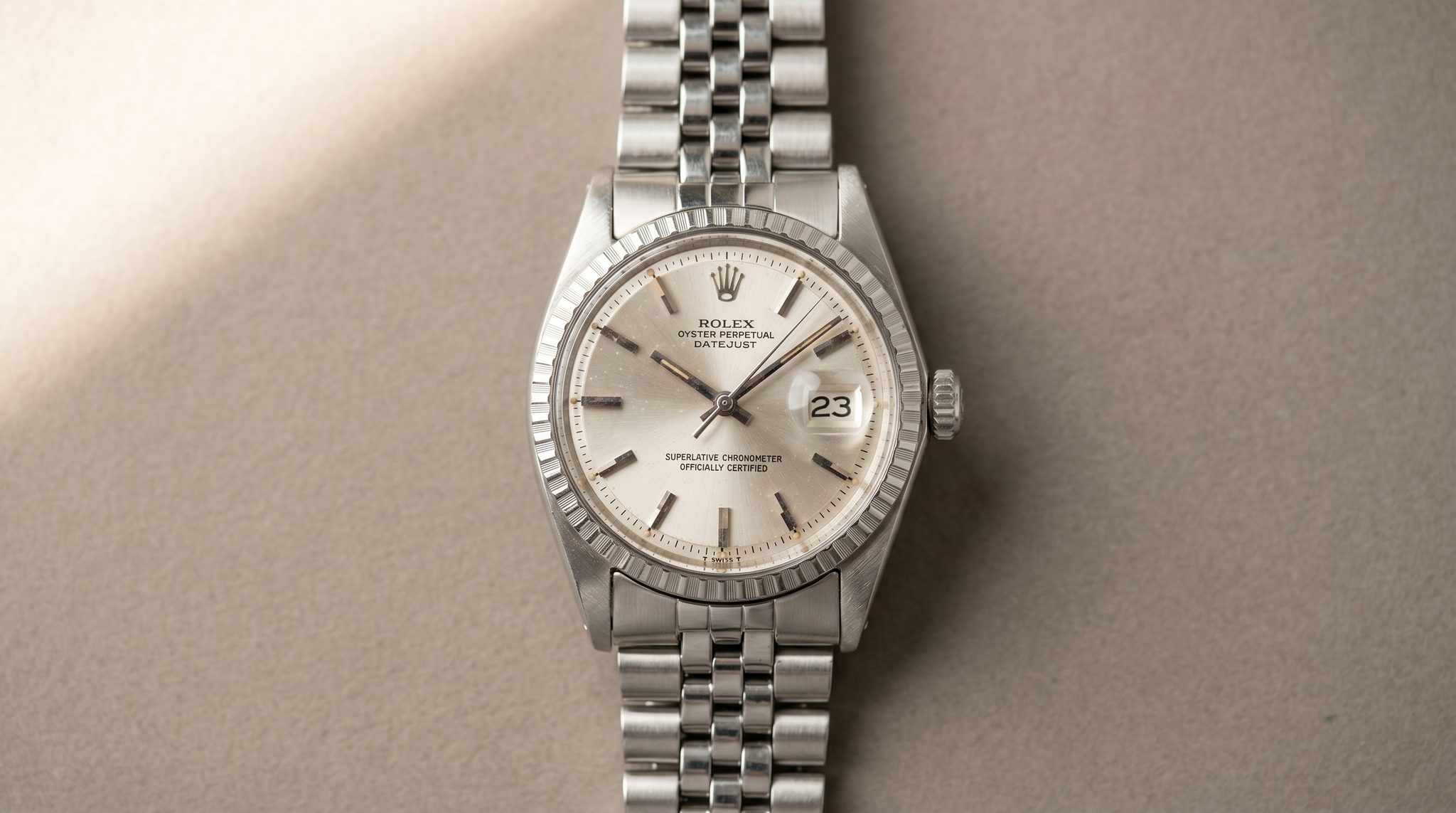
The Rolex Datejust 16220 is the last all‑steel 36 mm Datejust to pair the modern sapphire-and-3135 platform with Rolex’s now-discontinued engine‑turned steel bezel.
- Production
- c. late 1980s–mid 2000s
- Case
- Stainless steel
- Diameter
- 36 mm
- Thickness
- 11.5 mm
- Lug width
- 20 mm
- Lug-to-lug
- 43.5 mm
- Bezel
- Engine-turned steel
- Crystal
- Sapphire, Cyclops
- Water resist
- 100 m
- Movement
- Cal. 3135
- Power
- 48h
- Chronometer
- Yes
The Rolex Datejust 16220 was produced from the late 1980s to the mid-2000s.
The Rolex Datejust 16220 is the end of a distinctly Rolex idea: a plain steel Datejust made more expressive by machining the bezel rather than upgrading the metal. In hand, the engine‑turned ring reads like a tool for catching light, alternating crisp cut facets with flatter segments, and it is precisely this all‑steel, patterned bezel that Rolex later abandoned. The 16220 matters because it preserves that bezel on the modern five‑digit platform, with a sapphire crystal and the caliber 3135 underneath.
The reference belongs to the 162xx Datejust generation built around the 3135, but its exact production years are not documented consistently in the market record. Specialist and dealer sources place it broadly from the late 1980s into the early to mid‑2000s, with specific claims ranging from 1988–2004 to 1988–2006, and narrower inventory-based ranges like 1989–1996 or 1991–1999. What can be verified from dated examples is simpler and more useful: 16220s exist at least from circa 1989 through at least 2001, which establishes the reference as a long-running five‑digit Datejust rather than a short transitional oddity.
As a piece of product evolution, the 16220 is best understood as the direct successor to the acrylic-crystal Datejust 16030 with its earlier caliber 3035, and as a dead end in bezel terms. It shares its 36 mm case format and everyday 100 m Oyster water resistance with its smooth-bezel sibling (16200) and its fluted white-gold sibling (16234), but it keeps the entire watch in steel while giving the bezel a distinctly textured presence. Later six‑digit Datejust 36 references modernized the case and bracelet and continued with smooth or fluted bezels; the engine‑turned style itself did not carry forward.
Mechanically, the watch is defined by Rolex’s caliber 3135. Listings for the reference describe the 3135 here as a 31‑jewel automatic beating at 28,800 vph, with stop seconds and a quickset date. In use that combination explains the 16220’s enduring appeal: it feels like a contemporary Datejust to set, to wear, and to live with, but it looks like a vocabulary Rolex chose to retire.
“A modern, sapphire-crystal Datejust built around Cal. 3135, but with the all-steel engine-turned bezel Rolex later chose to discontinue.”
Rolex Datejust 16220 production years: c. late 1980s–mid 2000s
The 16220 sits on a seam in Datejust history where the watch became mechanically and materially modern without abandoning the older language of surface detail. It arrives as part of the late‑1980s five‑digit 162xx generation that pairs a sapphire crystal with the caliber 3135, a movement described in period listings as a 28,800 vph, 31‑jewel automatic with hacking seconds and a quickset date. That combination explains why a 16220 wears like a contemporary Datejust: the crystal is hard and clear, and the movement is designed for precise setting and day-to-day convenience.
Where the reference keeps one foot in the earlier era is the bezel. The engine‑turned steel ring, with its alternating polished and matte-machined segments, is the defining identifier of the 16220 and links it back to the acrylic-crystal 16030 that preceded it. The reason Rolex kept this bezel through the five‑digit generation, and the reason it later discontinued the style in the following era, is not documented in the sources here. What the record does show is the direction of travel: later Datejust 36 references standardize around smooth and fluted options rather than keeping an all‑steel machined pattern.
Within the run, visible change tends to happen in parallel tracks rather than in a single clean “Mark” sequence. Case details evolve, such as the move from drilled lug holes to smoother no‑holes cases (a change that can be spotted instantly at the spring bar area), while dial printing at 6 o’clock shifts as luminous materials change from tritium to later non‑radioactive compounds. Late examples are documented at least into 2001, and the broader market consensus places the end of production in the early to mid‑2000s.
Taken together, the 16220 is a reminder that the Datejust’s archetype was still being edited in small but permanent ways during the 1990s and early 2000s. The watch looks conservative at a glance, yet its defining trait is a detail Rolex ultimately chose not to carry forward.
- c. late 1980sReference appearsEngine-turned steel bezel
- 1989Documented earlyPeriod papers dated 1989
- 1990Dated setPapers dated June 1990
- c. 1990sLug style shiftsLug holes present or absent
- c. late 1990sLume change“SWISS T<25” to “SWISS”
- 2001Late exampleSmooth lugs, no holes
- c. mid 2000sBezel retiresLater refs lack engine-turning
16220 against its neighbours
The 16220 is best judged against the watches on either side of its idea: the 16030 that introduced the same bezel style in the acrylic and cal. 3035 era, the 116200 generation that modernized the steel Datejust while dropping engine‑turning, and the 16200 as the closest same-era sibling whose only meaningful difference is bezel design.
This reference 16220 Rolex · focal c. late 1980s–mid 2000s | ||||
|---|---|---|---|---|
| Production | late 1970s–late 1980s | c. late 1980s–mid 2000s | c. 1988/1989–c. 2005 | mid-2000s onward |
| Case | Stainless steel | Stainless steel | Stainless steel | Stainless steel |
| Diameter | 36 mm | 36 mm | 36 mm | 36 mm |
| Bezel | Engine-turned steel | Engine-turned steel | Smooth steel | Smooth steel |
| Crystal | Acrylic, Cyclops | Sapphire, Cyclops | Sapphire, Cyclops | Sapphire, Cyclops |
| Water resist | 100 m | 100 m | 100 m | 100 m |
| Movement | Cal. 3035 | Cal. 3135 | Cal. 3135 | Cal. 3135 |
| Power | ~42h | 48h | 48h | ~50h |
| Chronometer | – | Yes | Yes | Yes |
Seven dial generations across the run
Early Datejust 16220 dials are identified first by the small line of text at 6 o’clock: “SWISS T<25”. That signature is the practical clue that the luminous material is tritium, and it often comes with lume plots that, in real life, can soften in color with age. The important point for dating is that the tritium marking is independent of dial design. A baton dial, a Roman numeral dial, or a tapestry dial can all be correct in this era, so the “SWISS T<25” line should be read as a lume-era identifier, not as a dial-style identifier.
What to check before buying a 16220
Buying a Rolex Datejust 16220 is less about chasing a single “best year” and more about protecting the one trait that makes the reference itself: the correct engine‑turned steel bezel. Because dials and cases evolved on separate timelines, the safest purchases are the ones that look coherent as a whole, where bezel, dial text at 6 o’clock, and case details agree with the watch’s general era.
Rolex Datejust 16220 price and value
A Rolex Datejust 16220 sells for about $4,800 at the median, typically $3,900 to $5,900 across 162 comparable sales.
Rolex Datejust 16220 for sale
Indicative figures from recent dealer, auction, and Grey Market sales (updated this week). Every watch is verified before it sells here.
Each point is a recent dealer or auction sale, banded to an indicative figure. The range shown is not a valuation.
Adjacent in the Datejust family
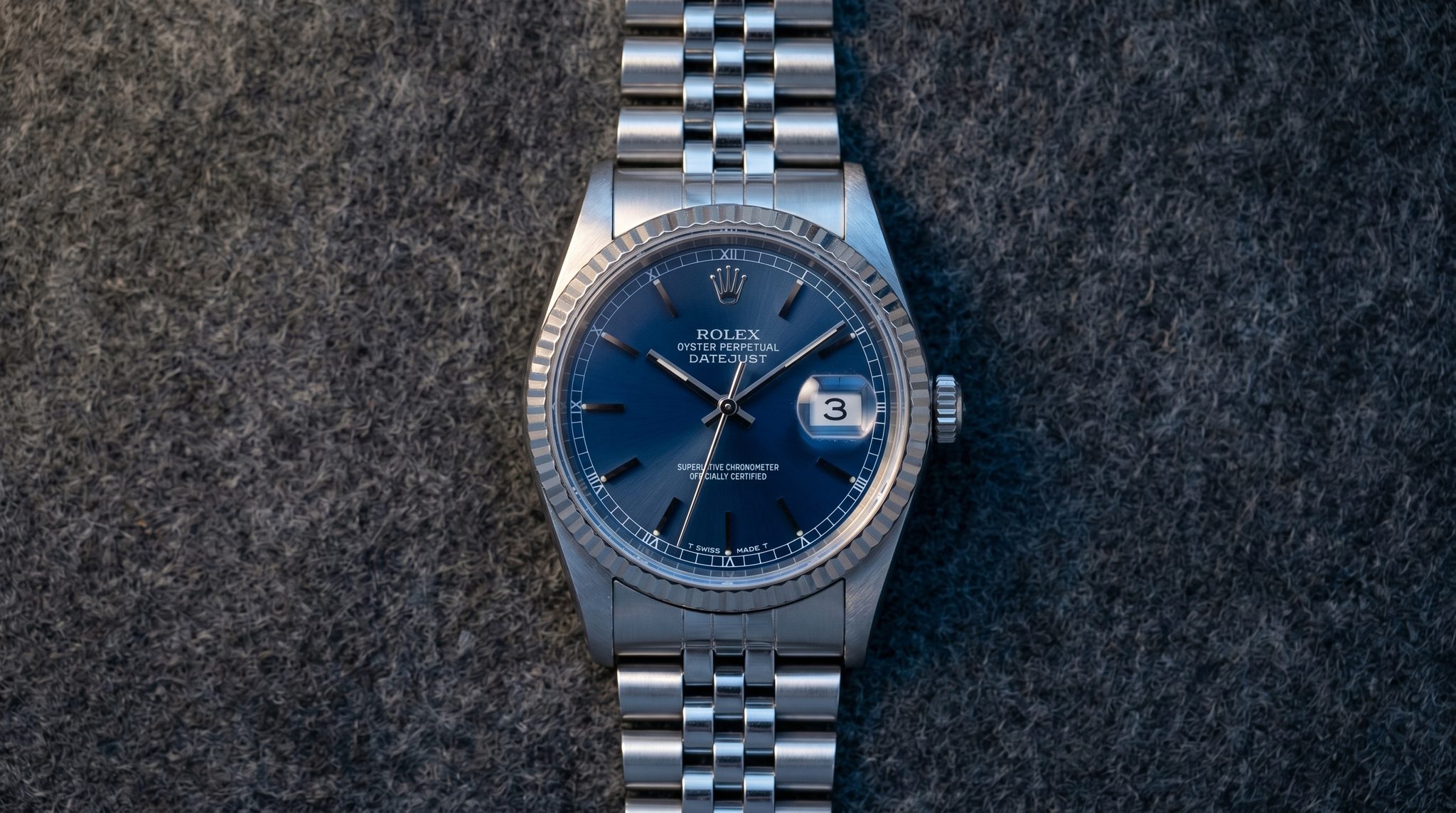
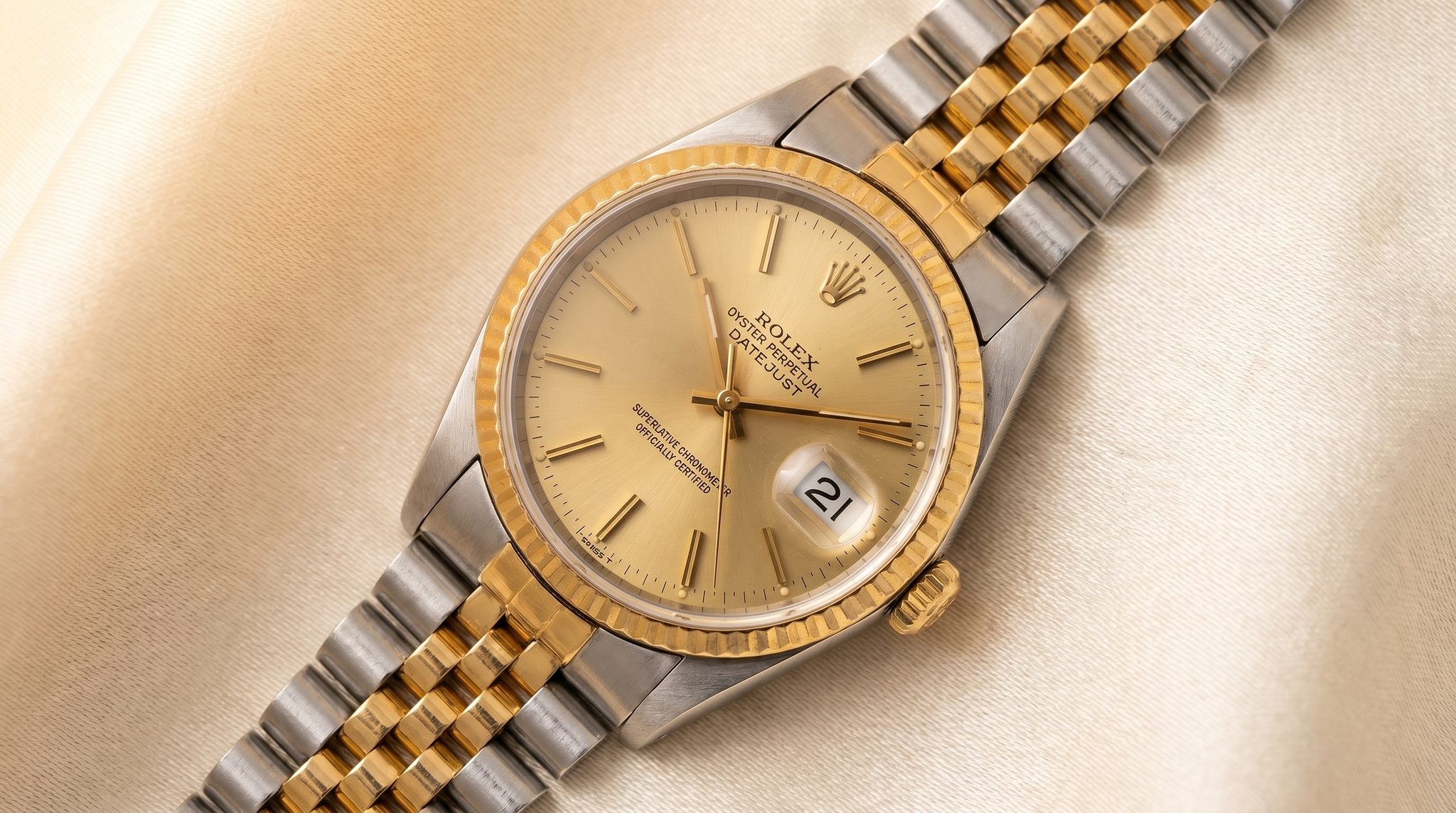
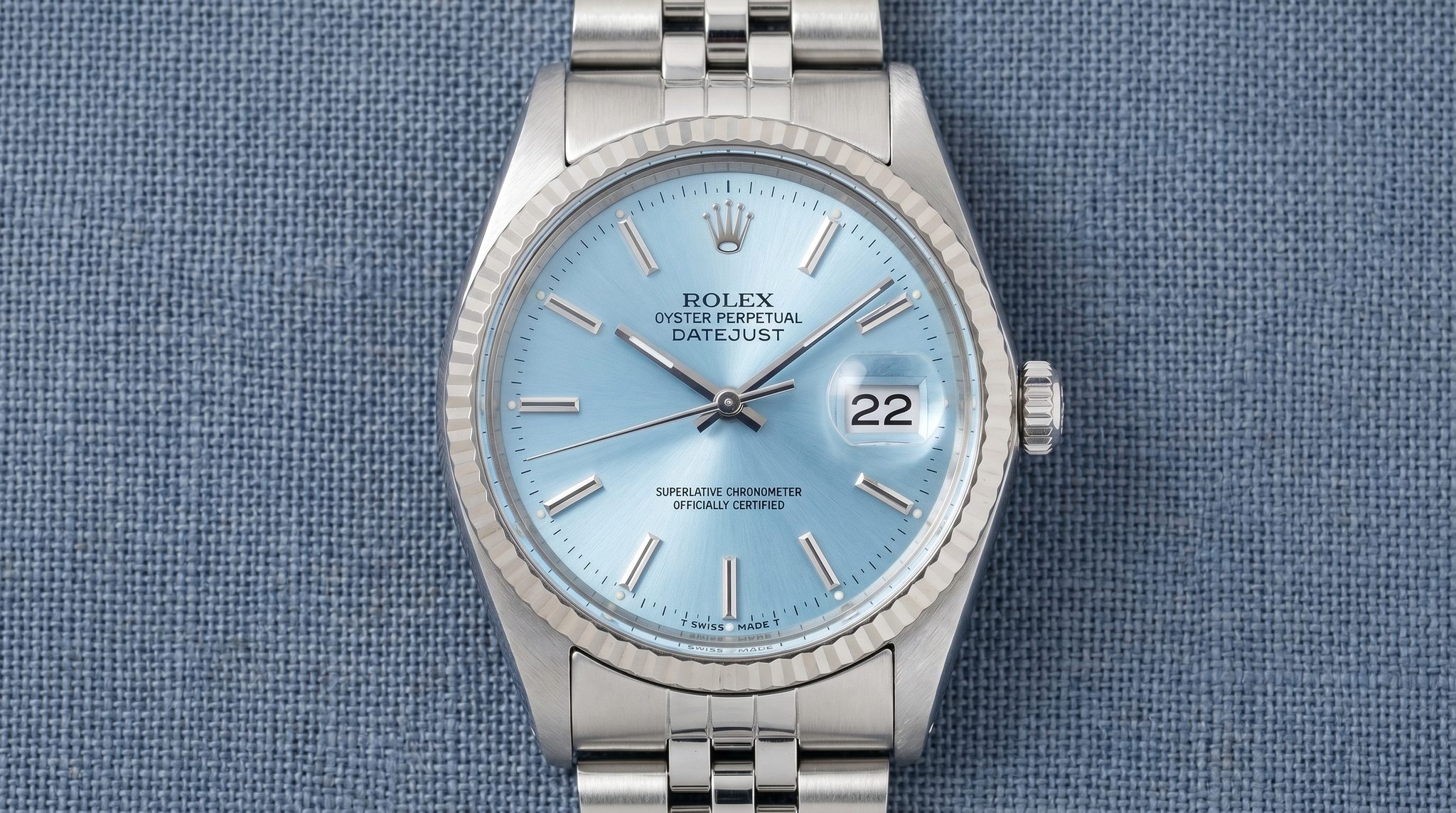
Common questions about the 16220
The Datejust 16220 is generally placed in production from the late 1980s into the early to mid‑2000s, but precise start and end years are not documented consistently. Specific sources cite ranges such as 1988–2004, 1988–2005, and 1988–2006, while some inventory-based guides narrow it to 1989–1996 or 1991–1999. Dated examples document the reference at least from circa 1989 through at least 2001.
- Review of the Rolex Datejust ref. 16220beckertime.com
- Stainless Steel Rolex Datejust 16000 vs. 16200; 16014 vs. 16234; 16030 vs. 16220beckertime.com
- 1990 Rolex Datejust 36mm on Jubilee 16220 Box & Paperskibblewatches.co.uk
Show 7 more
- Rolex Datejust 16220 Reference Reportottuhr.com
- Rolex Datejust Ref. 16220 Guidephigora.com
- Rolex Datejust 36 (16220)wristler.eu
- Rolex Watch Dimensions: Diameter, Thickness, Lug-to-Lugwristbuzz.com
- Rolex Datejust 16220 (reference page)chrono24.com
- A Closer Look at the Rolex Datejust 16220chrono24.com
- Rolex Datejust 16220 Stainless steel Gray c. 1989 (dealer listing)everywatch.com