

Rolex Datejust 16013
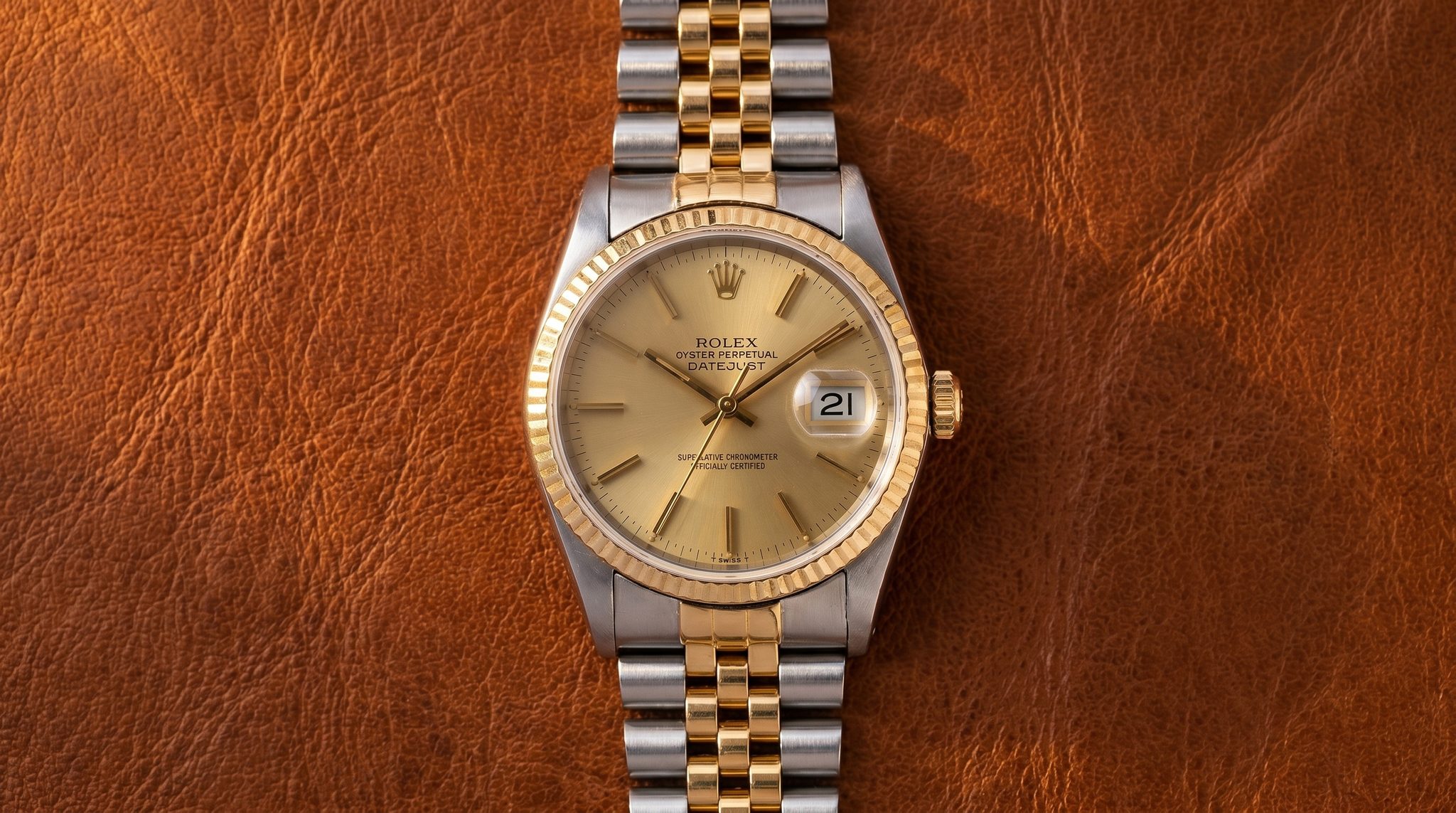
The Rolex Datejust 16013 is the Datejust that made the line feel modern to live with, pairing the bright, scratch-prone acrylic era with the Cal. 3035 quick-set date that finally stopped making you wind the hands through midnight.
- Production
- c. 1977–1988
- Case
- Steel + yellow gold
- Diameter
- 36 mm
- Bezel
- Fluted yellow gold
- Crystal
- Plexiglass, Cyclops
- Water res.
- 10 ATM
- Movement
- Cal. 3035
- Frequency
- 28,800 vph
- Power
- ~42h
- Date
- Quick-set
The Rolex Datejust 16013 is the watch that turned the Datejust from a habit into a convenience. It still wears the era of plexiglass and tritium, but it is built around the Cal. 3035, the high-beat movement that brought a true quick-set date to the Datejust, so the calendar can be corrected directly instead of by cycling the hands through days.
That single change explains why the 16013 sits so neatly in the lineage. Produced approximately from 1978 to the late 1980s (with some descriptions extending into very early 1990s sold stock), it occupies the transitional space between acrylic 16xx Datejusts such as the 1601 and 1603, and the later sapphire-crystal generation led by the 16233. In the hand, it reads as a classic two-tone 36 mm Datejust: a steel Oyster case, a yellow-gold fluted bezel that breaks light into narrow flashes, and most often a Jubilee bracelet whose gold center links pick up warmer tones as they age.
The reference is also a reminder that “vintage Datejust” collecting is often about surface, not architecture. Rolex kept the core specification essentially fixed across the run: yellow Rolesor case and bracelet, acrylic crystal with Cyclops, 100 m water resistance, and the Cal. 3035 at 28,800 vph. What changes the character, and therefore the desirability, is the dial you meet every time you check the time. Standard sunburst champagne and silver dials define the baseline, while textured executions such as tapestry (ribbed vertical channels cut into the dial) and the rarer mosaic pattern turn the same watch into something far more distinctive. Co-signed retailer dials, including Tiffany & Co., add yet another layer of specificity that matters only because it is printed where the eye already rests.
“Acrylic on the outside, quick-set on the inside: the 16013 is the Datejust that made everyday calendar life feel modern without abandoning the warm look of the tritium era.”
16013 across c. 1977–1988
The story of the Datejust 16013 is less about silhouette than about what changes when you actually live with the watch. Rolex’s 16xxx Datejust generation appears from 1977 onward, and by approximately 1978 the 16013 is in circulation as the two-tone, fluted-bezel expression of that redesign. The case remains the familiar 36 mm Oyster format, but the center of gravity shifts to the movement inside.
The Cal. 3035 is the hinge. BeckerTime describes it as the movement that introduced 28,800 vph to Rolex’s men’s collection and, crucially for the Datejust, brought the first Quickset function to the range. The effect is easy to feel: a Datejust that can be set like a modern watch, where the date advances directly rather than being dragged forward a day at a time by repeatedly passing midnight.
From there, the record becomes more diffuse because the reference’s most meaningful variation is not a single, datable hardware transition. Two watches can be equally correct 16013s and still look very different because the dial is where Rolex offered texture, color, and occasionally retailer co-signatures. A tapestry dial, described by WatchBox as vertical channels cut into the dial blank, is directly documented on R-series examples around 1987, and it is treated as a distinct alternative to the standard sunburst surfaces. Mosaic dials exist as an even more unusual textured execution, but their production window within the late 1970s to 1980s style world is not tightly documented.
The clean mechanical end-point is the late 1980s shift to the sapphire-crystal, Cal. 3135 Datejust generation, represented in the Rolesor fluted line by the 16233. That is the moment the 16013 becomes legible in hindsight: a watch still visibly of the acrylic era, but already running on the architecture that made the Datejust feel like the everyday, always-correct calendar watch people imagine when they say “Datejust.”
- 1977Generation shiftFive-digit 16xxx refs appear
- c. 197816013 appearsFluted yellow-gold bezel
- c. 1978Cal. 3035 eraQuick-set date at crown
- c. 1987Textured dials seenVertical ribbed dial texture
- c. 1988Successor arrives16233 with sapphire crystal
16013 against its neighbours
The 16013 is easiest to understand when it is bracketed by what it replaced and what replaced it. Against the acrylic 1601/1603 generation it reads as a usability upgrade because the Cal. 3035 brings quick-set and a higher beat rate; against the 16233 it reads as the last two-tone fluted Datejust whose warmth comes from plexiglass and tritium rather than sapphire-era parts.
16003 Closest sibling (smooth bezel) c. 1977–late 1980s | This reference 16013 Rolex · focal c. 1977–1988 | |||
|---|---|---|---|---|
| Production | c. 1960–1977 | c. 1977–late 1980s | c. 1977–1988 | c. 1988–2009 |
| Diameter | 36 mm | 36 mm | 36 mm | 36 mm |
| Case | Steel (typ.) | Steel + yellow gold | Steel + yellow gold | Steel + yellow gold |
| Bezel | Fluted (white gold) | Smooth (yellow gold) | Fluted yellow gold | Fluted yellow gold |
| Crystal | Acrylic, Cyclops | Acrylic, Cyclops | Plexiglass, Cyclops | Sapphire, Cyclops |
| Movement | Cal. 1570/1575 | Cal. 3035 | Cal. 3035 | Cal. 3135 |
| Frequency | 19,800 vph | 28,800 vph | 28,800 vph | 28,800 vph |
| Power | ~42h | ~42h | ||
| Date | Non-quickset | Quick-set | Quick-set | Quick-set |
| Water res. | 10 ATM | 10 ATM |
Five dial generations across the run
The baseline Datejust 16013 look is the sunburst dial, most often in champagne but also seen in silver or white. Under light the surface fans out in fine radial brushing, while applied yellow-gold batons and their tritium plots sit slightly proud of the dial and age at their own pace. These dials are less about rarity than about coherence: sharp printing, intact lume plots, and a color that has not been scrubbed into something too new for an acrylic-era watch.
What to check before buying a 16013
Buying a Rolex Datejust 16013 is less about hunting a rare mechanical configuration than about confirming that the visible parts are telling the same story. Because the reference’s value is driven so strongly by dial originality, the main risks are refinished or replaced dials, swapped hands with mismatched tritium aging, and parts mixing that blurs the watch’s intended two-tone identity.
Condition is the next lever. The acrylic crystal that gives the 16013 much of its warmth also scratches easily, and heavy polishing can soften the Oyster case’s edges and the definition that makes a 36 mm Datejust feel crisp. Bracelet condition matters just as much: two-tone bracelets of this era can show real stretch and clasp wear, and that can change both price and how the watch feels on the wrist.
The practical payoff, when those pieces line up, is straightforward. A good 16013 is a 36 mm Datejust that wears comfortably, resists water to 10 ATM, and offers the modern convenience that defines the thesis of the reference: the Cal. 3035 quick-set date. It is the kind of watch that fits a weekday routine, but still looks unmistakably of its time when the plexiglass catches light and the tritium settles into a soft, even tone.
Rolex Datejust 16013 for sale
Indicative market value from recent dealer, auction, and Grey Market sales: median ≈ $4,700, with a typical $3,800–$5,900 range across 609 comparable sales (updated this week).
Each point is a recent dealer or auction sale, banded to an indicative figure. The range shown is not a valuation.
What a 16013 has sold for here
One 16013 has sold on Grey Market, verified before it shipped.
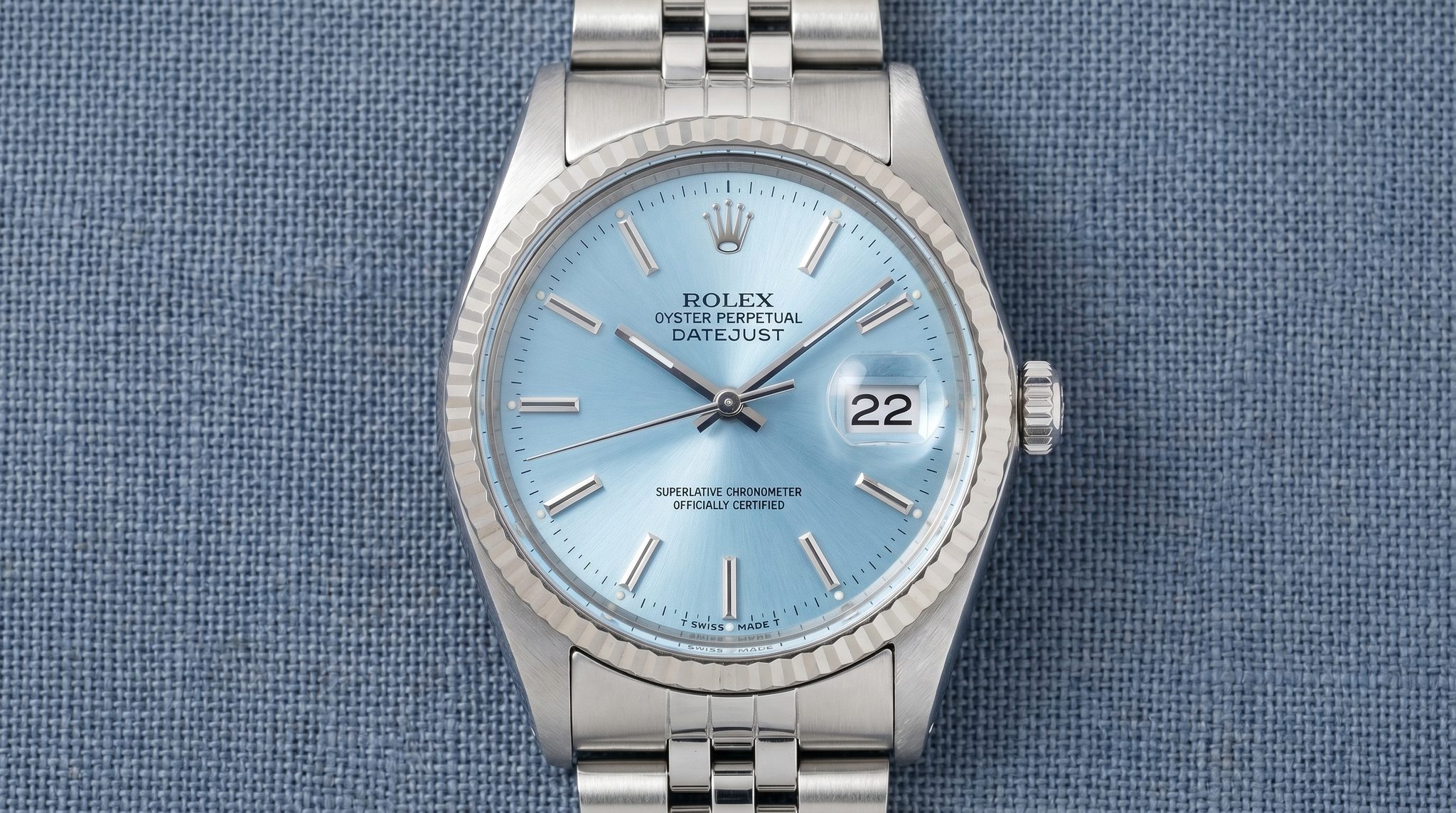
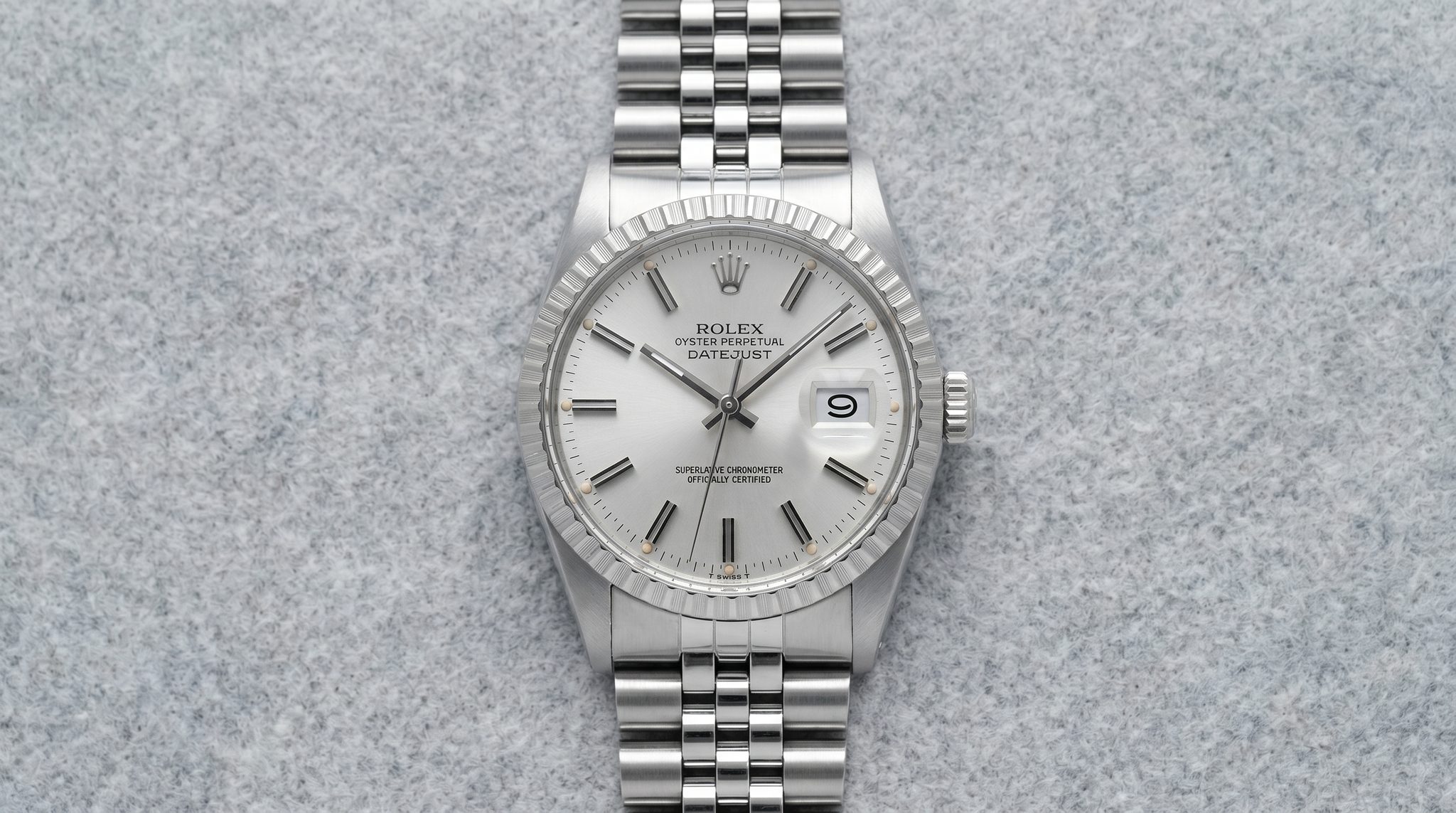
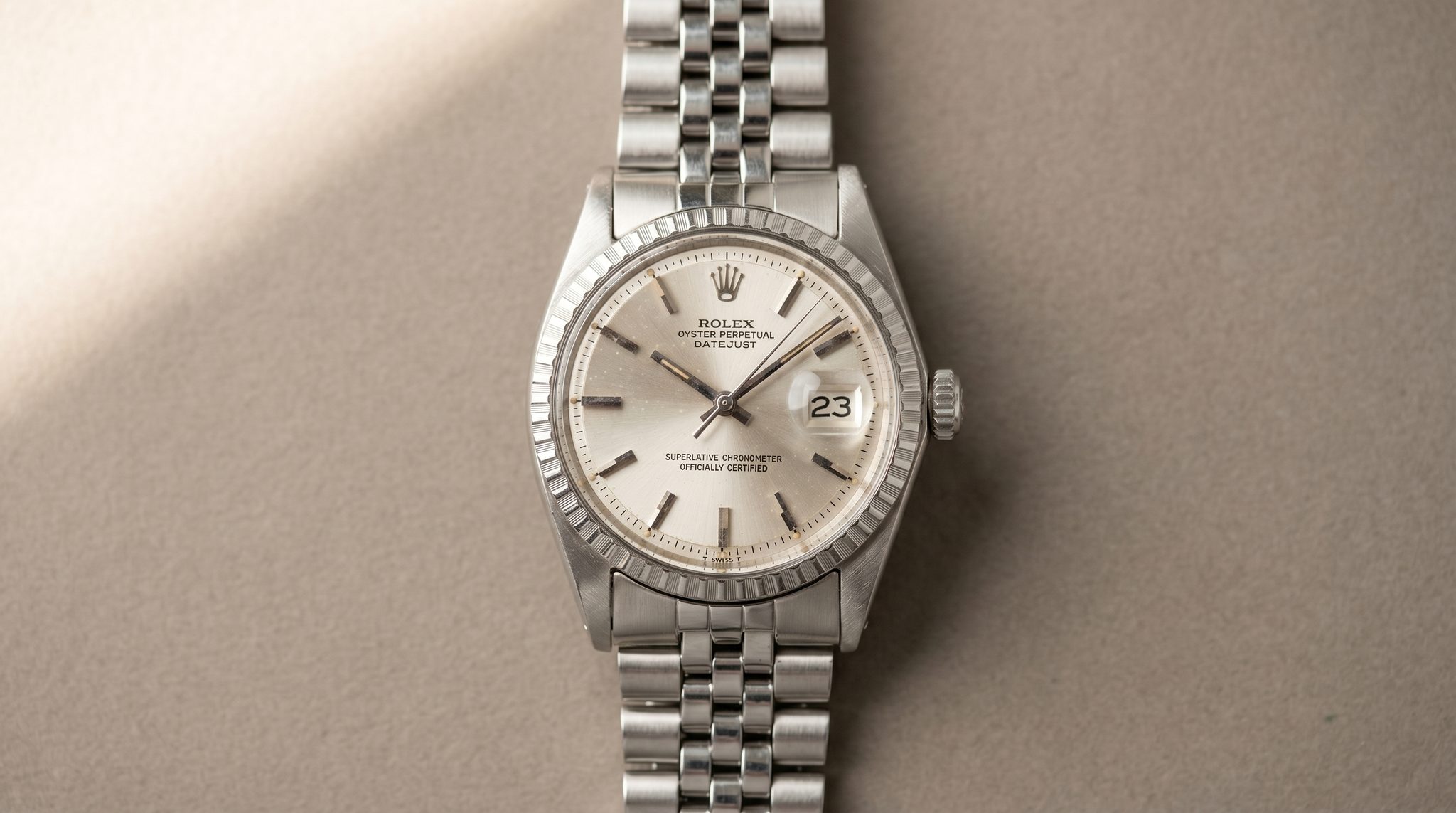
Adjacent in the Datejust family
Common questions about the 16013
Public sources do not give one single factory start and stop date, but examples are documented from about 1978 to the late 1980s, with some descriptions extending into very early 1990s sold stock.
- Review: The Rolex Datejust ref. 16013 - BeckerTimebeckertime.com
- Rolex 16013 - Datejust 36 watches - Chrono24chrono24.com
- Review of ROLEX Datejust ref.16013 - Luxury Watch Reviewsluxurywatches635.wordpress.com
Show 7 more
- Pre-Owned Rolex 16013 Datejust for Sale - BQ Watchesbqwatches.com
- Rolex Datejust 16013 Review: A Timeless Classic | WatchGuyswatchguys.com
- Rolex 16013 (Datejust 36) » Check Prices & More - Wristler.euwristler.eu
- Men's Rolex 16013 Datejust Watch Review | Bob's Watches - YouTubeyoutube.com
- Rolex Oyster Perpetual Datejust 16013 Luxury Watch Review - YouTubeyoutube.com
- Rolex Datejust 36 mm 16013 Reference Mosaic Dial - BUZZUFYbuzzufy.com
- Rolex Datejust 36, White Index Dial, Steel & Gold, 16013 - WatchChestwatchchest.com