

Rolex Datejust 126233
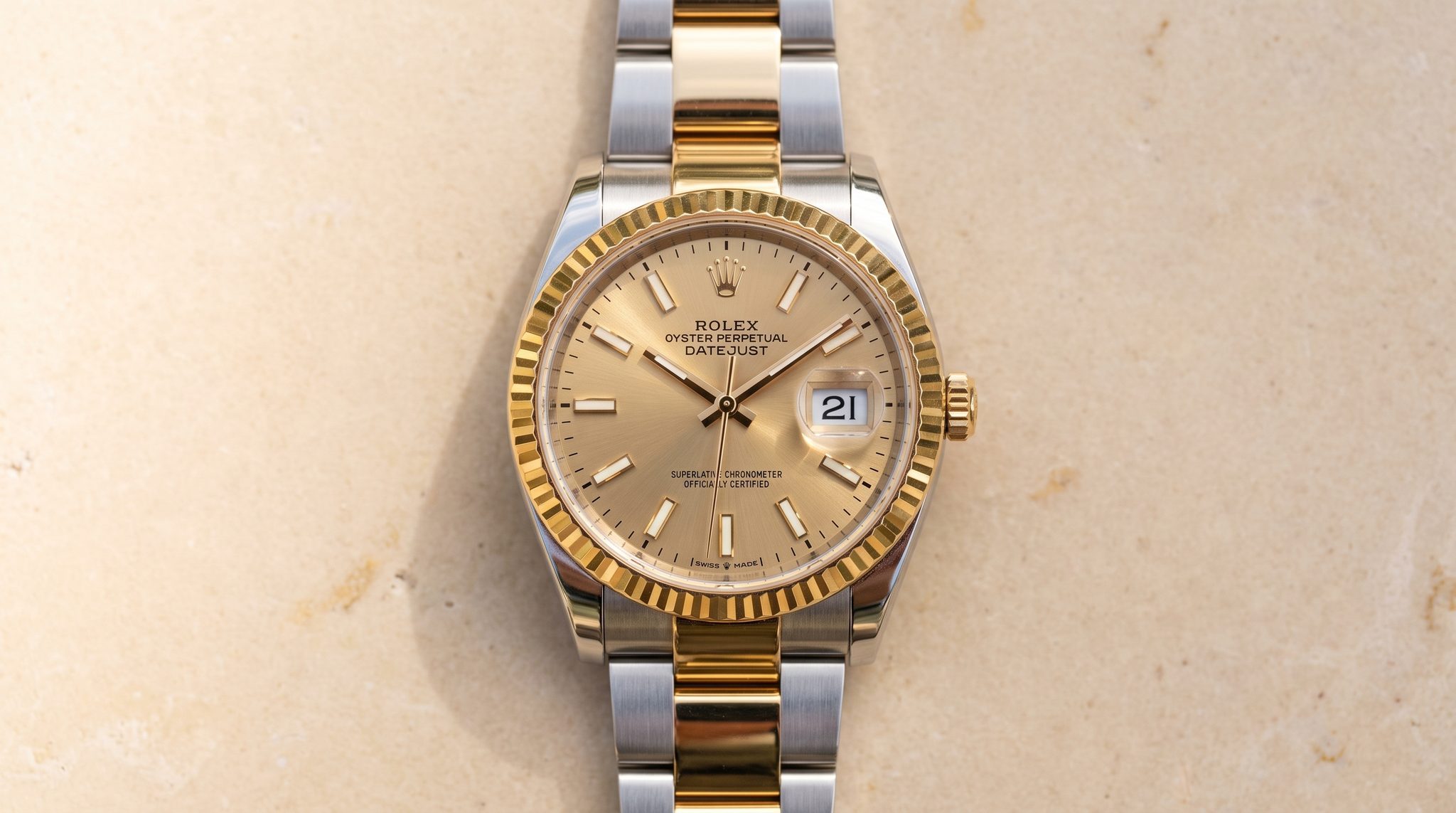
Introduced in 2018, the Rolex Datejust 126233 is the two-tone Datejust 36 that brought the yellow Rolesor formula into the calibre 3235 era, pairing familiar fluted-bezel dress cues with a modern 70-hour movement.
- Production
- 2018–present
- Case
- Yellow Rolesor
- Diameter
- 36 mm
- Thickness
- ~11–11.5 mm
- Lug width
- 20 mm
- Bezel
- Fluted, yellow gold
- Crystal
- Sapphire, Cyclops
- Water resist
- 100 m
- Crown
- Twinlock
- Movement
- Cal. 3235
- Power
- ~70h
- Chronometer
- Superlative
The Rolex Datejust 126233 is the moment the classic two-tone Datejust 36 stops being defined by the long-running 3135 generation and becomes a thoroughly modern daily watch. It arrived in 2018 with calibre 3235 and Rolex’s published approximately 70-hour power reserve, a single, practical number that captures the point of the update more clearly than any case-side tweak.
What makes ref. 126233 unusually easy to understand as a reference is also what makes it easy to mis-buy: the reference-level identity is stable. It stays a 36 mm Oyster case in yellow Rolesor (Oystersteel and yellow gold), waterproof to 100 metres, with a fluted yellow-gold bezel and the familiar date at 3 under a Cyclops. The differentiation, and most of the price spread in the mid-2020s market, comes from what you can see at a glance (dial execution and hour-marker style) and what you can verify in the set (bracelet choice, condition, and whether a watch is sold as Rolex Certified Pre-Owned).
“Ref. 126233 keeps the fluted, two-tone Datejust 36 look intact, then quietly modernizes it where it counts: calibre 3235 and a published ~70-hour reserve.”
126233 across 2018–present
Rolex introduced the Datejust 36 ref. 126233 in 2018 as the yellow Rolesor, fluted-bezel expression of the refreshed 36 mm line, and paired it from the start with manufacture calibre 3235. Rolex’s own documentation for m126233 describes the movement as a perpetual self-winding mechanical calibre with stop-seconds, rapid-setting date, and an approximately 70-hour power reserve, and it anchors the watch to the Superlative Chronometer standard of −2/+2 seconds per day after casing.
The mechanical change is straightforward, but its consequences are tangible. Calibre 3235 brings the Chronergy escapement and other modern Rolex architecture intended to improve efficiency and resilience, and it extends the reserve well beyond the earlier generation. At the same time, the rest of the reference is deliberately steady: 36 mm Oyster case, Rolesor metals, fluted bezel, sapphire crystal with Cyclops, and 100 m water resistance. Swisswatches Magazine notes that the 2018-era refresh also brought redesigned case sides and lugs, but Rolex does not publish a millimetre-by-millimetre breakdown of those geometry changes.
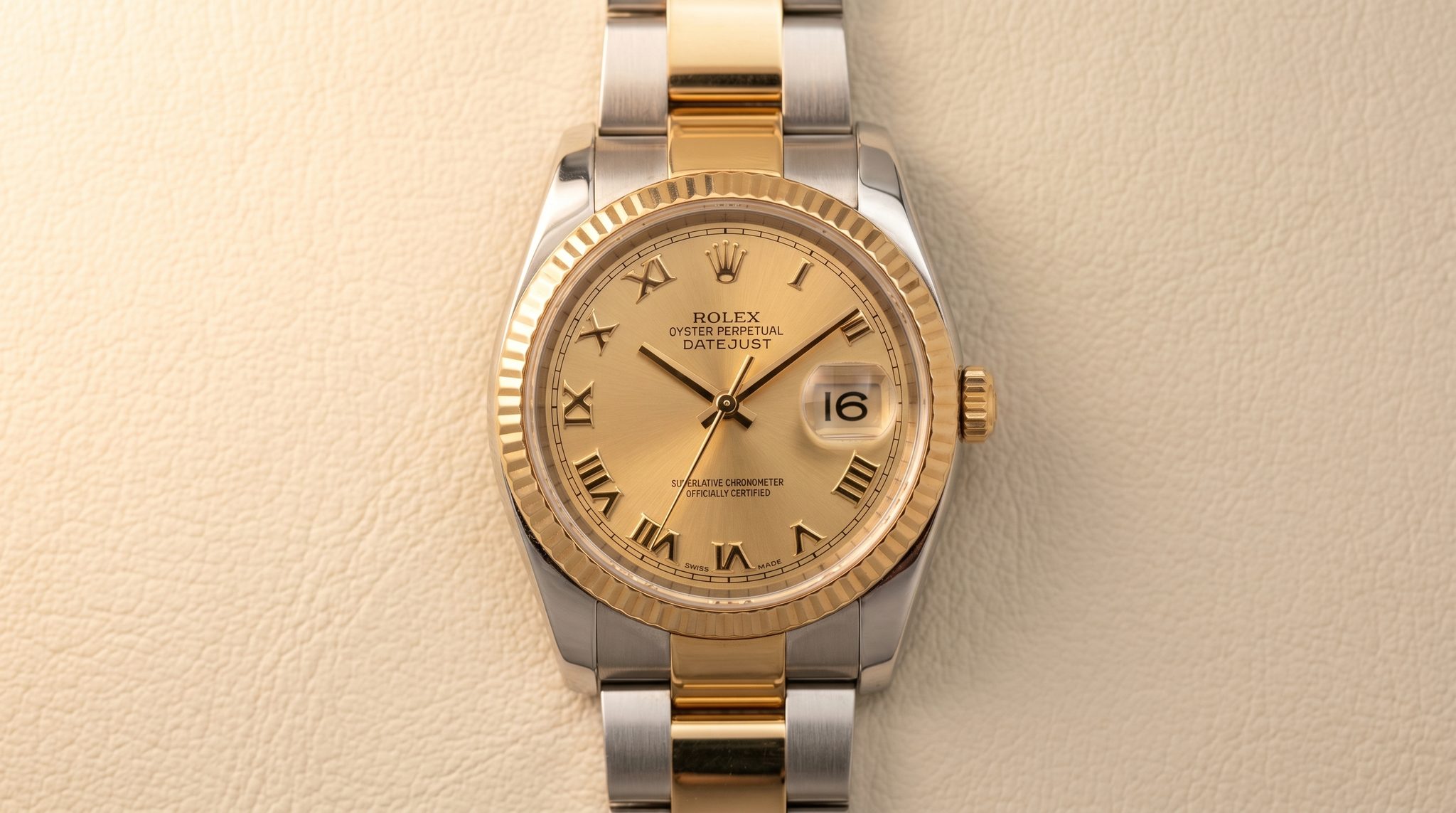
Within 126233, the story is therefore not a chain of mid-run hardware revisions. The documented differences that matter most in practice are the catalog configurations, especially dial execution and bracelet choice. Rolex publishes multiple 126233 variants with plain and sunray-finish dials, and also shows diamond-set options, including diamonds set in 18 kt gold settings and layouts that combine Roman numerals with diamond accents. Additional contemporary executions such as the palm motif are also documented. Because the available evidence does not provide clean first and last years for many individual dial codes within the reference, the safest way to understand a particular 126233 is to judge it as a coherent configuration: a known dial style for the reference, paired with the expected modern authenticity features and correct bracelet and clasp fit.
Taken as a whole, ref. 126233 illustrates how Rolex can change a Datejust generation without changing what it looks like to most eyes. The watch that reads, from across a room, as a traditional two-tone Datejust is also the one that shifted the line’s everyday mechanics into the 3235 era, leaving collectors to focus their attention not on case generations but on the small, high-impact choices that live on the dial.
- 2018Ref. debutsFluted YG bezel, 36 mm case
- 2018Cal. 32353235 noted on service/cert docs
- 20183135 replacedRef. 126233 on rehaut/papers
- c. 2020sDial paletteMarker style changes the whole face
- 2018 – presentStill currentListed in Datejust 36 catalog
126233 against its neighbours
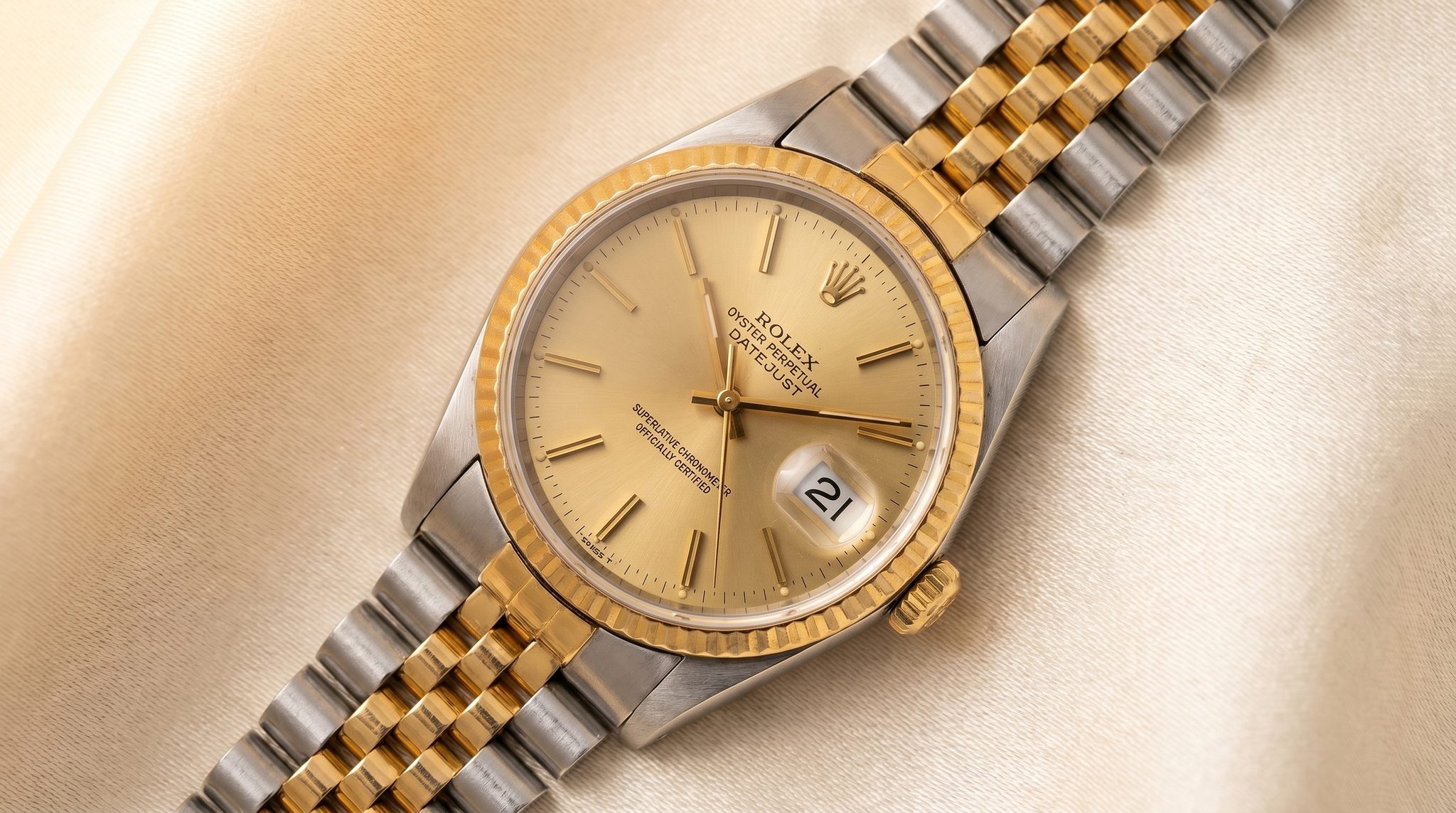
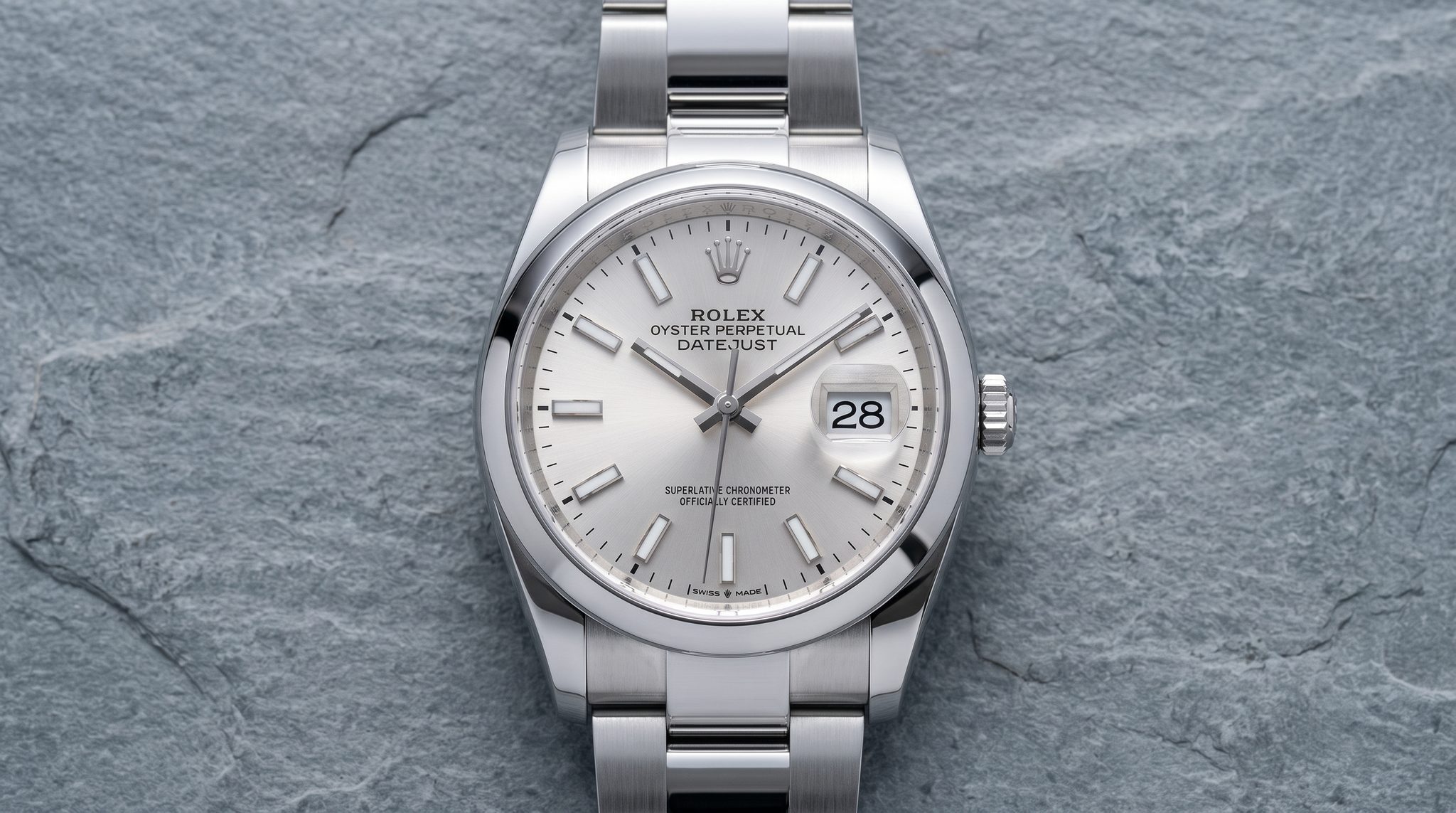
The Rolex 126233 is best understood against the watch it replaced, ref. 116233, because both aim at the same visual idea: a 36 mm, fluted-bezel, yellow Rolesor Datejust that can be ordered on Jubilee or Oyster. The contrast is primarily generational: 126233 is the 3235-era execution, while its predecessor belongs to the long-running 3135 era; a smooth-bezel sibling like ref. 126203 shows how much of the 126233 identity is carried by the fluted bezel rather than the case itself.
126203 Closest sibling c. 2018–present | This reference 126233 Rolex · focal 2018–present | |||
|---|---|---|---|---|
| Production | c. 2006–2018 | c. 2018–present | 2018–present | 2019–present |
| Case | Yellow Rolesor | Yellow Rolesor | Yellow Rolesor | Oystersteel + white gold |
| Diameter | 36 mm | 36 mm | 36 mm | 36 mm |
| Bezel | Fluted, yellow gold | Smooth | Fluted, yellow gold | Fluted, 18k white gold |
| Crystal | Sapphire, Cyclops | Sapphire, Cyclops | Sapphire, Cyclops | Sapphire, Cyclops |
| Water resist | 100 m | 100 m | 100 m | 100 m |
| Movement | Cal. 3135 | Cal. 3235 | Cal. 3235 | Cal. 3235 |
| Power | ~48h | ~70h | ~70h | ~70h |
| Chronometer | Yes | Superlative | Superlative | Superlative |
What to check before buying a 126233
Buying a Datejust 126233 is less about hunting for a narrow production-year clue and more about confirming that a specific watch is an honest example of a documented configuration. The reference itself is consistent: yellow Rolesor, fluted bezel, calibre 3235, and modern Rolex anti-counterfeit tells. The real risks are configuration fraud (aftermarket diamond work presented as factory), condition problems hidden by polishing, and the price distortion created by “full set,” unworn, and Rolex CPO premiums.
Rolex Datejust 126233 for sale
Indicative market value from recent dealer, auction, and Grey Market sales: median ≈ $14,000, with a typical $12,000–$15,500 range across 45 comparable sales (updated this week).
Each point is a recent dealer or auction sale, banded to an indicative figure. The range shown is not a valuation.
Adjacent in the Datejust family
Common questions about the 126233
Ref. 126233 was introduced in 2018 and remains in current production; no discontinuation date is documented in the sources cited here.
- Datejust 36 brochure, m126233assets.rolex.com
- Rolex Datejust 36 m126233 (current catalog pages)rolex.com
- Bob's Watches: Rolex Datejust 36 ref. 126233 overviewbobswatches.com
Show 7 more
- Swisswatches Magazine: Datejust 36 with calibre 3235 technical rundownswisswatches-magazine.com
- Everest Bands: Datejust 126233 vs 116233 comparisoneverestbands.com
- Chrono24 reference market page: Rolex 126233chrono24.com
- Wristadvisor: Rolex Datejust 126233 CPO pricing snapshotwristadvisor.com
- WatchCharts model overview: Rolex Datejust 36 126233watchcharts.com
- Bernard Watch listing with measured dimensions (126233-0016 example)bernardwatch.com
- Wristcheck product listings for 126233 variants (spec confirmation)wristcheck.com