

Rolex Datejust 16030
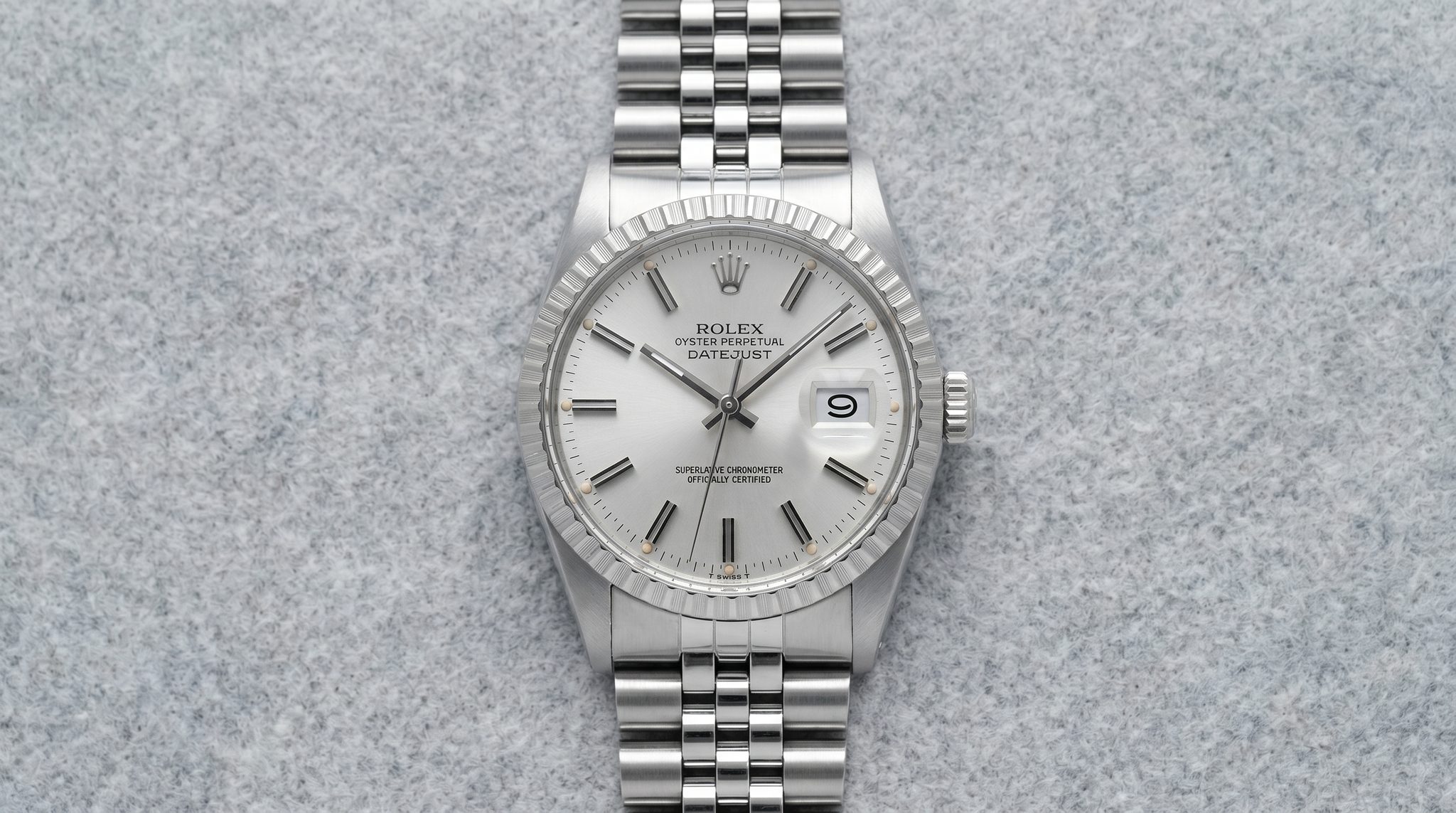
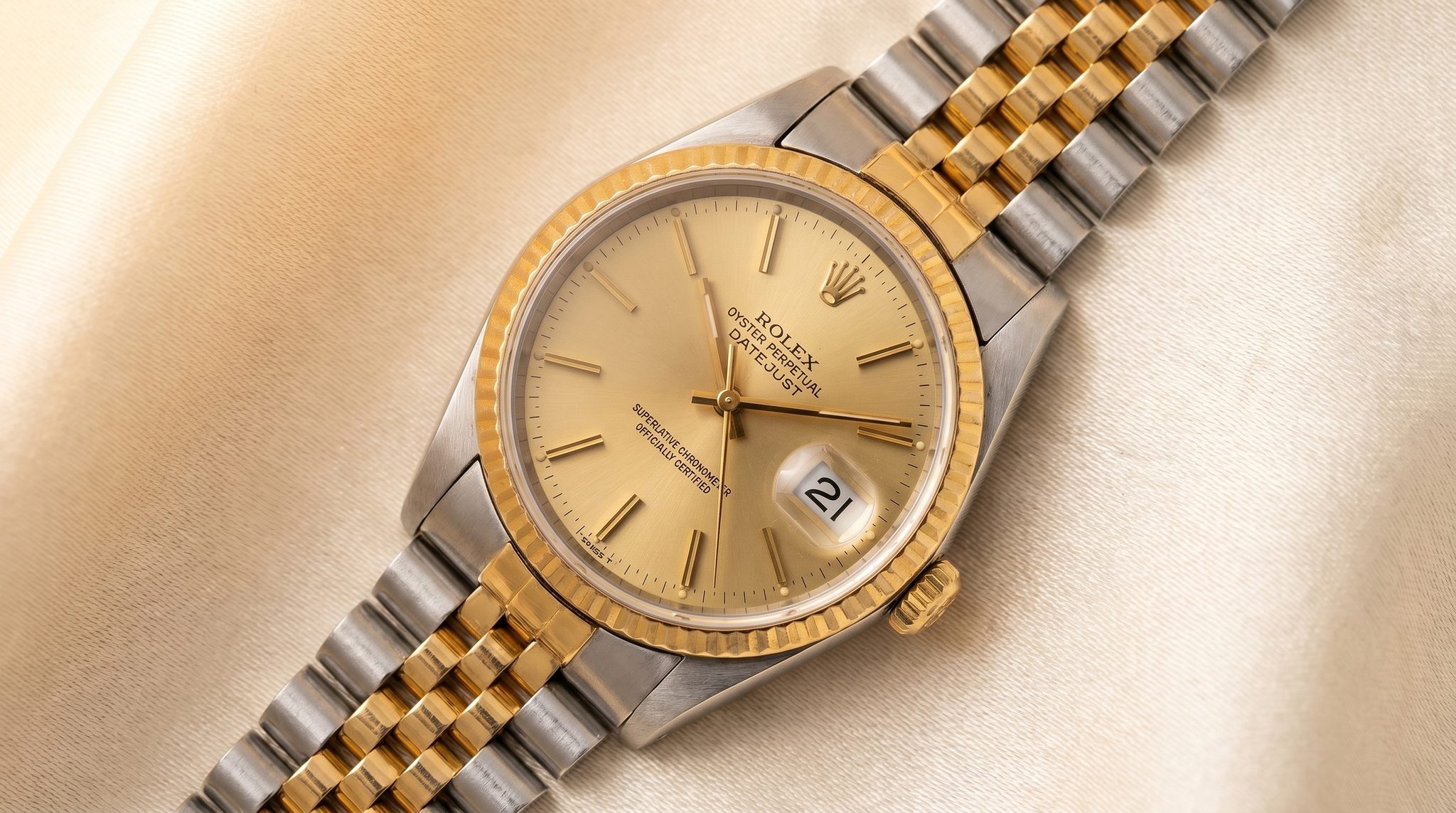
The Rolex Datejust 16030 is the late-vintage Datejust at its most usable, pairing an acrylic crystal and tritium dials with the Cal. 3035 quickset date that finally made the model effortless day to day.
- Production
- 1977–1988
- Case
- Steel Oyster
- Diameter
- 36 mm
- Bezel
- Engine-turned steel
- Crystal
- Acrylic, Cyclops
- Water resist
- 100 m
- Movement
- Cal. 3035
- Power
- ~42h
- Beat
- 28,800 vph
- Jewels
- 27
- Date
- Quickset
- Bracelet
- Oyster or Jubilee
The Rolex Datejust 16030 is the Datejust that kept the warm, forgiving look of acrylic and tritium, but finally made living with a date window simple. The proof is inside: Caliber 3035, Rolex’s first automatic Datejust movement with a quickset date, so the calendar can be corrected directly at the crown instead of winding hands through midnight loops.
That mix explains why the 16030 sits in a sweet spot in the line. Produced from 1977 to 1988, it replaced the long-running ref. 1603 and occupies the steel, engine-turned bezel slot in the 16xxx generation. It is also part of the last acrylic-crystal Datejust era before the sapphire-equipped 162xx family arrived, with the ref. 16220 taking over the same steel engine-turned role on the new Cal. 3135 platform.
In the metal, the reference is defined less by mechanical variation and more by execution. The engine-turned bezel reads like a quieter, more utilitarian cousin to fluting, and the plexiglass crystal adds a slight softness to the dial edge and Cyclops that later sapphire Datejusts do not replicate. Most surviving examples are tritium dials marked with a “T” Swiss line at 6 o’clock, so the collector’s game is usually not chasing “Mark” dials, but choosing the dial texture and color that makes this particular quickset, acrylic Datejust feel personal.
“The 16030 is the Datejust’s most practical vintage blend: acrylic and tritium on the outside, quickset convenience on the inside.”
16030 across 1977–1988
The 16030 arrived as Rolex modernized the Datejust without changing what made it feel like a Datejust. The headline change was mechanical: Cal. 3035 brought a higher beat rate (28,800 vph), a roughly 42-hour power reserve, and, most importantly for real life, a quickset date. Compared with the ref. 1603’s earlier Cal. 1565 and 1575, the daily experience shifts from ritual to convenience. If the watch sat unworn for a few days, the date is corrected directly at the crown.
Rolex did not, however, flip the entire watch into the modern era. The 16030 kept the acrylic crystal with a Cyclops and the familiar 36 mm Oyster case format, placing it among the last Datejust generations where the dial is viewed through plexiglass rather than sapphire. Most examples are tritium-lumed and carry a “T” Swiss line at 6 o’clock, so the dials tend to age in visible, human ways: plots can turn cream, hands can pick up their own shade, and a crisp example reads as much like a preserved object as a timekeeper.
Late in the run, another subtle modernization shows up in the date itself. The 16xxx generation is associated with phasing out open 6 and 9 date numerals, so many 16030s present a more modern date-wheel look than earlier Datejusts.
The zoomed-out significance of the 16030 is how cleanly it captures a turning point. Rolex changed what owners touched most often, the date-setting routine, but left in place the materials and visual softness that collectors now file under “vintage.” That is why the reference feels so complete: not experimental, not yet glassy-modern, and not defined by constant spec churn. It is one platform, and the dial does the talking.
- 1977IntroducedEngine-turned bezel, ref. 16030
- 1977Cal. 3035Crown sets date in first position
- 1977 – 1988Acrylic eraPlexi edge distortion, Cyclops
- c. 1980sTextured dialsCross-hatch or vertical striping
- 1988SucceededSapphire crystal, 162xx family
16030 against its neighbours
The 16030 makes the most sense when it is bracketed by what came immediately before and after in the same steel, engine-turned niche. The ref. 1603 shows what the Datejust looked like when the date was still non-quickset, while the ref. 16220 shows what changed when Rolex moved the line to sapphire crystal and the Cal. 3135 era.
16000 Closest sibling (smooth bezel) c. 1977–1988 | This reference 16030 Rolex · focal 1977–1988 | 16220 Successor c. 1988–late 1990s/early 2000s | ||
|---|---|---|---|---|
| Production | c. 1960–1978 | c. 1977–1988 | 1977–1988 | c. 1988–late 1990s/early 2000s |
| Case | Steel Oyster | Steel Oyster | Steel Oyster | Steel Oyster |
| Diameter | 36 mm | 36 mm | 36 mm | 36 mm |
| Bezel | Engine-turned steel | Smooth steel | Engine-turned steel | Engine-turned steel |
| Crystal | Acrylic, Cyclops | Acrylic, Cyclops | Acrylic, Cyclops | Sapphire, Cyclops |
| Movement | Cal. 1565 → 1575 | Cal. 3035 | Cal. 3035 | Cal. 3135 |
| Power | ~42h | ~42h | ~42h | ~48h |
| Beat | 18,000–19,800 vph | 28,800 vph | 28,800 vph | – |
| Jewels | – | 27 | 27 | – |
| Date | Non-quickset | Quickset | Quickset | Quickset |
Ten dial generations across the run
Most Datejust 16030s are exactly what the bottom line suggests: tritium-lumed dials, usually printed “T SWISS T” (sometimes with small layout differences such as the inclusion of “< 25”). On the wrist, this is less about text and more about the way the lume behaves with age. Original plots often drift from white to cream or pale yellow, and that warmth plays against the steel case and the slightly softened look of acrylic. For many collectors, the best 16030 is simply the one where the dial plots and hands agree in color, and where the print is crisp enough that the dial still looks deliberate rather than tired.
What to check before buying a 16030
Buying a Datejust 16030 is mostly an originality and condition problem, not a specification problem. The reference itself is stable: a steel 36 mm case, an engine-turned steel bezel, an acrylic crystal, and Cal. 3035 with quickset. What changes the value is whether the watch still presents as an intact late-vintage object, especially at the dial.
The first priority is the bezel and case. The engine-turning should look like machining, with crisp geometry, not like a smooth ring that has been polished into anonymity. The second is the dial and hands, since the market treats the dial as the price driver. Tritium plots should be present and coherent, and the “T” Swiss line at 6 o’clock should match the lume story the watch is telling.
The 16030 is also a reference where upgrades and swaps can be subtle. A watch can look correct at arm’s length while hiding a service dial, mismatched hands, or an incorrect bezel borrowed from a neighboring reference. Co-signed dials and rare executions raise the stakes further, because the premium invites fakery.
In the end, the 16030 suits the buyer who wants one watch that does two things at once. It wears like a classic 36 mm Datejust and reads warm and slightly soft through plexi, but it behaves like a modern daily watch the moment you pull the crown to quickset the date. That combination is the whole point of the reference, and it is why the best examples feel easy to live with rather than precious.
Rolex Datejust 16030 for sale
Indicative market value from recent dealer, auction, and Grey Market sales: median ≈ $4,500, with a typical $3,600–$5,800 range across 201 comparable sales (updated this week).
Each point is a recent dealer or auction sale, banded to an indicative figure. The range shown is not a valuation.
Adjacent in the Datejust family
Common questions about the 16030
Most specialist references place the Rolex Datejust 16030 in approximately 1977–1988. It replaces the ref. 1603 and is succeeded by the sapphire-crystal ref. 16220.
- The Rolex Datejust 16030: Buying This Classic Wasn't Spookyfratellowatches.com
- Review: The Rolex Datejust ref. 16030beckertime.com
- Rolex Datejust 16030watchguys.com
Show 7 more
- Rolex 16030 (Datejust 36) » Check Prices & Morewristler.eu
- Pre-Owned Rolex 16030 Datejust for Salebqwatches.com
- Rolex Datejust 36 16030bobswatches.com
- Rolex 16030 - Datejust 36 watcheschrono24.com
- Why I Bought a Vintage Rolex Datejust (Ref 16030)youtube.com
- Rolex Oyster Perpetual Datejust Ref. 16030 circa 1985youtube.com
- Pre-Owned Rolex Datejust 16030 Watcheswatchfinder.com