

Rolex Datejust 116300
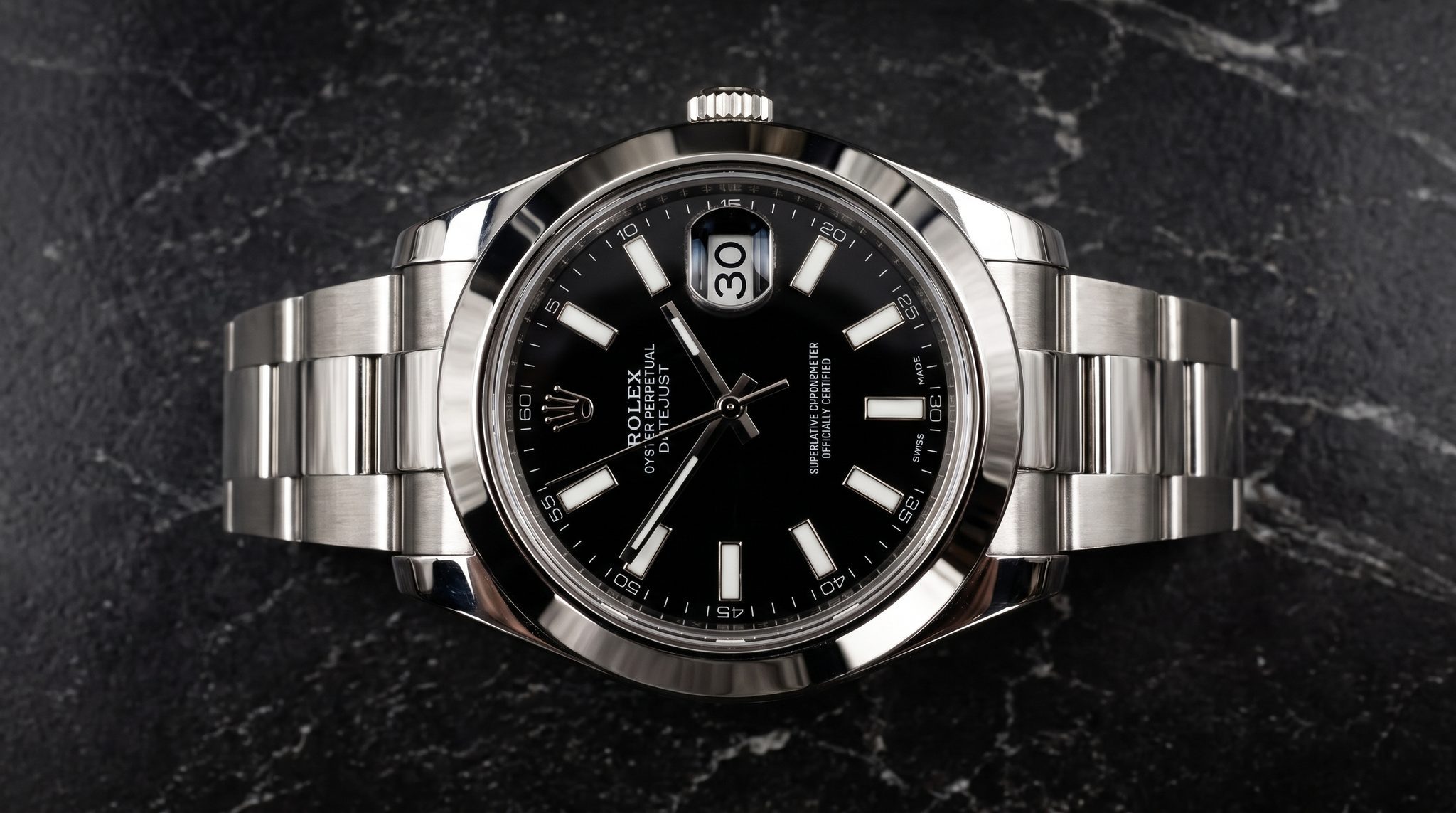
The Rolex Datejust 116300 was the first all-steel 41 mm Datejust, a short-lived large-case generation refined into the Datejust 41.
- Production
- 2009–c. 2017
- Case
- Stainless steel
- Diameter
- 41 mm
- Bezel
- Smooth steel
- Crystal
- Sapphire
- Water resist
- 100 m
- Movement
- Cal. 3136
- Power reserve
- ~48h
- Chronometer
- COSC
- Bracelet
- Oyster only
- Date
- Quickset
The Rolex Datejust 116300 was produced from 2009 to about 2017.
The Rolex Datejust 116300 was introduced in 2009 and phased out around 2016–2017, making it the short-lived first 41 mm all-steel Datejust with a smooth bezel. Its significance lies in the transition it records: Rolex enlarged the familiar Datejust formula, gave it the Datejust II name, then replaced that large-case execution with the more refined Datejust 41. The result is not simply a bigger Datejust, but the reference that shows Rolex working out what a modern 41 mm Datejust should be.
The 116300 paired a stainless-steel Oyster case with a polished smooth bezel and an Oyster bracelet, a deliberately restrained configuration beside the fluted-bezel versions of the Datejust II family. On the wrist, the 41 mm case gives the dial a broad, open presence, while the bezel reflects a clean band of light rather than breaking it into the sharper facets of a fluted design. The documented factory configuration is Oyster only, a useful distinction when listings confuse the 116300 with its successor, ref. 126300, which added a Jubilee option.
Rolex fitted the reference with Cal. 3136, an automatic chronometer movement with a quickset date and approximately 48 hours of power reserve. Movement overviews place the 3136 within the 3135 family and describe it as adapted for the Datejust II platform, with the then-current Parachrom hairspring, Microstella regulation, and Paraflex shock absorbers. Rolex did not publish a single stated rationale for that adaptation in the material available here, but the movement is a clear identifier: the 116300 belongs to the 3136 era, while the 126300 moved to Cal. 3235 and approximately 70 hours of reserve.
Dial choice supplies the reference’s modest variation. Black, blue, grey, silver, and white executions appear in specialist catalogues, with baton and Roman-numeral layouts alongside named blue Azzurro and slate-grey configurations. Exact start and end dates for individual dials are not established, so a dial should be read as one piece of the watch’s identity rather than as a precise production-date code. The 116300 is best understood as a transitional Datejust: broad, capable, and unmistakably modern, but still distinct from the proportions and movement architecture that followed.
“The 116300 is the Datejust that made 41 mm permanent by being replaced: its 3136, Oyster-only format is the evidence of the generation before refinement.”
Rolex Datejust 116300 production years: 2009–c. 2017
The 116300 begins with a size decision. In 2009 Rolex moved the all-steel smooth-bezel Datejust from the familiar 36 mm format represented by ref. 116200 into a 41 mm Datejust II case. That enlargement created the need for a related movement, and Cal. 3136 filled the role. Movement overviews describe it as a 3135-family derivative adapted for the Datejust II platform and updated with contemporary shock and anti-magnetic features; the reason for the architecture is not stated as a single Rolex explanation.
The case and movement timelines are straightforward, but the dial timeline is not. Catalogues document black, blue, grey, silver, and white dials, with both baton and Roman-numeral executions available during the reference’s run. They do not establish independent start and end dates for each colour or layout. The Azzurro blue and slate-grey Roman configurations can therefore identify a configuration, but not by themselves prove a precise year. Collectors infer that these dials belong within the 116300 production period because they are repeatedly catalogued with its fixed steel, smooth-bezel, Oyster format, while exact cutoffs remain undocumented.
The decisive change came with the 126300. The successor retained the nominal 41 mm diameter but replaced Cal. 3136 with Cal. 3235, increased the stated power reserve from approximately 48 to 70 hours, and offered Oyster or Jubilee bracelets. The documented reason for the replacement is the arrival of the Datejust 41 generation and its new movement architecture, not a recorded mid-run modification to the 116300. None is documented: the 116300 remains associated with Cal. 3136 throughout its run.
In a short span, Rolex moved from the 36 mm smooth-bezel Datejust to a broad 41 mm case, then revised that platform into the Datejust 41. The reference’s importance is visible in that sequence: it is the complete first attempt, preserved in steel, before the later proportions and movement became the permanent formula.
- 2009Reference introducedBroad case, smooth steel bezel
- 2009 – c. 2017Cal. 3136 era3136 marked movement, quickset date
- 2009 – c. 2017Steel configurationAll-steel case, Oyster bracelet
- 2009 – c. 2017Dial catalogueBlack, blue, grey, silver, white
- 2016 – 2017Successor appears3235 and Jubilee option
- c. 2017Reference phased outLater examples overlap successor era
116300 against its neighbours
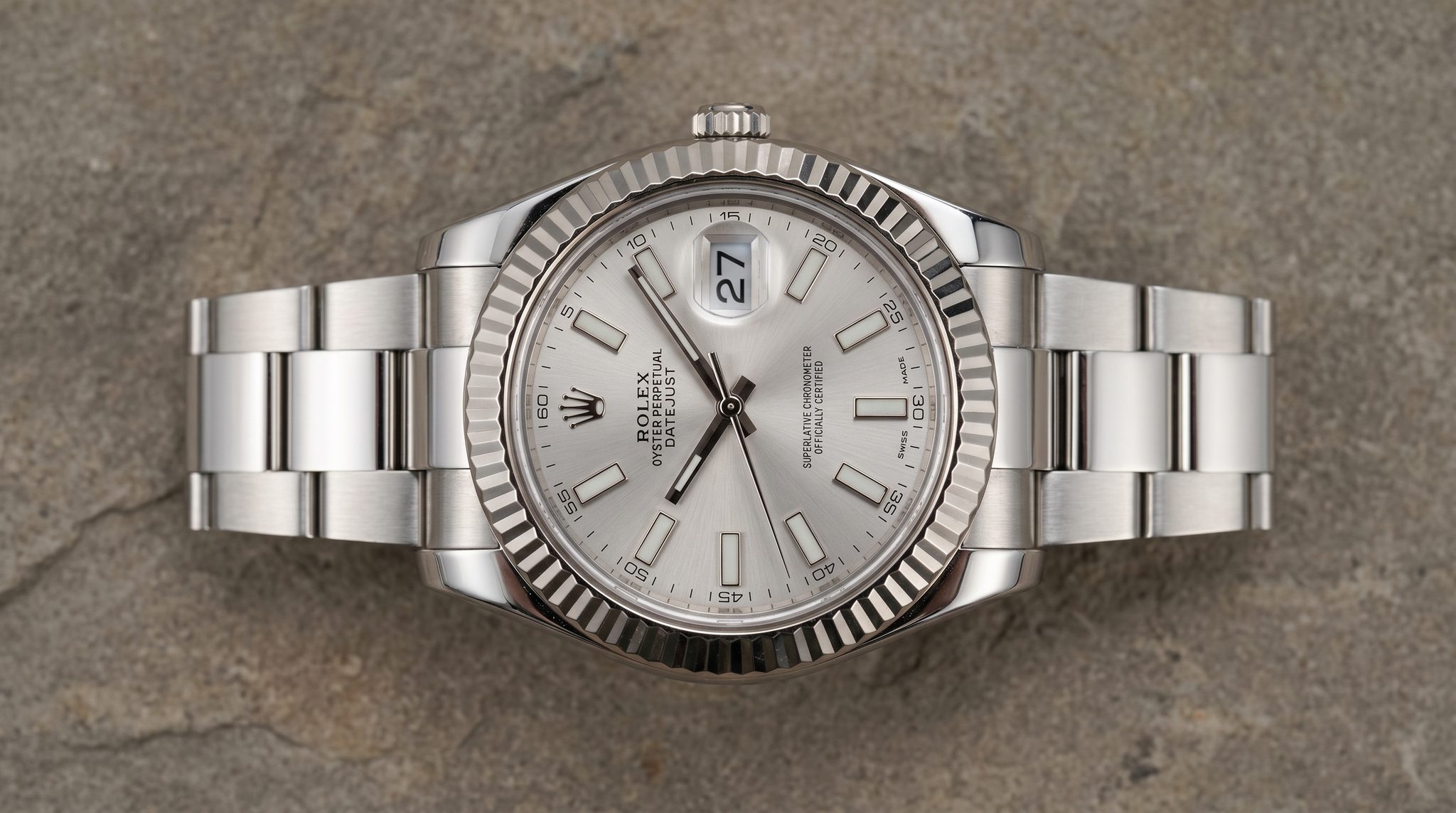
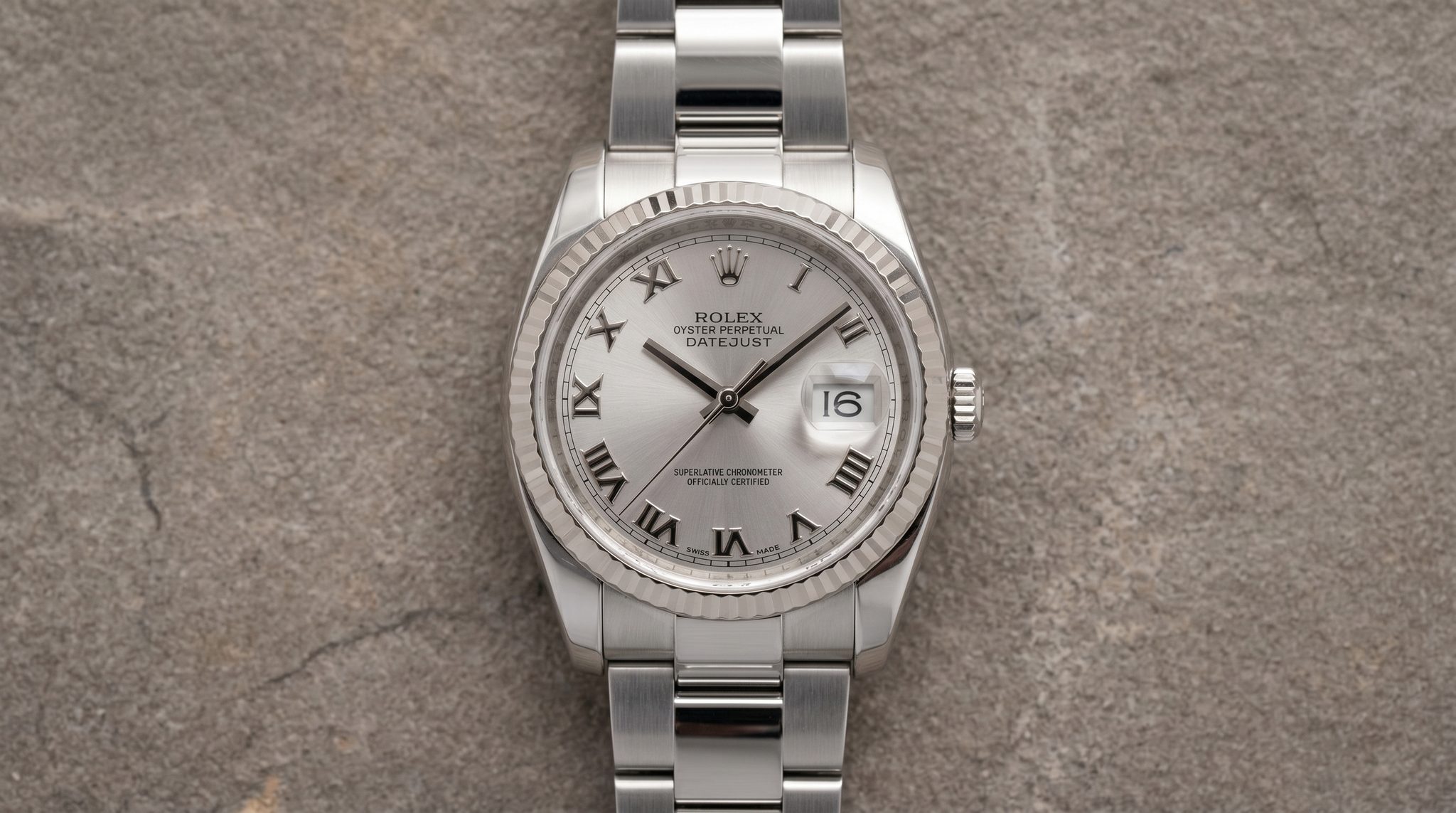
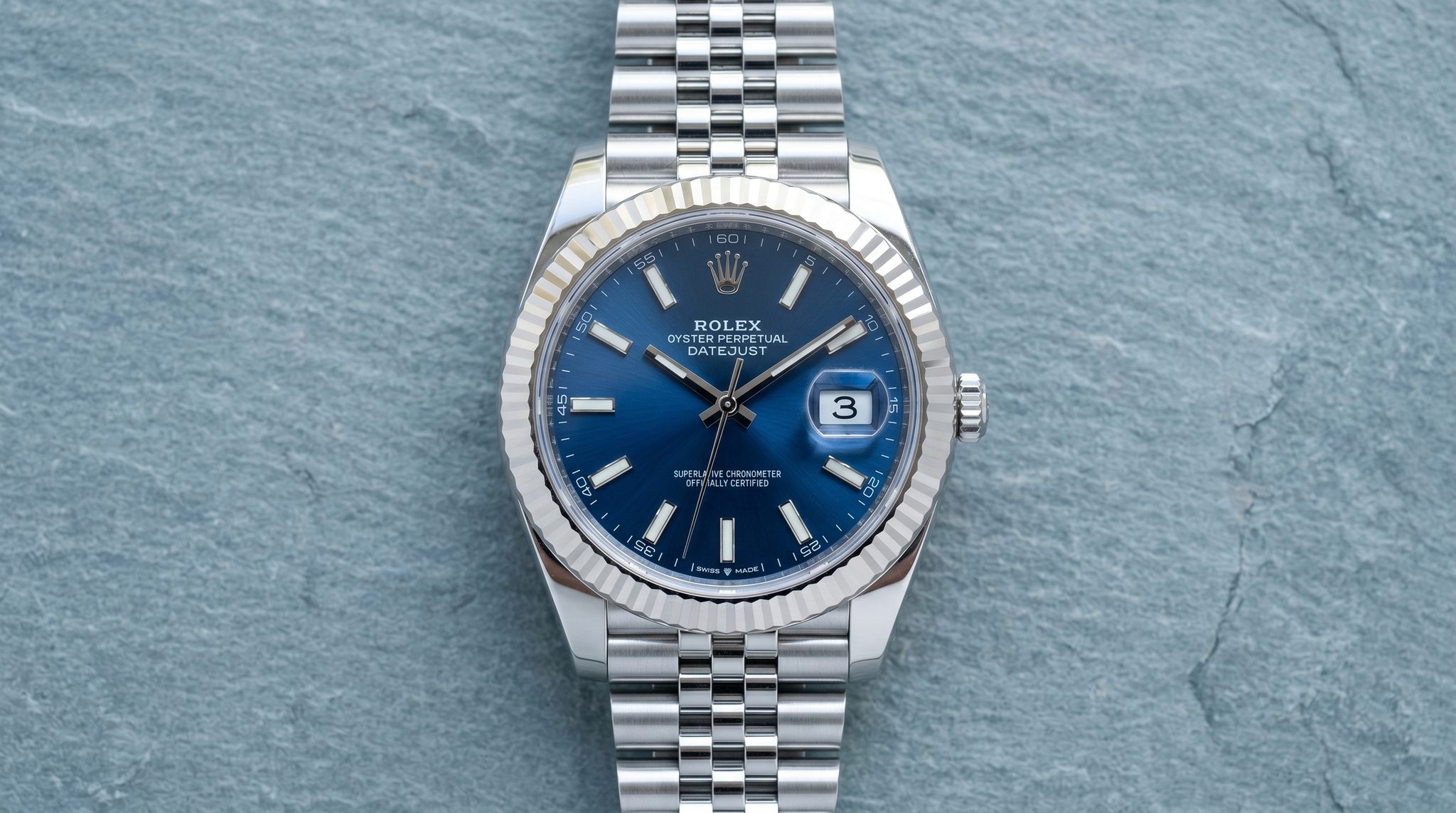
These three references frame the 116300’s role clearly: ref. 116200 is the smaller smooth-bezel Datejust that preceded it in configuration, ref. 126300 is the direct 41 mm successor, and ref. 116334 shows the same Datejust II platform with a different bezel treatment.
This reference 116300 Rolex · focal 2009–c. 2017 | ||||
|---|---|---|---|---|
| Production | 2004–2019 | 2009–2016 | 2009–c. 2017 | 2017–present |
| Case | Stainless steel | Steel and white gold | Stainless steel | Stainless steel |
| Diameter | 36 mm | 41 mm | 41 mm | 41 mm |
| Bezel | Smooth steel | Fluted | Smooth steel | Smooth steel |
| Crystal | Sapphire | Sapphire | Sapphire | Sapphire |
| Water resist | 100 m | 100 m | 100 m | 100 m |
| Movement | Cal. 3135 | Cal. 3136 | Cal. 3136 | Cal. 3235 |
| Power reserve | ~48h | ~48h | ~48h | ~70h |
| Bracelet | Oyster or Jubilee | Oyster | Oyster only | Oyster or Jubilee |
Four dial generations across the run
Baton dials give the 116300 its clearest modern reading. Viewed flat to the light, the markers leave more of the dial surface visible, particularly on blue or silver executions, while the broad 41 mm case makes the open layout feel deliberate rather than sparse. Black, blue, grey, silver, and white examples are catalogued. They appear across the reference period, but published material does not establish a separate start or end window for each colour.
What to check before buying a 116300
Buying a Datejust 116300 is less about choosing between case variants than proving that the watch still represents the one configuration Rolex assigned to the reference. The case should be stainless steel with a smooth bezel, and the documented factory bracelet is Oyster only. Dial choice supplies the meaningful variation, but exact dial sub-periods are not firmly catalogued, so originality and condition carry more weight than a seller’s precise year claim.
The reference’s similarity to the 126300 creates the main modern trap. A listing may call both watches “Datejust 41,” yet the 116300 belongs to the Cal. 3136 era with approximately 48 hours of reserve, while the successor uses Cal. 3235 and approximately 70 hours. Confirming the reference, movement, bracelet, bezel, and dial together matters more than relying on a generic model title.
For the right owner, the 116300 is a broad, straightforward daily Datejust with the visual directness of a smooth bezel and the mechanical character of the short Datejust II generation. It suits someone who wants the first 41 mm steel Datejust specifically, accepts its Oyster-only format, and prefers a watch whose identity is visible in the contrast between the sturdy earlier platform and the more developed successor that followed.
Rolex Datejust 116300 price and value
A Rolex Datejust 116300 sells for about $7,800 at the median, typically $7,300 to $8,500 across 79 comparable sales.
Rolex Datejust 116300 for sale
Indicative figures from recent dealer, auction, and Grey Market sales (updated this week). Every watch is verified before it sells here.
Each point is a recent dealer or auction sale, banded to an indicative figure. The range shown is not a valuation.
Adjacent in the Datejust family
Common questions about the 116300
The Rolex Datejust 116300 was introduced in 2009 and phased out around 2016–2017. Some catalogues and real-world listings extend into 2017, so the factory cutoff should not be treated as a single undisputed year.
- A Buyer's Guide to the Rolex Datejusteuropeanwatch.com
- Rolex Datejust: All References & Live Pricesprestigewatchguide.com
- Rolex Datejust II 116300 Specificationsmy-watchsite.com
Show 7 more
- Rolex 3136grail-watch.com
- All Rolex Datejust Referenceswristbuzz.com
- Rolex Datejust II Stainless Steel 116300-0006chronospex.com
- Rolex Datejust II Stainless Steel 116300-0002chronospex.com
- Rolex 116300 Datejust IIchrono24.com
- Rolex 126300watchcharts.com
- Rolex Datejust II 116300 Certified Pre-Owned Pricesrlxcpo.com