

Rolex Cosmograph Daytona
The Rolex Cosmograph Daytona is the racing chronograph that taught collectors to read Rolex history off a tachymeter scale.
No Rolex line shows its purpose more plainly on the outside than the Cosmograph Daytona, a chronograph conceived as a working instrument for motor racing and repeatedly redesigned around the one job it advertises, timing speed with a tachymeter. The clearest proof sits on the earliest widely accepted base reference, 6239, introduced in 1963: Rolex moved the tachymetric scale off the dial and onto a fixed bezel so the dial could be read faster in use, then spent decades refining what that bezel should be made of and how the rest of the watch should support it.
From there, the Daytona’s arc is a series of deliberate rebalances between legibility, durability, and mechanical ambition. The pre-Daytona chronographs (6234, 6238) still look like mid-century instruments, with smooth bezels and printed scales crowding the dial. The first Cosmographs (6239, 6241, 6262) establish the external tachymeter bezel and the high-contrast, motorsport-forward dial layouts that later become the template, even while the “Daytona” name only settles onto dials as Rolex’s Daytona racing association matures in the mid-1960s.
Around 1971 the line hardens into the Oyster idea with screw-down pushers (6263, 6265), a functional shift that makes the chronograph more robust and water resistant in spirit and construction, even as the most meaningful differences often remain on replaceable surfaces like dials and bezels. In 1988, the first automatic Daytonas (16520, 16523, 16528) modernize the whole proposition in one move, self-winding power, sapphire crystal, and a larger 40 mm case, built around Rolex’s modified Zenith-based caliber 4030. In 2000, Rolex ends the outsourced era with the in-house 4130 generation (116520, 116523, 116519), keeping the established silhouette but redefining the Daytona as a fully Rolex-engineered chronograph. Finally, the modern Cerachrom phase (116500LN, 116506) turns the bezel into a long-life material statement, ceramic for scratch resistance and stable color, while also showing how the Daytona now spans from steel daily wear to platinum anniversary positioning.
The unifying way to see the family is simple: every Daytona is a three-register, no-date chronograph, but the watch tells its era through three outward signals, where the tachymeter lives (dial or bezel), what the bezel is made of (metal, acrylic, ceramic), and how the case is sealed (pump pushers or screw-down pushers). Those decisions are the Daytona’s visible engineering logbook.
What each Cosmograph Daytona reference trades for
Median and typical range of recent dealer, auction and Grey Market sales, banded. Indicative, not a valuation; each reference page carries the detail.
15 references across 6 eras
Pre-Daytona multiscale
The earliest published Daytona-family reference here, 6234, is the template Rolex later simplifies rather than the Daytona itself. It uses a smooth bezel and places timing information on the dial, with tachymeter and telemeter scales printed as concentric tracks that make the face feel like an instrument panel. This is the period before the external tachymeter bezel becomes Rolex’s solution to legibility. The era ends not because a single factory cutoff is documented, but because Rolex’s next chronograph direction is clearly toward fewer dial scales and a cleaner, sportier read that can support a dedicated racing identity later.
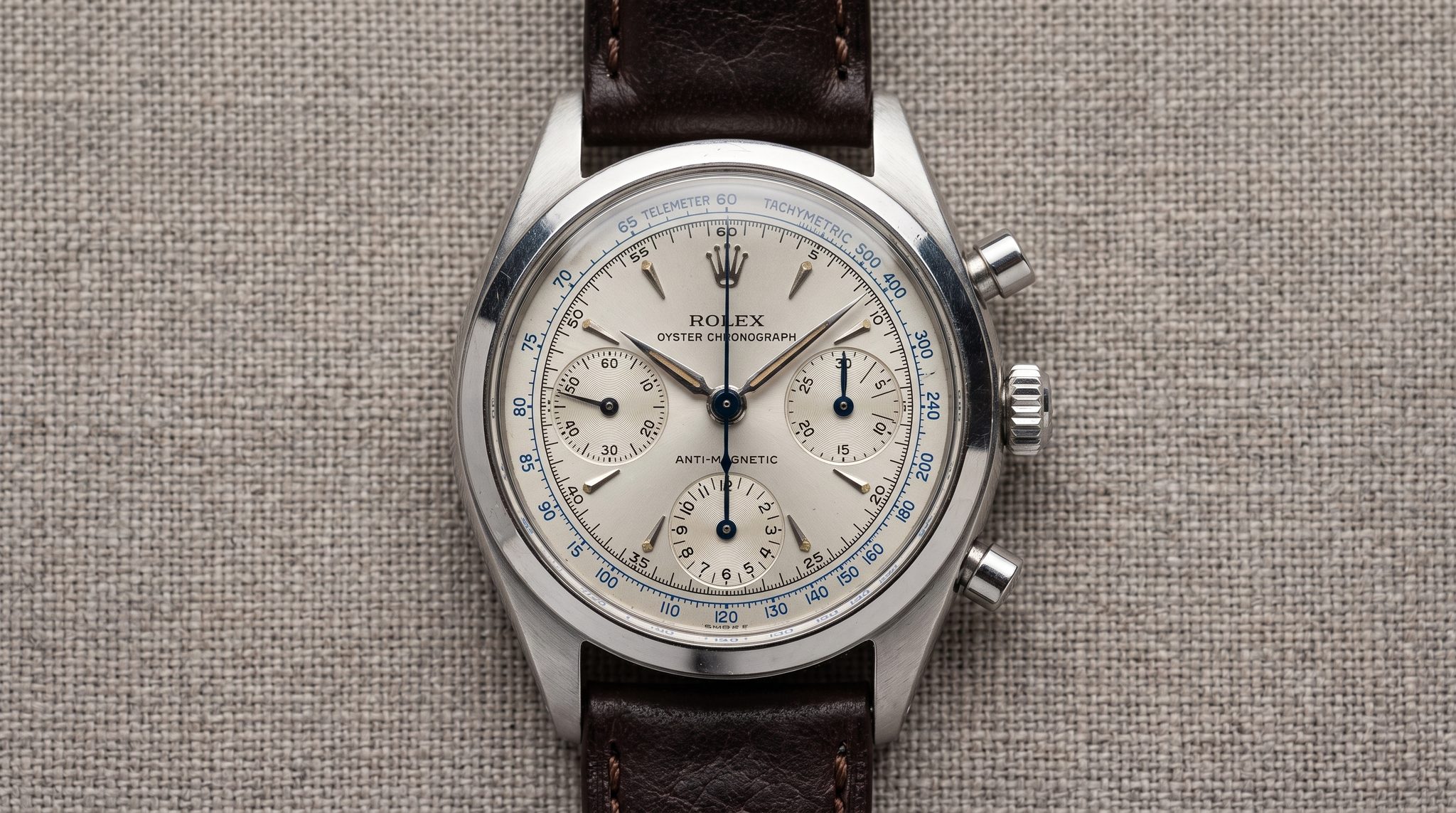
Smooth-bezel Pre-Daytona
6238 is the last major Rolex chronograph platform before the Cosmograph identity crystallizes. The watch stays on a smooth, polished bezel while a tachymeter remains printed on the dial, so the dial has to do the visual work. Across the run, the case architecture is stable and the dial evolves from early, more text-heavy executions toward restrained monochrome layouts with baton furniture. Sources also note that 6238 overlaps with early Cosmographs rather than ending cleanly when 6239 appears. The era gives way when Rolex commits to the bezel tachymeter as the Daytona’s defining racing feature, moving critical scale information off the dial entirely.
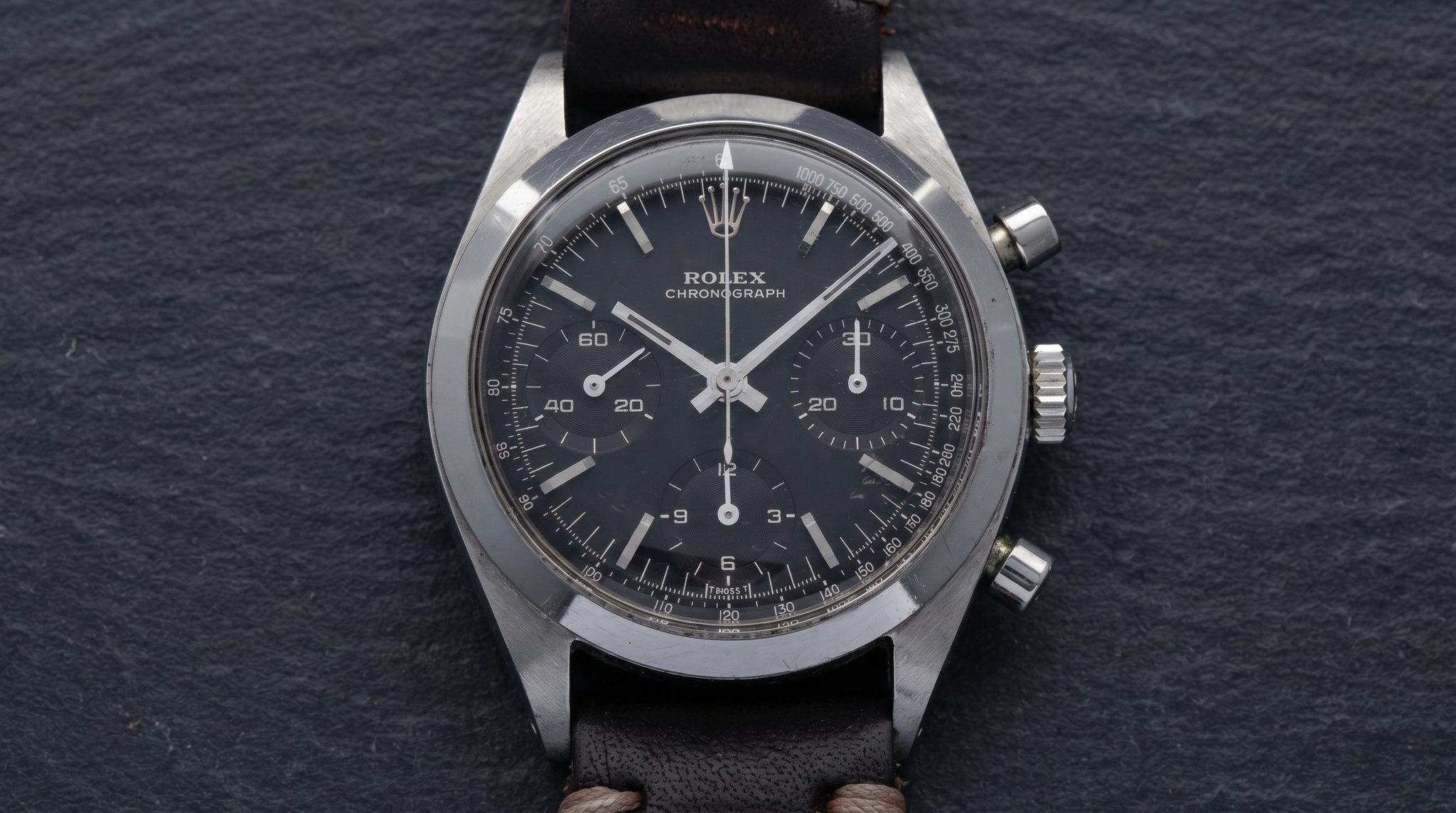
Pump-pusher bezel tachy
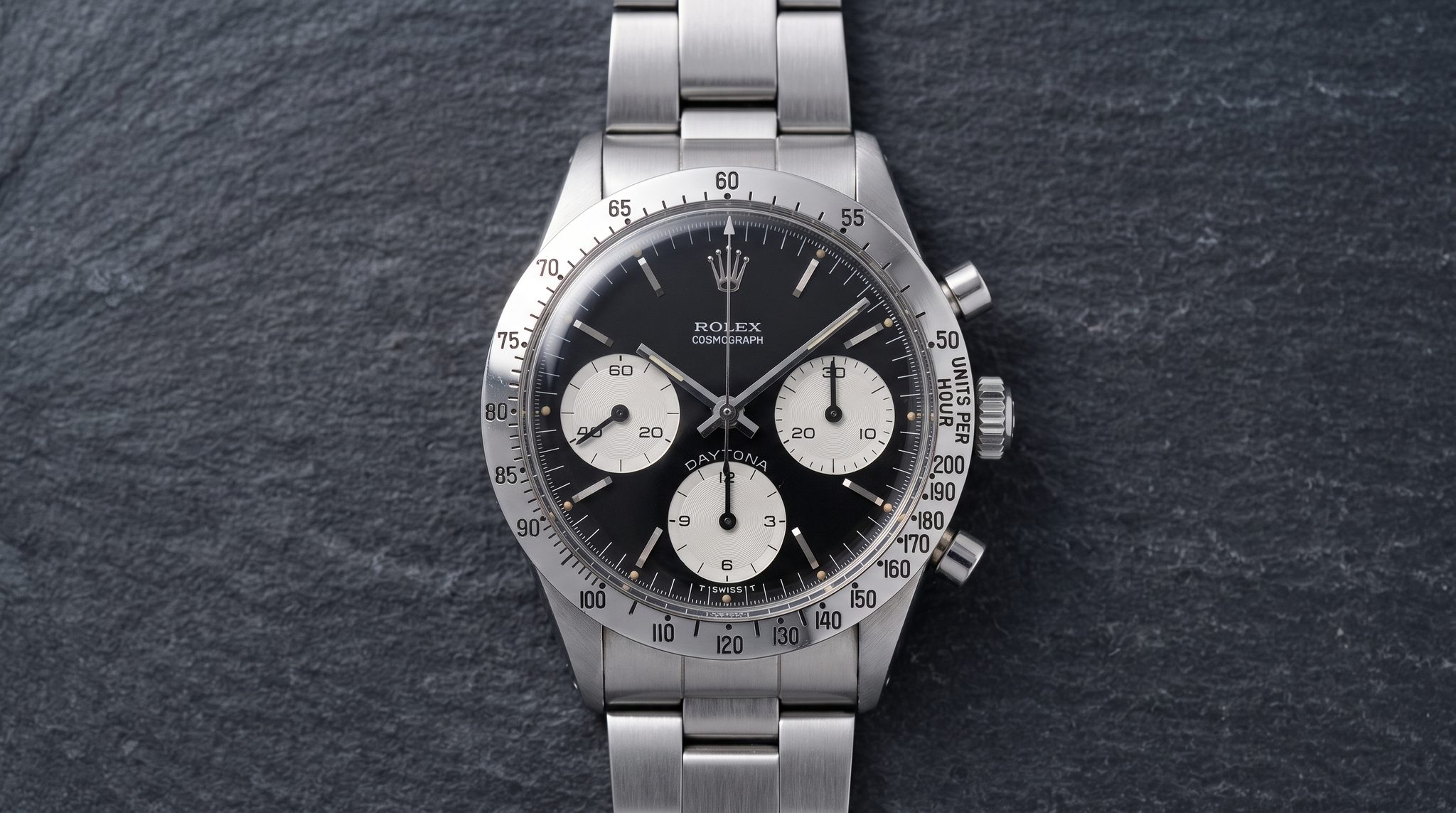
This is the first recognizably Daytona-like generation, defined by pump pushers and the tachymeter relocated to a fixed bezel for clearer dial space. 6239 establishes the formula with an engraved metal tachymeter bezel, while 6241 tests the same idea with a black acrylic tachymeter insert. 6262 arrives as a short-run hinge, retaining the pump-pusher silhouette but introducing the higher-beat Cal. 727 behind the familiar steel tachymeter look. The end of the era is an overlapping transition, not a single year, because screw-down pusher Oyster references begin around 1971 while late pump-pusher production persists into roughly 1970–1971.
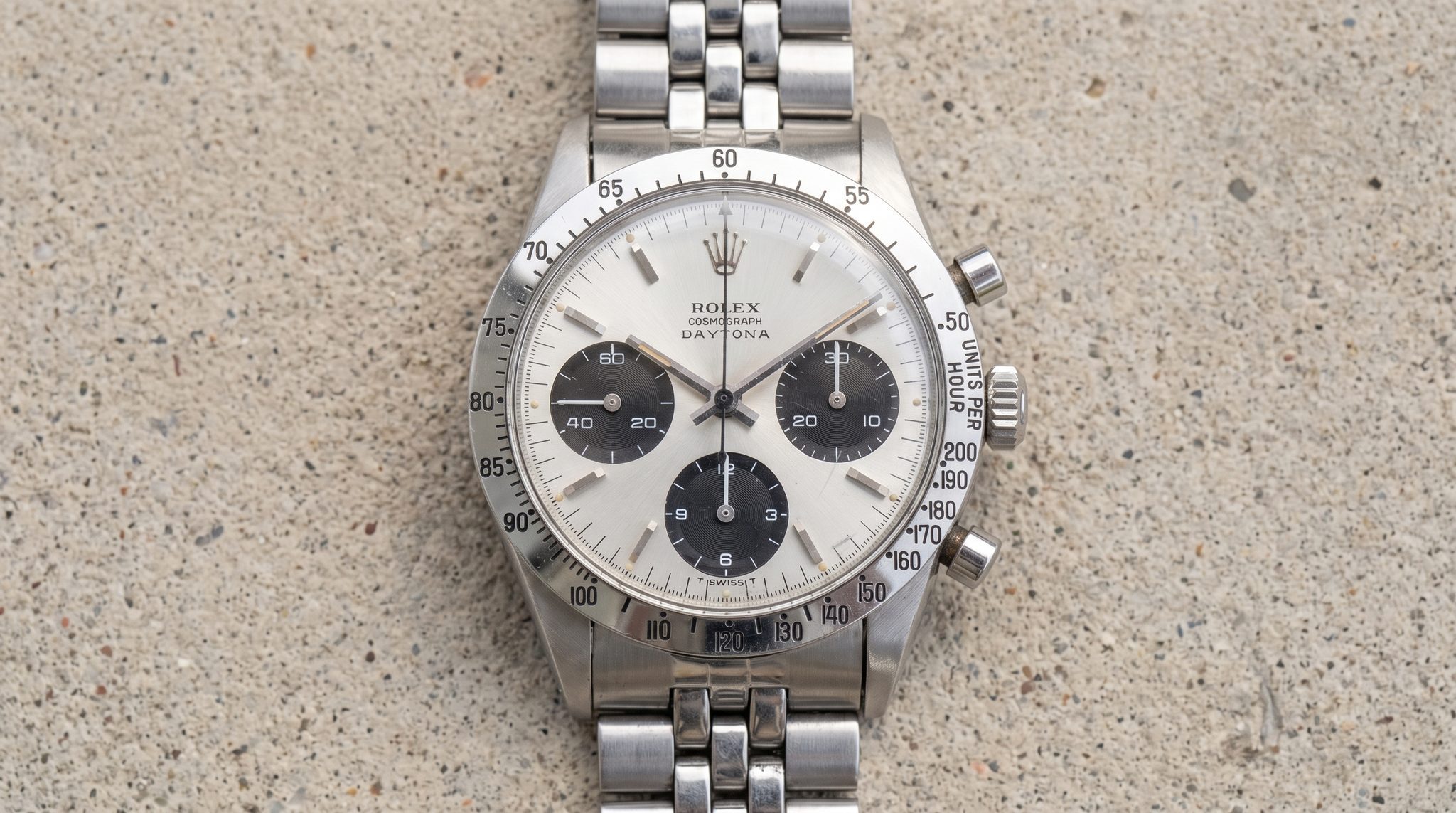
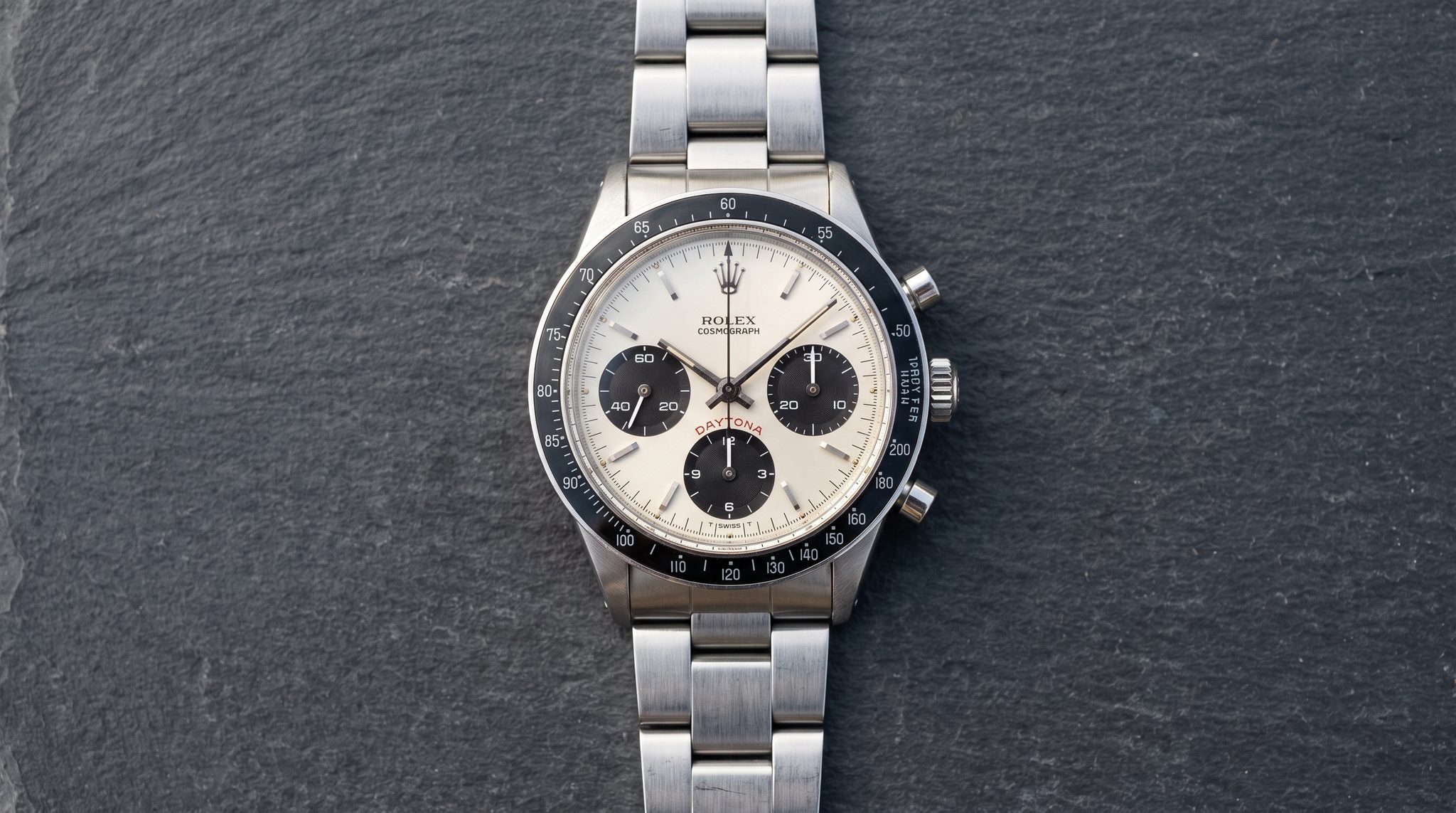
Manual-wind Oyster era
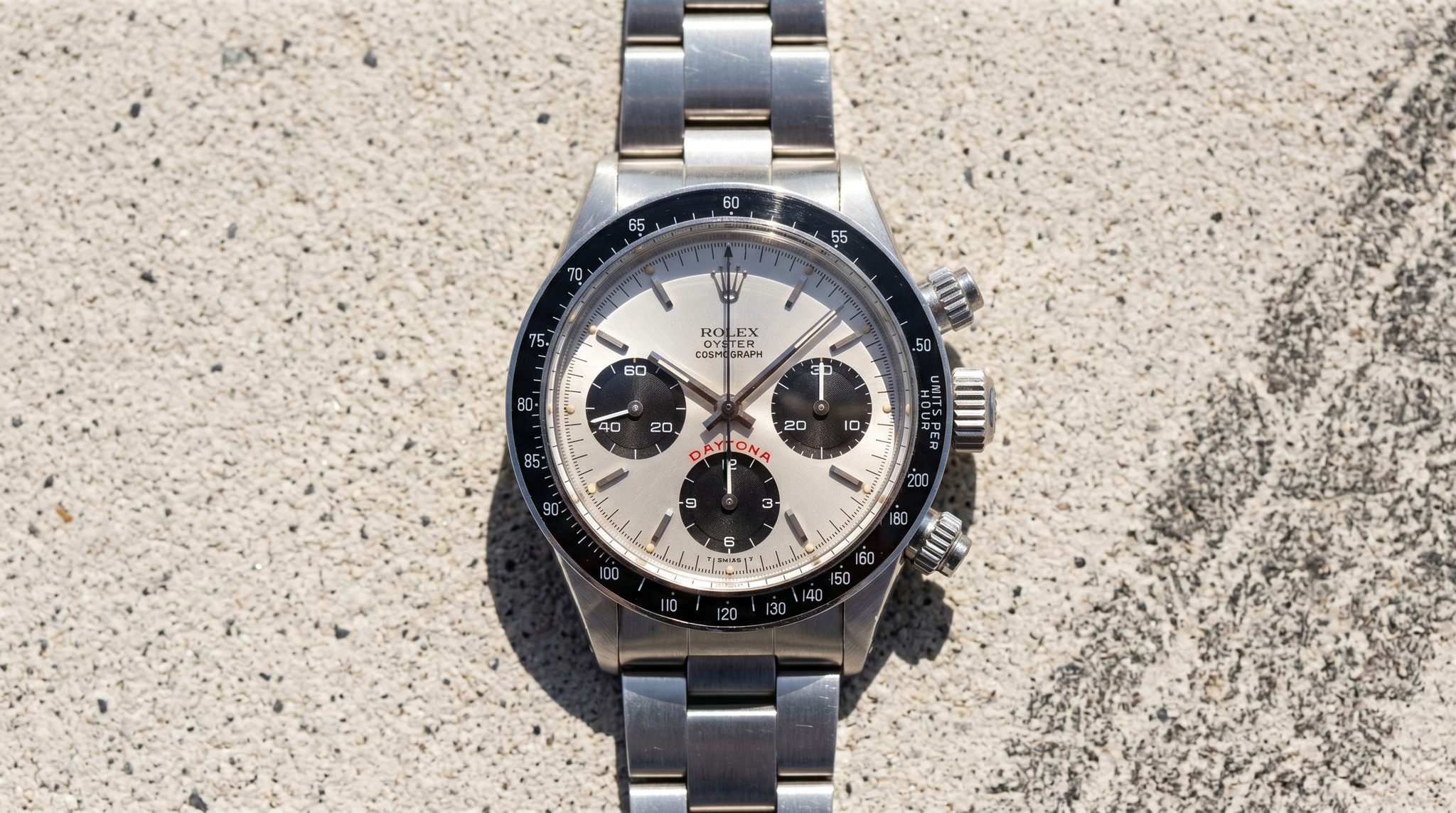
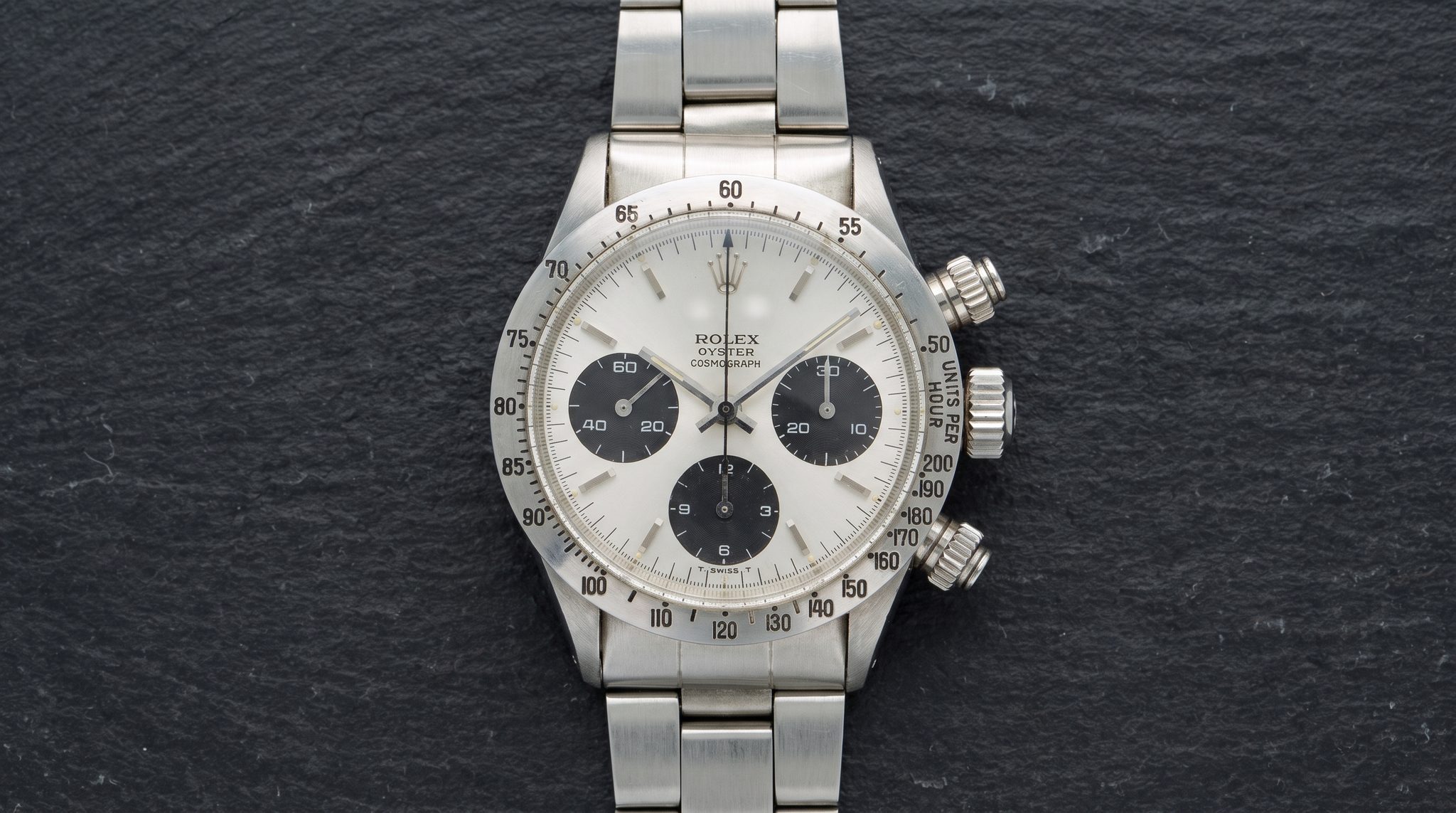
6263 and 6265 are the long manual-wind Daytona phase where the case becomes explicitly Oyster through screw-down chronograph pushers, a durability and water resistance move that visually separates them from pump-pusher predecessors. Within this stable architecture, the family splits into two clear bezel identities: 6263 with a black acrylic tachymeter insert, 6265 with an engraved metal tachymeter bezel. The movement baseline remains Cal. 727 throughout this generation, so collecting emphasis shifts to what can be seen and swapped, especially bezel type and dial execution. The era ends when Rolex replaces the hand-wound chronograph with the first automatic Daytona generation introduced publicly in 1988.
Zenith automatic transition
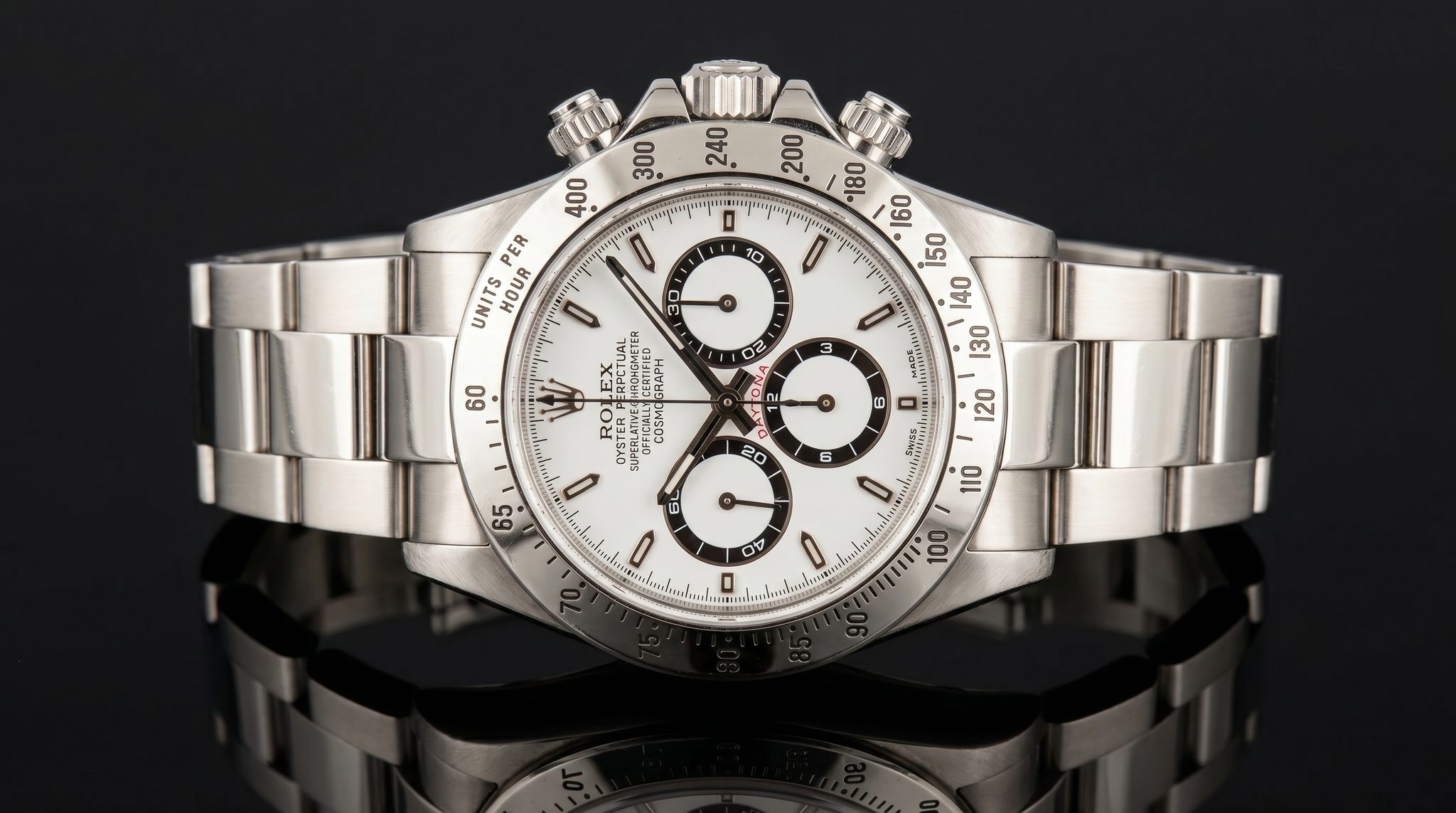
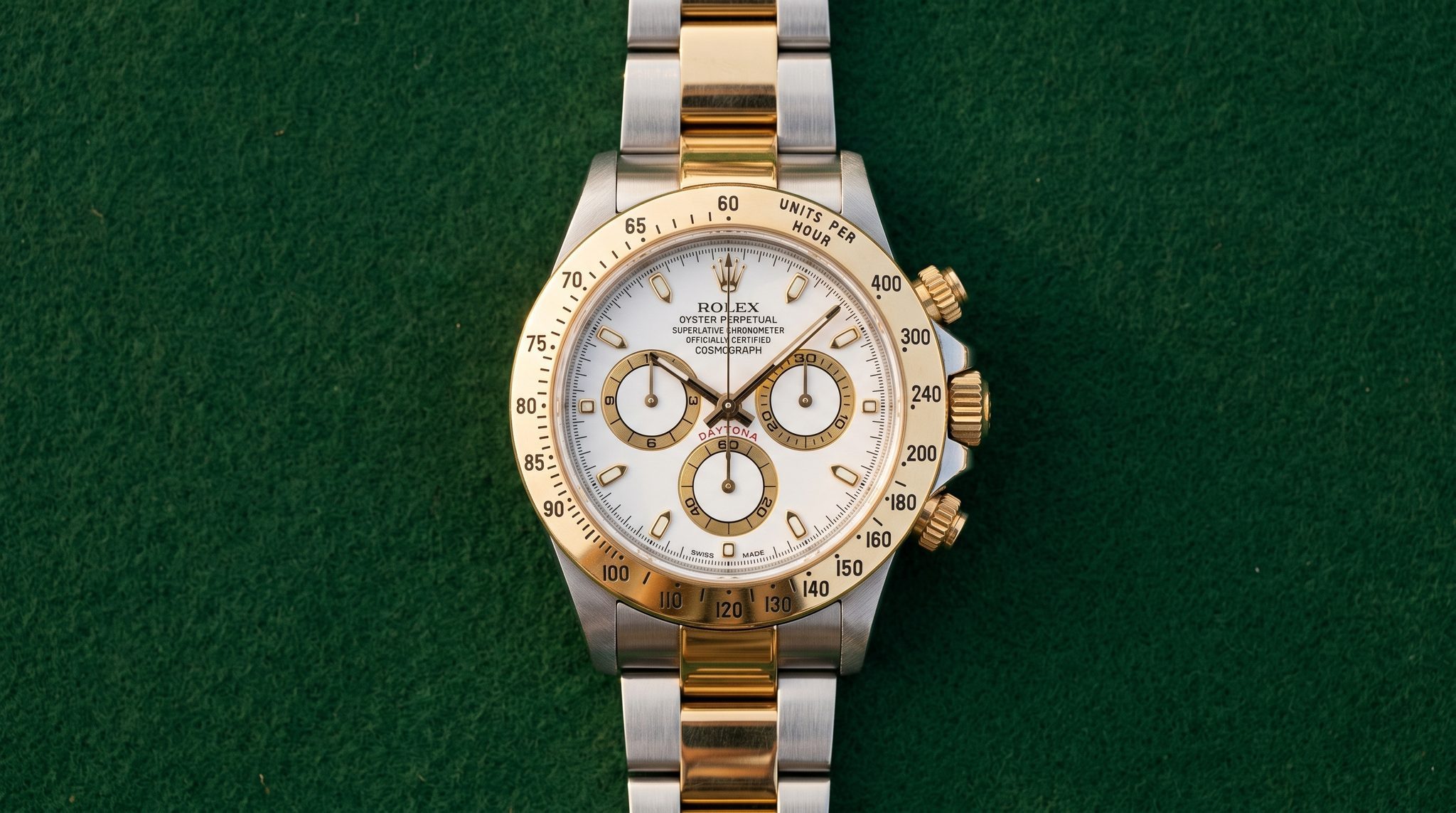
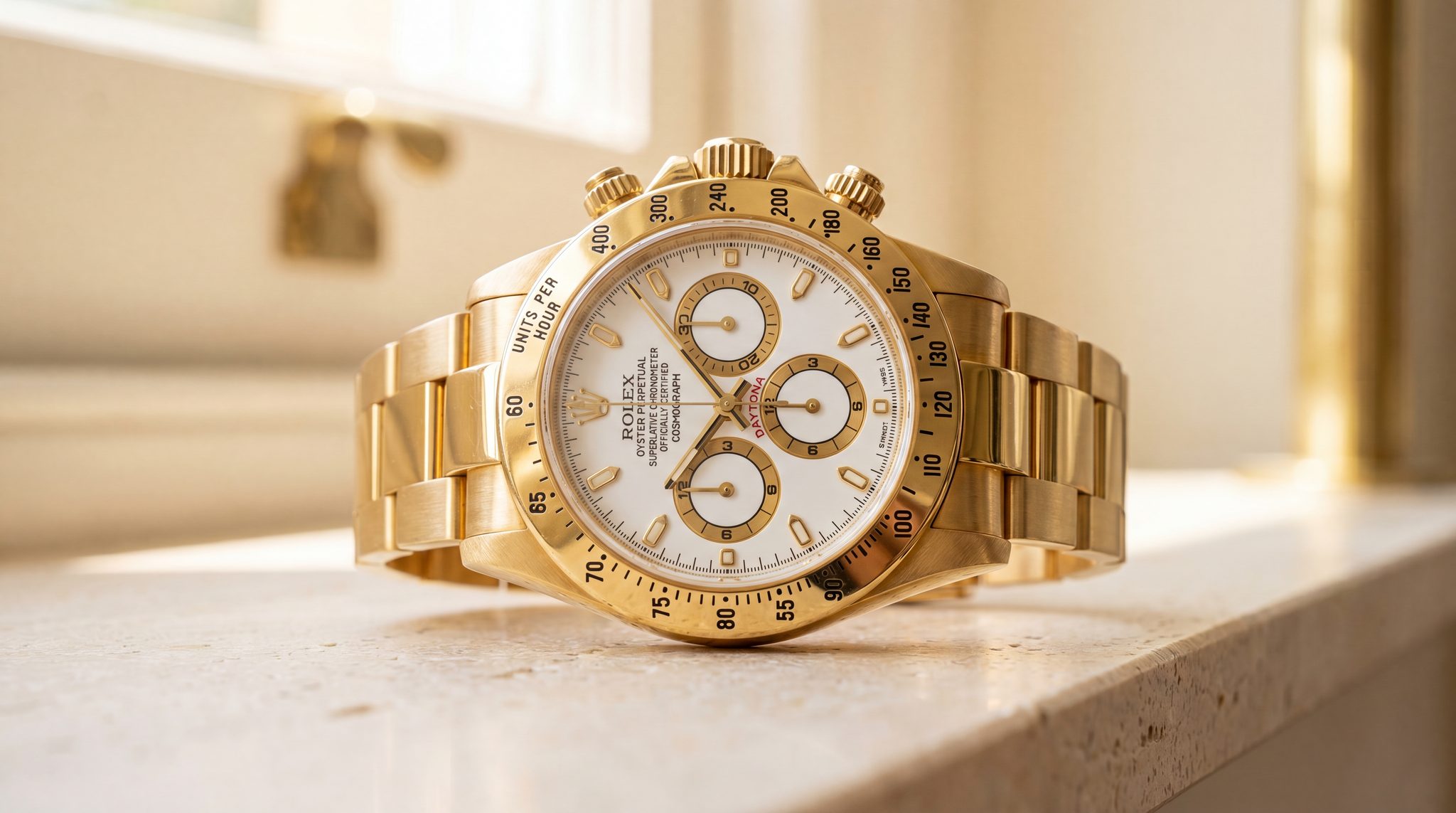
With 16520, 16523, and 16528, Rolex turns the Daytona into a modern automatic sports chronograph. The common generational cues are the larger 40 mm case format, sapphire crystal, screw-down pushers, and the Rolex-modified Zenith-based Cal. 4030. What differentiates the references is primarily material and presence: 16520 in steel, 16523 in steel and yellow gold, 16528 in full yellow gold. Collectors also treat this era as unusually readable from the front because visible traits like bezel scales, dial text layouts, and lume signatures change on overlapping tracks. The era ends when Rolex replaces the 4030 with its first fully in-house automatic chronograph movement in 2000.
In-house then Cerachrom
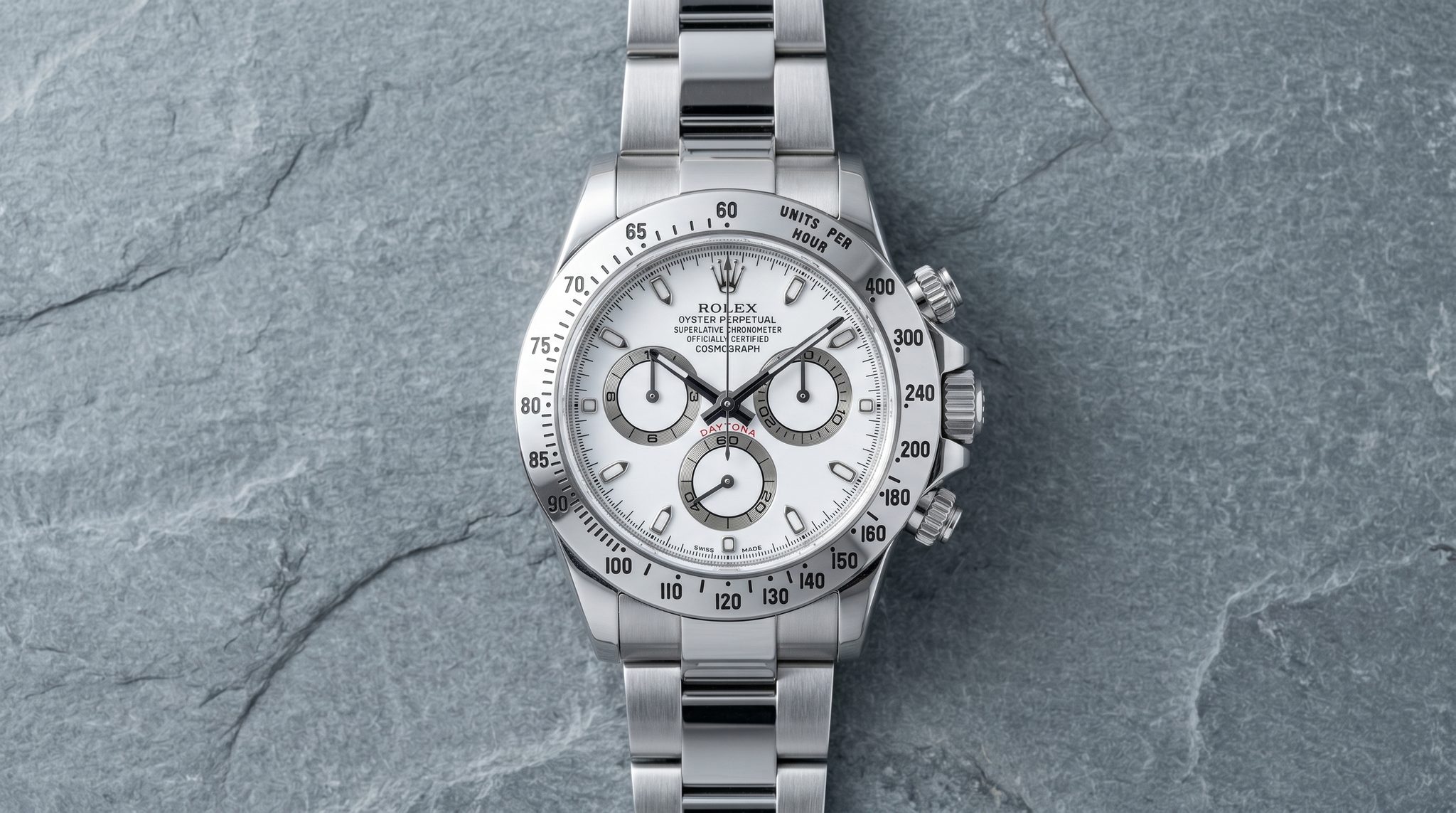
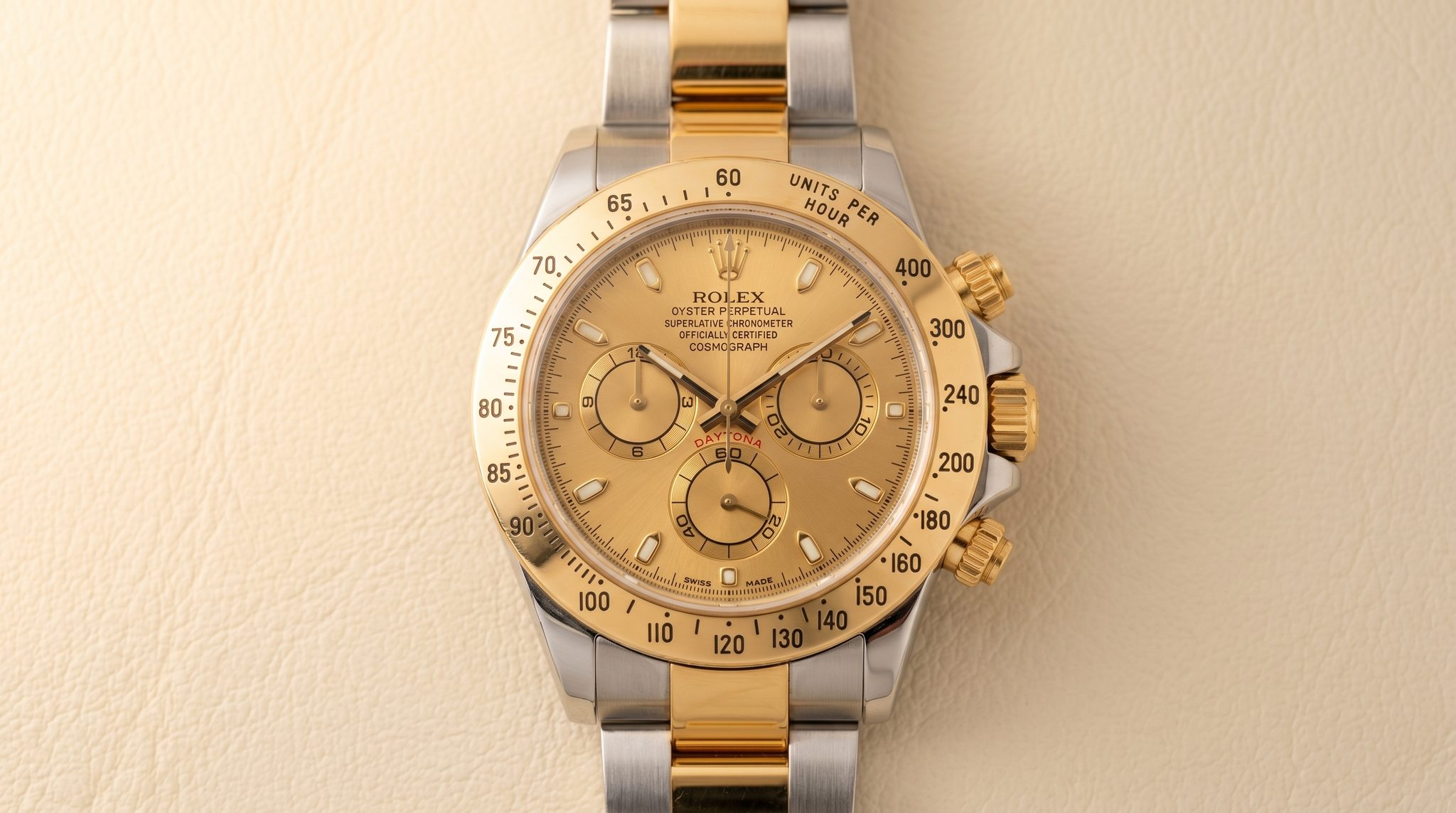
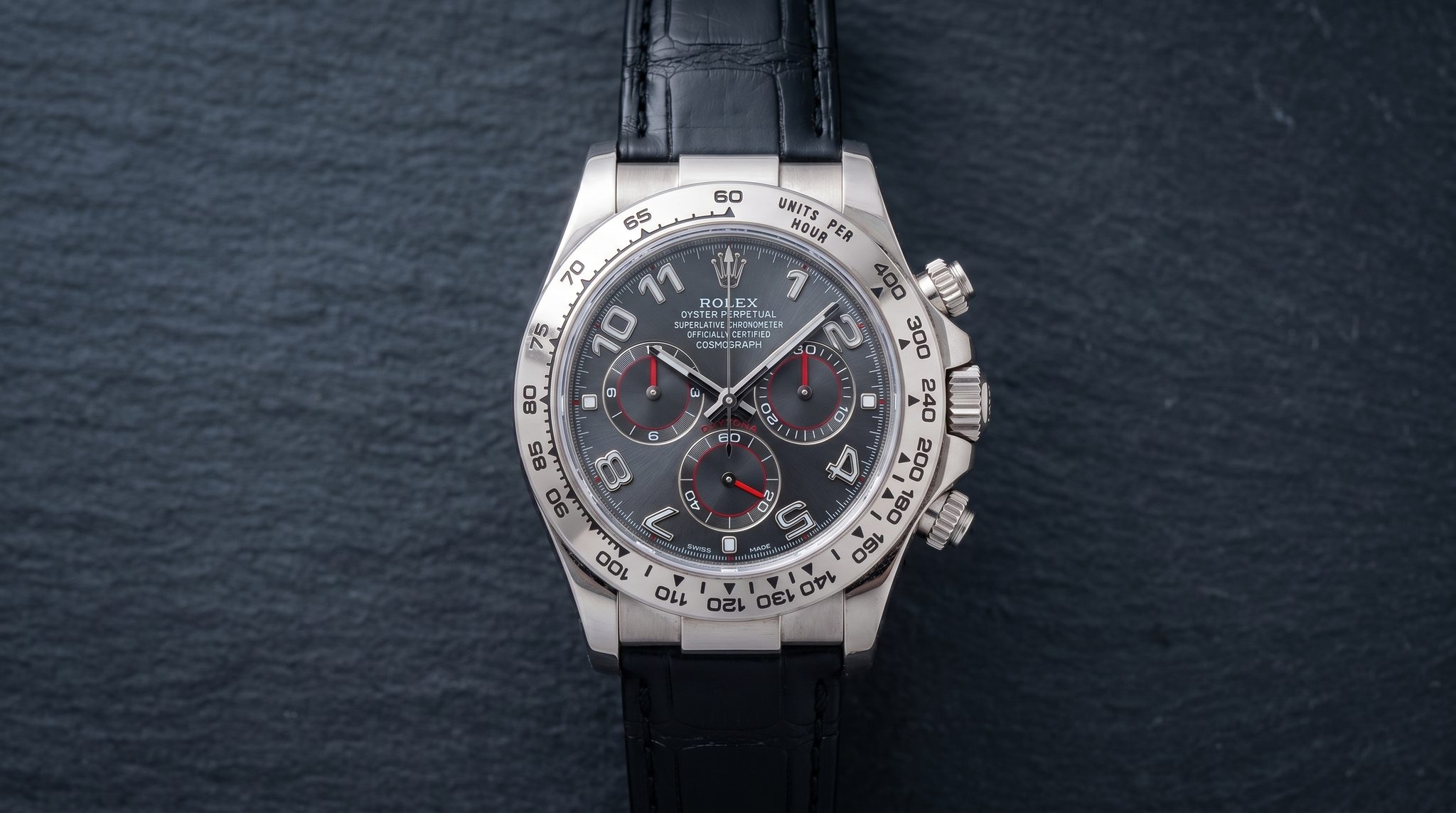
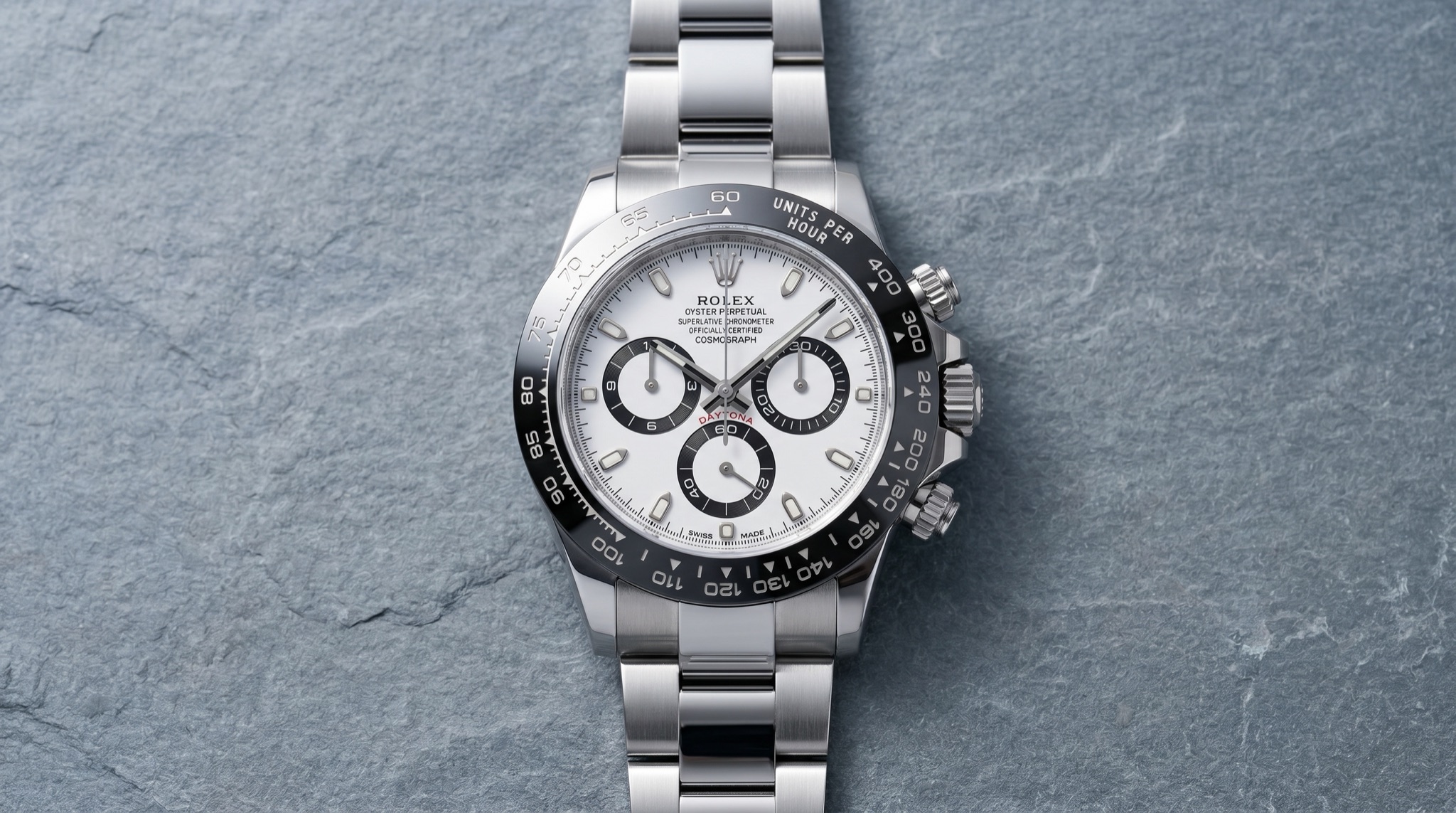
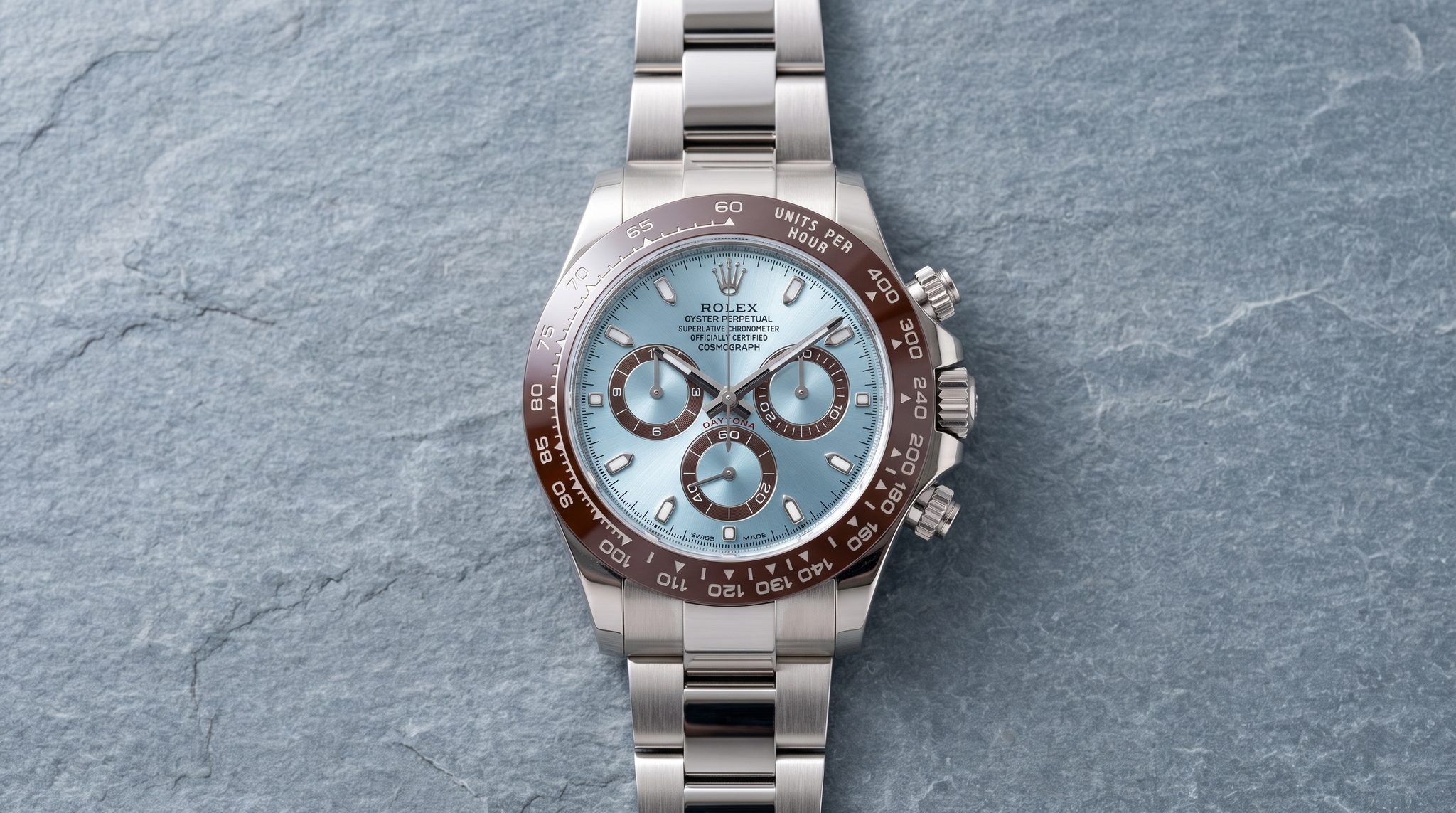
This final published era combines two linked modern steps. First, 116520, 116523, and 116519 introduce the in-house Cal. 4130 generation, keeping the established Daytona silhouette but making the chronograph fully Rolex-engineered, with the family’s modern “metal tachymeter bezel” look continuing across steel, two-tone, and white-gold-on-strap expressions. Second, Rolex shifts the bezel material story: 116500LN makes black Cerachrom the defining look of the steel Daytona from 2016, while 116506 uses platinum, ice-blue dial, and brown Cerachrom as an anniversary positioning statement from 2013. The era closes around 2023 when these references are replaced by updated successors in the next generation.
Which Cosmograph Daytona to buy
For daily wear with the clearest modern Daytona identity, 116500LN is the straightforward pick. It keeps the settled 4130-era platform but makes the most exposed timing surface, the bezel, a black Cerachrom signature that resists the cosmetic aging that metal bezels show.
For a first step into a vintage Rolex Cosmograph Daytona that still wears like a modern sports watch, dealer and editorial guides often frame 16520 as the gateway. It is the first automatic steel Daytona, with sapphire crystal and screw-down pushers, yet its era is still collected with a vintage mindset because visible details vary within the reference.
For the reference-collector who wants the manual-wind chapter in its most complete Oyster form, 6263 and 6265 are the center of gravity. They share the long-running screw-down pusher architecture, then let you choose the family’s two classic bezel identities, acrylic on 6263 or engraved metal on 6265.
For a watch that rewards patience, target coherence rather than a single nickname. The pump-pusher bezel-tachy generation, especially 6239 and 6241, sits in the period when the Daytona name and visual codes were still settling, so the best examples are the ones whose dial, bezel, and overall aging clearly belong together.
What to check on any Cosmograph Daytona
Buying across the Daytona family is less about one universal spec and more about internal consistency, because the most valuable traits often live on parts Rolex can replace in routine service. Dials, hands, bezels, bracelets, and even pushers are frequent swap points, and later-correct Rolex service parts can be genuine while still being wrong for a watch’s original era. The family is also a major target for redials and parts-built watches, especially where exotic and early-variant dials attract premiums.
Common questions about the Cosmograph Daytona
Rolex states that the Cosmograph Daytona launched in 1963, and many historians treat ref. 6239, introduced in 1963, as the first widely accepted Daytona. Earlier chronographs like 6238 are commonly treated as “pre-Daytona” precursors.
- Cosmograph Daytona, Born to racerolex.com
- Cosmograph Daytona, Triumph of Performancerolex.com
- Rolex Cosmograph Daytonaen.wikipedia.org
Show 7 more
- Reference Points, Understanding the Rolex (Non-Paul Newman) Daytonahodinkee.com
- Bob’s Watches, Rolex Daytona Evolution and Historybobswatches.com
- Monochrome Watches, History of the Rolex Daytona Chronograph (1963)monochrome-watches.com
- European Watch Company, A Buyer’s Guide to the Rolex Daytonaeuropeanwatch.com
- 41Watch, Retrospective, complete history of the Rolex Daytona41watch.com
- Bob’s Watches, Rolex Daytona Buying Guidebobswatches.com
- Servicing your Rolex, Our servicing procedurerolex.com