

Rolex Cosmograph Daytona 6263
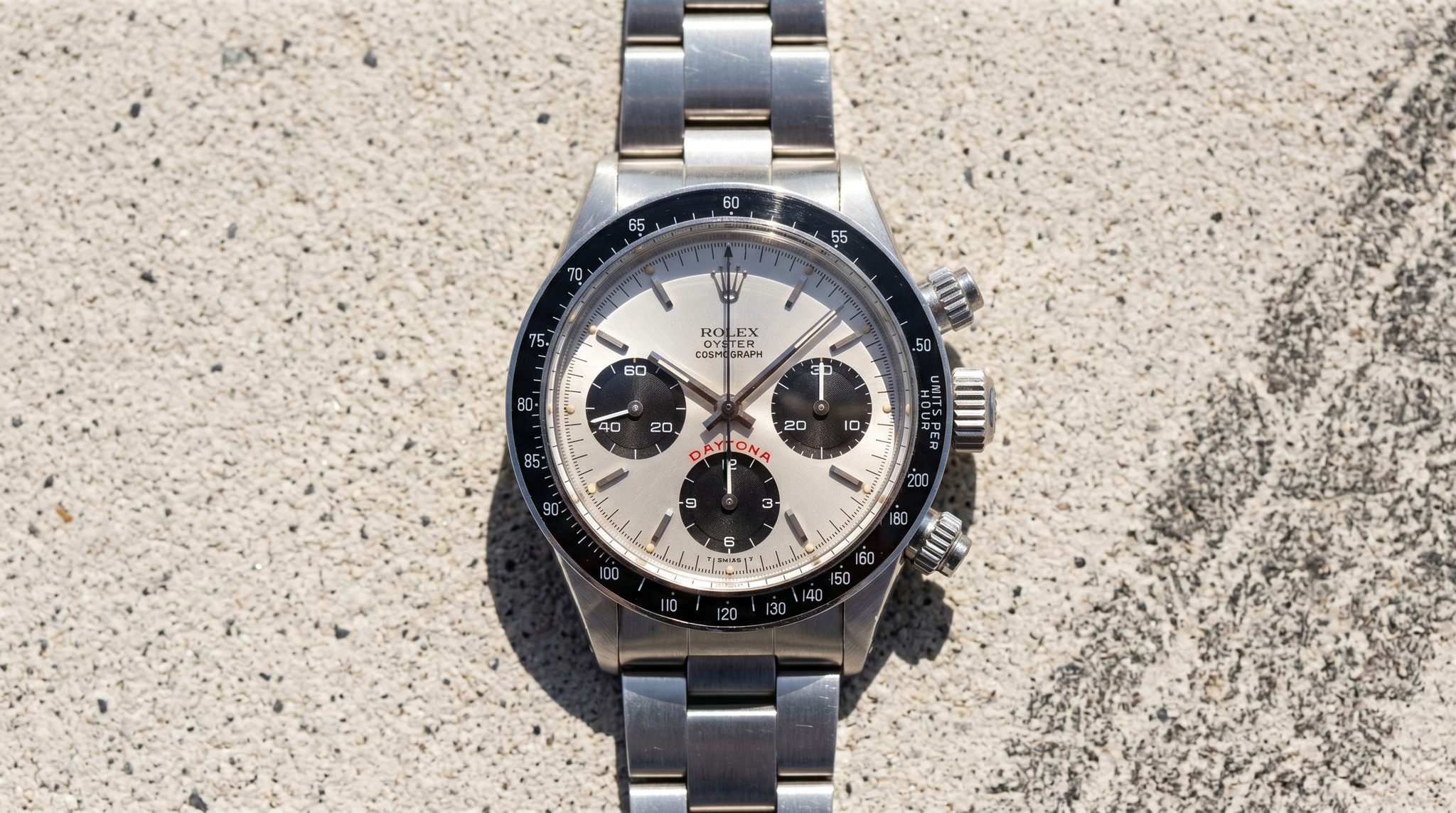
The Rolex Cosmograph Daytona 6263 is the manual-wind Daytona whose identity was written in replaceable parts, an acrylic bezel and a dial whose smallest markings can move the watch from merely vintage to truly rare.
- Production
- 1971–c. 1987/88
- Case
- Stainless steel / 14k / 18k
- Diameter
- 37 mm
- Lug width
- 19 mm
- Thickness
- 14 mm
- Bezel
- Black acrylic tachy
- Crystal
- Box acrylic
- Pushers
- Screw-down
- Movement
- Cal. 727 (manual)
- Chronograph
- 12-hour totalizer
- Dial
- Standard or exotic
- Dial mark
- Sigma; Big Red
The Rolex Cosmograph Daytona 6263 was produced from 1971 to about 1987.
The Rolex Cosmograph Daytona 6263 is the manual-wind Daytona that teaches a hard collector’s lesson: on this reference, value lives in details that can be swapped, lost, or quietly “improved” in service. The most vivid example is also the simplest to see, the black acrylic tachymeter bezel that defines the 6263’s face and is frequently found replaced after decades of knocks and cracks.
Introduced in 1971 and produced until about 1987 or around 1988, the 6263 sits in the final era of hand-wound Daytonas, powered by Rolex’s caliber 727 and housed in an Oyster case with screw-down chronograph pushers. In the family tree it follows the 6262 and precedes the 6265, but the 6263’s personality is not about where it sits in a lineup. It is about how many different “correct” watches exist under one reference number, and how each axis of variation, dial layout, dial signatures, lume execution, and case metal, can be genuine while still being easy to counterfeit or to mix.
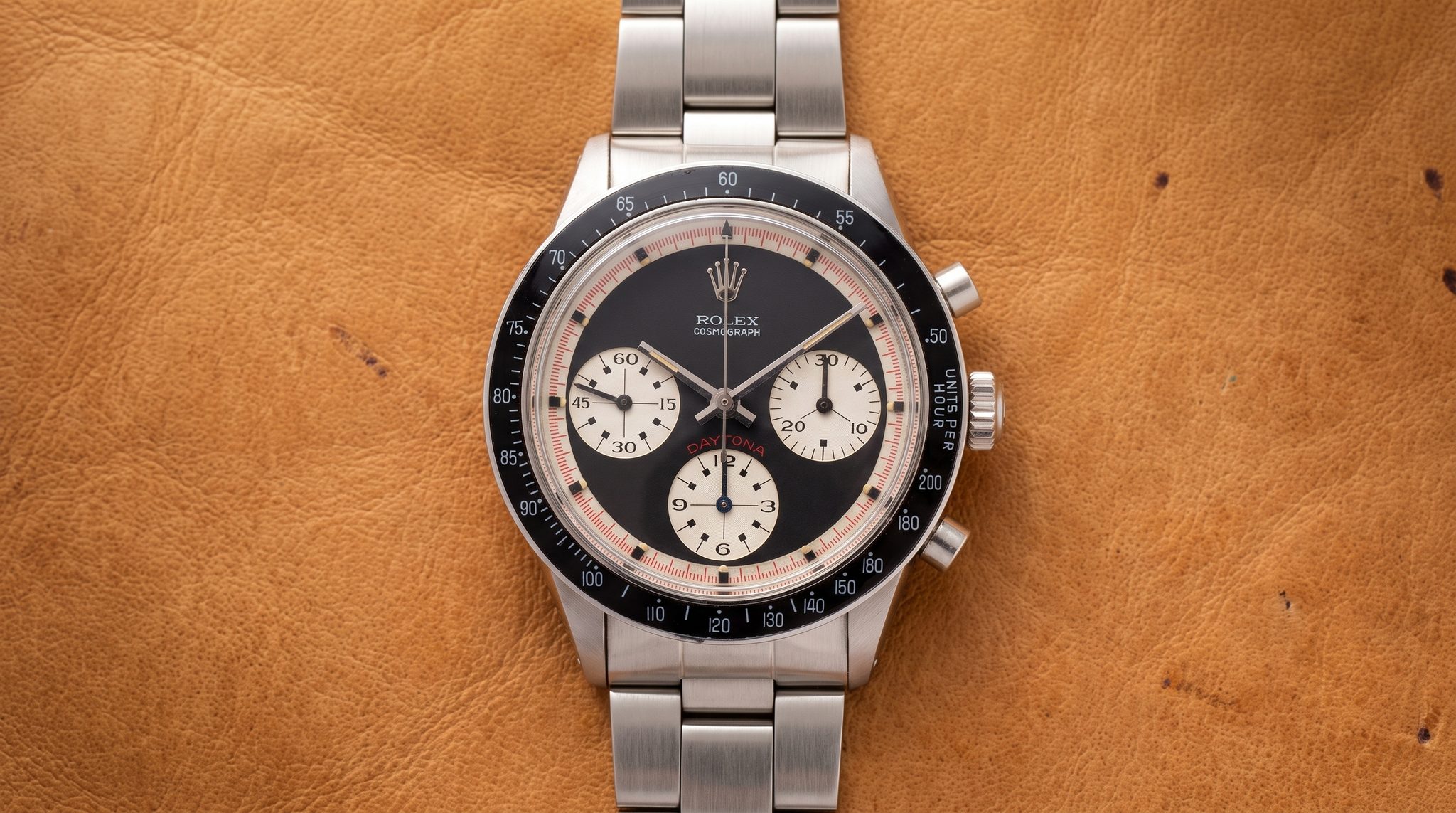
That is why the 6263 has become a reference people do not just wear, but study. A standard black or silver dial can be the calm, tool-like version of the watch. An exotic dial with Art Deco registers turns the same case into what collectors call a Paul Newman. Add red DAYTONA text (the “Big Red” style, associated with use from about 1975 onward) and the mood changes again. Add the tiny sigma symbols bracketing “T SWISS T” at 6 o’clock and the conversation becomes even more specific, because those marks signal precious-metal hour markers and are treated as scarce on this reference. The platform stays stable. The meaning shifts with the print.
“On the Daytona 6263, the reference stays the same while the bezel, the printing, and even two tiny sigma symbols can turn the same watch into a different object in the collector’s eye.”
Rolex Cosmograph Daytona 6263 production years: 1971–c. 1987/88
Ref. 6263 arrives in 1971 as the screw-down pusher, Oyster-cased manual Daytona with the black acrylic tachymeter bezel. That bezel is not a footnote. It is the reference’s visual signature and also one of its long-term vulnerabilities, because acrylic inserts are easily damaged and therefore often replaced. The result is a watch whose originality can hinge on a single ring of black plastic.
The movement story is comparatively calm. The 6263 is associated with Rolex caliber 727, a manually wound chronograph movement, and the appeal of this era is inseparable from that daily ritual: the watch asks to be wound, and it rewards attention with a layout that keeps time and measures up to 12 hours on the chronograph.
The dial story, by contrast, is layered rather than linear. Standard dials and exotic (Paul Newman) dials exist within the same reference, and luminous hour-marker executions appear on some exotic variants without turning them into a separate reference or even a separate dial family. Then come the signatures that collectors read like punctuation. The sigma marks, little σ symbols bracketing “T SWISS T,” indicate precious-metal hour markers and are treated as rare on 6263s. The red DAYTONA text, the Big Red style, is associated with use from about 1975 onward, but the exact first-use date is not firmly pinned in the provided record, which is why dating by a single trait can mislead.
The zoomed-out truth is that the 6263 is not a watch with one “correct” configuration. It is a stable platform that lived long enough for Rolex to sell materially different dials under the same reference number, and for decades of servicing to blur what left the factory together. That is why collectors prize watches that look assembled by time, not assembled later.
Production is generally described as ending around 1987, with some sources extending the end to around 1988 based on late examples and case dates. In the Daytona sequence the 6263 sits between the 6262 and the 6265, and the bezel difference that separates it from the 6265 remains the quickest way to identify it across a room.
- 1971Ref. introducedBlack acrylic tachymeter ring
- 1971Cal. 727 era727 stamp on movement
- c. 1975Big Red appearsDAYTONA in red above 6
- 1971 – c. 1987/88Sigma optionσ flanking T SWISS T
- c. 1987/1988Production endsLate examples with 1988 case dates
6263 against its neighbours
The 6263 makes the most sense when framed by the references directly beside it. Ref. 6262 shows where the manual-wind Daytona stood at the start of the 1970s, ref. 6265 is the closest sibling with the same Oyster, screw-down character but a different bezel material, and ref. 16520 marks the decisive break into the automatic era that follows soon after the last late 6263s.
This reference 6263 Rolex · focal 1971–c. 1987/88 | ||||
|---|---|---|---|---|
| Production | c. 1970–1971 | 1971–c. 1987/88 | 1971–c. 1987/88 | 1988–2000 |
| Diameter | 37 mm | 37 mm | 37 mm | 40 mm |
| Bezel | Steel tachymeter | Steel tachymeter | Black acrylic tachy | Steel tachymeter |
| Crystal | Acrylic | Acrylic | Box acrylic | Sapphire |
| Pushers | Pump | Screw-down | Screw-down | Screw-down |
| Movement | Cal. 727 (manual) | Cal. 727 (manual) | Cal. 727 (manual) | Self-winding (Zenith-based) |
| Case | Stainless steel | Stainless steel; gold variants | Stainless steel / 14k / 18k | Stainless steel |
Five dial generations across the run
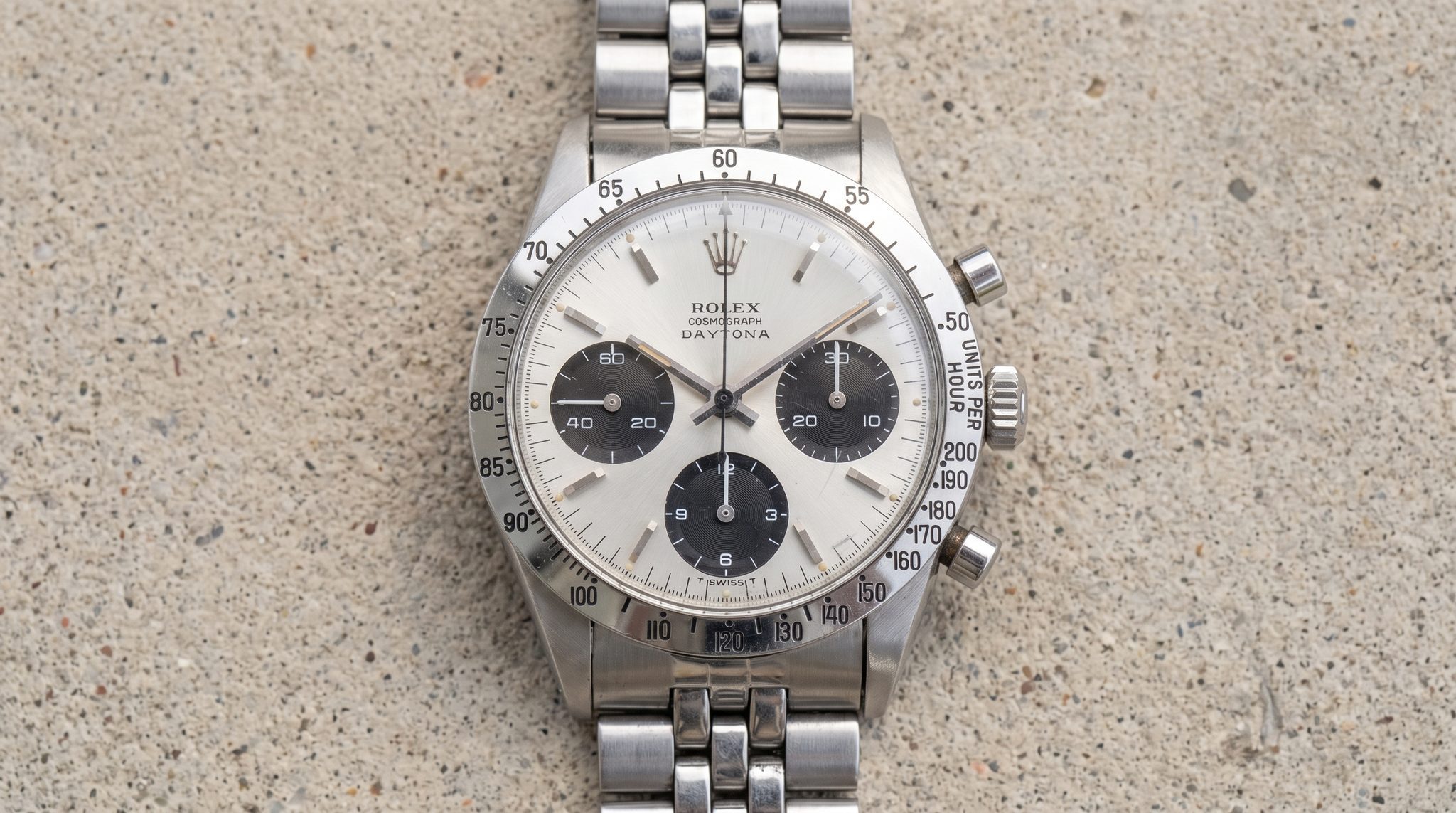
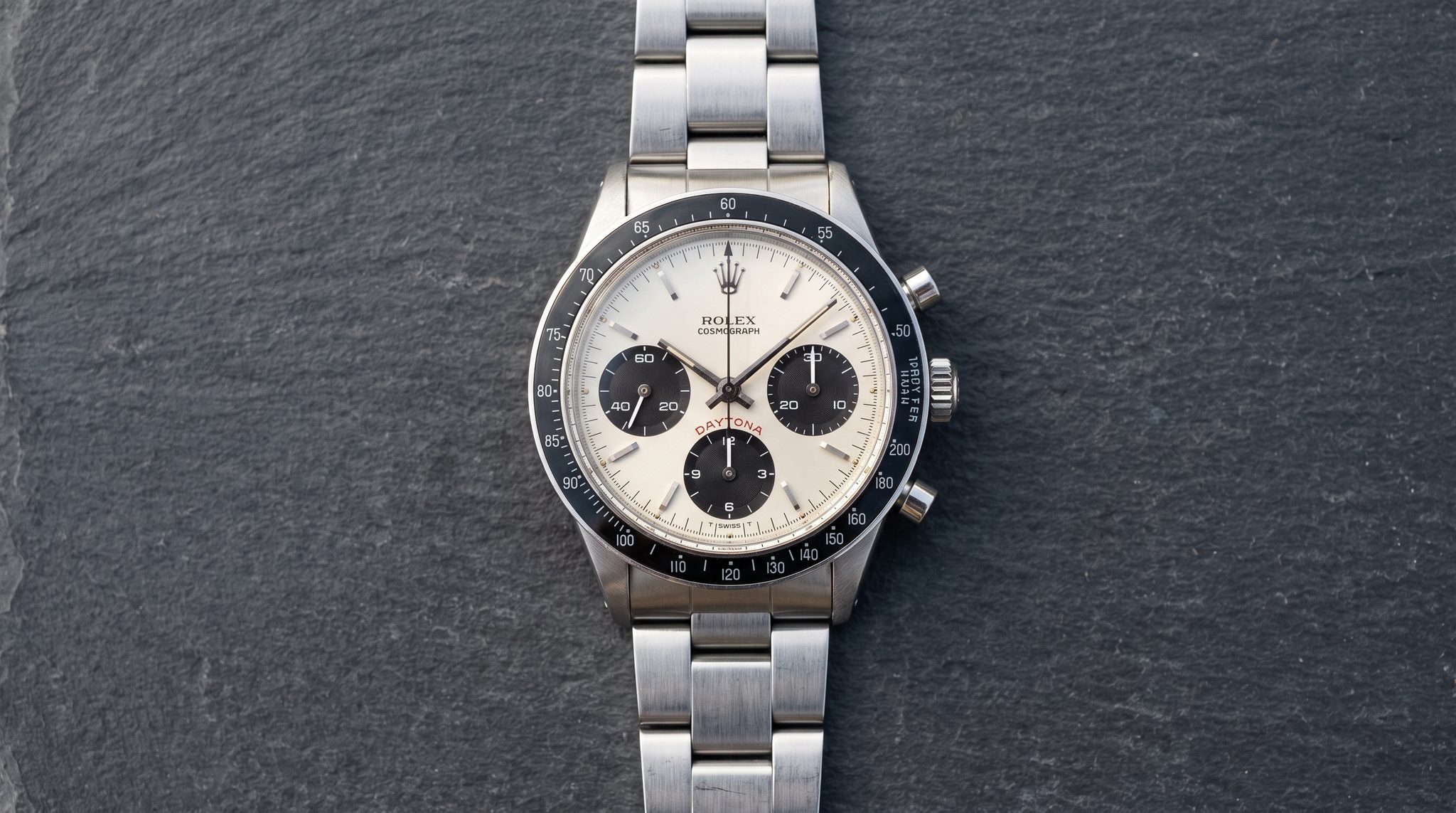
The standard 6263 dial is the version that reads most like an instrument. In black or silver on steel, or in champagne tones on gold examples, the printing is straightforward and the registers do the talking. Collectors still treat it as a variant worth defining because it shares the case with far rarer dials, which makes correct preservation of the ordinary details, dial condition, hands, pushers, bezel, matter disproportionately.
This “standard” category is about register style and typography, not about the color of the DAYTONA text or the presence of sigma marks. A standard-layout dial can also be Big Red, and it can also be sigma-signed, which is why it helps to describe each trait separately rather than collapsing them into a single early or late bucket.
What to check before buying a 6263
Buying a Rolex 6263 is less about finding “a 6263” than finding a coherent 6263. The same parts that make the reference legible at a glance, the acrylic bezel and the dial printing, are also the parts most likely to have been replaced, repaired, or cosmetically improved over time.
The safest purchases are the ones that hold together as a single story: dial, hands, bezel, pushers, and case condition that look like they have aged together, without restoration that has been chased for cosmetics. That is why the 6263 market rewards patience. The watch is small on paper at 37 mm, but it wears with presence thanks to the Oyster chronograph case, wide bezel, and box acrylic crystal, which makes it an unusually livable vintage chronograph when it is right.
Rolex Cosmograph Daytona 6263 price and value
A Rolex Cosmograph Daytona 6263 sells for about $78,000 at the median, typically $58,000 to $96,000 across 94 comparable sales.
Rolex Cosmograph Daytona 6263 for sale
Indicative figures from recent dealer, auction, and Grey Market sales (updated this week). Every watch is verified before it sells here.
Each point is a recent dealer or auction sale, banded to an indicative figure. The range shown is not a valuation.
Adjacent in the Cosmograph Daytona family
Common questions about the 6263
Rolex introduced the Cosmograph Daytona 6263 in 1971. Production is generally described as running until about 1987, with some accounts extending the end to around 1988 based on late examples and case dates.
- 1972 Rolex Oyster Cosmograph 'Daytona' Ref. 6263shop.hodinkee.com
- A Beginner's Guide to the early Rolex Daytona (1963-88)goldammer.me
- Rolex 6263 Review: Is This Vintage Daytona a Smart Investment?bobswatches.com