

Rolex Cosmograph Daytona 6264
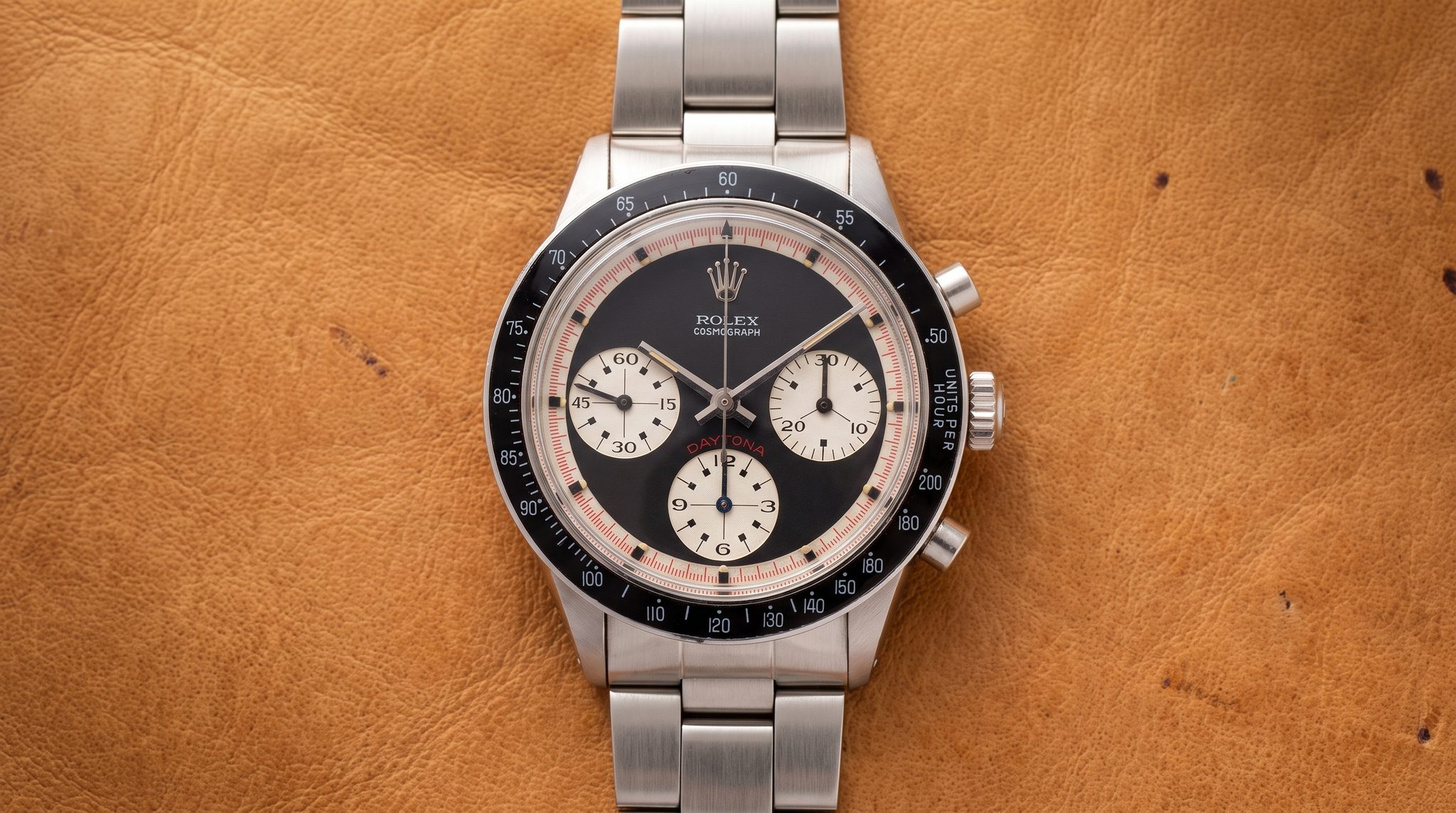
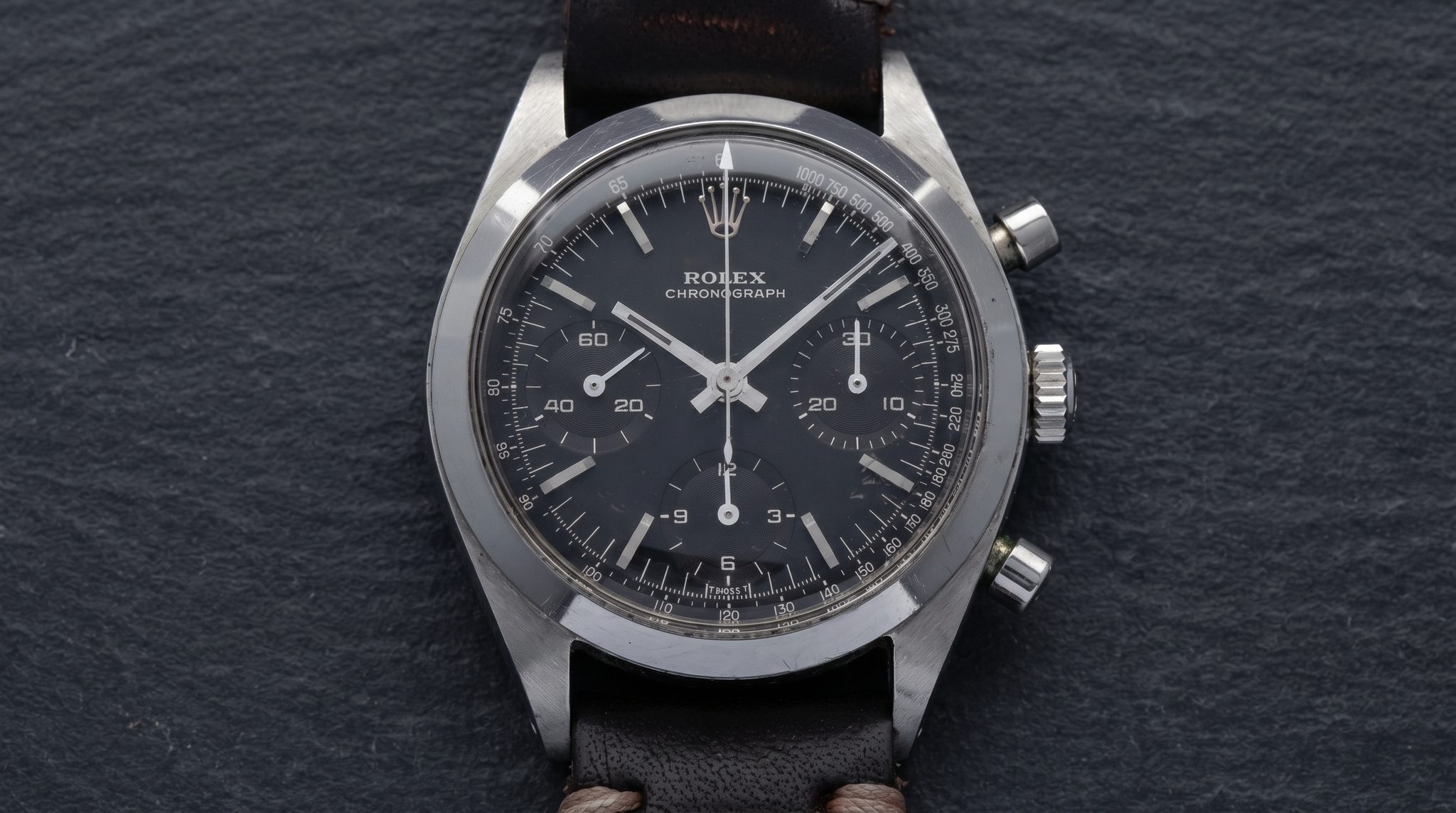
The Rolex Cosmograph Daytona ref. 6264 is the brief, early‑1970s bridge that pairs pump pushers with the black acrylic tachymeter bezel later carried into the long‑running Oyster era.
- Production
- c. 1970–1972
- Case
- Steel, 14k, or 18k
- Diameter
- 37–37.5 mm
- Bezel
- Black acrylic tachymeter
- Crystal
- Acrylic
- Pushers
- Pump (non screw-down)
- Movement
- Cal. 727 (manual)
- Jewels
- 17
- Dial
- Standard or exotic
- Complications
- Chronograph
The Rolex Cosmograph Daytona 6264 was produced from about 1970 to 1972.
The Rolex Cosmograph Daytona ref. 6264 is the Daytona that makes the model’s early‑1970s transition visible at a glance. It takes the black acrylic tachymeter bezel that defines later Daytonas and combines it with the older pump‑pusher case, a pairing that survives only briefly, roughly around 1970 to 1972, with some specialist references narrowing the commercial window to 1970–1971.
That brevity is not trivia, it is the reason the reference reads so clearly in the hand. The bezel is the first tell: a black acrylic ring with a printed tachymeter scale, not the engraved metal bezel of its close sibling ref. 6262. Then the pushers confirm the moment in the lineage: simple pump pushers, not the screw‑down chronograph pushers that soon define the long‑running successors.
Under the dial, ref. 6264 belongs to the late manual‑wind, column‑wheel era of the Daytona. It uses the Valjoux‑based Rolex caliber 727, and auction descriptions of surviving examples consistently describe the movement as a 17‑jewel manual chronograph. Cases are documented in stainless steel as well as yellow gold executions, including 14k and 18k examples, and auction listings commonly describe case diameters in the 37 to 37.5 mm range.
Collectors spend most of their attention on dials, because the reference’s case and movement story is comparatively fixed while its dial story is where the hierarchy of rarity and value lives. Ref. 6264 can be found with a standard “Cosmograph Daytona” dial, but it is also one of the references fitted with the so‑called Paul Newman, or exotic, dial. On an exotic dial, the watch looks more graphic and architectural: contrasting subdials, a stepped outer track, and Art‑Deco style numerals that change the entire tone of the watch without changing the reference number.
Within those exotic dials, further distinctions exist in printing execution. Specialists separate earlier and later Paul Newman layouts by typography, and on 6262/6264 a later execution is described as adopting a blockier ROLEX font with a change in minute‑track printing. Exact cutoffs are debated, but the result is that two watches from the same short production run can present like different eras. At the very top of the pyramid are rare yellow‑gold Paul Newman configurations, including the pale “lemon” dials documented by Christie’s in extremely small numbers and the even more unusual black‑and‑gold “JPS” configuration described as fewer than five known examples.
Ref. 6264, then, is not simply “a rare Daytona.” It is a tight, legible crossover: pump pushers, black acrylic bezel, and a dial ecosystem that ranges from straightforward to almost impossibly scarce, all compressed into one of the shortest production chapters in the model’s manual‑wind history.
“Ref. 6264 is the Daytona’s crossover in miniature: pump pushers, a black acrylic bezel, and dial choices that can move from straightforward to ultra‑rare without changing the reference number.”
Rolex Cosmograph Daytona 6264 production years: c. 1970–1972
In the early 1970s, Rolex’s Daytona line briefly splits the same basic watch into clean, easy-to-see identities. Ref. 6262 and ref. 6264 share the same core architecture, including the manual‑wind caliber 727, but they signal themselves instantly through the tachymeter: engraved metal on 6262, printed black acrylic on 6264. That bezel change is the headline, because it points forward to the look that continues on the screw‑down‑pusher successor family.
What changes next is not the dial or bezel first, but the case hardware. The reason for the shift to screw‑down pushers is not documented in the retrieved material, yet the outcome is clear in the lineage: the long‑running ref. 6263 and ref. 6265 adopt screw‑down pushers and continue for years, while ref. 6264 stays a pump‑pusher watch and disappears quickly. This is why production years for 6264 attract so much attention. Broad reference guides place it around 1970–1972, while more specialized research argues for a one‑year 1970–1971 window based on batch analysis; auction listings typically describe surviving pieces as circa 1970–1971, which is why the reference is routinely treated as one of the shortest chapters in the manual‑wind Daytona sequence.
Inside that narrow window, the most consequential variation is optional rather than chronological. A standard 6264 dial reads like a conventional vintage Daytona, while an exotic Paul Newman dial transforms the same watch into something more graphic: a stepped minute track, contrasting subdials, and distinctive numerals that make the chronograph registers look like separate instruments. Specialists then separate exotic dials into earlier and later printing executions, but the factory cutoff is not pinned to a single year. The practical consequence is that ref. 6264 is both tightly defined and surprisingly open-textured, a reference with one clear case identity and many dial faces.
- c. 1970Reference beginsBlack acrylic bezel, pump pushers
- c. 1970 – 1972Cal. 727 era727 engraving on movement bridge
- c. 1970 – 1972Dial choiceExotic step track and Art‑Deco numerals
- c. 1970 – 1972Gold executionsHallmarks and matching gold bracelet
- c. 1971Oyster successorsScrew‑down pushers on later refs
- c. 1972Reference endsMost examples dated circa 1970–1971
6264 against its neighbours
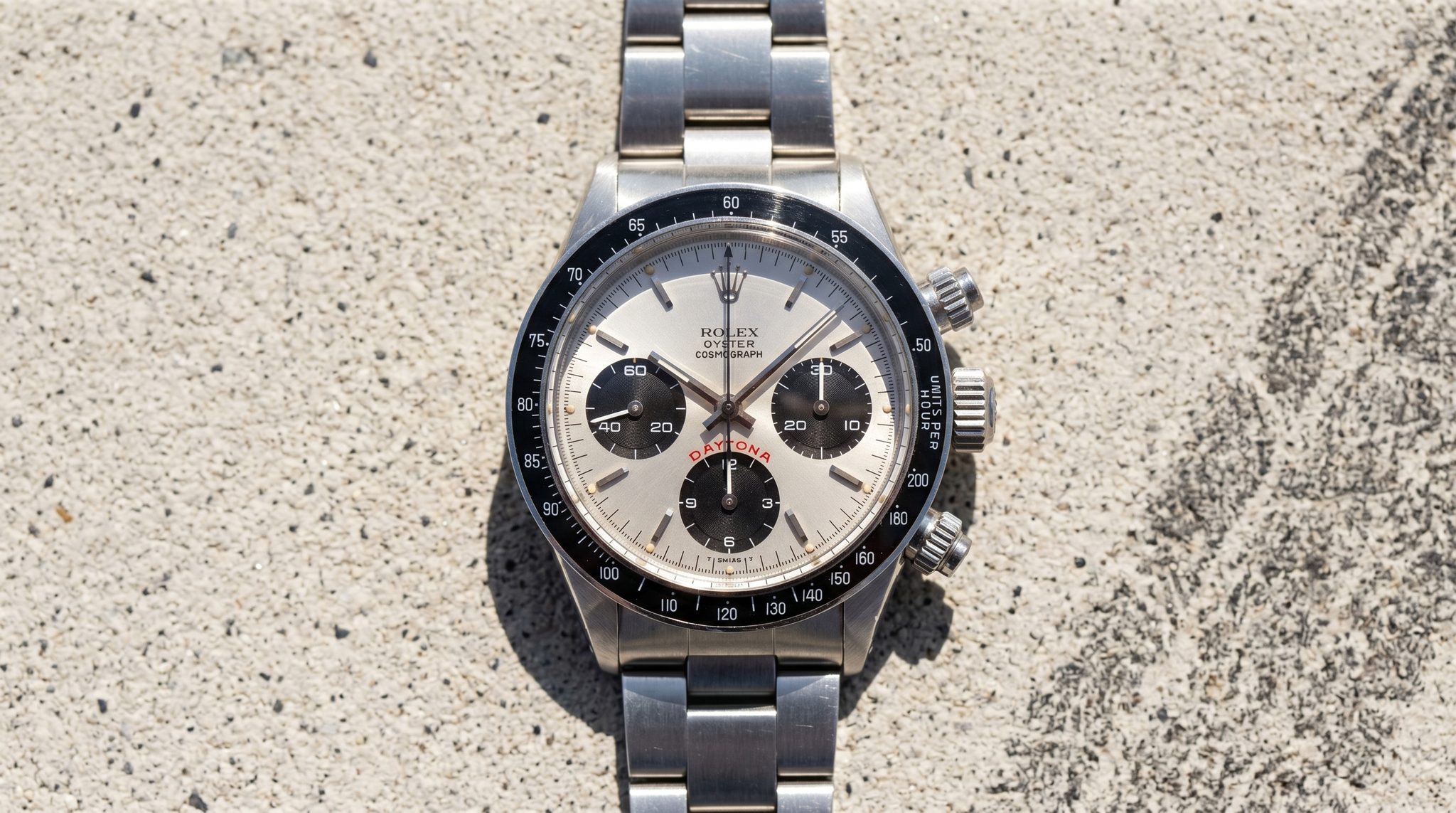
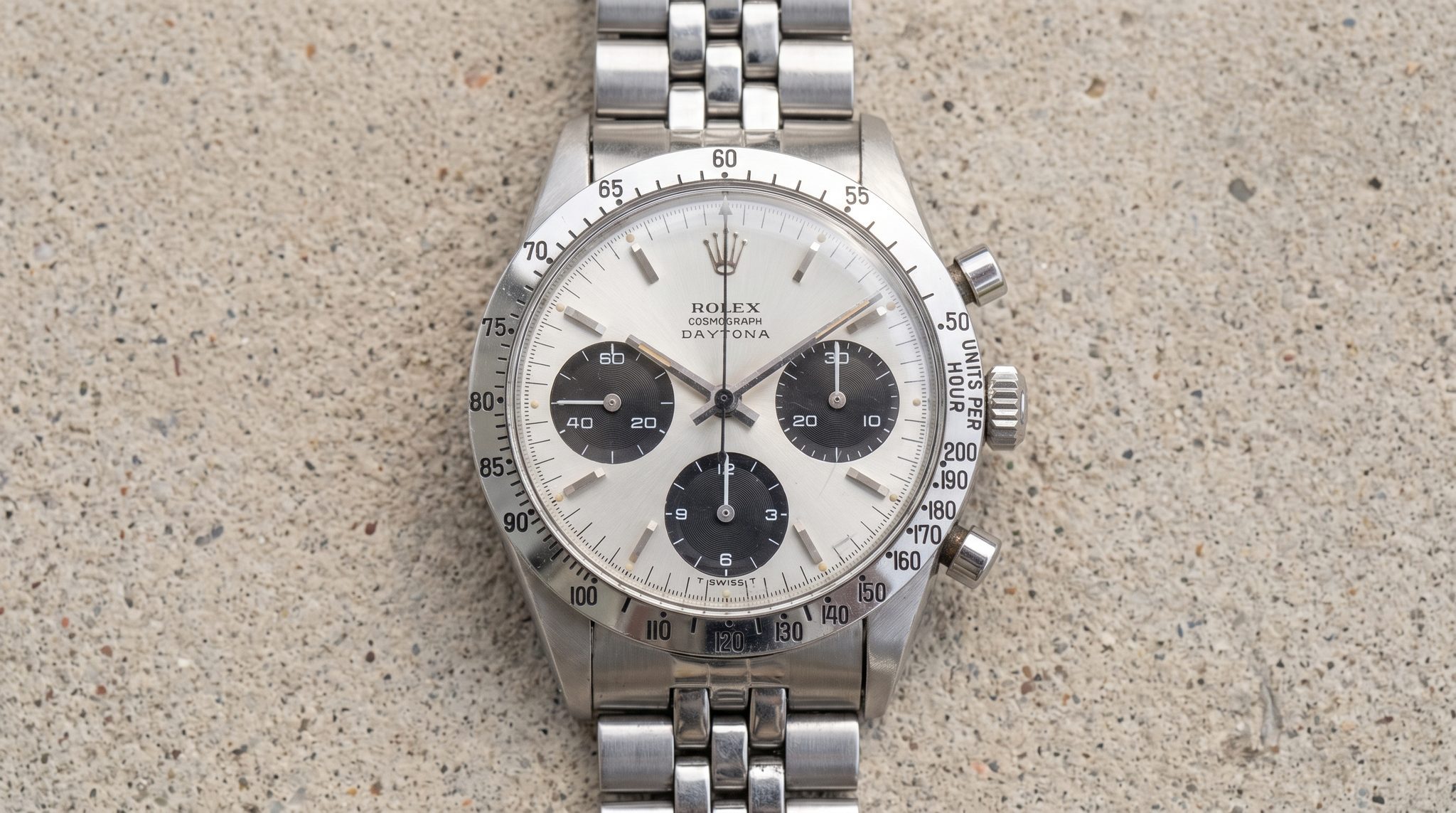
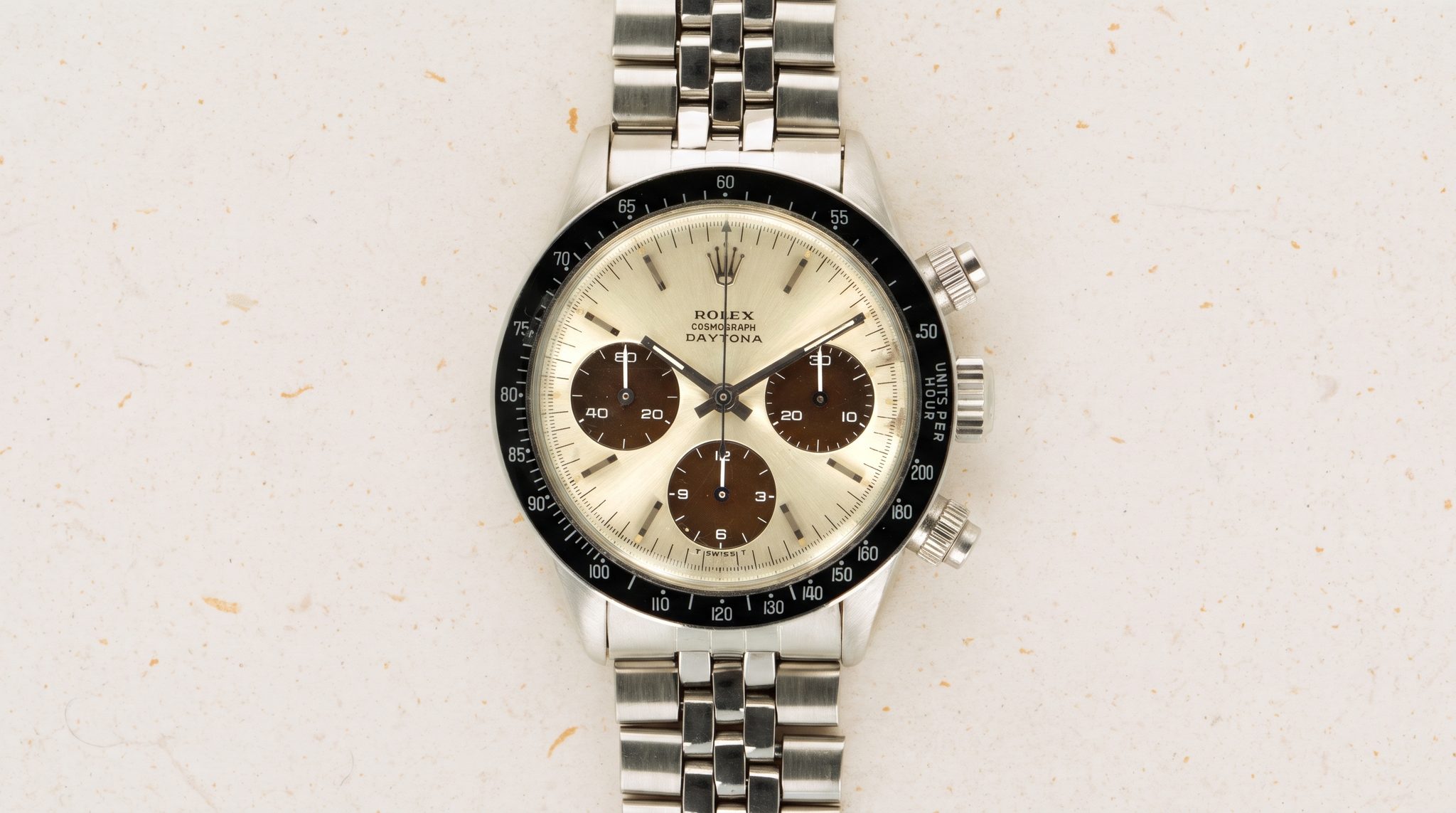
Ref. 6264 only makes sense when set beside the two watches that bracket it. Ref. 6262 is effectively its twin, sharing the same pump‑pusher case and caliber 727, but signaling itself with an engraved metal tachymeter bezel. Ref. 6265 is the next step in the line’s direction of travel: the screw‑down‑pusher successor that keeps the Daytona chronograph format but turns it into a long‑running Oyster‑style platform.
This reference 6264 Rolex · focal c. 1970–1972 | ||||
|---|---|---|---|---|
| Production | 1960s (not pinned) | c. 1970–1971 | c. 1970–1972 | c. 1971–1987 |
| Case | Steel or gold | Steel | Steel, 14k, or 18k | Steel or yellow gold |
| Diameter | ~36.5–37.5 mm | 37 mm | 37–37.5 mm | ~37–37.5 mm |
| Bezel | Black acrylic tachymeter | Engraved metal tachymeter | Black acrylic tachymeter | Engraved metal tachymeter |
| Crystal | Acrylic | Acrylic | Acrylic | Acrylic |
| Pushers | Pump (non screw-down) | Pump (non screw-down) | Pump (non screw-down) | Screw-down (Oyster) |
| Movement | Valjoux 72/722 family | Cal. 727 (manual) | Cal. 727 (manual) | Cal. 727 (manual) |
| Dial | Standard or exotic | Standard or exotic | Standard or exotic | Standard or exotic |
Six dial generations across the run
A standard‑dial 6264 is the reference in its most literal form: pump pushers flanking the case, and a black acrylic tachymeter bezel whose printed numerals sit on the surface rather than being engraved into metal. The standard dial avoids the exotic step track and Art‑Deco numerals, so the overall effect is quieter and more instrument‑like. Identification starts with the host traits that should not be confused with dial generation: the acrylic bezel, the pump pushers, and the caliber 727 inside.
Because dials can be swapped and watches can be assembled from period parts, the most convincing standard examples are the ones whose details agree with one another. The bezel font and its aging should make sense beside the dial’s printing and lume, and the case should show consistent wear around the pusher tubes and bezel seat rather than the mixed textures that can appear when components have been changed over time.
What to check before buying a 6264
Buying a ref. 6264 is less about learning a long list of mid‑run changes and more about resisting one large trap: the reference is short, valuable, and defined by parts that are easy to transplant. The biggest risks are incorrect dials, assembled watches, and heavy restoration, especially where an exotic dial is involved.
Rolex Cosmograph Daytona 6264 price and value
Rolex Cosmograph Daytona 6264 for sale
Auctions on Grey Market run on seven-day cycles, every watch verified before it sells. Browse what's live now, or consign your 6264.
Adjacent in the Cosmograph Daytona family
Common questions about the 6264
The Rolex Cosmograph Daytona 6264 was produced from about 1970 to 1972, while some specialist research narrows it to 1970–1971. Auction listings commonly describe surviving examples as circa 1970–1971, which aligns with the view that production clustered tightly in the early 1970s.
- Sotheby’s | ‘Paul Newman’ Daytona, Ref. 6264, Stainless steel chronographsothebys.com
- Christie’s | Signed Rolex, Cosmograph, Daytona, Paul Newman model, ref. 6264, circa 1970christies.com
- Rolex Daytona Reference Guide (6264 context)vintagedaytona.com
Show 10 more
- Wind Vintage | The Seven Different Paul Newman Daytona Referenceswindvintage.com
- Everest Bands | The Pauls (Daytona bezel and reference context)everestbands.com
- Rolexopedia | Reference 6262 (parallel production context)rolexopedia.net
- Rolexopedia | Reference 6265 (successor-line context)rolexopedia.net
- Chrono24 | Rolex ref. 6264 listings overviewchrono24.com
- Collector Square | Rolex Daytona mécanique ref. 6264 listing datacollectorsquare.com
- Perezcope | Case-number research referenced for 6264 batch claimsperezcope.com
- Hodinkee | Reference Points: Understanding the Rolex Paul Newman Daytonahodinkee.com
- Rolexopedia | Cosmograph Daytona reference guide overviewrolexopedia.net
- Robb Report | Daytona history (context for rarity claims)robbreport.com