

Rolex GMT-Master
The Rolex GMT‑Master is the travel watch that moved from an airline cockpit tool to a modern luxury standard by repeatedly rebuilding the same idea around better materials and a better way to set time zones.
The Rolex GMT‑Master is the travel watch that kept the same promise for seven decades, then repeatedly changed the engineering around that promise as real-world use exposed what mattered most: durability, legibility, and faster time-zone setting. It began as a practical answer to long-haul commercial aviation, developed with Pan American World Airways, so pilots could read local time and home time at a glance.
That origin matters because the whole family still reads like one problem solved in different ways. Every generation keeps the recognizable grammar, a 24‑hour hand read against a rotating 24‑hour bezel, but the details tell you what Rolex was optimizing in that period. Early examples prioritized immediate usability and visibility, then learned hard lessons about fragile or short-lived materials. Later references modernized the user experience, first by making the date easier to set, then by changing the GMT architecture so local time could be adjusted without disturbing “home” time.
This Rolex GMT‑Master reference guide is therefore less a list of “best” watches than a map of two recurring pivots. The first pivot is material, moving from early Bakelite to aluminum inserts, then to Cerachrom ceramic as Rolex chased a bezel that resisted cracking, fading, and day-to-day wear. The second pivot is mechanical, separating the original GMT‑Master “caller” layout, where the 12‑hour and 24‑hour hands stay linked, from the GMT‑Master II “flyer” layout, where the local hour hand jumps in one-hour steps for travel.
One zoomed-out truth falls out of that pattern. The GMT‑Master’s identity is not any single bezel color or nickname, it is Rolex treating the same instrument as a living system, upgrading what fails first (bezel materials), what slows you down (calendar setting), and what a traveler touches most (the hour hand) while keeping the overall look stable enough that a GMT from 1959 and one from today still read as close relatives.
What the GMT-Master has sold for at Grey Market
One Rolex GMT-Master has sold on Grey Market, verified before it shipped.
What each GMT-Master reference trades for
Median and typical range of recent dealer, auction and Grey Market sales, banded. Indicative, not a valuation; each reference page carries the detail.
12 references across 6 eras
Bakelite origin GMT
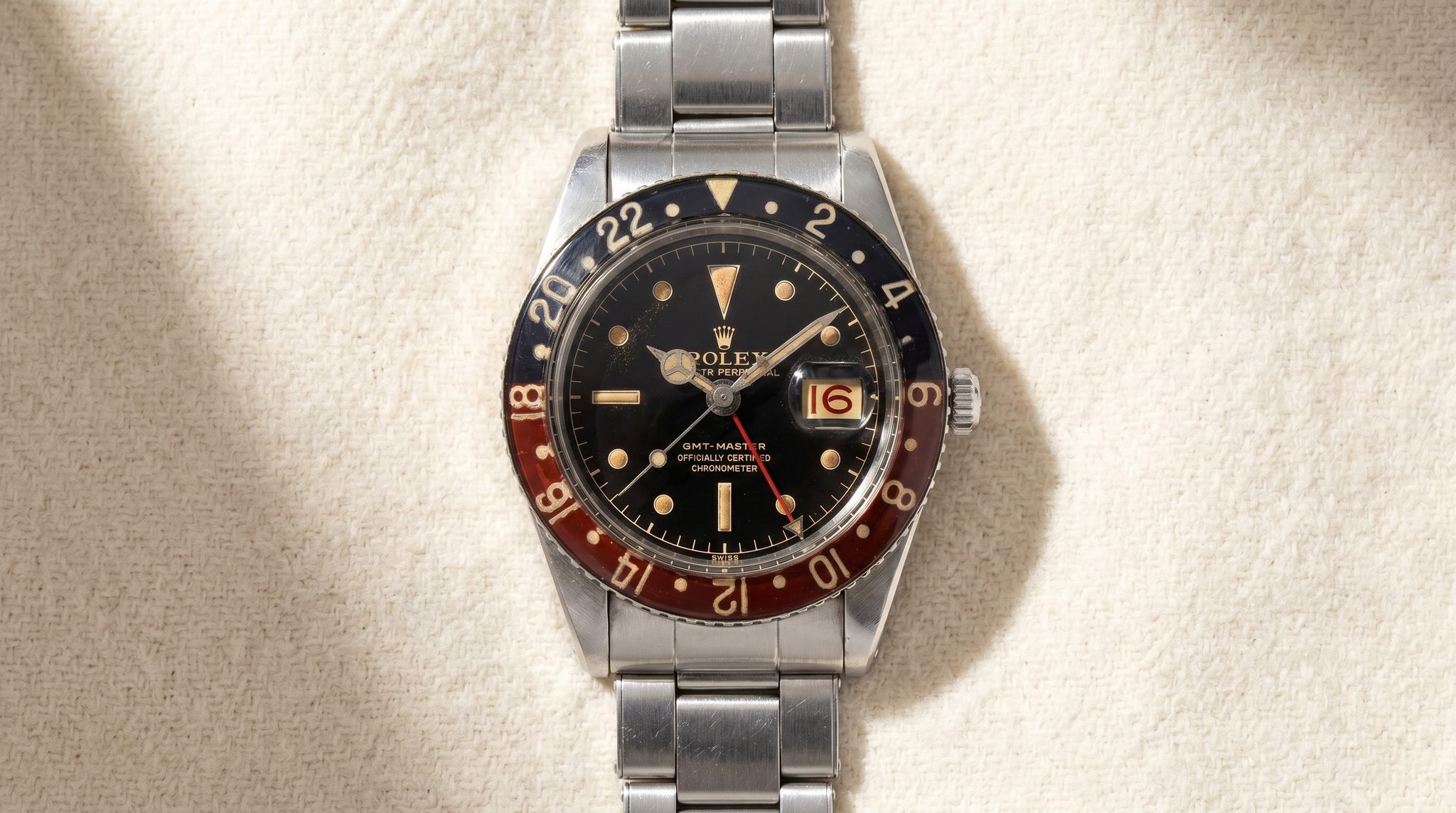
The first GMT‑Master generation is defined by the watch’s original solution to the pilot problem and by the immediate limits of its earliest materials. 6542 establishes the formula of a 24‑hour hand read against a rotating 24‑hour bezel, in a smaller, no‑crown‑guard case that still feels like a mid‑1950s Oyster. What ended this era was not a change in the mission but a push toward a tougher, more standardized execution. Period and later service practice treated the early Bakelite bezel insert as fragile, and later GMT‑Masters moved to more durable inserts and a more protected crown arrangement.
Crown‑guard caller era
This long-running generation turns the GMT‑Master into a standardized professional format. 1675 introduces the 40 mm, crown‑guard case that becomes the baseline size and silhouette for the line, and it normalizes aluminum bezel inserts in place of earlier plastic. Because production runs for decades, the “look” of the reference becomes a moving target in practice, with well-documented shifts such as glossy gilt dials giving way to matte dials over time. The era ends when Rolex begins modernizing the user experience, first by updating the movement and calendar behavior rather than by changing the outward tool-watch grammar.

Quickset transitional callers
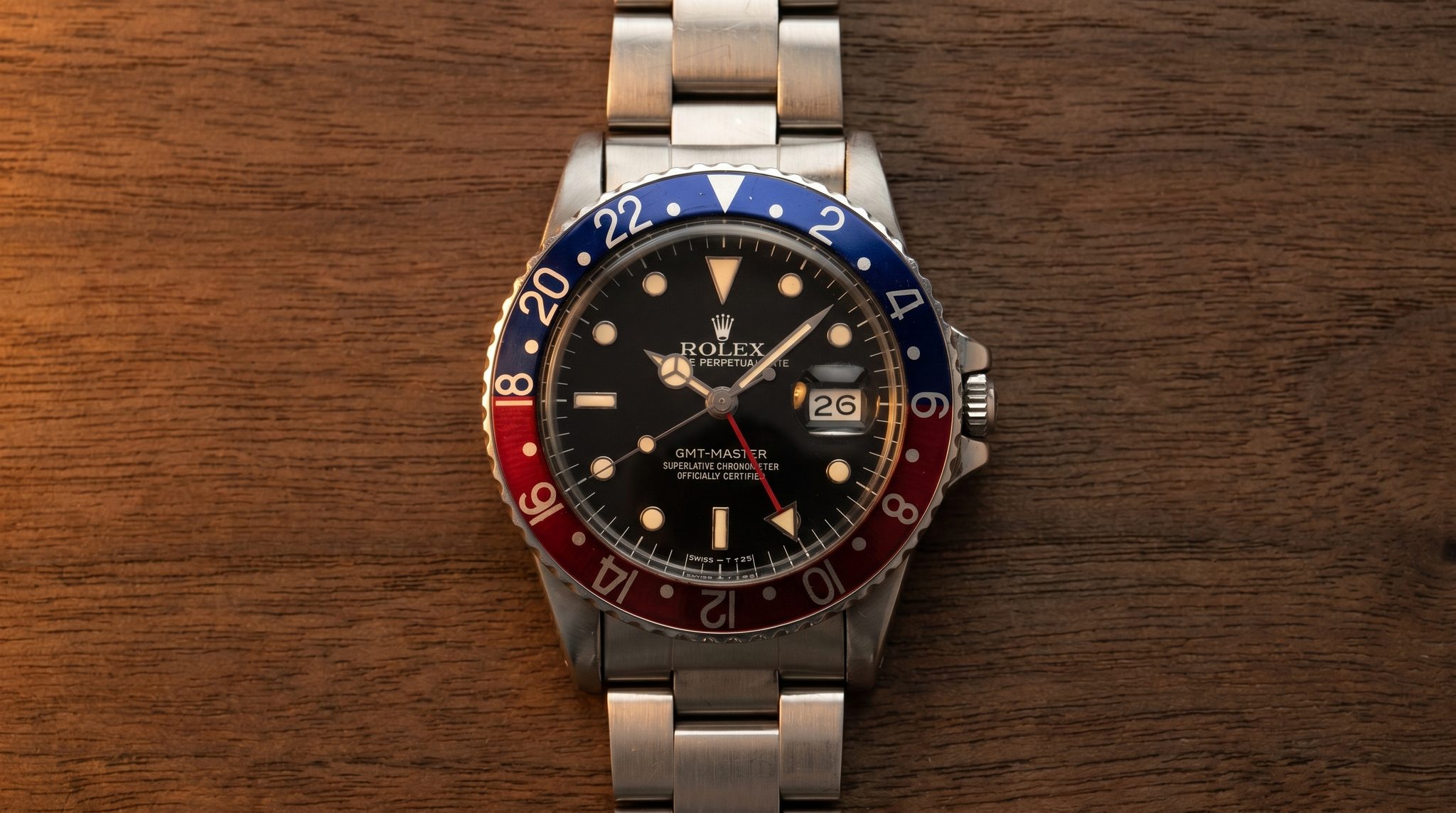
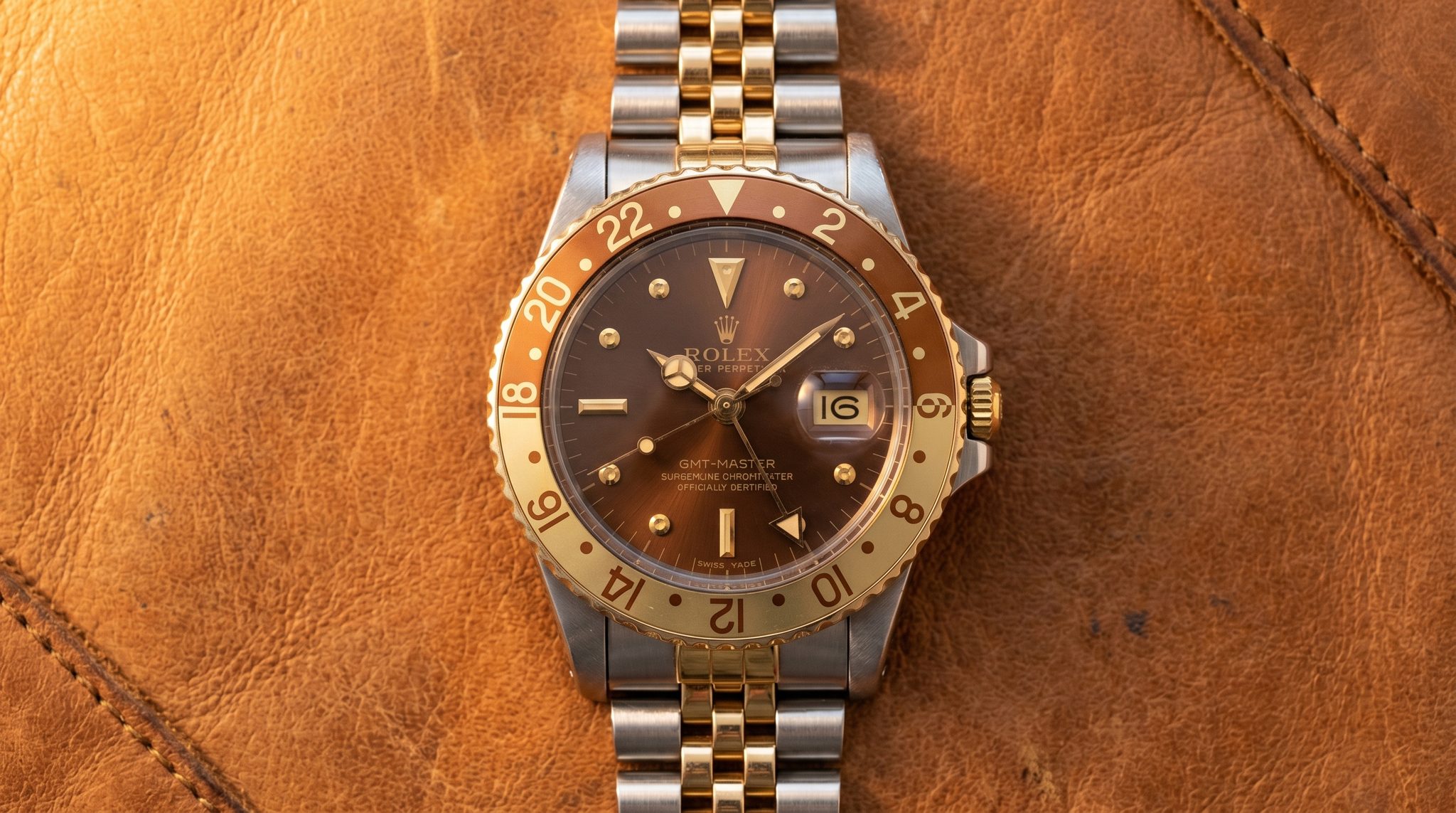
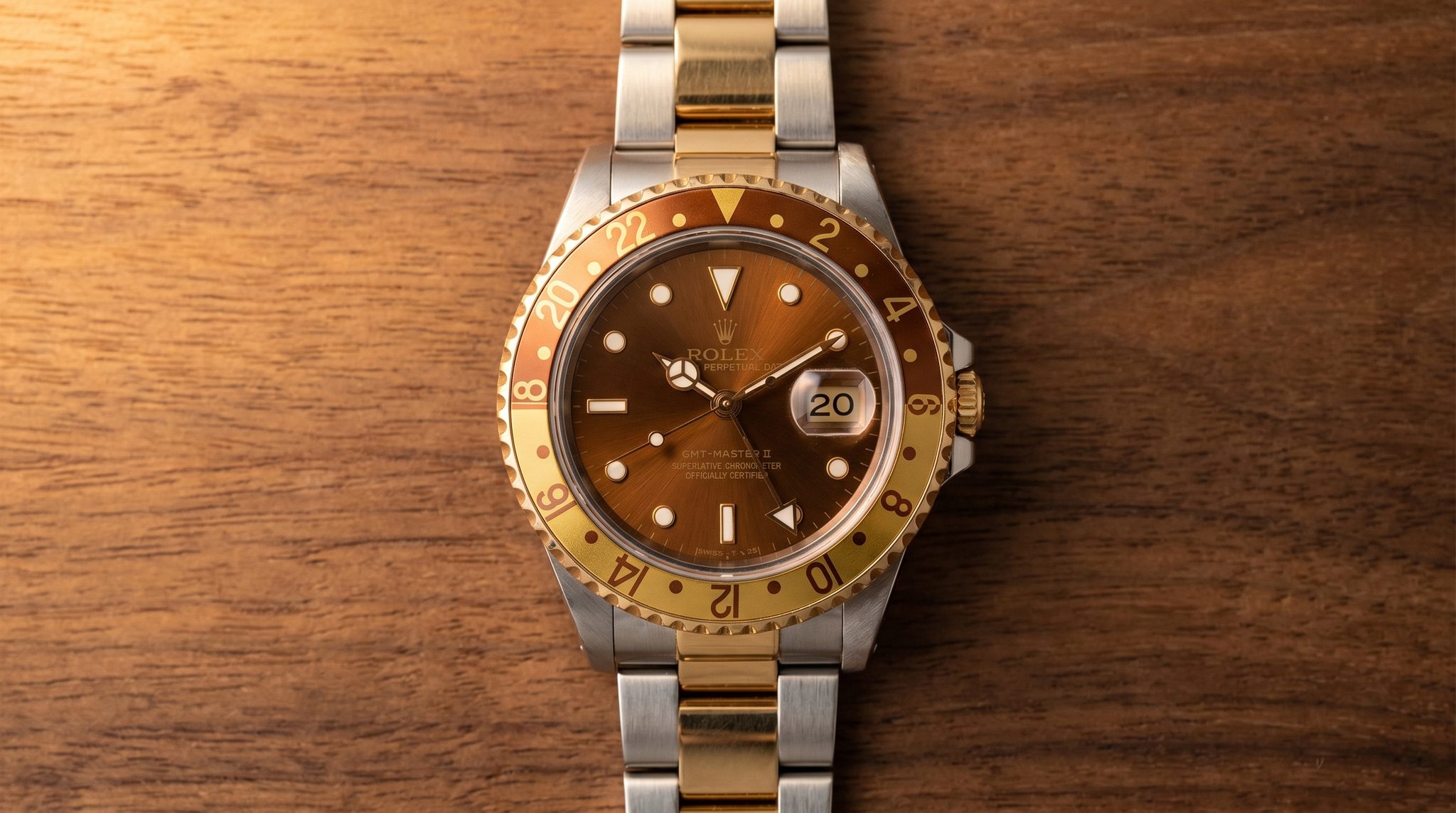
In the early 1980s the GMT‑Master modernizes from the inside out. 16750 and its two-tone sibling 16753 keep the acrylic-and-aluminum feel of earlier GMT‑Masters, but introduce the cal. 3075 with quickset date and hacking seconds, a meaningful usability upgrade for a watch still built around the linked-hand “caller” architecture. Visually, the period is defined by overlap rather than clean cutoffs, particularly in dial execution, which is why collectors treat these references as bridges. The era gives way when Rolex’s next step is no longer calendar convenience, but a new GMT setting system designed for frequent time-zone changes.
First GMT‑Master II flyer
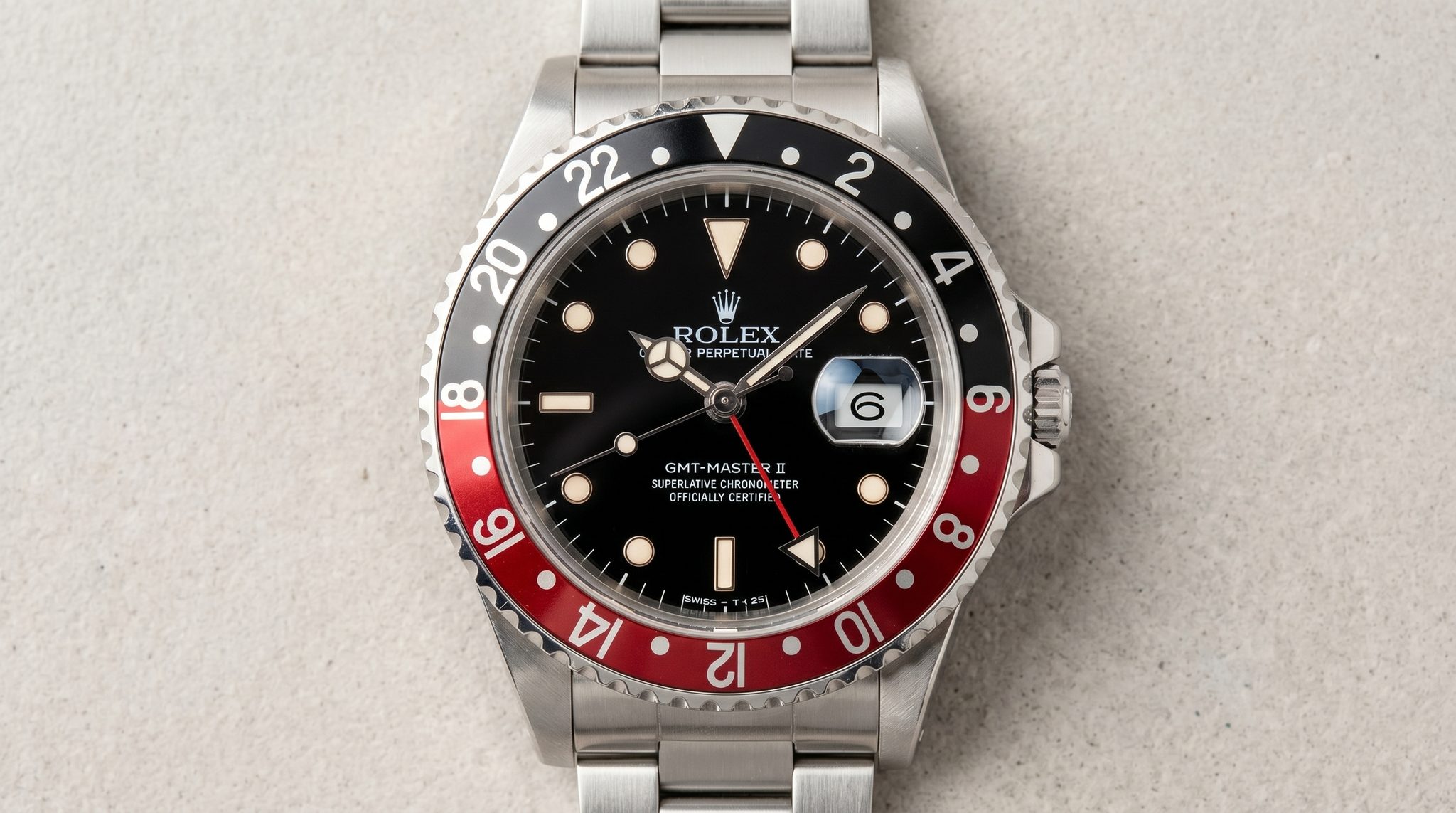
This short chapter is defined by the moment the GMT becomes a true travel mechanism. 16760 debuts the GMT‑Master II concept with an independent local hour hand, allowing time-zone jumps without stopping the movement, and it is closely associated with the move to a sapphire crystal in the GMT line. The thicker case profile commonly noted for this reference reflects the packaging needs of the new movement architecture, and its fixed identity, steel-only with a Coke bezel in the published coverage, reinforces how focused the experiment was. The era ends when Rolex refines the concept into a slimmer, longer-lived platform.
Late five-digit split
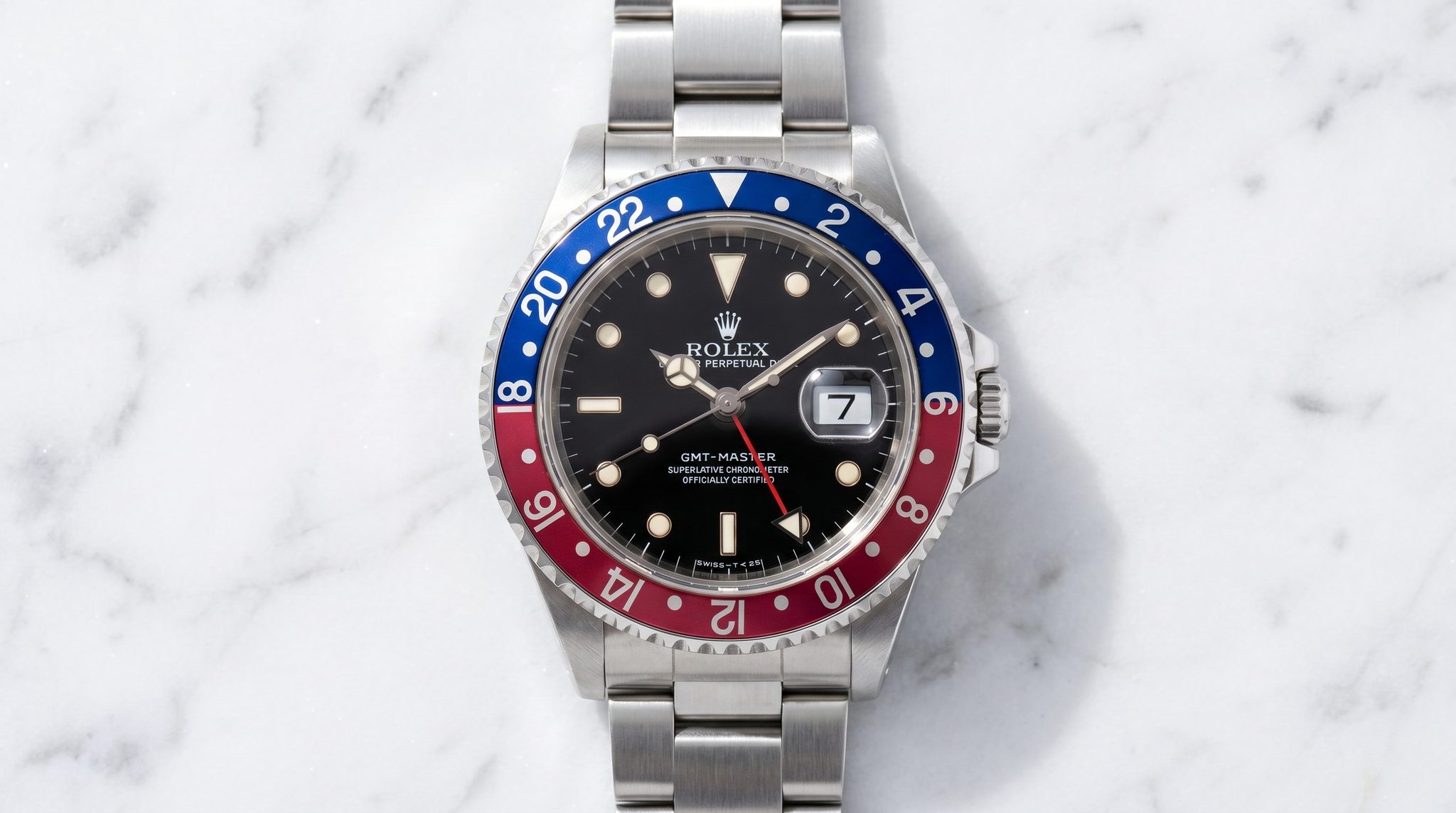
This era is defined by Rolex selling two philosophies at once, then gradually consolidating around one. 16700 continues the original GMT‑Master line with a caller architecture and a sapphire-forward, late five-digit build, even as 16710 and 16713 carry the GMT‑Master II flyer layout as the modern travel tool. The shared five-digit language, aluminum inserts and a wide spread of dial and lume executions, makes these references a dense identification landscape, but the family-level story is simple: the GMT‑Master name sunsets while the GMT‑Master II becomes the enduring architecture. The era ends at the documented turning point to ceramic bezels in steel.

Cerachrom modern GMT‑Master II
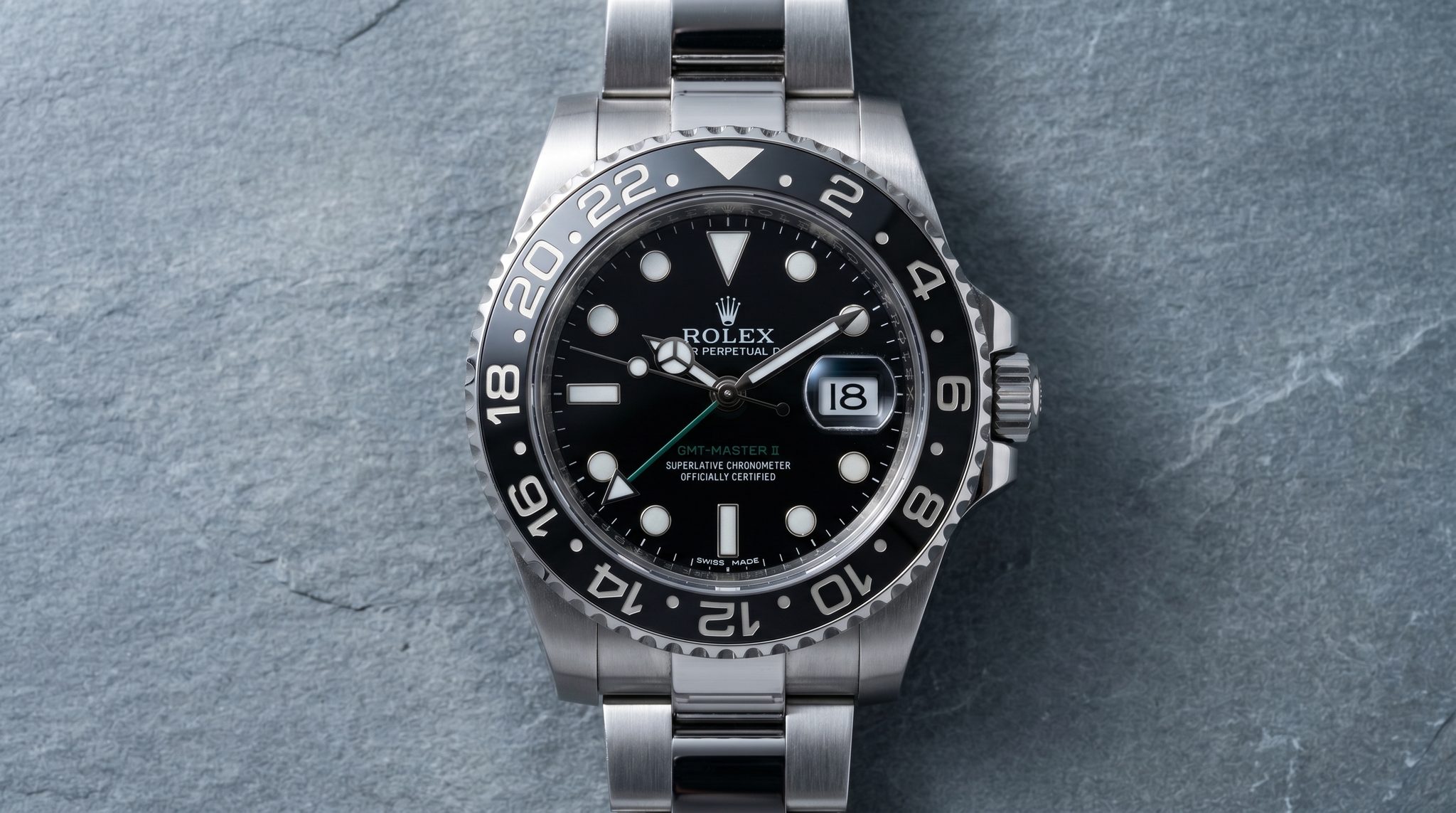
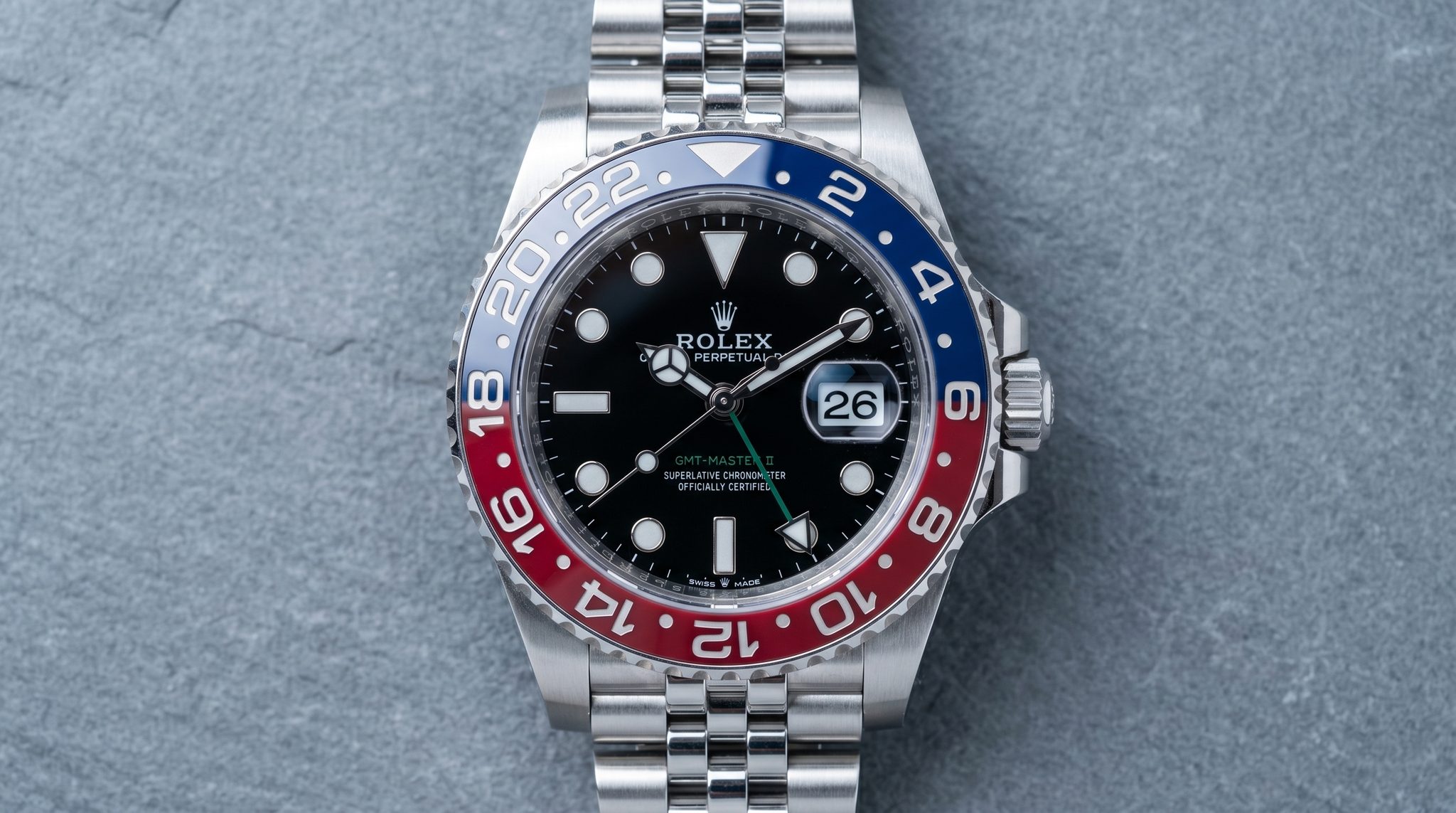
The ceramic era rebuilds the GMT‑Master II around long-wear materials and a more contemporary, luxury-leaning execution while keeping the same traveler functionality. 116710LN introduces the steel Cerachrom template, and 116710BLNR proves Rolex can execute a two-color ceramic bezel, a technical milestone that becomes a lasting design theme. The line then moves to the 126710 generation with cal. 3285 and a documented emphasis on bracelet identity, including Jubilee-forward launches and later Oyster options depending on reference. What ends one chapter and begins the next here is Rolex’s shift from aluminum to ceramic, then the movement and case-platform update from 11xxxx to 12xxxx.


Which GMT-Master to buy
For daily wear as a travel watch, 126710BLNR and 126710BLRO are the clean modern answers because they sit on the cal. 3285 platform and their meaningful, documented choice is how the watch wears, Jubilee versus Oyster, rather than chasing dial-era nuance.
For a first vintage Rolex GMT‑Master that still feels like the classic template, 1675 is the archetype. Its long production run is the point, it gives the most direct view of the family’s shift from early gloss gilt to later matte tool-watch dials under the same reference.
For a collector who wants a hinge moment rather than “the most famous,” 16760 rewards patience. It is the first GMT‑Master II flyer execution and a short-run reference with a concentrated identity.
For the owner who wants five-digit looks but modern travel setting, 16710 is the practical center of the vintage GMT‑Master II world: aluminum bezel era, sapphire crystal, and the independent local hour hand that defines the II line.
What to check on any GMT-Master
Buying across the Rolex GMT‑Master family is unusually shaped by service history and interchangeability. Rolex service practice is documented as replacing components that do not meet its standards, and replaced parts are typically not returned. That matters here because the family’s most value-defining parts, dials, hands, and bezel inserts, are also the easiest to swap across years and, sometimes, across closely related references.
Stories that discuss the GMT-Master
Common questions about the GMT-Master
GMT‑Master references use the original linked-hand layout, the 12-hour and 24-hour hands move together, so changing time zones usually means resetting the main time. GMT‑Master II references add an independent local hour hand that jumps in one-hour steps, making travel setting faster while the 24-hour hand continues to track home time.
- The Rolex GMT-Master: A Complete Collector's Guidesothebys.com
- Exploring the History of the Rolex GMTsothebys.com
- Reference Points: Understanding The Rolex GMT-Masterhodinkee.com
Show 7 more
- Rolex GMT-Master history and overviewbobswatches.com
- Rolex GMT-Master II historybobswatches.com
- The Evolution of the Rolex GMT-Master (Bucherer)bucherer.com
- History of the Rolex GMT-Master and GMT-Master II (Monochrome)monochrome-watches.com
- Rolex GMT-Master history (Fratello)fratellowatches.com
- Rolex servicing procedurerolex.com
- The complete evolution of the Rolex GMT-Master bezelbobswatches.com