

Rolex GMT-Master 16710
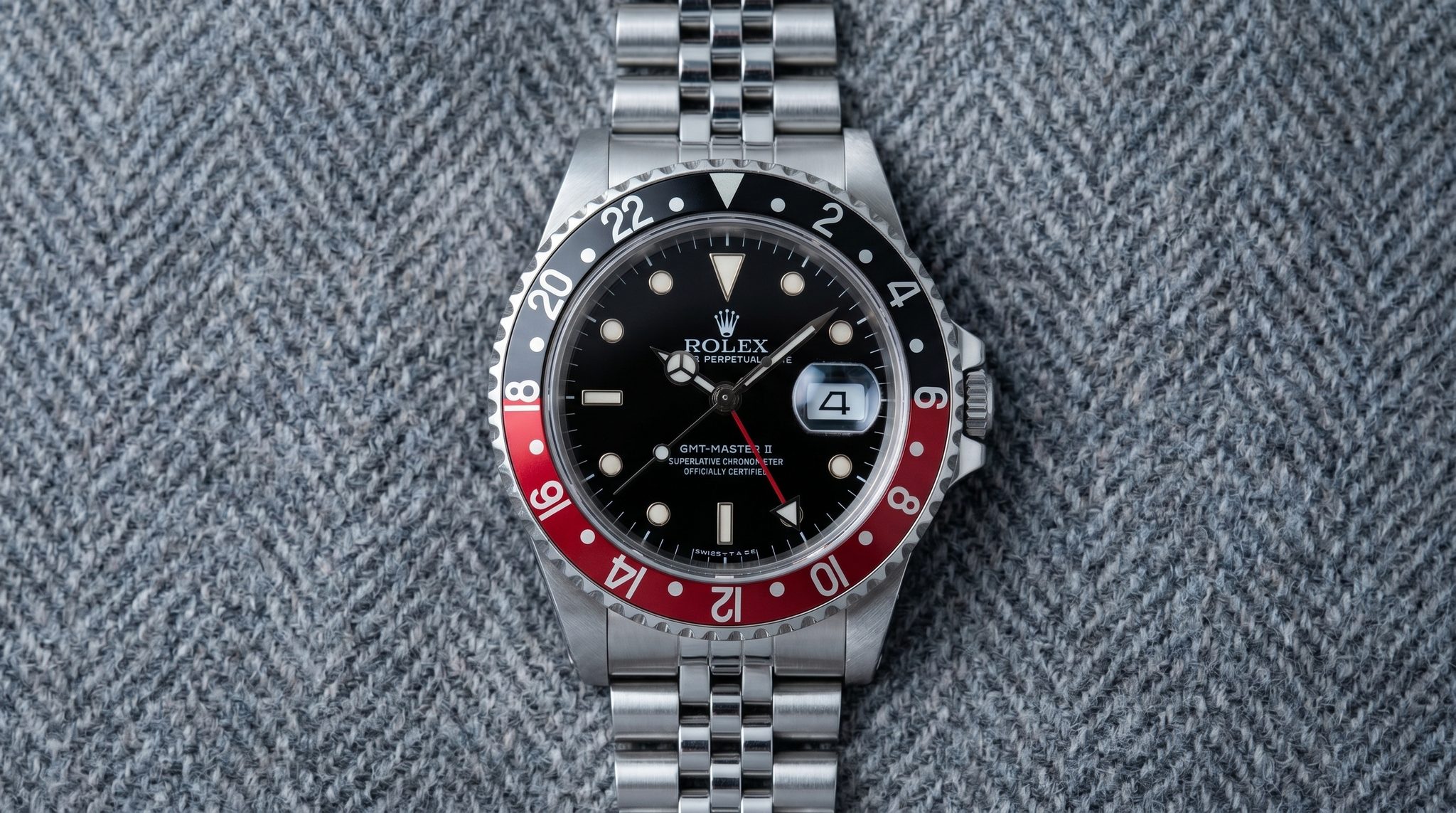
The Rolex GMT-Master II 16710 is the last steel GMT-Master II to live in the aluminum-bezel era, a single reference number that quietly spans tritium to Super-LumiNova and ends with a late movement change just before ceramic.
- Production
- c. 1989–2007
- Case
- 904L steel
- Diameter
- 40 mm
- Bezel
- Bidirectional 24h
- Insert
- Anodized aluminum
- Crystal
- Sapphire
- Water res.
- 100 m
- Movement
- Cal. 3185 → 3186
- Chronometer
- Yes (COSC)
- Lume
- Tritium → Luminova → SL
- Bracelet
- Oyster or Jubilee
The Rolex GMT-Master 16710 was produced from about 1989 to 2007.
The Rolex GMT-Master II 16710 is the GMT that stayed “old Rolex” right up to the moment Rolex stopped making old Rolex. It remained a 40 mm steel watch with an anodized aluminum insert for its entire life, then bowed out in 2007 as the ceramic-bezel GMT-Master II 116710LN took over the steel catalog.
That long, steady silhouette is exactly why the 16710 has become a reference where small, physical tells carry outsized meaning. Under one reference number, Rolex moved the dial from tritium “T SWISS T<25” (through about 1997) to the brief “SWISS” Luminova phase (around 1998–1999) and then to “SWISS MADE” Super-LumiNova (about 2000–2007). Independently, bracelets and cases evolved from earlier, more utilitarian execution to later, more modern-feeling hardware, and the run ends with a narrow subset fitted with the updated Caliber 3186 rather than the long-running 3185.
Mechanically, the 16710 is the modern traveler GMT template: Caliber 3185 (and later 3186) lets the local 12-hour hand jump in one-hour steps for a time-zone change while the 24-hour hand keeps home time, and the rotating 24-hour bezel can be used to read an additional zone. What collectors respond to in a Rolex GMT-Master 16710 review is less a single “best” version than the way this reference bridges eras while still looking, at a glance, like the classic aluminum GMT it always was.
“The 16710 is the last steel GMT-Master II that never left aluminum behind, yet it still spans tritium to “SWISS MADE” and finishes with a late 3186 twist at the edge of the ceramic era.”
Rolex GMT-Master 16710 production years: c. 1989–2007
The GMT-Master II 16710 begins as the slimmer, more flexible answer to the ref. 16760 it replaces, and it stays in production long enough that Rolex’s late-1990s material and manufacturing changes happen inside the same reference. The clearest “see it in your hand” clue is the single line of text at 6 o’clock. A tritium dial reads “T SWISS T<25”; the transitional Luminova period drops that to “SWISS”; later dials settle into “SWISS MADE” as Super-LumiNova becomes standard.
Those dial signatures are not the whole story, because Rolex did not treat every component as part of one synchronized update. A documented 1998 transition even breaks the neat rule by pairing Luminova lume with “T SWISS T<25” text. Bracelet construction is its own arc as well, moving from early hollow end links to solid end links around 2000, and late watches are reported with cases that no longer have drilled lug holes. At the very end, a small subset receives Caliber 3186, a quiet technical evolution that collectors tend to treat as the reference’s last chapter.
Taken together, the 16710 reads like a single watch that watches Rolex change around it. It is the same aluminum-bezel GMT in silhouette throughout, but it can feel meaningfully different on the wrist and look meaningfully different under a loupe, depending on where in the run a given example sits.
- 1989IntroducedSlimmer case profile
- c. 1997Tritium era“T SWISS T<25” at 6
- c. 1998 – 1999Luminova dials“SWISS” only at 6
- c. 2000Super-LumiNova“SWISS MADE” at 6
- c. 2000SEL braceletsSolid end links at lugs
- c. 2003No-holes caseNo drilled lug holes
- 2007DiscontinuedCeramic-bezel successor
- c. 20073186 subsetConfirm by movement check
16710 against its neighbours
The 16710 is easiest to understand when it is bracketed by the watches immediately around it. Ref. 16760 shows what Rolex was refining away, a thicker first-generation GMT-Master II case with a Coke-only insert. Ref. 116710LN shows what replaced the 16710 in steel, a ceramic-bezel GMT with a reshaped case and a new dial and lume style. Ref. 16700 is the lookalike that clarifies the functional point, it shares the era’s steel-and-sapphire feel, but uses the GMT-Master I system rather than the independently adjustable GMT-Master II format.
This reference 16710 Rolex · focal c. 1989–2007 | ||||
|---|---|---|---|---|
| Production | c. 1983–1988 | c. 1988–1999 | c. 1989–2007 | Introduced 2007 |
| Case | Steel | Steel | 904L steel | Steel (Super Case) |
| Diameter | 40 mm | 40 mm | 40 mm | 40 mm |
| Bezel | Bidirectional 24h | Bidirectional 24h | Bidirectional 24h | Bidirectional 24h |
| Crystal | Sapphire | Sapphire | Sapphire | Sapphire |
| Water res. | 100 m | 100 m | 100 m | 100 m |
| Movement | Cal. 3085 | Cal. 3175 | Cal. 3185 → 3186 | Cal. 3186 |
| Chronometer | Yes (COSC) | Yes (COSC) | Yes (COSC) | Yes (COSC) |
| Lume | Tritium | Tritium → Luminova | Tritium → Luminova → SL | Chromalight |
| Bracelet | Oyster | Oyster or Jubilee | Oyster or Jubilee | Oyster only |
Four dial generations across the run
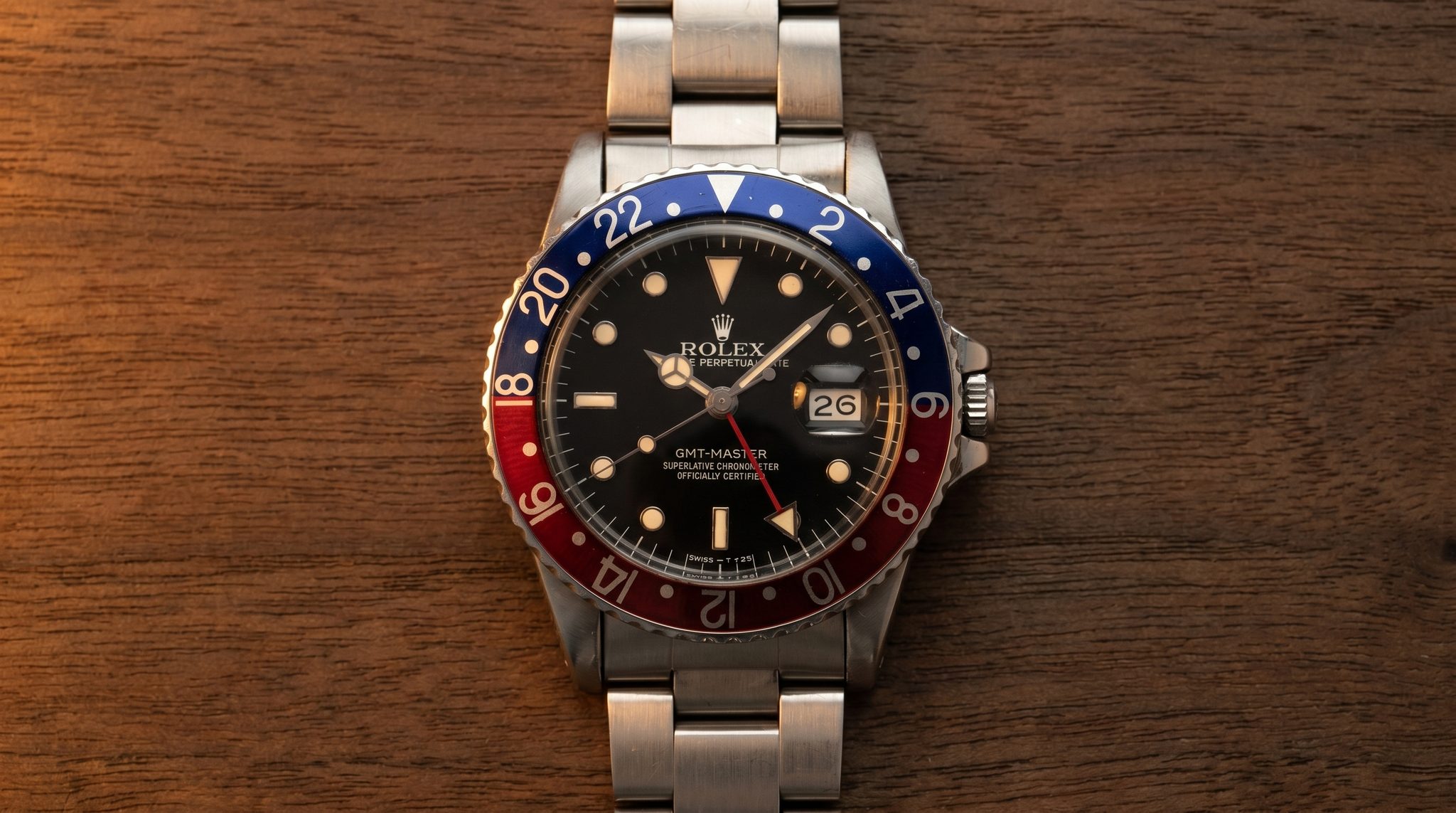
A tritium 16710 announces itself with the small, easy-to-miss line at 6 o’clock: “T SWISS T<25”. On the wrist, these are the dials that can take on the mellow, time-worn character many people associate with late-1980s and 1990s Rolex sport watches, because tritium does not stay the same color forever.
For identification and originality, the value is practical: the dial signature places the watch in the early part of the reference’s long run, and it sets expectations for the hands. A tritium dial paired with later replacement hands often looks like two different whites in the same room, even before a blacklight test or a parts history enters the conversation.
What to check before buying a 16710
Buying a GMT-Master 16710 for sale is rarely about chasing a single “correct” configuration. It is about finding a watch whose parts tell the same story, because inserts, dials, hands, and bracelets are all easy to swap, and decades of service have given the 16710 plenty of opportunities to become a mix of eras. Add the late-run premium some buyers pay for Caliber 3186, and verification becomes part of the price.
The reward, when the details line up, is a watch that still wears like a classic five-digit Rolex, slimmer in presence than the ceramic “Super Case” successor, but modern enough in basics to use as intended. In steel, with a sapphire crystal and 100 m water resistance, the 16710 is a tool watch that happened to survive into the era when tool watches became luxury objects.
Rolex GMT-Master 16710 price and value
A Rolex GMT-Master 16710 sells for about $10,750 at the median, typically $9,000 to $12,750 across 552 comparable sales.
Rolex GMT-Master 16710 for sale
Indicative figures from recent dealer, auction, and Grey Market sales (updated this week). Every watch is verified before it sells here.
Each point is a recent dealer or auction sale, banded to an indicative figure. The range shown is not a valuation.
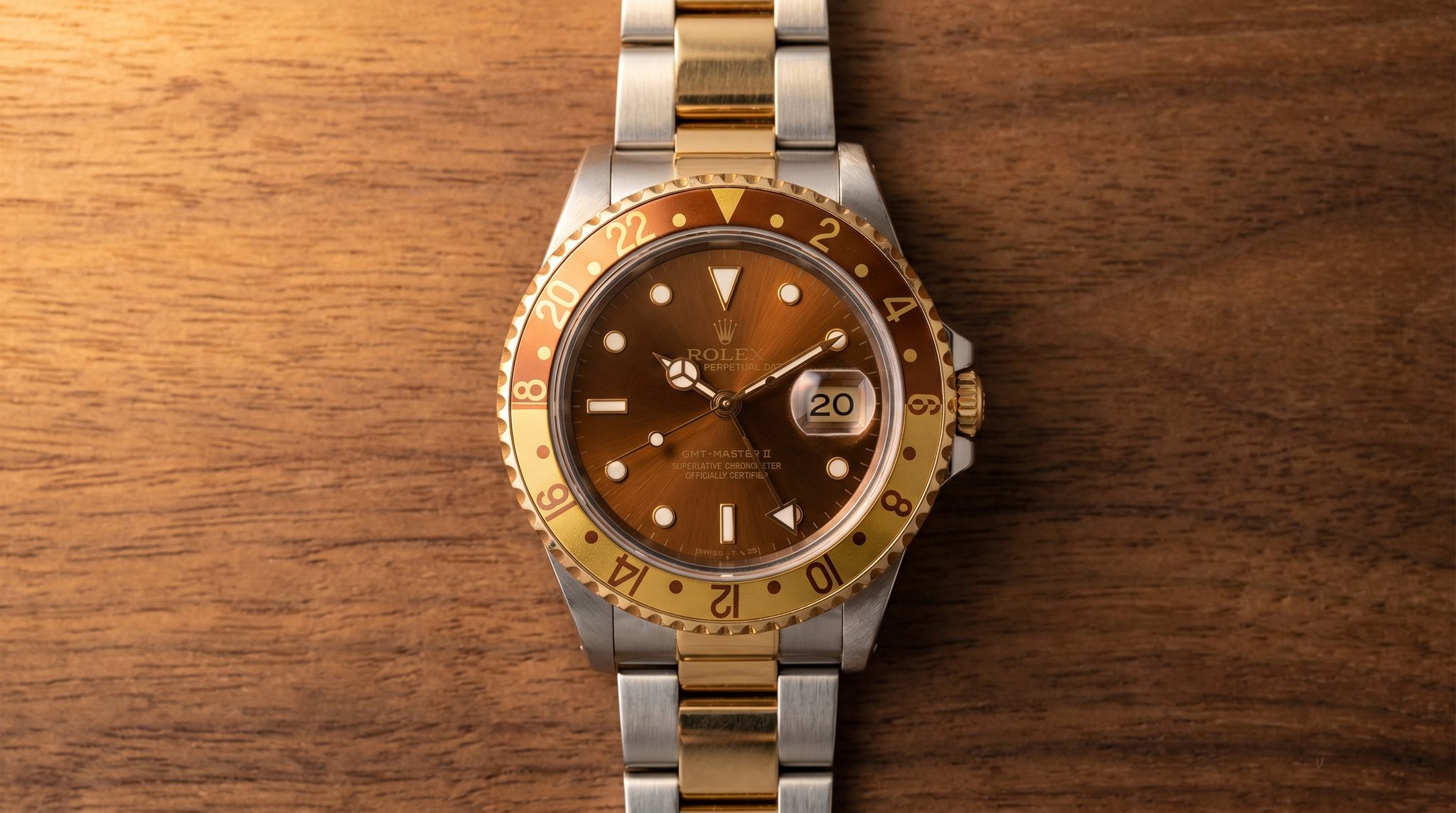
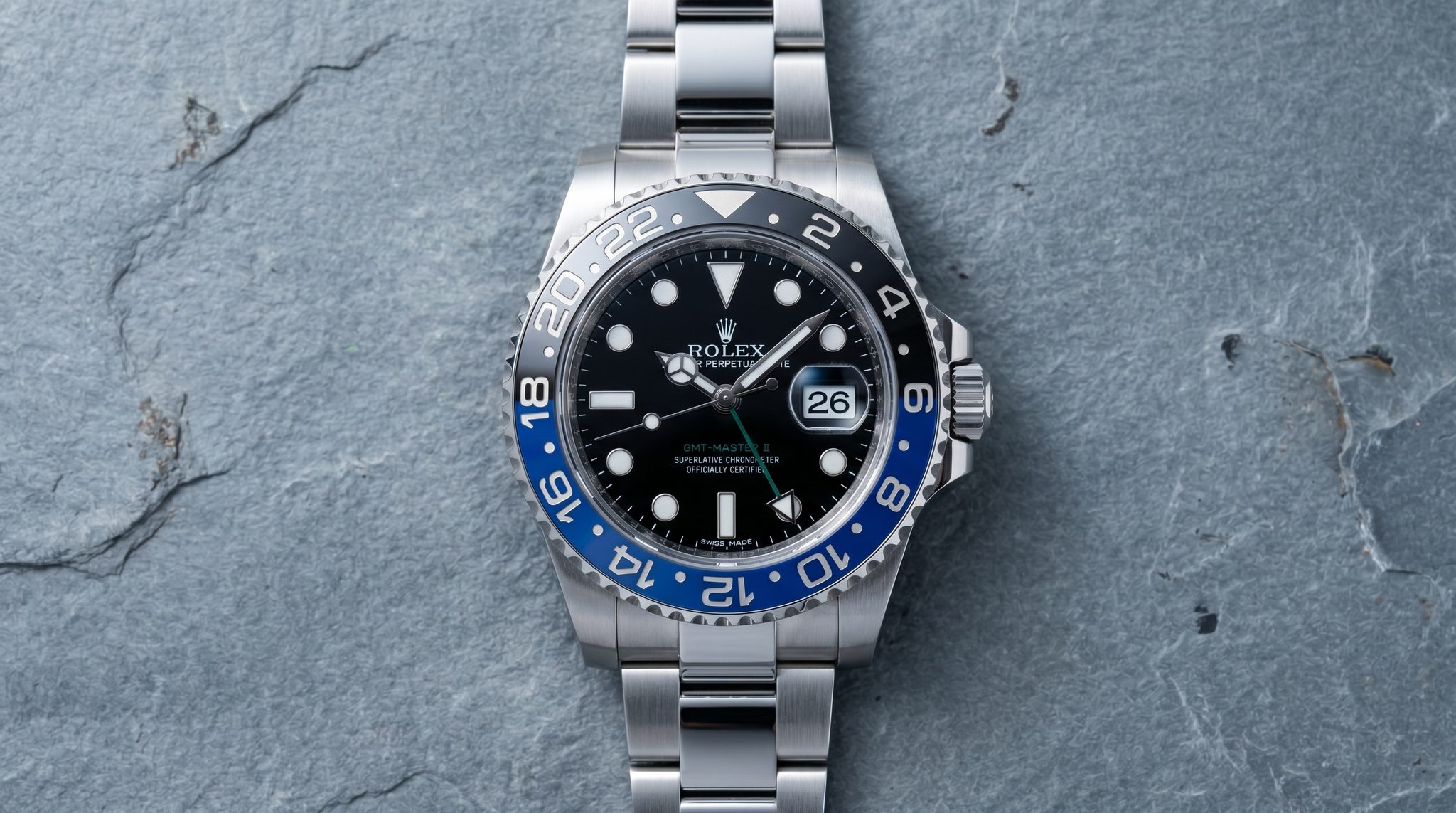
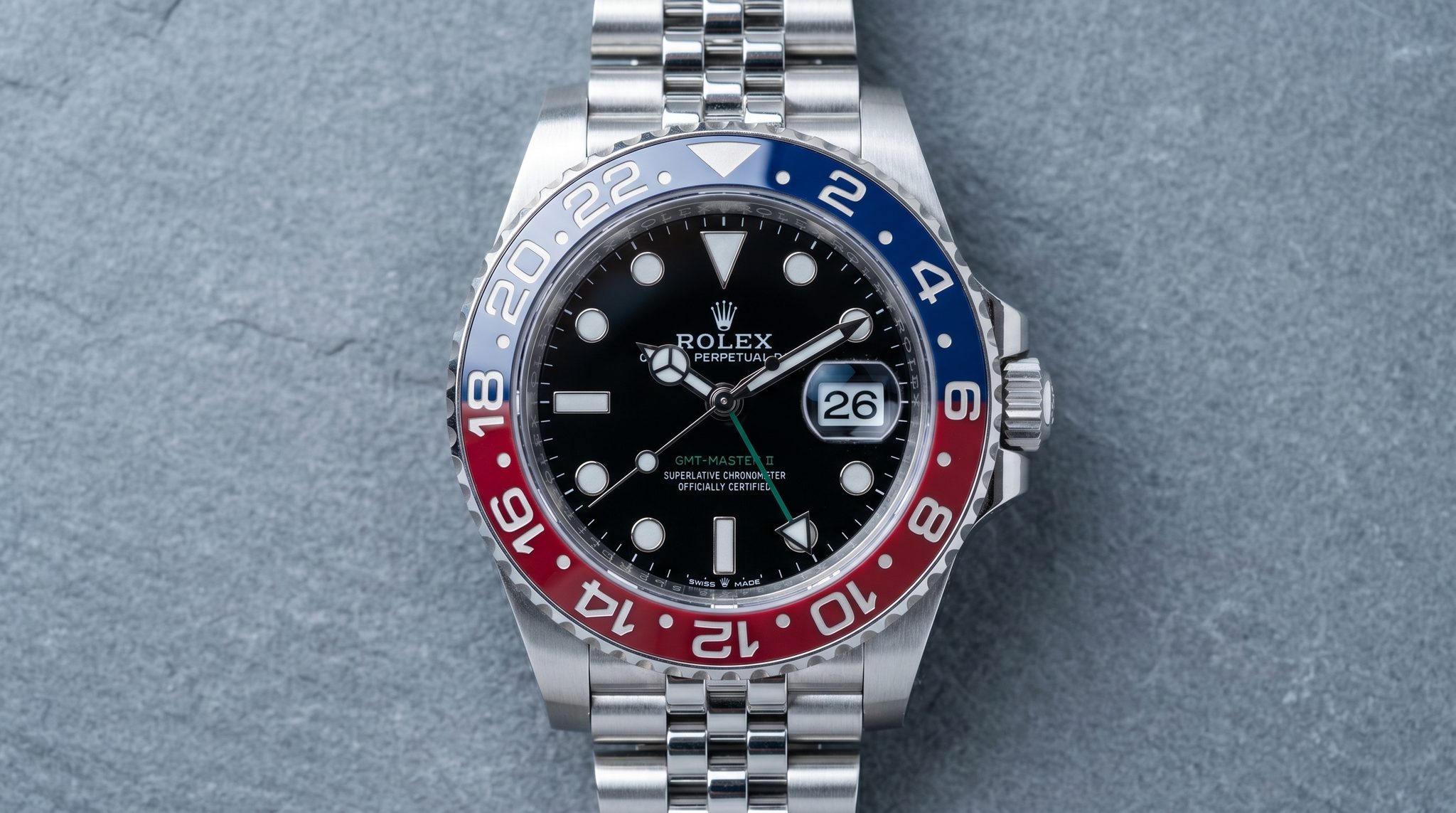
Adjacent in the GMT-Master family
Stories that discuss the 16710
Common questions about the 16710
The GMT-Master II 16710 is consistently placed at circa 1989–2007. Exact end dating can blur slightly in the market because assembly and retailer delivery do not always align perfectly with calendar years.
- Rolex GMT-Master II 16710 | Ref. 16710 Watches on Chrono24chrono24.com
- The Making of a Masterpiece: GMT-Master II Reference 16710bobswatches.com
- Rolex 16710: The Last True Vintage GMT-Master II Daily Driverbobswatches.com
Show 7 more
- Ref. 16710gmtmasterhistory.com
- Rolex 'Coke' GMT-Master II: Buying Guide and Historyeverestbands.com
- History and Evolution of the Rolex GMT-Master IIgrayandsons.com
- History of Rolex GMT Master and GMT Master II Watchesbeckertime.com
- #TBT: Rolex GMT-Master II 16710fratellowatches.com
- Reference Points: Understanding The Rolex GMT-Masterhodinkee.com
- Value That Never Sleeps: The Rolex GMT-Master's 70-Year Reigneverywatch.com