

Rolex GMT-Master 16760
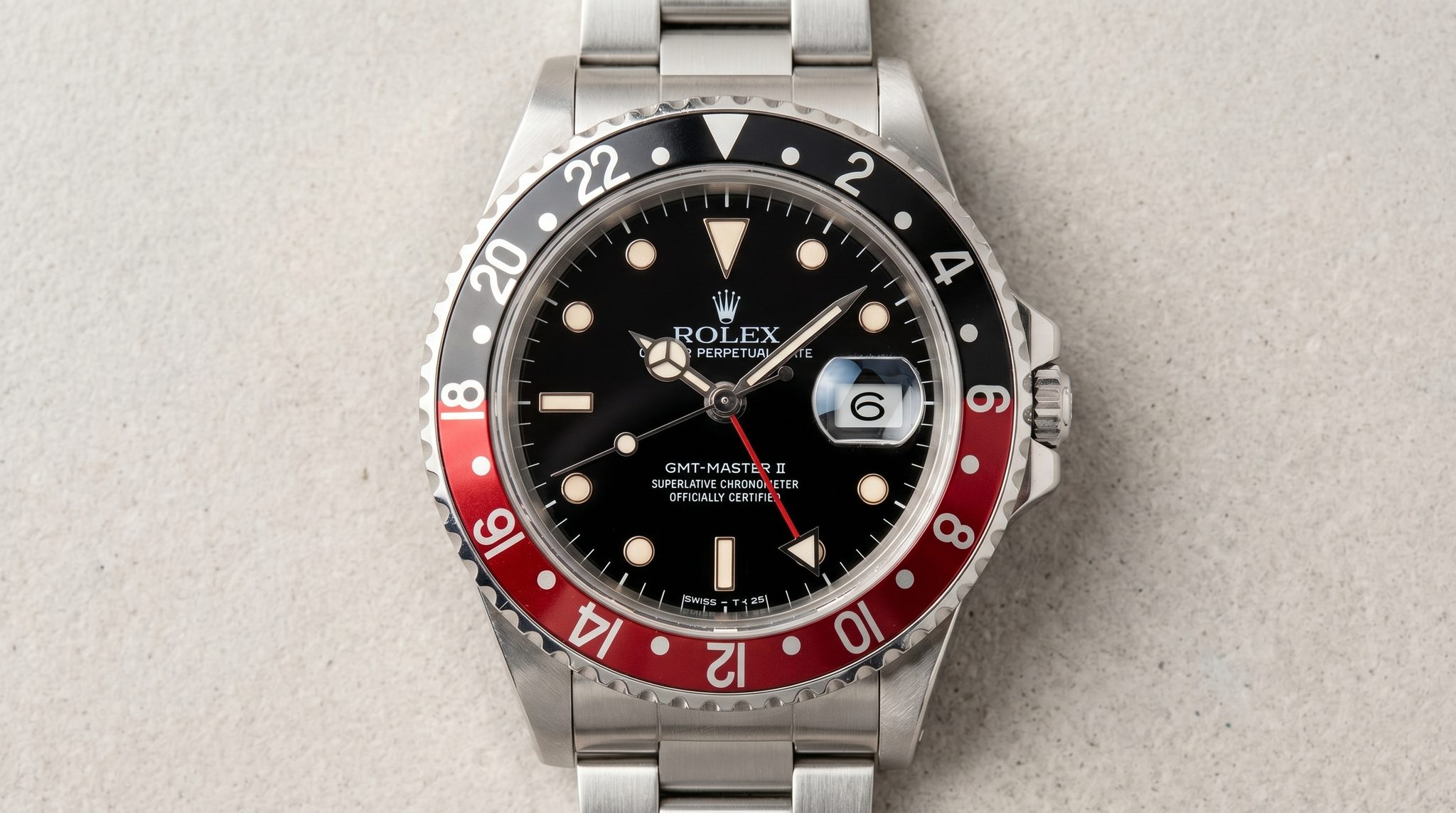
Rolex GMT‑Master II ref. 16760 is the short-run, thick-case debut of the GMT‑Master II idea, introducing caliber 3085’s independently jumping local hour hand and fixing the reference to a sapphire crystal and a Coke bezel.
- Production
- c. 1983–1988
- Case
- Steel
- Diameter
- 40 mm
- Thickness
- 12–13 mm
- Bezel
- Aluminum 24h, Coke
- Crystal
- Sapphire
- Water resist
- 100 m
- Dial
- Gloss black, tritium
- Lume
- Tritium
- Movement
- Cal. 3085 (auto)
- Functions
- Date, GMT (true GMT)
- Lug width
- 20 mm
The Rolex GMT-Master 16760 was produced from about 1983 to 1988.
Rolex GMT‑Master II ref. 16760 is the watch that turns the GMT from a dual-time display into the modern Rolex travel format, even if it had to grow a little to do it. Its defining proof is mechanical: caliber 3085 lets the main hour hand jump in one-hour steps forward or backward without stopping the movement, which is why the reference is remembered as the first “GMT‑Master II,” and why its case earned the thicker-profile nicknames “Fat Lady” and “Sophia Loren.”
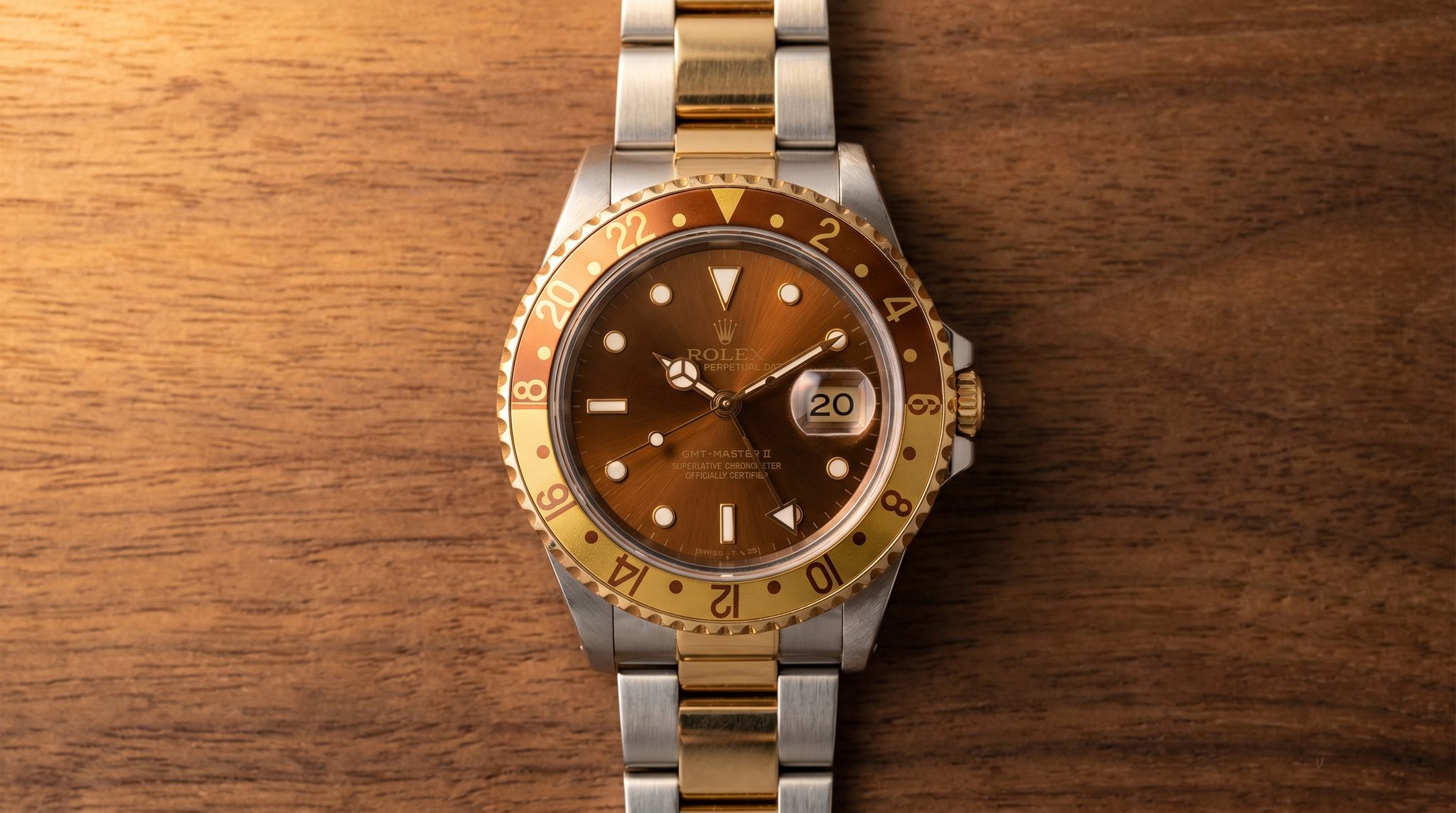
The rest of the 16760’s identity is unusually concentrated. Produced for only a short run, roughly 1983–1988, it is steel-only and tied to a single factory look: a red and black “Coke” aluminum bezel insert, a glossy black tritium dial, and (for the first time in the GMT line) a sapphire crystal. Because Rolex did not spin the reference into a long-lived platform, collectors do not chase a long list of factory dial generations here. What matters most is whether a given watch still reads as an intact mid‑1980s 16760: the correct 3085 architecture, the fuller case silhouette, and period tritium parts that belong together.
In the catalog, the 16760 sits between the GMT‑Master ref. 16750 that it overlapped and the GMT‑Master II ref. 16710 that replaced it after 1988. That narrow window is exactly why the 16760 feels so specific in the GMT family. It is the first expression of the GMT‑Master II concept, preserved in a short, thick-case chapter before the later, slimmer standard arrived.
“Ref. 16760 is the GMT‑Master II idea at its birth: caliber 3085’s jumping local hour hand, housed in the thicker “Fat Lady” case with sapphire crystal and a Coke bezel only.”
Rolex GMT-Master 16760 production years: c. 1983–1988
The 16760’s timeline reads like a concentrated engineering note in the GMT story. Around 1983, Rolex introduced the first GMT‑Master II and paired it with caliber 3085, the movement architecture that separates local time from reference time. On the wrist, the key experience is the hour hand itself: it can be advanced or set back in one-hour steps without stopping seconds, while the 24‑hour hand stays anchored to home time. With the rotating 24‑hour bezel, that split allows three time zones to be tracked at once.
Those functional gains are also the clearest explanation for the 16760’s shape. Specialist accounts tie the “Fat Lady” nickname to the thicker case required by the 3085, and the same short run marks the GMT family’s switch to sapphire crystal. Rolex then held the rest of the formula unusually steady for the reference: steel only and Coke only, with a glossy tritium dial. By the time ref. 16710 arrives from 1989, the GMT‑Master II concept is established, but the thick-case first chapter has already closed.
Seen in hindsight, the 16760 is the moment the GMT‑Master II becomes a fixed type rather than a gradual evolution. In only a few years, Rolex introduced the core travel function, changed the crystal material for the line, and then moved on, leaving a reference whose collectability comes from being both the first of its name and the briefest expression of its original proportions.
- c. 1983IntroducedJumping local hour hand
- c. 1983Case profileFull crown-guard shoulders
- c. 1983Crystal changeSapphire crystal fitted
- c. 1983 – 1988Insert fixedRed/black aluminum insert
- c. 1988Discontinued16710 is slimmer successor
- 1989SuccessorRef. 16710 on case
16760 against its neighbours
The 16760 is easiest to understand against its bookends: the GMT‑Master ref. 16750 that continued alongside it, and the GMT‑Master II ref. 16710 that replaced it. The 16750 represents the last stage of the earlier GMT‑Master architecture, while the 16710 shows how Rolex carried the GMT‑Master II concept forward after the thick-case, Coke-only debut.
This reference 16760 Rolex · focal c. 1983–1988 | |||
|---|---|---|---|
| Production | c. 1979/80–1988 | c. 1983–1988 | c. 1989–2007 |
| Case | Steel | Steel | Steel |
| Diameter | 40 mm | 40 mm | 40 mm |
| Crystal | Acrylic | Sapphire | Sapphire |
| Bezel | Aluminum 24h | Aluminum 24h, Coke | Aluminum 24h |
| Movement | Cal. 3075 | Cal. 3085 (auto) | Cal. 3185 → 3186 |
| Functions | Date, GMT (linked) | Date, GMT (true GMT) | Date, GMT (true GMT) |
| Lume | Tritium | Tritium | Tritium → LumiNova |
| Water resist | 100 m | 100 m | 100 m |
| Lug width | 20 mm | 20 mm | 20 mm |
Four case, dial, and bracelet variants across the run
In original form, the 16760 is a glossy black tritium-dial GMT‑Master II, with the luminous designation printed at 6 o’clock. The look is distinctly mid‑1980s Rolex sports: shiny lacquer, applied hour markers, and a crisp white minute track under sapphire rather than the softer distortion of earlier acrylic-crystal GMTs.
Collectors do encounter small printing differences within this single tritium era, including spacing and font weight in lines such as “OYSTER PERPETUAL DATE” and “GMT‑MASTER II.” Those differences are real on surviving watches, but they have not been standardized across mainstream references into universally used “Mk” generations with agreed production cutoffs for ref. 16760.
What to check before buying a 16760
Buying a Rolex 16760 is less about picking the “right Mark” and more about preserving a very specific set of first-generation GMT‑Master II traits. The reference has one factory identity: a steel, thick-case GMT‑Master II with a sapphire crystal and a Coke bezel. When parts are swapped, that identity blurs quickly, even if the watch remains perfectly wearable.
The best examples feel consistent in the small things as well as the big ones. A correct 16760 shows the 3085’s jumping-hour behavior, wears its mid‑1980s tritium dial and hands as a matching set, and still has the fuller crown-side proportions that gave the watch its nickname. The appeal is straightforward: it is the GMT‑Master II concept in its first, shortest-lived form, and ownership is essentially the pleasure of wearing that early solution exactly as it survived.
Rolex GMT-Master 16760 price and value
A Rolex GMT-Master 16760 sells for about $10,500 at the median, typically $8,900 to $13,000 across 54 comparable sales.
Rolex GMT-Master 16760 for sale
Indicative figures from recent dealer, auction, and Grey Market sales (updated this week). Every watch is verified before it sells here.
Each point is a recent dealer or auction sale, banded to an indicative figure. The range shown is not a valuation.
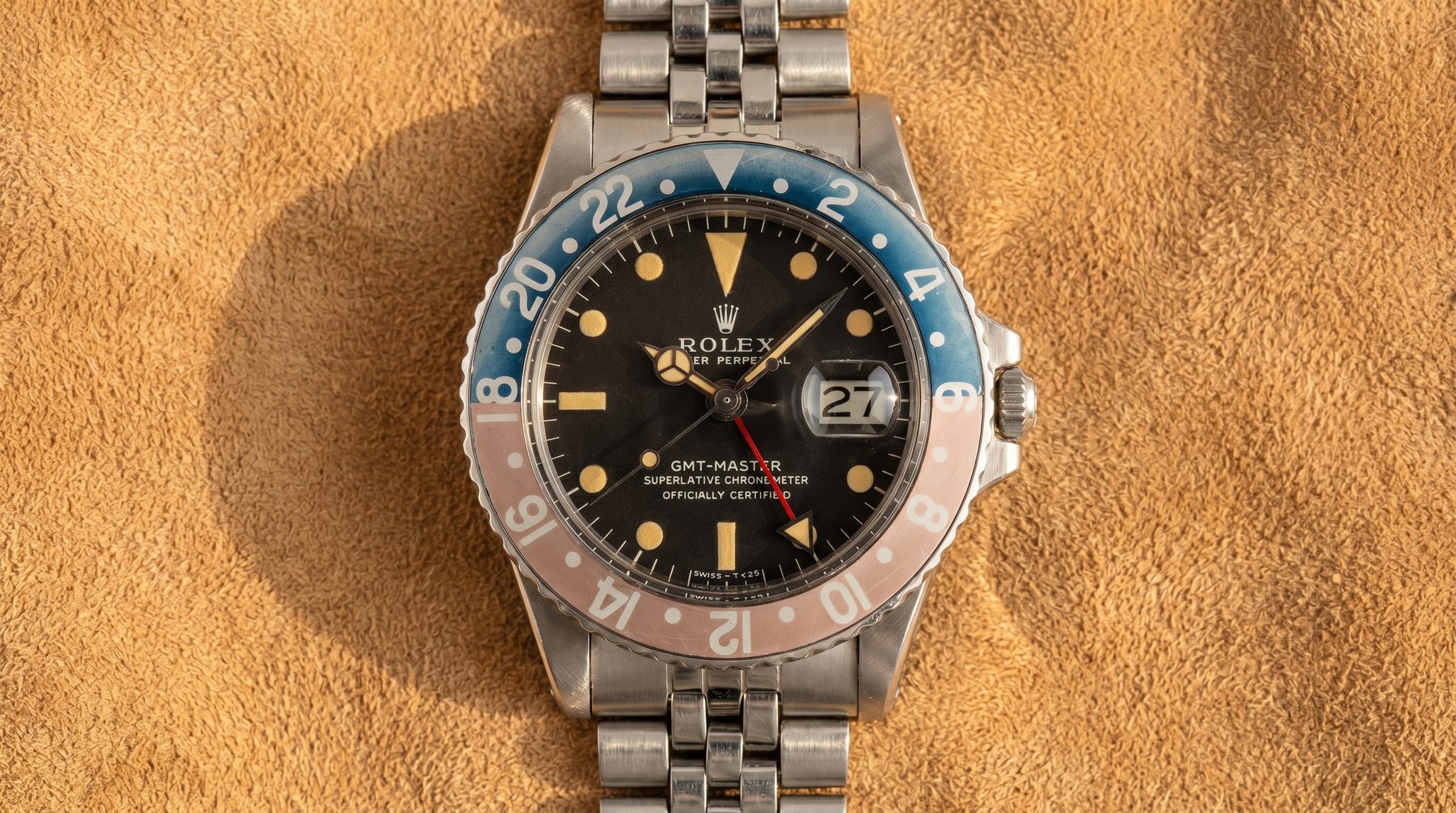
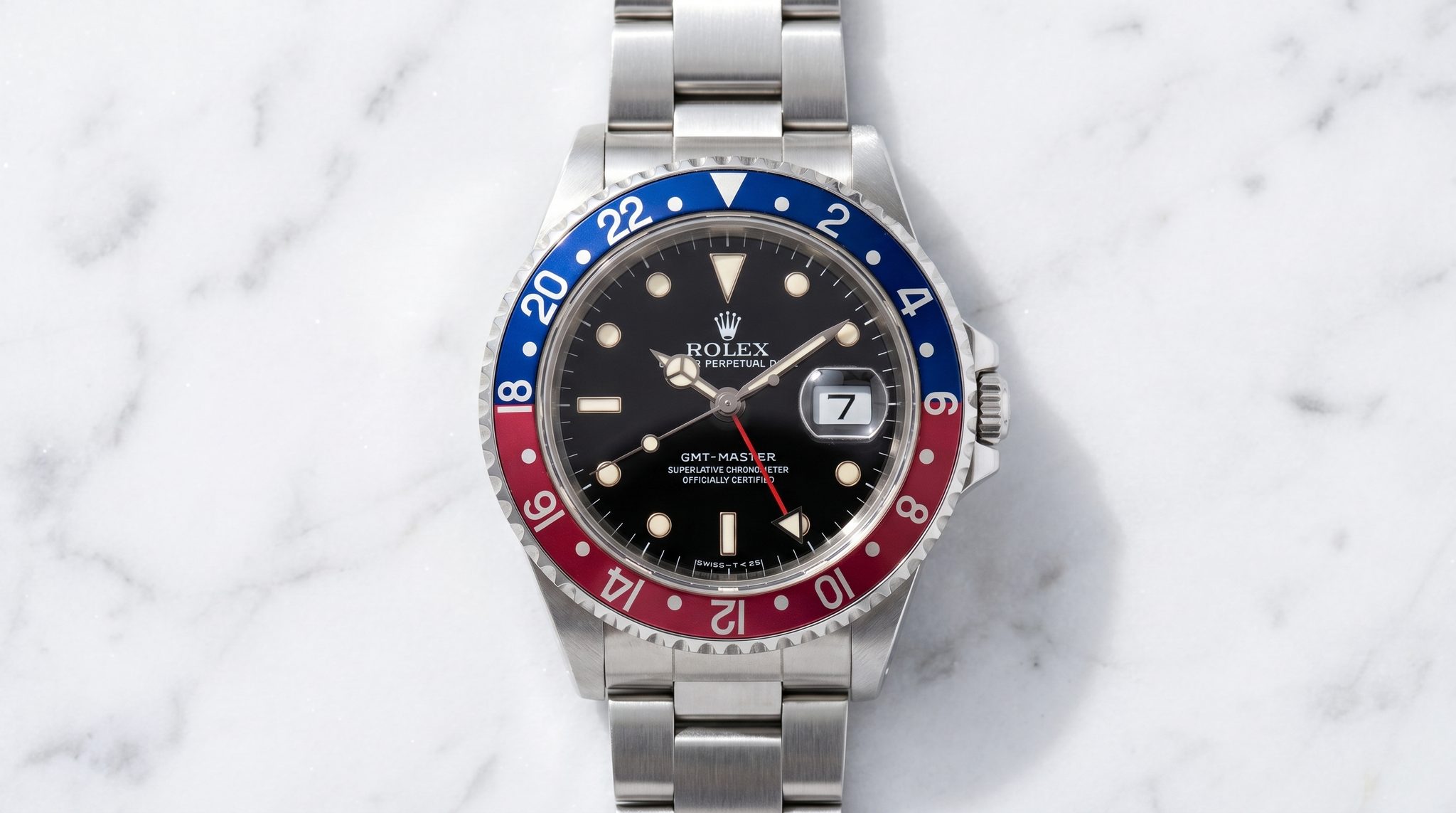
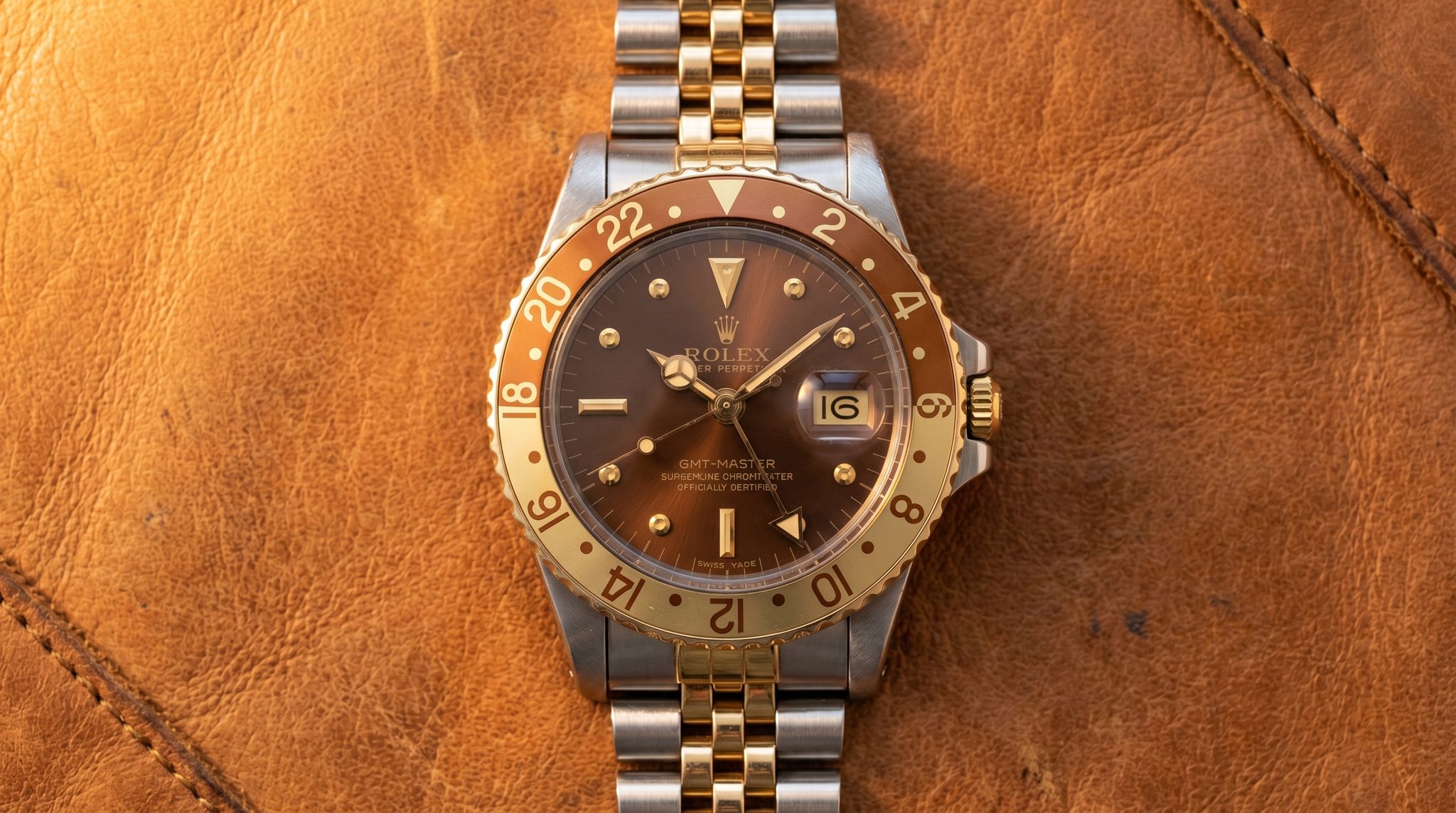
Adjacent in the GMT-Master family
Stories that discuss the 16760
Common questions about the 16760
GMT‑Master II ref. 16760 is widely dated to roughly c. 1983 through 1988. Multiple specialist dealer and editorial sources repeat that short run, although the exact start date is not documented to a specific month in public Rolex archives.
- The 5 Innovations of the GMT-Master II 16760bobswatches.com
- The Rolex GMT-Master II Fat Ladyswisswatchexpo.com
- 1984 Rolex GMT-Master II Ref. 16760 (HODINKEE Shop listing)shop.hodinkee.com
Show 7 more
- Rolex GMT Master 126710BLRO & 16710 & 16760officialwatches.com
- 1984 Rolex GMT-Master II (Ref. 16760) “Fat Lady”craftandtailored.com
- Rolex - GMT-Master II - 16760 - 1984 (listing)investmentwatches.com
- Ref. 16760 watches for sale (reference page)chrono24.com
- A Guide to the Rolex GMT-Master and GMT-Master IIanalogshift.com
- On the early 16760 dials (discussion)watchprosite.com
- 16760: what do I need to know? (collector discussion)omegaforums.net