

Rolex GMT-Master 16750
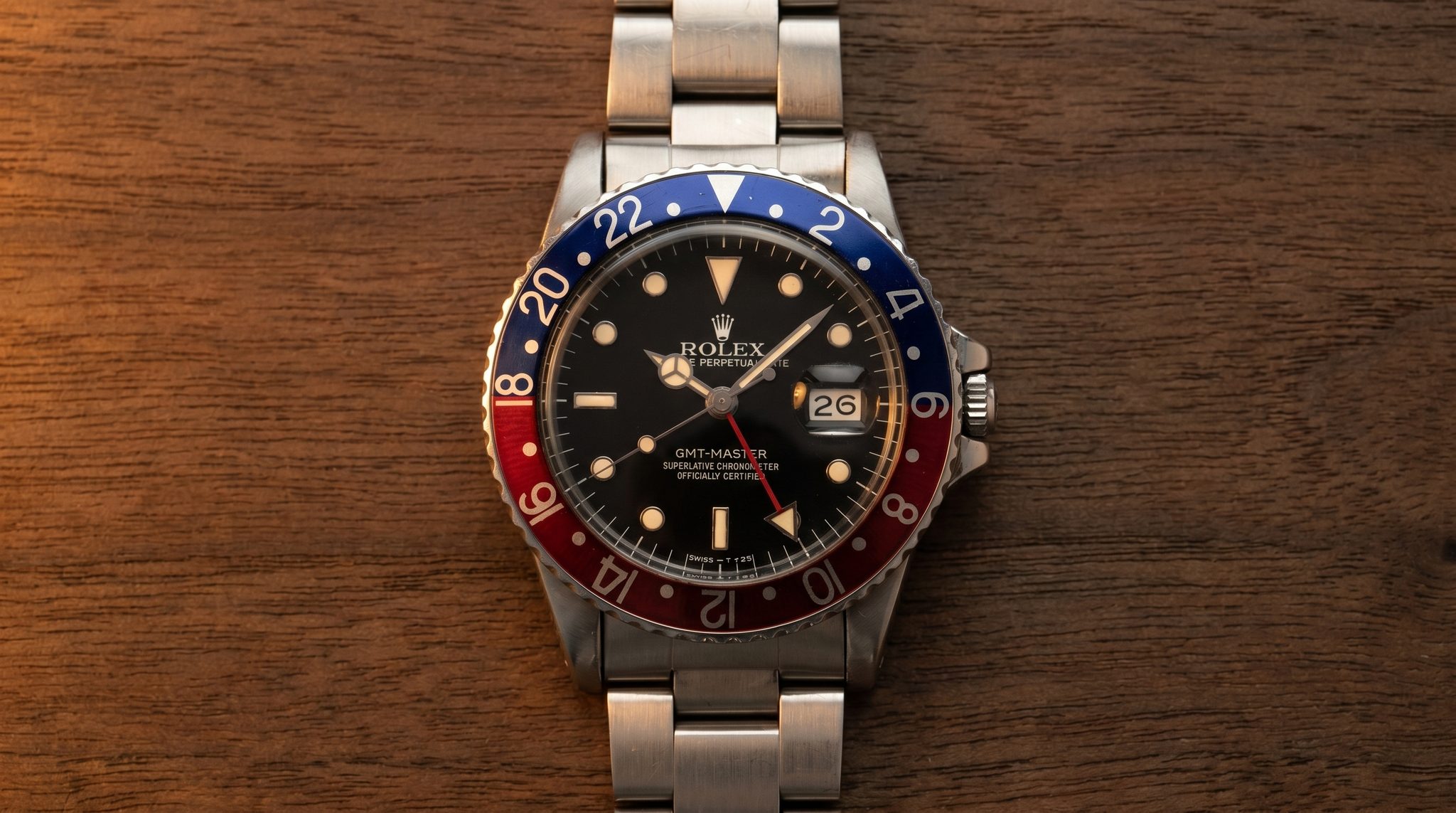
Rolex’s GMT‑Master ref. 16750 is the transitional steel GMT that keeps the acrylic, aluminum-bezel feel of the 1675 while introducing the Cal. 3075 quickset date and spanning a rare matte-to-gloss dial change in one reference.
- Production
- c. 1979/80–1988
- Case
- Stainless steel
- Diameter
- 40 mm
- Lug width
- 20 mm
- Bezel
- 24-hour
- Insert
- Aluminum (Pepsi/black)
- Crystal
- Acrylic
- Water res.
- 100 m
- Dial
- Matte or glossy
- Lume
- Tritium
- Movement
- Cal. 3075
- Functions
- Date, GMT, hacking
The Rolex GMT-Master 16750 was produced from about 1979 to 1988.
The Rolex GMT‑Master 16750 is the GMT that changed its behavior first and its face second. It brought in the Cal. 3075, a 28,800 bph movement with hacking seconds and a quickset date, but it still looks and wears like a classic GMT‑Master: 40 mm steel, acrylic crystal, and an aluminum 24‑hour bezel.
That split between what stayed old and what moved forward is why the 16750 has such a clear collector identity. Across a relatively short run (c. 1979/80–1988), Rolex produced two distinct dial eras inside the same reference. Early watches use matte black dials with painted tritium plots that echo late ref. 1675 examples; later watches switch to glossy black dials with applied hour markers outlined by white‑gold surrounds. Bezel insert choice, red and blue “Pepsi” or all‑black, is a separate configuration, so the watch is best understood as one reference whose most consequential change is visible on the wrist.
“The 16750 is the GMT‑Master that kept acrylic and aluminum, but adopted the Cal. 3075 quickset era and crossed from matte paint to glossy, white‑gold‑surround markers in one reference.”
Rolex GMT-Master 16750 production years: c. 1979/80–1988
Mechanically, the GMT‑Master 16750 is defined by one change that applies to the whole reference: the move to Rolex’s Cal. 3075. Collector and watchmaker descriptions consistently tie the 16750 to the quickset date and hacking seconds that come with that movement, along with a faster 28,800 bph cadence than the preceding ref. 1675. What Rolex did not change is equally important for how the watch feels in hand. The 16750 remains an acrylic‑crystal GMT‑Master with the traditional, linked GMT architecture rather than the later GMT‑Master II system with an independent local-hour hand.
The visible evolution happens on the dial, and its cutoff is the part of the record that attracts the most debate. Surviving examples and collector coverage cluster the transition around c. 1984, with some sources placing it in the second half of that year, but without a universally cited hard cutoff. Matte-dial watches have a flat, light‑absorbing black surface with painted tritium plots, a look closely aligned with late 1675s. Later glossy-dial watches catch light differently, with a lacquered surface and applied markers outlined by white‑gold surrounds, a style that points toward the sapphire‑crystal generation.
Step back from the details and the reference reads like a snapshot of Rolex standardizing the GMT‑Master for the late twentieth century: the same steel 40 mm format and aluminum inserts, but with a modernized movement and a dial that visibly pivots from utilitarian matte to the glossy, framed-marker look that dominates the later era.
- c. 1979/80Introduced16750 between lugs
- c. 1979/80Cal. 3075Quickset date at crown
- c. 1984Dial shiftApplied markers, WG surrounds
- c. 1983GMT-II appears“GMT-Master II” dial text
- 1988DiscontinuedLate watches are gloss-dial
16750 against its neighbours
The ref. 16750 sits in a narrow but revealing gap. The ref. 1675 explains why early 16750s can look almost indistinguishable at a glance, matte dial, acrylic crystal, aluminum insert, even though the 16750’s Cal. 3075 adds quickset date and hacking. The ref. 16700 shows the next step, when the GMT‑Master keeps the classic linked-GMT concept but moves into sapphire crystal and a newer movement family. The ref. 16760 runs alongside the later 16750 and demonstrates the fork in the road: the GMT‑Master II’s independent hour hand and sapphire construction.
This reference 16750 Rolex · focal c. 1979/80–1988 | ||||
|---|---|---|---|---|
| Production | c. 1959–1980 | c. 1979/80–1988 | c. 1983–1988 | c. 1988–1999 |
| Case | Stainless steel | Stainless steel | Stainless steel | Stainless steel |
| Diameter | 40 mm | 40 mm | 40 mm | 40 mm |
| Crystal | Acrylic | Acrylic | Sapphire | Sapphire |
| Water res. | Lower than 100 m | 100 m | 100 m | 100 m |
| Movement | Cal. 1575 GMT | Cal. 3075 | Cal. 3085 | Cal. 3175 |
| Functions | Date, GMT | Date, GMT, hacking | Date, GMT | Date, GMT |
| Insert | Aluminum (Pepsi/black) | Aluminum (Pepsi/black) | Aluminum (Coke) | Aluminum (Pepsi/black) |
| Dial | Gilt or matte | Matte or glossy | Glossy, WG surrounds | Glossy, WG surrounds |
| Lume | Tritium | Tritium | Tritium | Tritium → Luminova |
| Bezel | 24-hour | 24-hour | 24-hour | 24-hour |
| Lug width | 20 mm | 20 mm | 20 mm | 20 mm |
Two dial generations across the run
On a matte-dial GMT‑Master 16750, the dial reads as pure tool watch: a flat black surface that does not reflect much light, with the hour markers painted on and filled with tritium rather than set into applied frames. At arm’s length it can look like a late 1675, right down to the acrylic crystal and the aluminum bezel insert.
The difference arrives when the crown comes out. Every Rolex 16750 uses the Cal. 3075, bringing quickset date and hacking seconds to the GMT‑Master format. Collector coverage repeatedly treats this early matte-dial run as the scarcer look within the reference, and it is commonly associated with a premium versus glossy-dial 16750s in comparable condition when the dial, hands, and overall configuration remain correct and original.
What to check before buying a 16750
A GMT‑Master 16750 review that ignores cosmetics misses the point. The movement is usually the easy part, all 16750s should be Cal. 3075, while the value differences tend to sit in what decades of service can change quickly: dial, hands, bezel insert, and case geometry.
For many buyers, the appeal of a Rolex GMT‑Master 16750 for sale is exactly that it can be either of its two selves. A matte-dial watch wears like a late-vintage GMT with a more practical quickset date; a glossy-dial watch looks like an early step toward the sapphire era while keeping acrylic charm. Buying well means deciding which of those identities is the goal, then paying only for condition and originality that genuinely support it.
Rolex GMT-Master 16750 price and value
A Rolex GMT-Master 16750 sells for about $10,500 at the median, typically $8,600 to $13,000 across 163 comparable sales.
Rolex GMT-Master 16750 for sale
Indicative figures from recent dealer, auction, and Grey Market sales (updated this week). Every watch is verified before it sells here.
Each point is a recent dealer or auction sale, banded to an indicative figure. The range shown is not a valuation.
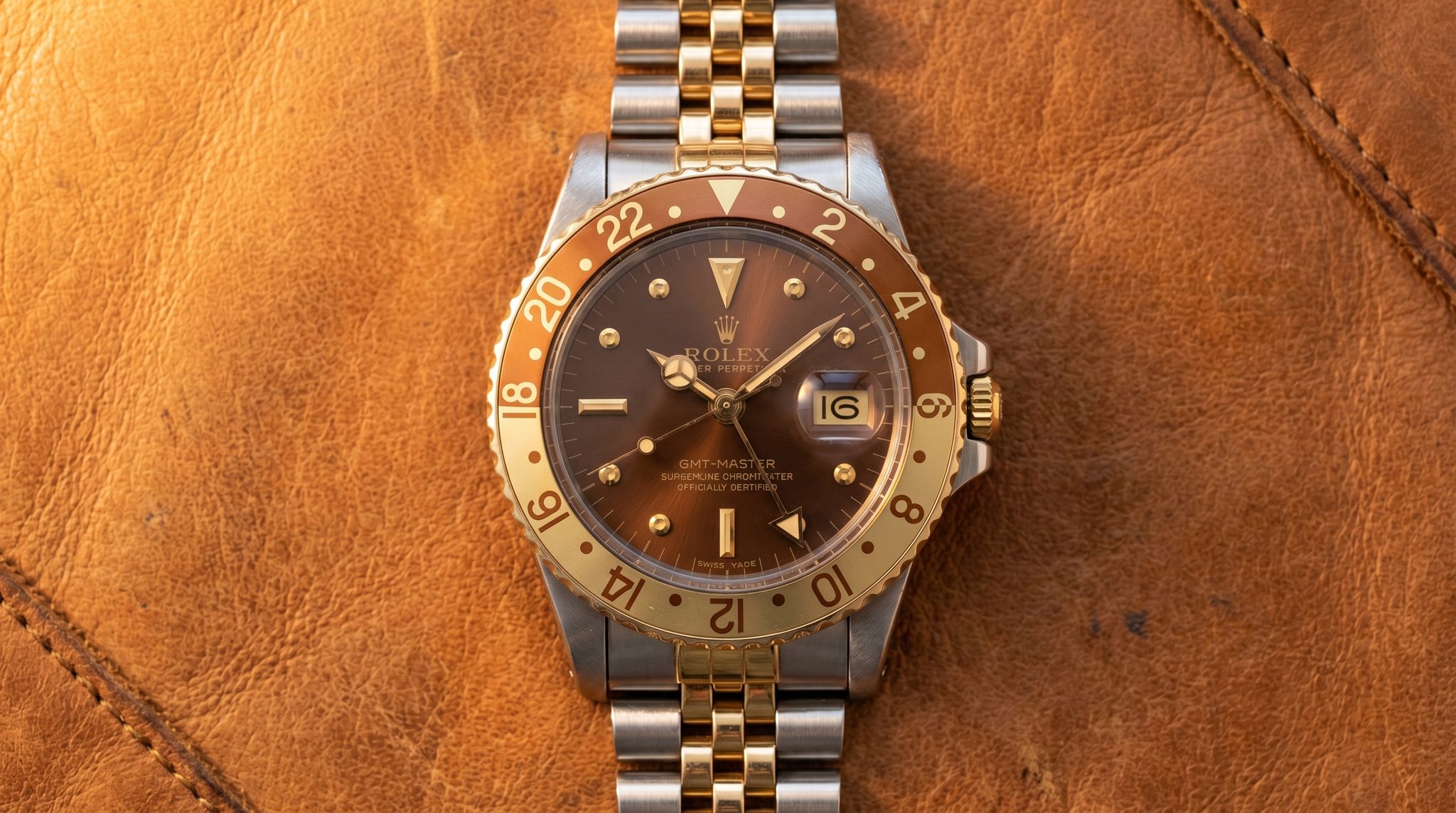
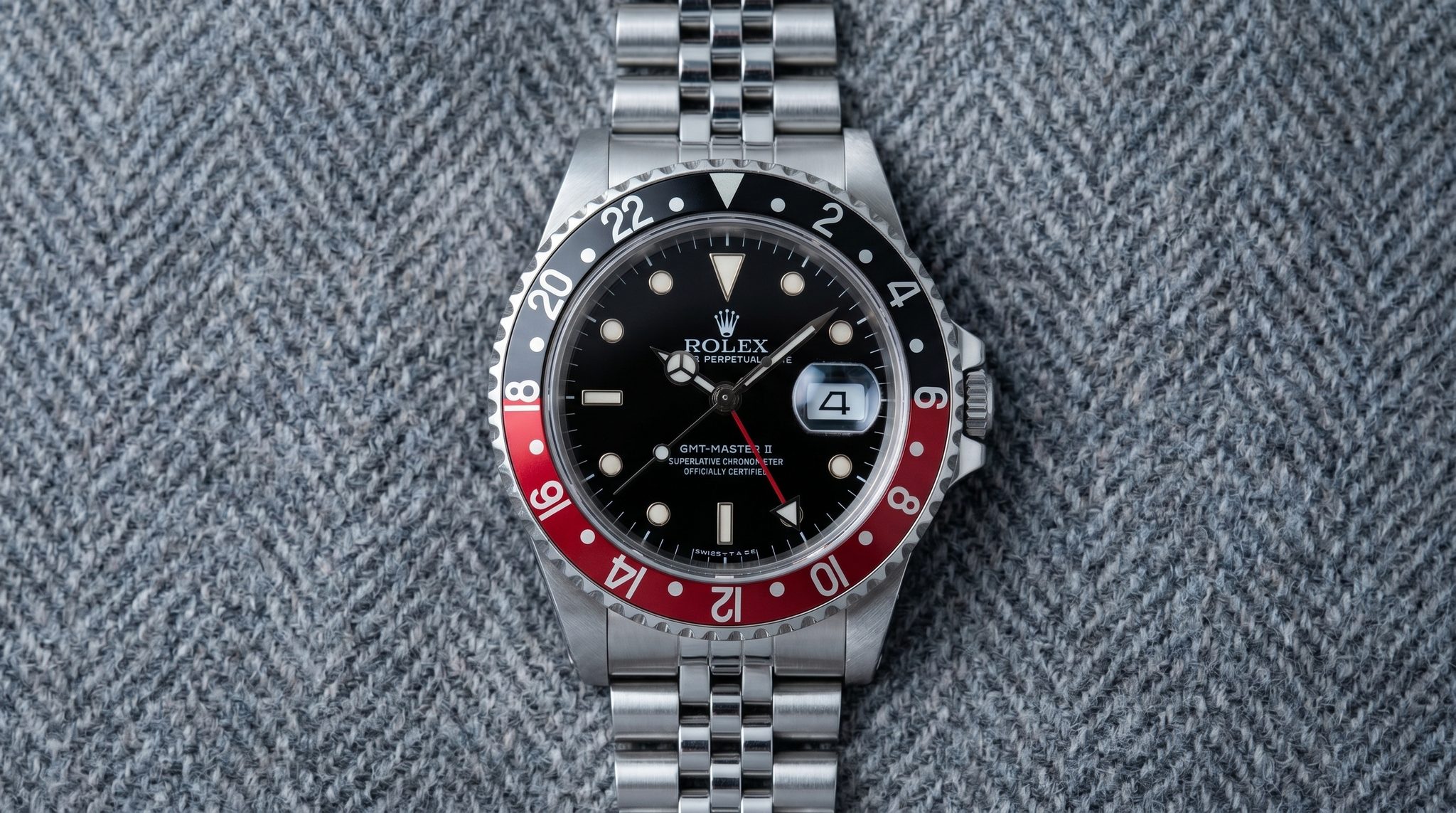
Adjacent in the GMT-Master family
Stories that discuss the 16750
Common questions about the 16750
Collector and specialist coverage most commonly places the GMT‑Master 16750 at c. 1979/80–1988. Some dealer and editorial descriptions use looser wording such as circa 1980–1988 or late 1970s to late 1980s.
- Ref. 16750 - GMT Master Historygmtmasterhistory.com
- Rolex GMT-Master 16750 Watches (Reference 16750)chrono24.com
- Rolex 16750 GMT-Master Ultimate Buying Guidebobswatches.com
Show 7 more
- In-Depth: The History of the Rolex GMT-Master and GMT-Master II (1955–2024)monochrome-watches.com
- Vintage Rolex GMT-Master 16750 (Video)youtube.com
- Rolex GMT-Master 16750 PEPSI OYS (Video)youtube.com
- 1982 Rolex GMT-Master (Ref. 16750) Matte Dial "Pepsi"craftandtailored.com
- Collector's Guide: The Rolex GMT-Master Reference 1675 in Steelwindvintage.com
- Reference Points: Understanding The Rolex GMT-Masterhodinkee.com
- A Guide to the Rolex GMT-Master and GMT-Master IIanalogshift.com