

Patek Philippe Calatrava
The Patek Philippe Calatrava is the dress watch that turned austerity into a repeatable product line without losing the cues collectors use to judge originality.
The Patek Philippe Calatrava is the dress watch that proved minimalism could be manufactured in volume and still remain collectible by inspection. The clearest evidence is that the foundational ref. 96 ran from 1932 to circa 1973 while cycling through four distinct movement series under the same reference number.
That combination, a stable visual idea with internally verifiable change, is the Calatrava’s separating power. Patek created it in 1932 as a simple, elegant, serially producible wristwatch for a market moving away from pocket watches, and for a company that needed a commercially viable product during the Great Depression. At the same time, Patek and specialist histories tie its look to Bauhaus-derived restraint, a dial reduced to what is necessary, a round case without decorative architecture, proportion doing the work of ornament. (The name “Calatrava” itself was adopted as a formal collection label much later, in 1985, even though collectors apply it retroactively to the earlier design family.)
Across decades, the Calatrava’s story is less about one “correct” spec than about a few recurring decisions that Patek revisits: whether the watch should be hand-wound or automatic, whether it should stay time-only or add a date, and whether the bezel should disappear into polish or announce itself through texture. Those choices are legible on the wrist. A smooth, flat ring of metal around the dial reads as pure outline, the kind of watch that seems to be all dial. A Clous de Paris hobnail bezel turns that ring into a surface you can read in light, crisp if the case has been treated gently, softened if it has been over-polished. A date window at 3 o’clock and a central seconds hand shift the Calatrava from ceremony to daily rhythm, without changing its basic grammar.
The family also shows something rarer in collecting: Patek’s changes are often driven by clear external pressures rather than restless redesign. The move into self-winding with ref. 2526 tracks post-war demand for automatic wristwatches. The late-20th-century return to strict hand-wound simplicity, crystallized by references like 3919 and the 96-proportioned 3796, aligns with the era when mechanical watches were repositioned as cultural objects during the quartz crisis. In the 2000s and 2010s, the line expands in size and practicality, not because the old shapes failed, but because the market’s baseline for legibility and everyday use moved.
Taken together, the Calatrava is not one watch but a controlled vocabulary. It teaches the collector to separate what Patek meant to change (winding system, date, size, bezel texture) from what it tried hard not to change, the sense that nothing is on the dial unless it earns its place.
8 references across 5 eras
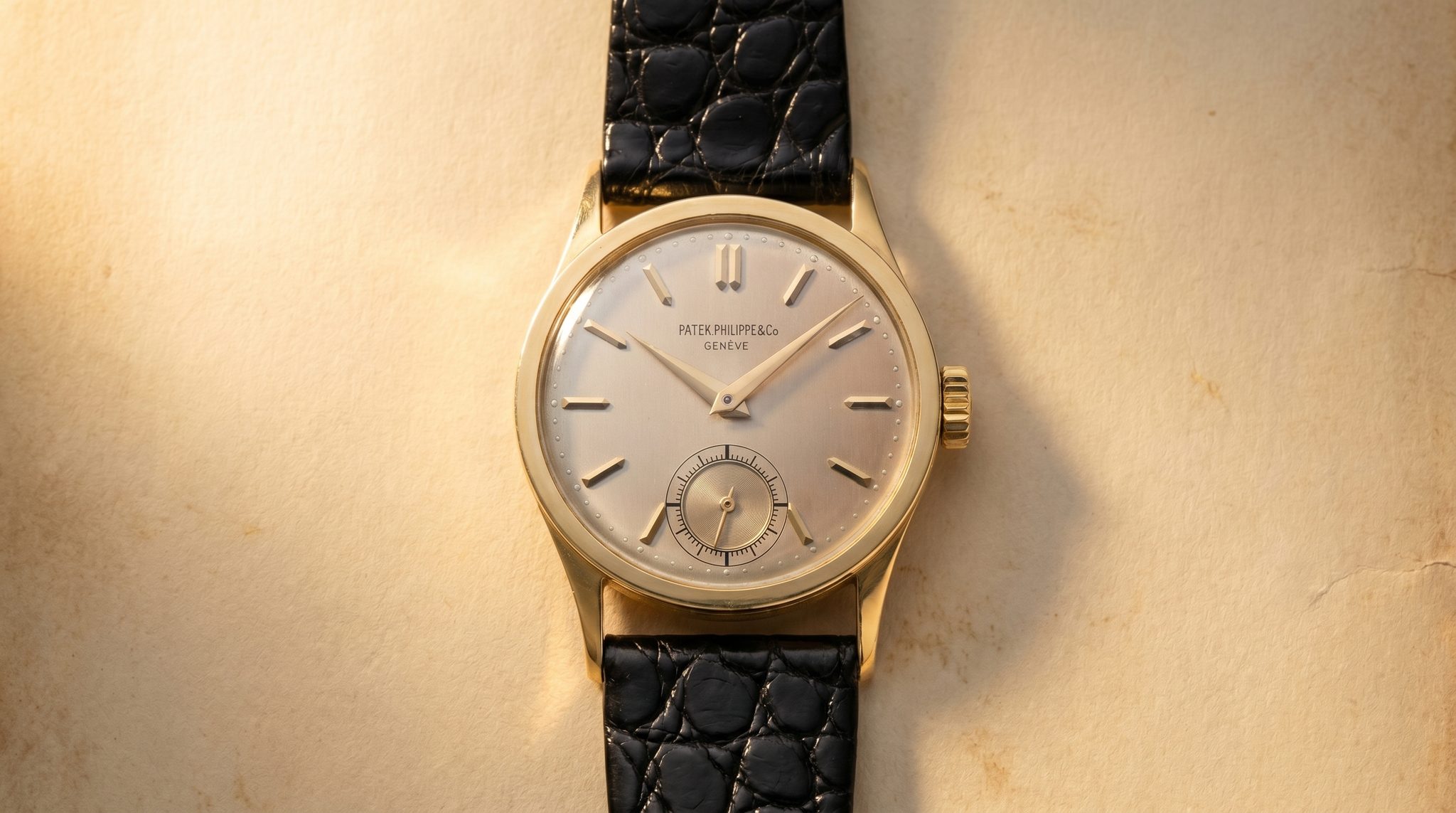
Foundational ref. 96
Ref. 96 establishes the Calatrava as a modern, serially producible dress watch built around restrained Bauhaus-leaning design. What looks simple is mechanically layered: the same reference spans four movement series (from an early LeCoultre-based 12-ligne ébauche through Patek’s 12-120 and 12-400, ending with the 27-AM-400 era that enables late center-seconds examples). That long run is why 96 collecting is often done by cross-checking independent clues that do not move in lockstep, including movement engravings and dial layout. The era ends when ref. 96 production ceases around the early 1970s, closing the original template’s multi-decade production arc.
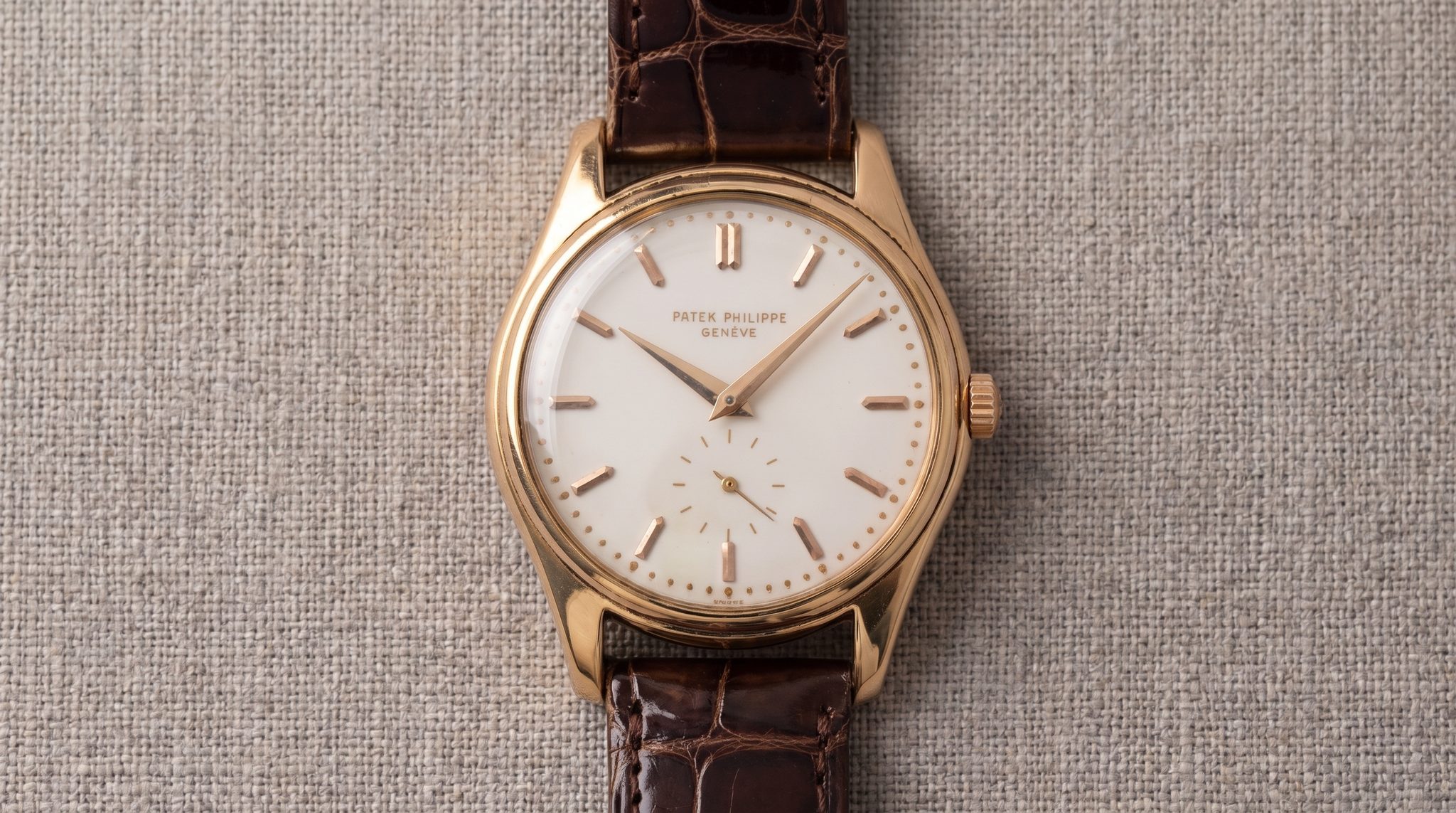
First automatic statement
Ref. 2526 is the Calatrava branch where the line absorbs Patek’s early self-winding identity. It is widely credited as the firm’s first automatic wristwatch, pairing Cal. 12-600 AT with a larger mid-century dress case and the enamel dial that defines the reference’s collecting stakes. The documented driver is post-war demand for automatic movements, and the thicker, larger case follows functionally from housing the new self-winding calibre. The generation ends as Patek moves on to other automatic round dress references after the late 1950s, leaving 2526 as a discrete, short-run technical and aesthetic node in the Calatrava family.
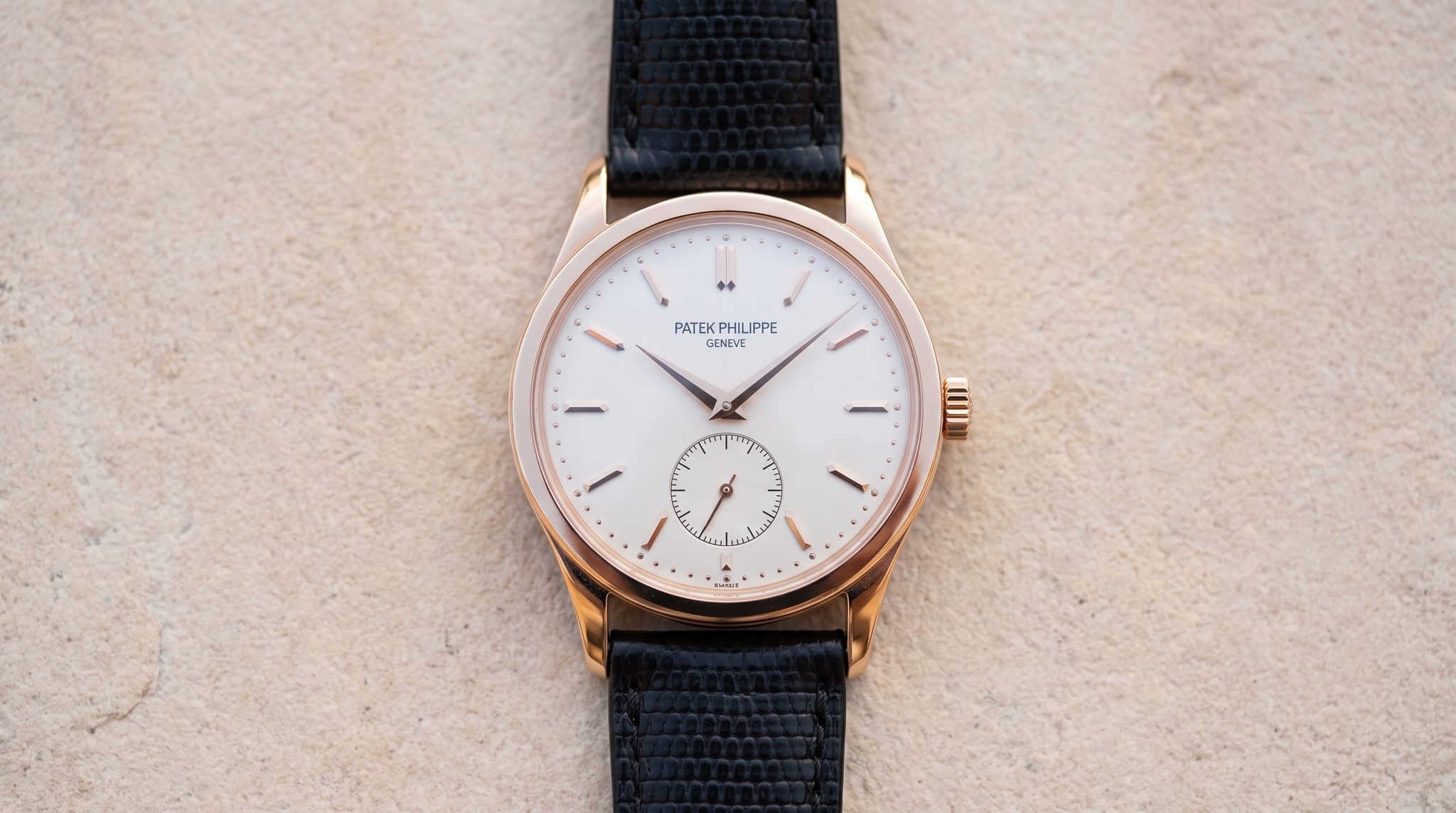
Modern 96 heirs
This era is the Calatrava’s deliberate act of continuity after ref. 96: keep the time-only, small-seconds template alive, then scale it for modern wear. Ref. 3796 arrives in 1982 as a close-proportioned successor that preserves the compact 96 feel while updating construction in ways collectors can see and live with, notably sapphire crystal and the thin hand-wound Cal. 215 PS platform. Ref. 5196 continues the same lineage starting in 2004, enlarging the idea to 37 mm while remaining no-date and hand-wound. The era ends around 2022 as 5196 leaves the catalogue, marking the close of this particular “smooth-bezel, small-seconds, manual” run among the published references here.
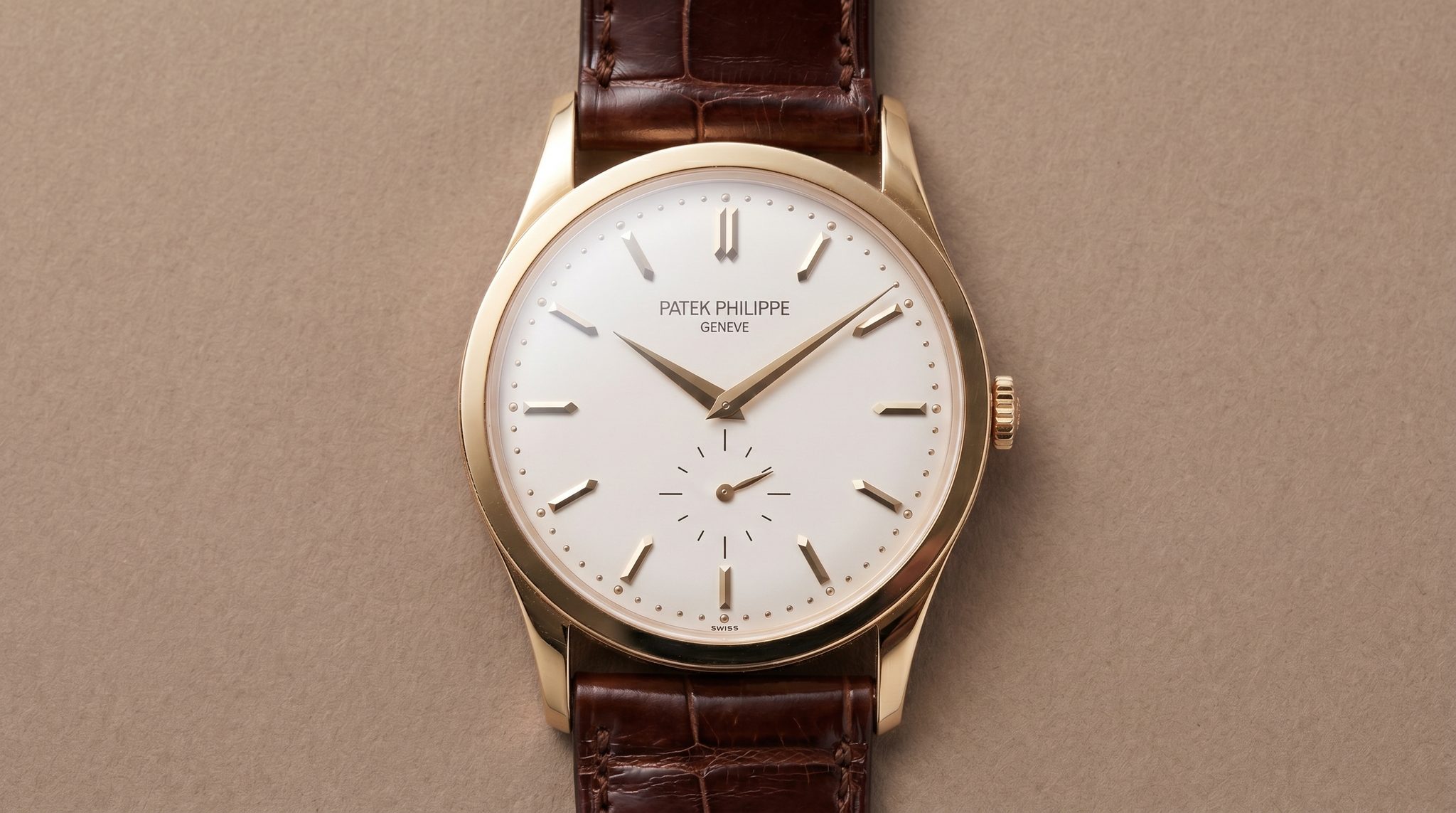
Hobnail signature Calatravas
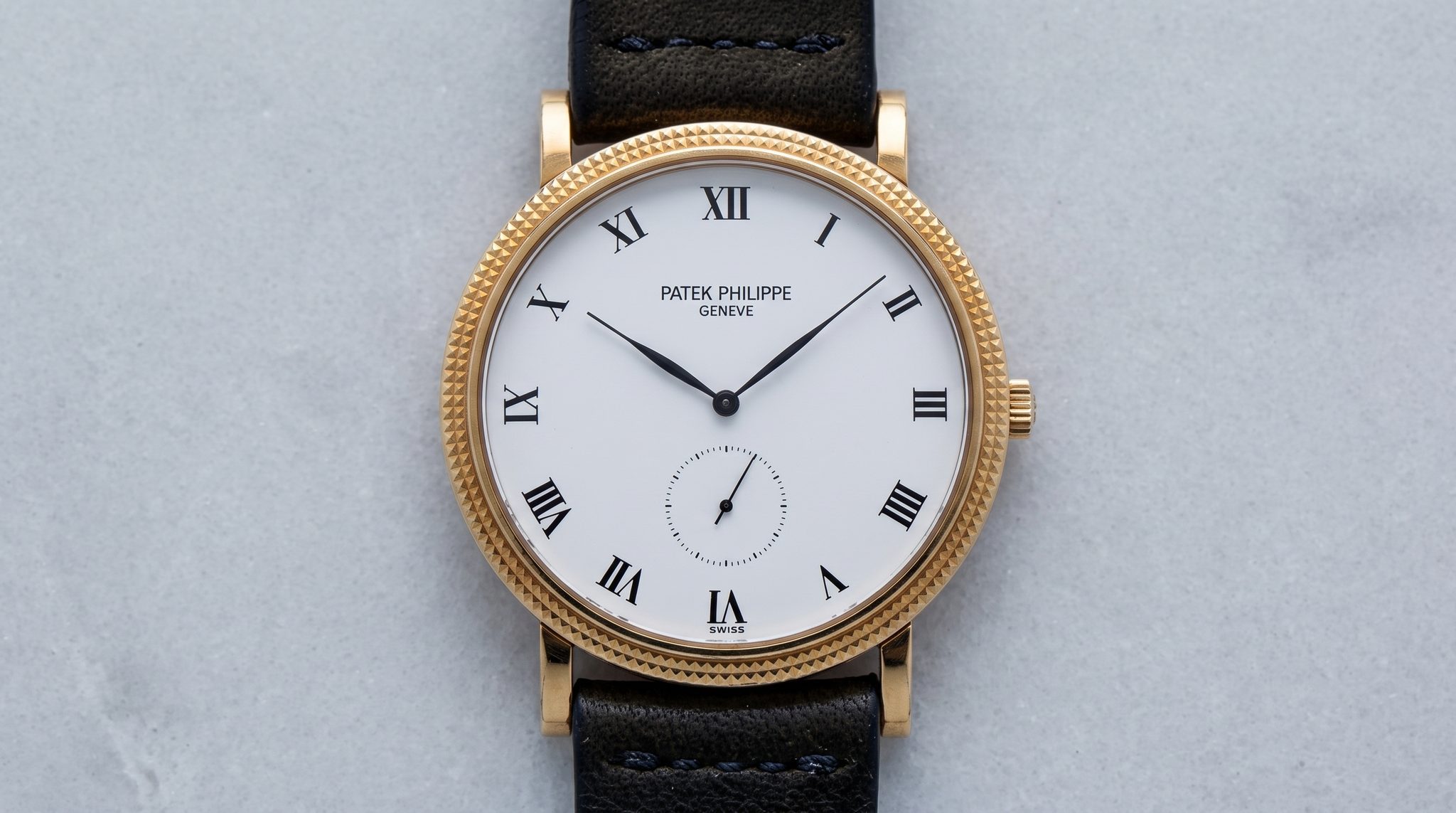
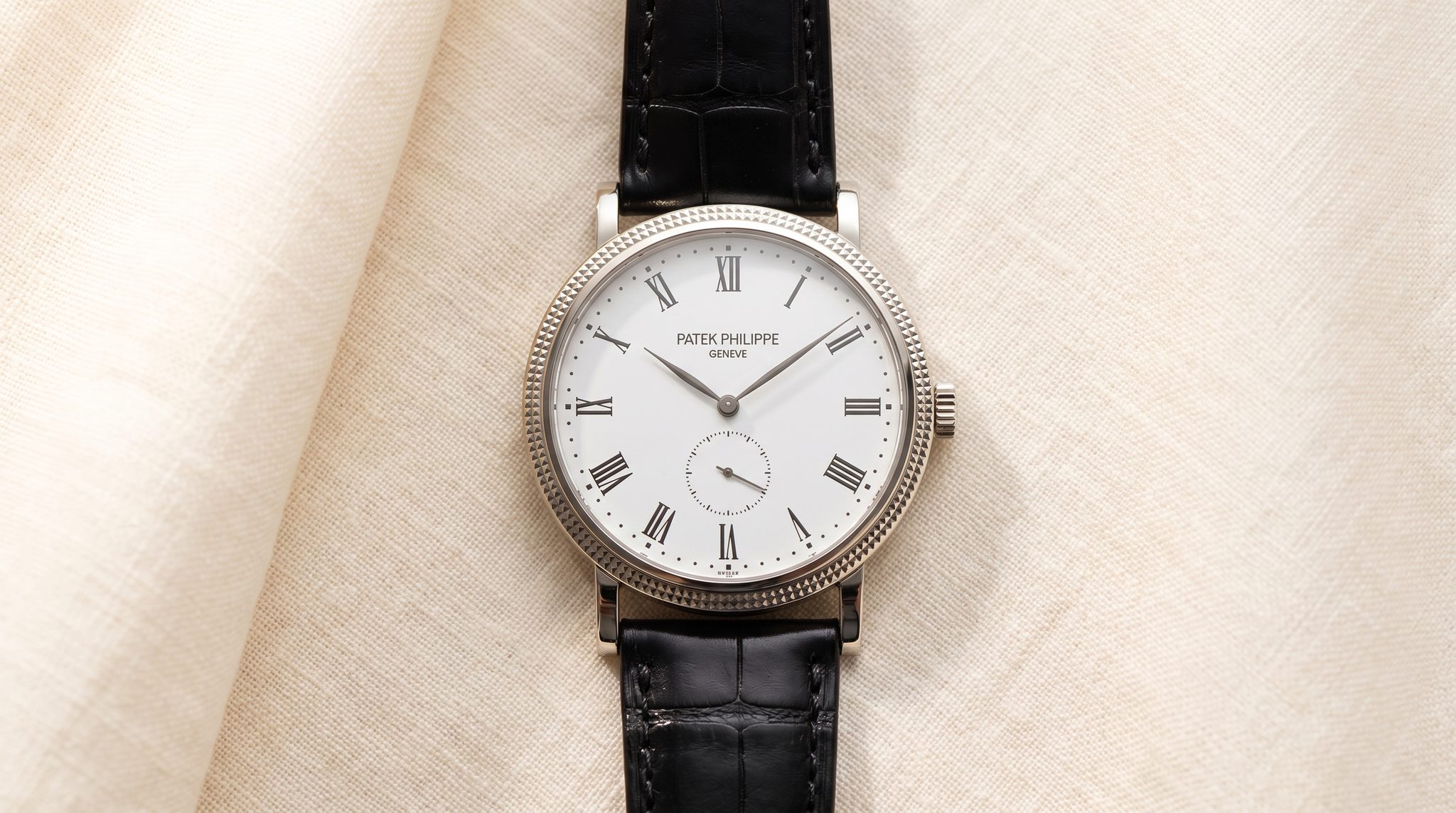
Here the Calatrava becomes recognizable by touch as much as outline. Ref. 3919, introduced in 1985, codifies the Clous de Paris hobnail bezel as a modern calling card during a period when Patek positioned mechanical simplicity as heritage amid electronic competition. It holds the formula for two decades, small, thin, Roman, hand-wound. Ref. 5119 then arrives in 2006 as a controlled update: it keeps the same manual-wind architecture and hobnail identity but enlarges the case to 36 mm for modern presence. The era ends in the late 2010s as 5119 production tapers and the hobnail line’s role passes to later models outside this published set.
Everyday automatic Calatravas
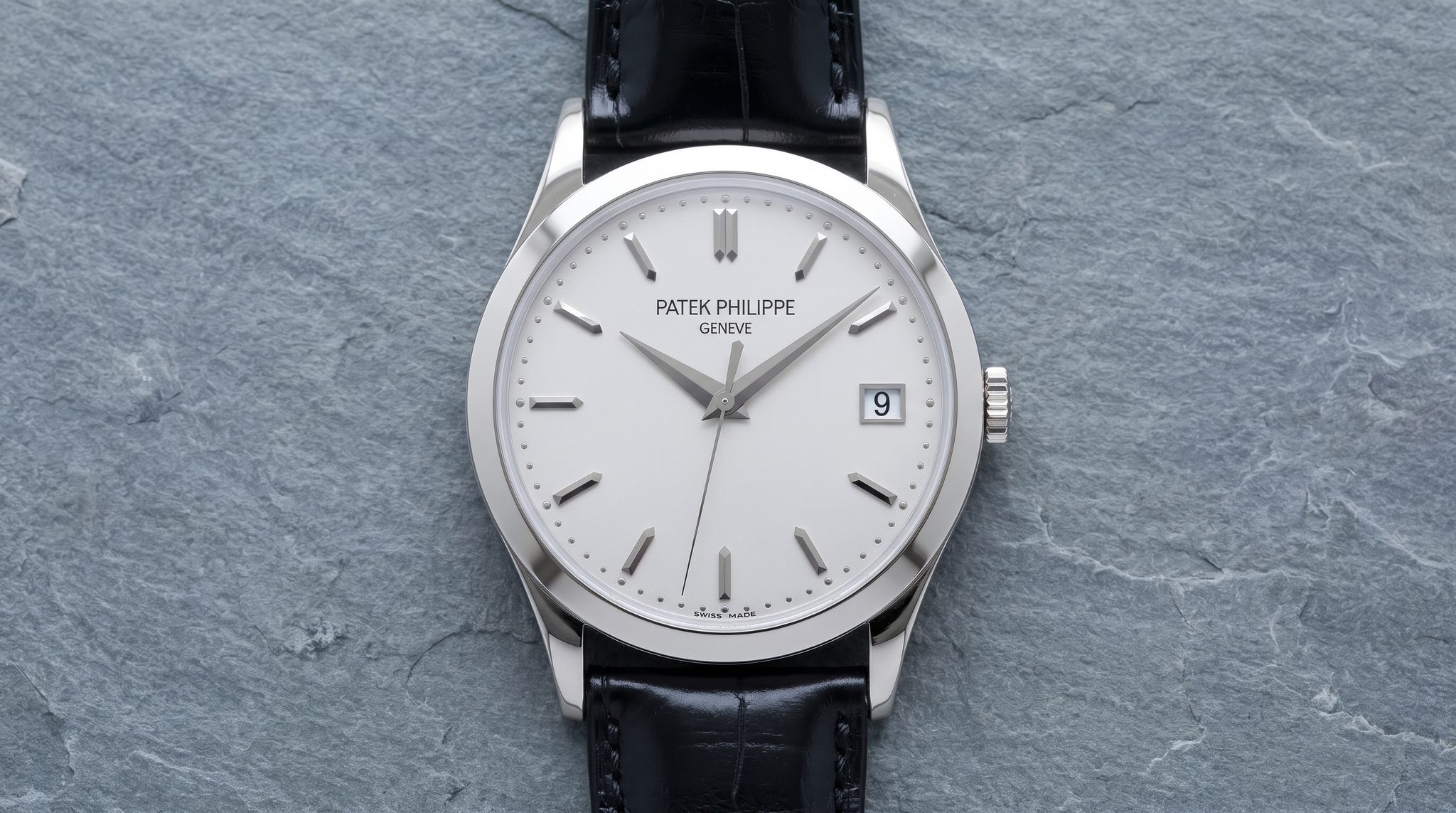
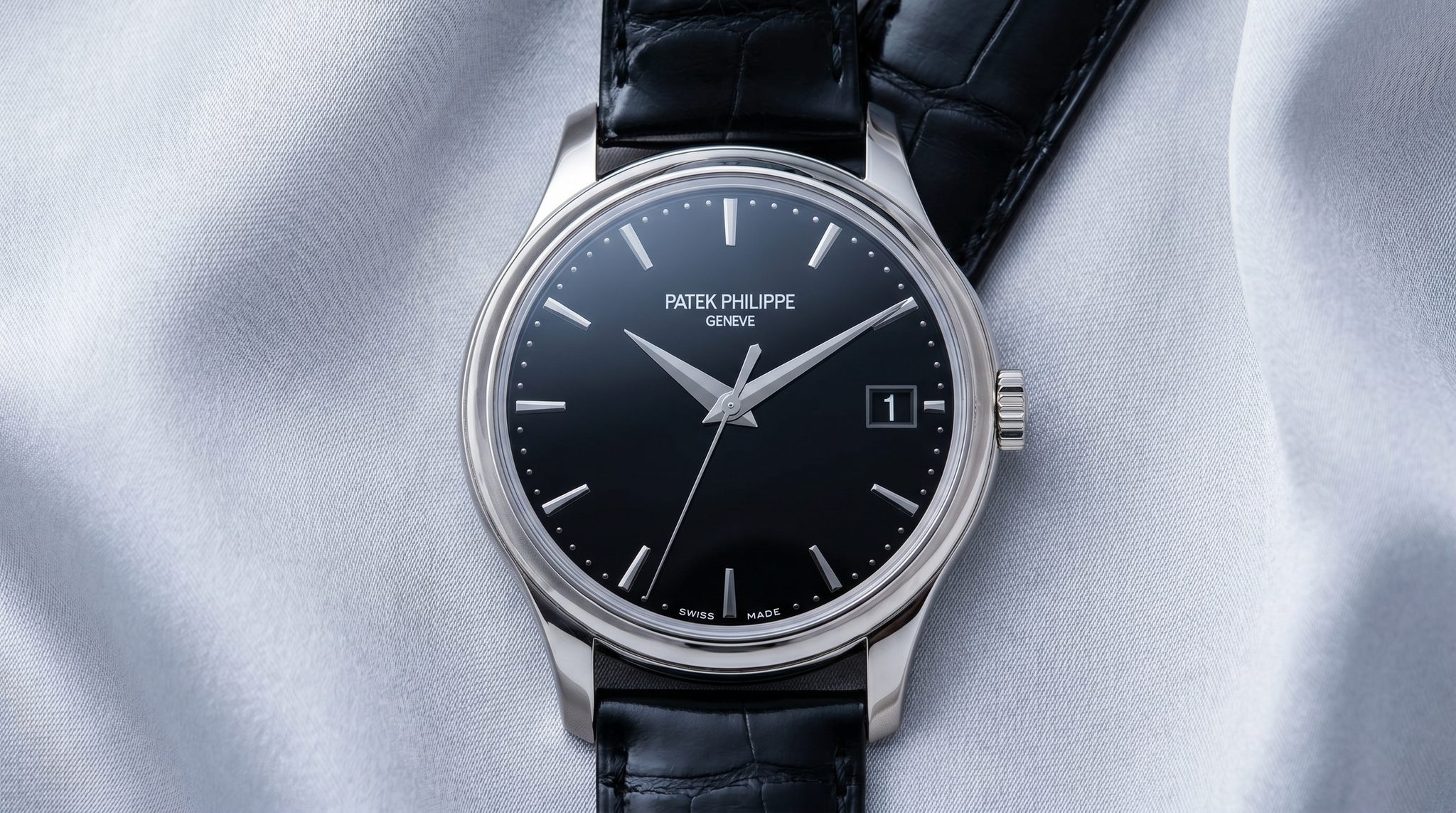
This generation translates Calatrava restraint into daily convenience by normalizing automatic winding and a date. Ref. 5296 launches in 2005 with a 38 mm case, central seconds, and date at 3, and it becomes a dial-led reference, the core mechanics staying steady while the face toggles between sector-like geometry and more traditional baton layouts. Ref. 5227, introduced in 2013, pushes the idea further into contemporary dress-watch expectations at 39 mm while adding a heritage-coded construction detail, an officer-style hinged dust cover over a sapphire back. The reason this era exists is market-driven practicality and legibility, and it continues as 5227 remains in production.
Which Calatrava to buy
For daily wear, 5227 is the clearest modern answer: it keeps the Calatrava’s quiet dial language while adding the two conveniences the older line refuses, automatic winding and a date, and it does so without turning the watch into a complication showcase. For a first vintage Patek Philippe Calatrava, ref. 96 is the grounding choice because its long, well-documented run lets a collector choose a version that matches taste while staying inside the founding silhouette.
For the reference-driven collector, 2526 is the target in this set because it is a discrete technical milestone, the 12-600 AT automatic era packaged in a Calatrava-style dress watch, with enamel-dial execution that is both visually decisive and historically specific. The one that rewards patience is 3919 or 5119 in especially sharp condition, since the hobnail bezel makes honest wear instantly visible and over-polishing permanently erases the very texture that defines the line.
If the goal is a “pure” modern Calatrava with the least noise, 5196 is the family’s controlled baseline: a long, steady production where small differences in metal and dial execution carry unusually large meaning.
What to check on any Calatrava
Buying across the Calatrava family is less about chasing a single checklist and more about protecting originality in the few places these watches express themselves: dial execution, case geometry, and movement correctness. Patek’s own service policy allows replacement of functional and cosmetic components, including hands and dial work, and that can materially change what a Calatrava is as an object. The line is also exposed to high-end counterfeits and frankenwatches because its simplicity makes small errors, in print, proportion, and finishing, the difference between right and wrong.
Common questions about the Calatrava
Ref. 96 is the 1932 foundation produced to circa 1973 and it spans multiple movement series under one reference number. Ref. 5196 is a modern, enlarged homage introduced in 2004, keeping the manual-wind, small-seconds, no-date layout in a 37 mm case with a consistent modern movement platform.
- Patek Philippe Calatrava Collectionpatek.com
- The Complete Collector's Guide to the Patek Philippe Calatravasothebys.com
- A Collector's Guide to the Patek Philippe Calatrava Ref. 96collectability.com
Show 7 more
- Patek Philippe Iconic Design: Clous de Pariscollectability.com
- History of the Patek Philippe Calatrava Part 1: Reference 96monochrome-watches.com
- History of the Patek Philippe Calatrava Part 2: Important Modelsmonochrome-watches.com
- History of the Patek Philippe Calatrava Part 3: Present Daymonochrome-watches.com
- Service costs (commitment to service)patek.com
- How to Spot a Fake Patek Philippewatchscanning.com
- How to Spot Frankenwatch Fake Partstimeandink.com