

Patek Philippe Calatrava 5196
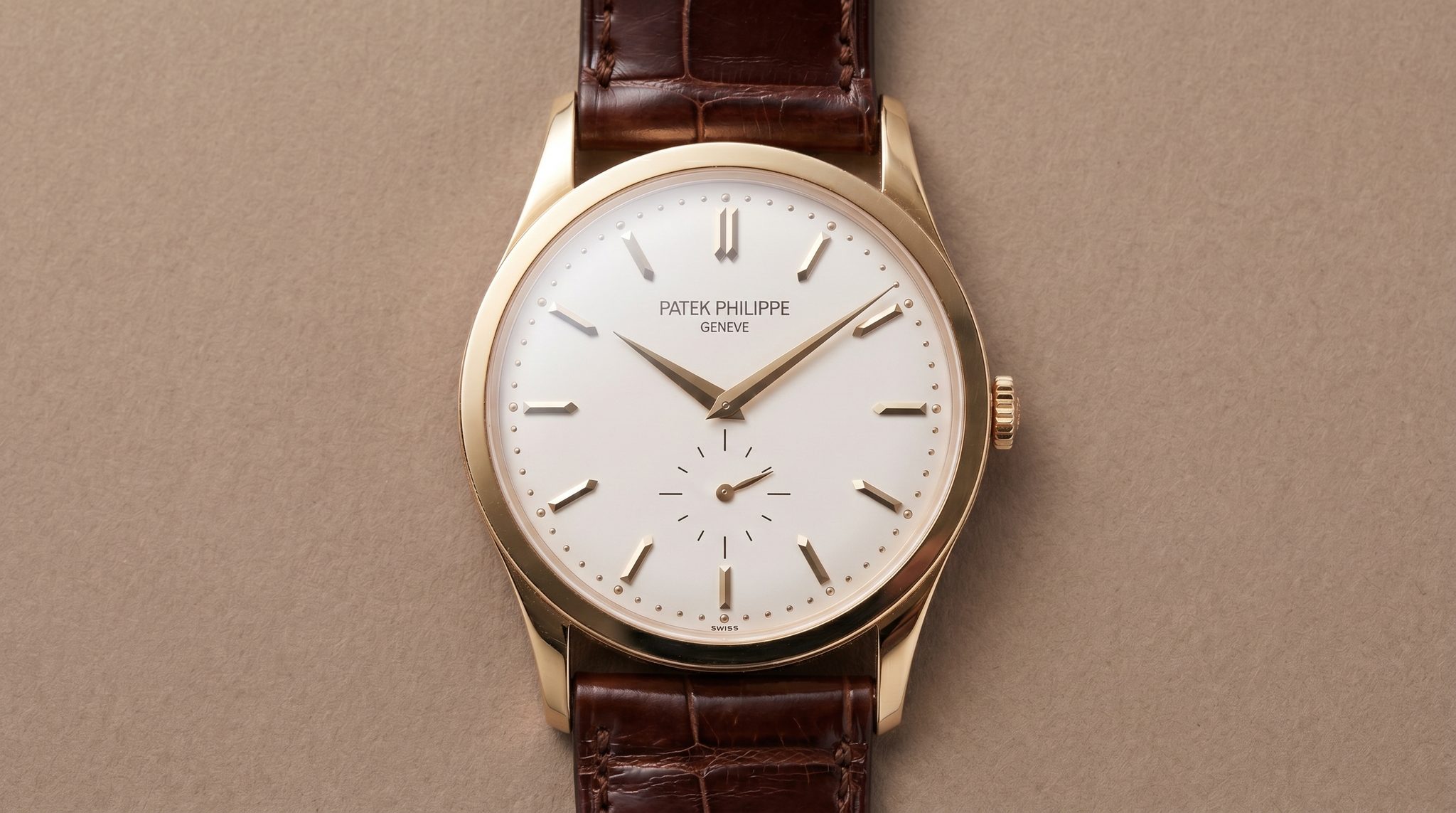
The Calatrava 5196 is Patek Philippe’s unusually steady modern tribute to the 1932 ref. 96: a 37 mm, hand-wound, small-seconds dress watch whose story is told mostly through metal choices and one standout platinum dial.
- Production
- 2004–c. 2022
- Case
- 18k gold / platinum
- Diameter
- 37 mm
- Crystal
- Sapphire
- Water res.
- 3 ATM
- Bezel
- Smooth polished
- Dial
- Baton or Breguet
- Seconds
- Small seconds
- Movement
- Cal. 215 PS
- Winding
- Manual
- Lume
- None
The Patek Philippe Calatrava 5196 is the kind of modern reference collectors use as a control sample: a watch Patek largely left alone, so the few sanctioned choices, metal on the wrist and dial execution in the light, become the entire point. The clearest, repeatable fact behind its calm reputation sits inside the case, the Caliber 215 PS is just 2.55 mm thick while still beating at 28,800 vph.
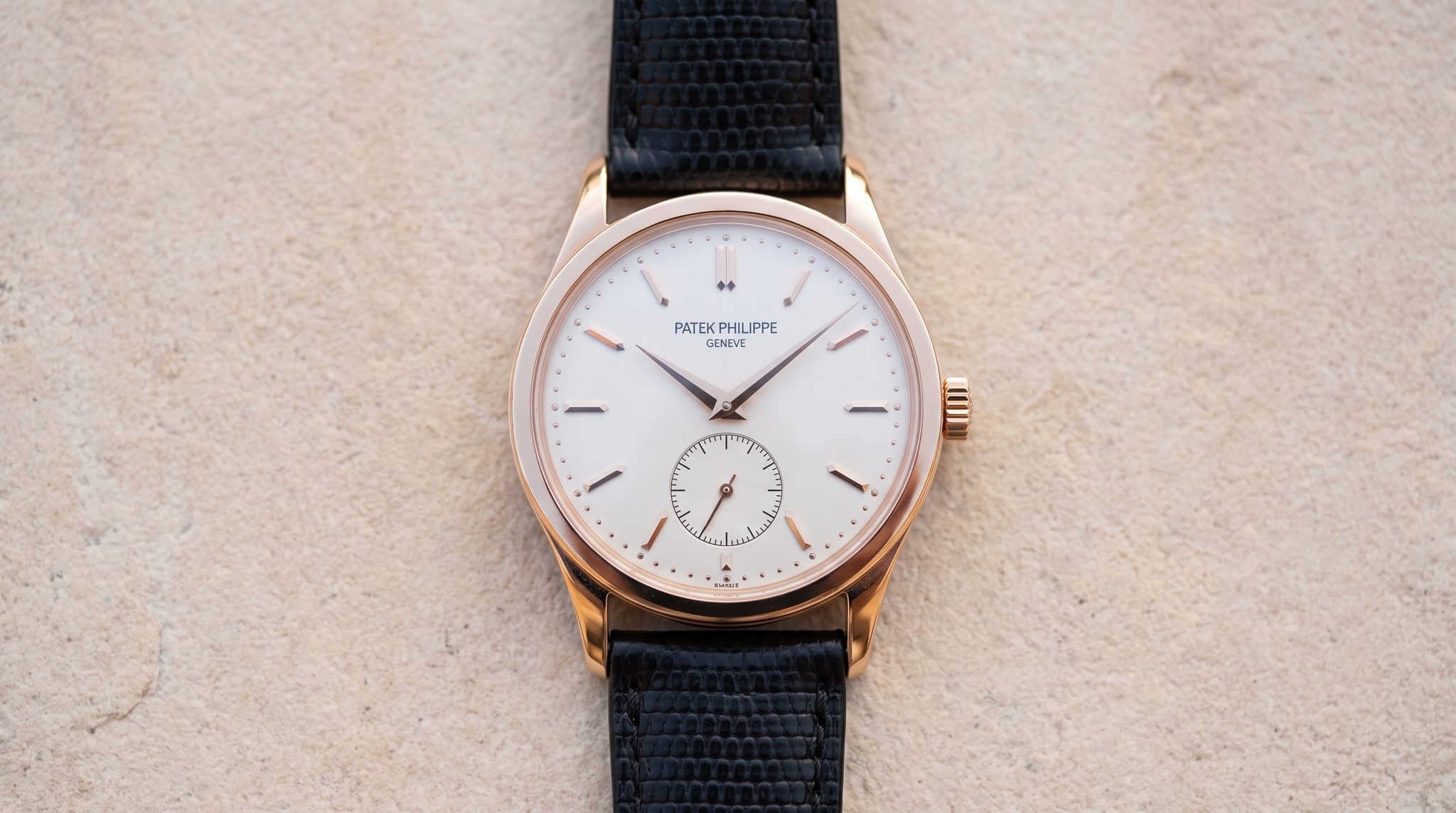
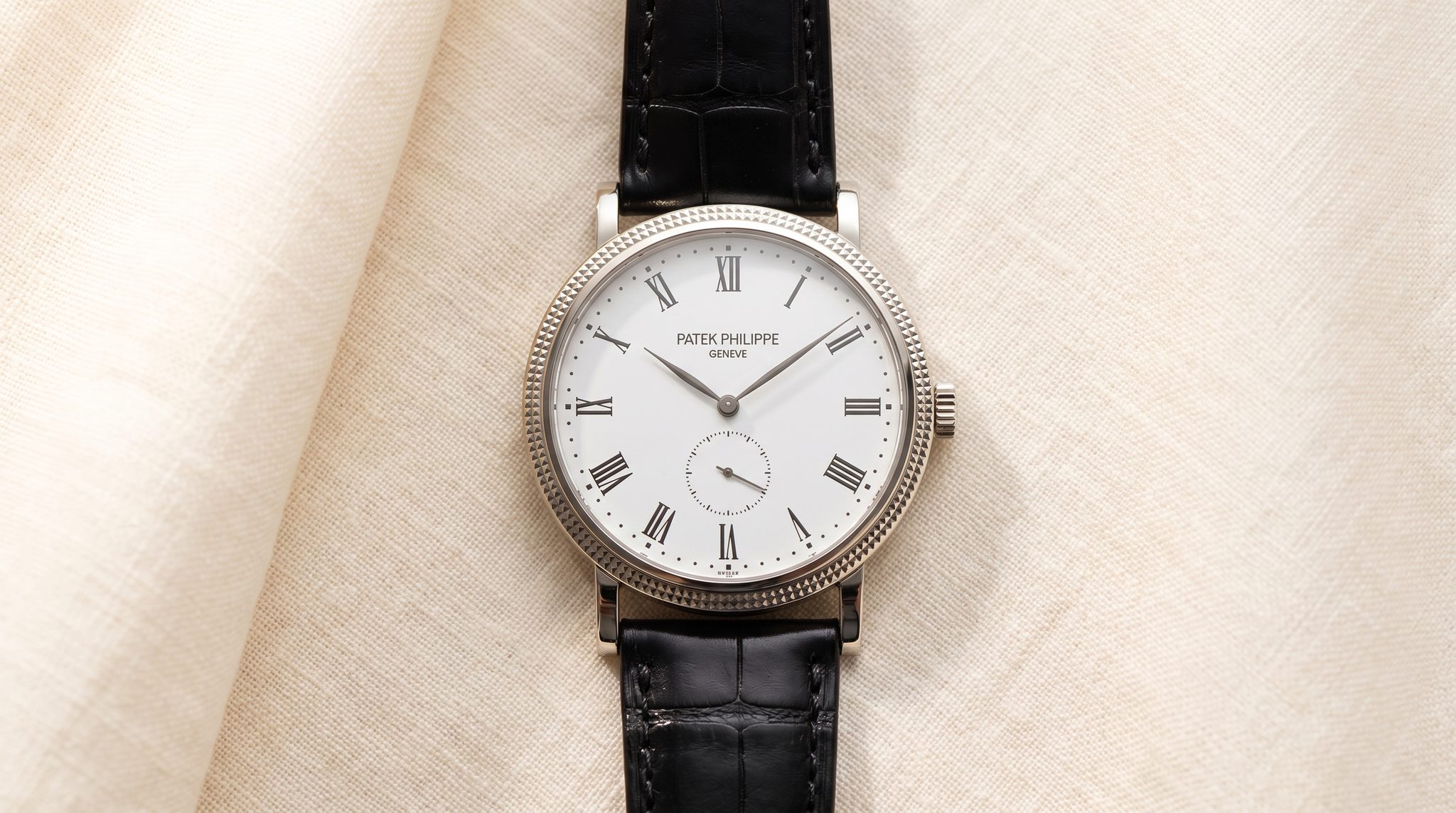
Introduced in 2004 as a larger, modern outgrowth of the original 1932 Calatrava ref. 96, the 5196 keeps the old idea intact, thin case, small seconds at 6, no date, and an unshowy, silvered dial, but scales it to a contemporary 37 mm. Patek never documented a mid-run caliber change or a sequence of named dial “marks” for the reference; instead, the line reads as one long, consistent production with the meaningful distinctions being the case metal (yellow, white, rose gold, or platinum) and a single expressive outlier, the 5196P with its two-tone dial and applied Breguet numerals.
That narrow band of variation is exactly why the Calatrava 5196 stays legible decades later. When a watch is this consistent, condition and originality do not hide behind “correct for the era” arguments. A sharp case, crisp printing, and the right dial for the right metal are not trivia here, they are the difference between a watch that looks like it has simply lived, and one that looks like it has been put back together.
“A 37 mm, hand-wound Calatrava that stayed consistent: Cal. 215 PS throughout, with variants mainly by metal and the 5196P’s Breguet-numeral two-tone dial.”
5196 across 2004–c. 2022
In the modern Calatrava family, the 5196 reads less like a series of upgrades and more like a deliberate decision to keep a single idea intact. It arrives in 2004 explicitly as a contemporary-sized extension of the ref. 96 concept, the same calm, time-only face with small seconds, but in a 37 mm case and with a modern, high-beat manual movement. The reason it wears so traditionally is documented where it matters most: the Caliber 215 PS is exceptionally thin at 2.55 mm, a practical constraint that lets Patek build a restrained dress case without resorting to automatic thickness.
The few time-linked clues that do exist are mostly external to the reference itself. One is the finishing hallmark on the movement: early pieces can carry the Geneva Seal, and later ones the Patek Philippe Seal, reflecting a brand-wide change that occurred around 2009. That shift is real and visible, but it is not documented as a clean, 5196-specific cutoff, so it works best as a prompt to verify paperwork and service history rather than as a single-year dating shortcut.
What the record does support is the bigger pattern: through the late 2010s and into 2020–2021, examples continue to surface with late production years, consistent with a widely reported discontinuation around 2022 even though no formal factory end date was published. Seen as a whole, the 5196’s “history” is a study in restraint. Where other references ask you to memorize generations, this one asks you to look harder at what is actually in front of you: the sharpness of the downturned, tapered lugs, the crispness of the dial printing, and whether the dial execution matches the metal it is housed in.
Late in its run, that restraint becomes the point. The 5196 proves that, even in the 2000s and 2010s, Patek could treat a dress Calatrava like a fixed type rather than a platform for yearly novelty, and that choice is why condition, correctness, and the single platinum outlier dial carry so much weight today.
- 2004Launch37 mm, small seconds at 6
- c. 2005Early examplesGeneva Seal on movement
- c. 2009Seal transitionGeneva Seal vs Patek Seal
- c. 2010 – 2021Long runLater-dated papers on examples
- c. 2022DiscontinuedNo longer in catalog
5196 against its neighbours
The Calatrava 5196 makes sense when set between its inspiration and its modern neighbors: the ref. 96 that established the template, the ref. 6119 that carries the manual-wind Calatrava forward at a larger size, and the ref. 5296 as the closest 96-like sibling that chooses practicality over purity with an automatic movement and a date.
This reference 5196 Patek Philippe · focal 2004–c. 2022 | 6119 Closest modern successor From 2021 | |||
|---|---|---|---|---|
| Production | 1932–c. 1973 | 2004–c. 2022 | 2005–c. 2019 | From 2021 |
| Case | Precious metals | 18k gold / platinum | White/rose gold | Precious metals |
| Diameter | 31 mm | 37 mm | 38 mm | 39 mm |
| Crystal | – | Sapphire | Sapphire | – |
| Water res. | – | 3 ATM | – | – |
| Bezel | – | Smooth polished | – | Different bezel |
| Dial | Sector/Arabic/baton (var.) | Baton or Breguet | 96-inspired, date | Enlarged layout |
| Seconds | – | Small seconds | Central seconds | – |
| Movement | Manual (varied) | Cal. 215 PS | Cal. 324 S C | Cal. 30-255 PS |
| Winding | Manual | Manual | Automatic | Manual |
| Lume | – | None | – | – |
Four dial generations across the run
In yellow gold, the Calatrava 5196J reads as the most traditional expression of the reference: a polished precious-metal case framing a silvery, opaline-style dial with applied baton markers and faceted hands, plus the small-seconds register tucked neatly at 6. There is no documented sequence of named dial generations for the 5196J; the way to identify it is simply the metal itself and the clean baton-dial layout that avoids numerals and avoids lume.
On the wrist, the important tells are the ones polishing can erase. The downturned, tapered lugs are meant to end in crisp edges, and the precious-metal hallmarks should still look sharp rather than washed out. Because the design is intentionally quiet, a softened case or dial printing that has lost its crispness tends to stand out immediately.
What to check before buying a 5196
Buying a Calatrava 5196 is less about decoding a long list of generations and more about verifying that the few things that matter are genuinely right. With no documented caliber change and no recognized sequence of dial “marks,” the value of a given watch concentrates in the condition of its case geometry, the integrity of its dial printing, and the coherence between reference, metal, and dial execution.
The other practical wrinkle is that one of the most visible “dating” clues, Geneva Seal versus Patek Philippe Seal, reflects a brand-level transition around 2009 rather than a 5196-specific, formally published cutoff. It can be a useful prompt to ask for papers, service history, and a clear movement photo, but it should not be treated as a single-step verdict.
In day-to-day ownership, the 5196 rewards the sort of wearer who likes ritual and restraint: winding a thin manual movement, reading time on a dial that never tries to do more than it needs to, and choosing between three quietly classic gold executions or the one platinum version that adds a little visual poetry through its numerals instead of through added functions.
Patek Philippe Calatrava 5196 for sale
Auctions on Grey Market run on seven-day cycles, every watch verified before it sells. Browse what's live now, or consign your 5196.
Adjacent in the Calatrava family
Common questions about the 5196
The Calatrava 5196 was introduced in 2004. Discontinuation is widely reported as around 2022, but Patek Philippe did not publish a formal end date; individual examples are seen with late production years into 2020–2021.
- History of the Patek Philippe Calatrava Part 3 – Major Modern Modelsmonochrome-watches.com
- The Story of the Patek Philippe Calatrava, a Dress Watch Classicanalogshift.com
- PATEK PHILIPPE CALATRAVA, REF. 5196Gcollectability.com
Show 7 more
- Patek Philippe 5196 - A detailed look at the successor of...youtube.com
- Patek Philippe Calatrava 5196G-001chrono24.com
- The overlooked genius: why the Calatrava 5196G is Patek Philippe's most honest modern watchwatchprosite.com
- Patek Philippe 5196 Calatrava for Saleluxurywatchesusa.com
- An Elegant 2005-2006 Patek Philippe Calatrava in Yellow Gold, Ref...instagram.com
- A Collector's Guide to the Patek Philippe Calatrava Ref. 96collectability.com
- The Patek Philippe Calatravathehourglass.com