

Patek Philippe Calatrava 3796
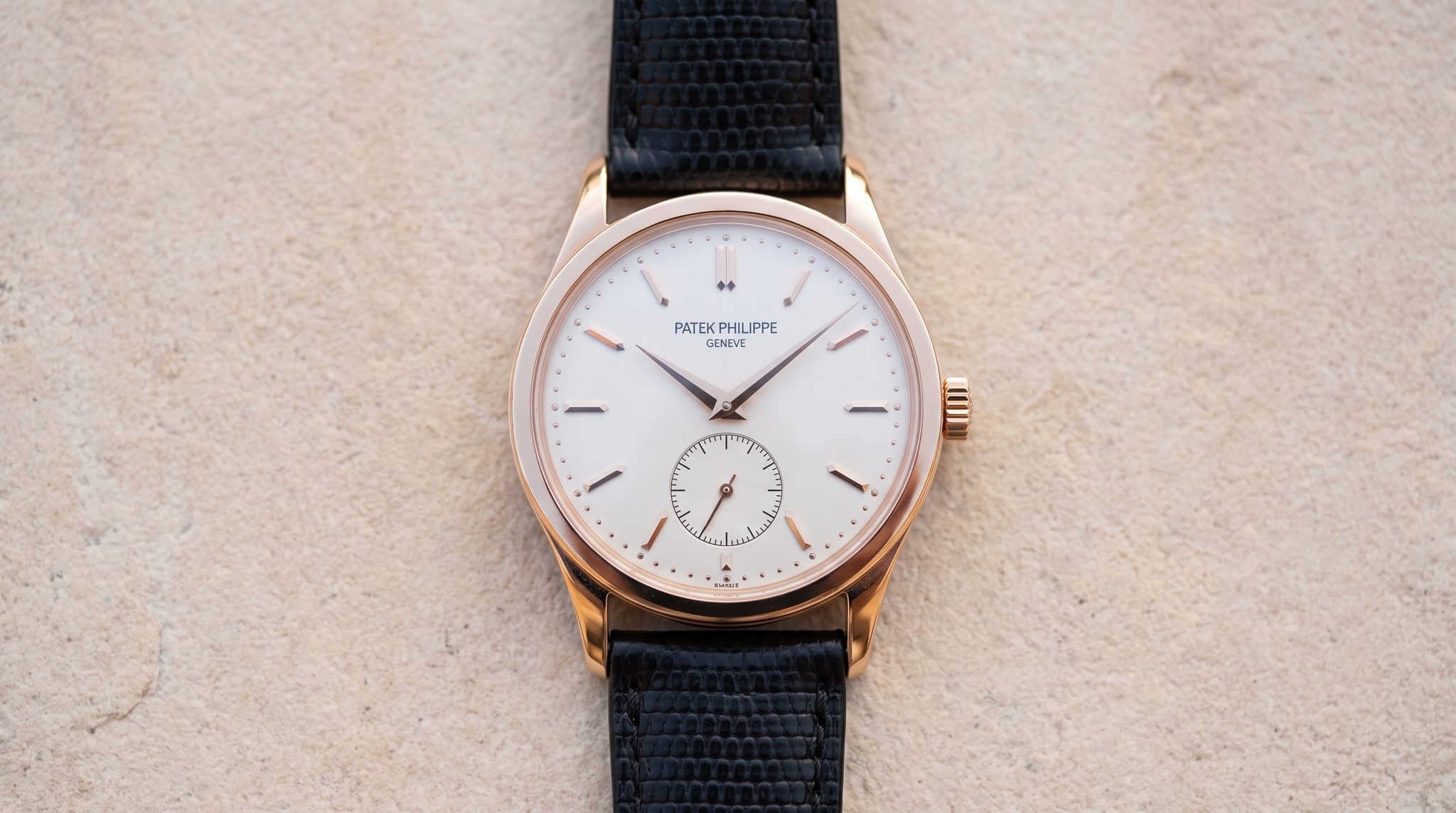
The Calatrava 3796 is the late 20th century watch that kept the original ref. 96 proportions alive, a 30.5–31 mm manual-wind dress Patek defined by sapphire crystal and the thin cal. 215 PS.
- Production
- 1982–1999
- Case
- Gold or platinum
- Diameter
- 30.5–31 mm
- Thickness
- ~7–7.5 mm
- Bezel
- Smooth or hobnail
- Crystal
- Sapphire
- Dial
- Small seconds at 6
- Movement
- Cal. 215 PS
- Winding
- Manual
- Power
- 45h
- Lug width
- 18 mm
The Patek Philippe Calatrava 3796 is the watch that refused to let the original Calatrava silhouette grow up. In an era when dress watches were steadily expanding, it held the line at roughly 30.5–31 mm, so close in proportion to the 1930s ref. 96 that Phillips notes the two can look identical on the wrist, then quietly modernized the formula with a sapphire crystal and Patek’s thin, Geneva Seal cal. 215 PS.
That tension between continuity and update is the point of the Calatrava 3796 review. It is a neo-vintage reference (introduced in 1982 and produced into the late 1990s, most often cited as 1982–1999) whose most important technical story is not complication, but refinement: a time-only layout with small seconds at 6 o’clock and a movement only 2.55 mm thick, running at 28,800 A/h with 18 jewels and about 45 hours of power reserve.
Because the core platform stayed stable, collecting the 3796 is largely about choosing a configuration rather than chasing a sequence of mechanical “marks”. Yellow, white, and rose gold, plus platinum, were all offered, and Patek paired them with a wide menu of dial executions. Some variants are simply different tastes within the catalog, like Roman numerals versus faceted batons. Others are the reason the reference has become a modern entry point into serious Calatrava collecting, like the décoratif 3796D with its Clous de Paris hobnail bezel, or the scarce rose-gold “pink on pink” 3796R that Phillips tracks as only 30 known examples in that exact dial-and-case pairing.
“The Calatrava 3796 is the ref. 96 idea, kept small on purpose, then modernized with sapphire and the cal. 215 PS.”
3796 across 1982–1999
The reference 3796 enters the Calatrava line in 1982 as a deliberate continuation of the ref. 96’s small, time-only dress-watch format. The basic proposition is simple to see: a round case around 30.5–31 mm, long tapered lugs, and a subsidiary seconds register at 6 that keeps the dial balanced and traditional.
The modernity is in two practical updates that the record does document clearly. First is the sapphire crystal, repeatedly cited as a key difference from the older ref. 96’s acrylic-era construction. Second is the movement choice: cal. 215 PS (also written as 215 S in some listings), a thin manual-winding calibre bearing the Geneva Seal, beating at 28,800 A/h with 18 jewels and roughly 45 hours of power reserve. The movement’s slim 2.55 mm height helps explain why the watch wears so flat on the wrist, with dealers measuring examples around 7–7.5 mm thick.
Where sports watches invite dating by a chain of forced upgrades, the 3796 is better understood as a stable platform offered with parallel options. Case metal spans yellow, rose, and white gold, and platinum. Dial executions range from the canonical silver opaline dial with applied batons and dauphine hands to Roman numerals, painted markers, co-signatures such as Tiffany & Co., and rarer diamond-marker configurations. The décoratif 3796D adds a hobnail Clous de Paris bezel that points toward the later 3919’s visual language, but it does not coincide with a new movement era.
Taken as a whole, the late 20th century Calatrava did not become “classic” by standing still. The 3796 shows the opposite, that the classic recipe could be kept almost unchanged in size while Patek adjusted materials, movement, and catalog variety until the market finally moved on to larger successors like the 5196.
- 1982Introduced31 mm case, small seconds
- 1982Modernized coreSapphire crystal, 215 inside
- c. 1980sDécoratif optionClous de Paris bezel
- 1992Extract-dated exampleTiffany signature, Extract dates
- c. 1994Pink-on-pink notedRose case, matching pink dial
- c. 1999DiscontinuedArchive/market dating ends
3796 against its neighbours
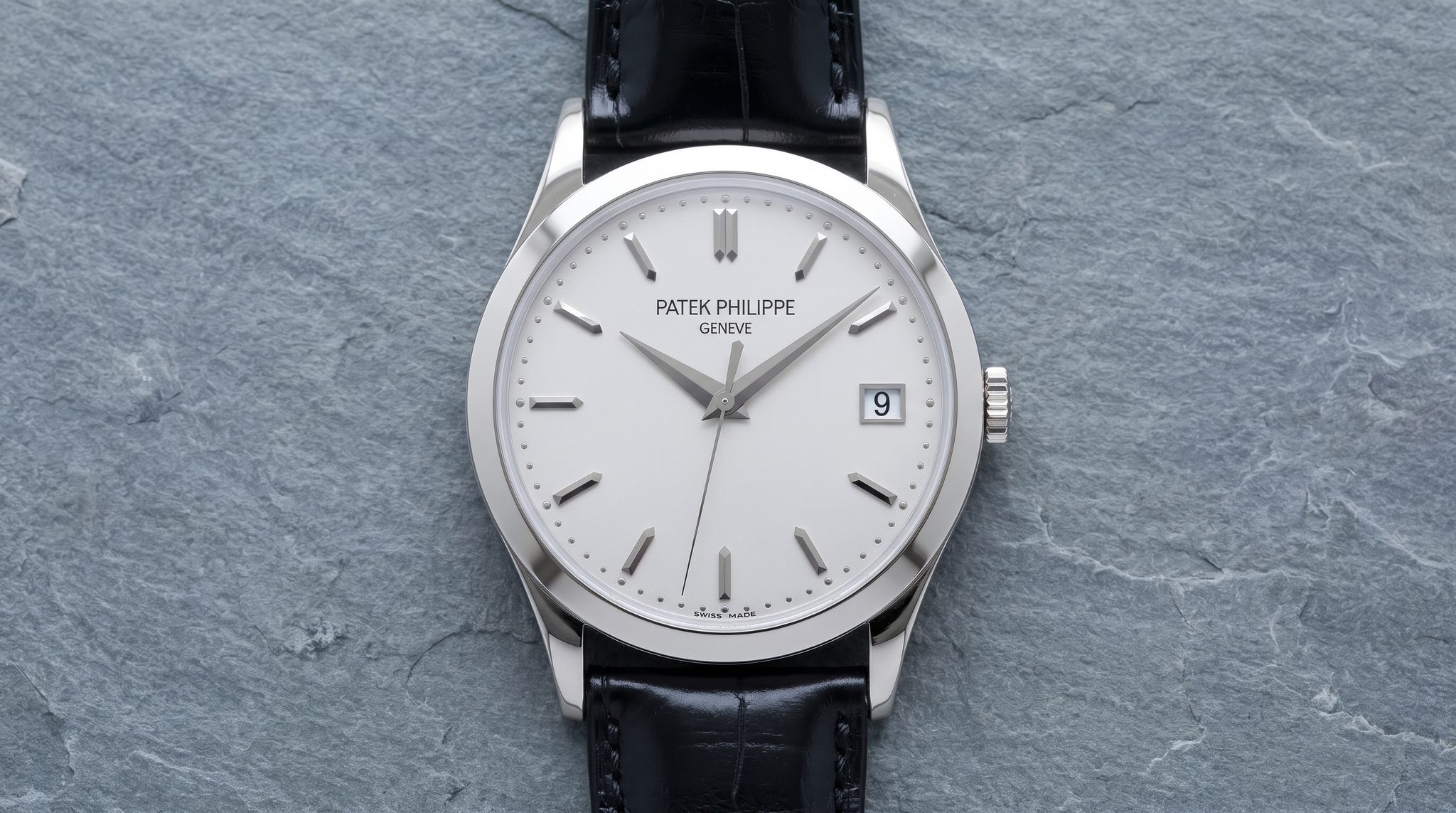
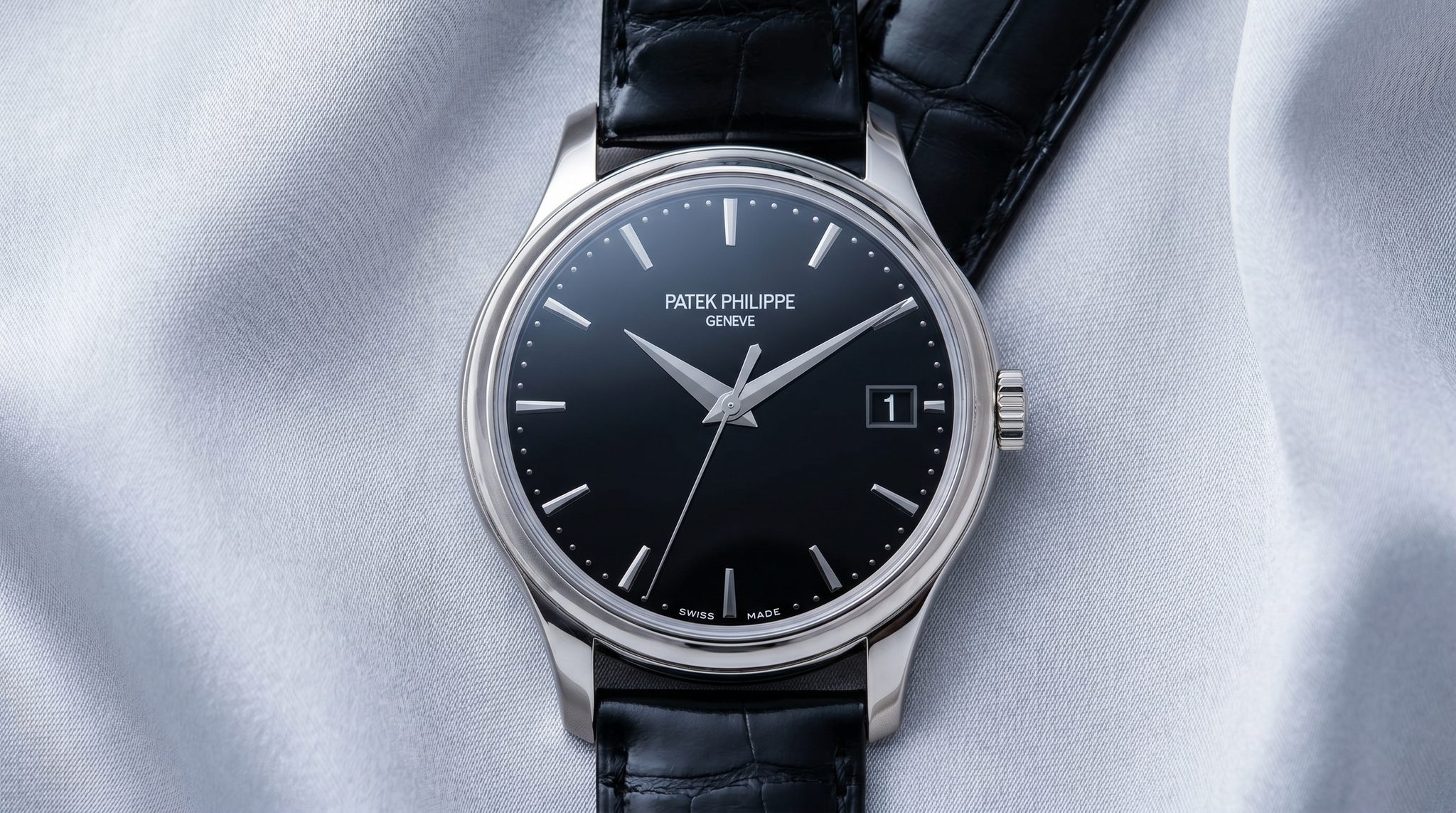
The Calatrava 3796 makes most sense when it is bracketed by what came before and what came after. Ref. 96 explains why the 3796’s size and layout feel so “unchanged” at a glance, while ref. 5196 shows the modern direction, keeping the small-seconds manual concept but scaling it up dramatically. Ref. 3919 sits nearby as the related Clous de Paris expression of the same classical idea, the bezel style the 3796D previews.
This reference 3796 Patek Philippe · focal 1982–1999 | ||||
|---|---|---|---|---|
| Production | 1932–c. 1973 | 1982–1999 | 1985–2006 | 2004–c. 2022 |
| Case | Gold, Pt, steel | Gold or platinum | 18k gold (J/G/R) | Gold / platinum |
| Diameter | 31 mm | 30.5–31 mm | 33.5 mm | 37 mm |
| Thickness | ~9 mm | ~7–7.5 mm | 6.5 mm | – |
| Bezel | Wide, flat | Smooth or hobnail | Clous de Paris | Smooth polished |
| Crystal | Acrylic (period) | Sapphire | – | Sapphire |
| Dial | Small or center sec. | Small seconds at 6 | Roman, small seconds | Small seconds at 6 |
| Movement | Manual (var.) | Cal. 215 PS | Cal. 215 PS | Cal. 215 PS |
| Winding | Manual | Manual | Manual | Manual |
| Power | – | 45h | – | – |
| Lug width | – | 18 mm | – | – |
| Water res. | – | – | – | 3 ATM |
Six case, bezel, and dial variants across the run
This is the Calatrava 3796 most people picture: a compact gold case and a silver opaline dial that reads almost like porcelain under soft light, punctuated by faceted applied batons and finished with tapered dauphine hands. The small-seconds subdial at 6 o’clock is the reference’s signature, giving the dial a calm, slightly vintage symmetry that center seconds would interrupt.
Collectability describes this as the typical 3796J configuration, and it appears throughout the production span rather than belonging to a short “early” or “late” era. Identification is therefore about coherence more than dating: the watch should present as a time-only, small-seconds Calatrava with sapphire crystal and cal. 215 PS, with the dial furniture matching the restrained, mid-century template the reference was created to preserve.
What to check before buying a 3796
Buying a Calatrava 3796 is less about catching a “correct year” than catching a correct configuration. The movement is reassuringly consistent across the reference, cal. 215 PS, so value usually turns on metal, bezel, and especially dial execution. That also means the dial is where the risk lives: rare dials (pink-on-pink, diamond markers, certain co-signatures) can add a premium large enough to attract incorrect parts or later refinishing.
The most reliable tool for high-stakes variants is documentation. Auction houses explicitly note applying for, or supplying, a Patek Philippe Extract from the Archives on 3796 lots, because it can confirm production date and original configuration. For the 3796D, it also helps separate a true décoratif reference from a watch that simply wears a hobnail-style bezel.
In daily ownership, the 3796 rewards the people who want a Calatrava that still feels like a dress watch, not a dress watch scaled to modern sports-watch tastes. At roughly 30.5–31 mm and about 7–7.5 mm thick, it sits flat, slips under cuffs easily, and wears like a piece of design history that kept going into the 1990s for those who preferred the original proportions.
Patek Philippe Calatrava 3796 for sale
Auctions on Grey Market run on seven-day cycles, every watch verified before it sells. Browse what's live now, or consign your 3796.
Adjacent in the Calatrava family
Common questions about the 3796
Specialist and auction sources consistently place the Patek Philippe Calatrava 3796 in production from 1982 into the late 1990s, most commonly cited as 1982–1999.
- Phillips: Ref. 3796, The Hong Kong Watch Auction: XVI (catalog entry)phillips.com
- Phillips: A Focus on Underrated Patek Philippe Calatravasphillips.com
- Collectability: Market Update, Neo-vintage Patek Philippe Calatravas (2015–2025)collectability.com
Show 7 more
- Grey Market: Calatrava 96 (1932–c. 1973) reference guide (lineage table including 3796)grymrkt.co
- Watch-Wiki: Patek Philippe Calatrava 3796watch-wiki.net
- Hodinkee Shop: 1988 Patek Philippe Calatrava Ref. 3796 (spec and movement description)shop.hodinkee.com
- Hodinkee Shop: 1987 Patek Philippe Calatrava Ref. 3796 With Papers (dated example)shop.hodinkee.com
- EveryWatch (Christie’s): Tiffany-signed salmon dial 3796 with Extract-dated manufacture and saleeverywatch.com
- Subdial: Vintage Patek pricing bands (includes 3796 by metal)subdial.ai
- Essential Watches: Patek Philippe Calatrava 3796 (dial and metal variants)essential-watches.com