

Patek Philippe Perpetual Calendar
Patek Philippe’s Perpetual Calendar is the complication line that turned the irregular Gregorian calendar into a readable, serially produced wristwatch language.
No watch line made the perpetual calendar feel like a repeatable wristwatch product the way Patek Philippe did, taking a mechanism built to cope with the Gregorian calendar’s uneven months and leap years and turning it into references collectors could study as a coherent family. The clearest proof is a date: Patek’s first perpetual calendar wristwatch is dated to 1925 (Ref. 97975), a watch widely described as a movement from 1898 repurposed into a wristwatch.
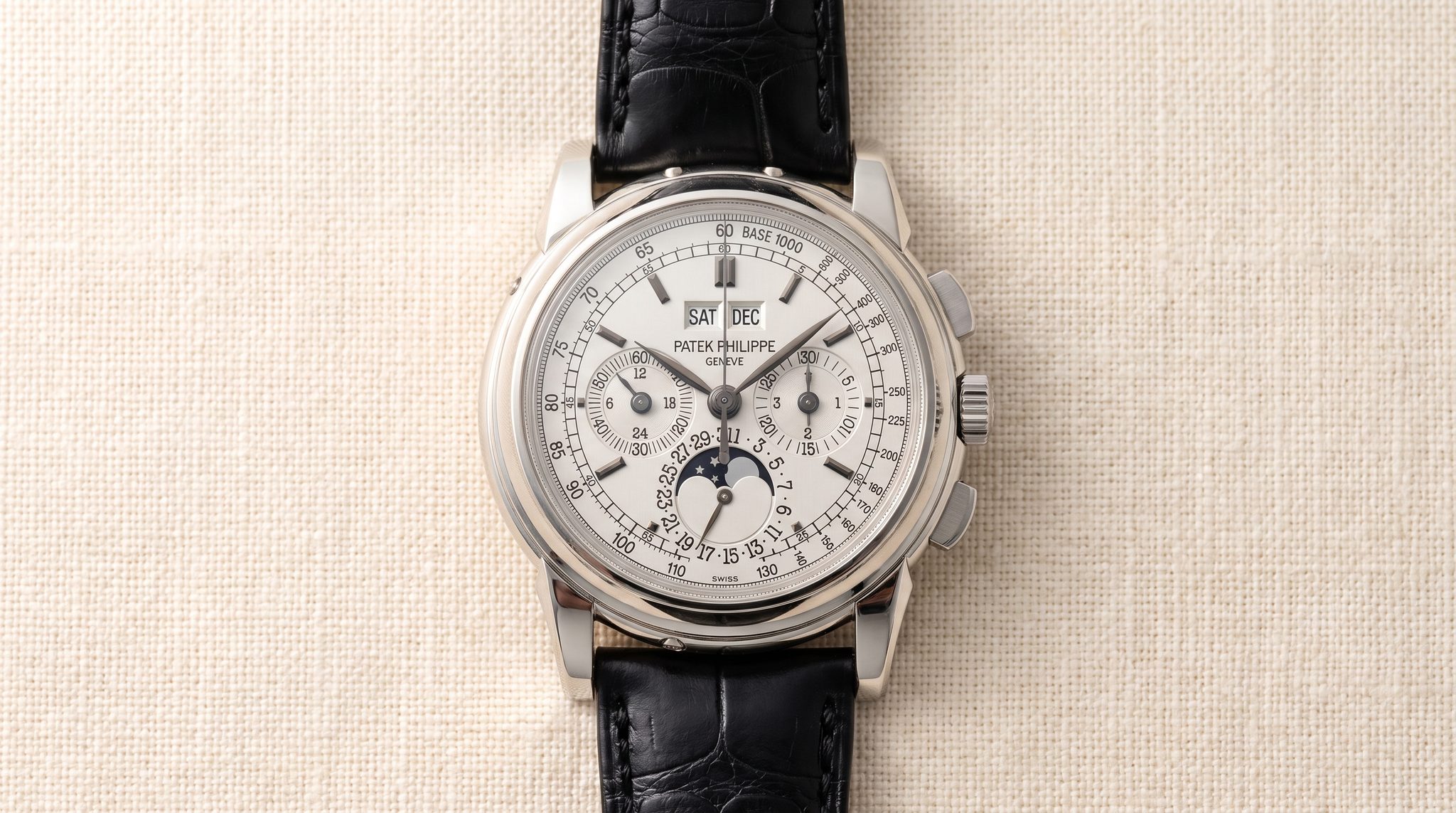
From that starting point, the Patek Philippe Perpetual Calendar history splits into two related dialects that remain easy to read on the dial. One is the perpetual calendar chronograph, identified at a glance by twin day and month windows under 12 o’clock and chronograph registers at 3 and 9, a layout established by 1518 and carried forward through 2499, 3970, and 5970. The other is the modern, non-chronograph perpetual calendar wristwatch, defined here by 3940’s three subdials that display the full calendar cycle in registers rather than apertures.
The reasons the line changes, when it does, are unusually well documented compared to most watch families. In the mid-century chronograph references, the engine stays constant while the exterior modernizes in overlapping steps, especially pushers, bezel, and dial scales. In the 1980s, there is a more decisive hinge: the perpetual calendar chronograph moves from Valjoux-based origins to a Lemania-based architecture, while the stand-alone perpetual calendar becomes a stable modern template intended for long production. And in the 2000s, the same chronograph-perpetual formula is recast for contemporary size preferences, culminating in the last Lemania-based chapter.
Across all of these references, collecting is shaped not only by design but by service reality. Patek’s own service documentation explicitly lists hands, the crown and tube, correctors and pushers, bars, and even the barrel as parts that may be replaced when worn during a complication service, with dial and crystal replacement listed as possible additional work. Because those parts are treated as serviceable, debates about originality in Patek Philippe Perpetual Calendar references often hinge on hands, crowns, correctors, pushers, and dials, and on whether documentation can anchor what a specific watch left the manufacture as.
One zoomed-out way to see the family is as a long argument for order: first as a technical demonstration, then as serial production, and finally as a set of stable, legible layouts that changed mainly when Patek changed movement strategy or when case scale itself became the message.
6 references across 6 eras
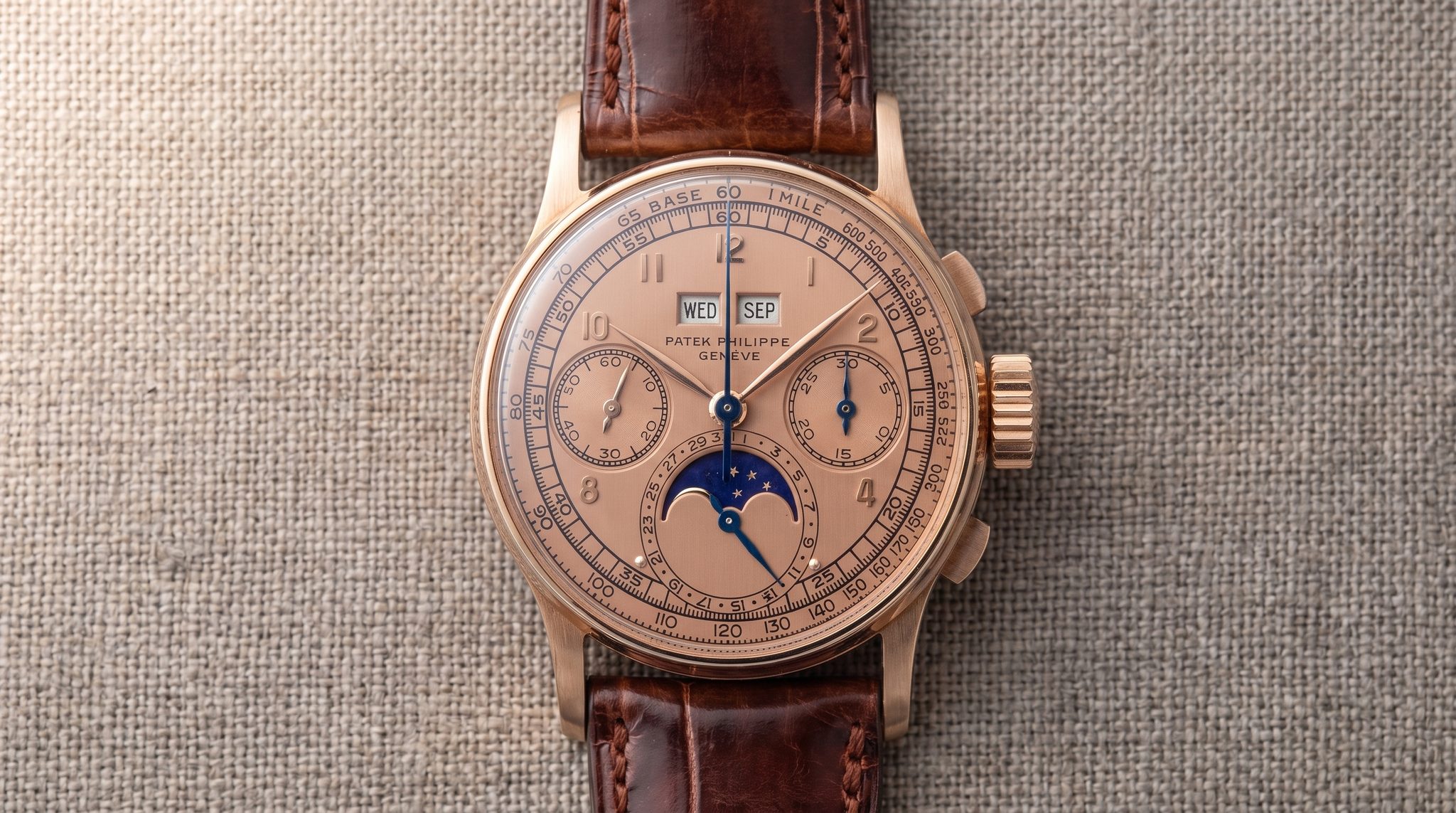
Foundational serial QP chrono
1518 establishes the perpetual calendar chronograph as a serial product, not a one-off technical showpiece. Its dial grammar is immediately recognisable, two calendar windows beneath 12, a date hand and moon phase at 6, and bi-compax chronograph registers at 3 and 9. The documented significance is conceptual: combining chronograph and perpetual calendar to define a flagship complication layout Patek would keep returning to. This first generation ends not because the layout is abandoned, but because Patek transitions into a long successor reference that refines the case and dial language over decades while keeping the same basic complication vocabulary.
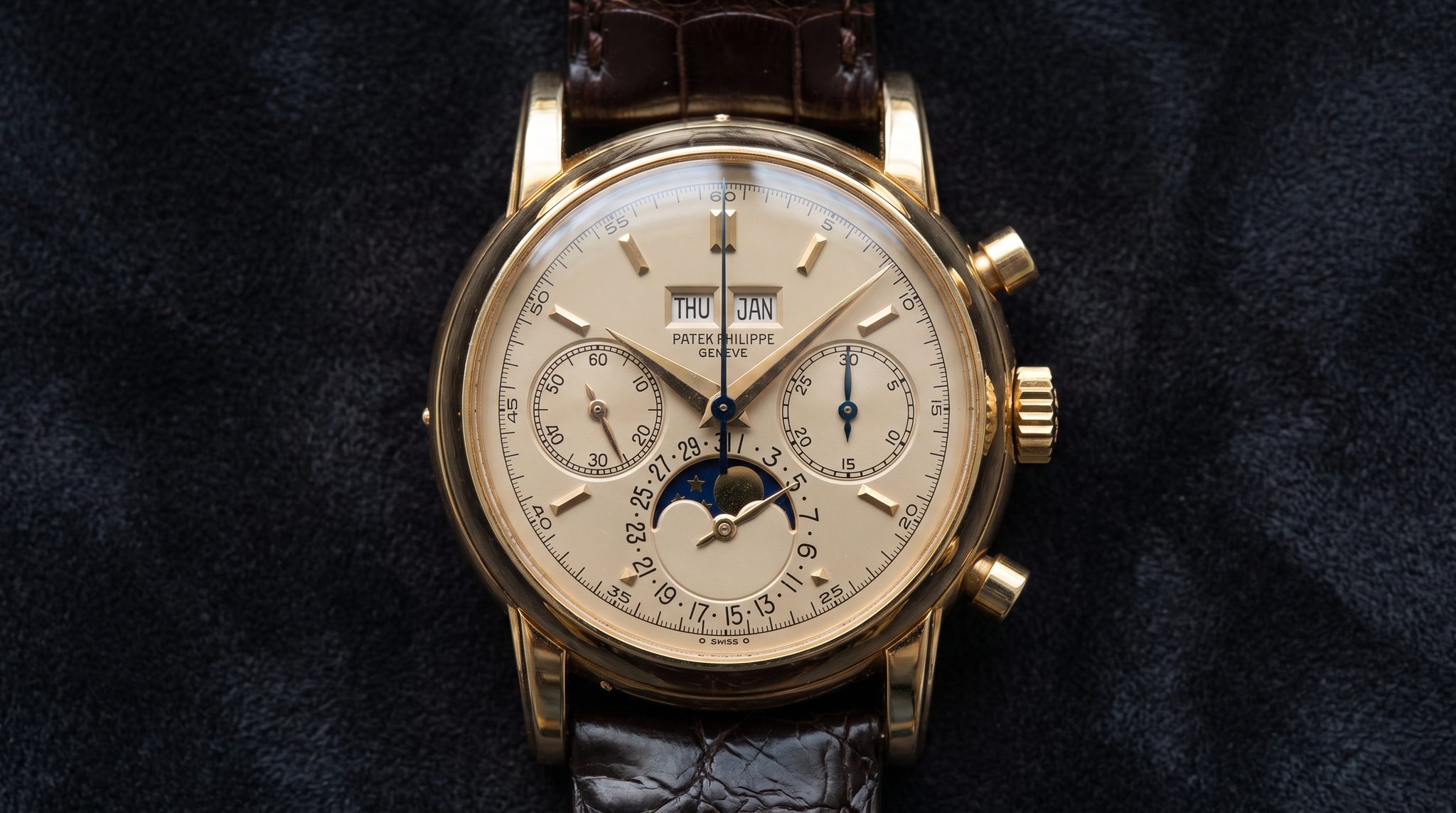
Mid-century mosaic evolution
2499 is the long mid-century evolution where the movement and complication concept remain the anchor while the visible watch changes in overlapping layers. Collectors read it by what the eye catches first, pusher shape, bezel and dial perimeter, and then by subtler cues such as dial-making technique. The best-documented generational direction is aesthetic and ergonomic modernization, including the shift from square to pump pushers and the gradual simplification from tachymeter-heavy dials to cleaner perimeter tracks, without a single clean redesign moment. The era ends when Patek draws a clearer mechanical boundary, replacing the Valjoux-based lineage with a new movement base in the next chronograph generation.
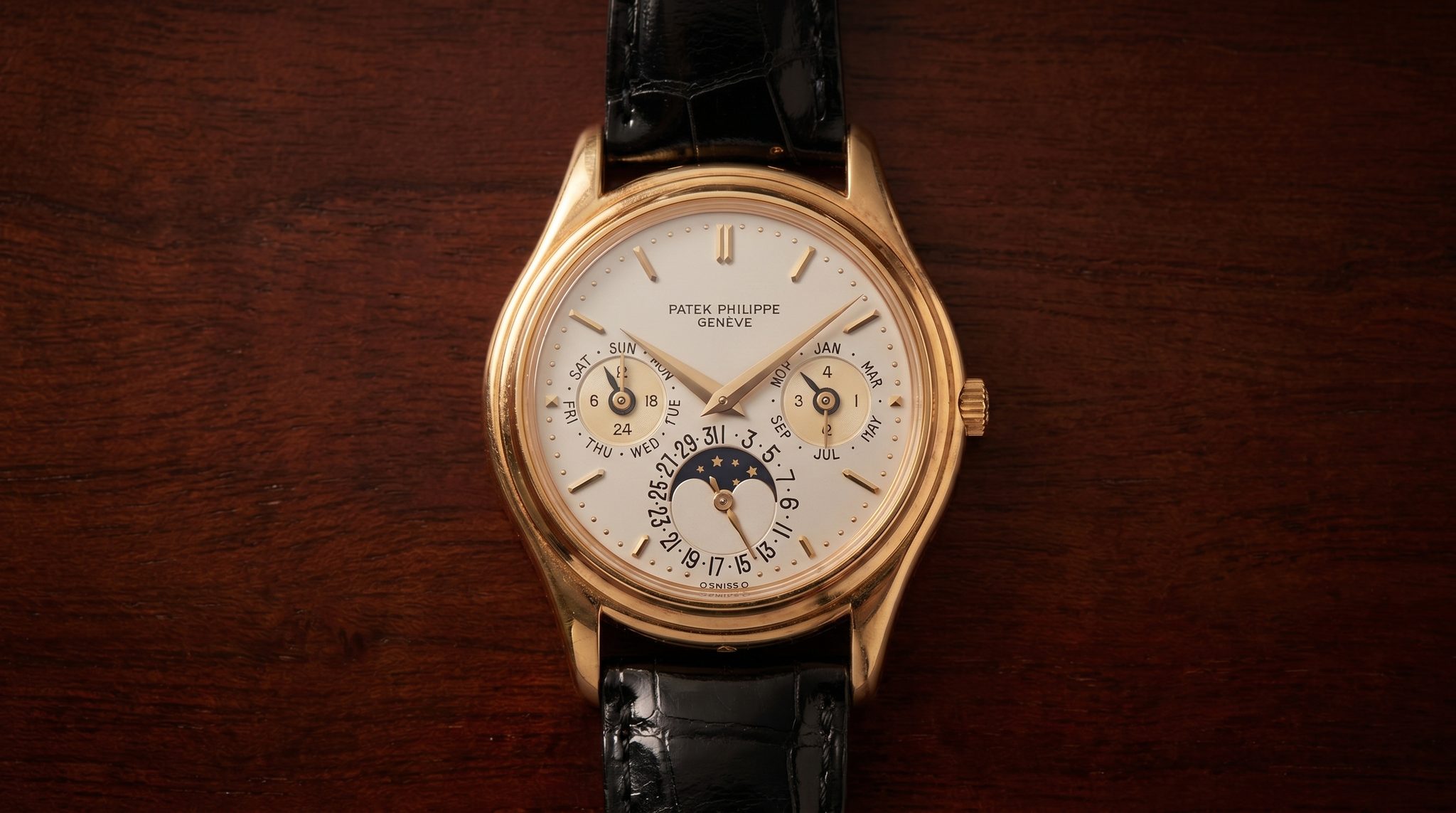
Modern automatic QP template
3940 defines Patek’s modern stand-alone perpetual calendar as a slim, three-register display that shows the cycle in subdials rather than relying on older aperture-forward layouts. In family terms, it becomes the reference that stabilizes expectations: a calm dress watch face that stays in production long enough for collectors to date examples by small, independent details rather than by headline redesigns. The documented reason this era gives way is not a change in what a perpetual calendar should show, but a later catalog decision to evolve the platform in successor references outside the set covered here, keeping the same display logic while updating size and styling to match later tastes.
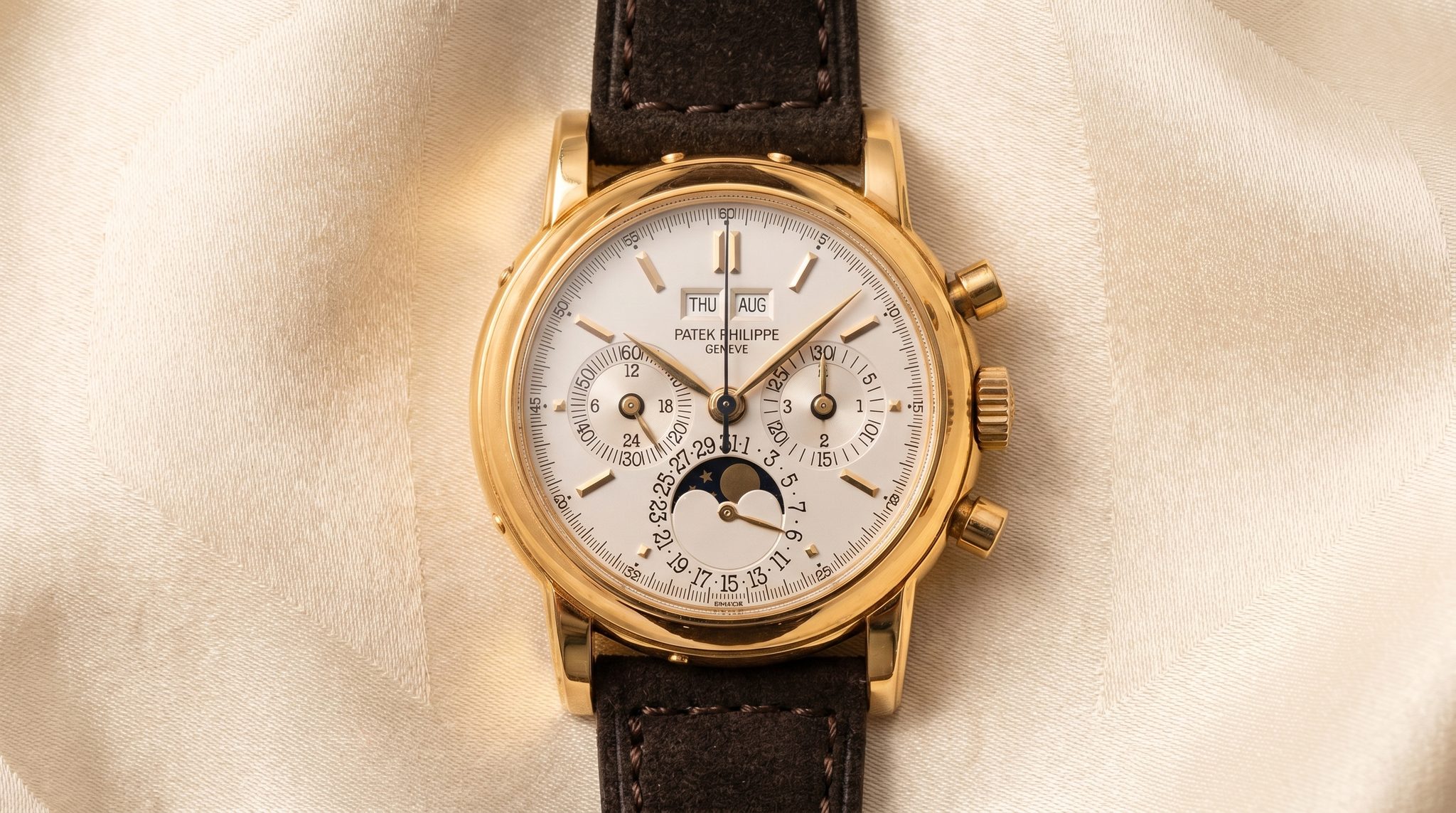
Lemania reset at 36 mm
3970 is the generational reset of the perpetual calendar chronograph. The watch still looks, from across a room, like the established Patek windowed-calendar chronograph, but the documented mechanical shift is decisive: the line moves away from the Valjoux base used in 1518 and 2499 to a Lemania-based chronograph architecture, paired with added calendar-cycle information on the dial such as leap year and a 24-hour indication. The era ends when Patek changes the watch’s physical emphasis rather than its basic formula, moving the same complication language into a noticeably larger modern case in the next chapter.
Rattrapante elaboration
5004 runs alongside the 3970 generation as a prestige escalation rather than a replacement, taking the compact Lemania-based perpetual calendar chronograph format and adding split-seconds functionality. On the wrist, the family resemblance is intentional, twin windows at 12 and the familiar calendar and chronograph registers, but the extra rattrapante control (integrated into the crown) signals that this is the densest expression of the era’s architecture. Documented series-level dial and hand changes exist, but factory reasons are not published, so they are best treated as stylistic evolution. The chapter ends as Patek transitions its split-seconds perpetual calendar chronograph into an in-house movement generation beyond this set.
40 mm last-Lemania scale
5970 is the Lemania-based perpetual calendar chronograph recast for modern proportions, with a 40 mm case and deliberately vintage-referential cues such as rectangular pushers and a tachymeter scale. The documented reason for the shift is taste and wearability: Patek keeps the established movement family while making case scale itself the headline. Although production is documented as 2004–2010, auction and collector accounts also note that some final pieces were sold in 2011, which explains why the end of the era feels slightly soft-edged in the market record. The generation closes when Patek moves the perpetual calendar chronograph into an in-house chronograph calibre in the successor line.
Which Perpetual Calendar to buy
For daily wear in the family’s classical dress idiom, 3940 is the most straightforward expression of the stand-alone perpetual calendar: no chronograph pushers to add bulk, and a dial language that later Patek perpetual calendars continue to echo. For a first vintage Patek Philippe Perpetual Calendar chronograph, 3970 is the clearest route because it keeps the traditional windowed layout while belonging to the more modern Lemania-based generation and running long enough that examples can be compared by documented series cues.
For the reference-focused collector who wants the mid-century lineage at its richest, 2499 is the point where the family teaches its core lesson, traits do not move together, so originality is read as a coherent combination rather than a single checklist. For the collector who rewards patience, 5004 is the bet on documentation and configuration, a reference defined by many executions and a late, tightly bounded end-of-run story. And for someone who wants the line’s modern scale without leaving the Lemania era, 5970 is the bridge, the same complication grammar, enlarged and made explicitly retrospective.
What to check on any Perpetual Calendar
Buying across Patek Philippe Perpetual Calendar references is unusually documentation-driven because the watches are complicated and Patek’s own service guidance explicitly treats key exterior parts as replaceable when worn. That means many correct watches carry later service components, and the collector question becomes whether the configuration is supported by records and coherent with the reference’s known layout. The family is also a frequent target for counterfeits that imitate the look of a perpetual calendar without the full functional display.
Common questions about the Perpetual Calendar
Specialist histories and Patek’s own account point to Ref. 97975 in 1925 as the first perpetual calendar wristwatch. Several sources add that its movement was originally made in 1898 for a women’s pendant watch and later re-cased.
- Patek Philippe Calendar Watchespatek.com
- Service costs, Our commitment to servicepatek.com
- Patek Philippe Perpetual Calendar Watches: A Collector's Guidesothebys.com
Show 8 more
- A Collector's Guide to the Patek Philippe Perpetual Calendar Chronograph Ref. 3970phillips.com
- Patek Philippe Perpetual Calendar Chronograph: Complete Historyrevolutionwatch.com
- The Entire History of Patek Philippe's Perpetual Calendarsrevolutionwatch.com
- The history of the Patek Philippe Perpetual Calendar chronograph 1518, 2499, 3970, 5970, 5270monochrome-watches.com
- Patek Philippe 97975, the World's First Perpetual Calendar Wristwatchrevolutionwatch.com
- 100 Years Since Patek Philippe Released the Perpetual Calendaroracleoftime.com
- Patek Philippe Perpetual Calendar Authentication Guidewatchscanning.com
- Editorial: The Patek 5270 and the Watch Industry's Evolutionwatchesbysjx.com