

Patek Philippe Perpetual Calendar 5140
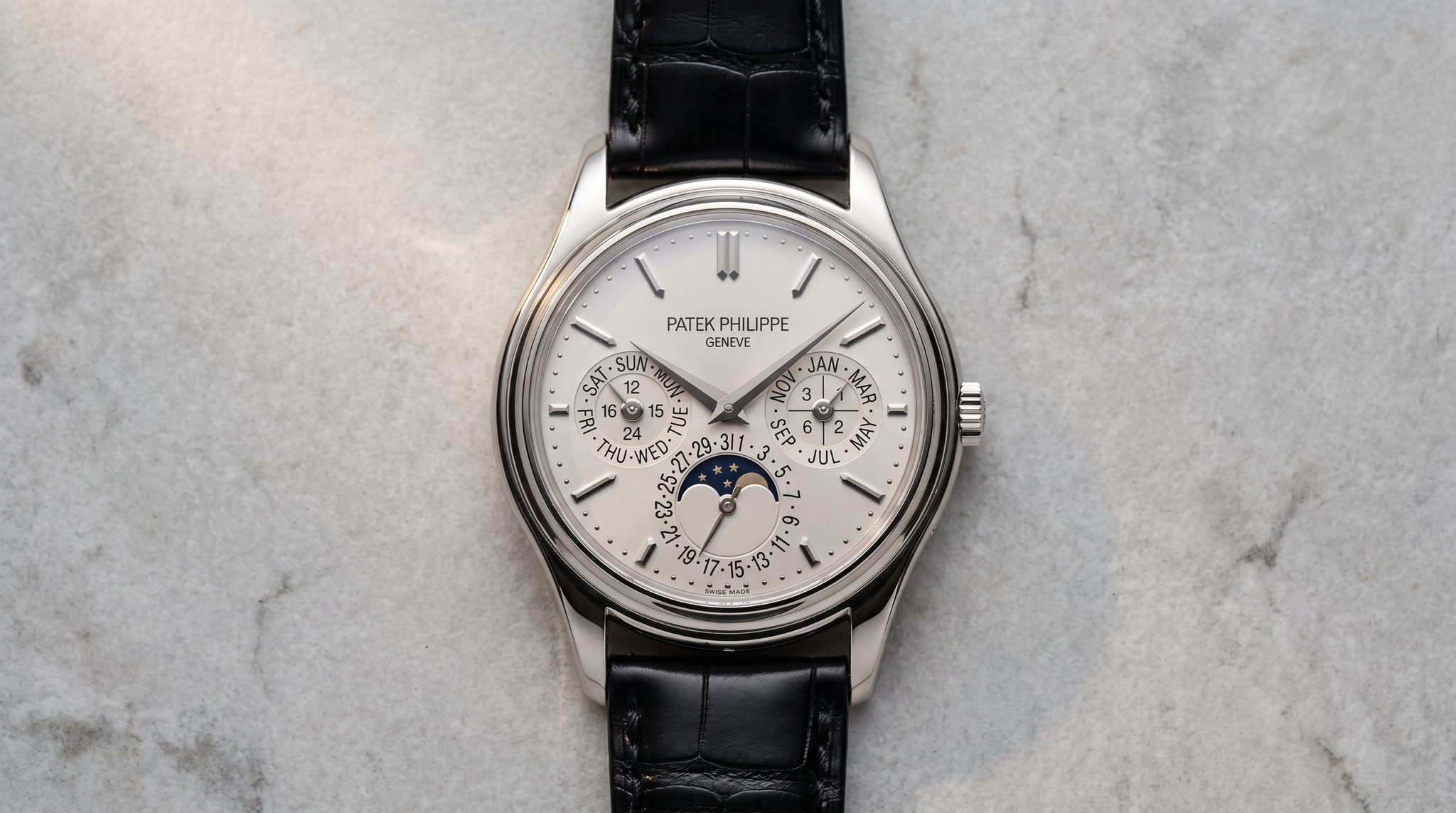
The Patek Philippe Perpetual Calendar 5140 enlarged the 3940 without abandoning its mechanical soul, making it the bridge between Patek’s classic ultra-thin perpetual and the larger 5327.
- Production
- 2006–2017
- Case
- Gold or platinum
- Diameter
- ~37 mm
- Thickness
- c. 9 mm
- Movement
- Cal. 240 Q
- Winding
- Automatic micro-rotor
- Power reserve
- 38–48h
- Dial
- Opaline, brown, blue, black
- Calendar
- Perpetual + moon phase
- Lume
- None
- Strap
- Leather
The Patek Philippe Perpetual Calendar 5140 was produced from 2006 to 2017.
- Production years
- 2006–2017
- Replaced
- 3940
- Replaced by
- 5327
- Movement
- Cal. 240 Q
The Patek Philippe Perpetual Calendar 5140 is the bridge generation of Patek’s modern perpetual calendar: it made the 3940 larger without making it mechanically different. The change is visible in one number, approximately 37 mm instead of 36 mm, while the movement beneath remains the remarkably thin 3.88 mm caliber 240 Q. That combination explains the reference’s place in the lineage. It is not a break with the 3940, nor merely a larger case around an old watch, but a deliberate re-proportioning of the same ultra-thin automatic idea before the 39 mm 5327 moved the design further toward contemporary scale.
Introduced in 2006 as the successor to the 3940, the 5140 retained the off-center 22K gold mini-rotor and the familiar three-register display. The dial places day and 24-hour indications at 9 o’clock, month and leap year at 3, and date with moon phase at 6. The movement’s perpetual-calendar mechanism tracks the four-year, 1,461-day cycle, so the owner corrects it only for exceptional calendar rules such as the omitted leap day in 2100. Its thinness is therefore not a cosmetic trick. The micro-rotor is integrated into the movement, leaving the bridges visible while keeping the watch under 10 mm thick.
The 5140’s real collecting interest lies in how Patek varied that stable architecture. White gold arrived first in 2006, yellow gold followed in 2007, and rose gold and platinum joined in 2010. The dial then became the reference’s visual chronology: opaline executions sit beside brown and blue sunburst versions, while the platinum line later brought an ebony-black diamond-indexed dial and a still later charcoal-grey configuration. These are separate case-metal and dial developments, not one universal sequence, and exact end dates for individual suffixes remain approximate. Identification begins with what is visible on the watch, but suffix and configuration should be confirmed against documentation rather than inferred from appearance alone.
Patek replaced most 5140 configurations with the 5327 around 2016. The family canon places the reference in production from 2006 to 2017, while the platinum 5140P line continued approximately to 2018. That overlap gives the 5140 its distinctive historical position: it is the watch that carried Patek’s classic micro-rotor perpetual calendar into a larger case, then remained relevant even as its successor had already arrived.
“The 5140 changed the size of Patek’s perpetual calendar, not its idea: the same 240 Q architecture carried the line from the 36 mm 3940 into a 37 mm case and toward the 39 mm 5327.”
Patek Philippe Perpetual Calendar 5140 production years: 2006–2017
The 5140’s chronology is best understood as a sequence of decisions about scale and presentation, not as a movement-development story. Patek introduced it in 2006 because the 3940’s 36 mm format was ready for a larger successor, yet the brand kept caliber 240 Q, preserving the thin automatic architecture that defined the line. The first watch was white gold with an opaline dial. Yellow gold followed in 2007, extending the same design into a warmer case without changing the complication or calibre.
Rose gold and platinum arrived in 2010 because Patek was broadening the reference’s precious-metal and dial palette. The early rose-gold execution was silvered or opaline, while the better-known brown sunburst rose-gold dial came later. That distinction matters in hand: an opaline dial returns light evenly and reads formal, whereas the brown surface darkens toward the edges and breaks into a radial sheen as the wrist moves. The reason for the exact cutoff between those rose-gold executions is not documented, so the early silvered phase should not be assigned a false terminal year.
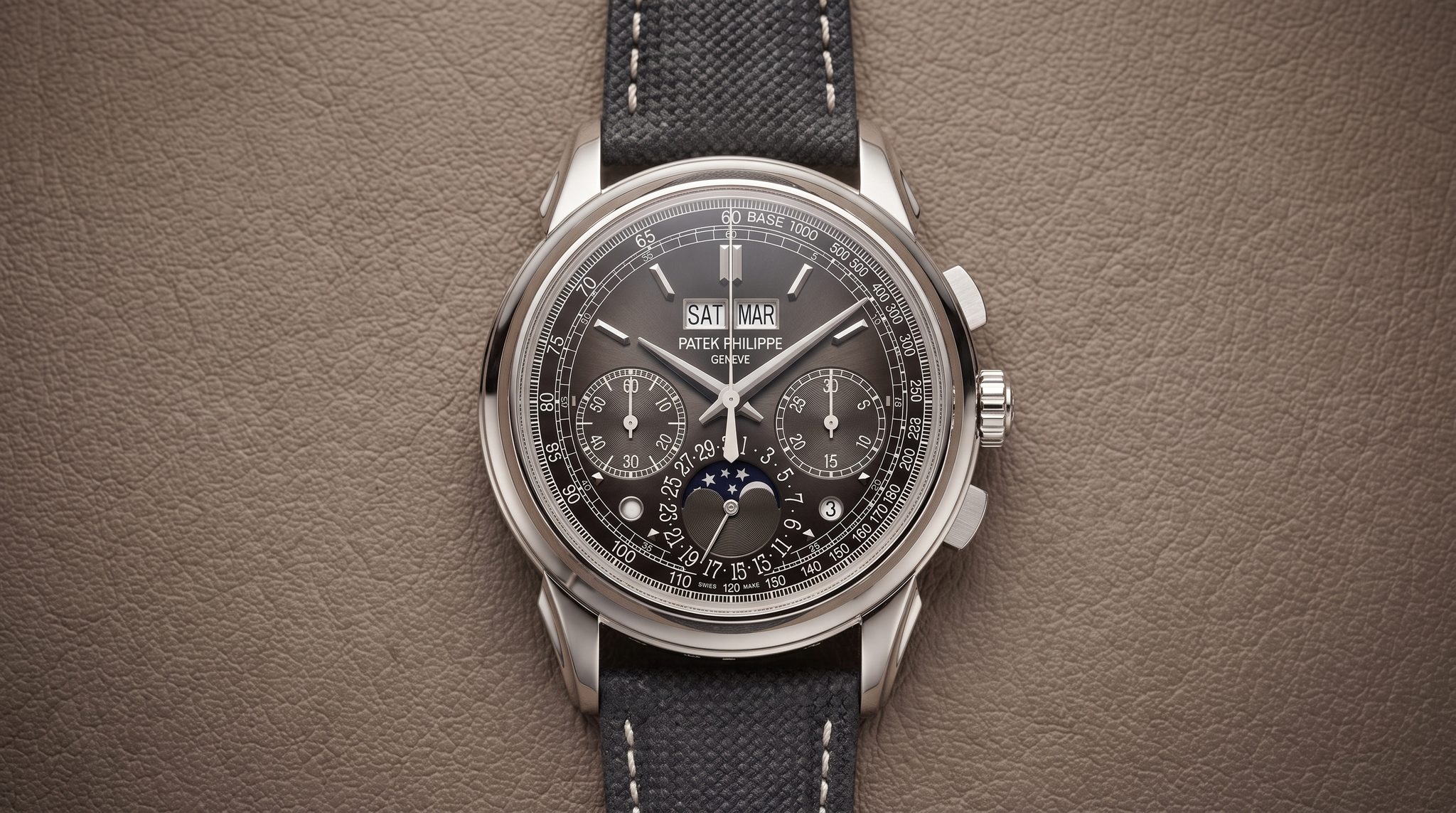
Platinum followed its own path. The 5140P-001 paired the case with a metallic blue sunburst dial and baton indexes. In 2014, Patek introduced the 5140P-013 with an ebony-black sunburst dial and diamond-set indexes, a separate visual statement rather than a generic update to every platinum watch. A later charcoal-grey platinum configuration appeared around 2016 and remained after most of the family had been superseded by the 5327, approximately until 2018. The brief does not establish a fully documented suffix for that grey configuration, so its dial and metal are firmer identification points than any assumed reference number.
The 5327 arrived in 2016 with a 39 mm case and applied Breguet numerals. Its arrival explains the 5140’s ending more clearly than any isolated dial change: the line was moving toward greater presence, while the 5140 represented the completed middle step between the discreet 3940 and the larger successor. Across roughly a decade, the watch changed case metals, dial surfaces, and index treatments while its central mechanical idea stayed fixed.
- 2006IntroducedLarger case, classic baton dial
- 2007Yellow goldYellow-gold case, opaline dial
- 2010Rose and platinumRose gold or platinum case
- 2014Dial expansionR-011 opaline; P-013 black diamonds
- 2016Successor arrivesLarger successor with Breguet numerals
- c. 2016Grey platinumCharcoal-grey platinum dial
- 2017Core run endsMost gold configurations absent
5140 against its neighbours
The 3940 and 5327 frame the 5140’s purpose in the lineage. One shows what Patek enlarged, while the other shows how far the design moved after the 5140. The shared caliber makes the comparison especially revealing: case scale and dial language, rather than a change of mechanical concept, define the generation.
This reference 5140 Patek Philippe · focal 2006–2017 | 5327 Successor From 2016 | |||
|---|---|---|---|---|
| Production | 1985–2007 | 2006–2017 | 2010–c. 2018 | From 2016 |
| Case | Gold or platinum | Gold or platinum | Platinum | Gold |
| Diameter | 36 mm | ~37 mm | ~37 mm | 39 mm |
| Movement | Cal. 240 Q | Cal. 240 Q | Cal. 240 Q | Cal. 240 Q |
| Winding | Automatic micro-rotor | Automatic micro-rotor | Automatic micro-rotor | Automatic micro-rotor |
| Dial | Three-register QP | Opaline, brown, blue, black | Blue, black, or grey | Breguet numerals |
Eight dial generations across the run
The launch 5140G presents the reference in its most restrained form. In the hand, the opaline dial spreads light softly across the three registers, while applied gold baton indexes give the otherwise information-dense face a clean perimeter. It is the clearest expression of the 5140 as a larger successor to the 3940, rather than as a colorful late-series special case. The exact end of this configuration is not firmly documented, so the 2006 launch is more secure than a final production year.
What to check before buying a 5140
Buying a 5140 is less about choosing between one fixed specification and more about establishing which configuration is actually in front of you. The same caliber 240 Q appears across the range, but case metal, dial finish, index treatment, and late platinum timing carry the identity and much of the market distinction. The most consequential mistakes are a dial that does not belong with the case, an assumed production date based on metal alone, and a case whose thin lugs have been heavily polished.
The reference suits an owner who wants a genuinely complicated Patek that remains discreet on the wrist. Its approximately 37 mm case and roughly 9 mm profile keep it close to the body, while the perpetual calendar asks for more attentive ownership than a simple time-only watch. A correct, well-preserved example feels less like a display of complication than a small piece of calendar machinery worn under a cuff. The appeal is precisely the balance the reference was built around: a substantial technical achievement that never became visually oversized.
Patek Philippe Perpetual Calendar 5140 price and value
Patek Philippe Perpetual Calendar 5140 for sale
Auctions on Grey Market run on seven-day cycles, every watch verified before it sells. Browse what's live now, or consign your 5140.
Grey Market runs watch auctions for vintage and neo-vintage pieces, every lot reviewed before it lists and verified before the seller is paid, and the Watch Exchange, where ID-verified collectors buy and sell at a fixed price. Selling one? See the ways to sell a Patek Philippe, or check what it’s worth. For more vintage Patek Philippe, see the Patek Philippe reference guide.
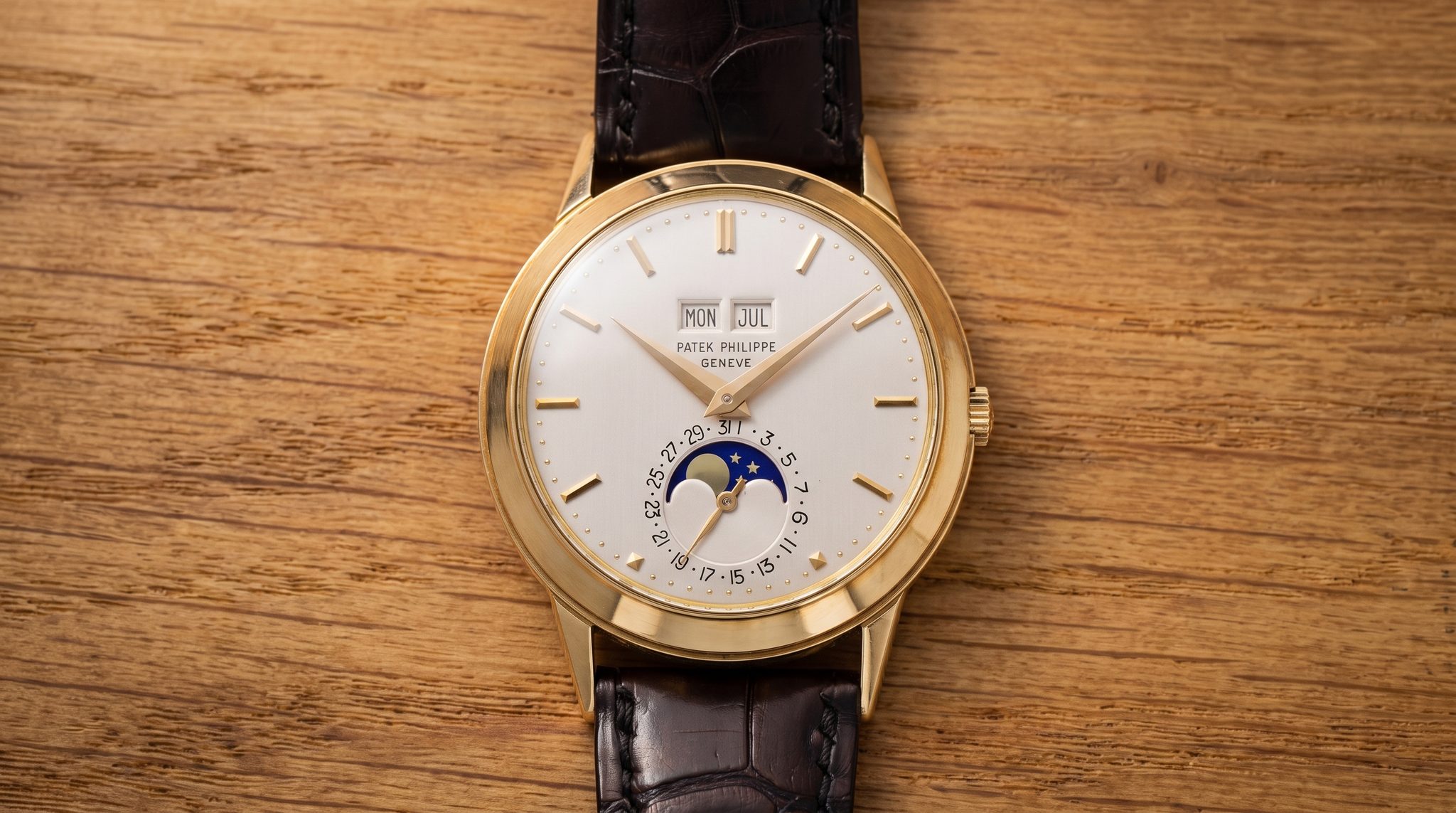
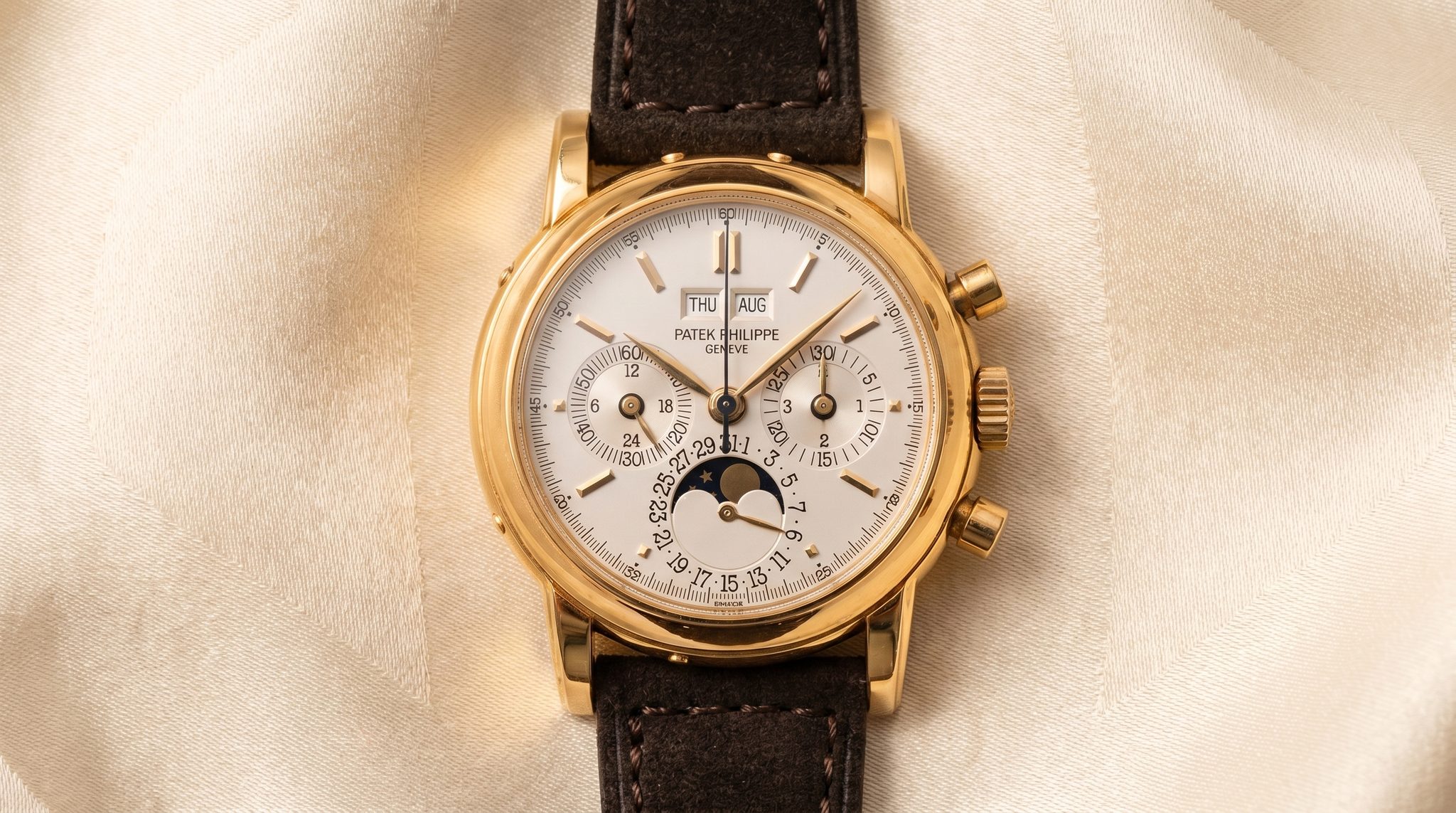
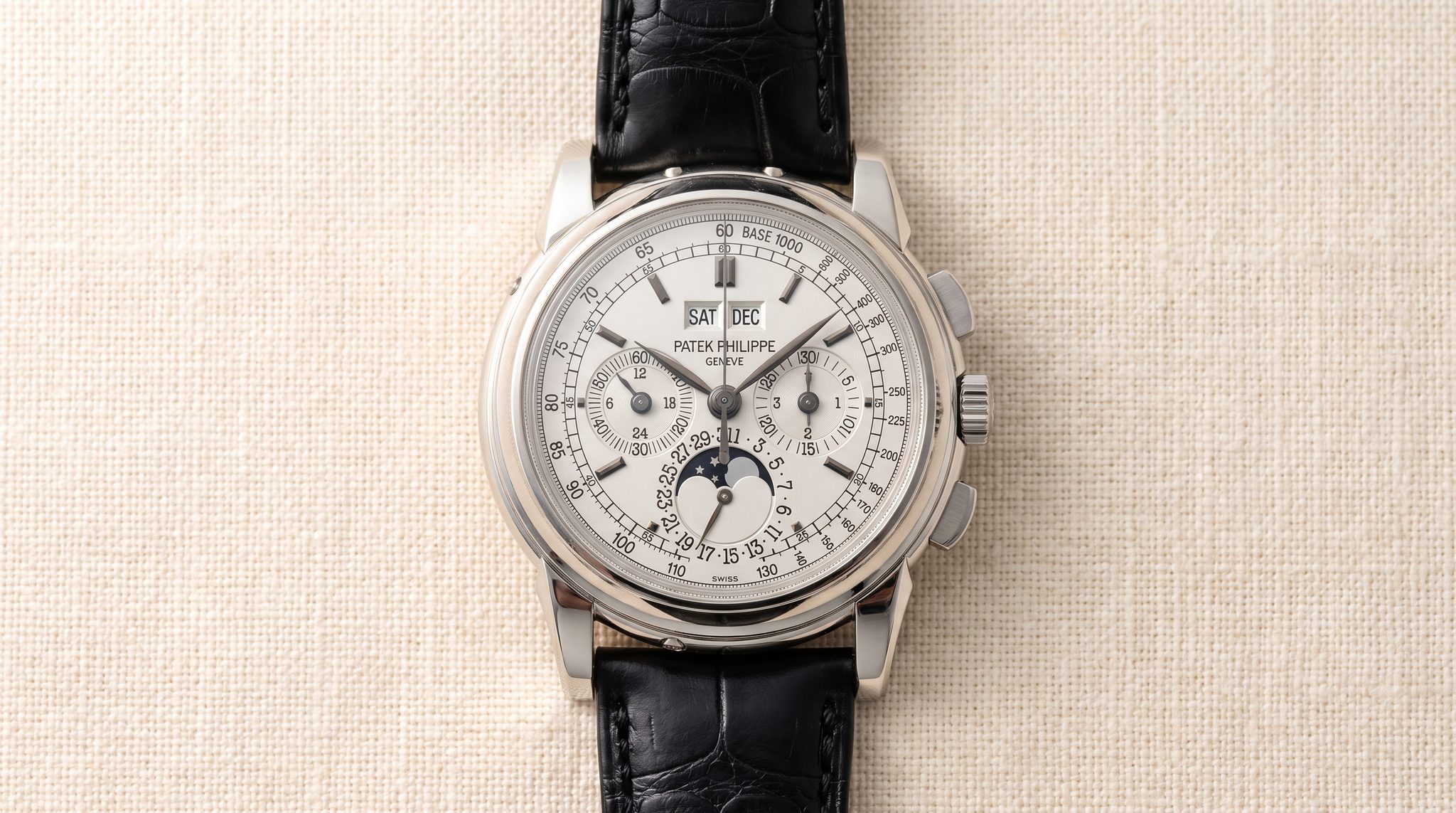
Adjacent in the Perpetual Calendar family
Common questions about the 5140
The 5140 was introduced in 2006, and the family canon places its production through 2017. Most configurations were replaced by the 5327 around 2016, while a late platinum configuration continued approximately to 2018.
- Patek Philippe 2006 Ref. 5140 press releasepatek.com
- Patek Philippe Caliber 240 movement sheetpatek.com
- Patek Philippe ref. 5140 auction catalog entryphillips.com
Show 7 more
- Patek Philippe ref. 5140 auction catalog entryphillips.com
- Patek Philippe ref. 5140 auction catalog entryphillips.com
- A Buyer’s Guide to the Patek Philippe Perpetual Calendareuropeanwatch.com
- Two new Patek Philippe 5140 referencesprofessionalwatches.com
- Hands-On: Patek Philippe 5140R and 5140Phodinkee.com
- Patek Philippe Perpetual Calendar 3940G vs 5140G41watch.com
- Patek Philippe ref. 5140R-001 auction lotchristies.com