

Patek Philippe Perpetual Calendar 5270
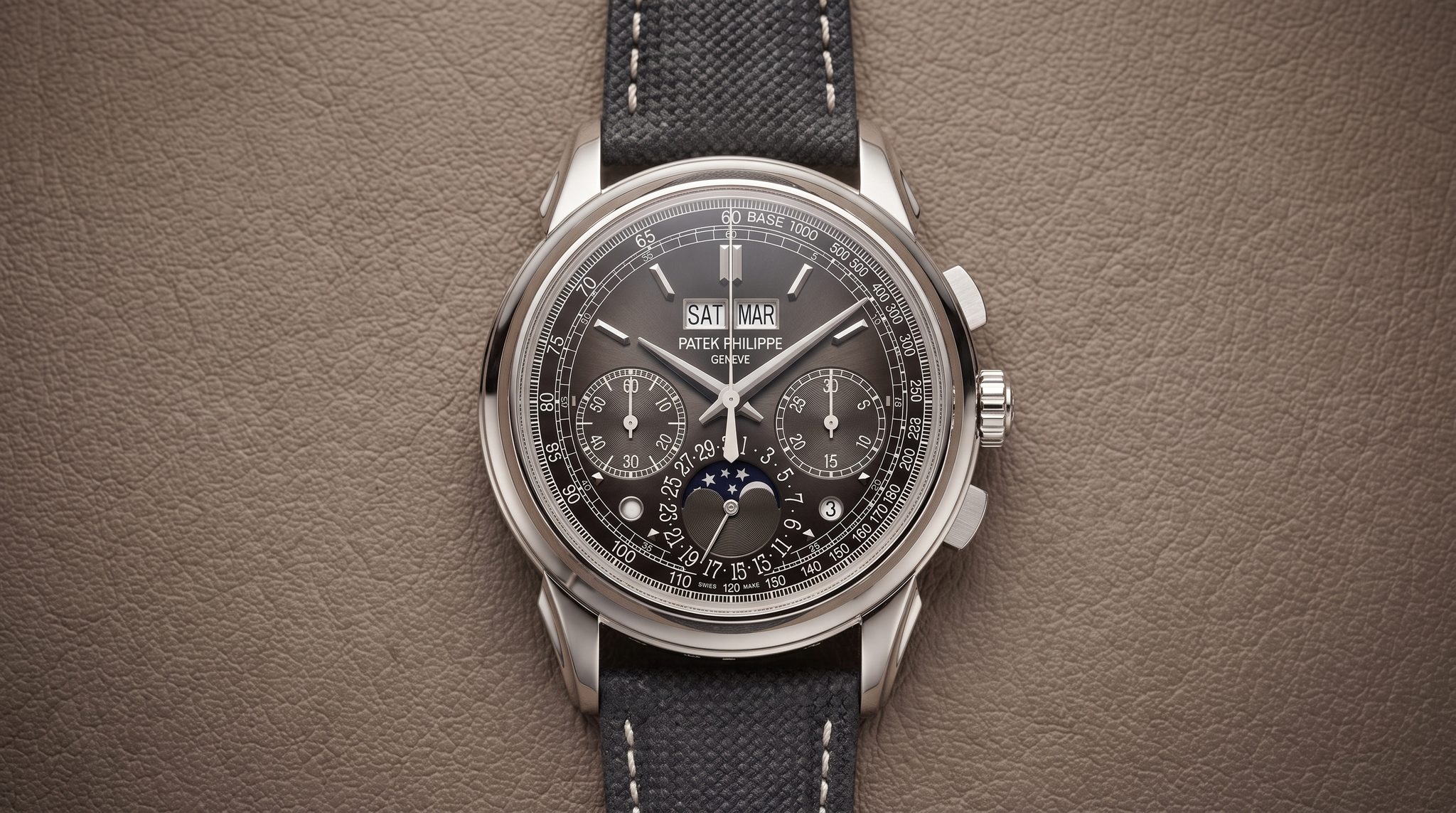
Patek Philippe’s ref. 5270 is the perpetual calendar chronograph that turned a lineage defined by outside chronograph ébauches into an in‑house era, and then kept rewriting its own face.
- Production
- 2011–present
- Case
- Precious metals
- Diameter
- 41 mm
- Thickness
- 12.5 mm
- Lug width
- 21 mm
- Movement
- Cal. CH 29-535 PS Q
- Winding
- Manual
- Chronograph
- Column-wheel, lateral
- Power
- 55–65h
- Beat
- 4 Hz
- Calendar
- Perpetual
- Displays
- Day/month apertures
The Patek Philippe Perpetual Calendar 5270 has been in production since 2011.
- Production years
- 2011–present
- Replaced
- 5970
- Movement
- Cal. CH 29-535 PS Q
The ref. 5270 is the moment Patek Philippe’s perpetual calendar chronograph stopped being an exquisitely finished adaptation and became a fully authored movement, and the proof is mechanical: it launched in 2011 with the CH 29‑535 PS Q, the first in‑house perpetual calendar chronograph calibre the manufacture had ever put into the line. That turning point would have been enough on its own, but the 5270 also did something rarer for a modern Patek grand complication. It showed its work in public, revising its dial in distinct, easy-to-see generations that collectors still use to date and judge a watch at arm’s length.
The basic architecture stays faithful to the family: day and month in twin windows at 12 o’clock, the date indicated by hand at 6 with the moonphase, and the leap‑year cycle indicated 1, 2, 3, 4 rather than the actual year. Within that familiar frame, the 5270’s outer ring became the battleground. The earliest pieces, produced 2011–2013, are the cleanest: no tachymeter scale at the periphery, which leaves a wide, open chapter that makes the dial read larger and calmer. From 2013 to 2015, Patek added a tachymeter and the track dipped around the 6 o’clock register, creating the much-discussed “double chin” silhouette. In 2015 the brand kept the tachymeter but removed the chin, restoring a smoother contour around the date and moonphase while preserving the sportier scale.
That visual evolution sits on top of a movement that is modern in specification but traditional in temperament. CH 29‑535 PS Q is manual‑wound, column‑wheel controlled, and uses a horizontal (lateral) clutch, with a 32 mm diameter and 7.0 mm height. It runs at 4 Hz (28,800 semi‑oscillations per hour) and offers a 55 to 65 hour power reserve with the chronograph disengaged, figures that situate the 5270 firmly in contemporary high-end watchmaking rather than vintage cadence. The case, at 41 mm with a commonly measured thickness around 12.5 mm and 21 mm lug width, gives the watch a presence that is more modern than its immediate predecessor, the 40 mm ref. 5970.
For collectors, the 5270’s appeal is not only that it is “the current one.” It is that it is the reference where the lineage’s mechanical future and its aesthetic arguments happen in the open: the same complication suite and the same in‑house engine, but with dials whose differences are structural, dated, and consequential to how the watch reads on the wrist.
“Ref. 5270 is the in‑house turning point of Patek’s perpetual calendar chronograph line, and its dial generations make that transition visible at a glance.”
Patek Philippe Perpetual Calendar 5270 production years: 2011–present
The 5270’s story has a clean hinge point and then a series of visible corrections. It begins in 2011 as the successor to the ref. 5970 and as the first perpetual calendar chronograph to carry Patek Philippe’s own chronograph base rather than an outsourced ébauche. That change is the historical weight of the reference: the CH 29‑535 PS Q is explicitly documented as an in‑house, manual‑wound column‑wheel chronograph with a lateral clutch, running at 4 Hz and offering 55 to 65 hours of power reserve with the chronograph disengaged.
Once that mechanical foundation was set, the visible narrative became the dial. The earliest 2011–2013 watches omit a tachymeter entirely, leaving an unusually open perimeter that frames the classic 12 o’clock apertures and the 6 o’clock date and moonphase without competition. In 2013, the reference swings in the opposite direction, adding a tachymeter and introducing the “double chin” effect where the scale’s geometry bunches up above the 6 o’clock register. The reason for the design is not documented in public material, but the consequence is straightforward to see: the lower portion of the dial looks heavier, and the periphery no longer reads as a single continuous ring.
In 2015, Patek revised the layout again, keeping the tachymeter but removing the chin. That one move did two things at once. It addressed the most common aesthetic criticism of the 2013–2015 dials, and it set a stable template that could carry the reference into other metals and more expressive dials, including platinum “salmon” executions and the rose‑gold bracelet model introduced in 2018, the yellow‑gold 5270J in 2020, and the platinum green 5270P‑014 introduced in 2022 as a replacement for the salmon‑dial platinum variant.
The zoomed-out irony of the 5270 is that collectors now treat its most desirable versions as inevitabilities, yet the reference itself shows how quickly “canonical” can be negotiated. In barely four years, its outer scale went from absent, to dominant and contoured, to present but visually tamed, all while the movement under the dial stayed constant. It is a modern Patek that wears its decision-making on its surface.
- 2011IntroducedMovement engraving: CH 29‑535 PS Q
- 2011 – 2013First seriesNo tachymeter text/scale
- 2013 – 2015Second seriesScale dips around 6 o’clock
- 2015Third seriesSmooth track around 6 o’clock
- 2018Metal expansionPlatinum salmon or rose bracelet
- 2020Yellow goldYellow-gold case and furniture
- 2022Platinum updateGreen lacquered gradient dial
5270 against its neighbours
The 5270 makes the most sense when it is framed against the watch it replaced, and the technical step above it. Ref. 5970 represents the end of Patek’s Lemania-based perpetual calendar chronograph era, while ref. 5204 takes the same modern chronograph architecture into split‑seconds territory. Together they show what the 5270 changed, and what it deliberately kept.
5271 Gem-set sibling 2010s–present | This reference 5270 Patek Philippe · focal 2011–present | |||
|---|---|---|---|---|
| Production | 2004–2010 | 2010s–present | 2010s–present | 2011–present |
| Diameter | 40 mm | – | – | 41 mm |
| Case | Gold or platinum | White gold (current) | Platinum, diamonds | Precious metals |
| Movement | Cal. CH 27-70 Q | CH 29-535-based | Cal. CH 29-535 PS Q | Cal. CH 29-535 PS Q |
| Winding | Manual | Manual | Manual | Manual |
| Chronograph | Column-wheel | Split-seconds | Column-wheel | Column-wheel, lateral |
| Calendar | Perpetual | Perpetual | Perpetual | Perpetual |
| Displays | Day/month apertures | Day/month apertures | Day/month apertures | Day/month apertures |
| Power | – | – | 55–65h | 55–65h |
| Beat | – | – | 4 Hz | 4 Hz |
Five dial generations across the run
The earliest 5270s are identified by what they do not have: no tachymeter text or scale around the perimeter. On the wrist that absence reads like extra breathing room, because the eye goes straight to the calendar information instead of being pulled outward to a numeric ring. This first series is anchored by the launch white‑gold 5270G‑001, commonly associated with a silvery opaline dial and darker, blackened-looking hands and indices in many examples described by specialists. If the dial carries a tachymeter, it is not this generation.
What to check before buying a 5270
Buying a Patek Philippe 5270 rewards a buyer who treats the dial as evidence. The reference’s most consequential differences are not subtle: tachymeter versus no tachymeter, chin versus no chin, and then the metal and dial color layered on top. Because Patek has historically allowed dial changes at service, a mechanically correct watch can still be aesthetically wrong for its original production configuration, and that mismatch matters disproportionately in this reference.
Patek Philippe Perpetual Calendar 5270 price and value
Patek Philippe Perpetual Calendar 5270 for sale
Auctions on Grey Market run on seven-day cycles, every watch verified before it sells. Browse what's live now, or consign your 5270.
Grey Market runs watch auctions for vintage and neo-vintage pieces, every lot reviewed before it lists and verified before the seller is paid, and the Watch Exchange, where ID-verified collectors buy and sell at a fixed price. Selling one? See the ways to sell a Patek Philippe, or check what it’s worth. For more vintage Patek Philippe, see the Patek Philippe reference guide.
Adjacent in the Perpetual Calendar family
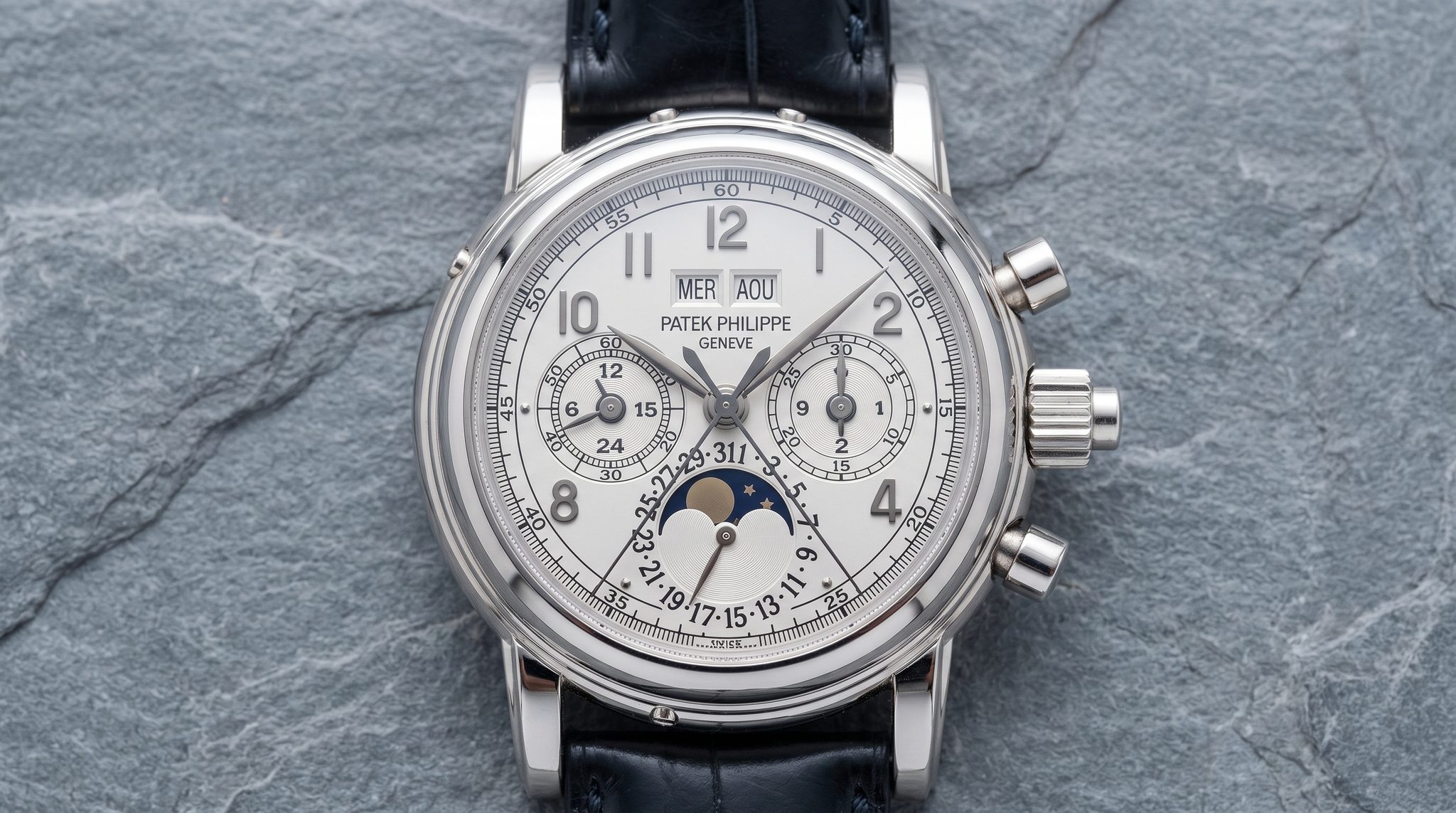
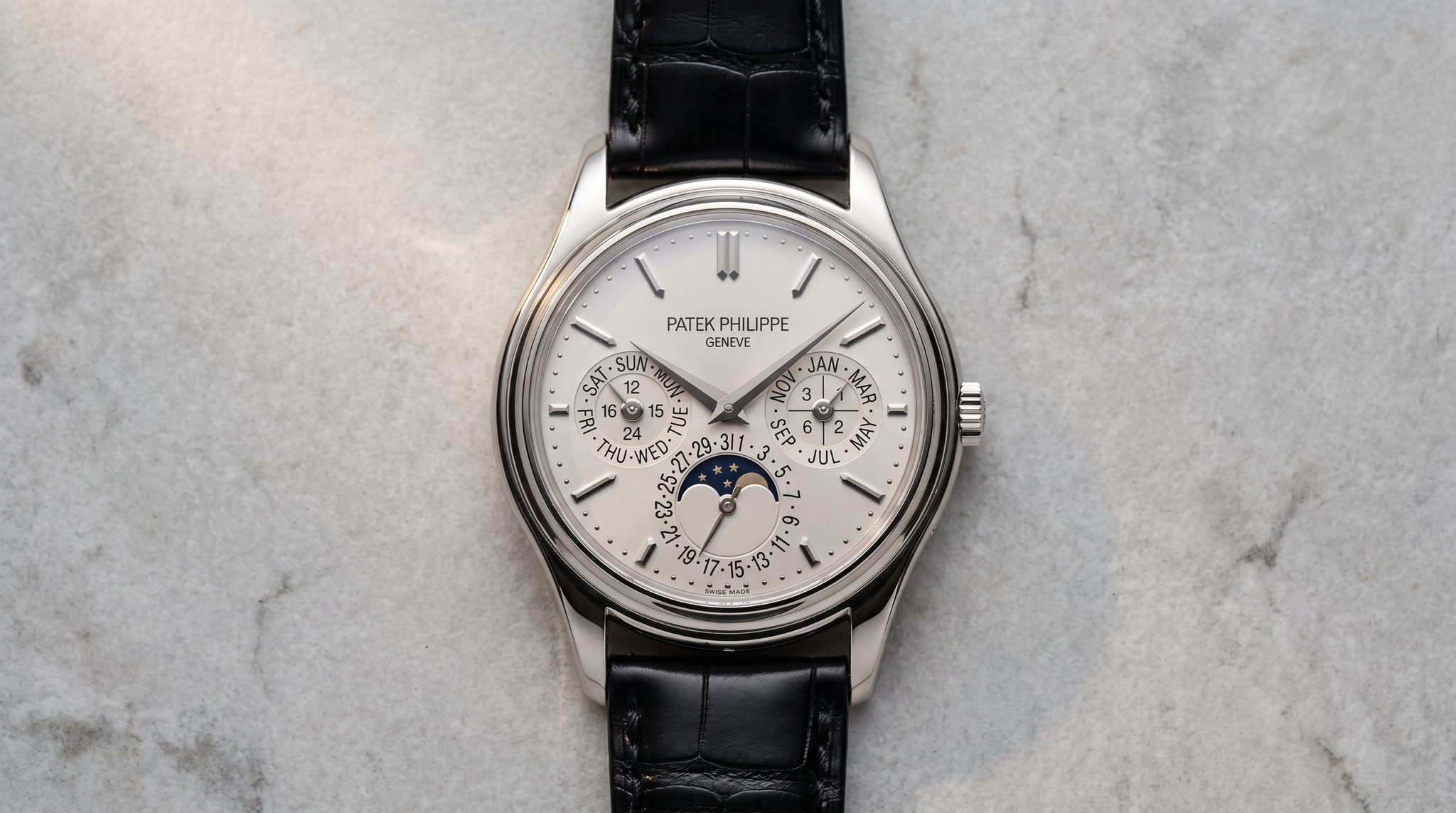
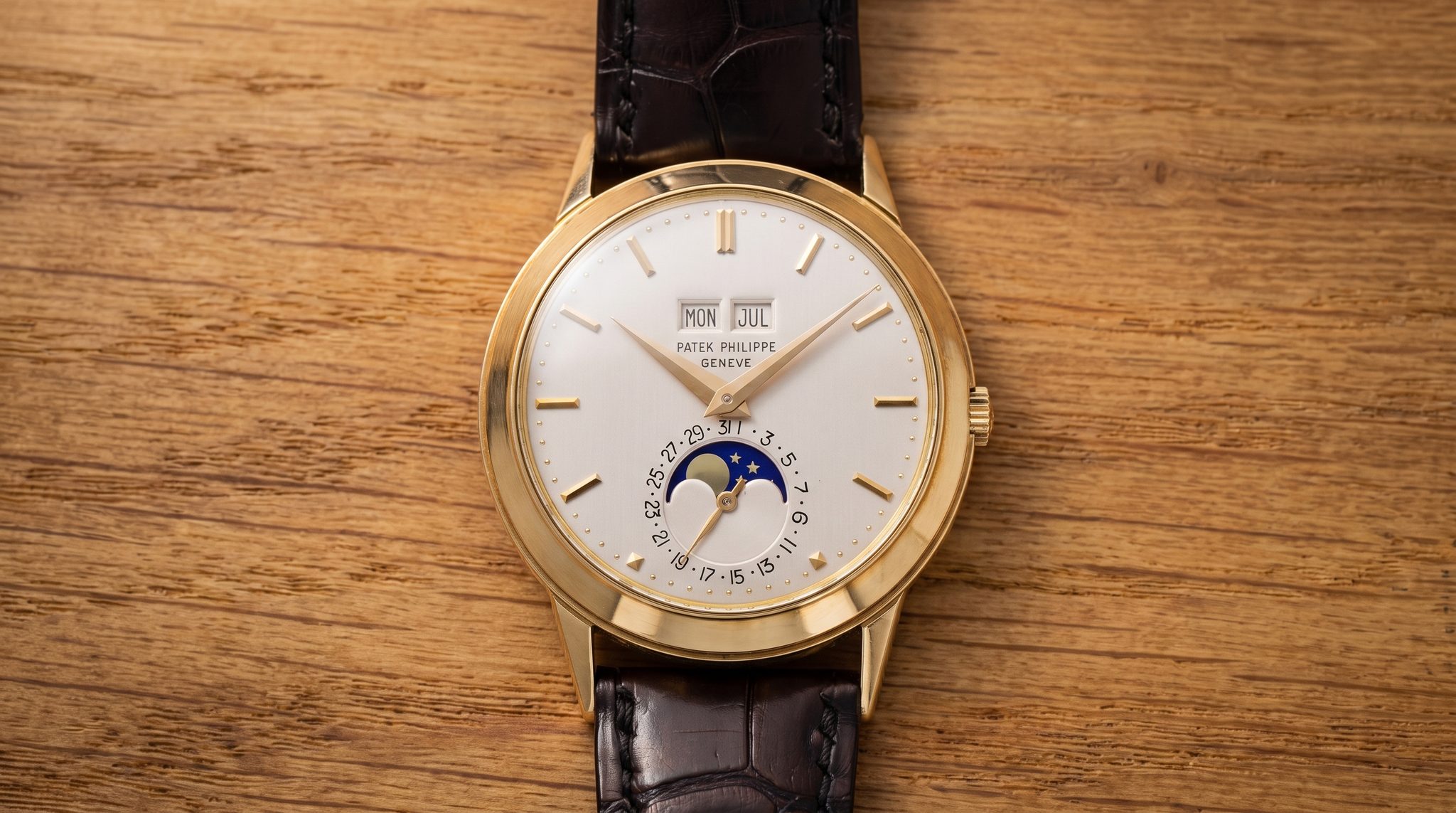
Common questions about the 5270
Patek Philippe ref. 5270 was introduced in 2011 and remains in production as of 2026. Within the reference, the earliest dial series is documented as 2011–2013 (no tachymeter) and the next as 2013–2015 (tachymeter with the “double chin”), followed by the 2015-onward chin-less tachymeter layout.
- Patek Philippe Grand Complications 5270P-014 (official product page)patek.com
- Patek Philippe, Press release: Ref. 5270G (2011)patek.com
- Phillips: Patek Philippe ref. 5270, The New York Watch Auction: SIX (dial series years)phillips.com
Show 7 more
- Sotheby’s: Collecting Patek Philippe’s Perpetual Calendar Chronograph (lineage, 5270 in production)sothebys.com
- Patek Philippe, Instructions for use: Calibre CH 29-535 PS Q (technical specifications)patek.com
- Patek Philippe, Instructions for use: Perpetual Calendar, Calibre CH 29-535 PS Q (technical specifications)patek.com
- Patek Philippe, Instructions for use: Calibre CH 29-535 PS (base chronograph)patek.com
- Monochrome Watches: All the Generations of the Patek Philippe 5270 (dial generations overview)monochrome-watches.com
- Hodinkee: A Week On The Wrist, Patek Philippe 5270G (wearability, 41 mm context)hodinkee.com
- Delugs: Strap guide for Patek Philippe 5270 (thickness and lug width measurements)delugs.com