

Rolex Oyster Perpetual
The Rolex Oyster Perpetual is the Rolex line that keeps the platform stable and lets the dial carry the era.
No Rolex line shows the brand’s modern strategy of concentrating change on the dial, while keeping the watch itself almost fixed, as clearly as the Oyster Perpetual. The clean hinge is dated: on 1 September 2020 Rolex replaced the Oyster Perpetual lineup, then the collector conversation quickly became about which dials belonged to which short windows, not about case revisions.
That pattern only works because the Oyster Perpetual began as a definition of “baseline Rolex” in the literal technical sense. Rolex’s own account ties the idea to 1931, when the waterproof Oyster case and the self-winding Perpetual rotor were brought together as a single, everyday wristwatch concept. The point was not a specialist tool but an all-conditions watch that did not ask its owner to think about winding or fragility, and that emphasis on practicality still sits under every later reference.
Across the references documented here, the family’s arc can be read as two long stabilizations separated by one modernization. Mid-century pieces like 1002 and the small Date 1500 are “platform” watches in the older Rolex sense, long runs that absorb movement upgrades and dial variety without changing what they are on the wrist. The late-1980s 15200 modernizes that same small Date idea into the sapphire and 31xx-movement era. Then the six-digit and post-2020 Oyster Perpetuals push the logic further: the watches become increasingly consistent as objects, while identity and collectability move outward to naming, positioning, and especially dial execution.
One zoomed-out consequence follows. When a watch line is engineered to remain itself, history stops being a ladder of obvious external redesigns and becomes a record of where Rolex chose to place variation. In the Oyster Perpetual, that variation migrates from inside the case in the vintage era, to materials and movements in the late twentieth century, and finally to the dial in the 2010s and 2020s. That is why a Rolex Oyster Perpetual reference guide is less about learning one set of “correct looks,” and more about understanding which references were defined by mechanics, which by branding shifts, and which by the face you see every time you check the time.
What each Oyster Perpetual reference trades for
Median and typical range of recent dealer, auction and Grey Market sales, banded. Indicative, not a valuation; each reference page carries the detail.
10 references across 5 eras
Acrylic OP baseline
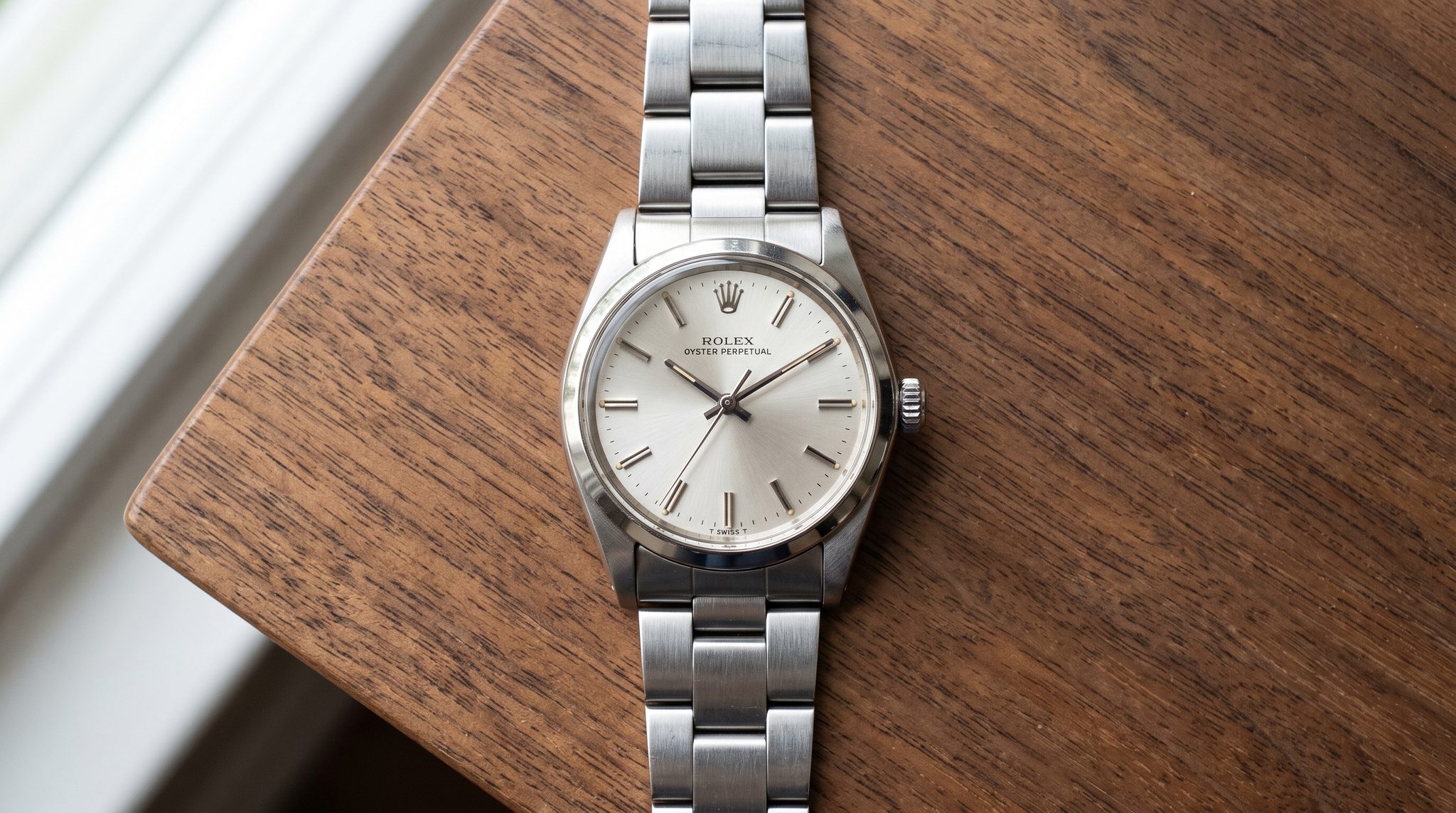
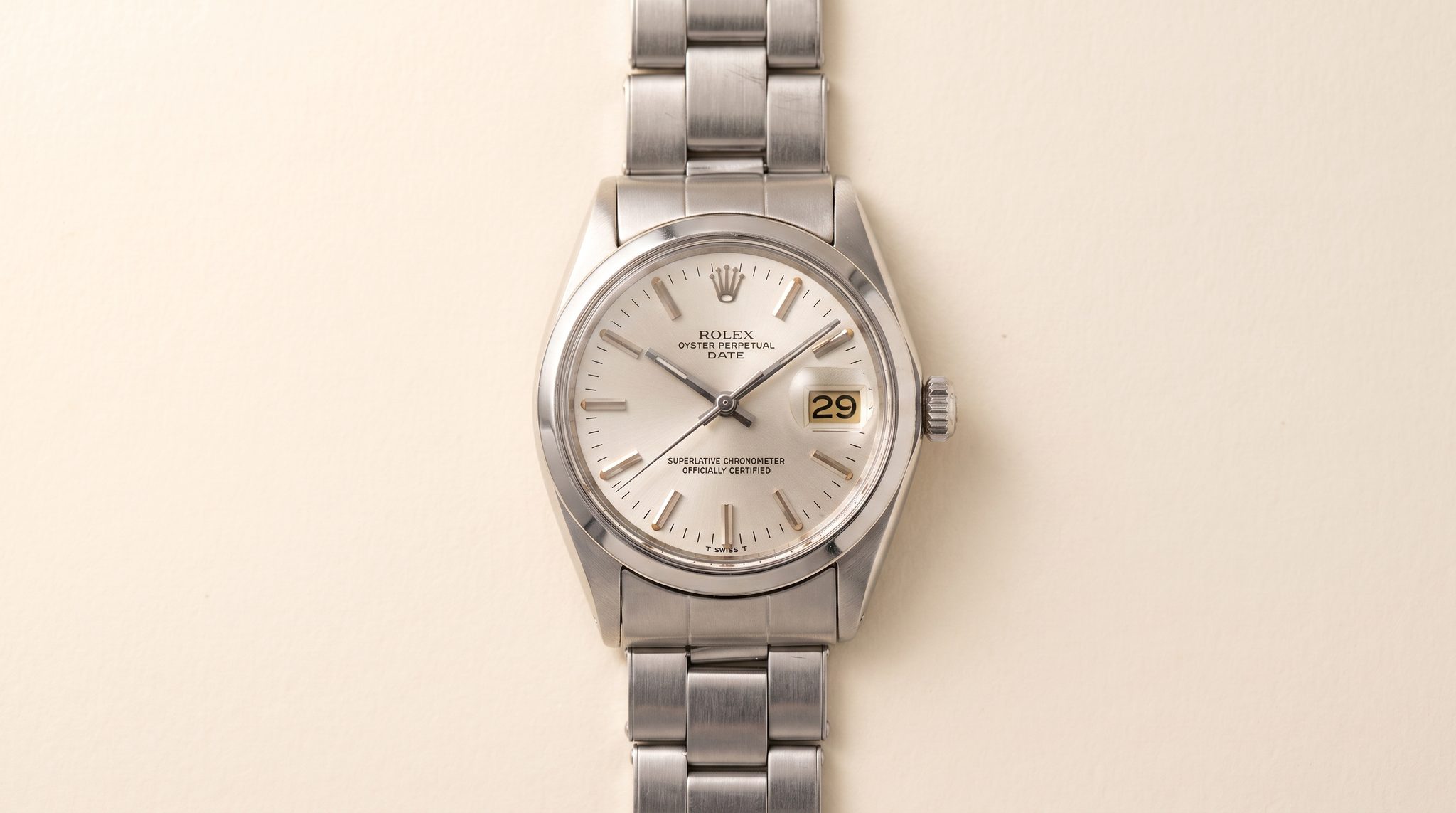
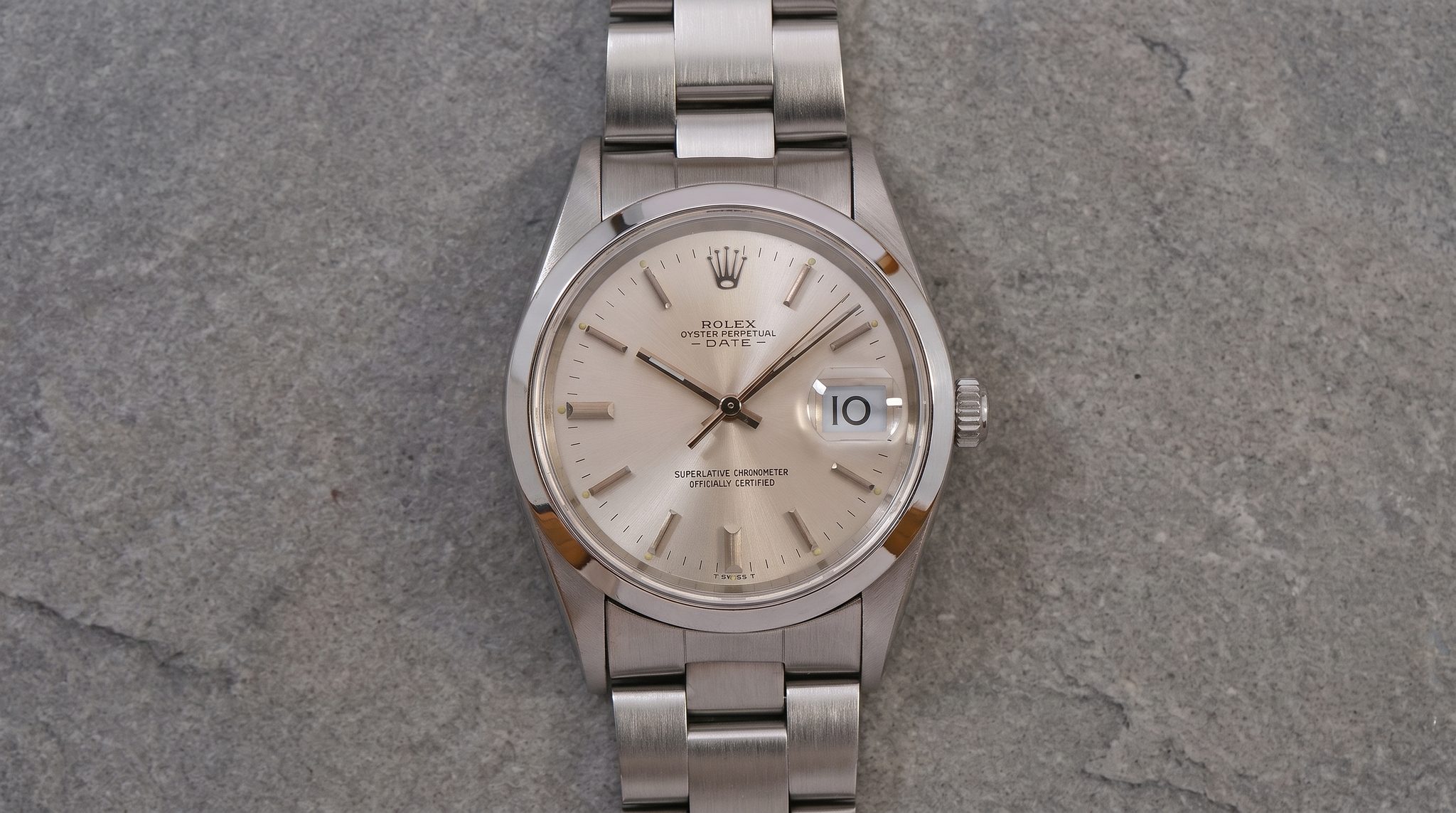
This era is the Oyster Perpetual as a long-running, compact baseline: acrylic crystal, smooth-bezel simplicity, and years of production long enough that the watch becomes a platform for variety rather than a single frozen configuration. 1002 represents the no-date side of that idea, while 1500 shows the parallel small-Date format that looks externally steady yet spans documented movement and luminous-material changes within its run. The era ends not because a single design cue vanishes, but because Rolex’s everyday watches move toward more modern materials and movement families, setting up the later sapphire and 31xx period. The 15000, c. 1977 to 1989, is the compact 34 mm Date that carried the line into the quick-set era on caliber 3035 while keeping its acrylic character.
Sapphire small Date
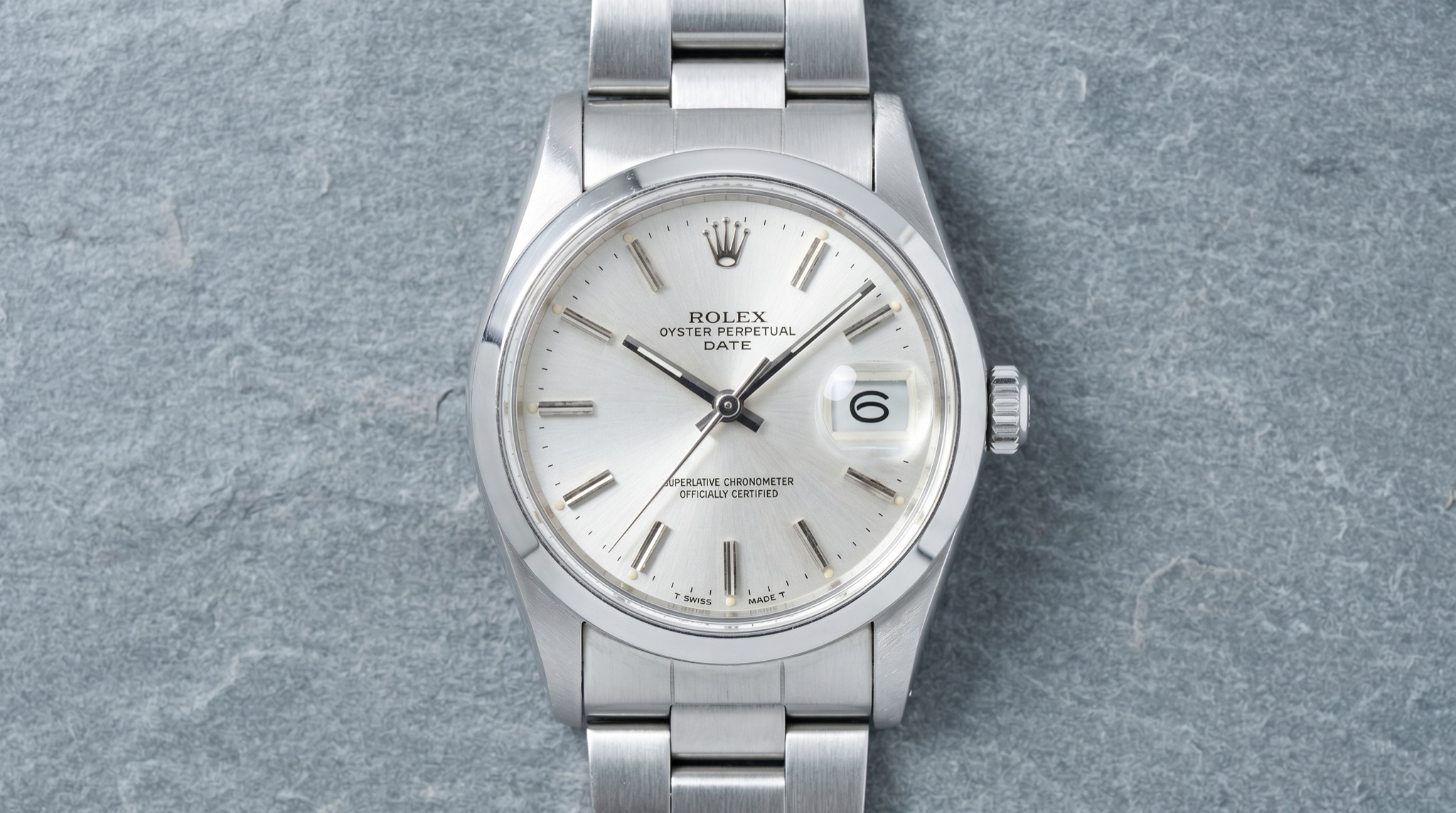
This generation is the 34 mm Oyster Perpetual Date concept updated into a more modern daily-wear package. 15200 is the published reference that captures the shift, pairing a sapphire crystal with Cal. 3135 and the usability upgrades described on that reference’s record (including quickset date and hacking). Compared with the acrylic-era Dates, the emphasis moves from mid-century continuity to late twentieth-century standardization around modern materials and a modern movement family. The end of the era is the model-family transition into later, six-digit-era Oyster Perpetual references that are documented as the next clear phase in the line’s recent history.
Six-digit identity shift
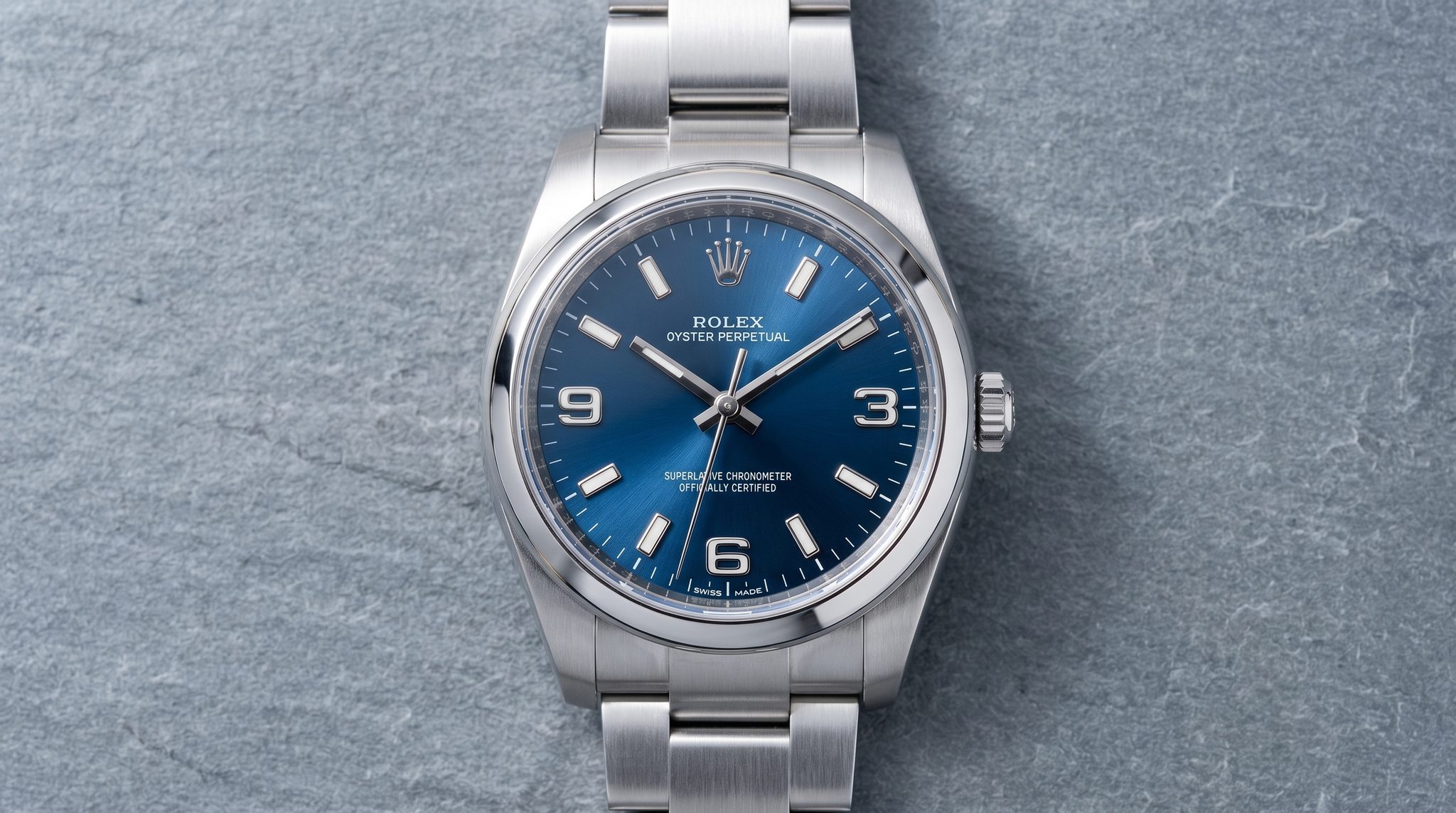
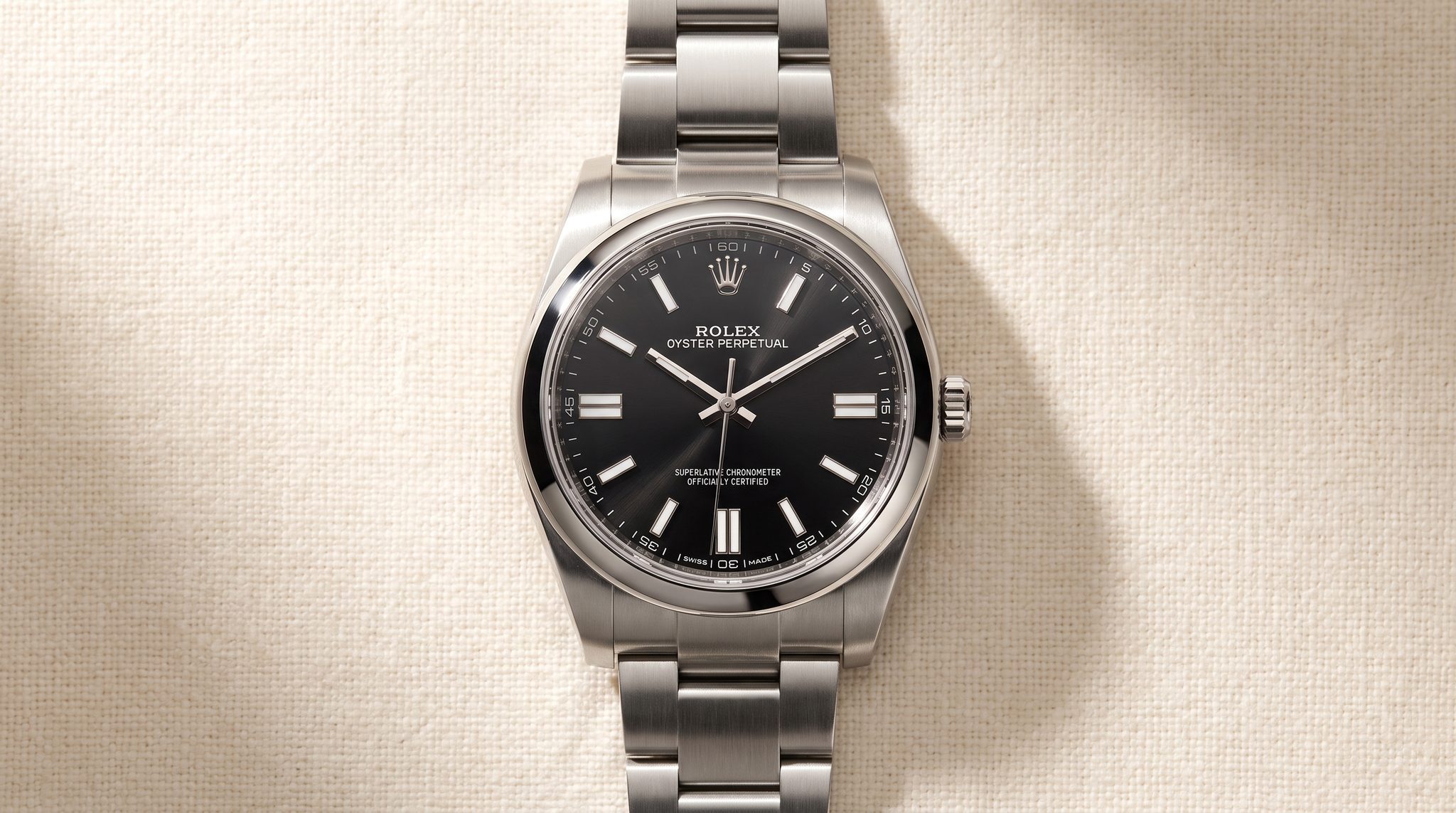
In this period, the Oyster Perpetual becomes modern Rolex in construction and finishing, while meaning increasingly comes from naming and dial choice. 114200 is the clearest example, a single reference documented as living under two official headings (Air-King, then Oyster Perpetual) without a corresponding, easily datable hardware break. Its 36 mm partner, the 116000, runs the same years on caliber 3130 and is collected almost entirely for its spread of period dials, from concentric-ring Arabics to the 3-6-9 layout. The era’s defining separation is that collectors learn to read the reference through dial executions and provenance, not through a mechanical timeline. It ends when the Oyster Perpetual line is replaced in the 2020 overhaul, which resets sizes and movements and makes dial programs the headline story.
OP 39 interlude
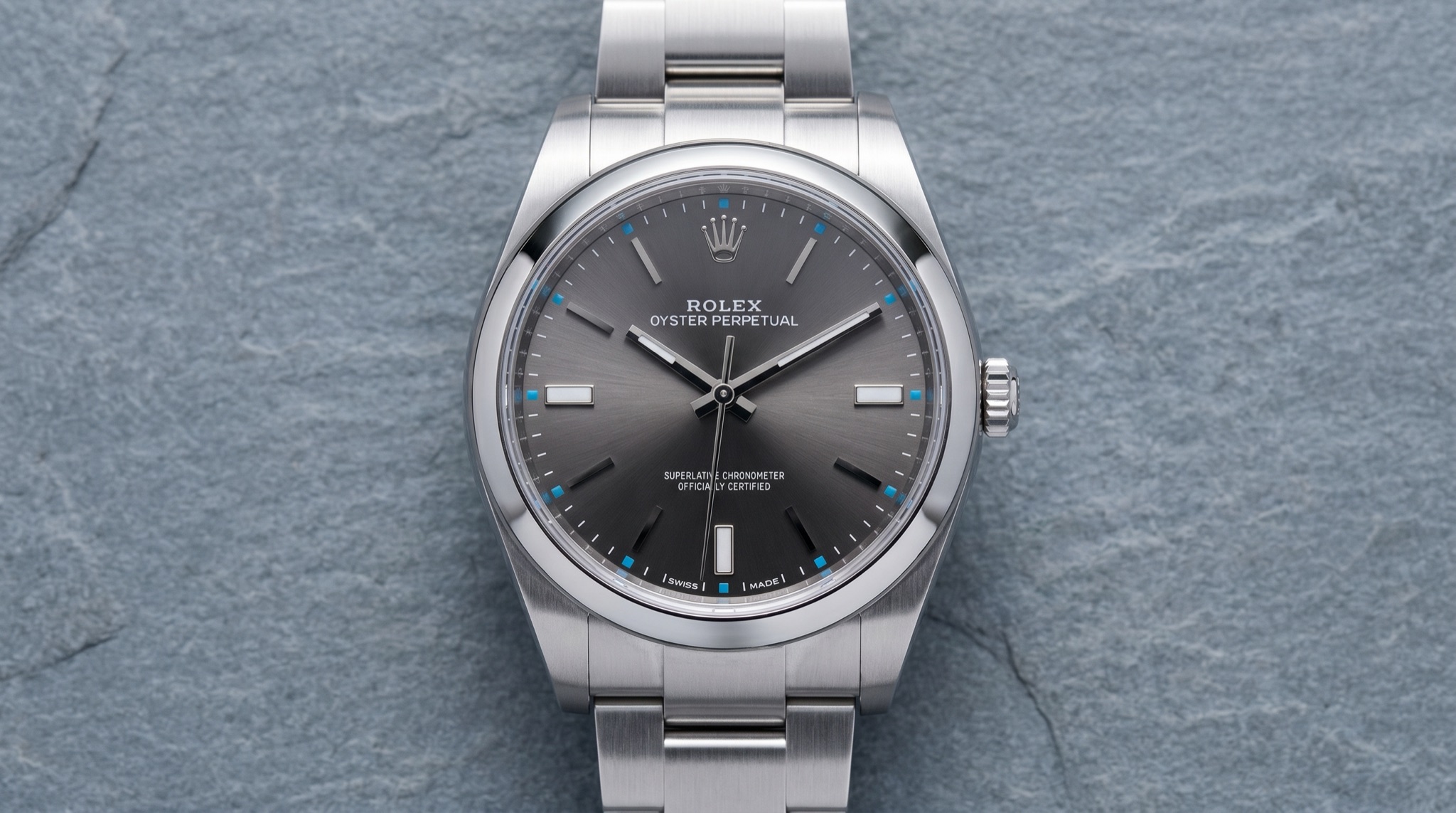
This is the brief, self-contained moment when the Oyster Perpetual offered a dedicated 39 mm size. 114300 is documented as a short-run reference that stays mechanically consistent across its life, with the reference’s internal stability making its dial families the main way production is discussed. The era ends for a documented, structural reason rather than a gradual fade: in 2020 the line is overhauled and the 39 mm format is replaced outright by a 41 mm Oyster Perpetual. That clean replacement is why 114300 reads as an interlude rather than as a stepping stone with multiple sub-generations.
2020 dial-led era
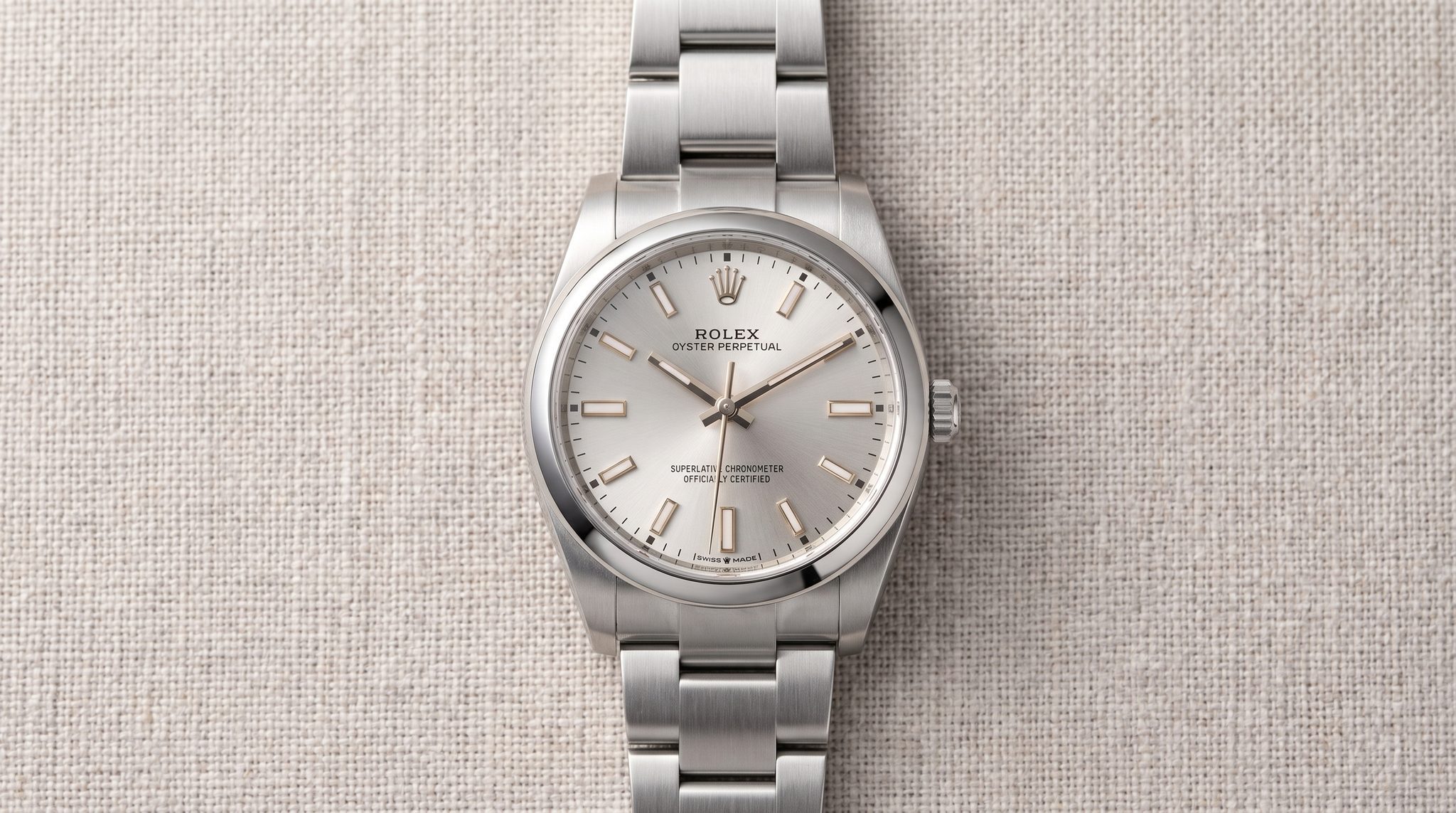
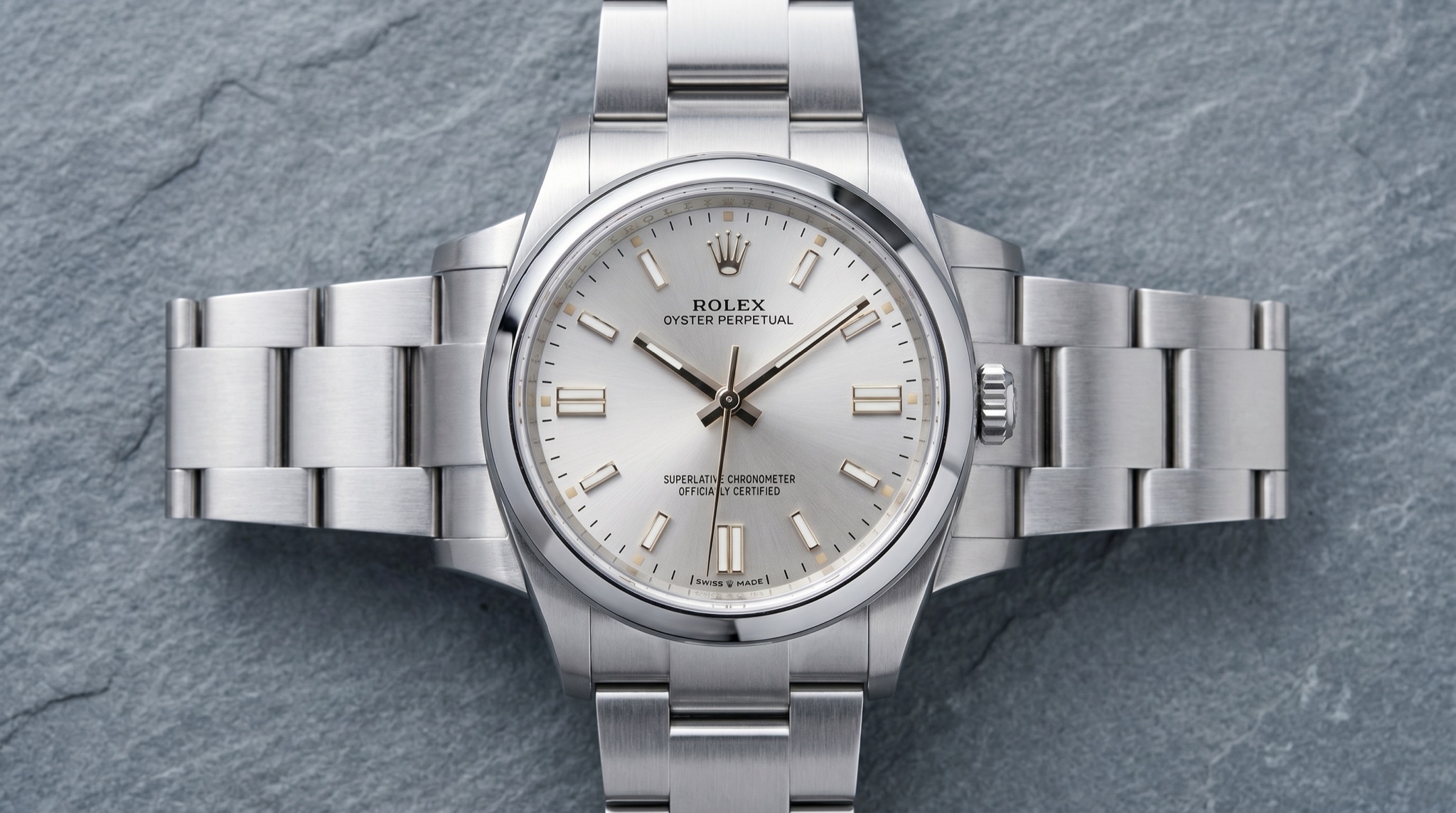
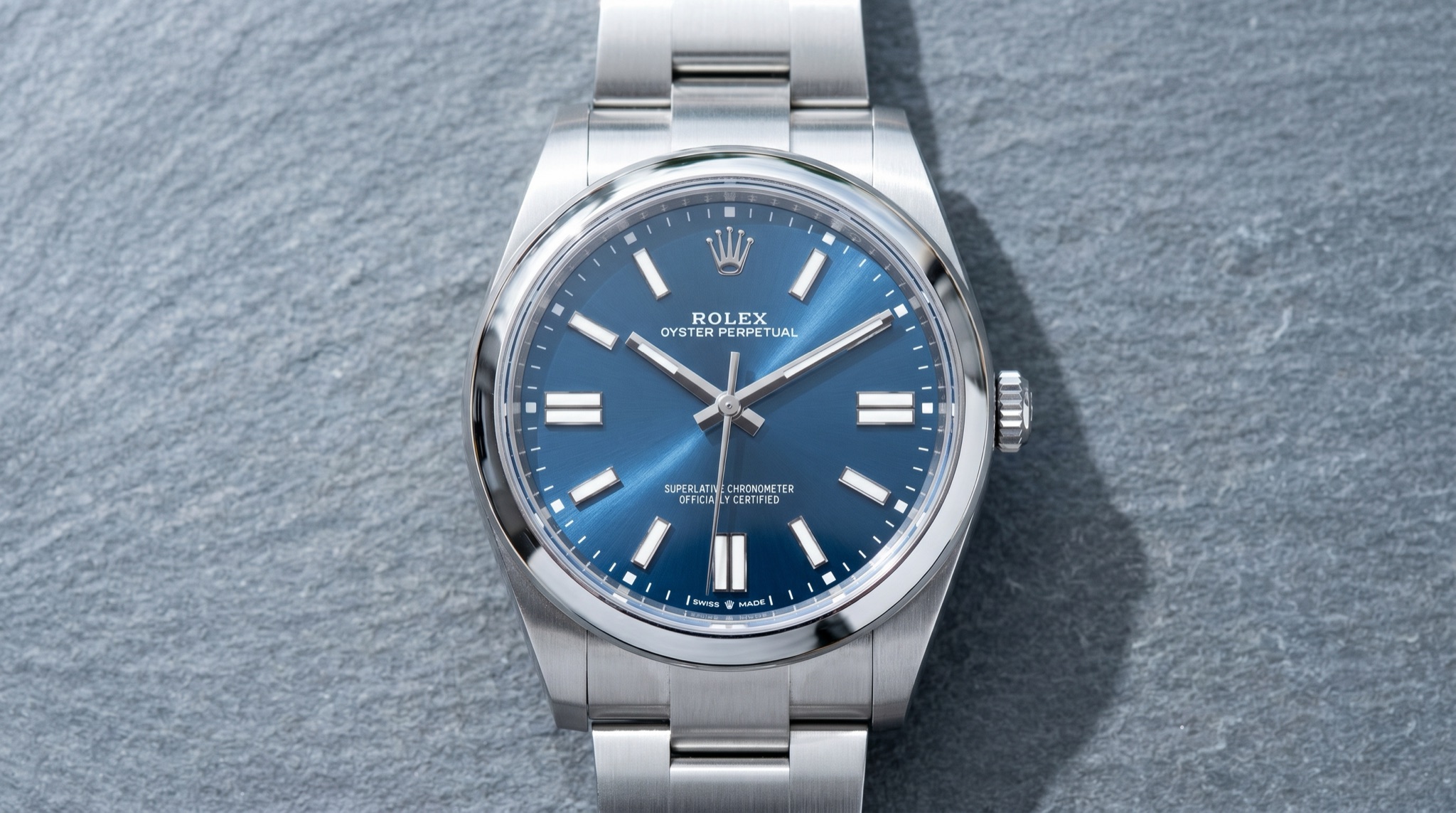
The 2020 overhaul is the clearest modern break in the family, and it also marks the point where the Oyster Perpetual’s identity becomes most visibly dial-led. The published references in this cohort share the same basic idea, time-only Oystersteel watches that are stable as objects while dial runs create the conversation. 124300 anchors the period as the largest size and is explicitly published as a 2020–2024 run, illustrating how a reference boundary can be created even when the underlying platform is steady. Alongside it, 124200 and 126000 show the same post-2020 logic in smaller sizes, continuing beyond the first wave while keeping the dial as the primary axis of change.
Which Oyster Perpetual to buy
If the goal is a current, time-only Rolex Oyster Perpetual for daily wear, the most straightforward route is to pick the post-2020 specification in the historically central 36 mm size, which is why 126000 is the clean default among these references. If the point is a first vintage Rolex Oyster Perpetual that still reads as the core idea, 1002 is the entry into the line’s mid-century baseline, with the added appeal that it spans a documented movement handoff while remaining the same watch in spirit.
If the intent is to collect the Oyster Perpetual as a set of reference-level turning points, 114200 is the one that rewards documentation and patience, because its story is a rare modern split between model headings (Air-King to Oyster Perpetual) under one reference number. If the goal is to chase the most era-defining modern behavior, 124300 is the dial-led focal point: a short published production window inside the 2020 overhaul that concentrates attention on which dials were offered when, and uses a reference change to draw a hard line around a few years of maximum visibility.
What to check on any Oyster Perpetual
Buying across the Oyster Perpetual family is unusual because the simplest-looking Rolexes are often the easiest to alter without immediate visual shock. Across both vintage and modern examples, collector value can hinge on whether the dial and hands are original, period-correct, and internally consistent with the rest of the watch. Rolex service and secondary-market repairs can also introduce later replacement parts that look plausible while changing originality.
Stories that discuss the Oyster Perpetual
Common questions about the Oyster Perpetual
In Rolex’s own framing, it combines two ideas: the waterproof Oyster case and the self-winding Perpetual rotor. Rolex anchors the combined concept and naming to 1931, presenting it as the basis for a practical, all-conditions everyday wristwatch.
- Rolex Oyster Perpetual, The fulfilment of a visionrolex.com
- Oyster Story, An immersive journey through timenewsroom.rolex.com
- Oyster Perpetualnewsroom.rolex.com
Show 7 more
- Presentation of the Oyster Perpetual (PDF)newsroom-content.rolex.com
- Rolex Oyster Perpetual, The prowess of the essentialrolex.com
- Rolex Oyster Perpetual Watches, 2020 model release guidebobswatches.com
- Rolex Introduces the New Oyster Perpetual (in bright colours too)watchesbysjx.com
- Rolex Oyster Perpetual Guide, Models, Features and Legacythe1916company.com
- Vintage 4 and 5 digit Rolex Oyster Perpetual guidewristler.eu
- Rolex Oyster Perpetual Date 15200 authenticity discussionwatchprosite.com