

Rolex Oyster Perpetual 124200
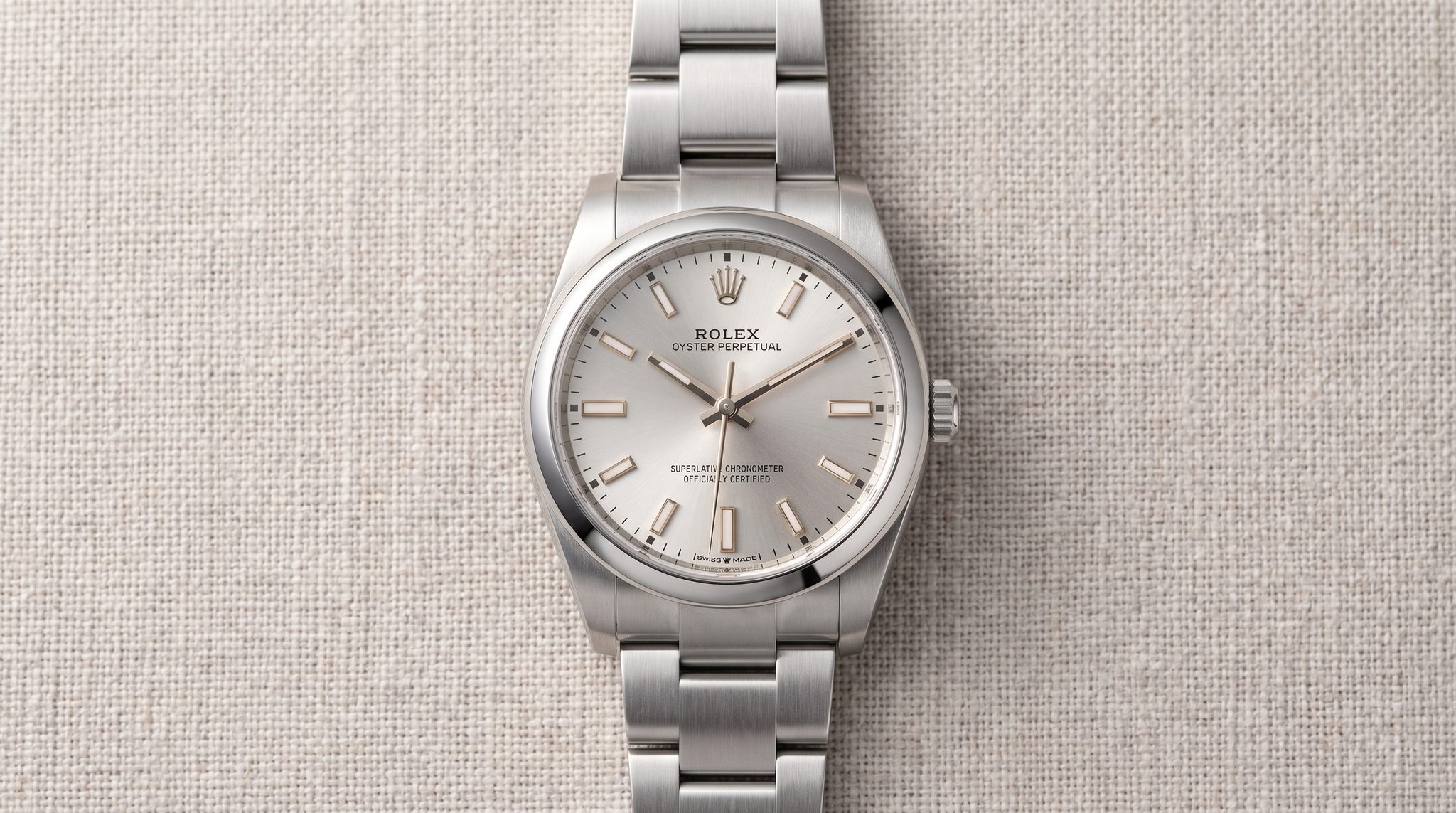
The Rolex Oyster Perpetual 124200 is the modern 34 mm Oystersteel OP whose story is told less by evolving hardware than by dial execution, from the 2020 sunray “Bright” set to later lacquer colors.
- Production
- c. 2020–present
- Case
- Oystersteel
- Diameter
- 34 mm
- Lug width
- 18 mm
- Bezel
- Smooth domed
- Crystal
- Sapphire
- Water res.
- 100 m
- Movement
- Rolex cal. 2232 / 3230
- Power res.
- ~55–70h reported
- Chronometer
- Superlative (−2/+2)
- Lume
- Chromalight
- Functions
- Time only, stop-seconds
The Rolex Oyster Perpetual 124200 is the rare modern Rolex whose most meaningful, checkable differences live on the dial rather than in a trail of case, bezel, or lume upgrades. The quickest way to understand it is to picture the 2020 relaunch set in 34 mm: four sunray “Bright” dials, including a silver version that is explicitly paired with yellow-gold markers, all sitting in the same 34 mm Oystersteel template.
That template is straightforward and deliberately conservative, a smooth domed bezel over a 100 m Oyster case on an Oyster bracelet, with a time-only dial and modern luminous batons. Rolex positions the watch as a Superlative Chronometer and specifies stop-seconds for precise setting, a detail that matters in daily use because it turns a simple three-hander into a properly settable instrument.
For collectors, the 124200’s interest is how little else is allowed to move. There is no documented progression of lume signatures, no shift from one bezel type to another, and no accepted “Mark” dial chronology in the vintage sense. What changes is color and finish, and even there the record has to be handled with care: the four sunray launch colors are consistently documented, while later colors like a pistachio green lacquer dial are best treated as newer, niche executions that appear in the market with less catalogue-grade clarity.
“The Rolex Oyster Perpetual 124200 is one modern 34 mm template, and its real variation is the dial.”
124200 across c. 2020–present
Rolex’s public materials present the 124200 as part of the modern Oyster Perpetual generation, with a 34 mm Oystersteel case, a smooth domed bezel, 100 m water resistance, and a time-only dial with stop-seconds. The important point for dating is that this core architecture does not fragment into collectible sub-eras the way many long-running sport references do; the watch is meant to look like itself from year to year.
The one clear axis of variation is the dial. At the 2020 refresh, sources consistently document a 34 mm set built around sunray finishes, the familiar metallic brushing that turns as the light moves across the dial. Within that set, the silver dial stands apart because it is explicitly described with yellow-gold markers and hands, a mixed-metal detail that is immediately visible at arm’s length and does not depend on micro-typography.
Later, the record becomes less clean, not because the watch changes mechanically, but because color reporting does. A pistachio green 124200 is described in the market as a multi-layer lacquer dial with a uniform, polished color, which implies a different dial execution from the sunray “Bright” dials. Rolex does not publish a simple public start-and-stop production table for the reference, so the safest chronology treats 2020 as launch timing for the current generation and treats later lacquer colors as observed additions rather than as factory-dated “marks.”
Stepping back, that constraint is the 124200’s defining character: the same 34 mm Oyster Perpetual platform can carry wildly different personalities without ever needing to become a different reference. In practice, that makes the 124200 a watch you authenticate and collect with your eyes first, but with discipline, because modern Rolex color names and marketplace labels are easy to misapply when the hardware is intentionally consistent.
- c. 2020Reference debut34 mm, smooth bezel
- 2020Bright sunray setSunray dial, baton plots
- 2020Silver accentsYellow-gold hands/markers
- c. 2024 – 2025Lacquer colorUniform lacquer green
- 2026Still currentRolex m124200 listings
124200 against its neighbours
The 124200 makes the most sense when framed against its immediate 34 mm predecessor and its closest current in-family sibling by movement size. The 114200 shows what Rolex replaced in the 34 mm slot before the 2020 refresh, while the 277200 shows how Rolex spreads the same modern small-case concept into a smaller diameter without changing the core idea of a simple, modern Oyster Perpetual.
277200 Current sibling (31 mm) c. 2020–present | 124205 Precious-metal sibling (34 mm) c. 2020–present | This reference 124200 Rolex · focal c. 2020–present | ||
|---|---|---|---|---|
| Production | c. 2007–2020 | c. 2020–present | c. 2020–present | c. 2020–present |
| Case | Oystersteel | Oystersteel | Everose gold | Oystersteel |
| Diameter | 34 mm | 31 mm | 34 mm | 34 mm |
| Bezel | Smooth domed | Smooth domed | Smooth domed | Smooth domed |
| Crystal | Sapphire | Sapphire | Sapphire | Sapphire |
| Water res. | 100 m | 100 m | 100 m | 100 m |
| Movement | Cal. 3130 | Cal. 2232 | Cal. 2232 | Rolex cal. 2232 / 3230 |
| Power res. | ~48h | ~55h | ~55h | ~55–70h reported |
| Chronometer | – | Superlative (−2/+2) | Superlative (−2/+2) | Superlative (−2/+2) |
| Lume | – | Chromalight | Chromalight | Chromalight |
| Functions | Time only | Time only, stop-seconds | Time only, stop-seconds | Time only, stop-seconds |
Five dial generations across the run
The silver 124200 is the easiest of the launch-era dials to spot across a room because it is explicitly described with yellow-gold markers and hands. On wrist, that warm metal tone changes the watch’s whole temperature: the case and bracelet stay Oystersteel, but the dial reads almost like a two-material composition, with gold color framing the luminous batons against a cool sunray base.
This is not documented as an evolution within the reference; it is a configuration of the silver dial itself, and it appears as part of the core 34 mm offering after the 2020 refresh. For identification, the tell is simple: a silver sunray dial with gold-colored hands and hour markers, paired with the smooth bezel and no-date layout that define the 124200.
What to check before buying a 124200
Buying a Rolex 124200 is less about hunting a correct era of hands or bezel than about verifying that a specific dial belongs on the specific reference. The modern Oyster Perpetual’s colored-dial premiums make the category attractive to counterfeiters and to “franken” assemblies, and the 124200’s stable hardware can make a wrong dial look plausible at first glance.
The other practical complication is paperwork-like certainty around specs. Some sources attribute the 124200 to caliber 2232 and an approximately 55-hour power reserve, while others list caliber 3230 and a roughly 70-hour reserve. Without a clear, universally consistent public statement that ties a specific caliber to a specific year within the reference, the safest approach is to authenticate the watch in hand and treat confident, dated movement claims in listings as something to verify, not to assume.
In daily ownership, the appeal is the opposite of a finicky collectible. It is a current, wearable 34 mm Oyster Perpetual with modern water resistance and a chronometer-rated movement, and its variety is emotional rather than mechanical: choose the dial that feels like your version of the watch, then pay for condition and correctness instead of chasing a mythical “early” run.
Rolex Oyster Perpetual 124200 for sale
Indicative market value from recent dealer, auction, and Grey Market sales: median ≈ $7,100, with a typical $6,400–$8,400 range across 43 comparable sales (updated this week).
Each point is a recent dealer or auction sale, banded to an indicative figure. The range shown is not a valuation.
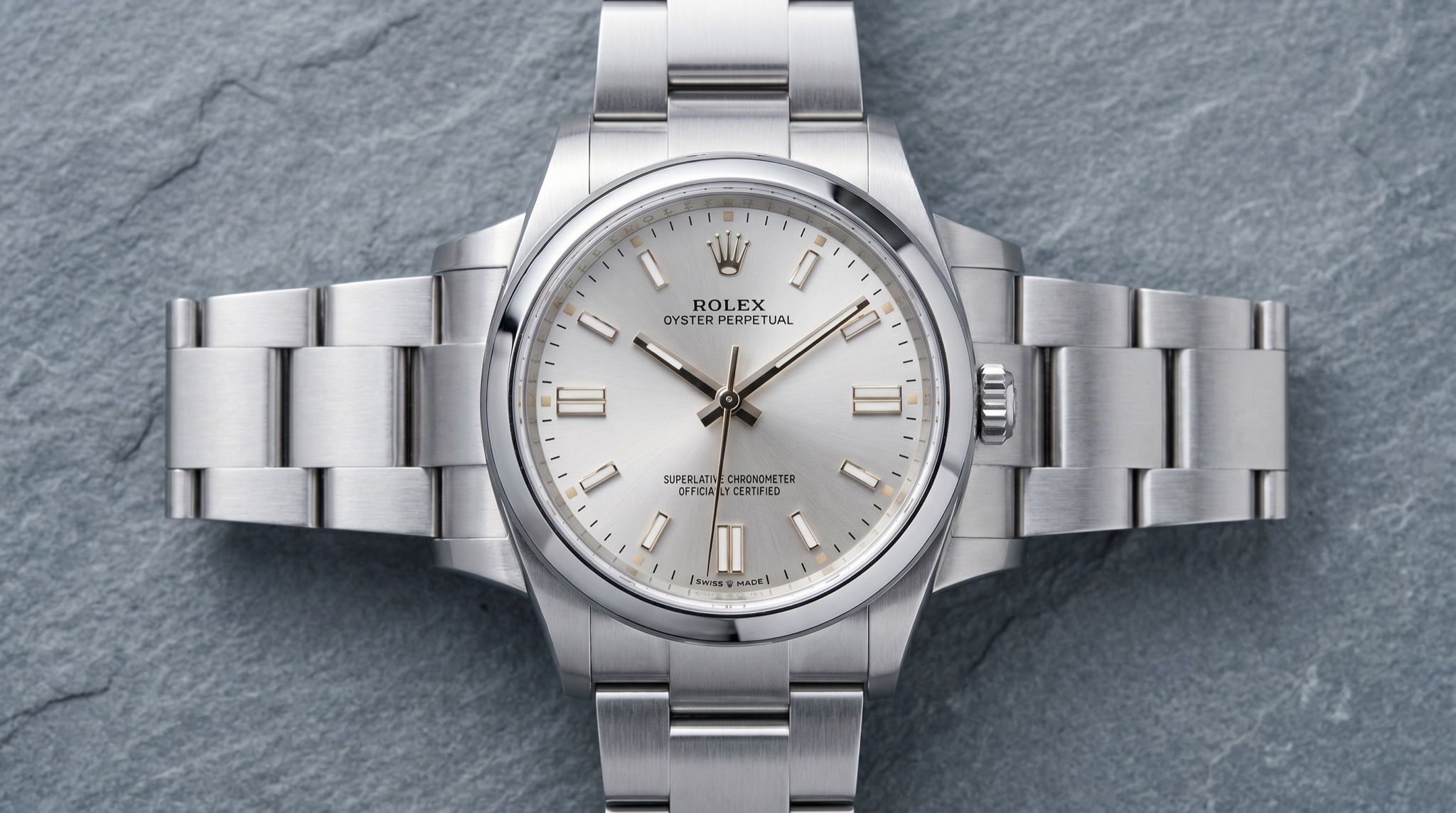
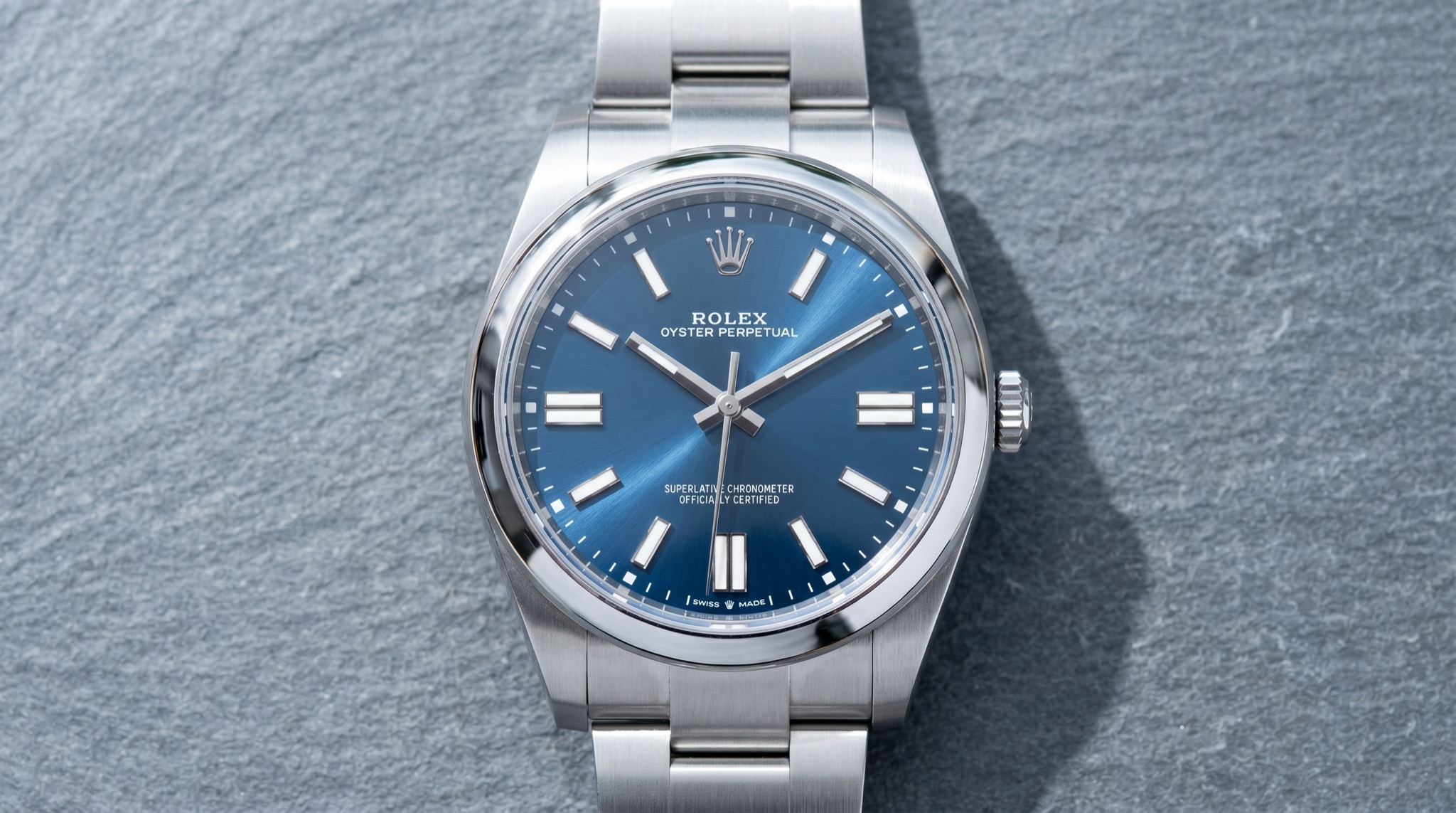
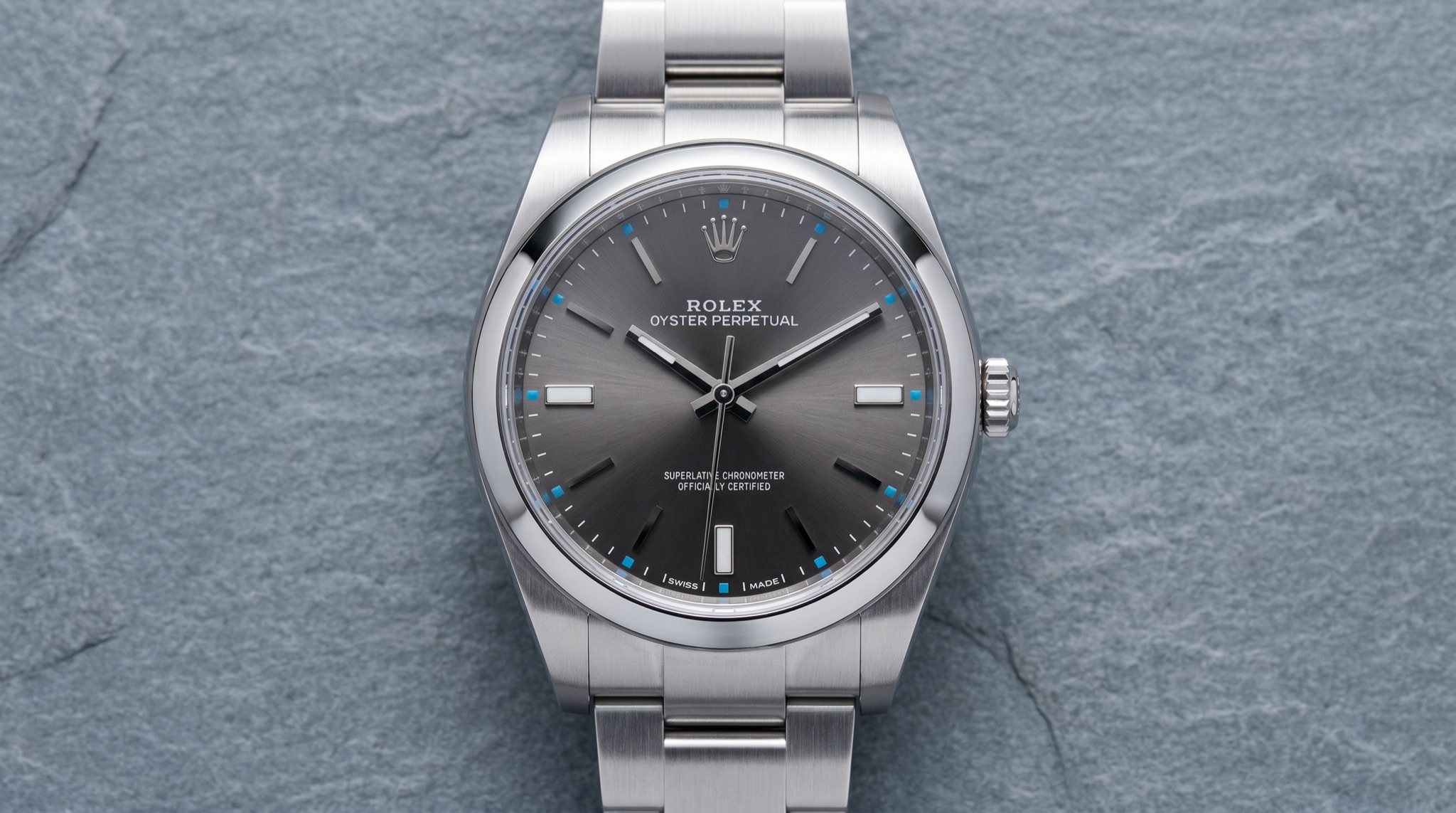
Adjacent in the Oyster Perpetual family
Common questions about the 124200
Rolex lists the Oyster Perpetual 124200 as a current model but does not publish a start and end year on its public product pages. Collector and editorial coverage places its launch with the 2020 Oyster Perpetual refresh, and the reference remains present in Rolex materials as of 2026.
- Rolex brochure: Oyster Perpetual m124200-0011 (PDF)assets.rolex.com
- Rolex product page: Oyster Perpetual 34 (m124200-0001)rolex.com
- Hodinkee: Introducing the new Rolex Oyster Perpetual 34 releasehodinkee.com
Show 7 more
- WatchBase: Rolex Oyster Perpetual 34 124200-0002 (Black)watchbase.com
- WatchBase: Rolex Oyster Perpetual 34 124200-0003 (Blue)watchbase.com
- WatchBase: Rolex Oyster Perpetual 34 124200-0008 (Lavender)watchbase.com
- Bob’s Watches: 2020 Oyster Perpetual model release guidebobswatches.com
- Bob’s Watches: Rolex Oyster Perpetual 34 overviewbobswatches.com
- Watch Club listing: 124200 pistachio (year 2025)watchclub.com
- WatchScanning: How to spot a fake Rolex Oyster Perpetual in 2026watchscanning.com