

Tudor Submariner
The Tudor Submariner is the professional diver that borrowed Rolex waterproofing, then developed a design language of its own.
The Tudor Submariner is the line that turned Rolex-derived waterproof engineering into Tudor’s own professional diving instrument. In 1969, the 7016 put square luminous plots and angular Snowflake hands on a production Tudor diver, creating the visual signature that still defines the family. Tudor introduced the Submariner in 1954 for divers and practical professional users who needed dependable underwater equipment at a moderate price, using Rolex-associated Oyster case technology, screw-down components and a less expensive outsourced movement strategy. The result was not simply a cheaper cosmetic counterpart to the Rolex Submariner: it answered the same functional problem with a different commercial and mechanical proposition.
The family’s first major phase culminated in the 7928, which established the approximately 39 mm case and crown guards in 1959 while retaining the conventional Submariner vocabulary. The 7016 then changed the line’s visual grammar and moved it into the ETA-powered era. Its date counterpart is represented here by the 9411, while the 94010 records the same broad Snowflake generation through a later reference-number form and overlapping dial configurations. The 76100, 79090 and 75090 show Tudor adapting the late Submariner platform to transitional, full-size and compact date formats. Finally, the 79190 brought sapphire, a Cyclops lens, round markers and a notched unidirectional bezel to the family’s closing chapter before production ended approximately in 1999.
Across those generations, the case often remains recognizably Tudor Submariner, but the details do not move as one unit. A hand set can change without a movement change, blue and black can run in parallel, and a lume marking can identify the dial without dating the entire watch. That is why a vintage Tudor Submariner is best understood through relationships between parts rather than through a reference number alone. The 7016 and 9411 are important for the Snowflake design, the 7928 for the pre-Snowflake case and crown-guard story, and the late references for showing how Tudor modernized the formula without abandoning its compact tool-watch proportions. The family’s singular character lies in that controlled tension: Rolex-derived architecture provided the foundation, while Tudor’s successive hands, markers, movements and bezel systems made the watch increasingly its own.
What each Submariner reference trades for
8 references across 5 eras
Big Crown to Guards
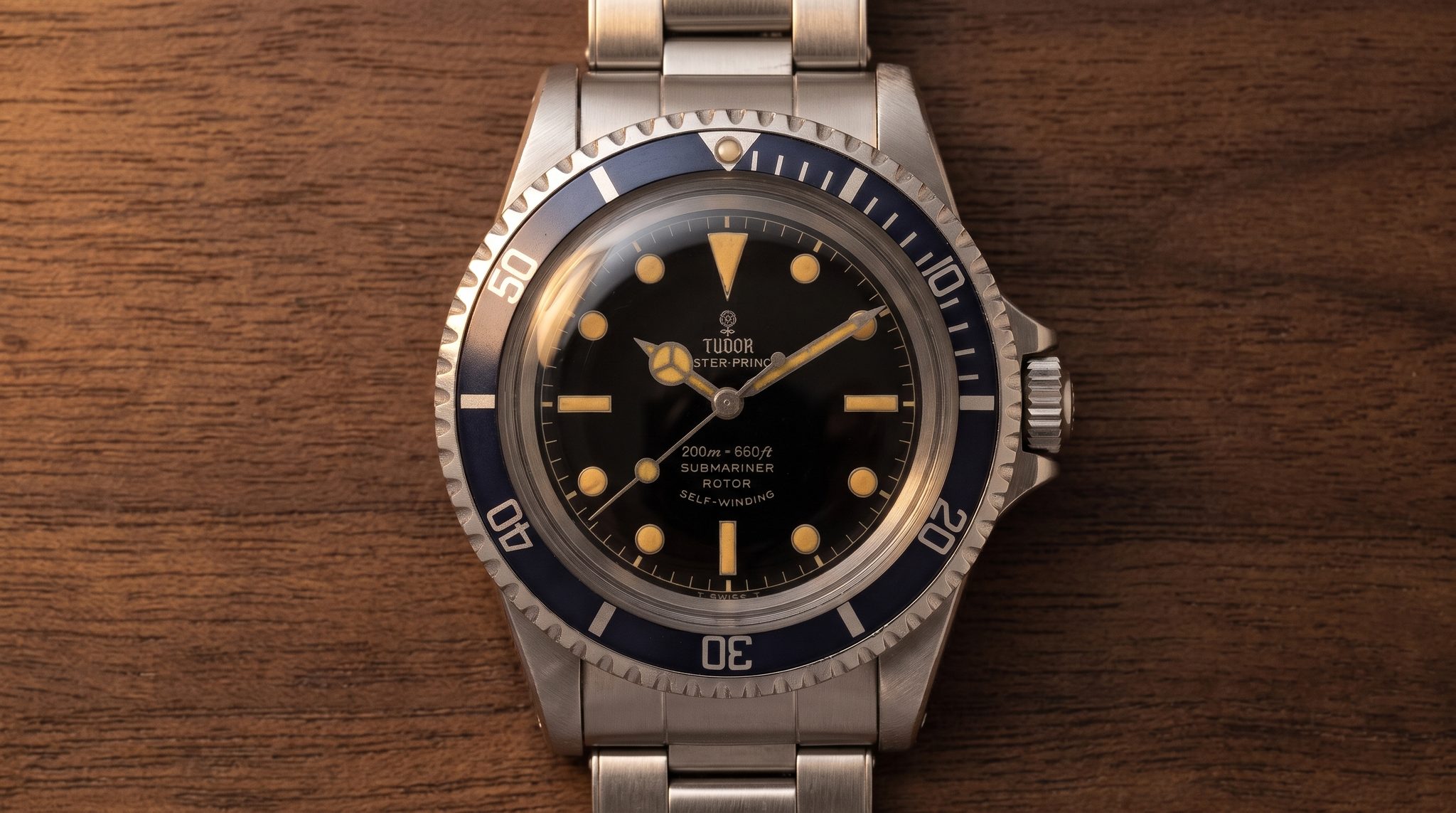
Tudor’s diver began in 1954 with the 7922, a 100 m Oyster Prince Submariner on the Fleurier-based calibre 390, and the 7924 followed with a large exposed crown. The 7928 of 1959 defines the mature pre-Snowflake Submariner. Its approximately 39 mm case and crown guards replaced the earlier exposed-crown architecture, while the automatic Tudor calibre 390, domed Plexiglas and bidirectional bezel kept the watch rooted in the original tool-watch formula. Square, eagle-beak, pointed and rounded guard shapes appeared across the run, alongside separate gilt, mixed-graphic and matte dial developments. These changes show Tudor refining protection and appearance without yet establishing the later Snowflake identity. The generation ended when the 7016 introduced a new ETA-based movement and a radically different dial and hand language.
Snowflake Debut
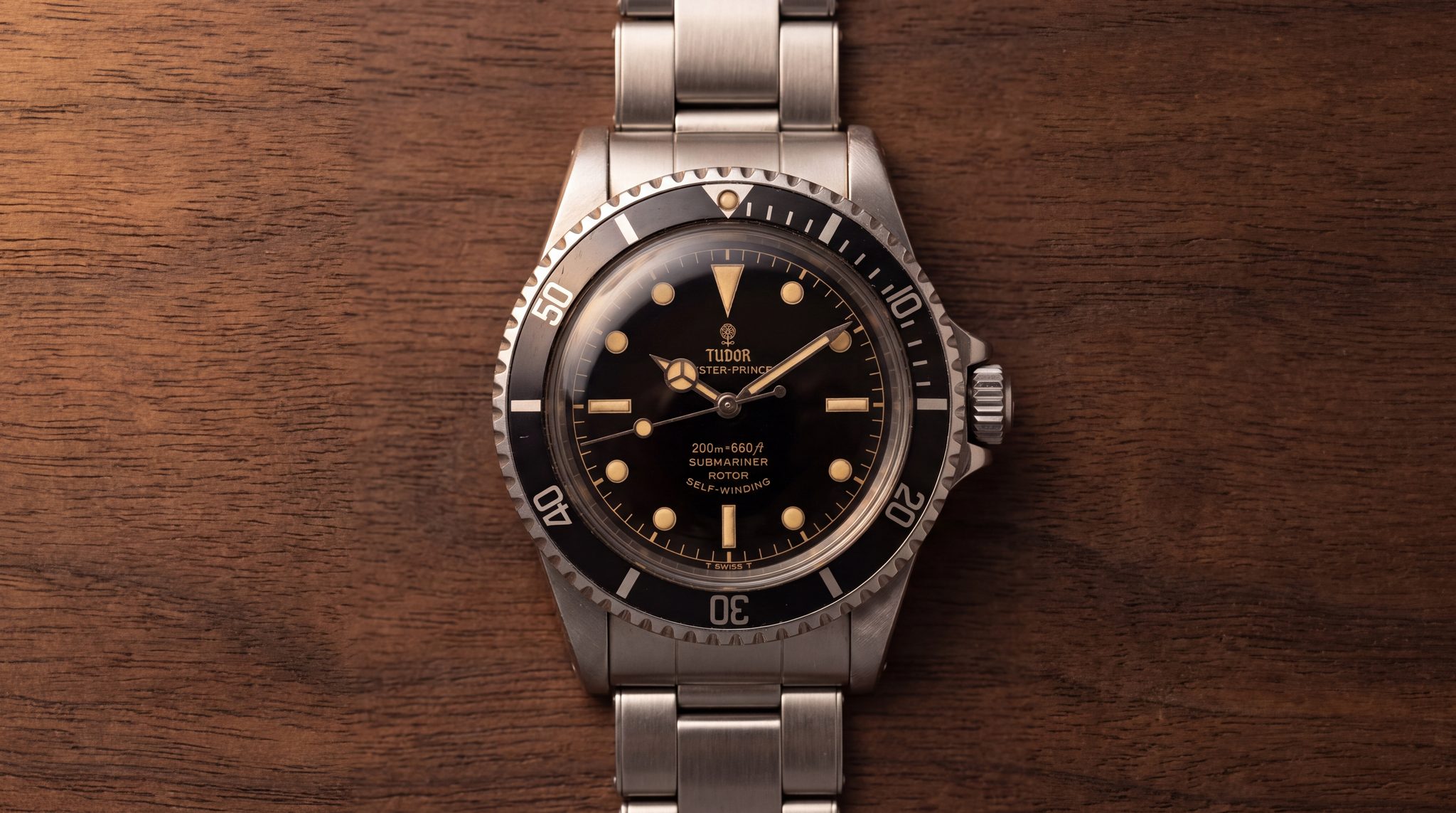
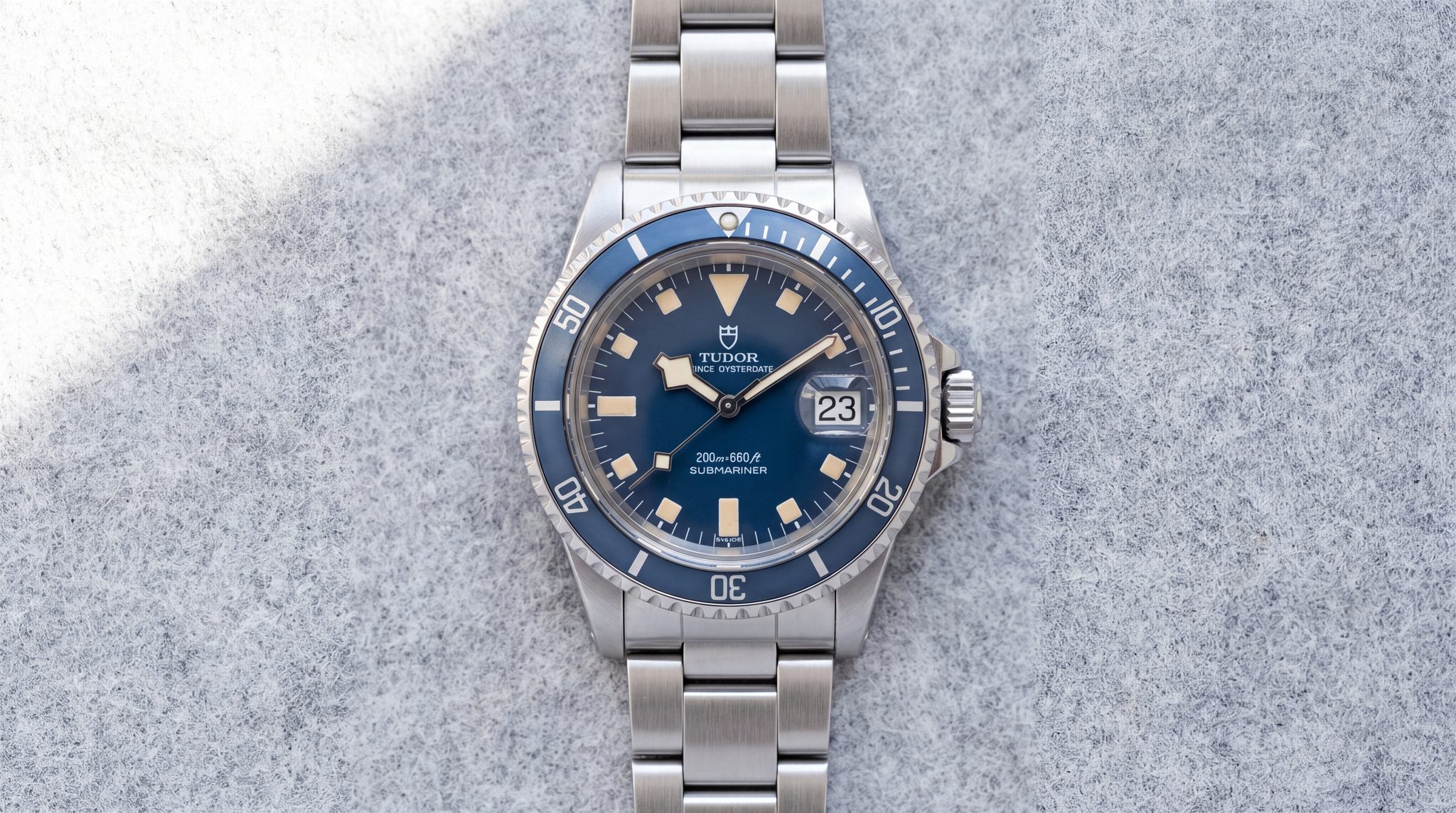
The 7016 marks the moment Tudor gave the Submariner its most recognizable visual language. Square luminous plots and the angular Snowflake handset appeared alongside the ETA 2483, replacing the earlier Fleurier-derived movement while retaining the approximately 39 mm Oyster-style case and no-date format. The transition was gradual rather than uniform: rose-logo dials, shield dials with round plots and early Swiss-only or later tritium markings can all occur within the reference. Black and blue were parallel choices, not a simple sequence. Tudor replaced the 7016 with the 9401/0 generation around the mid-1970s, ending this first Snowflake phase.
The ETA Snowflakes
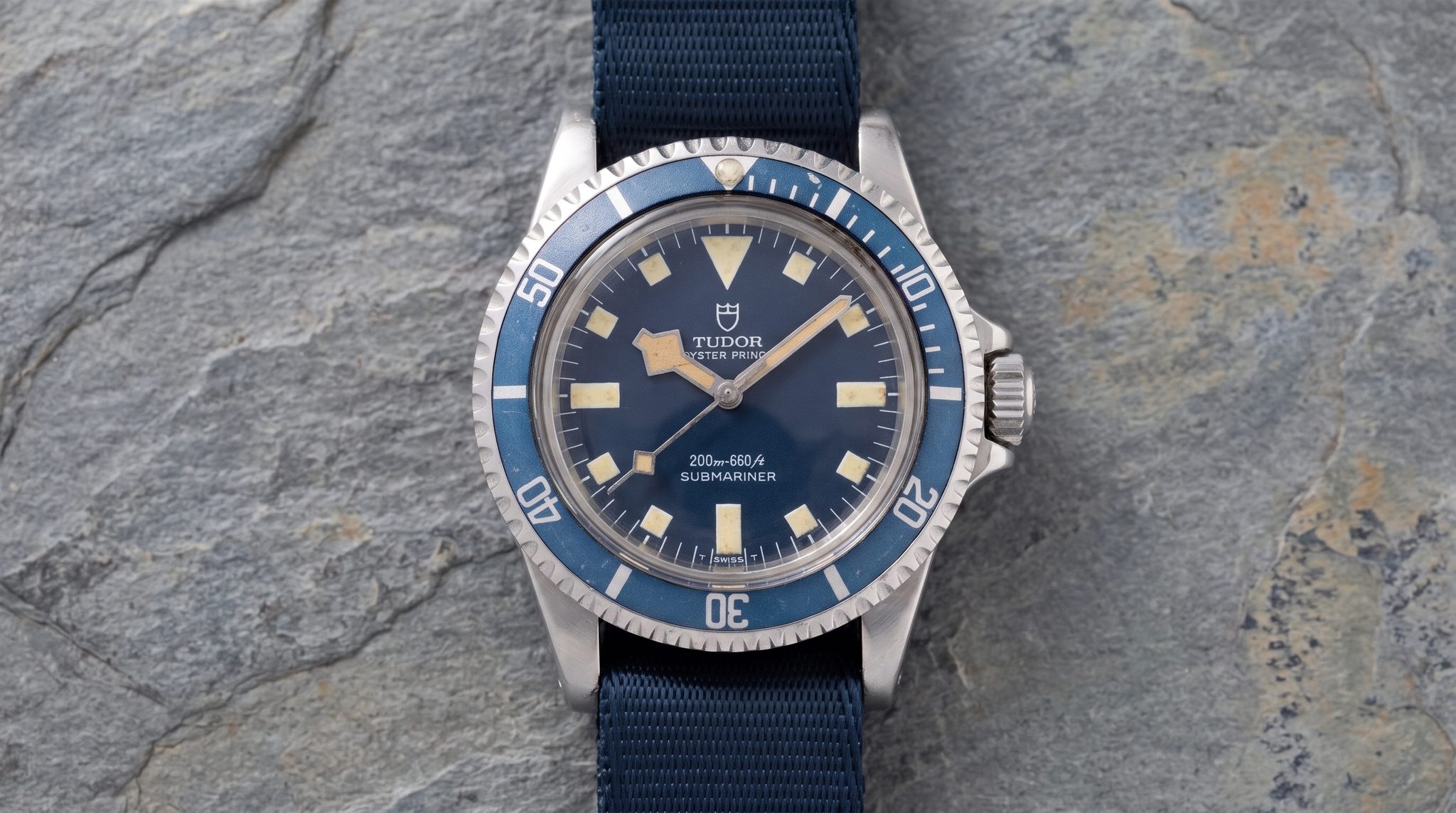
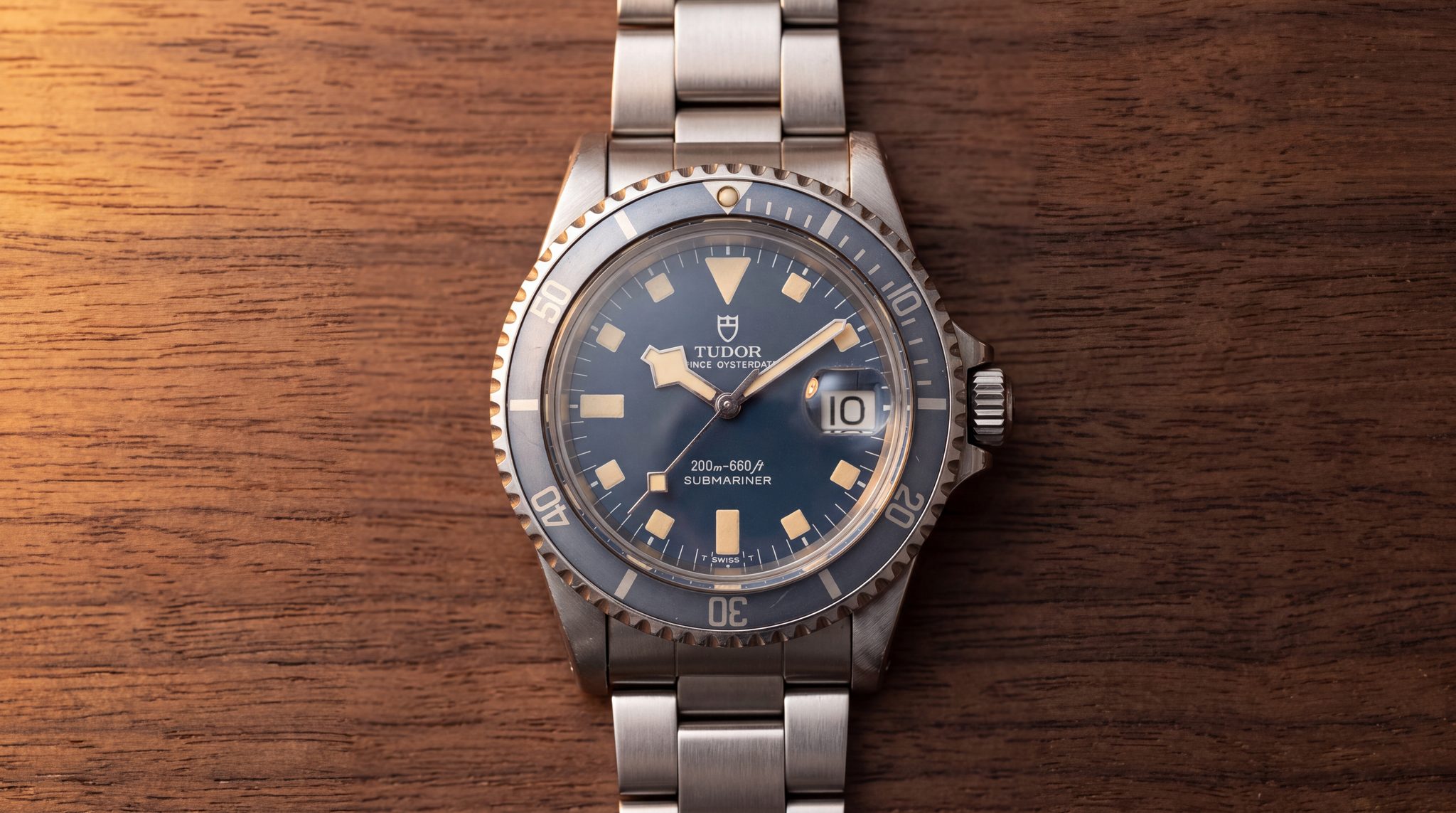
The 94010 and 9411 represent the mature Snowflake family in no-date and date form, with the latter adding a quick-set date beneath an acrylic Cyclops. Both retained the approximately 39–40 mm case, while the 94010 used ETA 2776 and the 9411 is principally associated with ETA 2784, with other calibre reports requiring individual inspection. The slashless 94010 designation and the later 94110 numbering were transitional changes rather than clean redesigns. Snowflake hands, black and blue configurations, military hybrids and later Mercedes-style combinations overlap. The generation gave way as Tudor moved toward conventional late Submariner dials and the 79000-series platform.
Round Plots and the Late Date
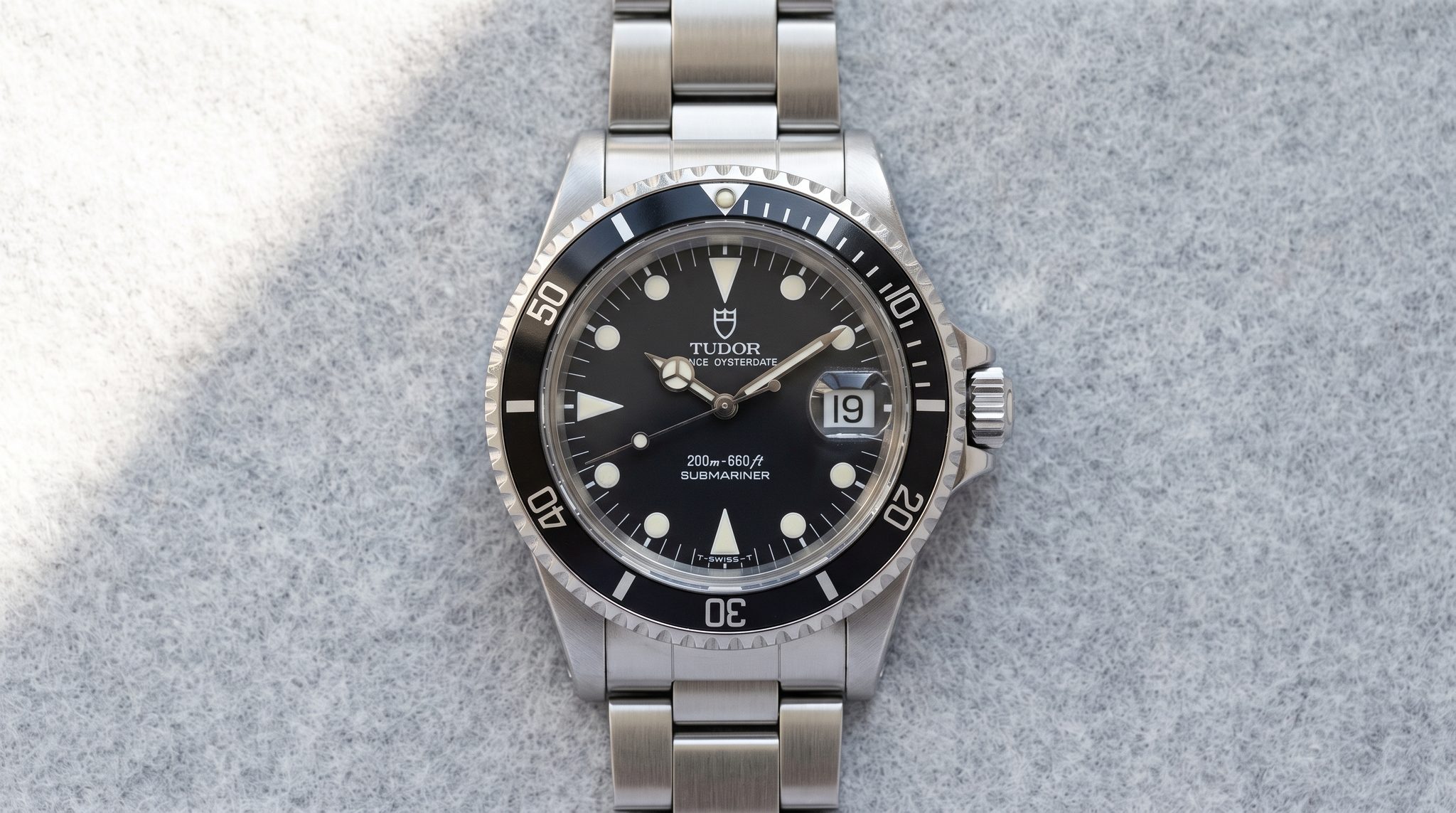
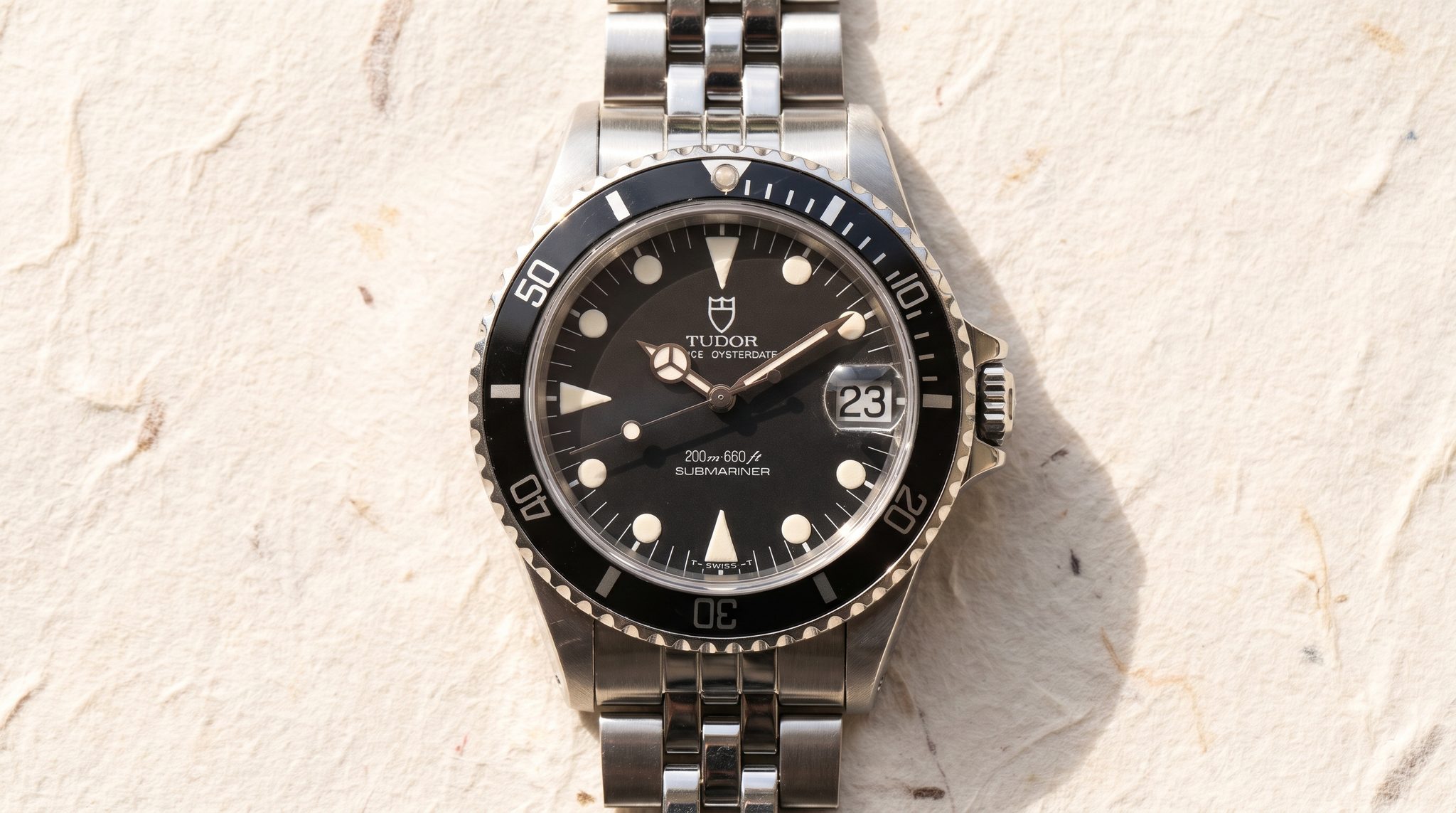
The 76100, 79090 and 75090 show Tudor reshaping the late Submariner around date displays, ETA 2824-2 family movements and several case sizes. The 76100 is the brief transition, recognized by round and triangular plots and its lollipop hour hand. The 79090 settled into the approximately 39–40 mm date format with Mercedes hands, an acrylic Cyclops and a bidirectional friction bezel. The 75090 carried the same late Oysterdate concept in a compact 36 mm case. The full-size line moved on with the 79190, which brought sapphire and a unidirectional notched bezel; one specialist account reports mineral glass on its earliest examples, so the crossover was not a clean break.
Final Sapphire Form
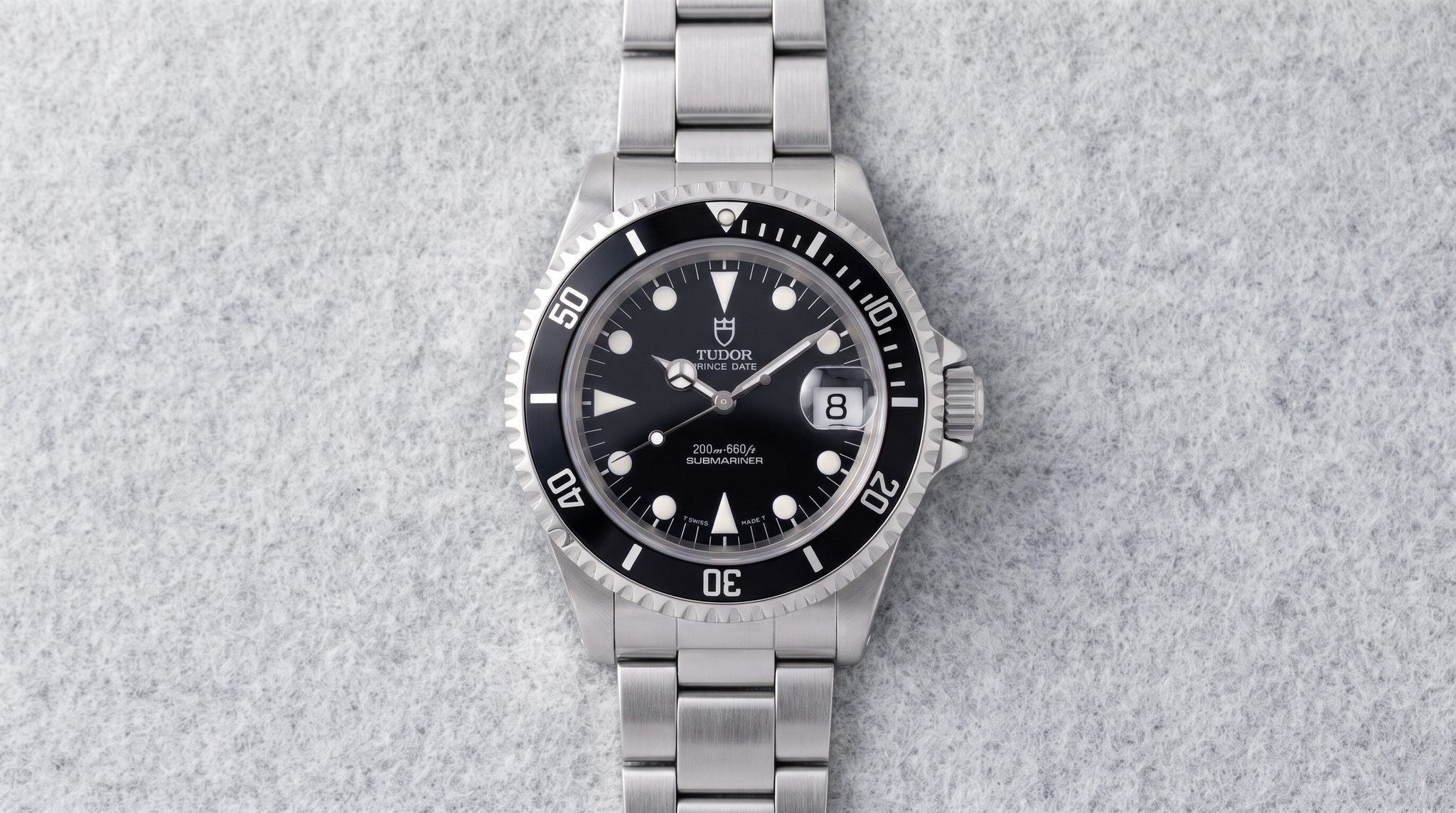
The 79190 is the family’s closing design, retaining the established Oyster-style case and ETA-based automatic architecture while updating the visible hardware. Sapphire, a Cyclops date lens, round markers and a more finely notched unidirectional bezel moved the Submariner toward late-1990s conventions. Black and blue dials continued, while tritium executions and later luminous treatments overlap the crystal and bezel changes. A polished engraved steel bezel is associated with the late part of the run, centered approximately on 1997, but the available evidence does not establish a universal cutoff. Tudor’s final Submariner reference left the catalogue around 1999, with no documented single reason for its discontinuation.
Which Submariner to buy
For the reference-collector target, the 7928 is the family’s central early watch. It established the approximately 39 mm case and crown-guard architecture before the Snowflake design, and its changing guard forms make it especially valuable to collectors who want the pre-Snowflake story. The 7016 is the clearest choice for the visual archetype: it introduced the Snowflake hands and square markers, while preserving the no-date simplicity that makes the design easiest to read.
For a date Snowflake, choose the 9411, but expect overlap between case numbering, dial layouts, lume markings and handset configurations. It rewards a patient search for coherence rather than a search for one supposedly definitive feature. The 76100 suits someone drawn to a short transitional chapter, especially the lollipop hour hand and round-and-triangle dial. For daily wear, the 79090 offers the most conventional late Submariner layout while retaining acrylic and a bidirectional bezel. The 75090 is the family’s compact option, a 36 mm date diver with the same late ETA-based architecture. The 79190 rewards patience most of all when originality matters more than simply owning the final reference.
What to check on any Submariner
Buying across the Tudor Submariner family means comparing generations whose cases can look similar while their dials, hands, movements, crystals and bezels belong to different eras. Service and replacement parts are common, especially dials, hands, inserts and bracelets, and genuine Tudor or Rolex-signed components can still be wrong for a particular reference. Frankenwatches often target the Snowflake and military-associated configurations because authentic individual parts can make an incorrect combination look persuasive.
Common questions about the Submariner
The Tudor Submariner was Tudor’s professional diving line, introduced in 1954 and last represented in the catalogue around 1999. It used Rolex-associated waterproof case technology and Tudor-sourced movements, then developed its own visual identity through the Snowflake generation and later ETA-based references.
- Tudor history: Submariners 1954 to 1968tudorwatch.com
- Tudor history: Submariners 1969 to 1999tudorwatch.com
- Tudor Submariner: a historical overviewfratellowatches.com
Show 7 more
- Tudor Submariner: A Brief Historyrescapement.com
- Tudor Submariner history and referencesmostra-store.com
- Tudor Sub movement referencetudorsub.com
- 94110 Series, Tudor Submarinertudorsub.com
- 'Snowflake' Submariner, ref. 9411/0sothebys.com
- Tudor Submariner 79090 auction lotphillips.com
- Tudor Submariner: History, French Navy and Referencesmostra-store.com