

Tudor Submariner 79090
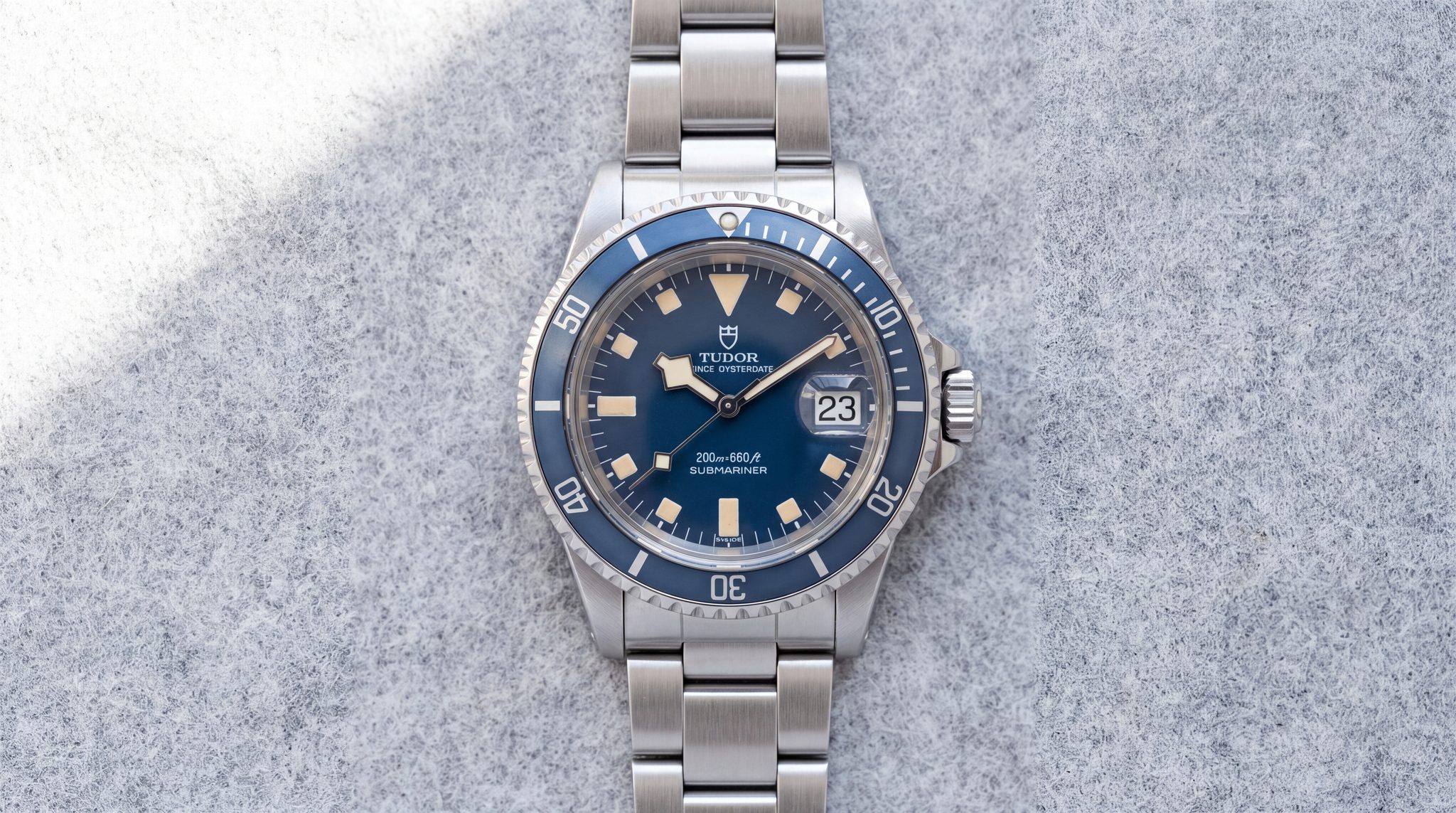
The Tudor Submariner 79090 is the last date Submariner to unite an acrylic crystal and bidirectional bezel before Tudor moved to sapphire.
- Production
- 1989–1995
- Case
- Stainless steel
- Diameter
- 39–40 mm
- Lug width
- 20 mm
- Lug-to-lug
- ~47–47.5 mm
- Thickness
- c. 12–12.3 mm
- Bezel
- Bidirectional, friction
- Crystal
- Acrylic, Cyclops
- Water res.
- 200 m
- Dial
- Black or blue
- Movement
- ETA 2824-2
- Chronometer
- No
- Lume
- Tritium
The Tudor Submariner 79090 was produced from 1989 to 1995.
- Production years
- 1989–1995
- Replaced
- 76100
- Replaced by
- 79190
- Movement
- ETA 2824-2
The Tudor Submariner 79090 is the last date Submariner in the brief interval before Tudor changed the formula: its acrylic crystal and bidirectional friction bezel were replaced by sapphire and a unidirectional bezel on the 79190 in 1995. That makes the 79090 a particularly clear late-generation reference, and its defining fact is concrete: a 39–40 mm steel watch with a date, 200 m water resistance and an automatic ETA 2824-2, produced from 1989 to 1995.
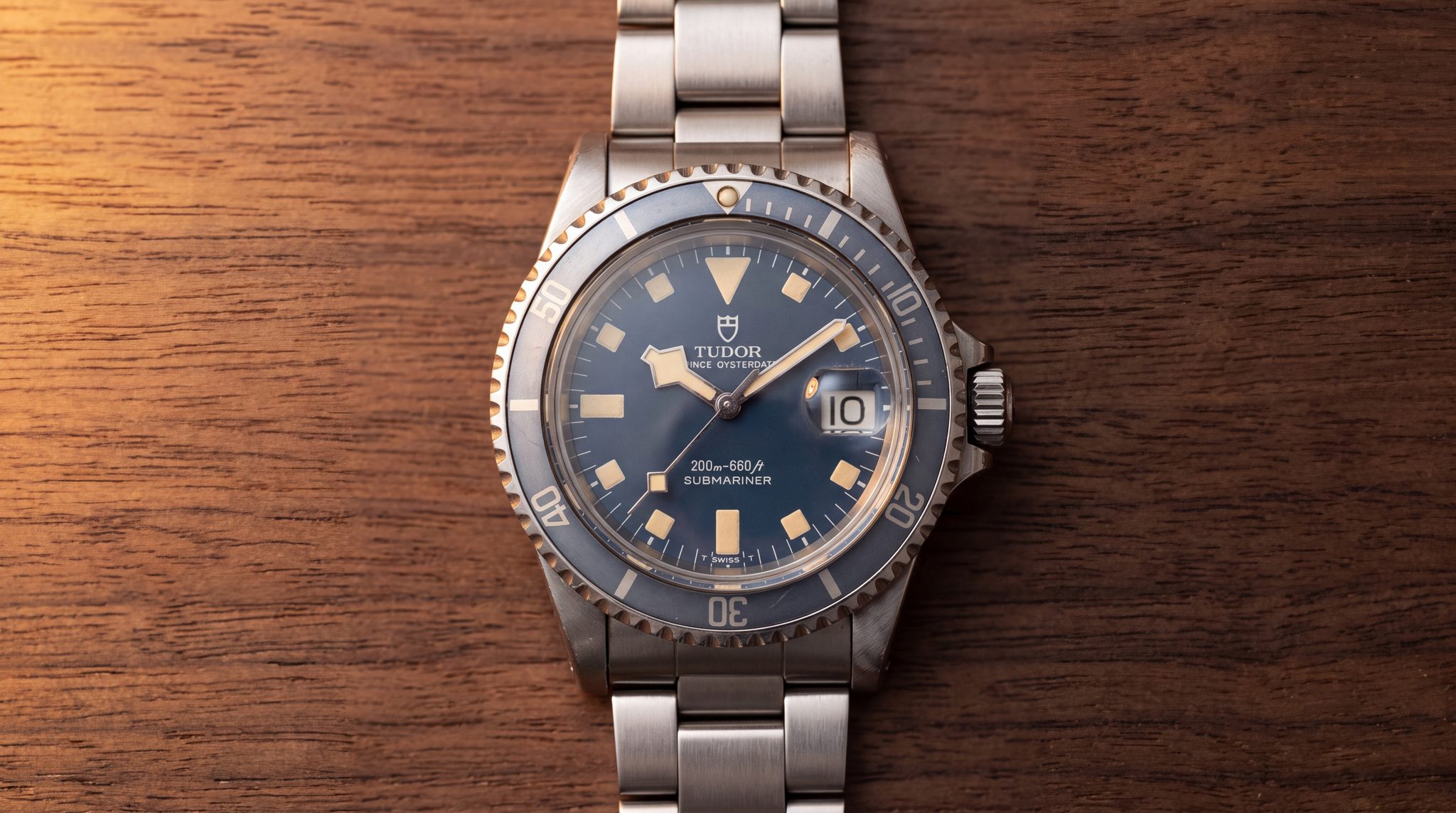
Its interest lies in the balance of familiar and newly conventional details. The earlier 76100 belongs to the snowflake-hand era, while the 79090 uses a Mercedes-style hour hand, pencil minute hand and lollipop seconds hand. Look at the dial in hand and the generation reads immediately: round luminous plots dominate the surface, triangular plots sit at 6 and 9, and the date rests beneath the raised acrylic Cyclops. Black and blue were factory colourways, each paired with a matching bidirectional insert. The lower dial signature is associated with tritium, written as “T SWISS T” or “T-SWISS-T” in published descriptions, although spacing and punctuation are not a secure dating code.
The reference is therefore less a catalogue of dramatic sub-variants than a tightly bounded configuration whose details must be judged independently. Dial colour, marker geometry, hand set and lume marking all describe the watch, but none should be used to manufacture a chronology the record does not establish. Rolex-signed crowns and case-back components can appear on period examples, yet no complete production matrix fixes their use by serial range or market. The result is a watch whose historical position is unusually visible: the final acrylic, friction-bezel date Submariner, just before Tudor's successor made the modernizing change.
“The Tudor Submariner 79090 is the last date Submariner whose acrylic crystal and bidirectional bezel define the whole configuration.”
Tudor 79090 production years: 1989–1995
Tudor introduced the 79090 in 1989 as the date-equipped replacement for the undated late Submariner. The date explains the movement choice: the ETA 2824-2 supplies the quick-set calendar and automatic winding, while the watch retained the 200 m case architecture and acrylic crystal. Phillips identifies the reference with a 39 mm case, plexiglass and bidirectional bezel; specialist measurements often round the case to 40 mm, which is why both figures appear in cataloguing.
The visual change from the preceding 76100 is separate from the later crystal and bezel change. The 76100 is associated with snowflake hands and earlier square-marker styling. The 79090 instead presents Mercedes hands and triangular luminous plots at 6 and 9, giving the dial a more conventional Submariner appearance. The brief does not document a later cutoff for the hand set, so the hands identify the 79090 generation rather than a precisely dated sub-era.
Tritium is likewise a material identification, not a colour chronology. The lower dial reads “T SWISS T” or “T-SWISS-T” in published descriptions, and the marking can occur with either black or blue dial and bezel. The reason for the punctuation and spacing differences is not documented. Cream, vanilla or darkened plots are best read as aging states of tritium, not as separate factory variants.
The decisive next step came in 1995 with ref. 79190. That reference changed the crystal to sapphire and the bezel to a unidirectional notched design, while retaining the broad date-equipped format. In other words, the 79090 itself made the snowflake-to-Mercedes transition, but the acrylic-to-sapphire and bidirectional-to-unidirectional transition belongs to the 79190. Across only one reference window, Tudor moved from an earlier handset language to the later case-and-bezel architecture while keeping the 79090 internally coherent. That separation is why the 79090 is best understood as the last complete acrylic/friction-bezel date configuration, not as a loose bundle of transitional parts.
- 1989IntroducedDate at 3, acrylic Cyclops
- 1989 – 1995ETA 2824-2Quick-set date, 25 jewels
- 1989 – 1995Dial layoutTriangles at 6 and 9
- 1989 – 1995Mercedes handsMercedes hour hand
- 1989 – 1995Tritium signingT SWISS T below 6
- 199579190 arrivesSapphire, notched bezel
- 199579090 endsAcrylic and bidirectional bezel
79090 against its neighbours
These three references frame the 79090 at the point where Tudor’s Submariner design moved from its snowflake past toward its sapphire future. The 76100 shows what changed in the hands and dial, the 79190 shows what changed in the crystal and bezel, and the smaller 75090 shows that the late-generation formula was offered in more than one case size.
75090 Smaller sibling c. 1988/89–1995 | This reference 79090 Tudor · focal 1989–1995 | 79190 Direct successor 1995–1999 | ||
|---|---|---|---|---|
| Production | c. 1984–1988 | c. 1988/89–1995 | 1989–1995 | 1995–1999 |
| Case | Stainless steel | Stainless steel | Stainless steel | Stainless steel |
| Diameter | Full-size | 36 mm | 39–40 mm | ~39 mm |
| Bezel | Bidirectional, friction | Bidirectional, friction | Bidirectional, friction | Unidirectional, notched |
| Crystal | Acrylic | Acrylic, Cyclops | Acrylic, Cyclops | Sapphire, Cyclops |
| Water res. | 200 m / 20 ATM | – | 200 m | 200 m |
| Dial | Snowflake layout | Black or blue | Black or blue | Black or blue |
| Movement | ETA 2824 family | ETA 2824-2 | ETA 2824-2 | ETA 2824-2 |
Six dial generations across the run
In hand, the black 79090 is the restrained version of the reference: a matte or satin black dial under a clear acrylic Cyclops, paired with a matching black bidirectional insert. Round luminous plots fill most of the dial, while triangles at 6 and 9 give the otherwise familiar layout its late-generation signature. The colourway is factory documented, not evidence of a replacement or regional execution.
What to check before buying a 79090
Buying a Submariner 79090 is less about finding the most dramatic patina than about preserving the complete late-acrylic configuration. Replacement dials, mismatched hands, incorrect inserts and over-polished cases can make a watch look plausible while removing the evidence that makes the reference distinctive. The 39–40 mm measurement also deserves a practical check, since published dimensions use both figures.
Start with the dial and hands together. The triangular 6 and 9 markers, Mercedes handset and lower tritium signature should make visual sense as one watch, not merely as individually attractive parts. Then inspect the acrylic crystal, bidirectional bezel, crown, case-back components and ETA 2824-2 movement. A 200 m rating belongs to the model’s specification, not to an untested vintage example.
For someone who wants a Tudor Submariner that still feels compact and purposeful on the wrist, the 79090 offers a strong middle ground between early snowflake character and later sapphire practicality. Its short run means the watch is read through surviving details: an honest case, coherent lume and a correct dial usually tell more about ownership than a spectacular but unexplained colour shift. That is what living with one is like, a durable steel diver whose age remains visible through acrylic, tritium and the marks of use.
79090 price and value
Tudor Submariner 79090 for sale
Indicative market value from recent dealer, auction, and Grey Market sales: median ≈ $5,500, with a typical $4,500–$6,800 range across 52 comparable sales (updated this week).
Each point is a recent dealer or auction sale, banded to an indicative figure. The range shown is not a valuation.
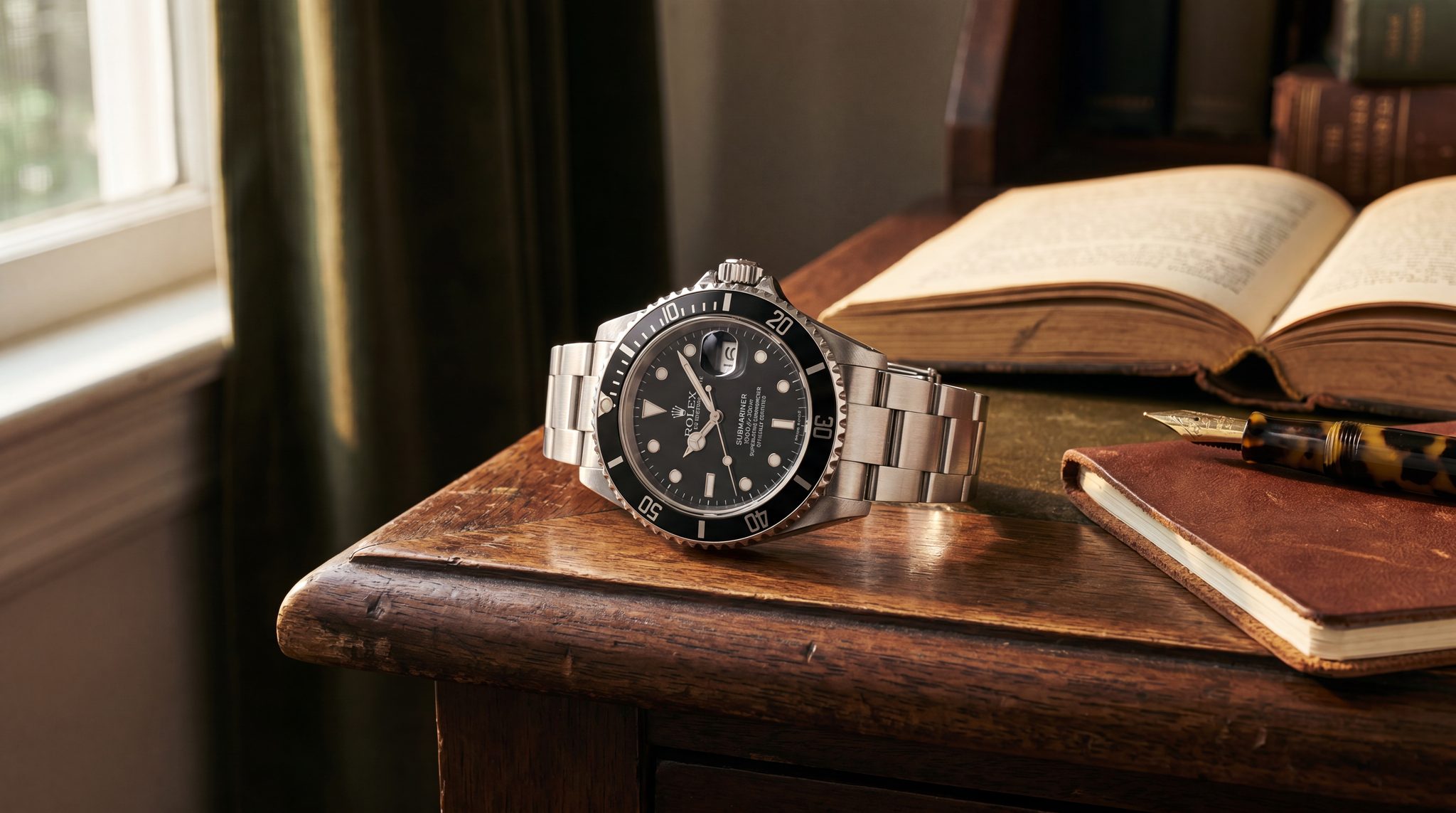
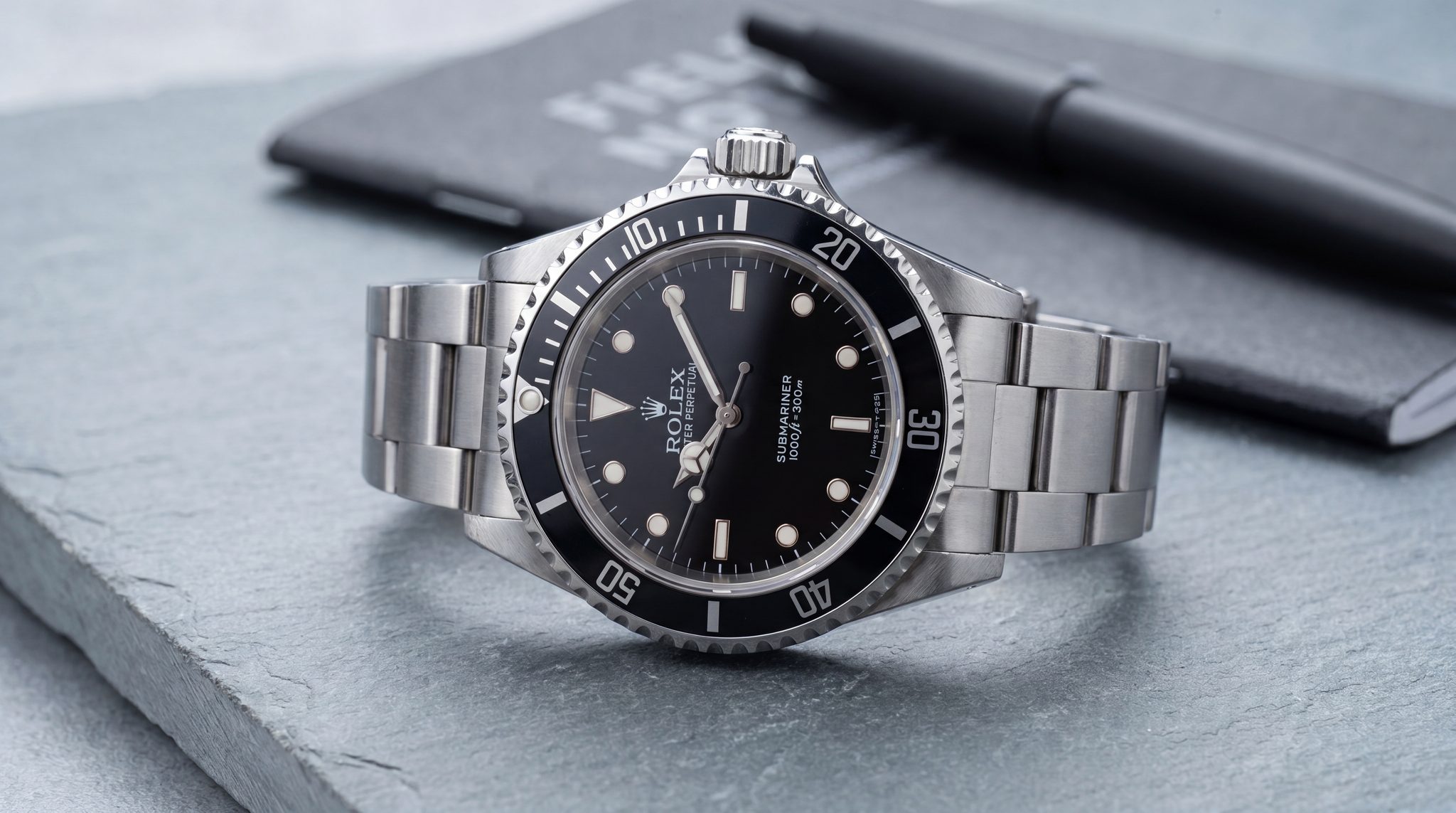
Adjacent in the Submariner family
Common questions about the 79090
The Tudor Submariner 79090 was produced from 1989 to 1995. Tudor dates its introduction to 1989, and Phillips gives the principal 1989–1995 production window. Ref. 79190 followed in 1995 with sapphire crystal and a unidirectional bezel.
- Tudor history: Submariners 1969 to 1999tudorwatch.com
- Tudor Submariner 79090 auction lotphillips.com
- Tudor Submariner 79090 and 75190 comparisontime-curated.com
Show 7 more
- Tudor Submariner 79090 reference overviewgenesiswatchmaking.co.uk
- Tudor Submariner history and referencesmostra-store.com
- 1992 Tudor Submariner ref. 79090tickingtimehomme.com
- 1990 Tudor Submariner ref. 79090tickingtimehomme.com
- Tudor Submariner 79090 market overviewflyback.ai
- Tudor Submariner 79090 reference guidetudorcollector.com
- 1992 Tudor Submariner reference listinghodinkee.com