

Rolex Explorer 214270
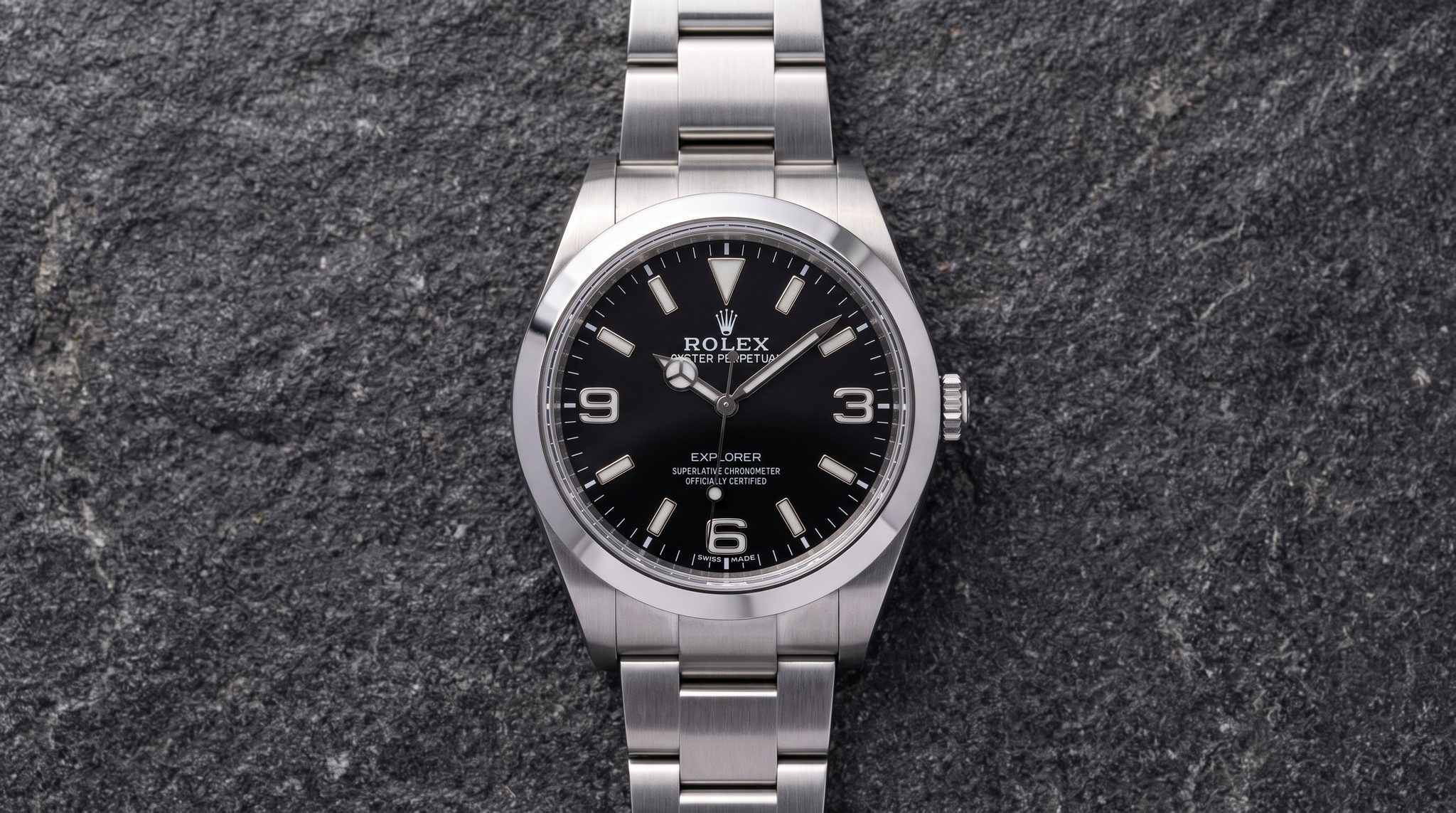
The Rolex Explorer 214270 is the one-generation 39 mm Explorer whose two distinct executions are defined by a visible correction, hands that finally fit the dial and 3–6–9 numerals that light up.
- Production
- 2010–2021
- Case
- Oystersteel
- Diameter
- 39 mm
- Bezel
- Smooth fixed steel
- Crystal
- Flat sapphire
- Water res
- 100 m
- Crown
- Twinlock screw-down
- Movement
- Cal. 3132
- Power
- ~48h
- Chronometer
- Yes (COSC)
- Lug width
- 20 mm
- Bracelet
- Oyster (Easylink)
The Rolex Explorer 214270 was produced from 2010 to 2021.
The Rolex Explorer 214270 is the Explorer that Rolex visibly corrected in public: the early watches wear hands that come up short on the 39 mm dial, and in 2016 the same reference quietly reappeared with longer hands and luminous 3–6–9 numerals. That single before-and-after, short minute hand that misses the minute track versus a minute hand that finally reaches it, is why the 214270 has become the defining “two-version” modern Explorer.
Launched at Baselworld 2010 as the first 39 mm Explorer, the 214270 sits between the last of the traditional 36 mm era (ref. 114270) and the 2021 return to 36 mm (ref. 124270). It is also the only Explorer produced in this exact size, and Rolex never offered it in Rolesor or precious metal. The result is a reference whose identity is unusually concentrated: one case, one movement (caliber 3132), one black dial, and a story told almost entirely by whether the 3–6–9 numerals glow and whether the hands look proportionate.
“A one-generation 39 mm Explorer, split cleanly in two: short hands and dark 3–6–9, then longer hands and luminous numerals in 2016.”
Rolex Explorer 214270 production years: 2010–2021
Most specialist sources place Rolex Explorer ref. 214270 production at 2010–2021, and the reference’s history turns on a rare modern Rolex moment where the “same watch” genuinely exists in two noticeably different executions. Rolex launched the 214270 at Baselworld 2010 as the first 39 mm Explorer, pairing the larger case with caliber 3132, a 31xx-family movement described as an evolution of the Explorer’s earlier 3130 architecture with added shock protection. The reason Rolex chose this direction is not documented in the open record, but the watch clearly aligns its larger case with a movement noted for Paraflex shock absorbers and a Parachrom hairspring.
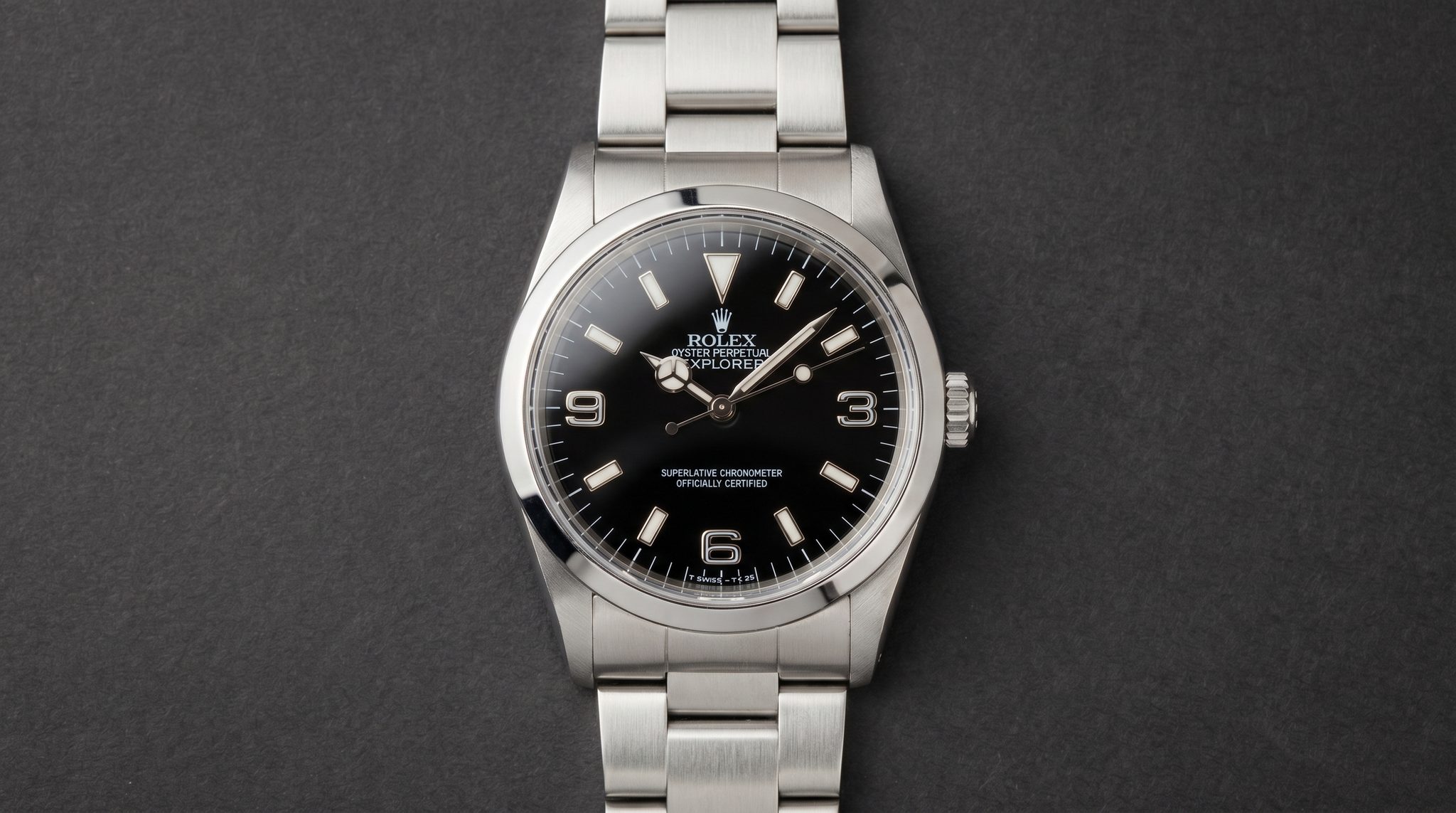
The early period is now called Mk I (2010–2016). In hand, the quickest tell is proportional rather than textual: the minute hand stops short of the minute track, leaving a thin ring of empty dial between its tip and the markers, and the polished 18k white-gold 3–6–9 numerals stay dark at night because they are not filled with luminous material. In 2016 Rolex revised the same reference into Mk II, correcting the proportions with longer, slightly broader hands and changing the dial so the 3–6–9 numerals are filled with Chromalight. Under low light, Mk II reads as a fully luminous hour scale, with the numerals joining the triangle and batons in a uniform blue glow.
One zoomed-out consequence of the 214270’s run is how much meaning collectors have been able to pack into a single, straightforward adjustment. There were no alternate metals, no bezel experiments, and no movement swap to segment the reference. Instead, the 214270 became a modern Explorer whose identity is pinned to a clear design decision, then a clear correction, and that simplicity is exactly what makes original dials and hands so consequential on the secondary market.
- 2010Introduced39 mm case, ref. 214270
- 2010 – 2016Mk I dialMinute hand misses minute track
- c. 2015Cert standardPaperwork/era cue, not dial text
- 2016Mk II update3–6–9 glow blue in Chromalight
- 2021DiscontinuedSuccessor ref. 124270 era begins
214270 against its neighbours
The Explorer 214270 is best understood as the hinge between two eras: it replaces the final 36 mm Explorer (114270) with a one-generation 39 mm case and the shock-focused caliber 3132, then gives way to the 36 mm return (124270) with Rolex’s newer 32xx movement family. Those neighbors frame what makes 214270 distinct, the only Explorer built around this exact 39 mm package.
This reference 214270 Rolex · focal 2010–2021 | ||||
|---|---|---|---|---|
| Production | 2001–2010 | 2010–2021 | from 2021 | from 2023 |
| Diameter | 36 mm | 39 mm | 36 mm | 40 mm |
| Case | Steel | Oystersteel | Steel | Steel |
| Crystal | Sapphire | Flat sapphire | Sapphire | Sapphire |
| Water res | 100 m | 100 m | 100 m | 100 m |
| Bezel | Smooth fixed steel | Smooth fixed steel | Smooth fixed steel | Smooth fixed steel |
| Movement | Cal. 3130 | Cal. 3132 | Cal. 3230 | Cal. 3230 |
| Power | ~48h | ~48h | ~70h | ~70h |
| Lume | Super-LumiNova | – | Chromalight | Chromalight |
Two dial generations across the run
Mk I is the original 39 mm execution, and it looks like a familiar Explorer dial scaled up without the final proportional recalculation. The most telling detail is the handset: the minute hand does not quite reach the minute track, so the watch reads slightly “small” inside its larger case, and many period reviews singled that out as the weak point of the design. In daylight, the 3–6–9 numerals reinforce the effect because they are solid 18k white gold with no luminous fill, catching light as polished metal against the matte black dial.
At night, Mk I is even easier to understand: Chromalight is present on the triangle at 12 and the baton markers, but the 3–6–9 numerals remain dark. That combination, short hands plus dead numerals, is the complete Mk I signature. The exact cutoff within 2016 is not publicly pinned to a firm month or serial range, which is why examples near the transition are best judged by these visible parts rather than by an assumed date.
What to check before buying a 214270
Buying a Rolex Explorer 214270 is mainly the art of confirming that the visible correction is either present by birth or absent by birth, not added later. Because Mk I and Mk II share the same case and caliber 3132, a service dial and hands can collapse the reference’s two-version history into something that looks “right” but is no longer period-correct. The safest path is to treat the minute hand’s reach and the 3–6–9 lume as primary evidence, then let paperwork and service history support that physical story.
Condition matters in a very literal way on this reference. The Explorer’s appeal is its restraint, so polishing that softens the case lines or swapping parts that change the dial’s night behavior tends to be more noticeable than on busier sports models. For many owners, the practical draw is exactly what Rolex built here: a slim, 100 m-rated, time-only steel Oyster watch with a matte black dial, an Oyster bracelet with Easylink comfort extension, and a movement family known for robust daily performance. Owning one is less about managing complications and more about living with a single clear design choice, either the original Mk I quirk or the Mk II correction.
Rolex Explorer 214270 price and value
A Rolex Explorer 214270 sells for about $6,800 at the median, typically $6,000 to $7,500 across 148 comparable sales.
Rolex Explorer 214270 for sale
Indicative figures from recent dealer, auction, and Grey Market sales (updated this week). Every watch is verified before it sells here.
Each point is a recent dealer or auction sale, banded to an indicative figure. The range shown is not a valuation.
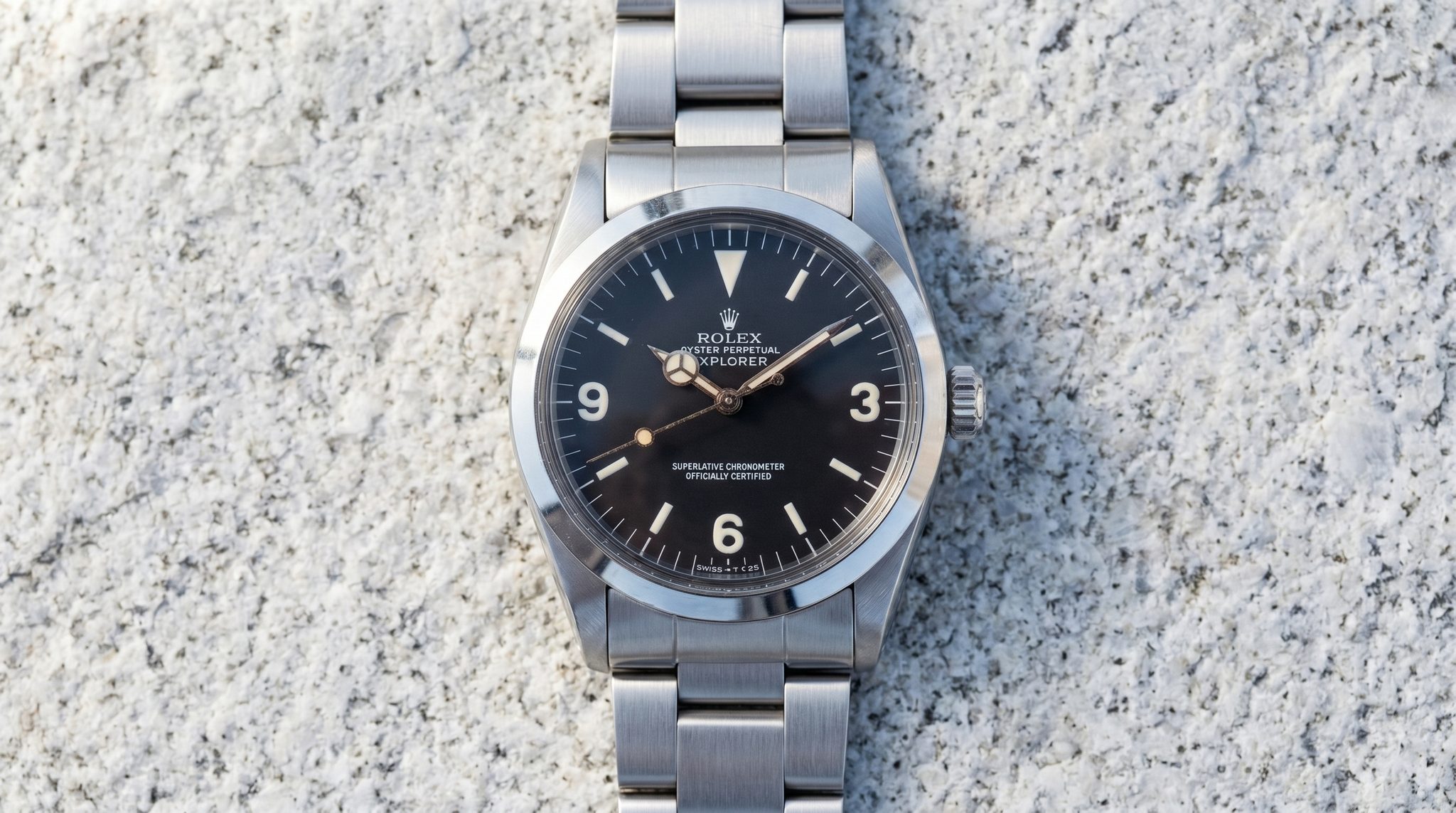
Adjacent in the Explorer family
Stories that discuss the 214270
Common questions about the 214270
The Rolex Explorer 214270 was produced from 2010 to 2021.
- Rolex Explorer 214270 Ultimate Buying Guide - Bob's Watchesbobswatches.com
- Rolex Explorer Evolution: 14270 to 114270 to 214270 - Bob's Watchesbobswatches.com
- Rolex Explorer 214270 2016 | In-depth review - Monochrome Watchesmonochrome-watches.com
Show 7 more
- The New Rolex Explorer Reference 214270 - Fratellofratellowatches.com
- Rolex Explorer 214270: The Story Behind the Mark II Dial Guide - Bob's Watchesbobswatches.com
- Pre-Owned Rolex Explorer 214270 - The 1916 Company (Rolex CPO listing page)the1916company.com
- Rolex Explorer ref. 214270 Watches on Chrono24 (reference overview)chrono24.com
- One Year With The Rolex Explorer 214270 | Best And Worst (owner measurements)youtube.com
- Rolex Explorer I 39mm 214270 Mk2 - Rubber B (market context)rubberb.com
- Rolex Explorer: references 1953–2025 & pre-owned buying guide - Mostra Storemostra-store.com