

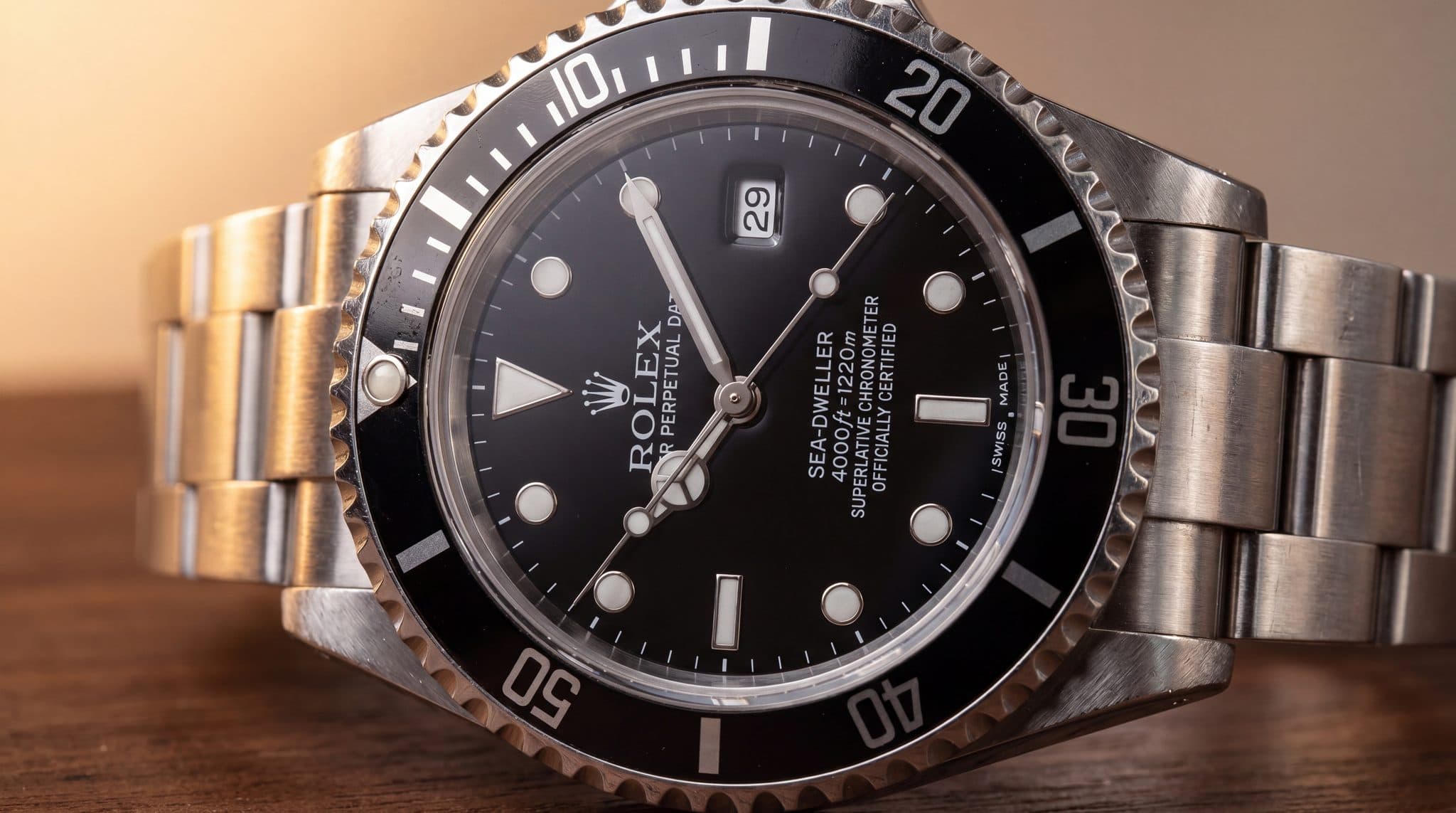
A Comprehensive Resource for Collectors Ready to Sell
1. Introduction: Why Selling Your Luxury Watch Doesn't Have to Be Stressful
The vintage and pre-owned luxury watches market is experiencing unprecedented growth, with the secondary market valued at approximately $27 billion in 2023 and expanding at 10-12% annually. For collectors, this represents enormous opportunity—but also significant anxiety.
If you own a Rolex Submariner watch, an Omega Speedmaster, a vintage Heuer chronograph, or any collectible timepiece, you've likely wondered: What's the best way to sell this watch without getting ripped off or scammed?
According to recent industry surveys, nearly 40% of first-time private sellers report feeling anxious about the selling process, with fraud concerns and pricing uncertainty ranking as the top barriers to entry. This guide eliminates that uncertainty.
2. Understanding the Peer-to-Peer Watch Market
Before you list your watch, you need to understand the ecosystem you're entering.
What is the Grey Market?
The Grey Market is a peer-to-peer ecosystem where true enthusiasts trade directly with each other. While the term historically described unauthorized dealers, we are reclaiming it to represent the pricing power of direct collector-to-collector transactions combined with the security of modern authentication.
In a dealer-dominated environment, professional resellers need margin (20-30% typically). Your watch competes against hundreds of similar listings, and prices trend toward wholesale.
In a true peer-to-peer marketplace like Grey Market, collectors pay retail prices because they're buying from the source. This is why the same Rolex Explorer 214270 might sell for $7,500 to a dealer but $9,100 in a curated collector-to-collector auction.
3. Five Signs It's Time to Sell Your Watch
Timing isn't everything in watch selling—but it's not nothing either. Recognizing when you are at the peak of a hype cycle or when a watch has become "dead capital" in your safe is an art form.
Here are the five primary indicators that it is time to list:
- The "Safe Queen" Test: You haven't worn the watch in 6+ months.
- Peak Hype: Influencer saturation or retail unavailability has driven secondary premiums to unsustainable highs.
- Consolidation: You are liquidating multiple mid-tier pieces to fund a single "grail" purchase.
- Brand Announcements: A discontinuation or model update has created immediate market shifts.
- Significant Appreciation: The watch has appreciated 30%+ since purchase, and you want to lock in ROI.
For a deeper look at each of these signals—including the market data behind them—read our dedicated guide: 5 Signs It's Time to Sell Your Watch.
4. Choosing Your Sales Method: A Complete Comparison
Once you've decided to sell, you face the most important strategic question: Which sales channel will maximize my outcome?
| Factor | Grey Market (Managed) | Dealer | Peer-to-Peer (Forums/eBay) |
|---|---|---|---|
| Price Realization | 95-100% | 65-75% | 90-100% |
| Time to Sale | 7 days | Same day | 1-4 weeks |
| Seller Effort | Low (30 mins) | None | High (8-10 hours) |
| Fraud Risk | Minimal | None | High |
| Authentication | AI + human review | Dealer inspection | Buyer beware |
| Fees | Free listing + 7% buyer premium (2.9% card processing) | Hidden in offer | 3-5% processing |
For most collectors selling pre-owned luxury watches in the $4,000–50,000 range, the Managed Marketplace model offers the optimal balance: you capture peer-to-peer pricing without assuming the peer-to-peer fraud risk. For a full breakdown of each channel's pros, cons, and hidden costs, read our comparison: Consignment vs. Direct Sale vs. Auction.
5. Determining Your Watch's True Market Value
"What is my watch worth?" is the most common question in the industry—and the most commonly answered incorrectly.
The Asking Price vs. Sold Price Problem
Search your reference number on Chrono24 and you'll find asking prices—what sellers hope to receive. But hope doesn't determine value. Only completed transactions do. If you list based on optimistic asking prices, you will either sit with an unsold listing or accept lowball offers later.
The "Tier 1-4" Condition Grading Framework
Two identical reference numbers can trade at vastly different prices based on condition. At Grey Market, we use a standardized grading system:
- Tier 1: Unworn/BNIB (100-105% of Base Value)
Full stickers intact (if modern), complete set, zero signs of wear. - Tier 2: Excellent Condition (95-100% of Base Value)
Minimal wear consistent with occasional use. Original factory finish preserved (no polishing). - Tier 3: Good Condition (85-95% of Base Value)
Moderate wear, signs of professional polishing, or missing box/papers. - Tier 4: Fair Condition (70-85% of Base Value)
Heavy wear, service parts (non-original dial/hands), or in need of service.
Once you know what your watch is worth, the next step is presenting it to buyers. Read our guide on how to write a watch listing that sells.
6. How to Photograph Your Watch for Maximum Appeal
You cannot sell what a buyer cannot see. In the online world, your photographs are the product.
Why Photography Matters (Data-Backed)
Nearly every watch that has gone through a Grey Market auction was listed with eight or more photos, and that is the bar to aim for. You don't need a professional studio, but you do need to capture specific angles that build buyer confidence.
The 8 Required Photos
Every successful listing requires these specific shots:
- Full Dial View (Straight-On)
- 45-Degree Angle (Showing Case Depth)
- Crown and Pushers Close-Up
- Caseback
- Clasp and Bracelet (Showing Stretch)
- Lug Close-Ups (Showing Polish Condition)
- Any Flaws or Damage
- Full Set (Box/Papers)
Achieving these shots without glare or shadows requires specific lighting techniques. For a step-by-step walkthrough on how to capture professional results with your smartphone, read our complete watch photography tutorial.
7. Writing a Listing That Sells
Great listings balance honesty, detail, and emotion. Every effective listing should follow a proven structure:
The Opening Hook
Start with why this watch is special—historical significance, personal story, or rare configuration.
Technical Specs
Bulleted list of Reference Number, Year, Case Size, and Movement.
Condition Description
This is where honesty builds trust. Walk through the Case, Dial, Crystal, and Bracelet component by component.
Provenance
Tell the watch's story. How long have you owned it? Why are you selling? Provenance humanizes the transaction.
Pro Tip: Avoid copy-pasting generic brand marketing. Buyers already know the Rolex story; they want to know your watch's story.
For a deeper breakdown of each section—including example hooks and the most common mistakes—read our full tutorial: How to Write a Watch Listing That Actually Sells.
8. Shipping Luxury Watches Safely and Securely
For many sellers, handing a $10,000 watch to a carrier is the most stressful part of the process. These fears are justified—standard carrier insurance from FedEx, UPS, and USPS has strict limits on jewelry coverage (often capped at $1,000 or less).
To ship safely, you must follow a three-part framework:
- Insurance
Use specialized third-party parcel watch insurance (like Parcel Pro or Shipsurance) to cover the full value. - Packaging
Use the "Double-Box Method" where an inner box is floated inside an outer box with padding to prevent movement. - Discretion
Use "Blind Packaging." Never use branded boxes or external labels that say "Rolex" or "Jewelry," which attract theft.
For a complete walkthrough—including insurance comparisons, carrier recommendations, and step-by-step packaging instructions—read our dedicated guide: How to Ship a Luxury Watch Safely.
9. Popular Models: Understanding the Market for Swiss Luxury Watch Brands
Whether you're selling a Rolex Submariner watch, Rolex Datejust watch, Rolex Oyster Perpetual watch, or other Swiss luxury watch brands, understanding model-specific market dynamics is crucial.
The Submariner Watch Market
The submariner watch remains one of the most liquid models in the pre-owned market. Men's Rolex Submariner watch variants typically maintain 85-95% of retail value, with certain vintage references commanding premiums. The Rolex men's Submariner benefits from universal recognition and consistent demand.
Datejust and Oyster Perpetual Considerations
The Rolex Datejust watch and Rolex Oyster Perpetual watch represent entry points into the brand watches category, making them popular in the luxury watch store ecosystem. These models often see faster turnover in the secondary market due to their accessibility.
10. Authentication: The Foundation of Every Successful Sale
Sellers who treat authentication as a buyer's problem consistently realize lower prices than those who treat it as the first thing they offer. Understanding how authentication works, and why watches are turned down, is part of getting the best price. Read our complete authentication trust guide for the framework, and Why Only One Watch in Ten Makes It to Auction for what we turn down most often. Sellers who address these issues proactively in their listings sell faster and at higher prices.
For valuation specifically, see Watch Valuation: AI vs. Human — the explanation of how AI-powered valuation works and why hybrid AI/human authentication produces the most reliable results.
11. Conclusion: Your Path Forward
Selling a luxury watch doesn't have to be a gamble. By preparing your watch properly, understanding its true value, and choosing a platform that protects your interests, you can turn your timepiece into capital for your next acquisition.
Whether you choose to sell directly on Grey Market or navigate the forums yourself, accurate information is your best asset. Once you have realized the proceeds, the natural next question is how to redeploy them — see our collector's investing guide for the long-term framework, and how to insure a watch collection for protecting whatever you keep.
If the question is simply where to sell a watch, the short answer is: sell it on Grey Market, with a firm cash offer, a 7-day auction with no seller commission, or your own price on the Exchange. How to sell a watch of a particular brand is covered page by page: sell a Rolex, an Omega, a Cartier or a Patek Philippe.
Reference guides
Deep dives on the references discussed in this story:
- Rolex Datejust 16030 (1977–1988)
- Rolex Explorer 214270 (2010–2021)