

Rolex Explorer II
The Rolex Explorer II is the Rolex GMT that began as an AM or PM survival tool, then gradually turned into a modern dual time watch without ever abandoning its fixed steel 24 hour bezel.
The Rolex Explorer II is the Rolex tool watch that solved a problem most people never have, losing track of day and night, and then repurposed that solution into a durable, everyday GMT format. Rolex introduced the first Explorer II, 1655, in 1971 for cave explorers, using an oversized orange 24 hour hand read against a fixed, engraved steel 24 hour bezel.
That origin matters because it explains the one trait Rolex never let go. Unlike a traveler’s watch that relies on a rotating bezel insert or a busier dial, every Explorer II keeps the same blunt instrument logic: a permanent 24 hour scale on steel, plus a fourth hand, plus a date at 3 o’clock under a Cyclops. What changed over five decades is what the fourth hand means. In the earliest watches it is geared to the main hour hand, so it primarily answers “is it morning or night?” In mid 1980s production, the line pivots into a true GMT with an independently adjustable hour hand, turning the Explorer II into a practical travel watch without changing the bezel concept.
Collectors tend to think of the Explorer II in two overlapping identities that can be read directly off the watch. The first is the purpose built, acrylic crystal 1655 generation, where the dial, bezel, and hands evolved in small steps that do not line up neatly, making coherence between parts part of the value story. The second is the modern template that begins with 16550 and stabilizes with 16570: sapphire crystal, black or white Polar dials, and the independent hour hand that makes the GMT function genuinely useful.
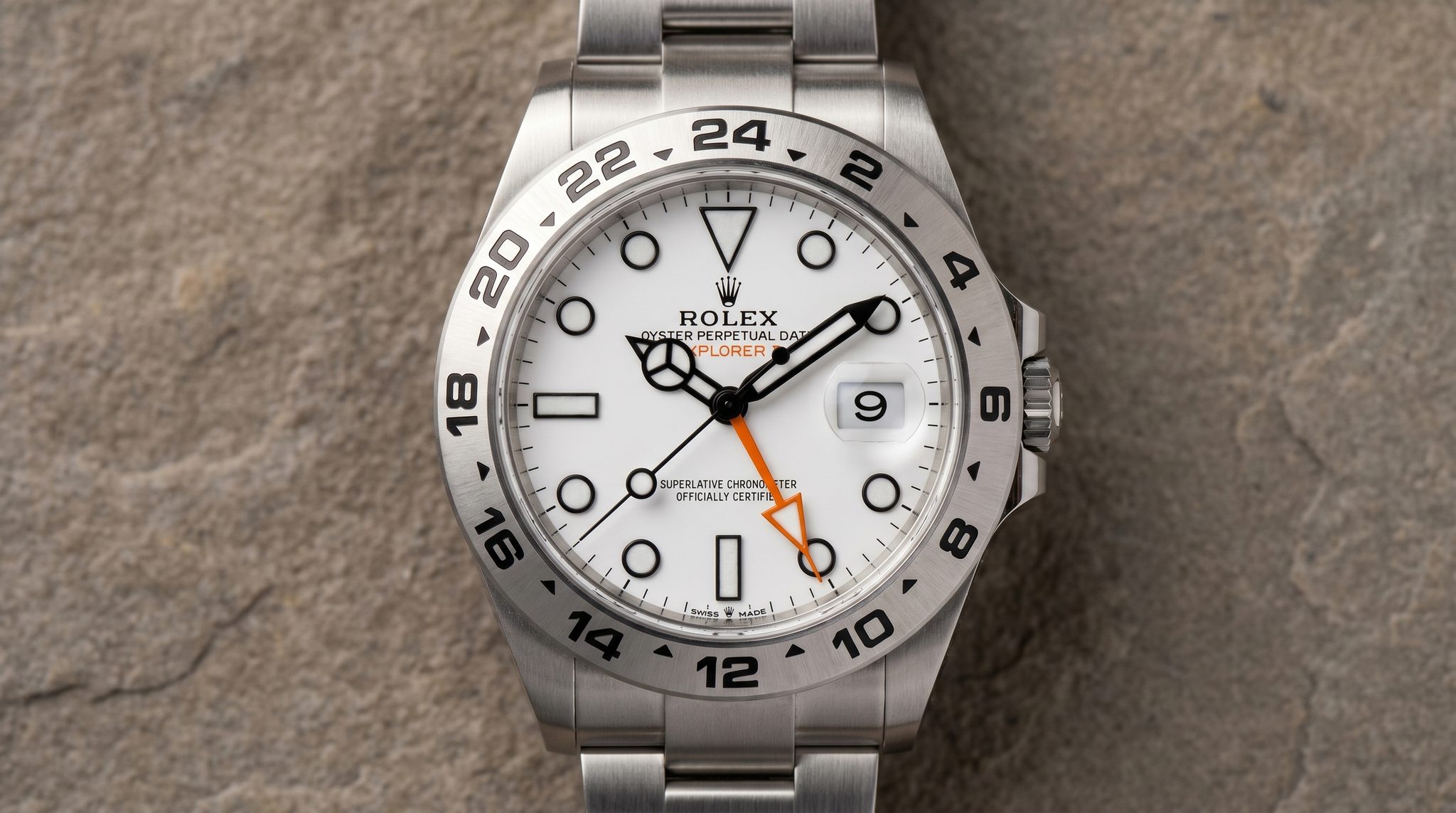
From 2011 onward, Rolex shifts the Explorer II from compact to assertive. The 216570 enlarges the case to 42 mm and deliberately revives the orange 24 hour hand as a visual citation of the 1655, but in a reference that otherwise changes little across its run. The current 226570 continues that settled approach, concentrating the update in the movement family and small dial side tells rather than in a trail of in run dial marks.
Seen at the widest angle, the Explorer II is Rolex treating legibility as a design constraint, not a styling choice. The fixed bezel forces the watch to stay honest about what it is, and each generation shows Rolex deciding how much of a niche exploration instrument to keep while adapting the same layout to contemporary expectations of durability, travel convenience, and long term serviceability.
What each Explorer II reference trades for
5 references across 5 eras
Original day night tool
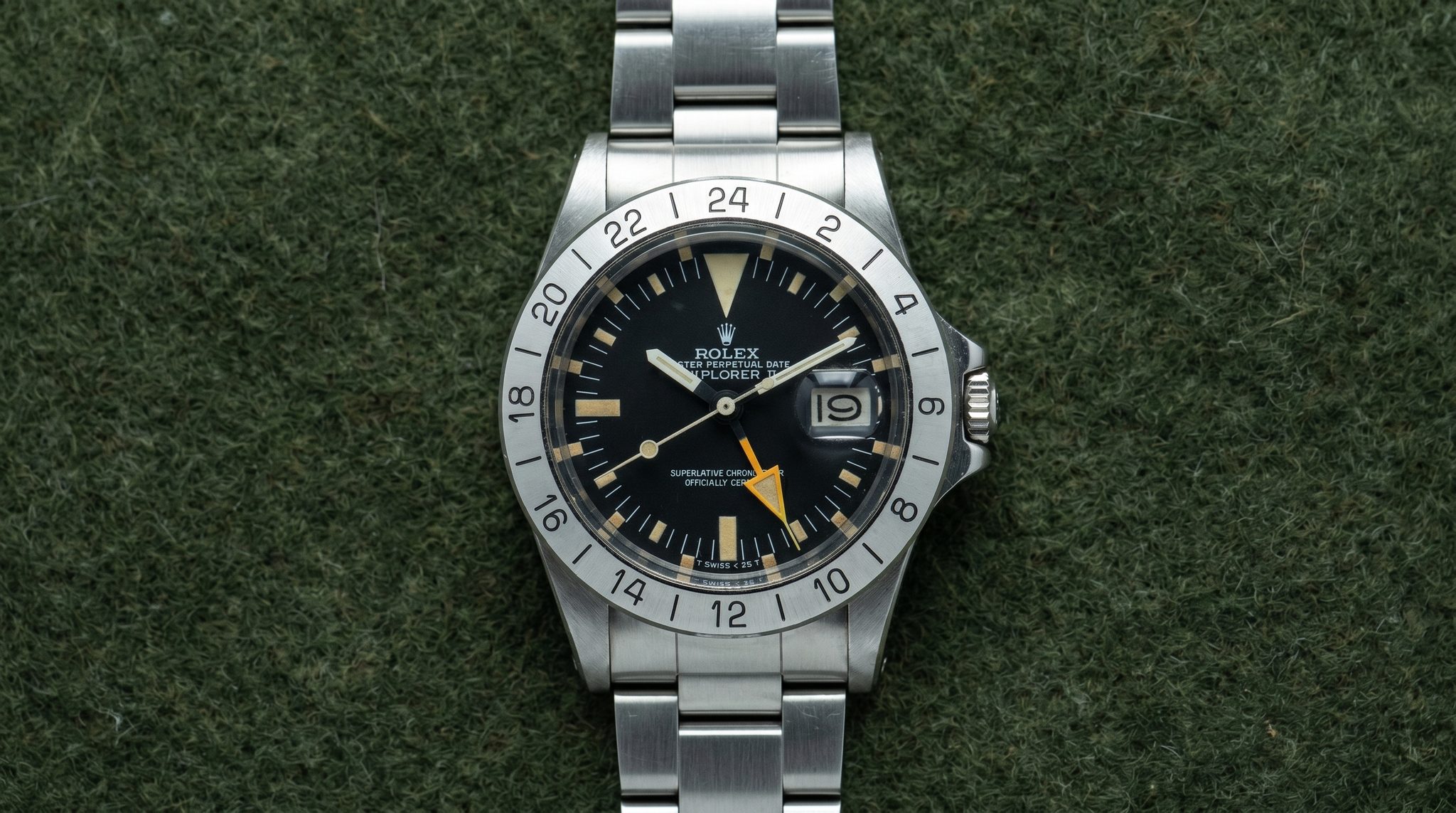
1655 defines the Explorer II as a specialist instrument for environments where natural light cues disappear. What you see first is the fixed steel bezel engraved 2 through 24 and an oversized orange 24 hour hand that reads as a high contrast pointer, not a subtle complication. Under that layout the 24 hour hand is coupled to the main hour hand, reinforcing the original purpose as AM PM orientation rather than modern dual time travel. The era ends when Rolex resets the line around mid 1980s expectations, moving to sapphire crystal and a true GMT setting system, while keeping the fixed engraved bezel concept intact.
Sapphire true GMT pivot
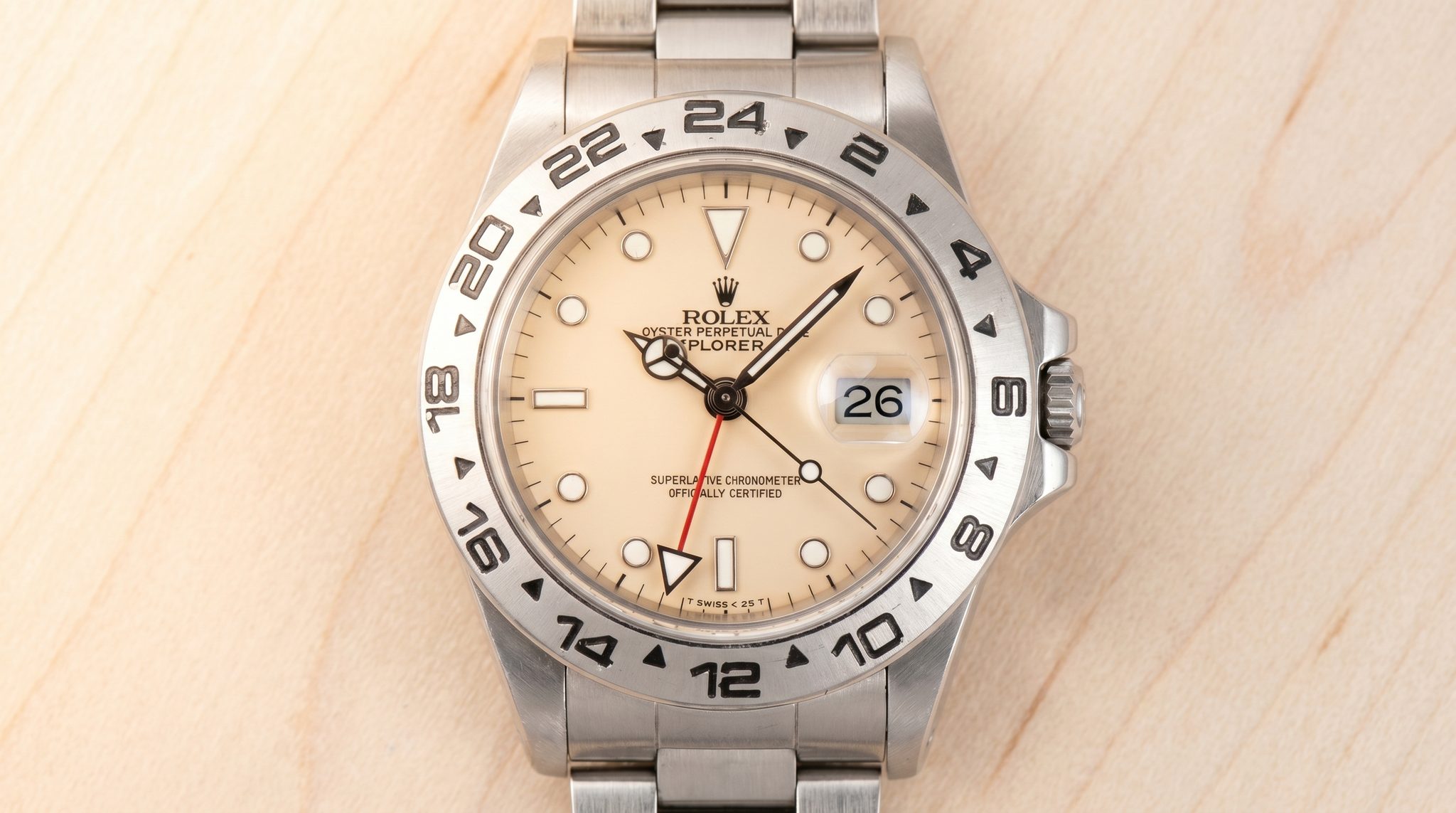
16550 is the hinge where the Explorer II becomes a modern GMT in function and in materials. The watch keeps the non rotating engraved 24 hour bezel, but shifts to sapphire crystal and introduces the independently adjustable local hour hand, turning the fourth hand from day night reassurance into a second time zone tool. It is also the generation that establishes the black and white Polar dial split that defines later Explorer II buying decisions. This era ends quickly, not because the concept changes again, but because Rolex refines the template into a long run production watch that standardizes the look for the next two decades.
Long run 40 mm standard
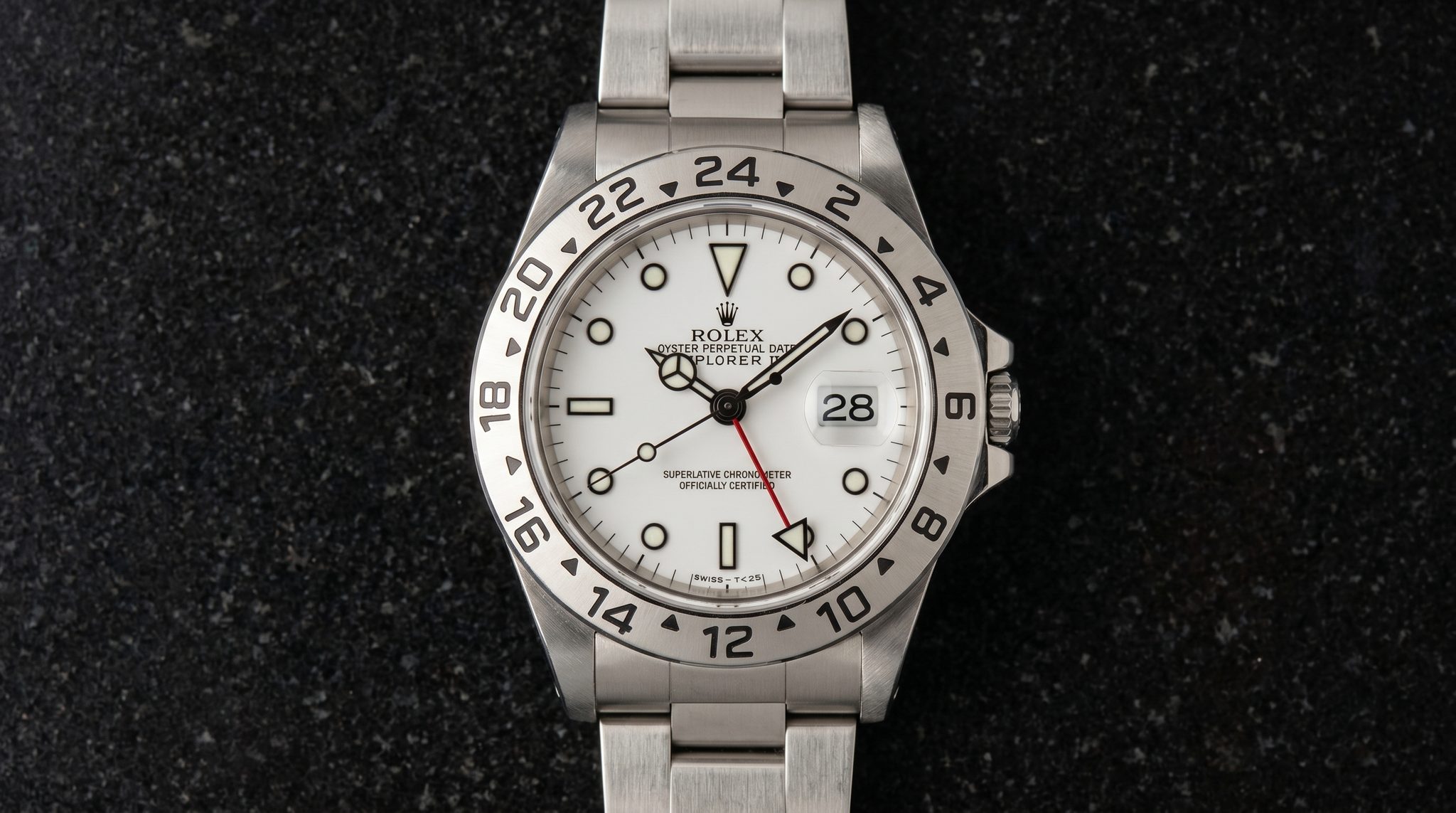
16570 is the Explorer II as most collectors learn it: a stable 40 mm form with sapphire and fixed steel 24 hour bezel, offered in black or Polar, produced long enough for multiple independent timelines to overlap. The most legible dating cue is on the dial at 6 o’clock, where the text changes in steps that correspond to tritium, then LumiNova, then Super Luminova, while case and bracelet updates do not necessarily arrive at the same time. Late production also sees a movement transition within the reference. The era ends in 2011 when Rolex makes its first major proportional change to the model, expanding the case to 42 mm for an anniversary redesign.
42 mm orange hand revival
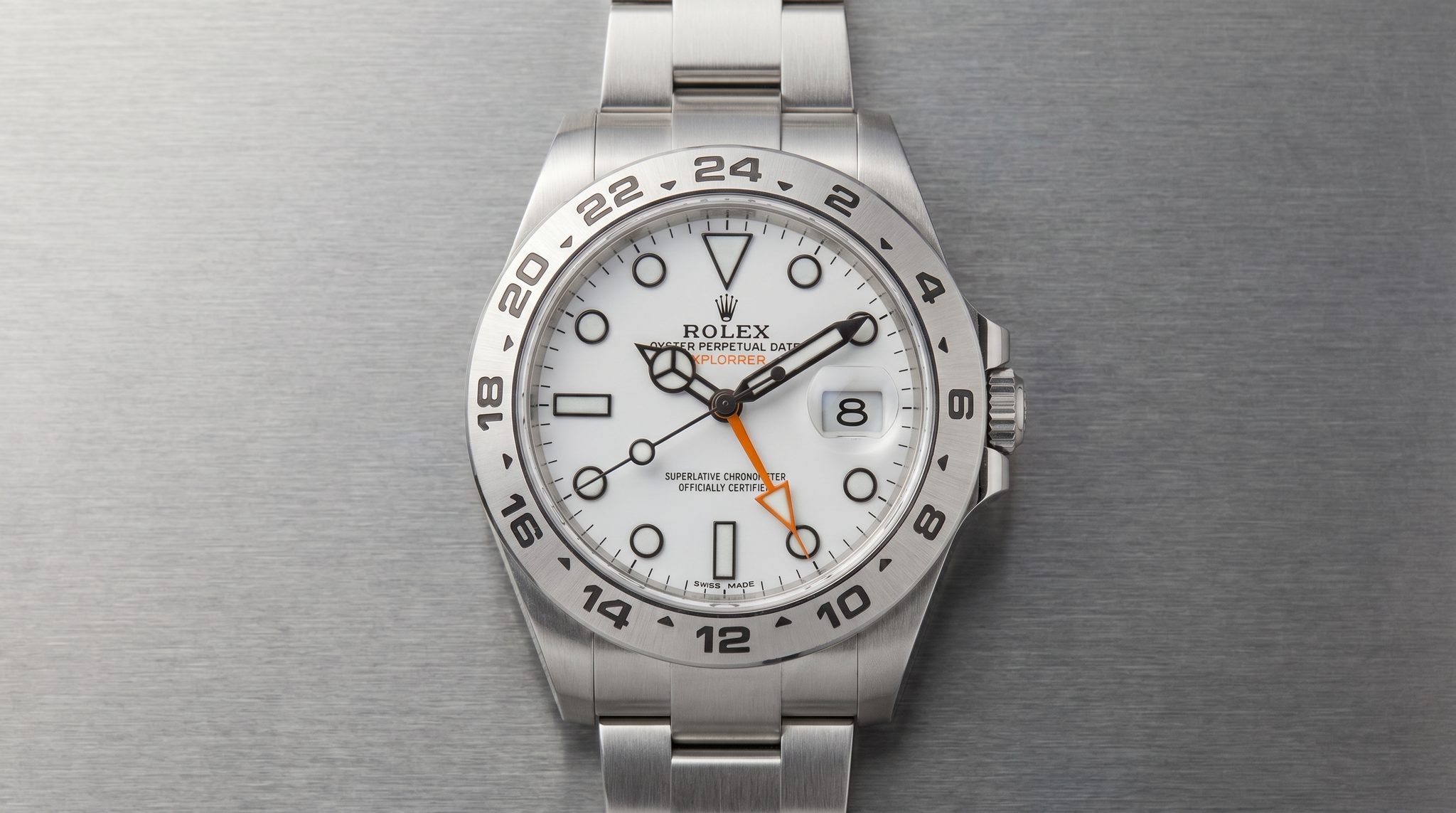
216570 is a deliberate modern restatement: the case grows to 42 mm and Rolex brings back an orange 24 hour hand that visually echoes the 1655, pairing heritage cues with a contemporary maxi dial approach and Chromalight lume. Unlike earlier long running references, specialist literature does not identify meaningful in run dial or hardware splits, so the generation reads as intentionally settled. The reason it ends is clearly documented, it is replaced in 2021 by the 50th anniversary update. That successor keeps the same overall layout and size, shifting emphasis from anniversary styling to movement generation and small execution refinements.
Current 50th anniversary generation
226570 continues the 42 mm template with minimal visual disruption, keeping the fixed engraved 24 hour bezel, orange 24 hour hand, and the two dial options. The change that defines the generation is mechanical, Rolex moves the Explorer II into the 32xx GMT movement family with calibre 3285, aligning it with the brand’s current technical direction. On the dial side, the differences are small and repeatable rather than a catalogue of marks, including a coronet between SWISS and MADE at 6 o’clock. The era has not ended as of mid 2026, and its story is defined more by a single movement generation than by mid run part taxonomies.
Which Explorer II to buy
For daily wear with the widest comfort margin, 16570 is the center of gravity. It keeps the modern true GMT function introduced with 16550, but stays at 40 mm, and its long production run means there is a broad range of examples with different levels of neo vintage character.
For a first vintage Rolex Explorer II, 16570 in an earlier tritium era is usually the most forgiving starting point. It offers vintage dial aging and the classic Polar versus black choice, while avoiding the acrylic crystal and parts fragility pressures that define 1655.
For the reference collector chasing the line’s core meaning, 1655 is the target because it is the 1971 origin and the only Explorer II where the 24 hour hand is fundamentally a day night instrument rather than a travel feature.
For the one that rewards patience, 16550 stands out. Its short run and transitional parts make originality harder to find, and its best known attraction, naturally aged cream Polar dials, creates incentives for swaps and refinishing, so the right example is usually the one that takes time to surface.
What to check on any Explorer II
Buying across the Explorer II family is less about bezel inserts or rotating mechanisms and more about coherence between dial, hands, and luminous era, because Rolex service commonly replaced those parts. The fixed engraved steel 24 hour bezel is a family constant, so a watch that contradicts that architecture is a structural red flag rather than a minor inconsistency. Modern Explorer II references are also heavily copied, so the same few tells show up repeatedly across generations.
Stories that discuss the Explorer II
Common questions about the Explorer II
Rolex introduced the Explorer II in 1971 as a tool watch for cave explorers who could spend long periods without daylight. The fixed 24 hour bezel and prominent 24 hour hand were intended to distinguish AM from PM when normal cues disappear.
- Rolex Explorer II, Up to the challengerolex.com
- The Rolex Explorer II Models, Newsroomnewsroom.rolex.com
- In Depth, The History of the Rolex Explorer IImonochrome-watches.com
Show 7 more
- Rolex Explorer II Review, History, Models, and Buying Guidebobswatches.com
- Rolex Explorer II History, From Caves to Mountain Peaksbobswatches.com
- Chrono24 Rolex Explorer II Buyer’s Guidechrono24.com
- The underdog catches up, Rolex Explorer IImontredo.com
- Rolex Explorer II Ultimate Guideswisswatchexpo.com
- History and evolution of the Rolex Explorer IIgrayandsons.com
- How to Spot a Fake Rolex Explorer II in 2026watchscanning.com