

Omega Speedmaster
The Omega Speedmaster is the racing chronograph that became a space watch without abandoning the bezel-tachymeter tool design it launched with.
The Omega Speedmaster is the rare watch line whose defining feature, a tachymeter scale moved onto the bezel for speed calculations, was conceived for the racetrack and only later became inseparable from the Moonwatch story. It debuted in 1957 with the CK2915, pairing Cal. 321 with an external tachymeter bezel as part of Omega’s professional instrument push alongside the Seamaster 300 CK2913 and Railmaster CK2914.
That origin matters because it explains why the Speedmaster’s identity has held together through its biggest pivots. NASA qualification in 1965 elevated the Speedmaster’s reputation, but the watch that racers needed and the watch astronauts used shared the same core priorities in Omega’s early language, legibility, durability, and precise elapsed-time reading. What changes across generations is the architecture around those priorities: first a compact straight-lug case that evolves rapidly, then an administrative renumbering that overlaps real-world production, then the 42 mm asymmetrical “Professional” case that fixes the Moonwatch silhouette, and finally the Cal. 321 to Cal. 861 movement change that makes long, stable production possible.
Collectors can read that arc directly off the wrist. Straight lugs with no crown guards place a watch in the pre-Professional world (CK2915, CK2998, then 105.002 and 105.003 and their renumbered 145.003 label), while the twisted-lug asymmetrical case and “Professional” dial text define the Moonwatch-era platform (105.012 and 145.012). The shift to Cal. 861 in 145.022 is the family’s major technical handoff, and its long run creates many correct combinations rather than one fixed configuration. By the 2000s, special editions like 3578.51.00 show a different kind of continuity: the underlying Moonwatch platform stays familiar, while meaning is concentrated into dial and caseback execution.
One zoomed-out lesson falls out of this history. The Speedmaster did not become enduring by staying still, it became enduring by changing the few things that had to change, case protection, reference coding, then movement industrialization, while keeping the same readable tool-watch proposition that began with motorsport timing in 1957.
What each Speedmaster reference trades for
Median and typical range of recent dealer, auction and Grey Market sales, banded. Indicative, not a valuation; each reference page carries the detail.
9 references across 4 eras
Broad Arrow to 2998
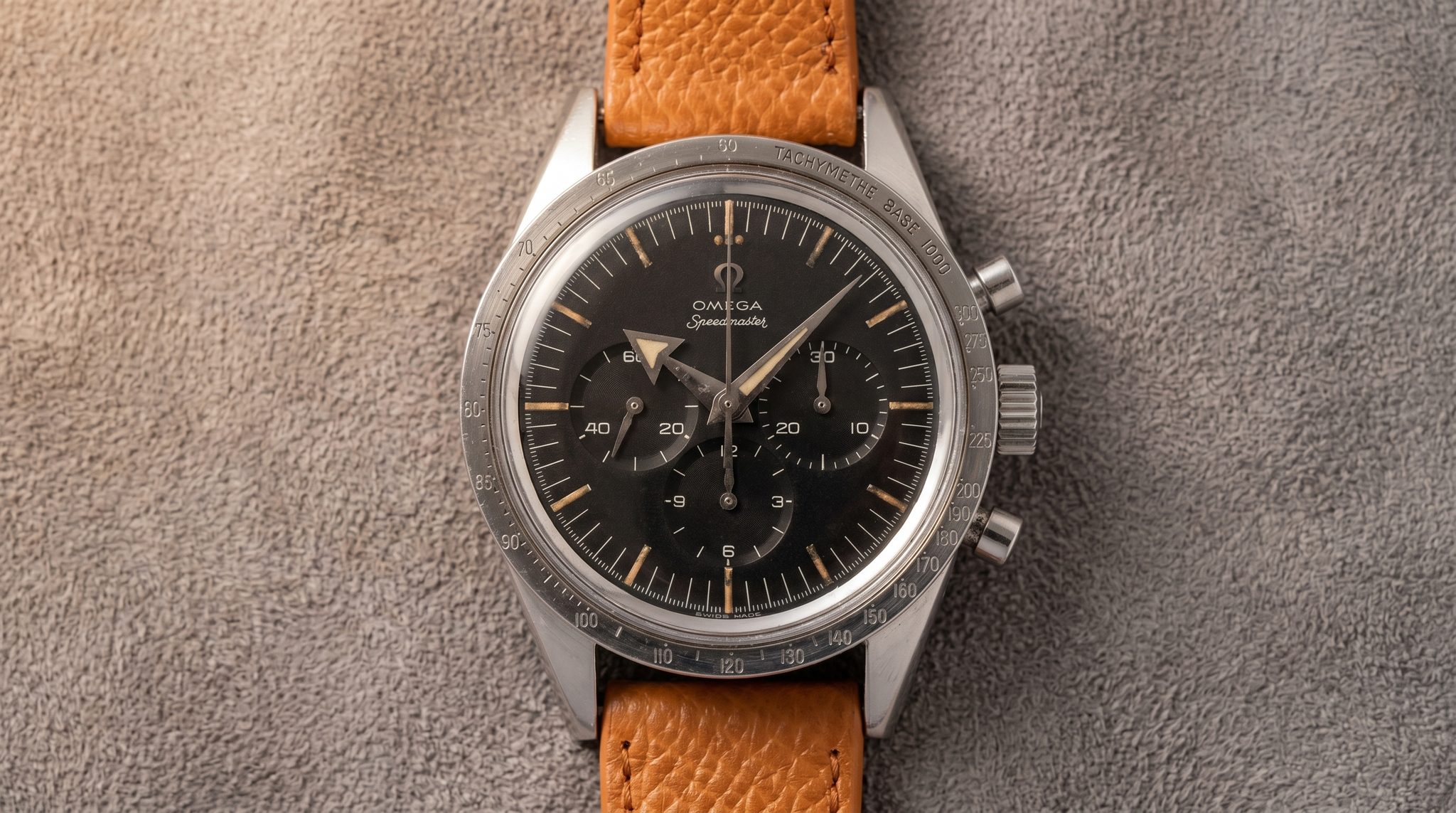
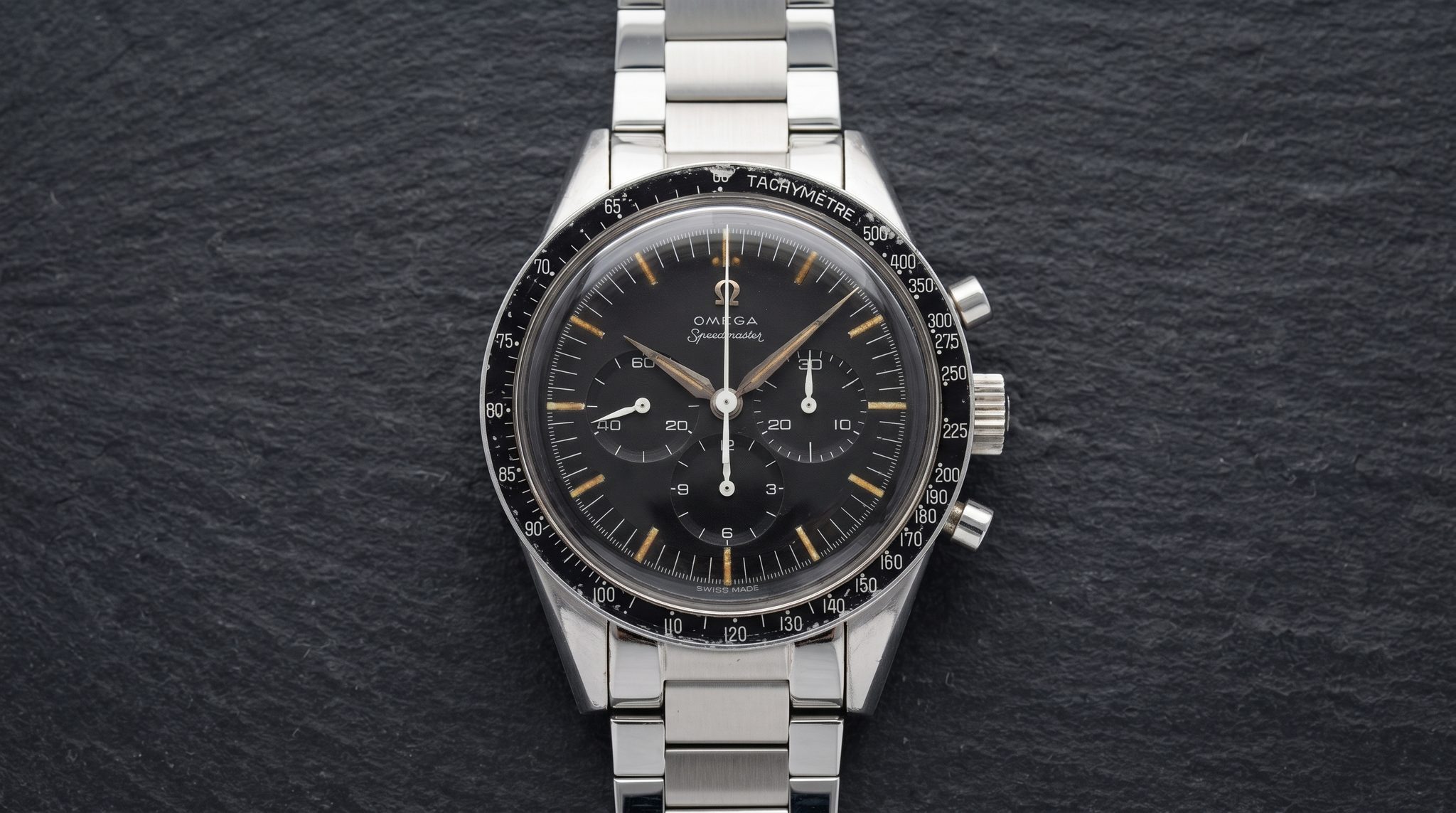
The Speedmaster begins as a purpose-built racing chronograph, defined by Omega’s decision to put the tachymeter on the bezel for at-a-glance speed calculations. CK2915 establishes the template in 1957 with Cal. 321 and an instrument-like, high-contrast layout. CK2998 follows as the early-1960s refinement phase where the same straight-lug, Cal. 321 architecture continues but visible components evolve in overlapping ways, especially bezel scales and hand styles. This era ends not because the design is abandoned, but because Omega starts recoding and rationalizing references in the early 1960s. That renumbering overlaps the tail of CK2998 production and deliveries rather than arriving as a clean break.
Renumbered straight-lug 321s
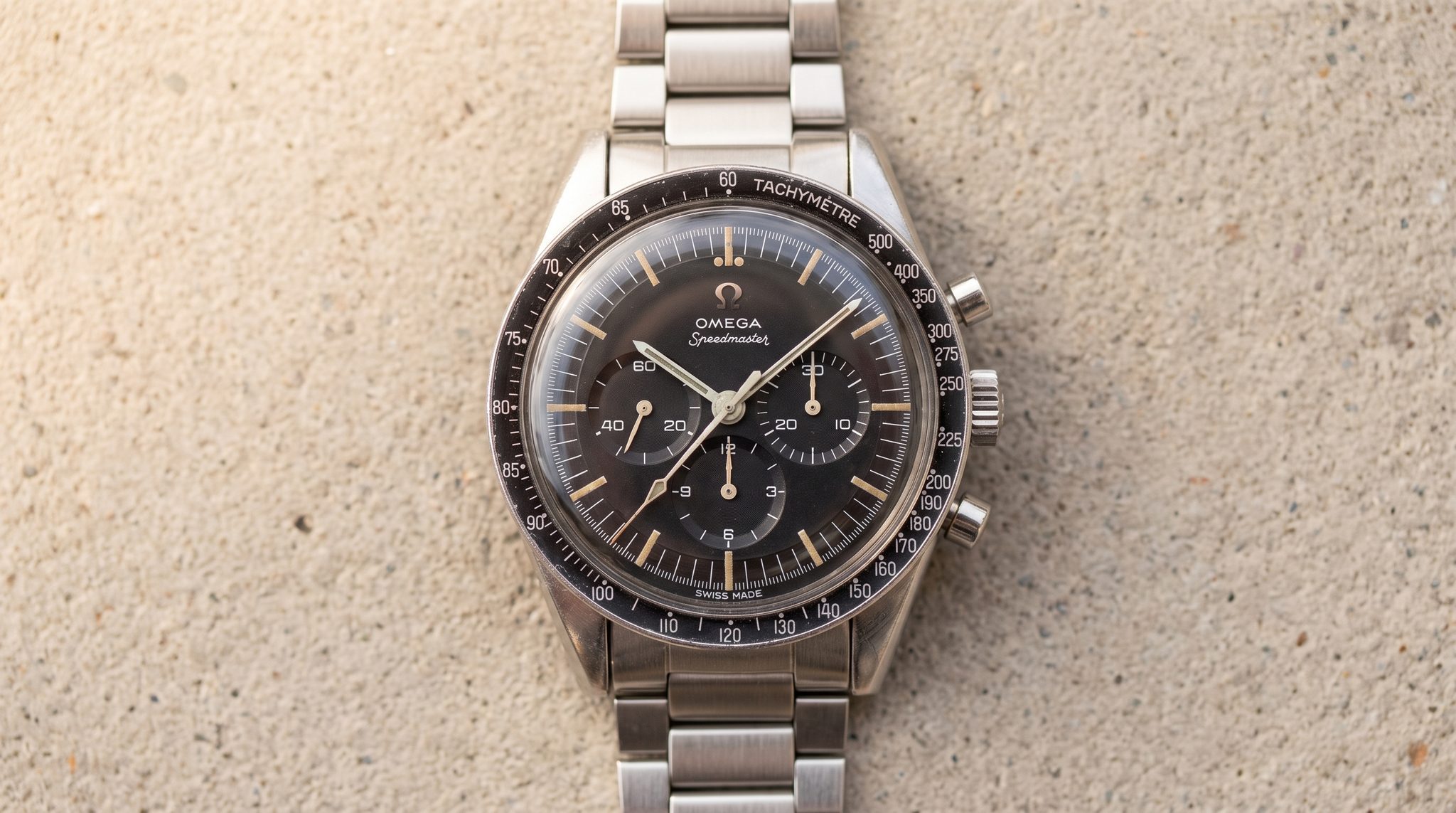
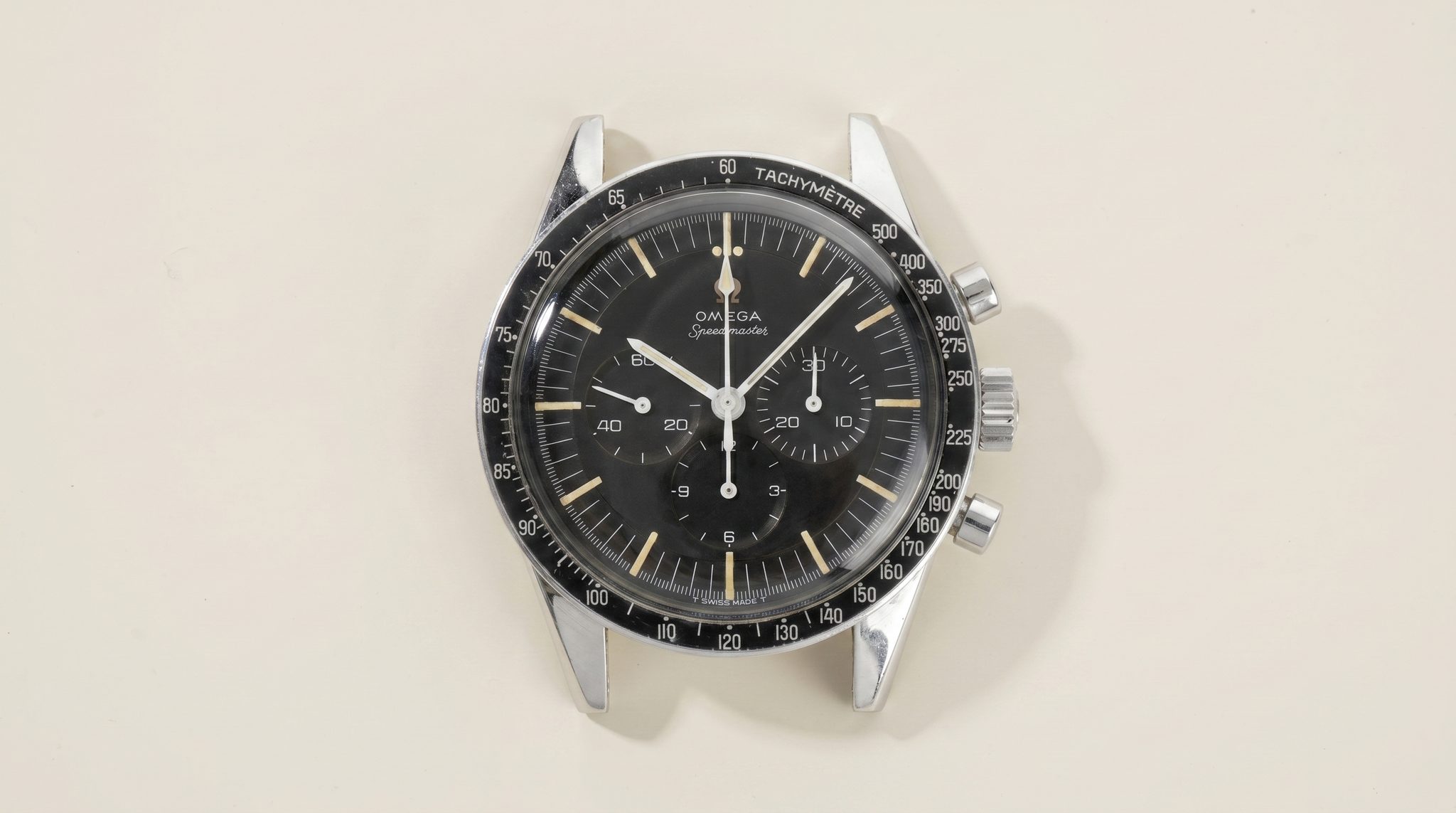
This generation is the straight-lug Speedmaster under Omega’s 105.xxx and later 145.xxx coding, with Cal. 321 and the pre-Professional dial format still intact. The key change is administrative and chronological rather than aesthetic: 105.002 continues the late CK2998-era watch under a new reference scheme, and 105.003 becomes the last straight-lug Speedmaster, historically anchored by Omega’s confirmation of Ed White’s 105.003-63 Gemini IV EVA watch. 145.003 then illustrates how messy the transition could be, with late straight-lug watches documented as 145.003 in records while cases may still be stamped 105.003-65. The era ends as Omega’s Moonwatch architecture takes over the line.
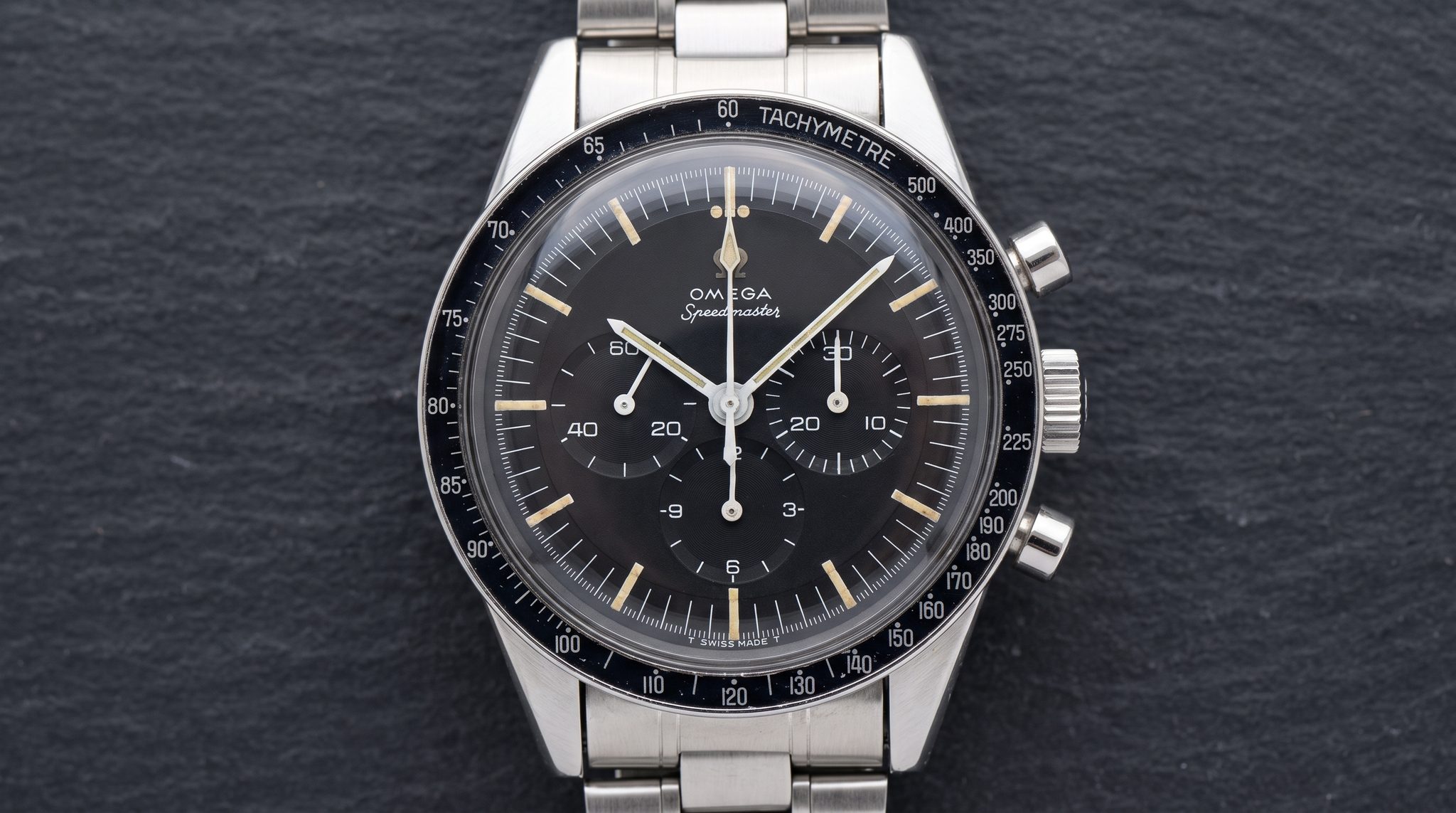
First Professional Moonwatch case
Here the Speedmaster becomes the Moonwatch silhouette. 105.012 introduces the 42 mm asymmetrical twisted-lug case with crown guards and adds “Professional” on the dial, while still using Cal. 321. 145.012 follows as the last regular-production Speedmaster Professional with the column-wheel Cal. 321, produced circa 1967–1969, sitting directly beside the beginning of the 861 era in 1968. The documented reason this generation ends is the movement change, not a wholesale redesign: Omega keeps the Professional case language but shifts to Cal. 861 in the successor line, which reshapes the Speedmaster’s long-term manufacturability and service life.
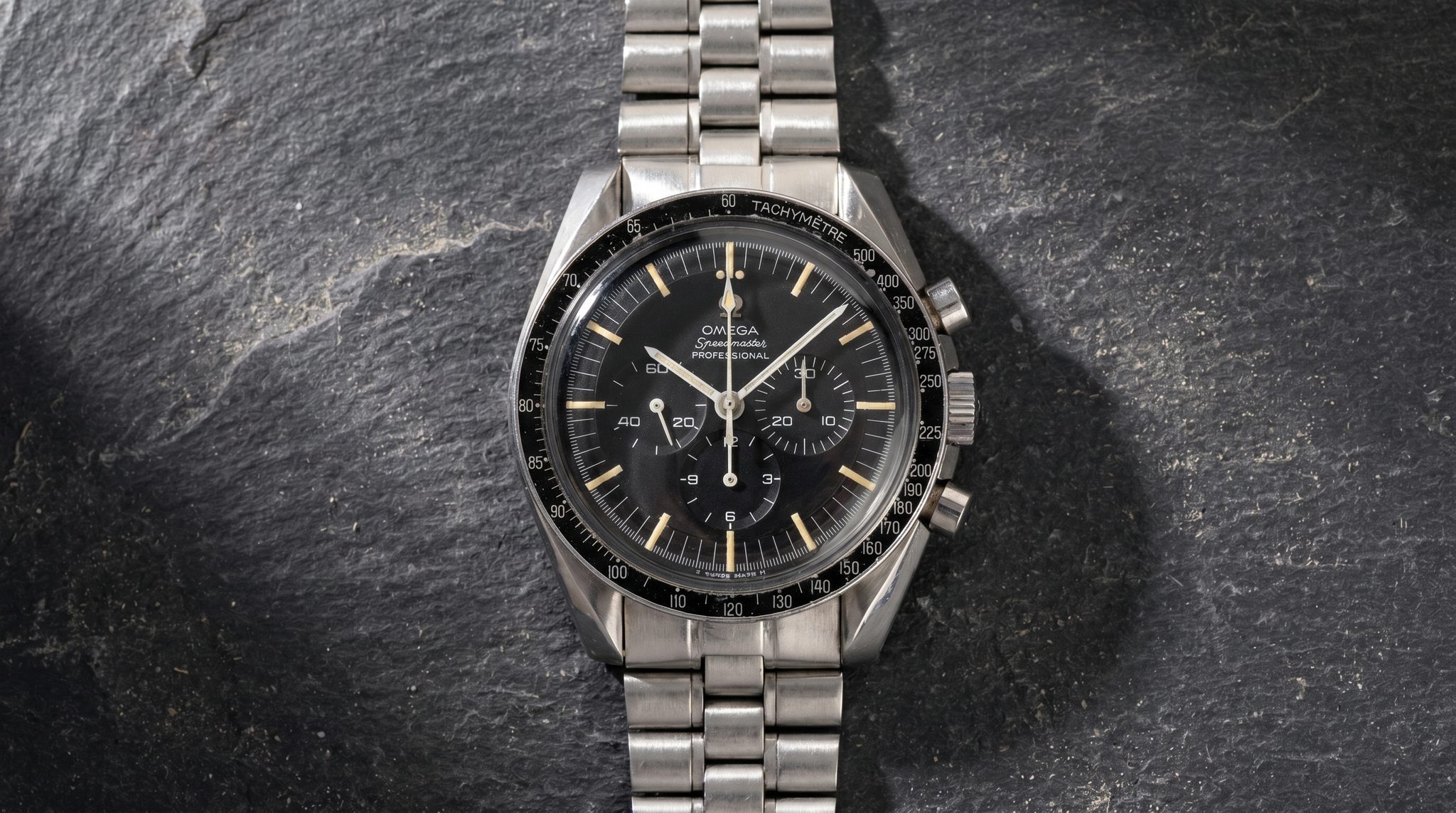
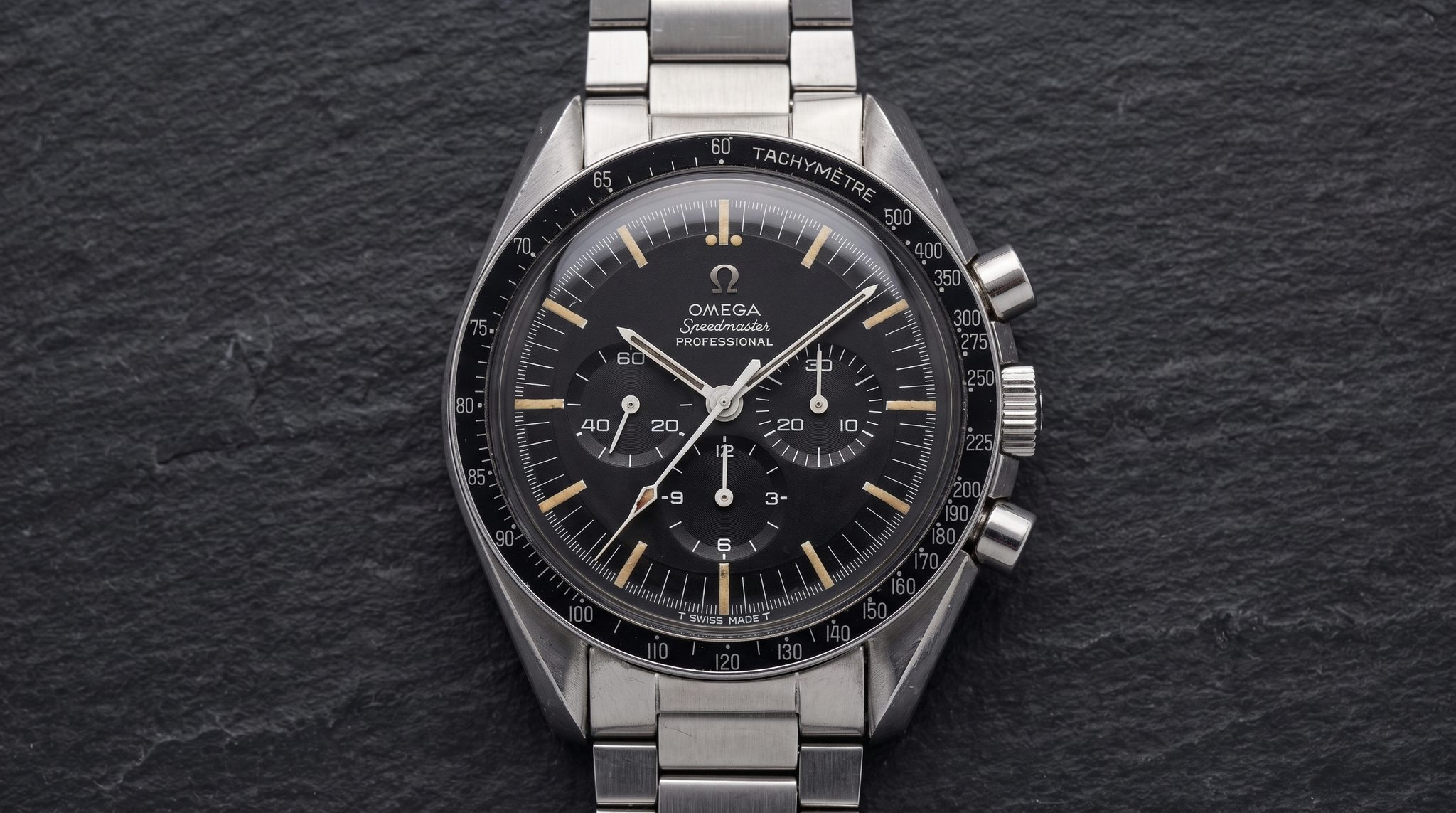
861-era backbone and modern commemoration
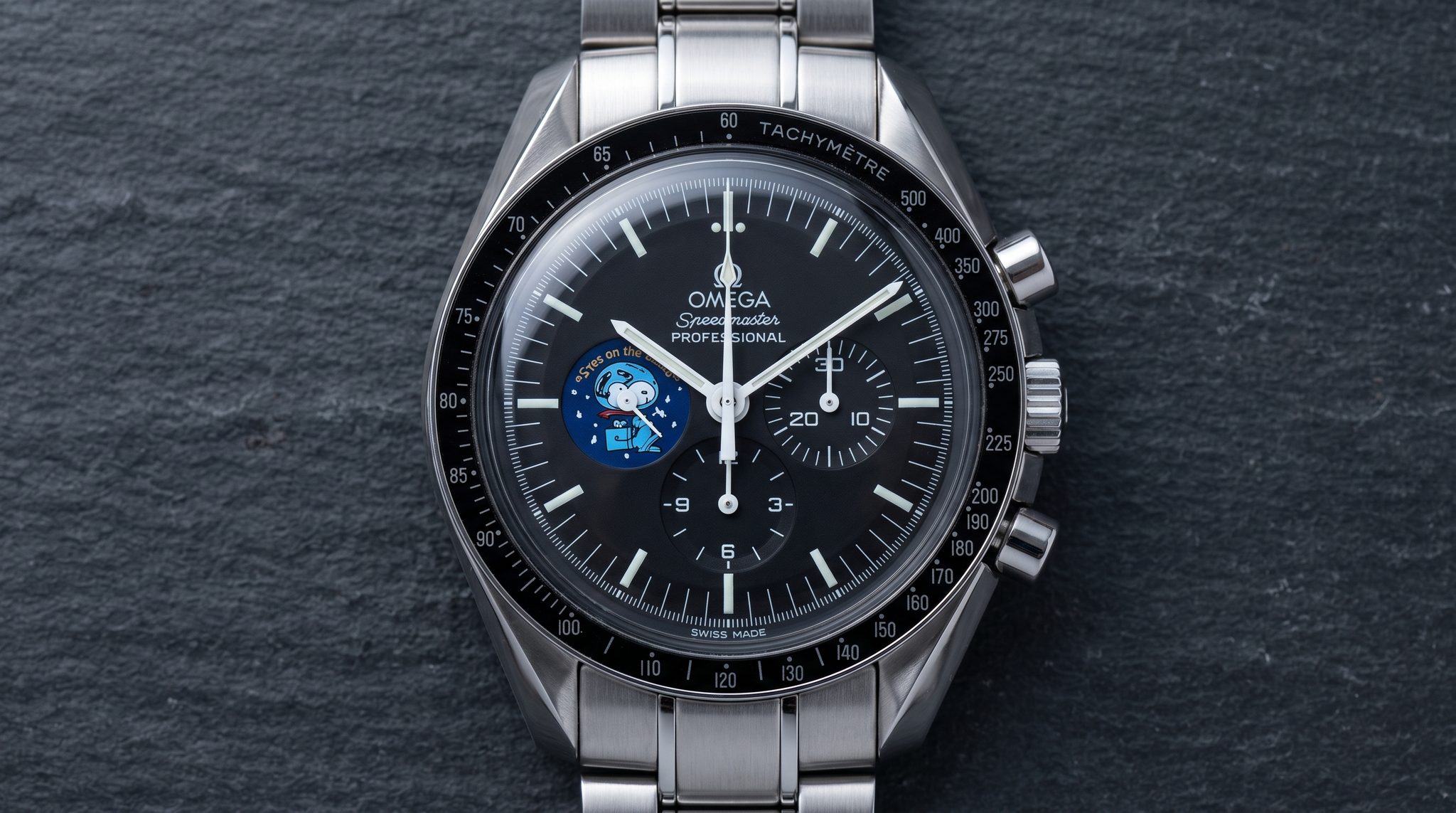
145.022 is the platform that makes the Speedmaster Professional a long-running standard. It introduces Cal. 861 around 1968 while keeping the familiar Professional case, then remains in production through circa 1988, long enough that dial, bezel, and caseback details become a timeline rather than a single fixed look. The era’s later anchor in the published set, 3578.51.00 (c. 2003–2005), shows how the modern Speedmaster uses that same Moonwatch foundation as a canvas for commemorative meaning, concentrating collectibility into specific dial and caseback execution while remaining mechanically and visually close to the standard Professional format. The era closes here because the published set’s modern representative is a limited commemorative reference rather than a new core platform change.
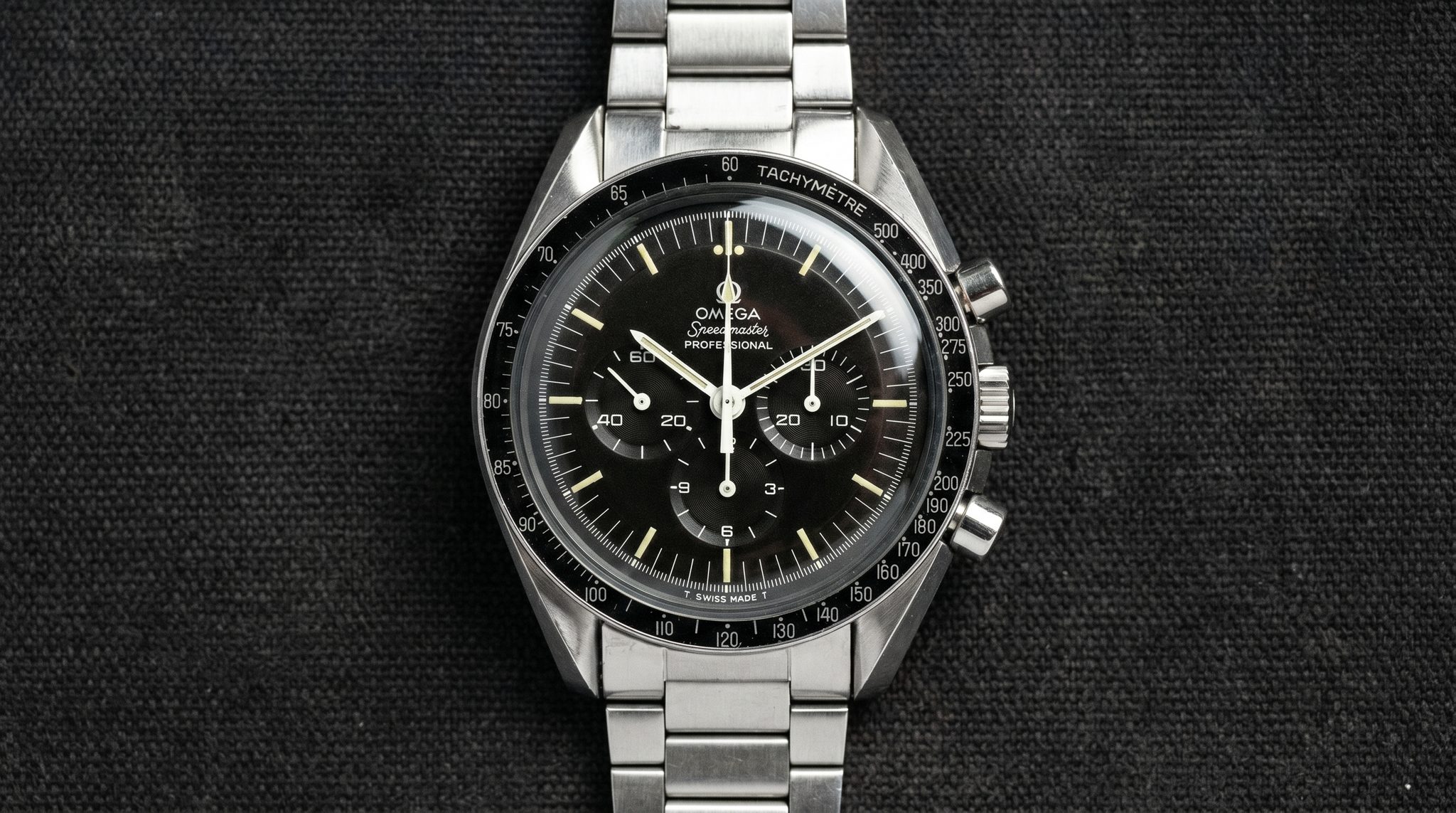
Which Speedmaster to buy
For daily wear with the most vintage authenticity per headache avoided, 145.022 is the family’s practical center. The Cal. 861 generation is documented as long-running and service-friendly, and its external continuity means it still reads as a classic hesalite Moonwatch without requiring the fragile scarcity of earlier parts.
For a first vintage Omega Speedmaster that feels meaningfully different on the wrist, 105.003 delivers the straight-lug, no-crown-guard experience and carries the clearest NASA-linked archival anchor in the published set (Ed White’s confirmed 105.003-63).
For the reference-collector’s target that concentrates the Moonwatch story into one watch, 105.012 is the hinge: it is the first “Professional” dial and the first 42 mm asymmetrical case, while still retaining Cal. 321.
For a piece that rewards patience and careful verification, 145.003 is the outlier. It can be physically indistinguishable from a late 105.003-65, so the win is not finding a rarer-looking watch, it is securing documentation that proves the reference identity and keeps the configuration honest.
What to check on any Speedmaster
Buying across Speedmaster generations is unusually sensitive to parts interchangeability. Bezels, hands, crowns, pushers, and even dials can be replaced in routine service, and a watch can look “right” while mixing eras. The family is also a known target for frankenwatches built from mostly genuine Omega components, including a high-profile case where Omega stated a record-setting “Broad Arrow” was assembled from parts.
Common questions about the Speedmaster
It launched in 1957 as a sports and racing chronograph aimed at race drivers and other time-critical professionals. Omega marketing emphasized speed calculation, accuracy, legibility, and durability, with the tachymeter bezel as the key tool feature.
- The Omega Speedmaster: A Complete Collector's Guidesothebys.com
- The Evolution: Omega Speedmasterbucherer.com
- OMEGA Space Legacy | Official Watch & Moon Mission Timepiecesomegawatches.com
Show 7 more
- Maintenance, Complete service (Omega customer service)omegawatches.com
- Fratello’s Guide To Omega Speedmaster Watchesfratellowatches.com
- Fratello Buying Guide: Omega Speedmaster Professional 145.022fratellowatches.com
- Feature: Buyer's guide to the Omega Speedmasterwatchfinder.co.uk
- DJR Expert Guide Series, Vol. 346, Identifying counterfeit Omega Speedmaster componentsdjrauthentication.com
- Omega says ex-employees created 'Frankenstein' Speedmaster (reporting on Omega statement)businessinsider.com
- Omega Speedmaster, Wikipedia (overview and baseline chronology)en.wikipedia.org