

Omega Speedmaster CK2998
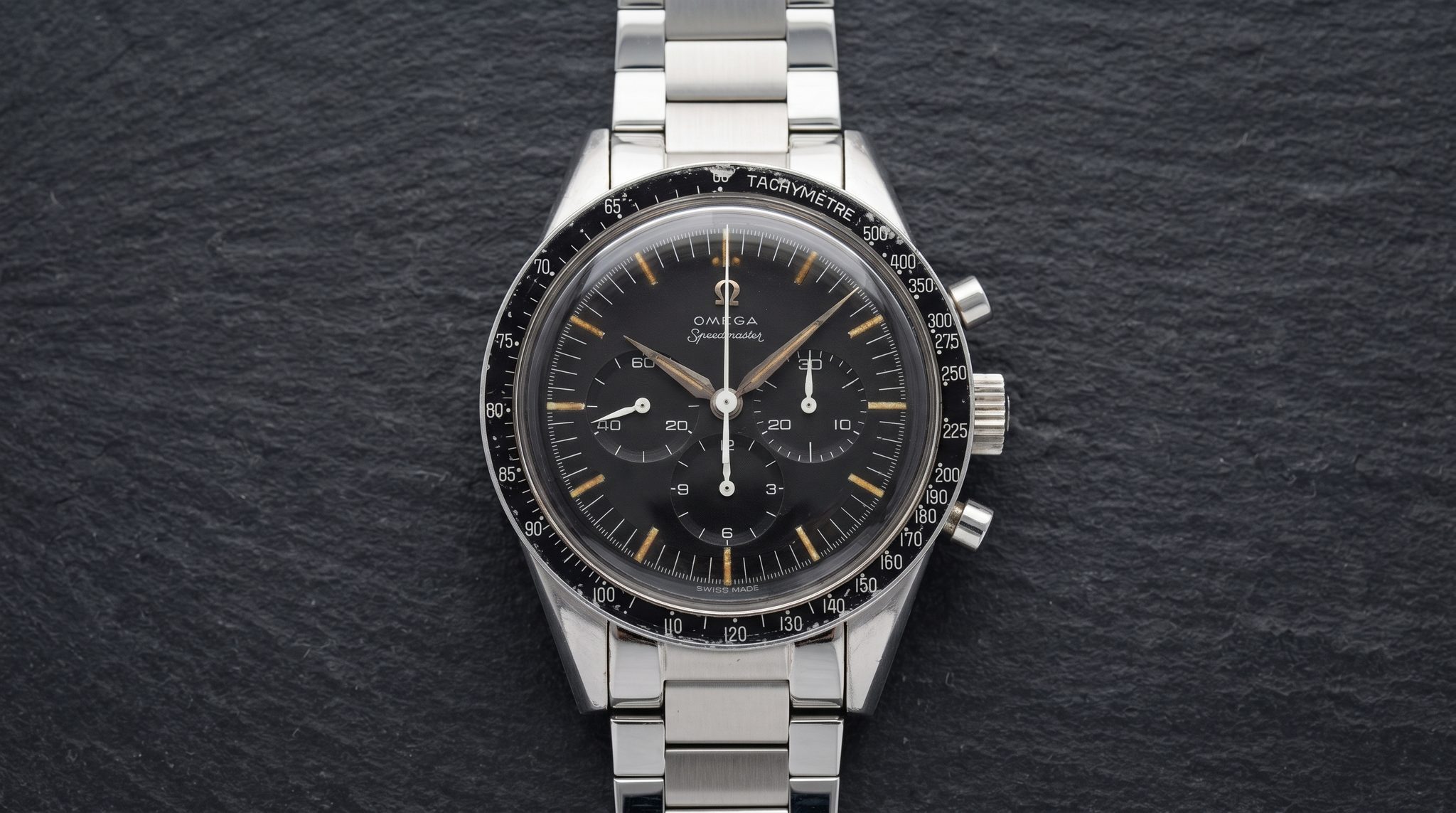
The Omega Speedmaster 2998 is the short-run Speedmaster where the model’s famous look was still being invented in public, with bezels, hands, and even dial typography changing on overlapping schedules.
- Production
- 1959–c. 1962/63
- Case
- Stainless steel
- Diameter
- ~39–39.7 mm
- Lug width
- 19 mm
- Lug to lug
- ~48 mm
- Thickness
- ~13 mm
- Crystal
- Plexiglass
- Bezel
- Tachymeter (1000/500)
- Dial
- Black, step, applied Ω
- Movement
- Cal. 321
- Winding
- Manual
- Power res.
- c. 50h
The Omega Speedmaster 2998 is the Speedmaster that proves the “classic” look was not a single design, but a moving target. Within one short early-1960s run, Omega shifts from a black BASE 1000 tachymeter bezel to a TACHYMETRE 500 scale, while hand styles evolve on their own schedule, so two authentic 2998s from adjacent sub-references can look surprisingly different at a glance.
That restless specificity is exactly why the reference matters. Produced from 1959 into the early 1960s, it sits between the first Speedmaster, the CK 2915, and the renumbered straight-lug successor, 105.002. Across eight factory sub-references (2998-1 through -6, then 2998-61 and 2998-62), the formula stays constant where it counts, a straight-lug steel case around 39 mm and the manual-wind, column-wheel caliber 321, but changes accumulate in the parts collectors actually see: bezel scale, register hands, and the chronograph seconds hand.
A useful way to read an Omega 2998 is to treat it as several timelines layered on one watch. The caseback suffix tells you which sub-reference it began life as, but the bezel, the sub-dial hands, and the chronograph seconds hand each have their own windows, and service replacement can scramble the picture. The reference rewards the kind of attention where the watch is identified by what the eye notices first, the scale on the bezel, the silhouette of the small hands, the shape of the chronograph pointer, and only then by what those traits mean historically.
“The Speedmaster 2998 is not one “correct” configuration, it is a short, fast evolution where bezel, dial, and hand changes overlap rather than marching in lockstep.”
CK2998 across 1959–c. 1962/63
The story of the Speedmaster 2998 is best understood as a burst of refinement rather than a slow generational drift. Omega replaces the CK 2915 in 1959 with a watch that keeps the straight-lug steel case and the caliber 321, but leans into a more modern, higher-contrast presentation: a black bezel insert and a crisp black stepped dial with an applied Omega logo and no “Professional” line.
The first big visible fork arrives at the bezel. Early 2998-1 and 2998-2 watches are associated with the BASE 1000 scale, which reads like a technical boast on the rim. By 2998-3, the tachymeter scale shifts to TACHYMETRE 500, a change that becomes the default for the remainder of the reference. The reason for the change is not documented in the available record, but it is one of the easiest period tells because it sits on the outermost edge of the watch and dominates the first impression.
Hands then become their own, separate timeline. Early 2998 watches use alpha hour and minute hands, and for several sub-references the small hands in the three registers are painted in a leaf-like alpha style. Around 2998-4, stick-style register hands begin to appear, and by 2998-5 they are the expected configuration. The chronograph seconds hand follows yet another arc: Omega’s highly legible lollipop seconds hand appears as an option on early 2998s, then the spear-shaped chronograph seconds becomes standard from 2998-5 and is consistently present on 2998-6, 2998-61, and 2998-62.
Late in the run, the caseback itself starts carrying more information. The 2998-61 and 2998-62 suffixes explicitly denote case production year in the way Omega used widely in the period, and the final 2998-62 is so close to the next reference that early 105.002 examples are described as identical in configuration aside from the reference number. The zoomed-out lesson is that the “pre-Professional” Speedmaster aesthetic was not born fully formed. It was tuned in real time, and the 2998 is where that tuning is most visible because so many recognizable traits change within only a few years.
- 1959IntroducedStraight lugs, Cal. 321
- c. 1960BASE 1000 eraBezel reads “BASE 1000”
- c. 1960 – 1961BASE 500 bezelBezel reads “TACHYMETRE 500”
- c. 1961 – 1962Sub-dial shiftRegister hands change shape
- c. 1962Spear secondsPointed “spear” chrono hand
- c. 1961 – 1962Year suffixesCaseback stamped “-61” or “-62”
- c. 1962/63RenumberedCaseback reads “105.002”
CK2998 against its neighbours
The Speedmaster 2998 sits between two useful bookends: the CK 2915 that introduced the Speedmaster with its earliest bezel and hand language, and the 105.002 that effectively renumbers the late 2998 into Omega’s newer code. A third frame reference, 105.003, keeps the straight-lug case and caliber 321 but changes the hand style decisively, making it the clearest visual “after” to the 2998’s alpha-hand era.
This reference CK2998 Omega · focal 1959–c. 1962/63 | ||||
|---|---|---|---|---|
| Production | 1957–1959 | 1959–c. 1962/63 | c. 1962–1964 | c. 1963/64–1969 |
| Case | Stainless steel | Stainless steel | Stainless steel | Stainless steel |
| Diameter | ~38.5 mm | ~39–39.7 mm | ~39–39.7 mm | 38 mm |
| Lug width | 19 mm | 19 mm | 19 mm | 19 mm |
| Crystal | Hesalite (acrylic) | Plexiglass | Plexiglass | Hesalite (acrylic) |
| Bezel | Engraved steel tachy | Tachymeter (1000/500) | Tachymeter, BASE 500 | Tachymeter, BASE 500 |
| Dial | Black, applied Ω | Black, step, applied Ω | Applied Ω, no “Professional” | Stepped, applied Ω |
| Movement | Cal. 321 | Cal. 321 | Cal. 321 | Cal. 321 |
| Winding | Manual | Manual | Manual | Manual |
| Power res. | ~50h | c. 50h | ~50h | ~50h |
Eight dial generations across the run
The first CK 2998 series is the one collectors recognize instantly by its outer ring: the black tachymeter bezel is printed “BASE 1000,” a high-scale layout that reads more like instrumentation than ornament. Look next to the dial text and you often see the wide, horizontally stretched “oval O” in OMEGA. On the registers, the small hands are painted in a leaf-like alpha shape, matching the delicate, early character of the watch. A lollipop chronograph seconds hand can appear here, but it is not a clean delimiter, examples exist with both lollipop and straight seconds hands, so it has to be treated as an independent feature rather than a rule.
What to check before buying a CK2998
Buying a Speedmaster 2998 is less about finding a single checklist-correct watch and more about verifying that every visible part belongs to the same short chapter of the model’s evolution. Because bezel scale, register-hand style, and chronograph seconds hand change on different schedules, the fastest route to a wrong watch is to assume one early trait guarantees the rest.
Condition and originality matter disproportionately here because the most valuable cues are the easiest parts to swap: bezel inserts, hand sets, even casebacks. The market rewards watches that look assembled by time rather than assembled later, where the wear on the bezel, the patina of the lume, and the crispness of the dial printing all tell the same story.
Omega Speedmaster CK2998 for sale
Auctions on Grey Market run on seven-day cycles, every watch verified before it sells. Browse what's live now, or consign your CK2998.
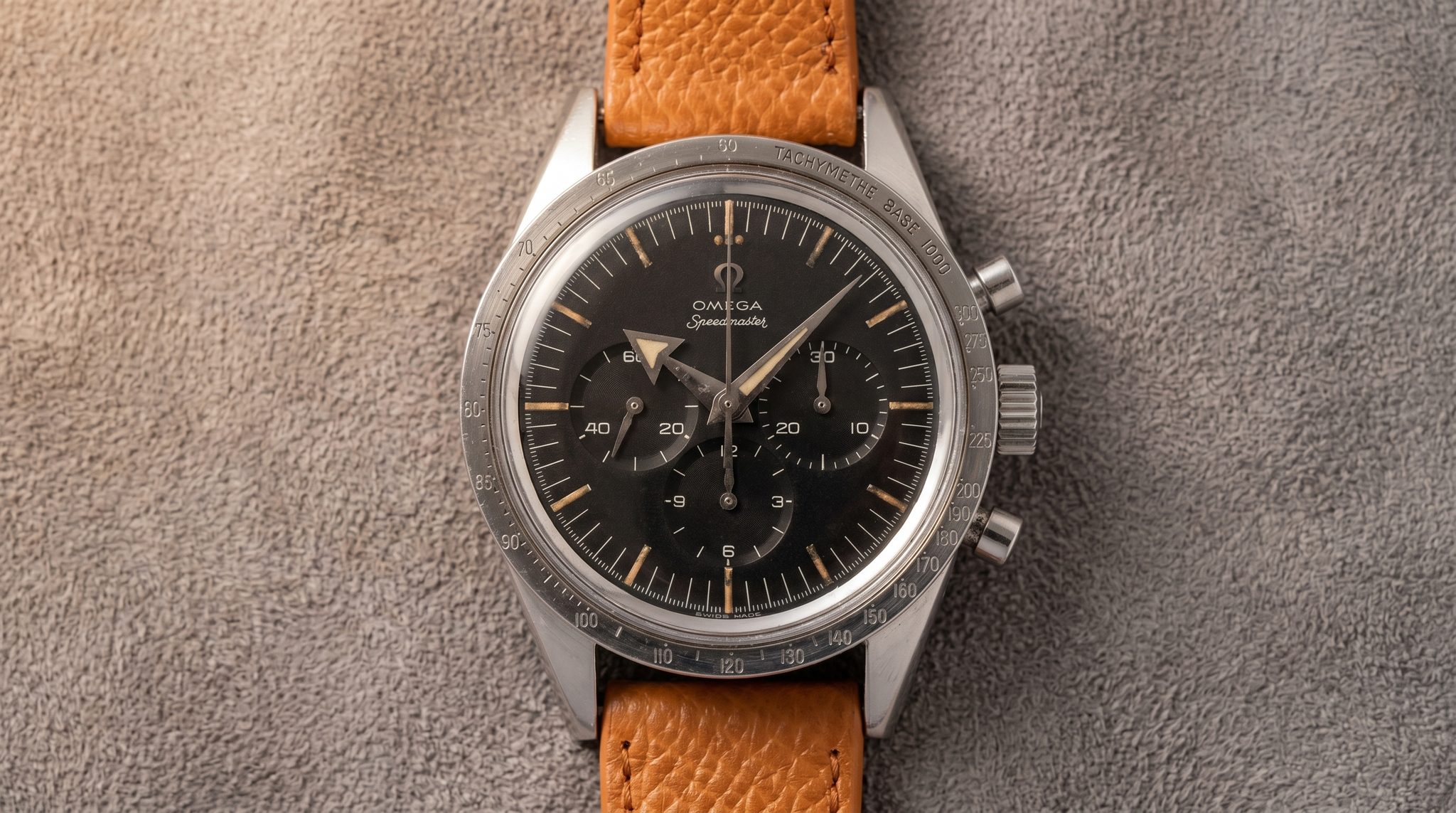
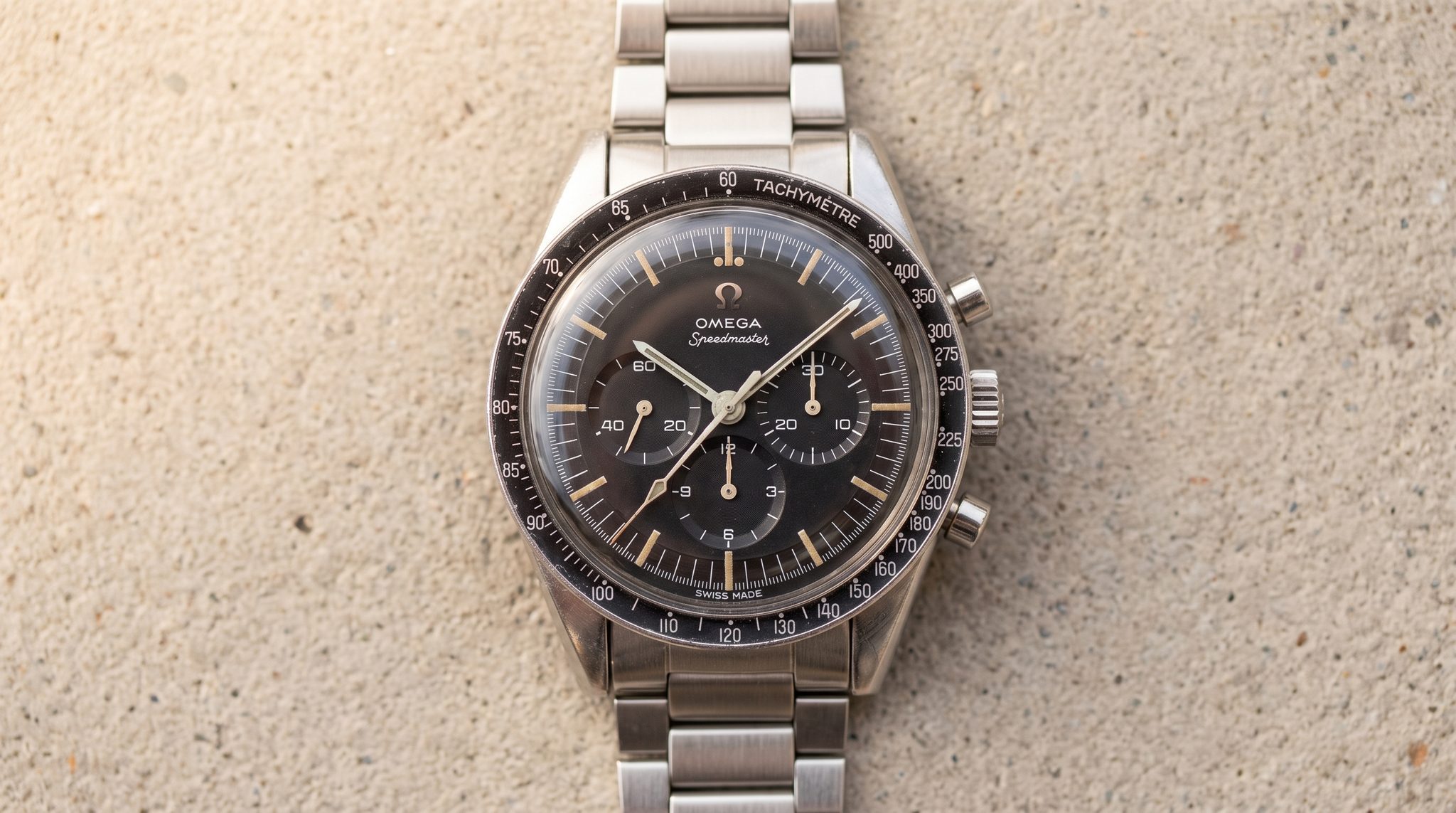
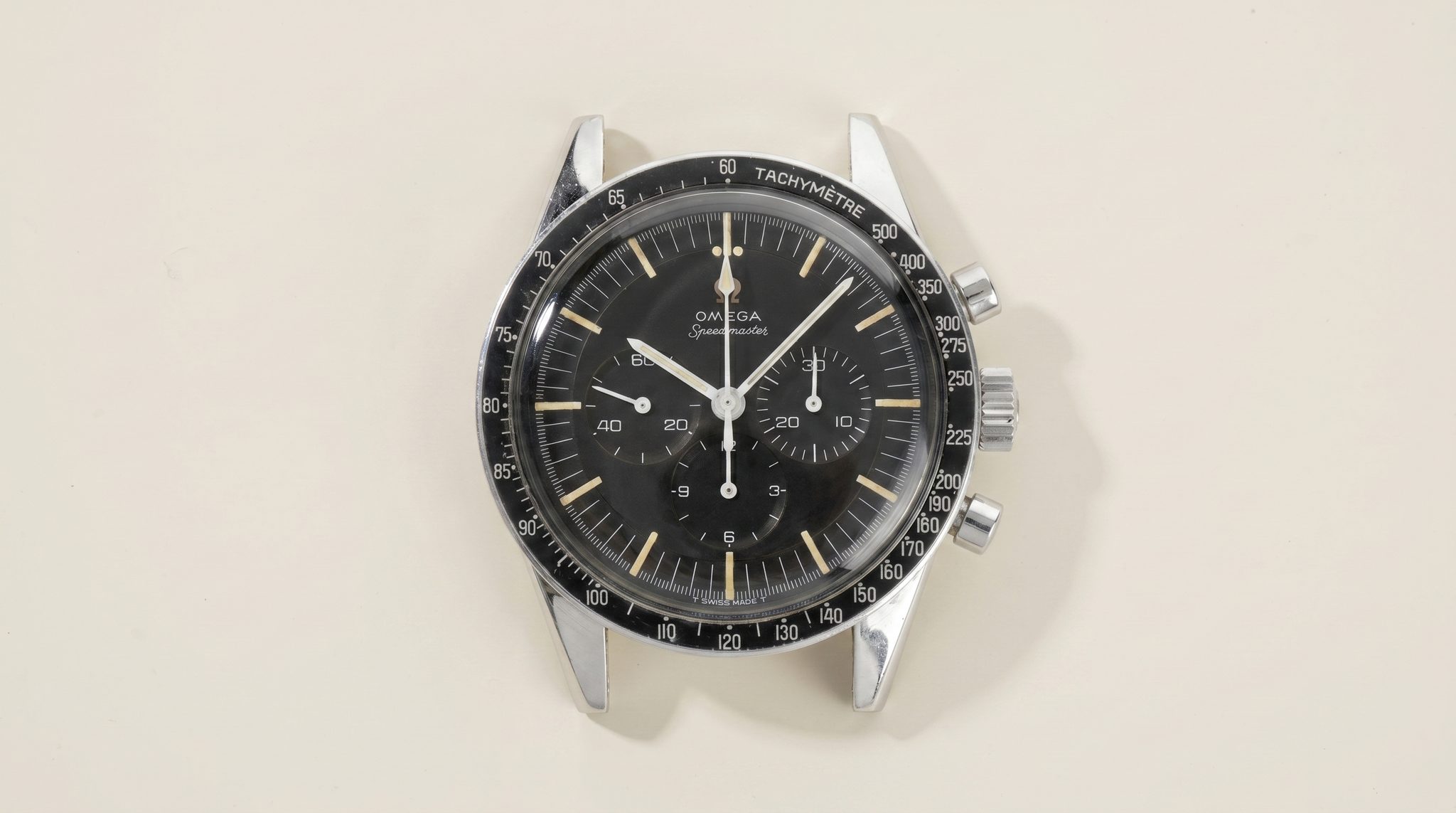
Adjacent in the Speedmaster family
Common questions about the CK2998
The Omega Speedmaster 2998 was introduced in 1959 and was produced into the early 1960s. Many references summarize the run as 1959–1962, while some auction and specialist sources extend it to 1959–1963, often noting that late examples were still delivered in 1963.
- Omega Speedmaster Reference Archivefratellowatches.com
- Omega The Geneva Watch Auction: XIII (Omega Speedmaster ref. 2998)phillips.com
- Omega The Geneva Watch Auction: SEVEN (Omega Speedmaster ref. 2998)phillips.com
Show 7 more
- Omega The Hong Kong Watch Auction: XXII (Omega Speedmaster ref. 2998)phillips.com
- 1962 Omega Speedmaster Ref. 2998-6shop.hodinkee.com
- 1960 Omega Speedmaster Ref. 2998-1 With Tropical Dialshop.hodinkee.com
- Reference Points: Understanding The Omega Speedmaster (incl. 105.002 context)hodinkee.com
- Omega Speedmaster CK2998 Reference Reportottuhr.com
- A Guide to the Evolution of the Omega Speedmaster Moonwatch, reference by referencemonochrome-watches.com
- 2998 (Speedmaster101)speedmaster101.com