

Omega Speedmaster 145.012
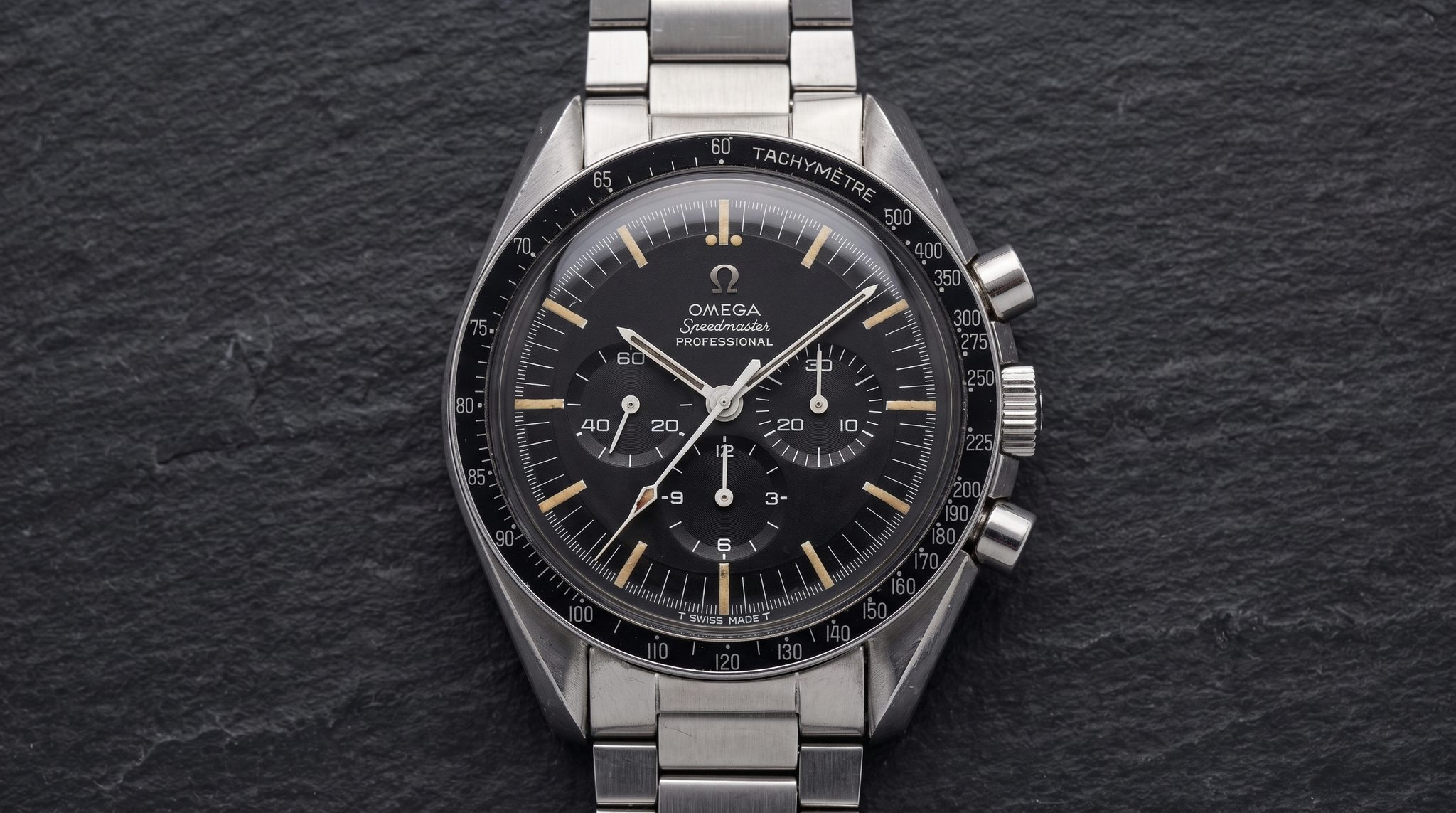
The Omega Speedmaster 145.012 is the last regular-production Speedmaster Professional to carry the column-wheel Cal. 321, a brief late-1960s run where tiny external details and service-prone parts now decide whether a watch still reads as “321-era” in the hand.
- Production
- c. 1967–1969
- Case
- Stainless steel
- Diameter
- ~42 mm
- Lug width
- 20 mm
- Bezel
- Tachymeter, BASE 500
- Bezel type
- DON (DO90)
- Crystal
- Hesalite (acrylic)
- Dial
- Stepped, “Professional”
- Lume
- Tritium (T…T)
- Movement
- Cal. 321
- Winding
- Manual
- Caseback
- Pre-Moon Seahorse
The Omega Speedmaster 145.012 is the Speedmaster Professional at the exact moment the Cal. 321 era ends: a watch whose identity is anchored in one mechanical fact, and policed by a handful of small, easily changed exterior parts. One number captures the stakes of originality on this reference: a correct dot-over-90 tachymeter bezel is routinely valued in the €1,500–1,800 range, and replacement examples are also quoted at $1,500–4,000, even before the rest of the watch is discussed.
Most sources place 145.012 production in 1967–1968, with deliveries extending into early 1969, and the boundaries are worth stating plainly because this is a transition reference. It follows the 105.012 with the same asymmetrical “Professional” case family and the same Cal. 321, but it leads directly into the 145.022, introduced with the simpler Cal. 861 in late 1968. The 145.012 is therefore less a redesign than a final, short consolidation of the NASA-qualified architecture before Omega re-engineered the movement for the long-running 861 line.
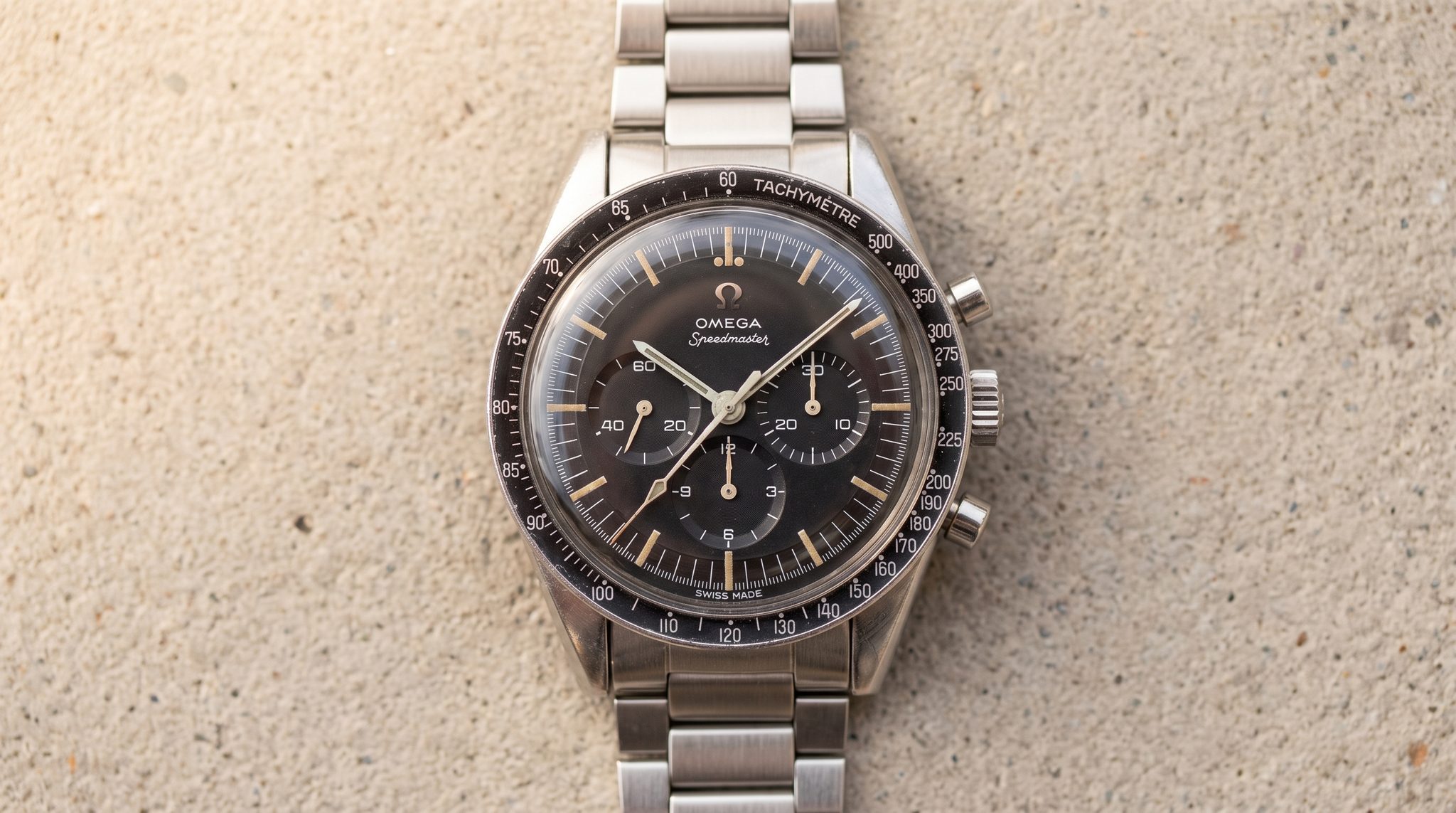
In the hand, the classic configuration is a black stepped “Speedmaster Professional” dial with tritium luminous plots and “T SWISS MADE T,” paired with the period dot-over-90 (DON/DO90) BASE 500 tachymeter bezel and a Pre-Moon Seahorse caseback without later Moon-landing inscriptions. Collectors also track two caseback suffixes, 145.012-67 and 145.012-68, but those markings date the caseback manufacture rather than guaranteeing the final assembly or delivery year. The upshot is that the Omega 145.012 is best understood as a late-1960s reference defined by an ending, and judged by whether its most visible, most replaceable components still belong to that ending.
“The 145.012 is the last regular-production Speedmaster Professional with Cal. 321, and the reference where a DON bezel, tritium hands, and a stepped “T SWISS MADE T” dial matter as much as the movement inside.”
145.012 across c. 1967–1969
The 145.012 sits in a narrowly defined late-1960s corridor, and the sources agree on its position even when they debate its borders. Fratello, Revolution, and multiple dealer guides converge on 1967–1968 as the main production span, while also documenting watches delivered into early 1969. Chuck Maddox proposes a more granular timeline, beginning in early 1966 and ending in October 1968, but Omega’s publicly quoted material in the same set does not confirm month-level cutoffs, which is why most careful chronologies describe the window as late 1960s with a delivery tail.
The causal story of the reference is mechanical. The Cal. 321 inside the 145.012 is the integrated, column-wheel chronograph architecture associated with the NASA-qualified Speedmasters, and it is repeatedly described as the last regular-production Speedmaster to use that movement. In the successor 145.022, Omega moved to the Cal. 861, a cam-switched design presented as simpler and cheaper to produce. That change is the reason the 145.012 reads like a final edition of an older engineering approach rather than a “new model” defined by a new case.
Externally, the 145.012 stays within the Professional asymmetrical case family introduced with the 105.012, but it carries a tangible case-level tell against its predecessor: taller pushers, often cited as one of the easiest ways to separate the two in photographs. The caseback remains in the Pre-Moon style, with the Seahorse medallion and “Speedmaster” engraving rather than later Moon-landing commemorations.
Late in the run, a second, quieter timeline runs alongside the reference number itself: the service reality. Bezels, hands, crowns, and pushers were routinely replaced over decades of maintenance, and the parts that most immediately signal “145.012” today are often the parts most likely to have been swapped. That is why the reference’s short production life can still produce long arguments in the present tense. The watch did not change much in the catalog, but it changes easily on the workbench, which makes surviving, coherent examples feel less like a bundle of components and more like a single object that has simply made it through time.
- c. 1967Reference beginsCaseback stamped 145.012-67
- c. 1967 – 1968Cal. 321 eraCal. 321 in the movement
- c. 1967 – 1969Pre-Moon backHippocampus, no Moon inscription
- 1968145.022 starts145.022 reference, Cal. 861
- c. 1968Late -68 backsCaseback stamped 145.012-68
- c. 1969Late deliveriesExtract or papers showing 1969
- c. 1967 – 1969Reference ends145.012 reference, not 145.022
145.012 against its neighbours
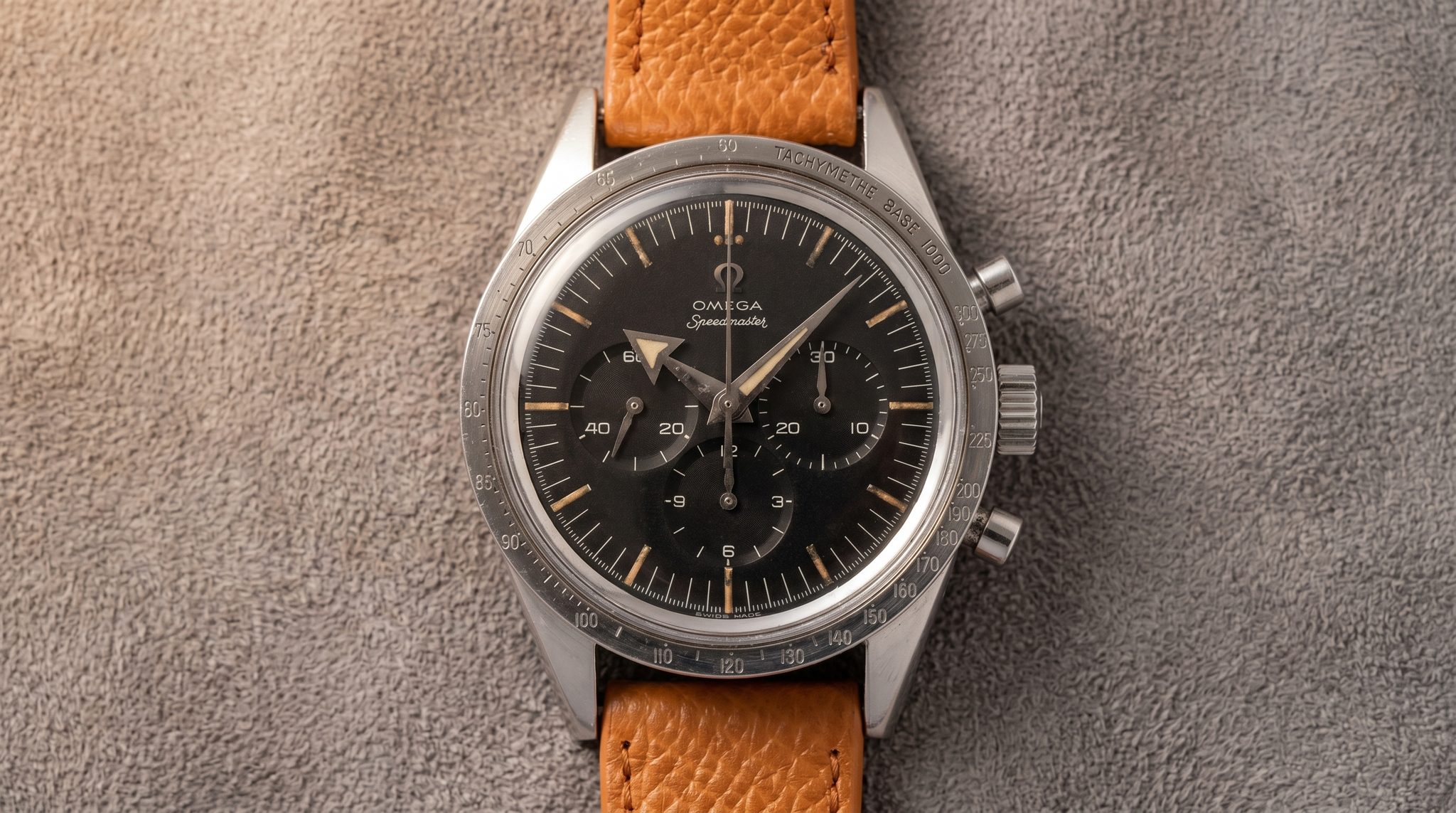
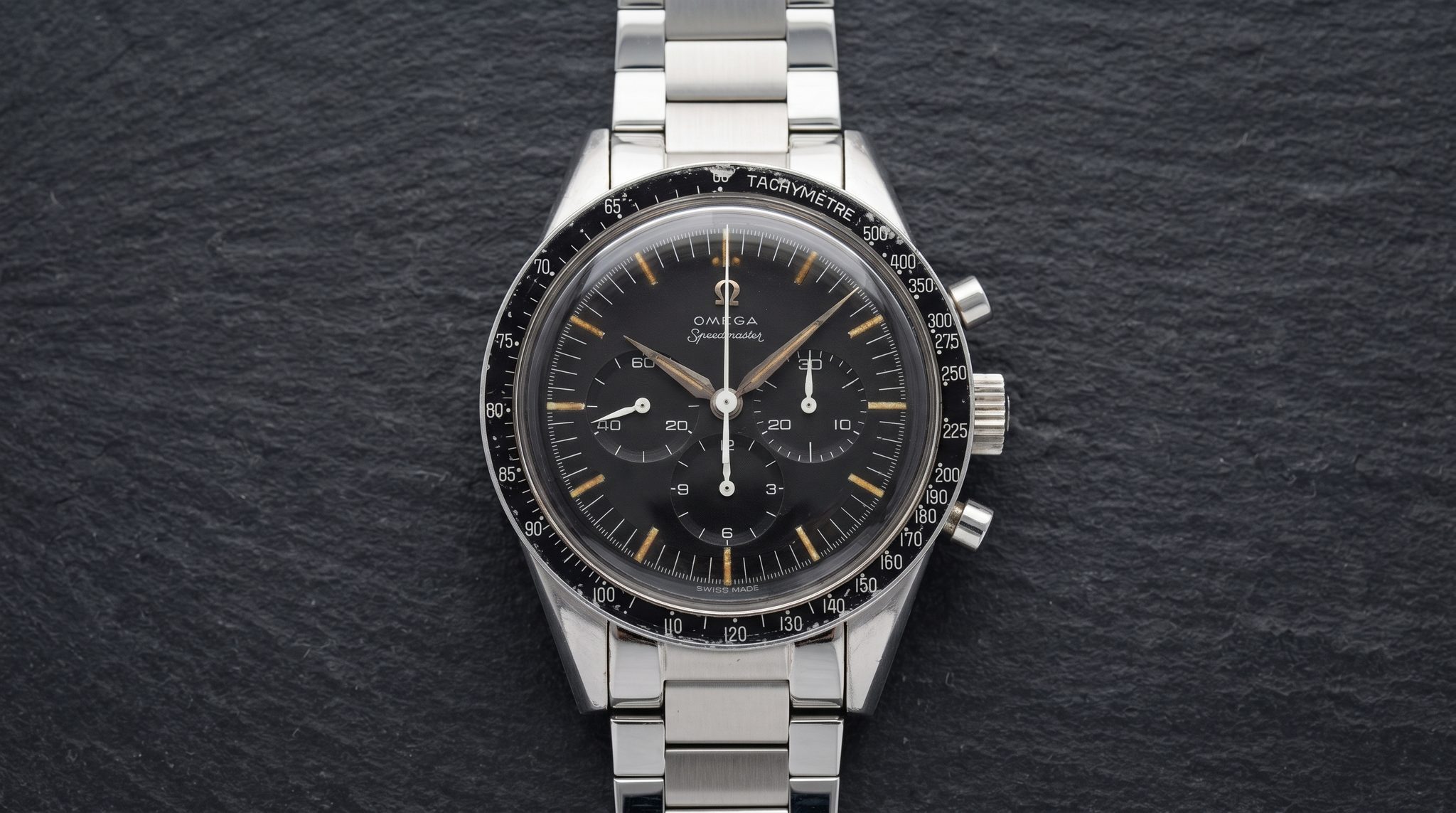
The 145.012 only makes full sense when it is bracketed by the two references that touch it on either side. The 105.012 shows how little Omega changed on the surface while the Cal. 321 era matured, and the 145.022-68 shows how the watch could look almost the same while the movement architecture underneath became something fundamentally different.
This reference 145.012 Omega · focal c. 1967–1969 | ||||
|---|---|---|---|---|
| Production | c. 1963/64–1969 | 1964–c. 1967 | c. 1967–1969 | 1968–c. 1988 |
| Case | Stainless steel | Stainless steel | Stainless steel | Stainless steel |
| Diameter | 38 mm | 42 mm | ~42 mm | 42 mm |
| Lug width | 19 mm | 20 mm | 20 mm | 20 mm |
| Bezel | Tachymeter, BASE 500 | Tachymeter, BASE 500 | Tachymeter, BASE 500 | Tachymeter (aluminum) |
| Bezel type | DO90 | DON (DO90) | DON (DO90) | DON → DNN |
| Dial | Stepped, applied logo | Step, applied logo | Stepped, “Professional” | Stepped → flat |
| Lume | Tritium (T…T) | Tritium | Tritium (T…T) | Tritium |
| Movement | Cal. 321 | Cal. 321 | Cal. 321 | Cal. 861 |
| Winding | Manual | Manual | Manual | Manual |
| Caseback | Straight-lug era | Pre-Moon Seahorse | Pre-Moon Seahorse | Moon text era |
Three dial generations across the run
The baseline Speedmaster 145.012 is the watch most people picture when they picture a late-1960s “Pre-Moon” Professional: a black stepped dial whose raised outer ring catches light differently from the center, with tritium plots that often mellow from pale to warm cream as they age. The correct dial is typically marked “T SWISS MADE T,” and many examples are described with an applied metal Omega logo at 12 o’clock.
This is also the execution where service history most visibly rewrites the watch. The original tachymeter insert is expected to be the BASE 500 dot-over-90 bezel, and replacing it is materially expensive relative to the watch. Fratello quotes €1,500–1,800 for a DON bezel, while Speedmaster101 frames replacements at roughly $1,500–4,000. Hands are the other high-friction area: Fratello notes that period-correct tritium hand sets can cost around €1,000, and it also observes that the central chronograph seconds hand can appear with either a teardrop (drop) counterweight or a flat end within the reference’s run.
Caseback suffixes 145.012-67 and 145.012-68 appear across this same standard execution. Collectors treat those suffixes as caseback production codes rather than a promise of assembly or delivery year, which is why late deliveries into 1969 can still wear a “-68” back and remain perfectly coherent.
What to check before buying a 145.012
Buying a Speedmaster 145.012 is less about chasing an exotic spec sheet than about judging whether a late-1960s watch still has late-1960s surfaces. The reference is mechanically simple to define, it must contain Cal. 321, but it is visually easy to drift away from its period as bezels, hands, crowns, and pushers are replaced during routine service.
The most expensive mistakes are usually the most visible ones. A missing or replaced dot-over-90 bezel and incorrect hands can erase much of what makes the 145.012 read as a Cal. 321 Professional at a glance, and the cost to correct those issues is now meaningful. Fratello quotes €1,500–1,800 for a DON bezel and around €1,000 for correct tritium hands, while Speedmaster101 frames DON replacements at roughly $1,500–4,000.
At its best, the 145.012 is the most straightforward way into a Cal. 321 Professional case, and several sources describe it as the most accessible 321-era Moonwatch. That is not because it is a compromise, but because it sits at the end of a mature design, produced in enough quantity that honest examples still exist, yet close enough to the 861 transition that originality has become the whole game.
Omega Speedmaster 145.012 for sale
A 145.012 is scheduled to open on Grey Market. Every watch is verified before bidding starts.
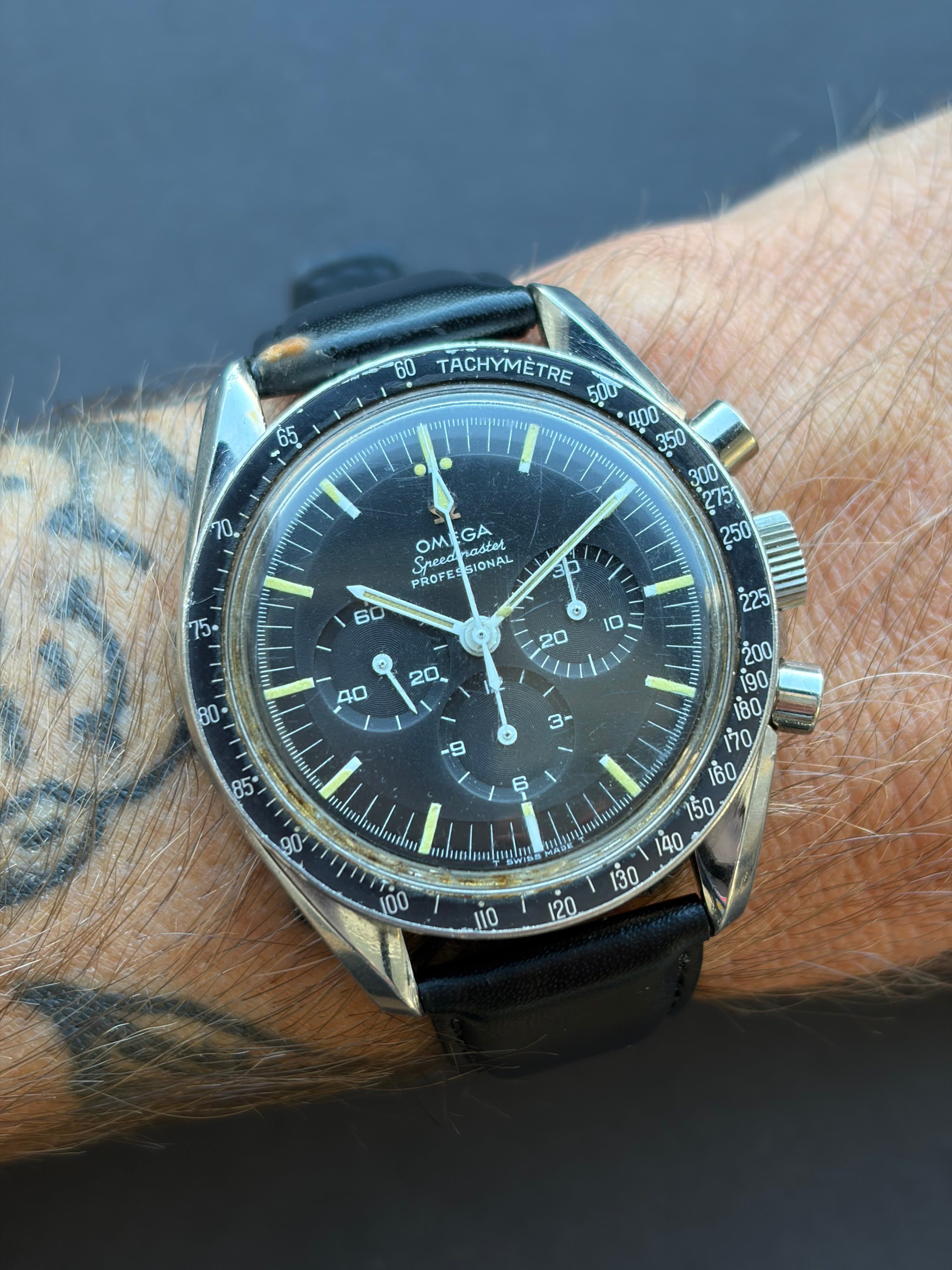
Each point is a recent dealer or auction sale, banded to an indicative figure. The range shown is not a valuation.
Adjacent in the Speedmaster family
Common questions about the 145.012
Most guides place Omega Speedmaster 145.012 production in 1967–1968, with deliveries continuing into early 1969. A single detailed timeline proposes an earlier start in 1966 and an October 1968 cutoff, but month-level precision is not uniformly documented across the cited sources.
- Omega Speedmaster Professional 145.012 Buyer's Guide (145.012-67)fratellowatches.com
- Speedy Tuesday: Omega Speedmaster Professional 145.012-67fratellowatches.com
- Speedy Tuesday: One Of The Last Omega Speedmaster Professional 145.012 Watchesfratellowatches.com
Show 7 more
- 145.012 (reference overview)speedmaster101.com
- Why The Ref. 145.012 Is a Must Have For Any Speedmaster Collectorrevolutionwatch.com
- Omega Speedmaster 145.012 Reference Reportottuhr.com
- Omega Speedmaster Professional 145.012 vs 145.022bobswatches.com
- Omega Speedmaster 145.012 – The Last Cal. 321wahawatches.com
- Omega Speedmaster (Moonwatch references overview)en.wikipedia.org
- Phillips, Ralph Ellison Speedmaster 145.012-67 (record sale context)phillips.com