

Omega Speedmaster 105.002
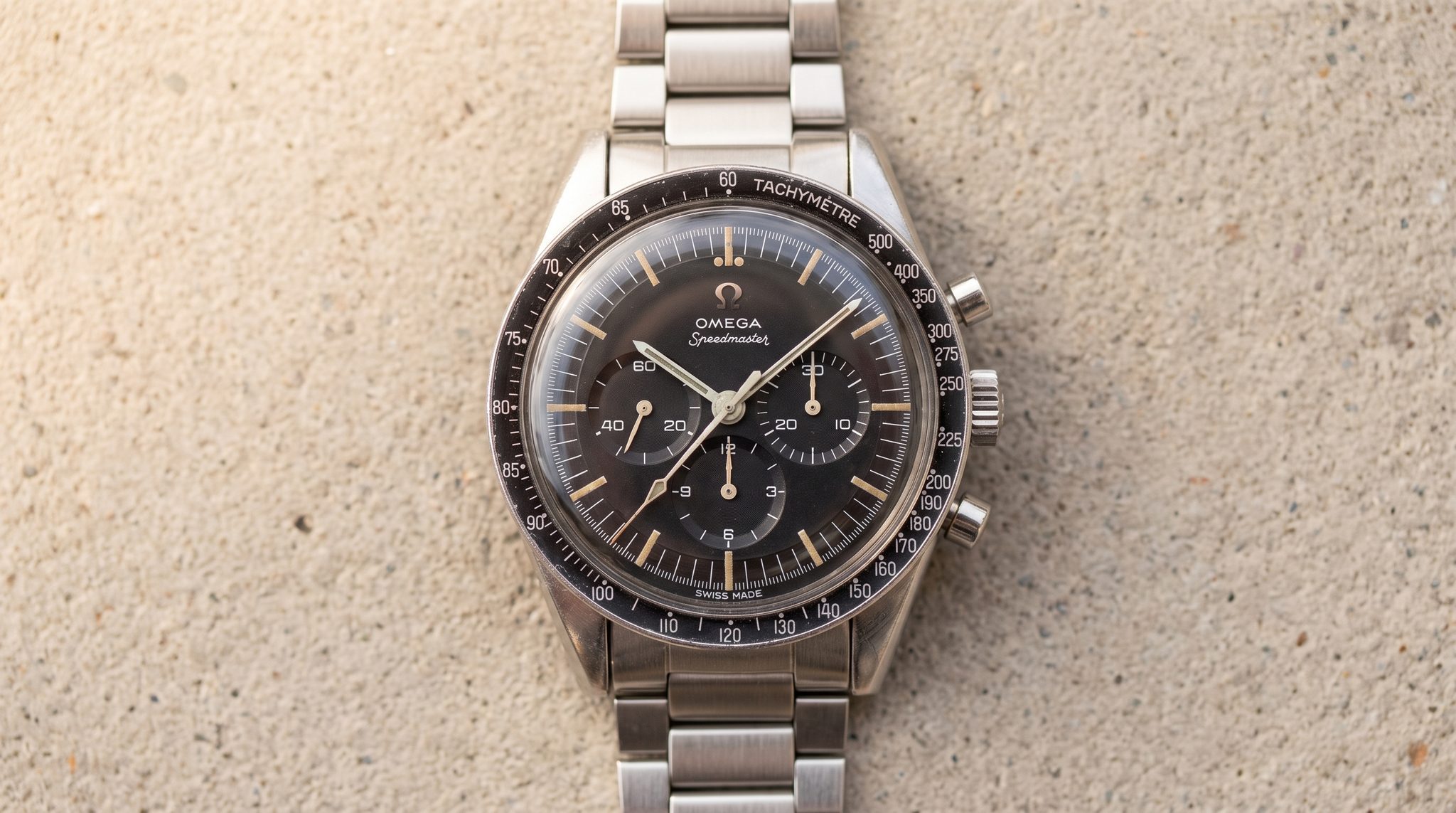
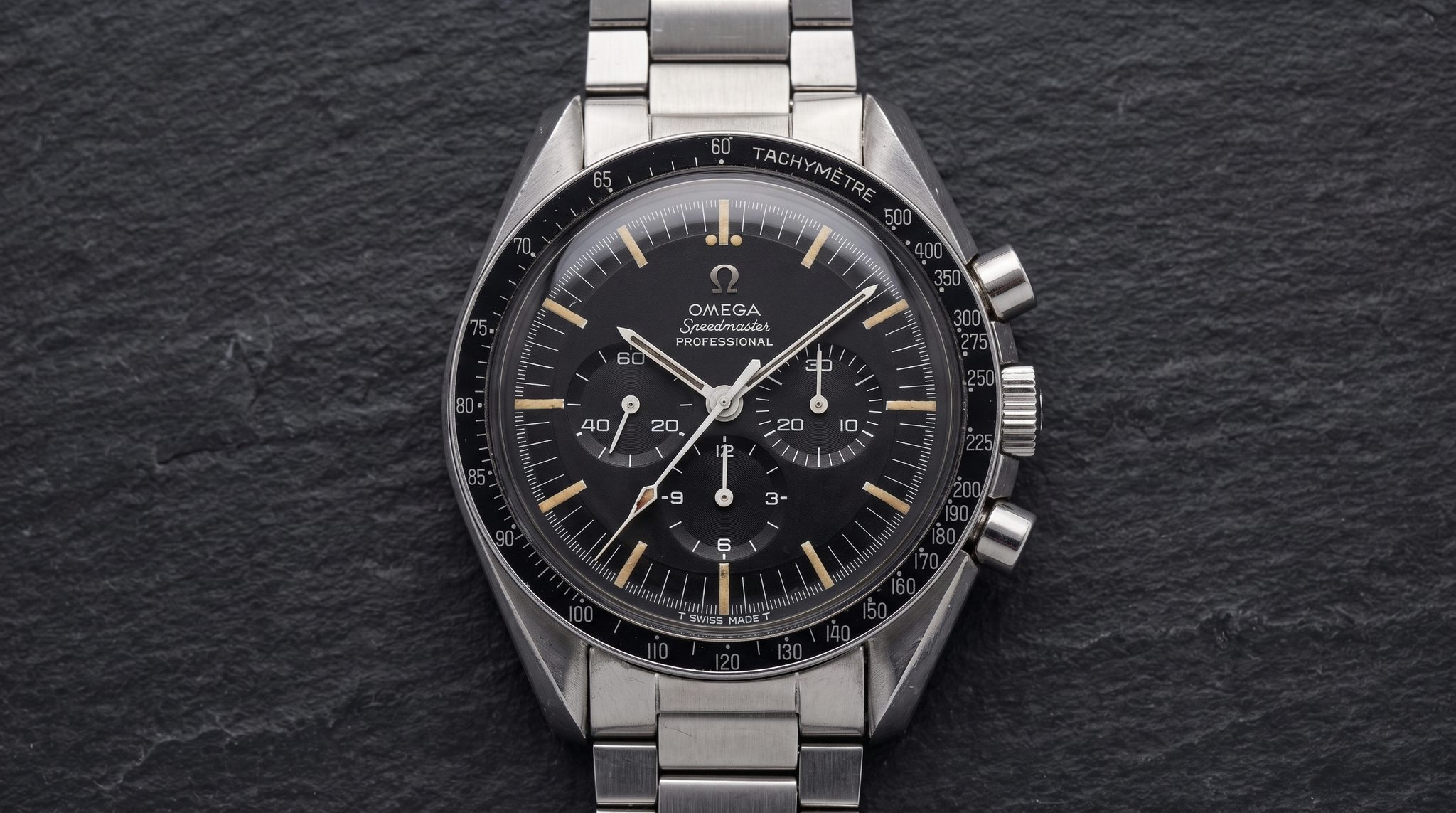
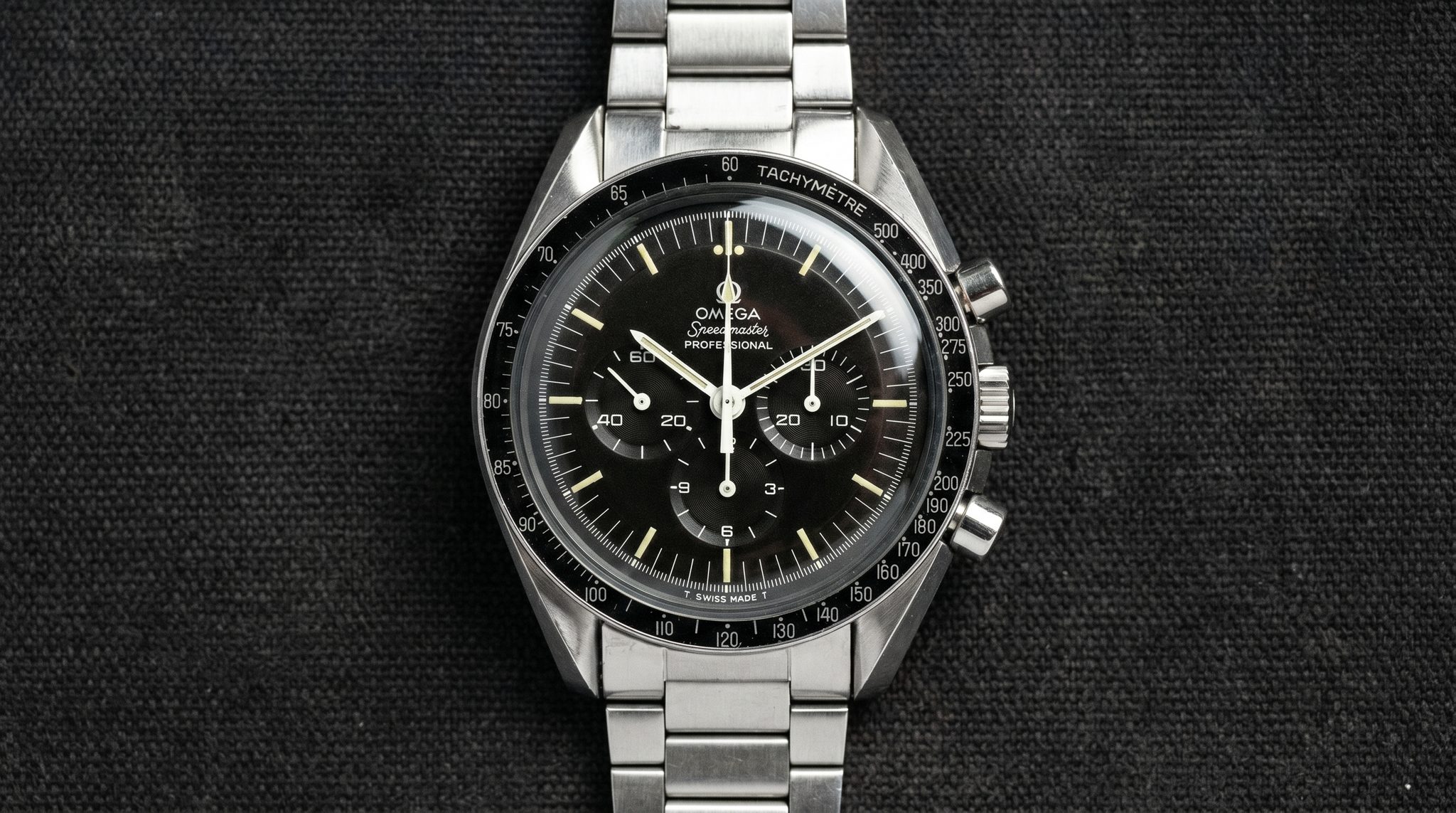
Omega Speedmaster 105.002 is the renumbered end of the CK2998 era, produced in a brief late-1962 to mid-1964 window that can be found with both alpha and baton hands.
- Production
- c. 1962–1964
- Case
- Stainless steel
- Diameter
- ~39–39.7 mm
- Thickness
- 12.8 mm
- Lug width
- 19 mm
- Lugs
- Straight lugs
- Crystal
- Plexiglass
- Bezel
- Tachymeter (aluminum)
- Bezel type
- DON
- Dial
- Stepped, applied logo
- Movement
- Cal. 321
- Chronometer
- No
The Omega Speedmaster 105.002 is the rare Speedmaster that changes hands without changing identity: in a run documented from late 1962 into the second quarter of 1964, Omega sold the same straight-lug, Cal. 321 chronograph that collectors associate with late CK2998, but under a new reference code, and with a late-series swing toward baton hour and minute hands around the upper end of the 20.5-million movement range. That combination, a renaming that left the watch visually almost unchanged at first, followed by a subtle but historically important hand-set pivot inside the same reference, is why 105.002 sits at the hinge between “2998-style” Speedmasters and the more standardized look that follows.
On the wrist it is recognizably early Speedmaster: compact by later Moonwatch standards, typically described as about 39 mm in diameter (some texts cite 39.7 mm), with straight lugs and a plexiglass crystal over a stepped dial with an applied Omega logo. Inside is Omega’s Caliber 321, the manual-wind, column-wheel chronograph movement that defines the entire pre-Professional straight-lug generation. The result is a reference whose appeal is not in a long list of configurations, but in how a few small, verifiable details, especially the hands and the occasional unusual dial color, capture Omega’s early-1960s transition from the CK2998 naming system to the 105.xxx era.
“Ref. 105.002 is the late-1962 to mid-1964 bridge: a renumbered CK2998-62 at the start, and a baton-hand preview of the 105.003 at the end.”
105.002 across c. 1962–1964
The 105.002 story starts with paperwork, not metalwork. In 1962 Omega introduced the 105.xxx numbering for Speedmasters, and collector scholarship treats ref. 105.002 as the CK2998-62 continuing under the new MAPICS codification. That continuity is visible in the way early 105.002 watches present themselves: the same straight-lug case profile, the same stepped dial architecture, and the same alpha hour and minute hands that defined the CK2998 look.
The brief production window is documented broadly as 1962–1964, with Sotheby’s placing it from late 1962 into the second quarter of 1964, and specialist dealers clustering examples within roughly 19.583 million to 20.525 million movement numbers. Within that span, the most consequential change is not a new case or a new movement, since all known 105.002s use Caliber 321, but the gradual appearance of baton hour and minute hands toward the high-serial end. Surviving watches and archive-backed examples cluster the baton-hand configuration around the upper 20.5-million range, while earlier serials more often retain alphas. The exact cutover is not fixed by a published factory bulletin, which is why the hand transition is best treated as an overlap rather than a single clean breakpoint.
A second, much rarer thread runs through the same period: a small handful of 105.002-62 watches with a grey-blue stepped dial instead of the expected black. Fewer than five have been documented in specialist collecting coverage, including a photographed 19.833 million example dated to 1963. The evidence points to a genuine period variant, but the small sample and lack of factory explanation leave its purpose undocumented.
Seen as a whole, 105.002 compresses the early Speedmaster’s evolution into a narrow slice of time. When modern collectors talk about the “straight-lug, Cal. 321” Speedmaster as if it were a settled template, this reference is the reminder that the template was still being standardized, one detail at a time, even while the watch’s official nameplate was changing.
- c. 1962Reference beginsStraight-lug case, 105.002-62 back
- c. late 1962Dated productionMovement in 19.58x.xxx band
- c. 1963Hand overlapAlpha or straight baton hour hand
- c. 1963Grey-blue dialGrey-blue stepped dial tone
- c. 1964Late productionMovement near 20.52x.xxx
- c. 1964Reference replaced105.003 caseback, baton hands typical
105.002 against its neighbours
The 105.002 only makes sense when it is framed by its neighbors. CK2998 shows what it continued, essentially the same straight-lug Cal. 321 Speedmaster with alpha hands, while 105.003 shows what it pointed toward, the baton-hand straight-lug Speedmaster that becomes a stable, long-running template. The early “Professional” 105.012 is included only as the next major conceptual step, the jump to the asymmetrical case and Professional dial era.
This reference 105.002 Omega · focal c. 1962–1964 | ||||
|---|---|---|---|---|
| Production | 1959–c. 1962/63 | c. 1962–1964 | c. 1963/64–1969 | 1964–c. 1967 |
| Case | Stainless steel | Stainless steel | Stainless steel | Stainless steel |
| Diameter | ~39–39.7 mm | ~39–39.7 mm | 38 mm | 42 mm |
| Lug width | 19 mm | 19 mm | 19 mm | 20 mm |
| Lugs | Straight lugs | Straight lugs | Straight lugs | – |
| Crystal | Plexiglass | Plexiglass | Hesalite (acrylic) | Acrylic (Hesalite) |
| Bezel | Tachymeter (aluminum) | Tachymeter (aluminum) | Tachymeter (aluminum) | Tachymeter bezel |
| Bezel type | DON | DON | DO90 | DON |
| Dial | Black, applied logo | Stepped, applied logo | Stepped, applied logo | “Professional” text |
| Movement | Cal. 321 | Cal. 321 | Cal. 321 | Cal. 321 |
| Chronometer | No | No | No | No |
Three dial generations across the run
On early ref. 105.002, the watch reads like the final CK2998: the hour and minute hands are slim alpha shapes that taper to points, with luminous centers that echo the period’s radium plots. In many examples the central chronograph seconds is the vintage “spear” style with a pointed tip and a distinctive counterweight, while the sub-dial hands stay in simpler baton form. The overall effect is dressier than later Speedmasters, even though the case and bezel are pure tool-watch.
This is also the configuration that makes the renumbering story tangible. Specialist coverage and dealer descriptions repeatedly describe early 105.002 as essentially a 2998-62 renamed under Omega’s new coding, and in hand the alpha set is the quickest way to see that continuity. These watches are also frequently discussed as the last Speedmaster reference introduced with alpha hour and minute hands.
What to check before buying a 105.002
Buying a Speedmaster 105.002 is mostly about resisting easy stories. Because early 105.002 and late CK2998-62 are described as essentially identical apart from coding, parts can be mixed in ways that still look persuasive, especially when the watch is built around a correct Cal. 321. The second trap is the hand transition: both alpha and baton hour and minute hands are documented within the reference, but the changeover is not pinned to a single published cutoff, so “wrong hands for the serial” is not always the decisive argument people want it to be.
The safest purchases are the ones that look like they have been assembled by time rather than assembled later. A coherent watch shows the expected straight-lug case with a correct 105.002-62 caseback, a stepped applied-logo dial without later “T” markings, and a period-correct DON bezel that has aged in the same visual language as the rest of the watch. When a detail looks too new for its neighbors, it often is.
Ownership is the appeal of early Speedmaster proportions without later-case bulk. With its commonly cited 19 mm lug width and roughly 39 mm presence, the 105.002 wears compact, and its plexiglass crystal and vintage bezel insert age in a way that turns honest wear into part of the watch’s character. It is a short-run reference, often estimated in the low thousands, and that scarcity concentrates attention on originality, the one factor that cannot be replaced once it is lost.
Omega Speedmaster 105.002 for sale
Auctions on Grey Market run on seven-day cycles, every watch verified before it sells. Browse what's live now, or consign your 105.002.
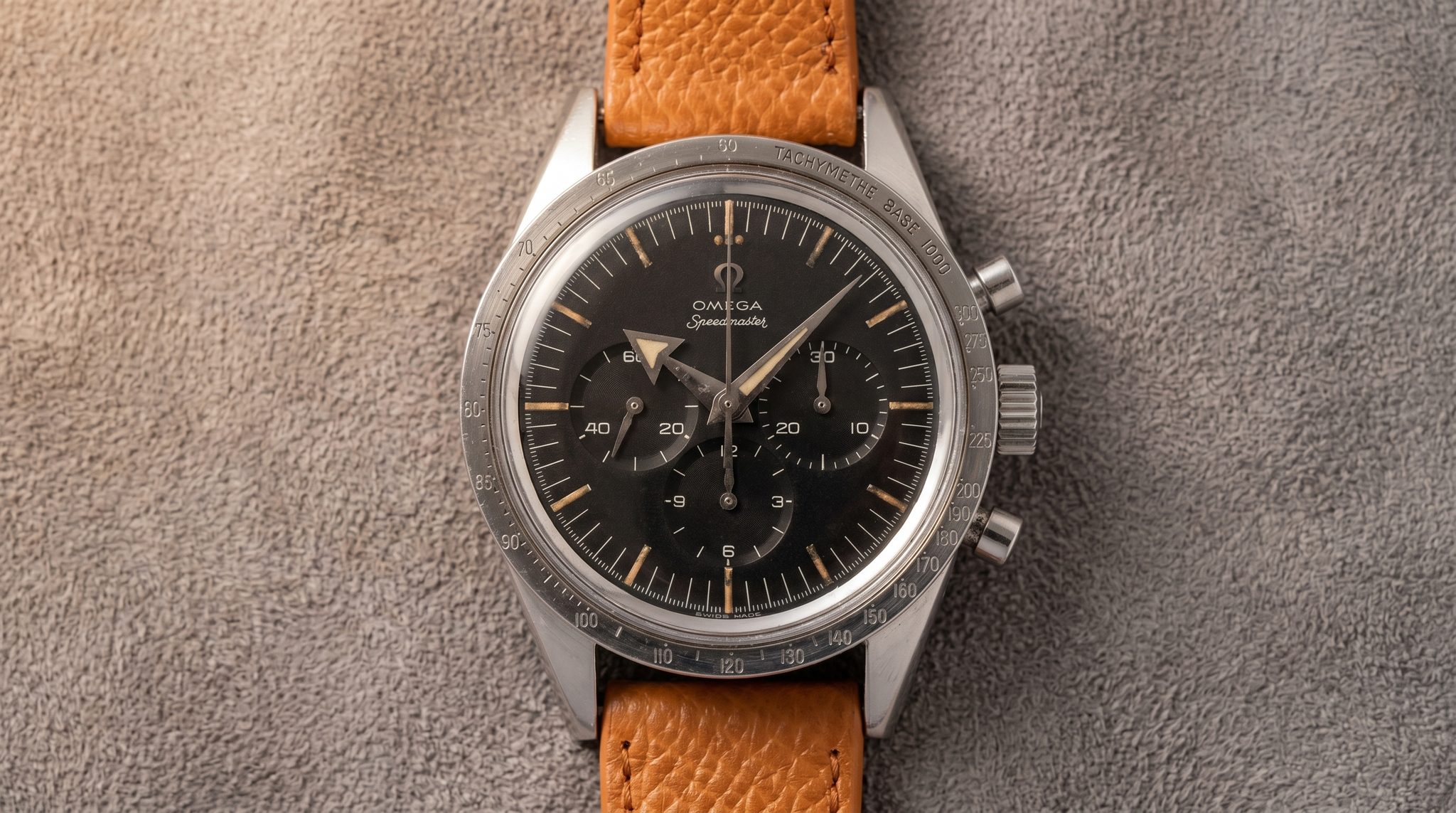
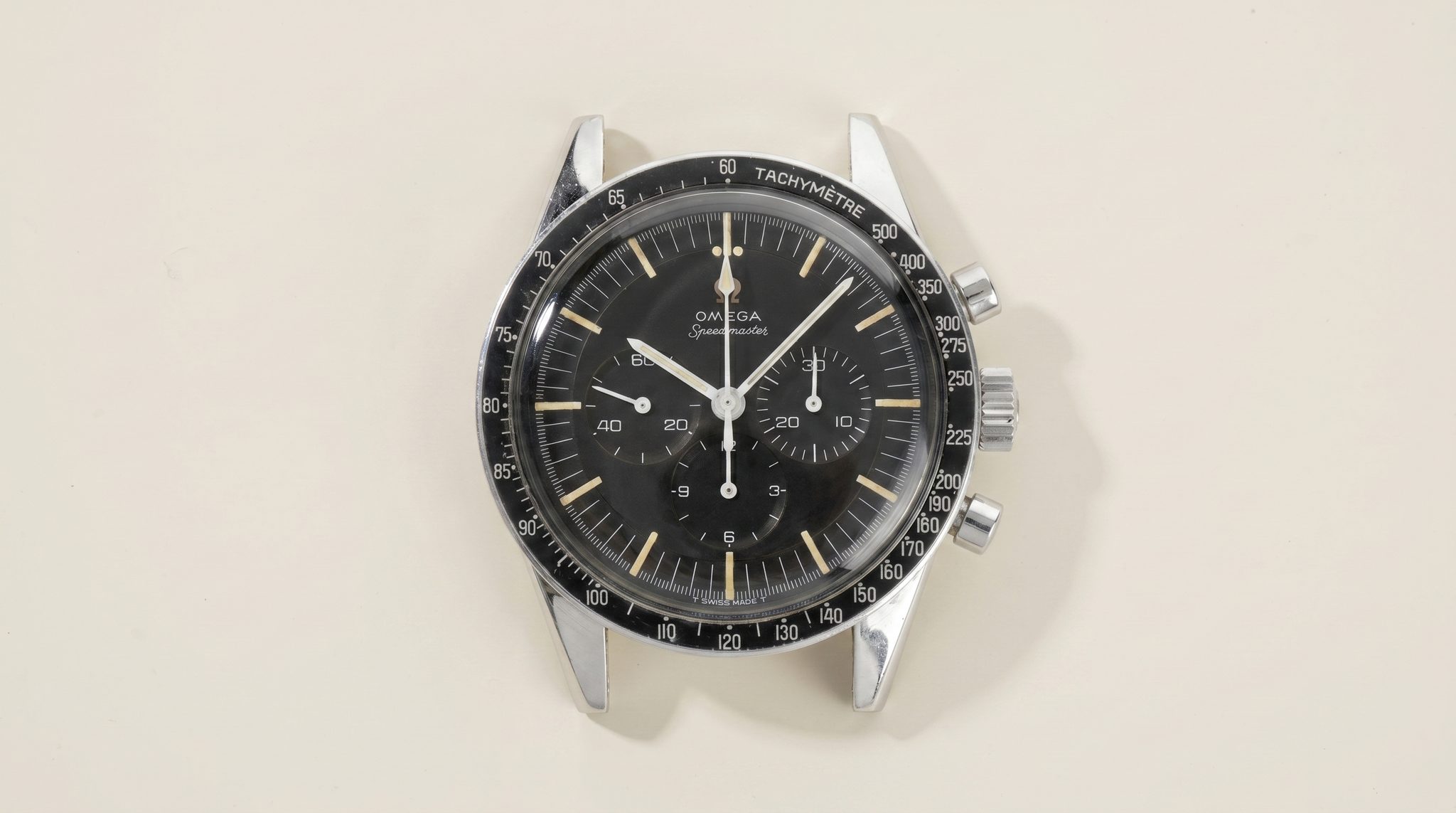
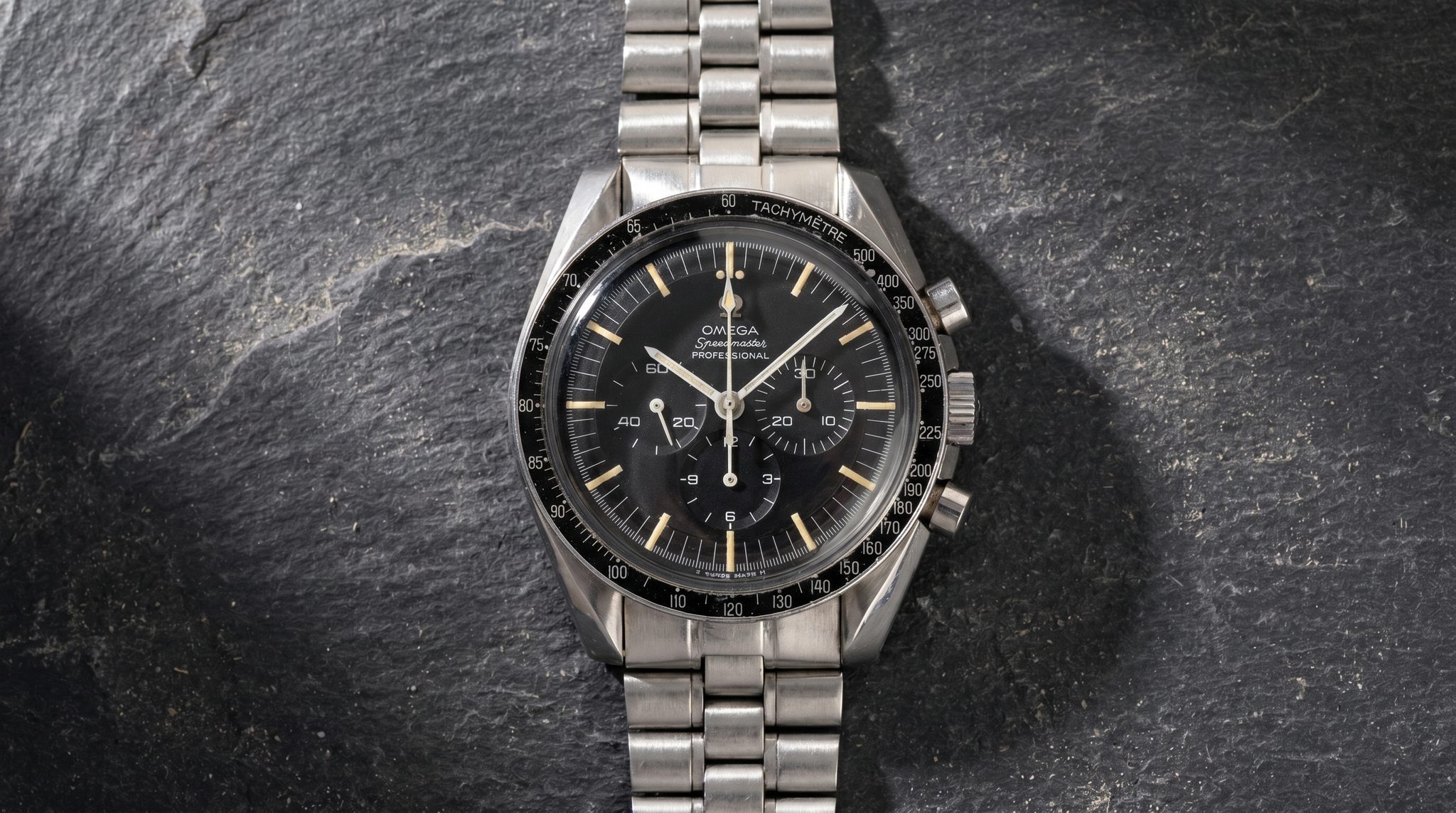
Adjacent in the Speedmaster family
Common questions about the 105.002
Most specialist overviews place Omega Speedmaster ref. 105.002 in the early 1960s, commonly given as 1962–1964. Sotheby’s dates production more narrowly from late 1962 into the second quarter of 1964.
- Sotheby’s | Omega Speedmaster ref. 105.002-62 ‘FAP’ (production window late 1962 to Q2 1964; serial range)sothebys.com
- HODINKEE Shop | 1964 Omega Speedmaster Ref. 105.002 (dimensions; short production)shop.hodinkee.com
- Somlo | Omega ref. 105.002-62 (serial range; estimated production; caseback stamping)somlo.com
Show 7 more
- Swisswatches Magazine | Speedmaster overview (105.002 listed 1962–1964)swisswatches-magazine.com
- Bob’s Watches | Speedmaster history (105.002 introduced 1962; followed by 105.003)bobswatches.com
- WatchProSite | Omega Speedmaster ST105.002 vintage review (39.7 mm mention; function overview)watchprosite.com
- OmegaForums | 105.002 DEPORA thread (collector scholarship on MAPICS renaming; serial range)omegaforums.net
- WahaWatches | 105.003 last of its kind (pusher size comparison 105.002 vs 105.003)wahawatches.com
- Speedmaster101 | Reference 105.002 (hand change noted; serial-range cautions)speedmaster101.com
- Watchfid | 105.002-62 special dial (grey-blue dial; observed count)watchfid.com