

Tudor Prince Oysterdate 9050
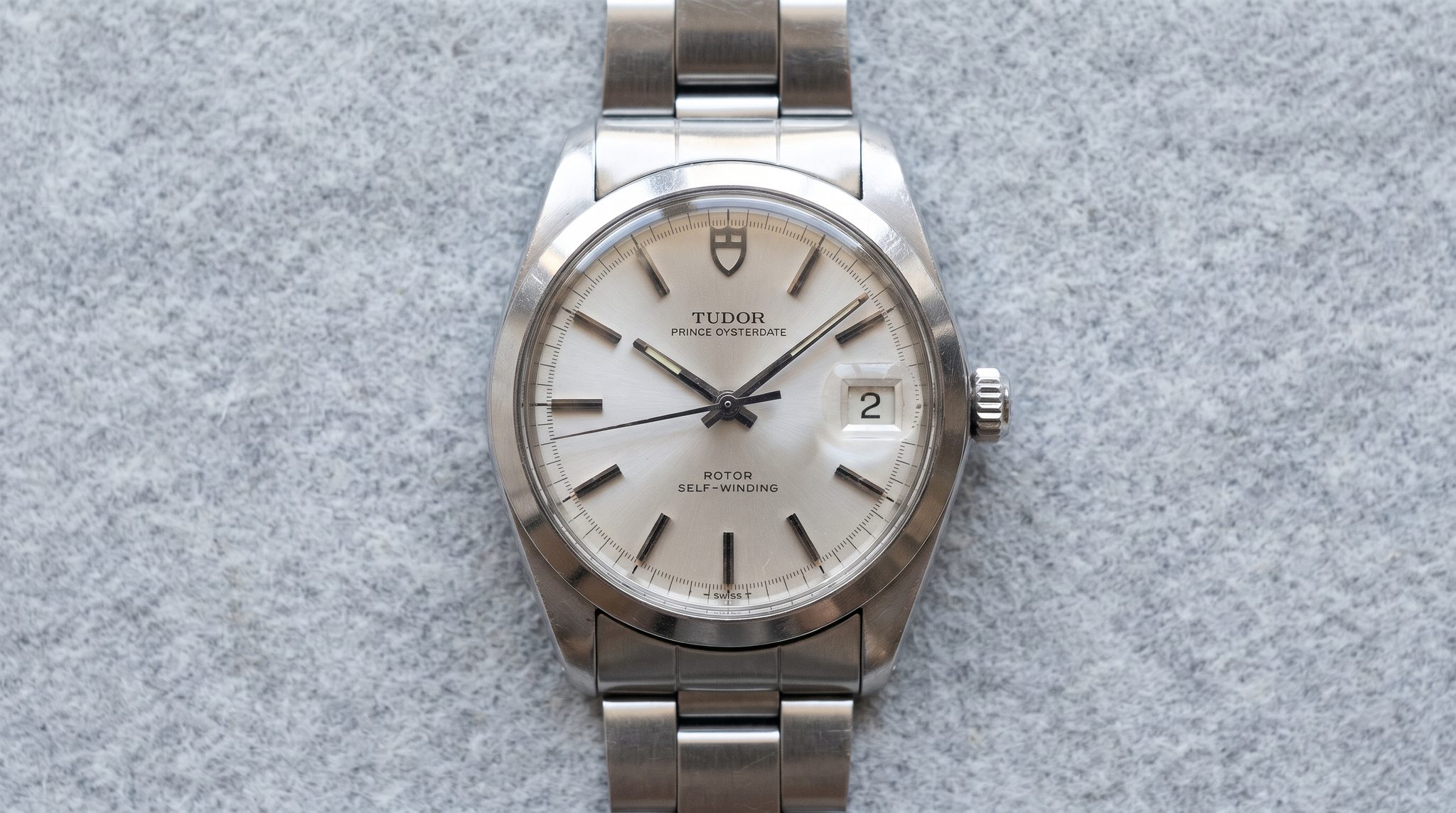
The Tudor Prince Oysterdate 9050 is a transitional Oysterdate whose documented 2472 and ETA 2784 examples make each individual watch more informative than its reference number alone.
- Production
- late 1960s–early 1980s
- Case
- c. 34 mm steel
- Lugs
- 19 mm
- Thickness
- c. 10 mm
- Bezel
- Typically smooth
- Crystal
- Plexiglass
- Dial
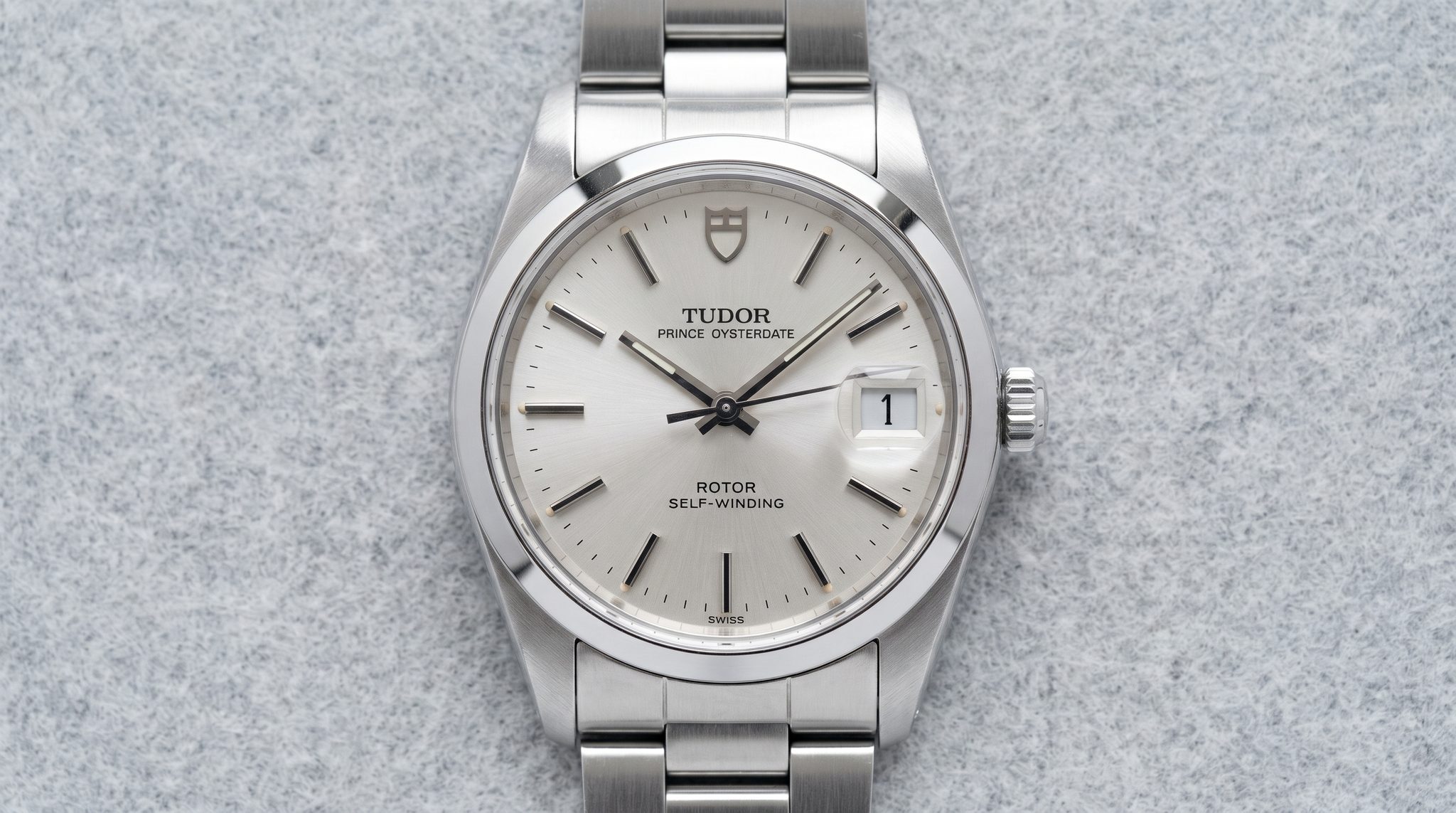
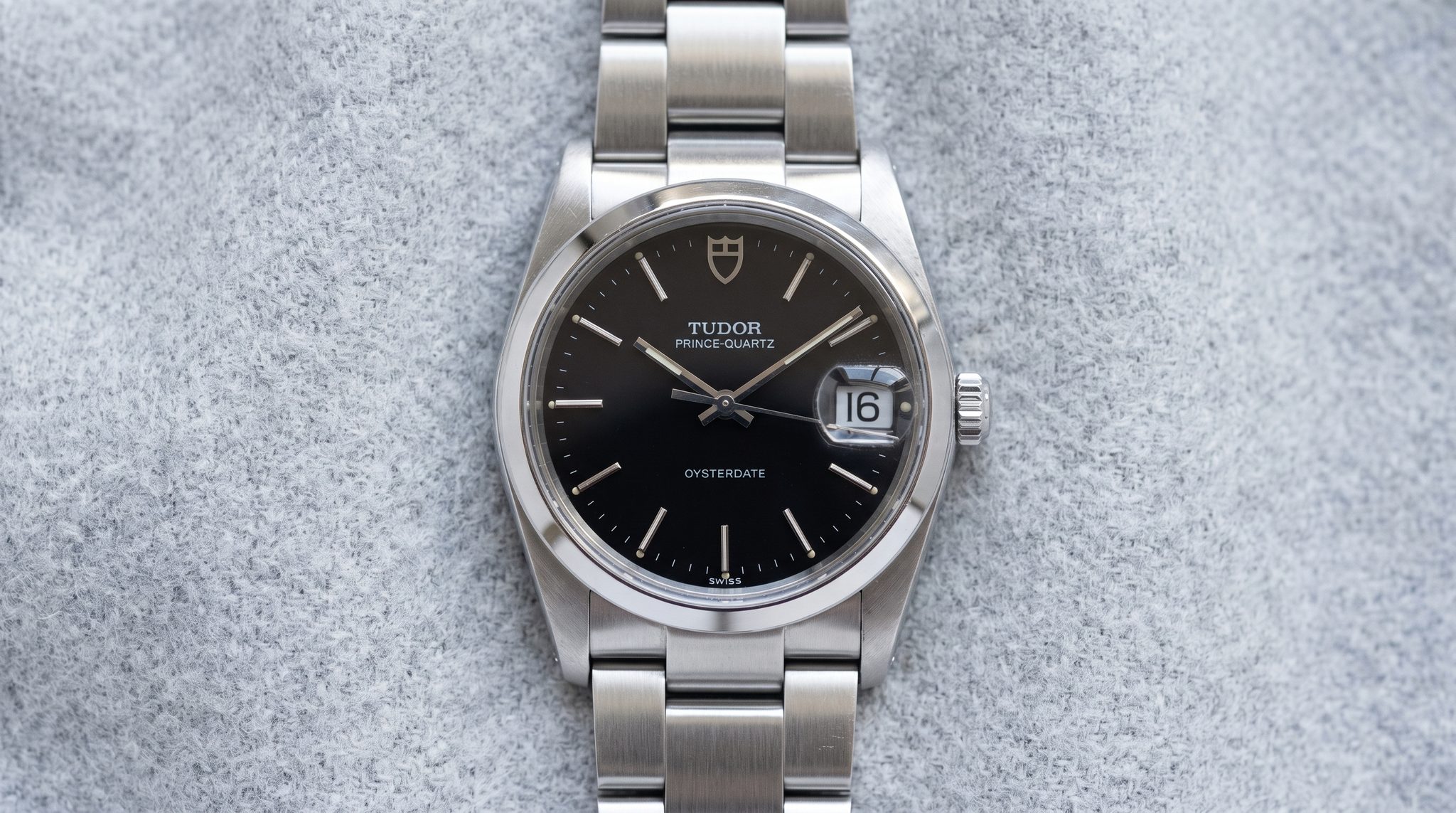
- Silver, black, blue, grey
- Date
- 3 o’clock, usually magnified
- Movement
- Cal. 2472 / ETA 2784
- Winding
- Automatic
- Lume
- Dial-specific
- Water resistance
- Not guaranteed
The Tudor Prince Oysterdate 9050 was produced from the late 1960s to the early 1980s.
- Production years
- late 1960s–early 1980s
- Movement
- Cal. 2472 / ETA 2784
The Tudor Prince Oysterdate 9050 is the Oysterdate reference where a single number begins to conceal several different watches. One documented 1977–78 example has a matte blue dial with no luminous plots and matching hands, while another dated 1980 carries a grey dial. Both sit within the same approximately 34 mm steel Oyster format, yet neither dial can be used as a universal date code. That tension is the defining fact of the Tudor 9050: it belongs to a transitional family, and its surviving details matter more than a supposedly fixed catalogue specification.
“The Tudor 9050 is a reference number attached to a changing Oysterdate family, so originality is judged trait by trait: case, dial, lume, hands, movement, and date evidence must agree.”
Tudor Prince Oysterdate 9050 production years: late 1960s–early 1980s
The 9050 has no securely documented factory start or end date, so the timeline begins with surviving examples rather than an asserted catalogue cutoff. A 1968 watch establishes that the reference was already in circulation by that year, and its quick-set date and non-luminous dial show that even an early documented example cannot stand for every later configuration. The reason the dial spread is not a clean sequence is not documented. Silver, white, black, blue, and grey executions are recorded, but the records do not show that one colour replaced another at a known date.
- 1968Early exampleNo luminous plots; date at 3 o’clock
- c. 1970 – 1979Dial rangeColour alone does not establish dating
- 1977 – 1978Blue no-lumeNo lume on dial or hands
- 1980Grey exampleGrey dial; standard Oysterdate layout
- c. 1980 – 1989Related designationFive-digit reference presentation
9050 against its neighbours
These comparisons place the 9050 between two generations. The 7966 is the 1960s watch before it, with an ETA 2462 or 2484-family movement and a date that does not quick-set. The 74034 and the midsize 72000 are what followed: ETA 2824-2 automatics with quick-set dates, the 74034 with a fluted white-gold bezel and the 72000 in a smaller 32 mm steel case. The 9050 sits between them, with an acrylic crystal and a cal. 2472 or ETA 2784 movement.
This reference 9050 Tudor · focal late 1960s–early 1980s | ||||
|---|---|---|---|---|
| Production | c. 1959–1960s | late 1960s–early 1980s | late 1980s–at least 2002 | late 1980s–1990s |
| Case | 34 mm; steel, gold, two-tone | c. 34 mm steel | 34 mm steel | Steel, 31.5–32 mm |
| Bezel | Smooth; gold on two-tone | Typically smooth | 18k white gold, fluted | Smooth steel |
| Crystal | Acrylic; Cyclops seen | Plexiglass | Acrylic or sapphire | Acrylic or mineral |
| Movement | ETA 2462 / 2484-family | Cal. 2472 / ETA 2784 | Tudor Auto-Prince / ETA 2824-2 | ETA 2824-2; 2826 or 2784 reported |
| Date | At 3; non-quickset | 3 o’clock, usually magnified | Quick-set, magnified | At 3 o’clock |
Four dial generations across the run
On the wrist, a silver, white, or light dial gives the 34 mm case a brighter, more open appearance, with applied hour markers carrying much of the visual structure. These colours are recorded for 9050 examples, but the available evidence does not establish a formal colour sequence or prove that all light dials belong to one production window.
What to check before buying a 9050
Buying a Tudor Prince Oysterdate 9050 is less about finding a single correct specification than about finding a coherent individual watch. The principal risks are mixed parts, refinished dials, over-polished cases, uncertain reference usage, and movement descriptions copied from later ETA calibres. A seller’s date or the presence of a Rolex-signed caseback cannot settle those questions by itself.
Tudor Prince Oysterdate 9050 price and value
Tudor Prince Oysterdate 9050 for sale
Auctions on Grey Market run on seven-day cycles, every watch verified before it sells. Browse what's live now, or consign your 9050.
Grey Market runs watch auctions for vintage and neo-vintage pieces, every lot reviewed before it lists and verified before the seller is paid, and the Watch Exchange, where ID-verified users buy and sell at a fixed price. Selling one? See the ways to sell a Tudor, or check what it’s worth. For more vintage Tudor, see the Tudor reference guide.
What a 9050 has sold for here
One 9050 has sold on Grey Market, verified before it shipped.
Adjacent in the Prince Oysterdate family
Common questions about the 9050
The Tudor Prince Oysterdate 9050 was documented from the late 1960s to the early 1980s. The available evidence does not establish a definitive factory start or end date, and individual records may reflect production estimates or sale dates rather than a catalogue cutoff.
- 1968 Tudor Prince Oysterdate Ref. 9050 With Non-Lume Dialshop.hodinkee.com
- Tudor Prince Oysterdate 9050 0 Automatic Mens Stainless Steel Wristwatch Auctionliveauctioneers.com
- Tudor Prince Oysterdate 9050/0 Blue No-Lume Dial 1977/197810-over-10.com
Show 7 more
- 1978 Tudor Prince Oysterdate Ref. 9050/0shop.hodinkee.com
- Tudor Prince Oysterdate 9050/0 Full Setchrono24.com
- Tudor Prince Oysterdate 9050/0 Watch Onlychrono24.ca
- Tudor Prince Oysterdate 9050/0 Silver Dial Date, 1969aigner-fuchs.com
- Tudor Prince Oysterdate 9050/0bernardwatch.com
- Tudor Prince Oysterdate Ranger Ref. 9050/0lepage.fr
- Tudor Prince Oysterdate 9050grandcaliber.com