

Tudor Prince Oysterdate 74033
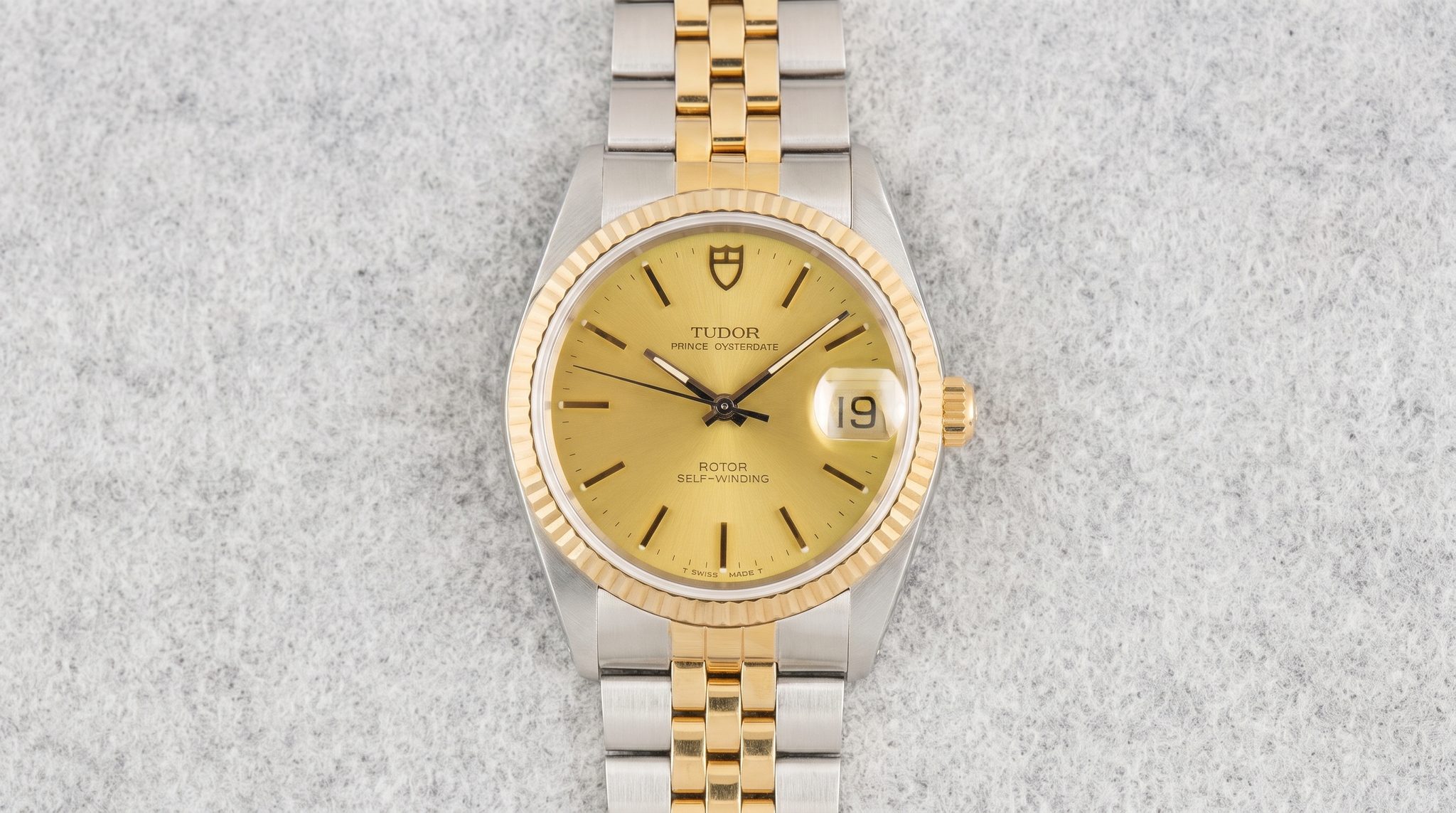
The Tudor Prince Oysterdate 74033 is a two-tone dress watch whose real identity lies in its surviving components, not a neat factory chronology.
- Production
- c. late 1980s–late 1990s
- Case
- 34 mm steel and gold
- Bezel
- Usually fluted yellow gold; smooth examples documented
- Crystal
- Sapphire on later examples; verify per watch
- Dial
- Champagne, linen, Roman or diamond
- Movement
- ETA 2824-2; 2884 listings
- Bracelet
- Two-tone Oyster or Jubilee style; leather also seen
- Date
- Quick-set, 3 o’clock
- Lume
- Tritium on period examples
The Tudor Prince Oysterdate 74033 was produced from the late 1980s to the late 1990s.
- Production years
- c. late 1980s–late 1990s
- Movement
- ETA 2824-2; 2884 listings
The Tudor Prince Oysterdate 74033 is best understood as a watch assembled by evidence rather than by a perfectly documented production chart. One surviving example is dated circa 1989, while dealer and marketplace records extend into 1997, 1998 and approximately 2000, leaving the reference with a broad historical outline but no securely established factory start or end date. That uncertainty gives the 74033 its particular character: the watch is identifiable as a 34 mm two-tone Oyster model, yet its dial, bezel, bracelet and movement cannot be dated as one package simply from the reference engraved on the case.
The basic formula is clear. The stainless-steel case carries yellow-gold accents, usually a fluted gold bezel and gold crown, with a date aperture at 3 o’clock and commonly a magnifier. Two-tone Oyster- or Jubilee-style bracelets are encountered, as are leather straps. The documented movement is the automatic ETA 2824-2, but later records also describe ETA 2884 and 2884-2 family movements. Those descriptions may reflect genuine variation, replacement movements or catalogue errors, and the reason for the inconsistency is not documented. Inspection of the movement is therefore more informative than assuming that every 74033 left the factory with one uniform calibre.
The dials make the same point in visible form. A champagne linen dial shows a woven texture when light moves across its surface, while smooth champagne or gold dials present a cleaner metallic field. Roman-numeral executions and ten-diamond dials are also documented. None can safely be treated as a dated “mark” of the reference. The linen dial is documented on a circa-1989 example, Roman numerals appear on late-1980s and early-1990s examples, and diamond dials occur in later surviving records, but the full windows remain uncertain. Tritium is mentioned on some period listings, without a dependable 74033-specific lume cutoff.
That is the useful verdict for collectors. The Prince Oysterdate 74033 is not a reference whose history can be read from one dial style or one movement description. It is a compact Tudor whose originality is established by the agreement of several physical clues, each considered on its own terms.
“A Tudor 74033 is not dated by one trait. Its originality emerges when the dial, bezel, bracelet and movement agree.”
Tudor Prince Oysterdate 74033 production years: c. late 1980s–late 1990s
The timeline is deliberately narrower than the catalogue language often attached to the reference. The circa-1989 example establishes that the 74033 was circulating by that point, and its champagne linen dial gives a useful visual anchor, but it does not prove that linen was an introductory configuration. The same caution applies to Roman numerals and diamond indices: surviving watches demonstrate options, not a sequence in which one dial replaced another.
Movement descriptions create a separate problem. ETA 2824-2 is specifically documented in period examples, while other records identify ETA 2884 or 2884-2 movements. The record does not establish a clean factory handoff, and it does not explain whether every discrepancy reflects production variation, later replacement or transcription. That is why a movement inspection carries more weight than a seller’s title.
The case and dial evidence must likewise be kept apart. The principal format is steel and yellow gold, commonly with a fluted bezel, but smooth-bezel 74033 examples are also documented. A smooth bezel cannot therefore be used by itself to reject the reference, just as a linen dial cannot establish an early date. The reason Tudor’s public production record does not resolve these component windows is not documented. By the end of the surviving record, the watch had changed less as a single model than as a set of configurations circulating under one reference number.
- c. 1989Documented exampleLinen texture across champagne dial
- c. 1990Automatic movementAutomatic ETA 2824-2 markings
- c. 1990sDial optionsBlack Roman numerals on gold dial
- c. 1990s – 2000Later recordsInspect calibre markings under the caseback
- 1997 – 1998Late dating evidenceDated examples, not factory cutoff
74033 against its neighbours
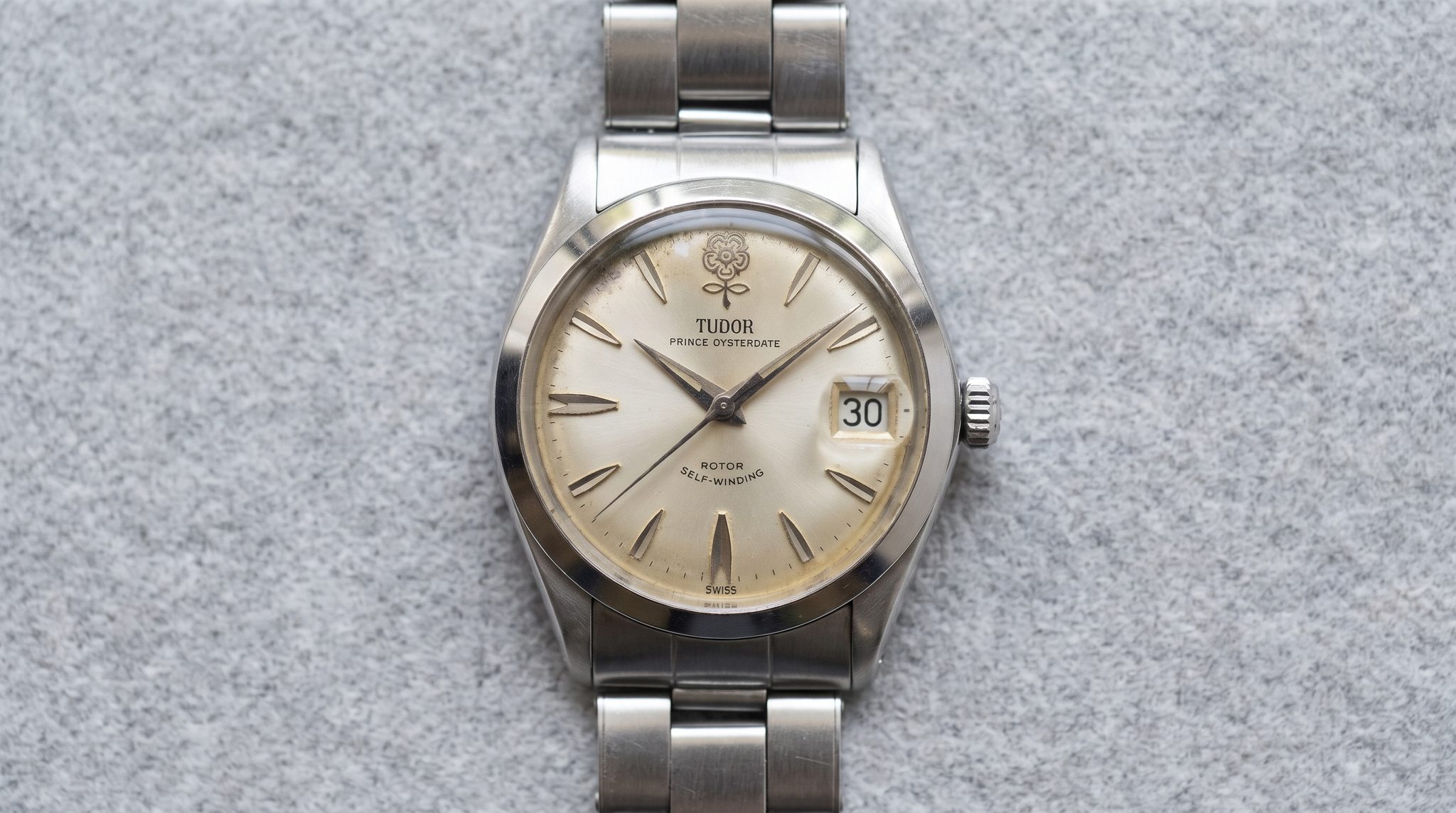
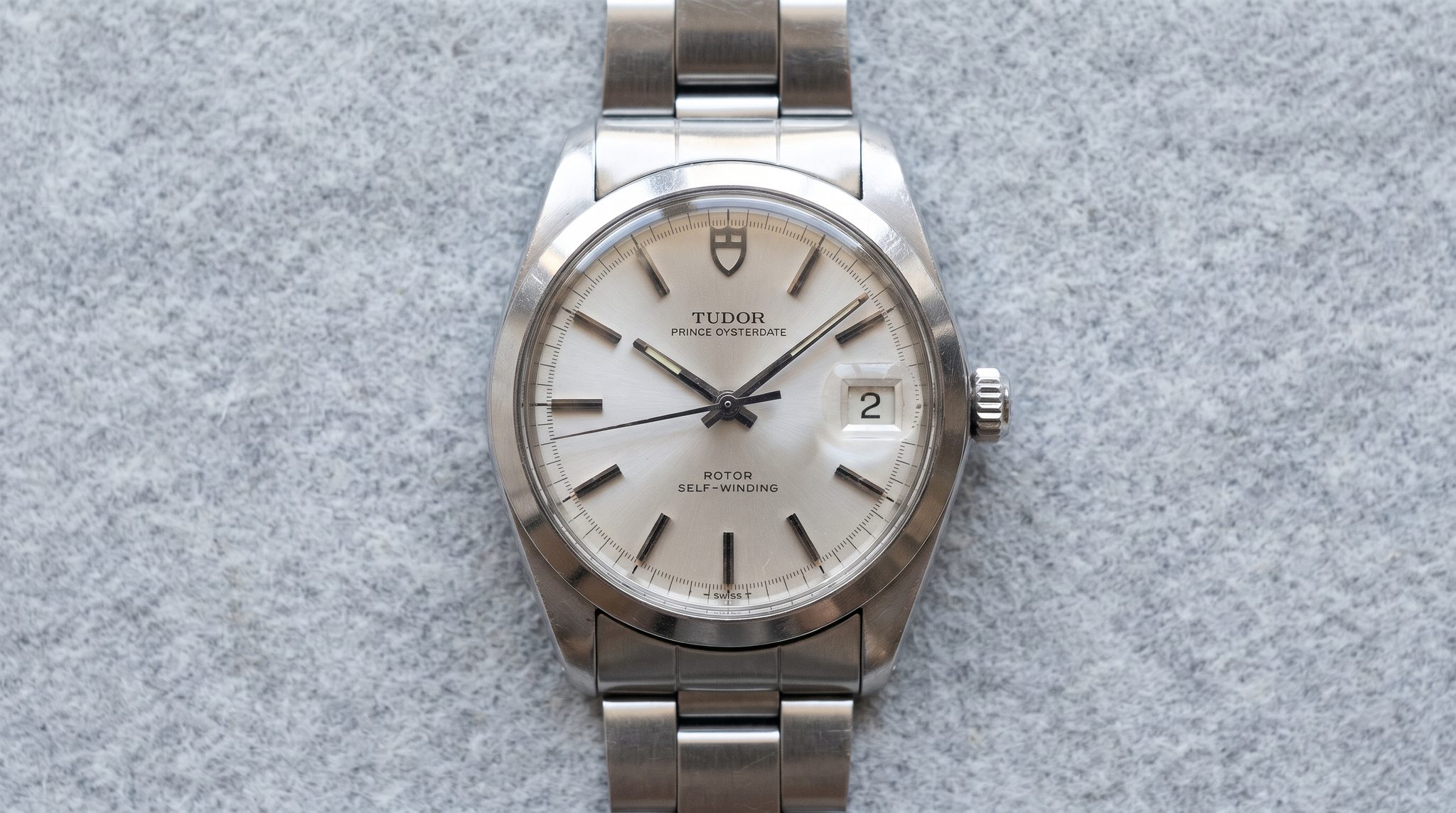
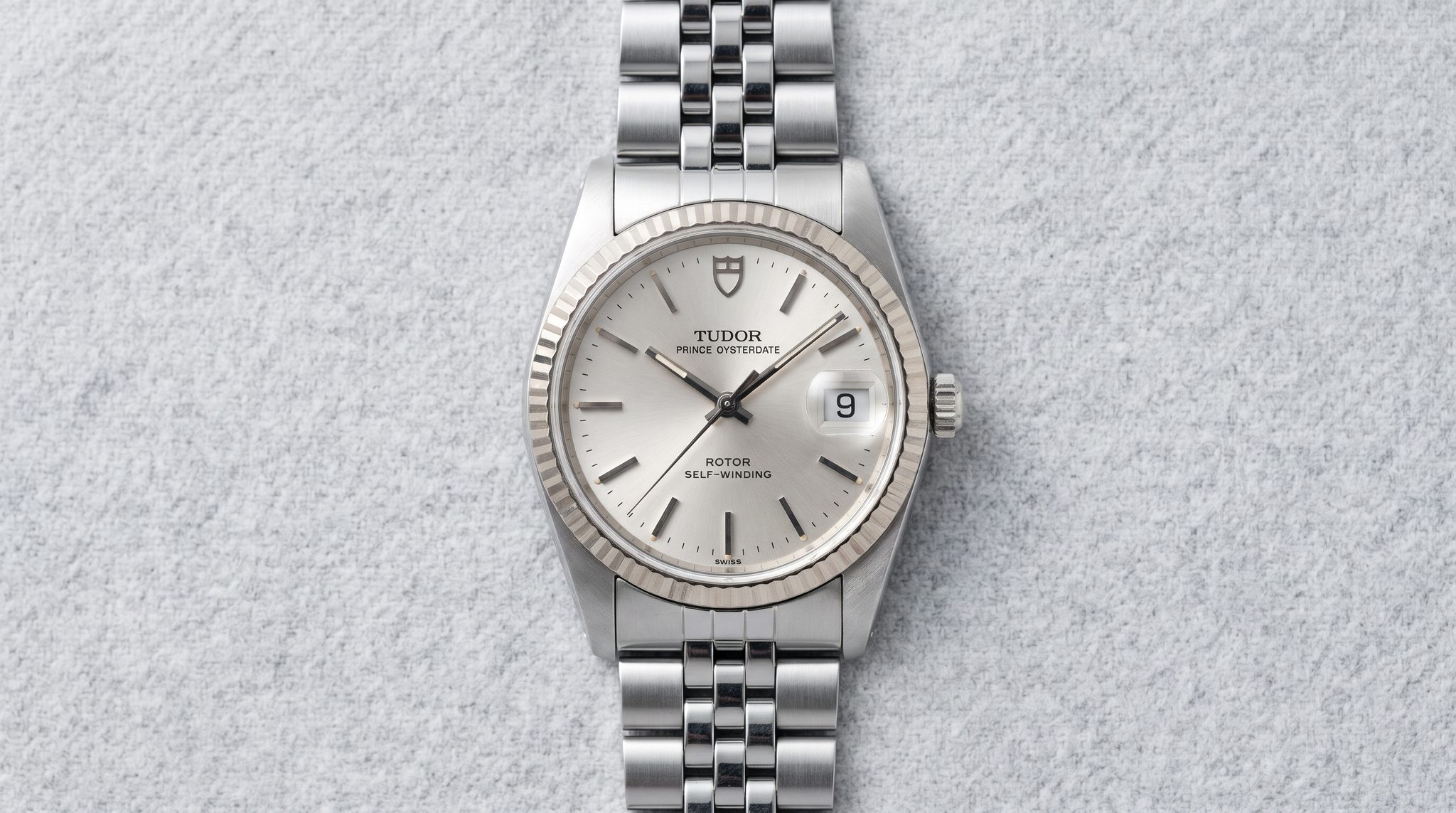
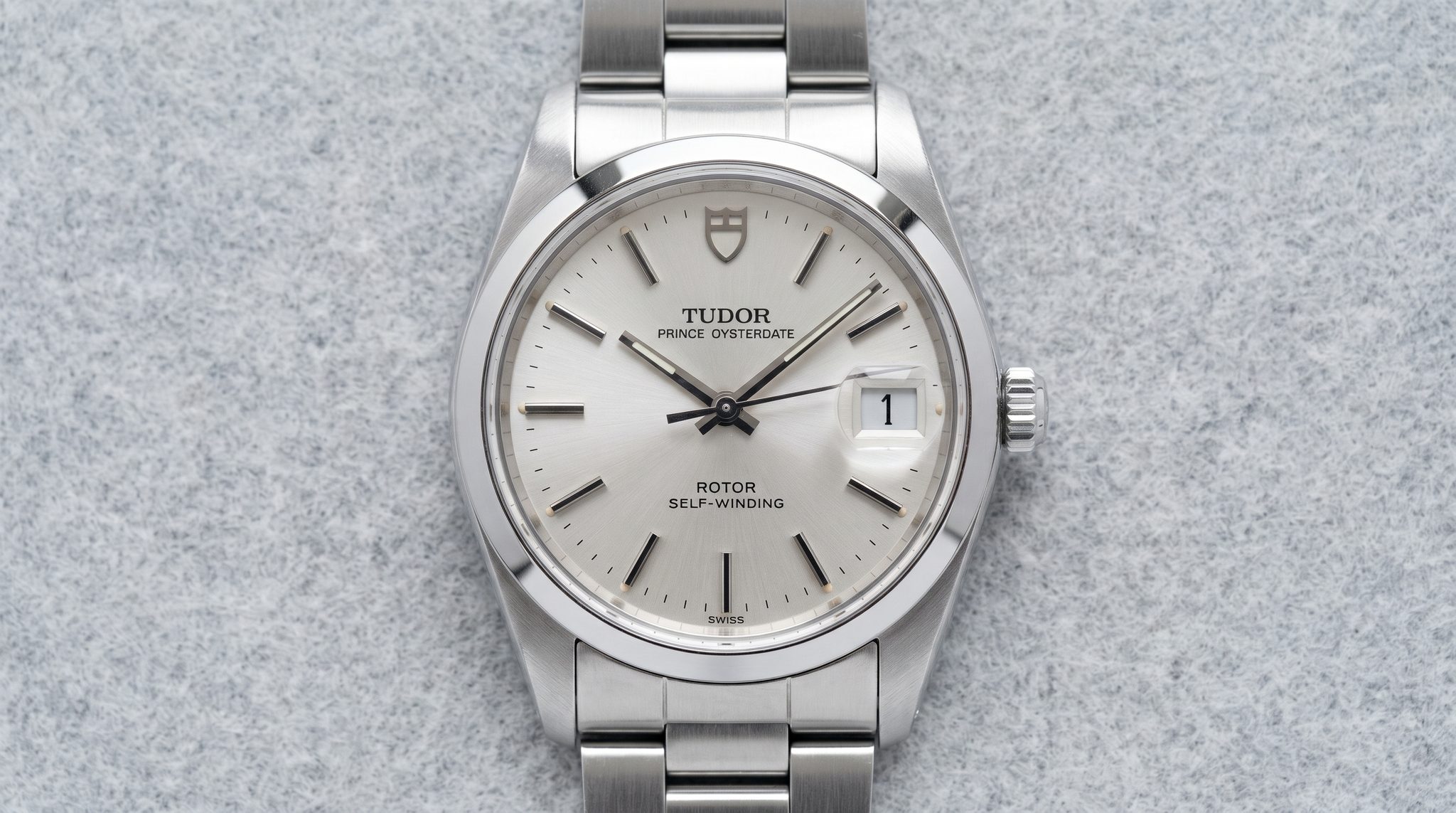
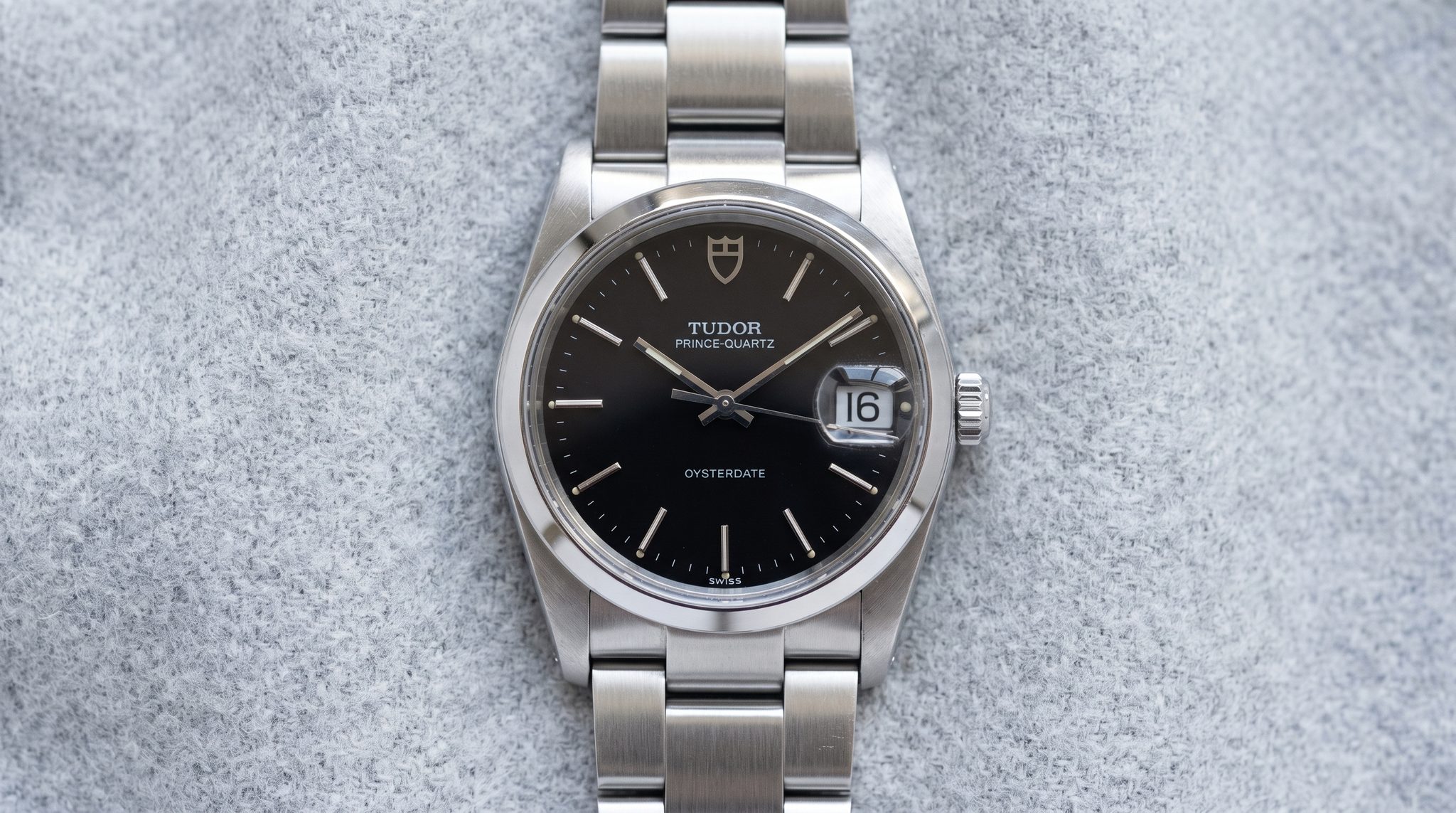
The 74034 is the closest comparison: the same 34 mm Prince Oysterdate idea with a fluted bezel, but in white gold on an all-steel watch rather than the 74033’s yellow gold on steel and gold. The 72000 is the midsize steel contemporary with a smooth bezel. The 7966 goes back to the 1960s, when the Prince Oysterdate was already offered in two-tone, to show how far the line had moved by the time the 74033 arrived with a quick-set date and an ETA 2824-2.
This reference 74033 Tudor · focal c. late 1980s–late 1990s | ||||
|---|---|---|---|---|
| Production | c. 1959–1960s | late 1980s–at least 2002 | late 1980s–1990s | c. late 1980s–late 1990s |
| Case | 34 mm; steel, gold, two-tone | 34 mm steel | Steel, 31.5–32 mm | 34 mm steel and gold |
| Bezel | Smooth; gold on two-tone | 18k white gold, fluted | Smooth steel | Usually fluted yellow gold; smooth examples documented |
| Crystal | Acrylic; Cyclops seen | Acrylic or sapphire | Acrylic or mineral | Sapphire on later examples; verify per watch |
| Movement | ETA 2462 / 2484-family | Tudor Auto-Prince / ETA 2824-2 | ETA 2824-2; 2826 or 2784 reported | ETA 2824-2; 2884 listings |
| Date | At 3; non-quickset | Quick-set, magnified | At 3 o’clock | Quick-set, 3 o’clock |
Four dial generations across the run
The plain champagne or gold dial is the most immediately legible expression of the watch: a warm metallic surface, applied batons or faceted markers, and the date window interrupting the field at 3 o’clock. Dealer records place this treatment across the broad period associated with the reference, but they do not establish a single factory window. Tritium is mentioned on some period listings, not as a defining feature of every champagne dial, so the actual marking must be read from the dial.
What to check before buying a 74033
Buying a Prince Oysterdate 74033 requires more than matching a reference number to a photograph. The broad dating record, overlapping dial executions, smooth and fluted bezel examples, and mixed movement descriptions make originality a matter of component agreement. A watch can be attractive and correctly identified while still carrying a replacement dial, bracelet, bezel or movement, so the seller’s description should be treated as a starting point rather than a complete history.
Tudor Prince Oysterdate 74033 price and value
A Tudor Prince Oysterdate 74033 sells for about $1,900 at the median, typically $1,400 to $2,800 across 6 comparable sales.
Tudor Prince Oysterdate 74033 for sale
Indicative figures from recent dealer, auction, and Grey Market sales (updated this week). Every watch is verified before it sells here.
Each point is a recent dealer or auction sale, banded to an indicative figure. The range shown is not a valuation.
Grey Market runs watch auctions for vintage and neo-vintage pieces, every lot reviewed before it lists and verified before the seller is paid, and the Watch Exchange, where ID-verified users buy and sell at a fixed price. Selling one? See the ways to sell a Tudor, or check what it’s worth. For more vintage Tudor, see the Tudor reference guide.
Adjacent in the Prince Oysterdate family
Common questions about the 74033
The Tudor Prince Oysterdate 74033 was produced approximately from the late 1980s to the late 1990s. A circa-1989 auction example and records dated through 1997 and 1998 support that broad range, while approximately 2000 appears in listing-level estimates rather than a verified factory production table.
- Tudor Prince Oysterdate Ref. 74033, Steel and Goldcatalog.antiquorum.swiss
- Tudor Prince Oysterdate 74033, Phillips Hong Kong Sessionsphillips.com
- Tudor Prince Oysterdate reference 74033lifeonthewrist.com
Show 6 more
- A Classic Watch with a Twist, the 1997 Tudor Prince Oysterdatelifeonthewrist.com
- Tudor Prince Date 74033chrono24.com.au
- Tudor Prince Oysterdate Ref. 74033, 34mm Rolex case and crownchrono24.com
- Tudor Prince Oysterdate 74033 Watches Indexcollectorsquare.com
- Tudor Prince Oysterdate 740331stdibs.com
- Tudor Prince Oysterdate 74033, Yellow Gold and Stainless Steeleverywatch.com