

Tudor Prince Oysterdate
The Tudor Prince Oysterdate is the watch family whose reference numbers must be verified through coherent parts, not read as complete specifications.
The Tudor Prince Oysterdate is best read part by part, because its reference numbers often identify a family of configurations rather than one fixed watch. In 1946, Hans Wilsdorf described Tudor’s purpose as giving Rolex dealers a watch they could sell at a “more modest price” while retaining dependable construction. The Oyster Prince followed in 1952, combining the waterproof Oyster case with automatic winding and Tudor-branded, non-Rolex movements.
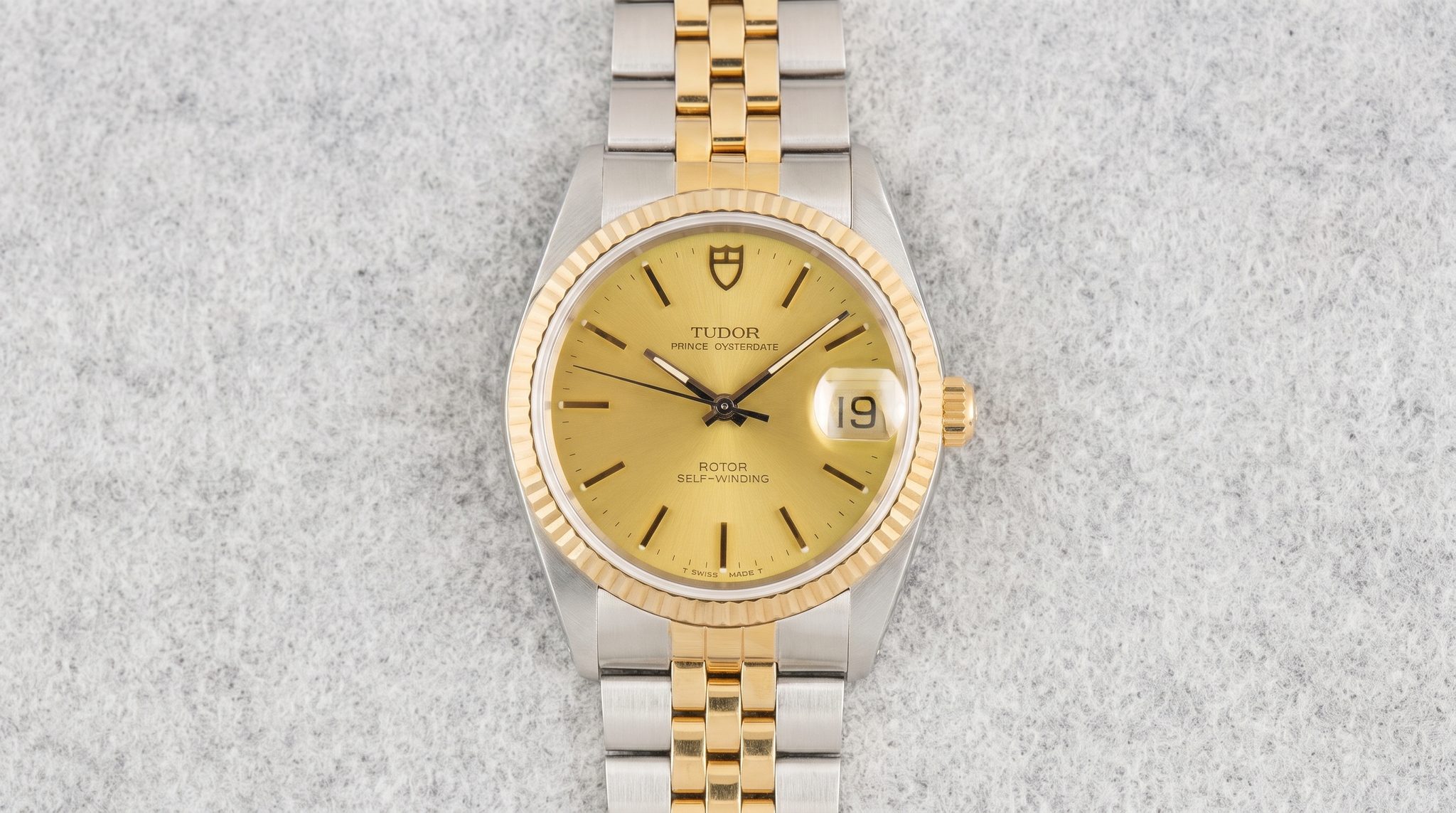
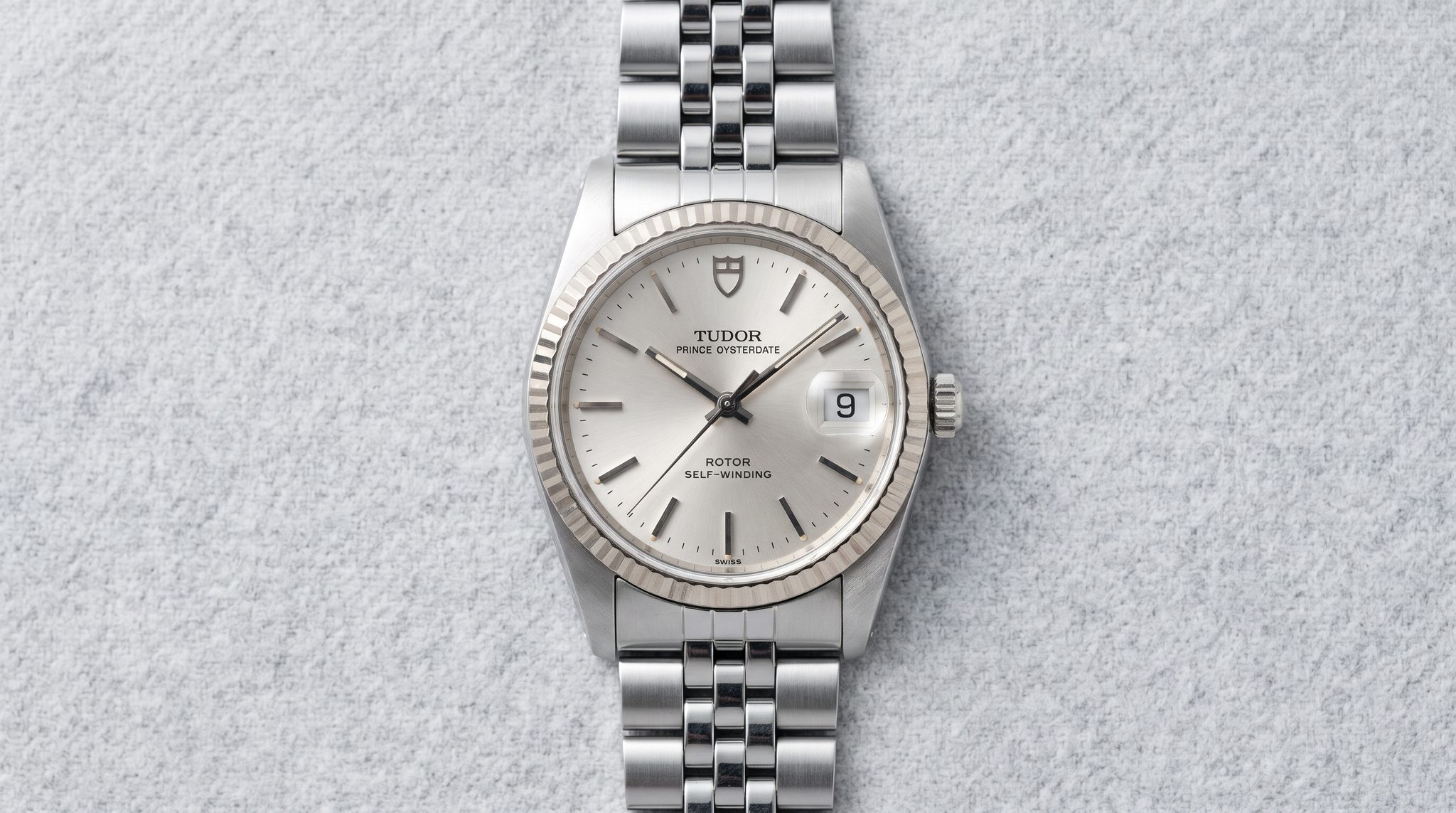
That origin explains the family’s enduring logic without explaining every later variation. Tudor built an accessible everyday watch around a durable case, automatic or quartz power, and a date display, while surviving examples show that dials, bezels, bracelets, crystals and movements did not always change as one package. The result is a vintage Tudor Prince Oysterdate family rather than a single frozen model. Its published references run from the compact early 7966 through the transitional 9050, the bracelet-associated 78370, and the later midsize or two-tone 72000, 74033 and 74034.
The early references establish the pattern. The 7966 already appears in several materially different executions, so its number is a starting point rather than a complete identity. The 9050 carries that ambiguity into a later period, where surviving watches document more than one configuration under the same reference. The 78370 sharpens the lesson: it is chiefly a bracelet number, and the watch head uses separate case references. By the late 1980s and 1990s, 72000, 74033 and 74034 preserve the compact Oysterdate idea while differing in size, metal, bezel treatment, dial execution and movement records.
The sources do not document Tudor’s stated reason for most of these component changes. They support a firmer conclusion: the family’s history is clearest when each physical clue is considered independently, then tested against the others. A dial can establish an execution without dating its crystal; a movement can identify a mechanical basis without proving the original bracelet; a bracelet stamp can describe the bracelet without naming the watch. That is why the best Tudor Prince Oysterdate reference guide is not a ladder of upgrades. It is a history of one practical Oyster formula whose identity remains assembled from evidence.
What the Prince Oysterdate has sold for at Grey Market
One Tudor Prince Oysterdate has sold on Grey Market, verified before it shipped.
What each Prince Oysterdate reference trades for
Median and typical range of recent dealer, auction and Grey Market sales, banded. Indicative, not a valuation; each reference page carries the detail.
6 references across 4 eras
Early Prince Oysterdate
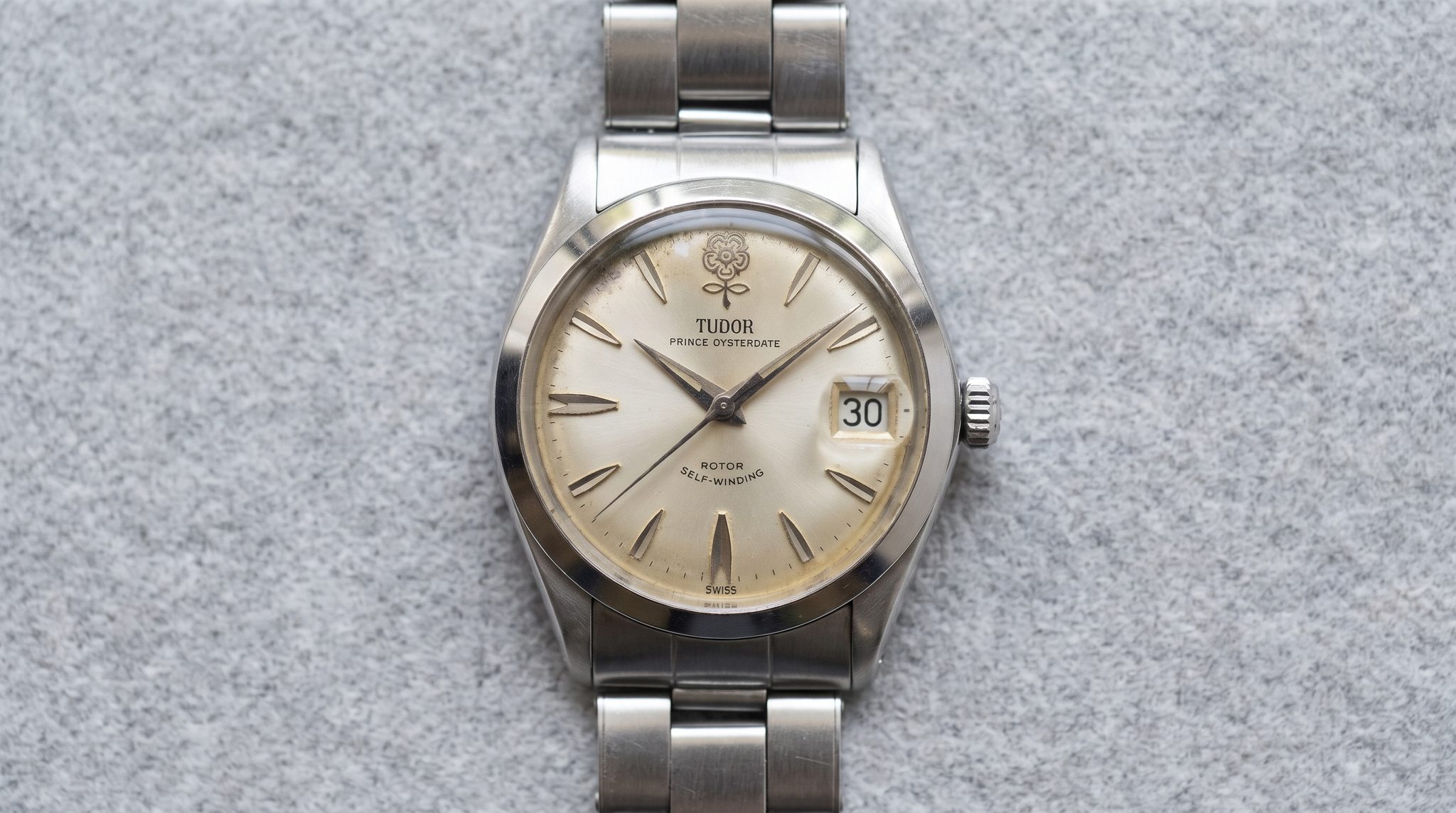
The 7966 represents the early compact Prince Oysterdate as a still-flexible design family. Its 34 mm Oyster case, automatic date display and period variety show Tudor adapting the basic everyday formula across steel, two-tone and precious-metal executions. The important family-level change was not one documented dial or calibre handoff, but the emergence of overlapping configurations under one reference. That pattern explains why later collectors treat the case number as an opening clue rather than a complete specification. The available material does not establish a single reason or precise cutoff for the transition to later references, so the next era is best understood as continuation with greater documentary ambiguity.
Transitional Oysterdate
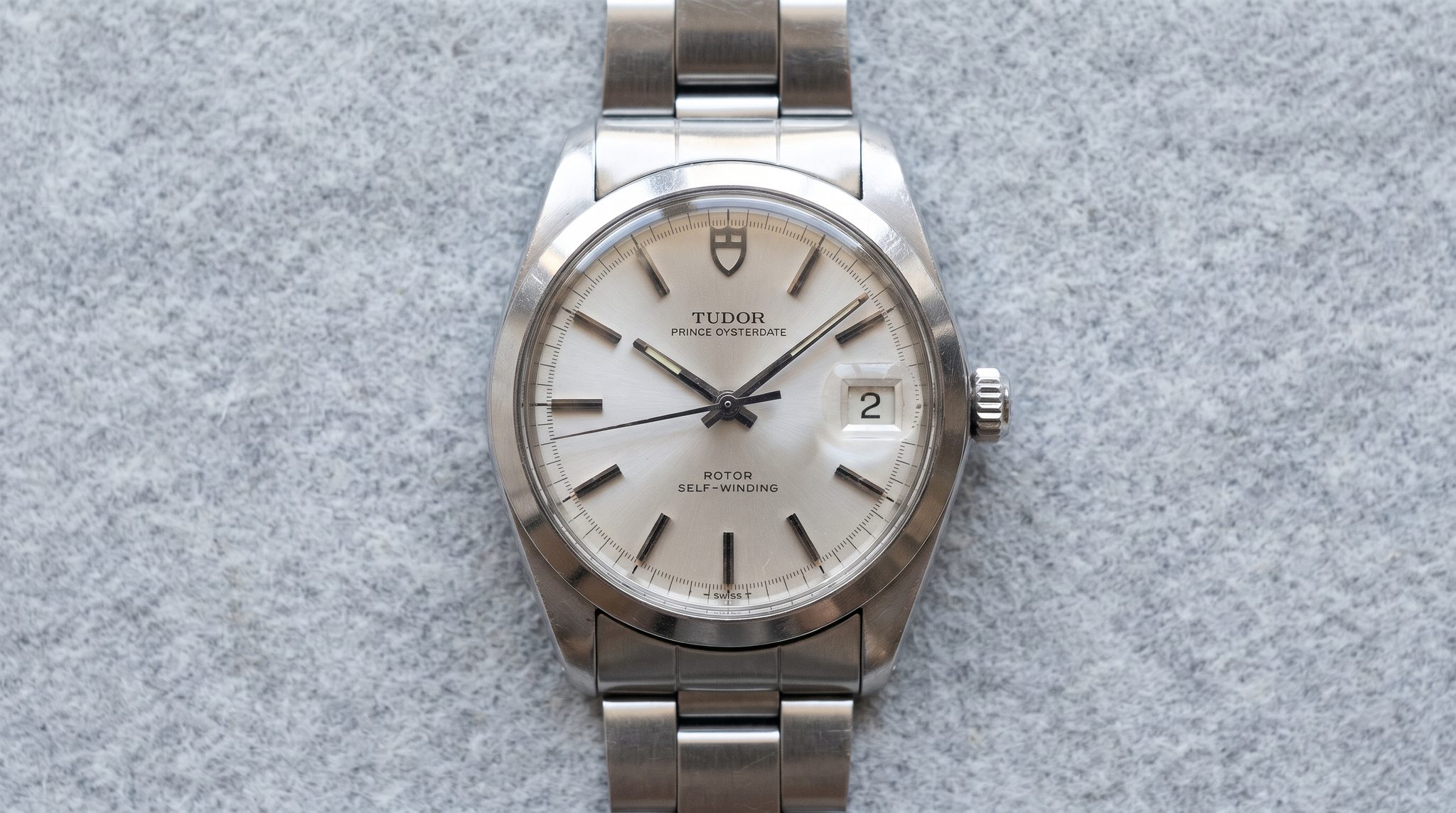
The 9050 carries the compact Oysterdate into a period where one reference can represent several surviving configurations. Its significance for the family is methodological: component evidence becomes more valuable than a presumed catalogue sequence, because documented examples do not prove that dial, movement and date-setting details changed together. The watch remains recognizably Tudor’s small Oysterdate, but the reference does not resolve every question about an individual example. The reason for the overlapping executions is not documented in the available sources. This era gives way to the quartz evidence represented by 78370, where the distinction between bracelet number and watch-head reference becomes central.
Quartz Bracelet Era
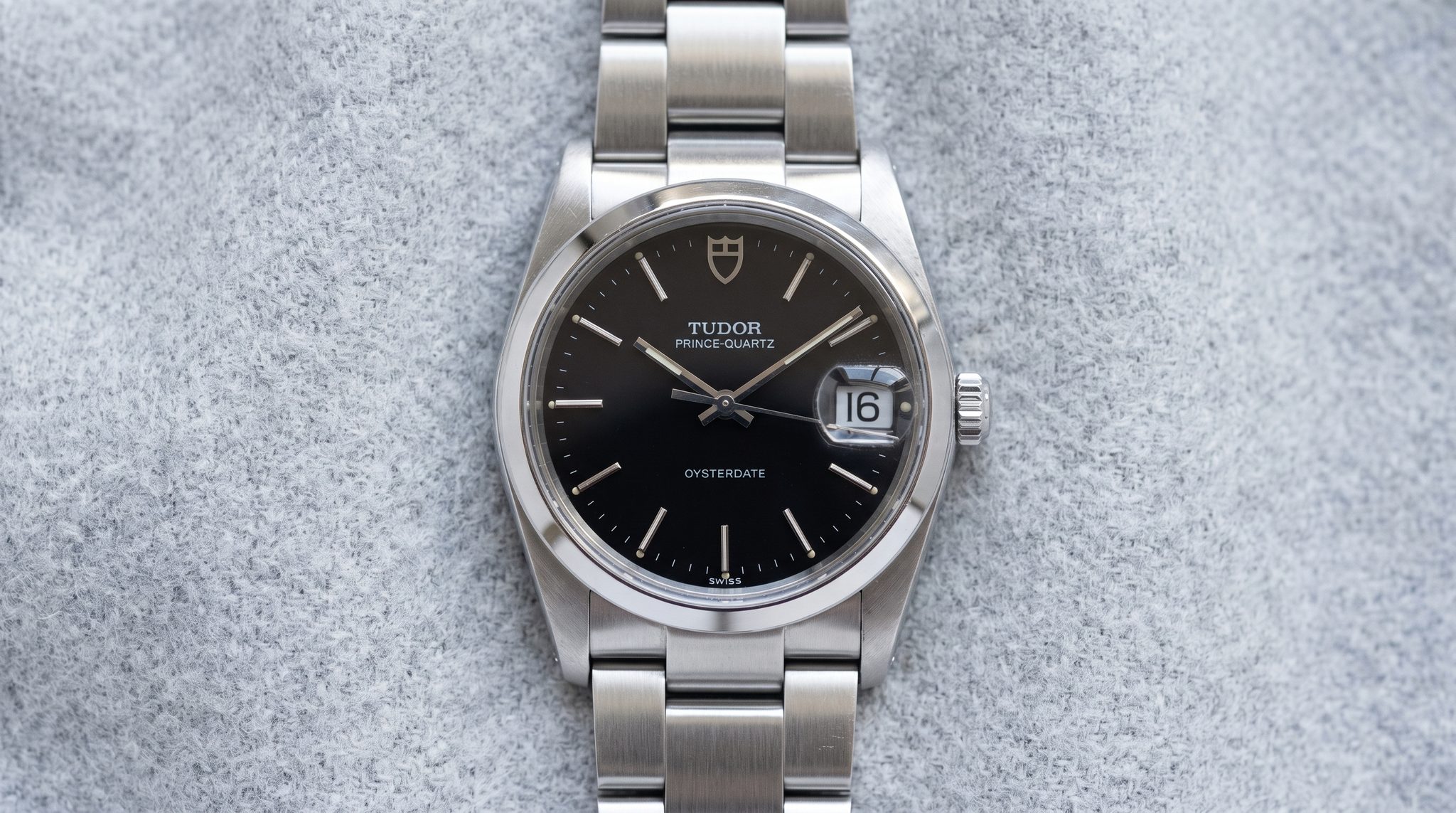
The 78370 is a classification milestone rather than a conventional watch generation. It belongs chiefly to the bracelet, while associated Prince Oysterdate watch heads carry separate case references and can be steel or two-tone quartz configurations. That separation prevents the number from being used as a complete model identity. The family’s established date-and-Oyster format therefore survives, but its cataloguing becomes more modular: bracelet, case, movement and dial must each be identified on their own terms. The available evidence does not establish when the bracelet number began or ended, and it does not document a specific Tudor reason for its different pairings.
Late Compact Oysterdate
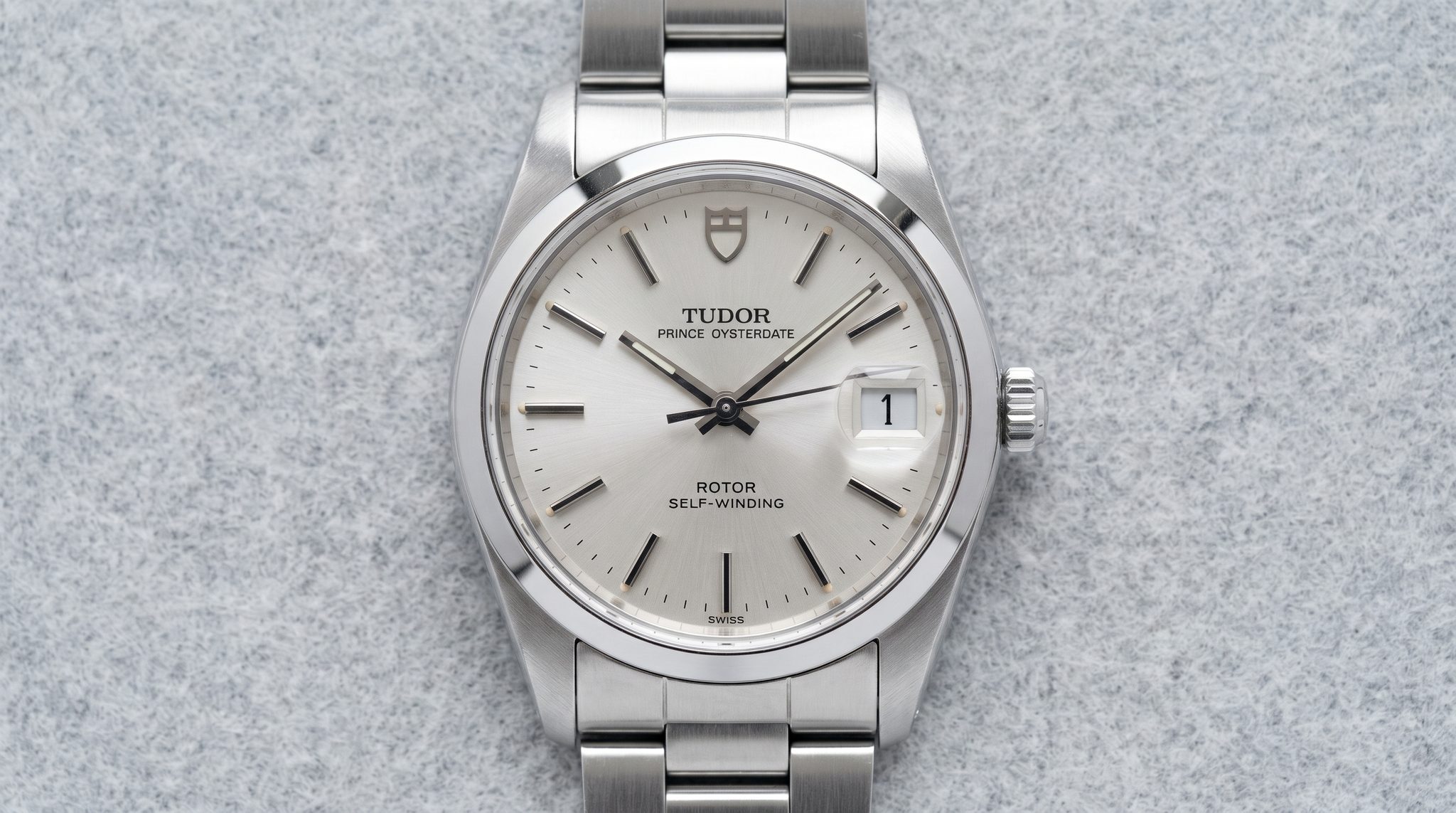
The 72000, 74033 and 74034 bring the family into its later compact phase, retaining the Oysterdate premise while offering distinct case sizes, two-tone or steel-and-gold treatments, and broader dial execution. Their shared lesson is not a single technical specification. It is that late production still allowed separate component timelines, even when ETA-based automatic movements provided a relatively stable mechanical foundation. The 74034 has dated evidence extending to at least 2002, beyond the main late-1990s window represented by the other references. The reason Tudor made these changes is not documented, so they are best described as overlapping configurations rather than a clean sequence of upgrades.
Which Prince Oysterdate to buy
For daily wear, the 74034 is the most straightforward choice in this published group. Its compact 34 mm case and broadly stable ETA 2824-2 mechanical basis make it less mechanically unsettled than the earlier references, while its changing dials and crystals still reward careful selection.
For a first vintage Tudor Prince Oysterdate, the 7966 offers the clearest introduction to the family’s early character. It combines the small Oyster format with enough documented variation to show why originality must be judged by the complete configuration, not the reference alone.
The reference-collector’s target is 78370, precisely because it tests cataloguing discipline. Its number chiefly identifies a bracelet, so collecting it means tracing the relationship between bracelet, case reference and quartz watch head.
The 9050 rewards patience. Its transitional position and overlapping documented configurations make a coherent, well-understood example more important than a supposedly definitive dial or date claim. Choose the 72000 for midsize steel wear, or the 74033 when two-tone construction and a dressier presentation are the point.
What to check on any Prince Oysterdate
Buying across the Tudor Prince Oysterdate family is different from buying a narrowly specified modern model. The references share the Oysterdate idea, but dials, movements, crystals, bezels and bracelets can follow separate timelines, and service or replacement parts may be genuine without being correct for the particular watch. The family is also vulnerable to composite watches that borrow Rolex or Tudor-associated components.
Common questions about the Prince Oysterdate
The Tudor Prince Oysterdate is a family of Tudor Oyster watches with an automatic or quartz movement and a date display, generally at 3 o’clock. Its roots lie in the 1952 Oyster Prince concept, which combined Rolex-associated Oyster construction with a more accessible Tudor position.
- Tudor Historytudorwatch.com
- Tudor Prince Oysterdate Historytimeonthemove.net
- The Fourth Coming: The Prince Oysterdaterevolutionwatch.com
Show 7 more
- The Evolution of Tudor Watch Modelschrono24.com
- The TUDOR Timelinejohnsonsjewellers.co.uk
- Tudor Prince Oysterdate 74000chrono.dk
- 1978 Tudor Prince Oysterdate Ref. 9050/0hodinkee.com
- 1984 Tudor OysterDate Quartz Ref. 91534lunaroyster.com
- Tudor Prince-Quartz Oysterdate Ref. 9150ottuhr.com
- Scrabble the Seconds: The Tudor Prince Oysterdate 79200 Series Turns 30watchonista.com