

Tudor Prince Oysterdate 7966
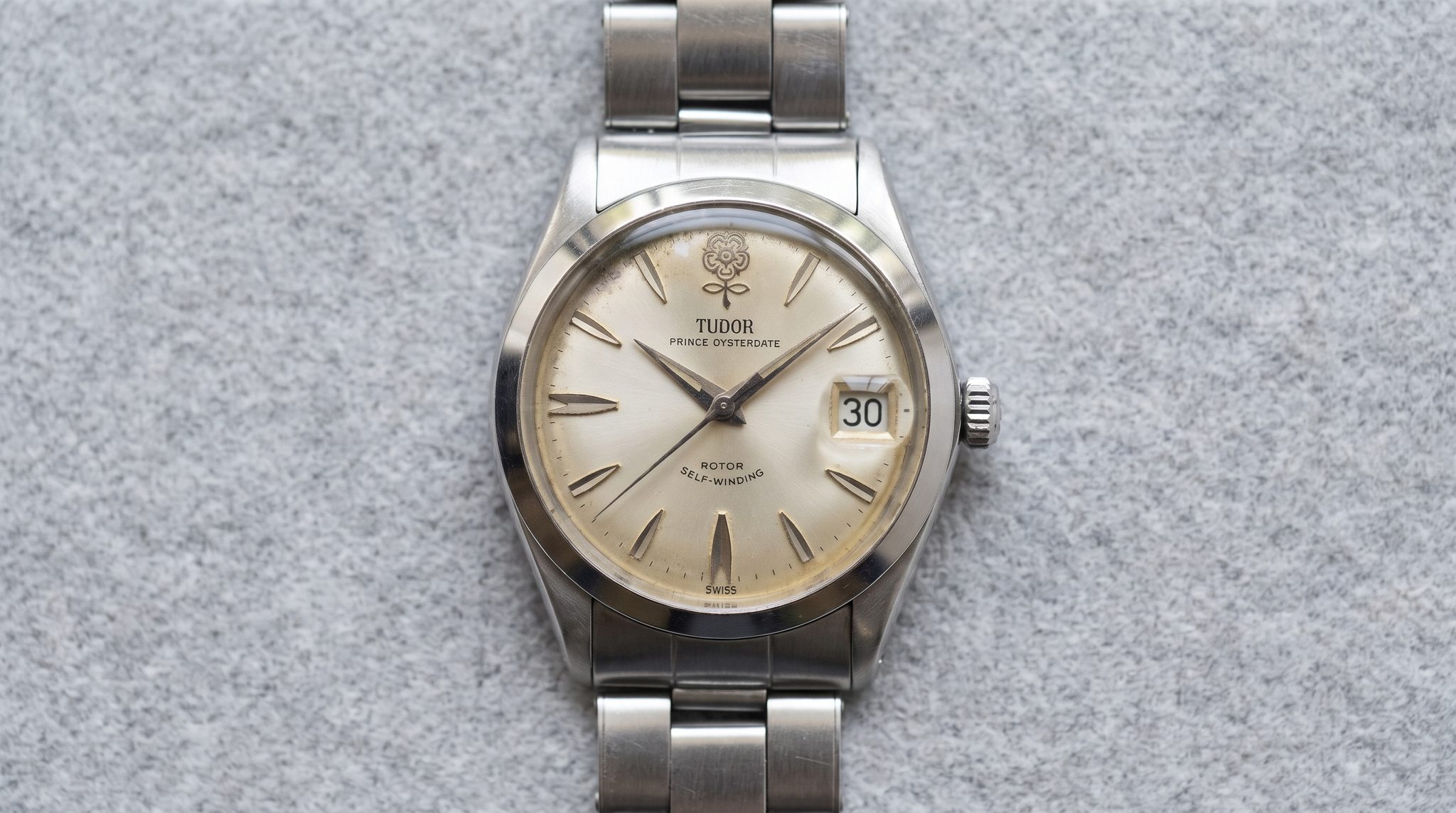
The Tudor Prince Oysterdate 7966 is one reference with unusually varied documented executions, from compact silvered dress dials to the black-dial Ranger, making originality more important than the number engraved on the case.
- Production
- c. 1959–1960s
- Case
- 34 mm; steel, gold, two-tone
- Lug width
- 19 mm
- Crystal
- Acrylic; Cyclops seen
- Bezel
- Smooth; gold on two-tone
- Dial
- Silver, champagne, black
- Date
- At 3; non-quickset
- Movement
- ETA 2462 / 2484-family
- Winding
- Automatic
- Lume
- Dial-dependent
- Bracelet
- Oyster or leather
The Tudor Prince Oysterdate 7966 was produced from about 1959 through the 1960s.
- Production years
- c. 1959–1960s
- Movement
- ETA 2462 / 2484-family
The Tudor Prince Oysterdate 7966 is best understood as a reference that gathered several watches under one number, not as a single frozen design. A 34 mm Oyster case can house an ordinary silvered dial, a champagne or gilt execution, an 18-karat-gold case, or the black Ranger configuration, while surviving listings associate the reference with both ETA 2462 and 2484-family movements. That combination is the fact collectors keep returning to: the case reference identifies the starting point, but the individual dial, metal, movement, and hardware establish what the watch actually is.
Tudor placed the 7966 in the compact Prince Oysterdate line during the late-1950s-to-1960s transition. The watch combines an automatic movement with a date at 3 o’clock in a Rolex/Tudor Oyster case, and the date is generally non-quickset. Its 34 mm diameter gives it the restrained proportions expected of a period everyday watch, while the documented 19 mm lug width keeps the case from appearing insubstantial on the wrist. Period examples may carry a Cyclops date magnifier, but that feature must be judged on the watch in hand rather than assumed from the reference.
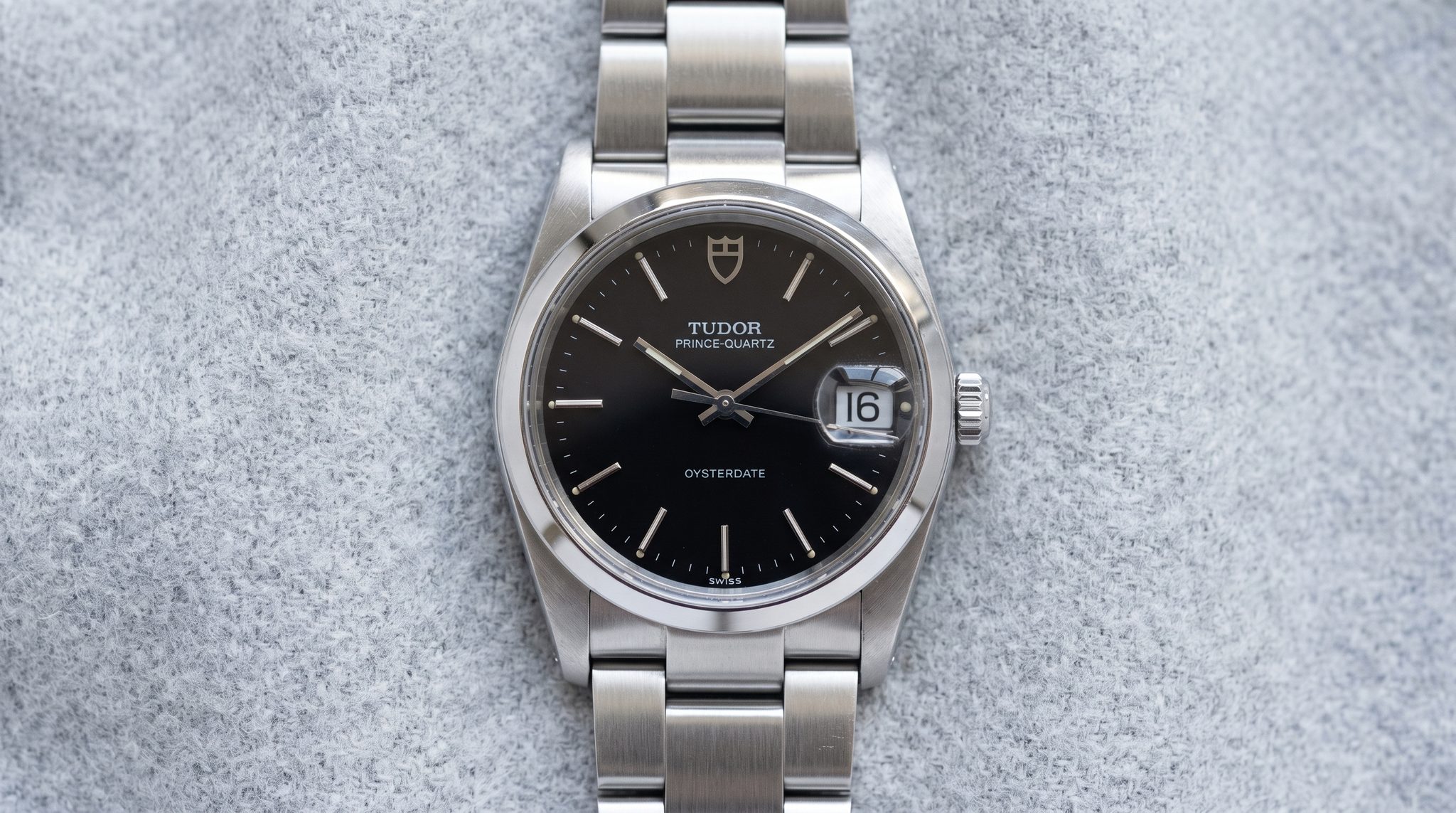
The most distinctive execution is the Ranger-associated 7966, documented at approximately 1966–1969 with a black dial, luminous Arabic numerals at 3, 6, 9, and 12, Ranger hands, and an ETA 2462 automatic movement. It is not evidence that every 7966 had a Ranger dial. Alongside it sit silver and champagne dials with applied baton markers, luminous dots or markers on some examples, and gold-cased watches with gilt details. A Tudor 7966 can therefore be historically coherent in more than one way, but a dial style does not prove a case metal, and a movement attribution does not establish a universal production cutoff.
That is why the Prince Oysterdate 7966 production years remain approximate. Individual watches are documented from about 1959 through the 1960s, while no authoritative factory record in the available material fixes a complete beginning and end. The result is a vintage Tudor whose appeal lies in its variety, but whose purchase requires the parts to agree with one another rather than merely agreeing with the number 7966.
“The 7966 is singular because one reference number covers several historically credible watches, so originality is read in the agreement between case, dial, movement, and hardware.”
Tudor Prince Oysterdate 7966 production years: c. 1959–1960s
The 7966 did not develop through a securely documented sequence of factory marks. Instead, the evidence shows overlapping executions, which is why each physical feature needs its own reading. Silvered dials with applied steel batons appear on early and mid-1960s examples, while other watches from the same broad period use champagne or gilt details. The reason Tudor offered these combinations, and the precise point at which one dial option gave way to another, is not documented in the available material.
Luminous details form a separate track. Some early-1960s watches have luminous dots or markers, but the evidence does not support a universal radium-to-tritium cutoff for the reference. The Ranger-associated dial is more clearly defined: its numerals are described as tritium, and its approximately 1966–1969 window belongs to that execution rather than to every Prince Oysterdate 7966. A black dial alone is therefore not enough; the numeral layout and Ranger handset must agree.
Movement evidence follows another independent path. Early listings describe 25-jewel Tudor automatic movements, while other 7966 watches are attributed to calibre 2484 or 2484C. The Ranger is specifically documented with ETA 2462, operating at 18,000 vph, and a rotor signed “Tudor Auto Prince.” These records establish real variation, but not a single universal handoff date. The movement must be inspected rather than inferred from the dial or case.
By the middle of the decade, the same reference could therefore describe a modest silver-dial Oysterdate, a precious-metal dress execution, or a black Ranger. That is the larger historical point: in only a few documented years, the 7966 was still being worked out as a family of configurations, even though collectors now encounter it as a fixed reference.
- c. 1959Reference appearsCompact Oyster case, silvered dial, Tudor rose
- c. 1962Silvered executionsSilver dial, steel markers, date at three
- c. 1962Luminous dialsLuminous dots or markers among applied batons
- c. 1962Gold executionGold case, champagne dial, gilt markers
- c. 1964Later steel exampleSteel case, silver dial, applied batons
- c. 1966 – 1969Ranger executionBlack dial, Arabic numerals, ETA 2462
7966 against its neighbours
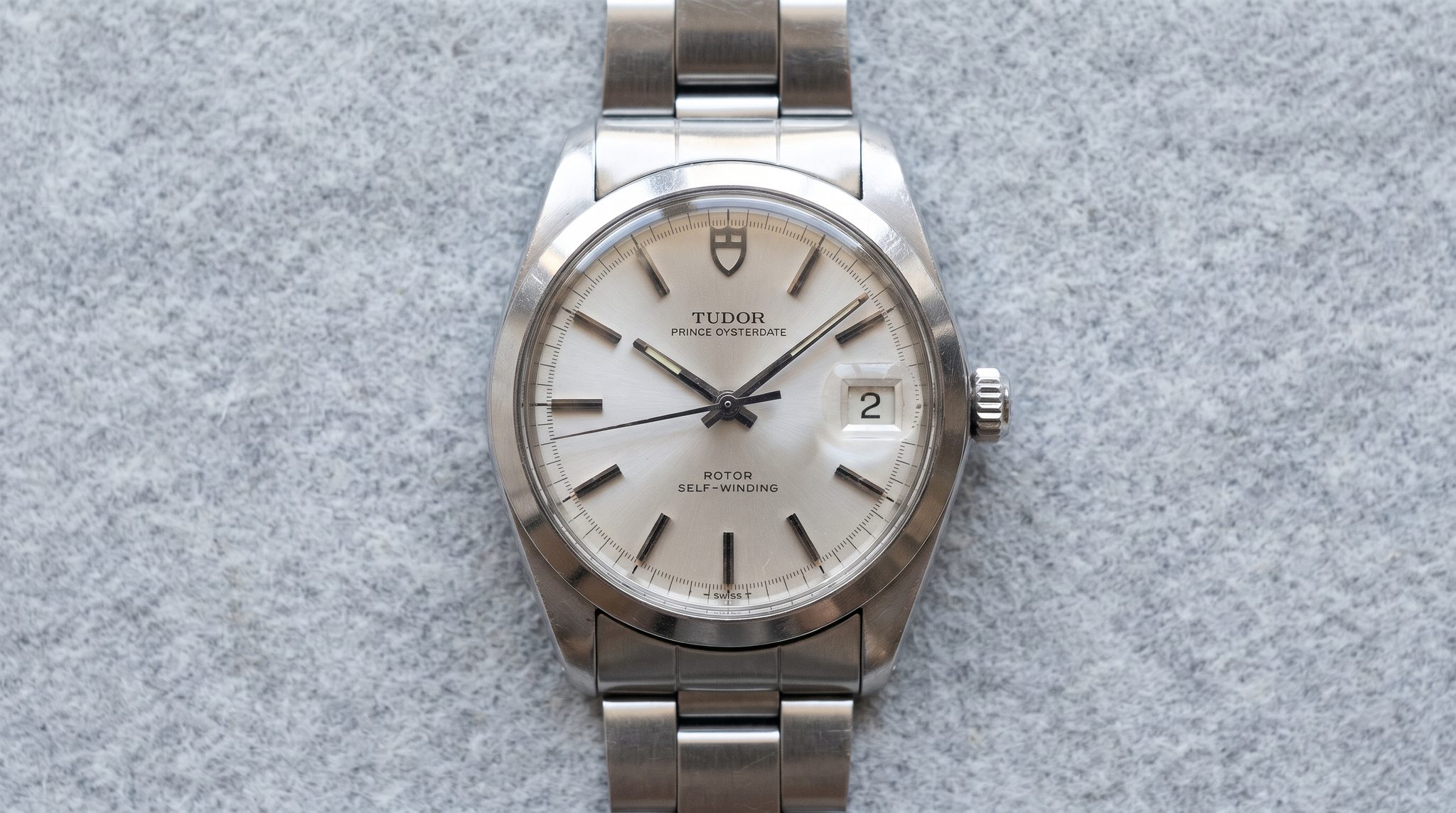
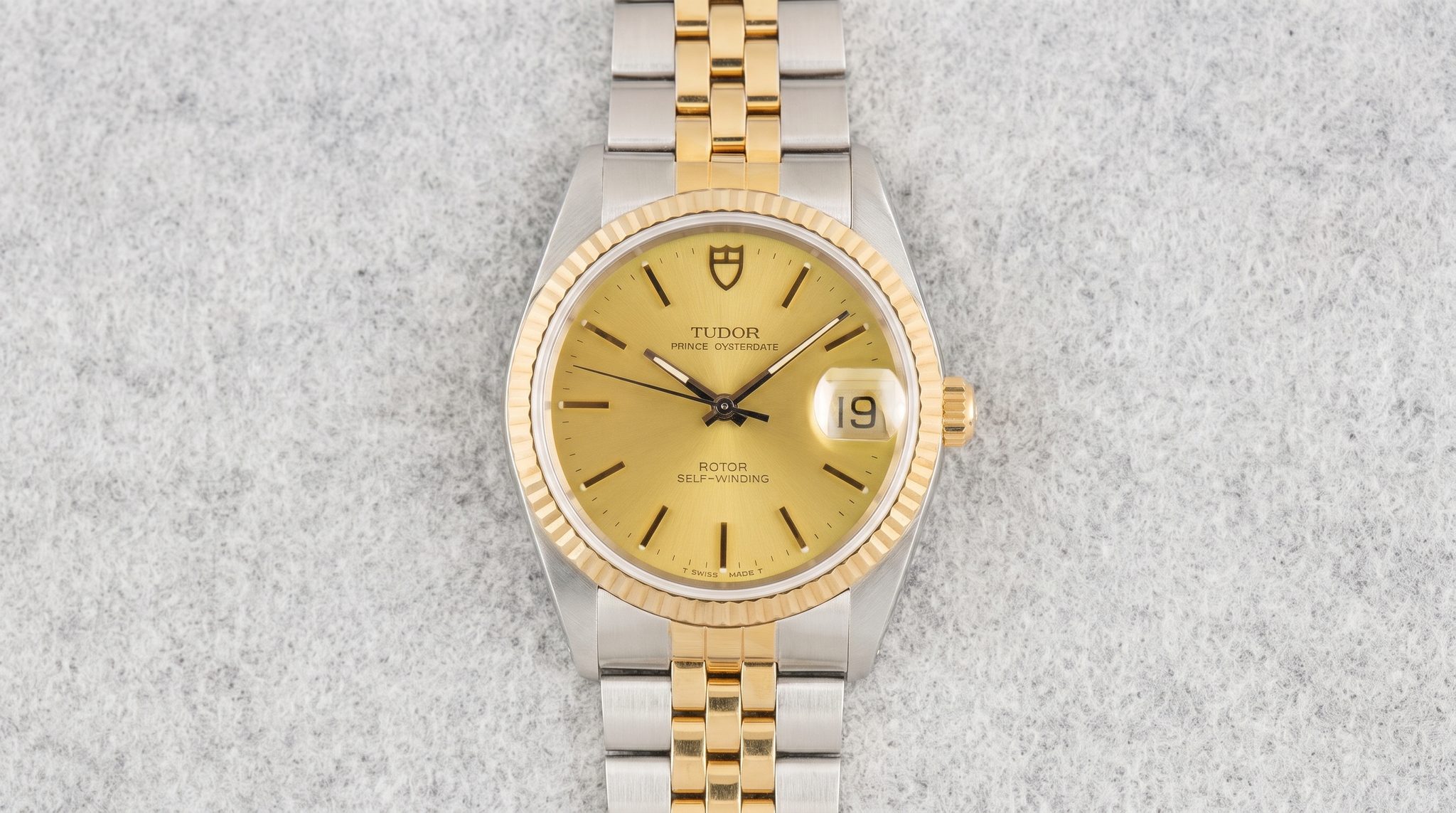
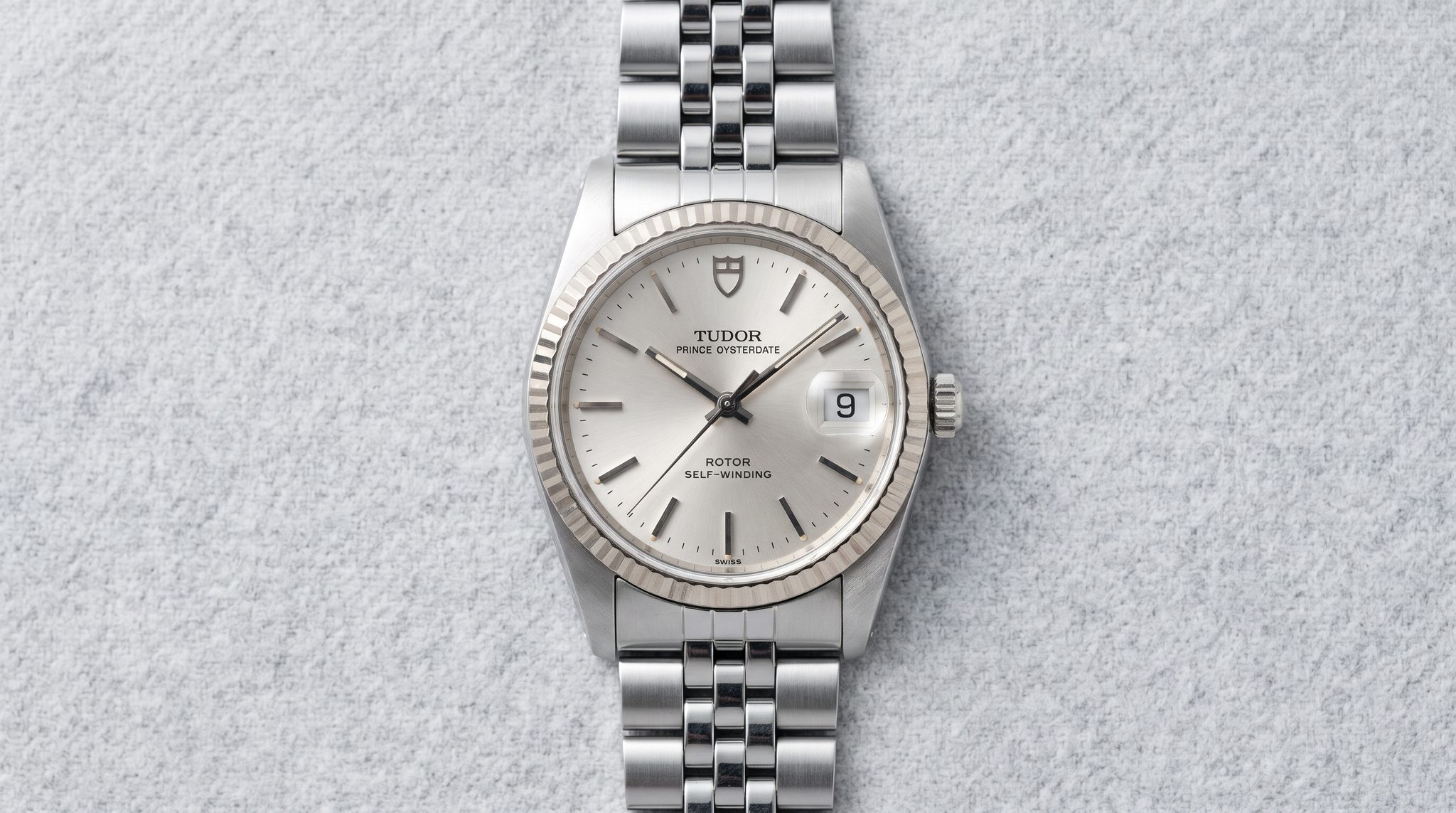
These comparisons follow the 7966 forward rather than sideways. The 9050 is the steel Prince Oysterdate that came after it, with a later automatic calibre and a magnified date. The 74034 and 74033 show where the line ended up by the late 1980s: a 34 mm case, a quick-set ETA 2824-2 and a fluted gold bezel, in white gold on steel or yellow gold on a two-tone watch. Against them, the 7966 is the earlier, simpler watch: acrylic crystal, non-quickset date and an ETA 2462 or 2484-family movement.
This reference 7966 Tudor · focal c. 1959–1960s | ||||
|---|---|---|---|---|
| Production | c. 1959–1960s | late 1960s–early 1980s | late 1980s–at least 2002 | c. late 1980s–late 1990s |
| Case | 34 mm; steel, gold, two-tone | c. 34 mm steel | 34 mm steel | 34 mm steel and gold |
| Bezel | Smooth; gold on two-tone | Typically smooth | 18k white gold, fluted | Usually fluted yellow gold; smooth examples documented |
| Crystal | Acrylic; Cyclops seen | Plexiglass | Acrylic or sapphire | Sapphire on later examples; verify per watch |
| Movement | ETA 2462 / 2484-family | Cal. 2472 / ETA 2784 | Tudor Auto-Prince / ETA 2824-2 | ETA 2824-2; 2884 listings |
| Date | At 3; non-quickset | 3 o’clock, usually magnified | Quick-set, magnified | Quick-set, 3 o’clock |
Six dial generations across the run
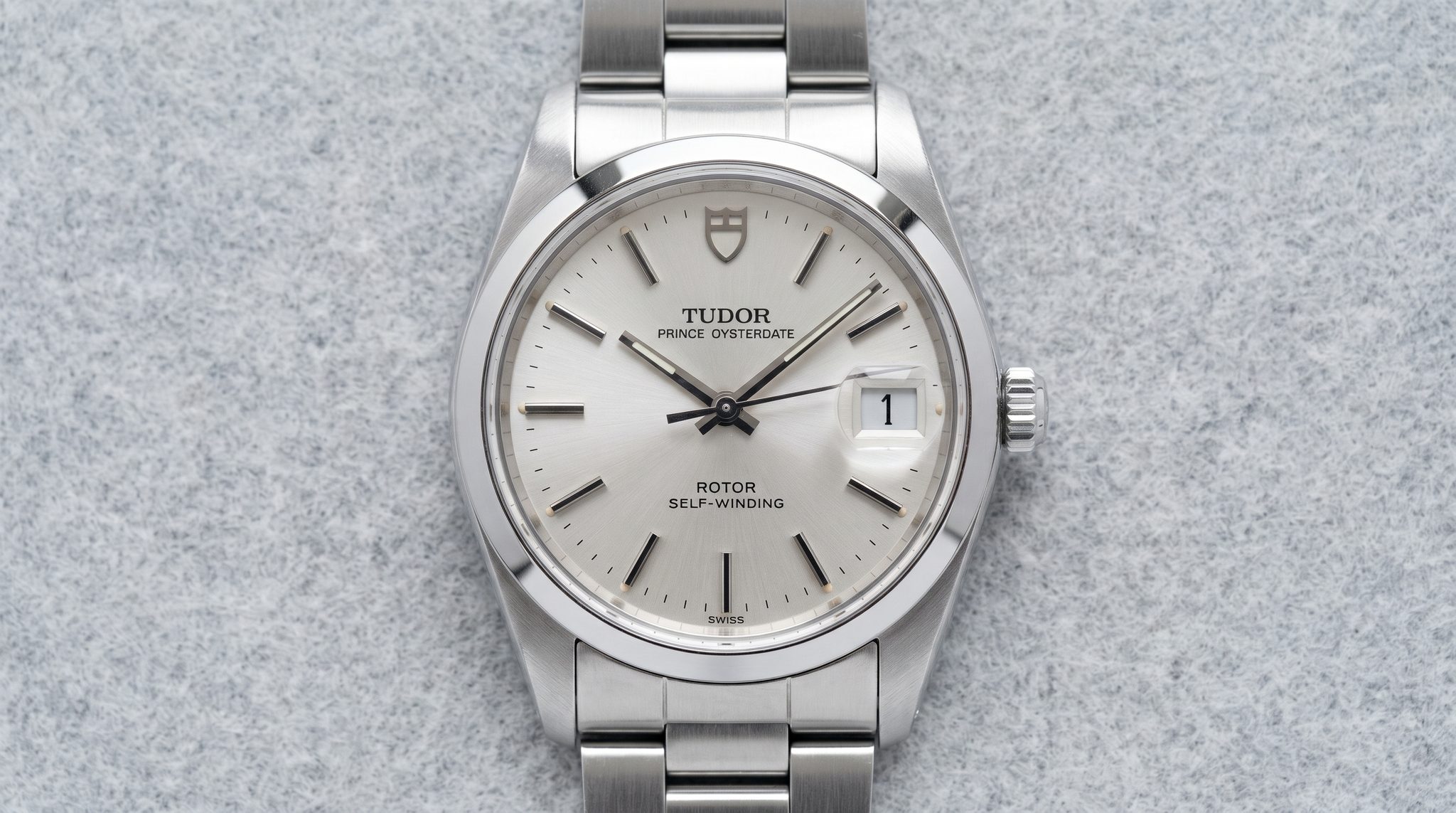
On the wrist, this is the restrained Prince Oysterdate: a silver or silvered surface, applied steel batons, and a Tudor rose at 12. The markers catch light without turning the dial into jewelry, while steel hands keep the impression practical. Dated examples from about 1959 through the mid-1960s support its presence, but not a continuous factory window or a separate mark designation.
What to check before buying a 7966
Buying a Prince Oysterdate 7966 is less about finding the right year than about deciding whether the watch’s parts belong together. The reference spans ordinary steel, precious-metal, two-tone, and Ranger executions, and published movement attributions include ETA 2462 and 2484-family calibres. The attractive dial in the photograph is only the beginning of the examination.
Tudor Prince Oysterdate 7966 price and value
Tudor Prince Oysterdate 7966 for sale
Auctions on Grey Market run on seven-day cycles, every watch verified before it sells. Browse what's live now, or consign your 7966.
Grey Market runs watch auctions for vintage and neo-vintage pieces, every lot reviewed before it lists and verified before the seller is paid, and the Watch Exchange, where ID-verified users buy and sell at a fixed price. Selling one? See the ways to sell a Tudor, or check what it’s worth. For more vintage Tudor, see the Tudor reference guide.
Adjacent in the Prince Oysterdate family
Common questions about the 7966
The Tudor Prince Oysterdate 7966 was produced from c. 1959 to the 1960s. Individual watches are documented from about 1959 through the later 1960s, but no authoritative factory record establishes a definitive start and end year. The Ranger-associated execution is separately dated approximately 1966–1969.
- Tudor Prince Oysterdate Ref. 7966, circa 1962jewelry.ha.com
- Fratello’s Top 5 Vintage Tudor Referencesfratellowatches.com
- Tudor Oysterdate Prince 7966 Watches indexcollectorsquare.com
Show 7 more
- Tudor Prince Oysterdate 7966, circa 1965jewelry.ha.com
- Vintage Tudor Prince Oysterdate 34mm Steel Watch 79661stdibs.com
- Tudor Prince Oysterdate Stainless Steel Men’s Watch 79661stdibs.com
- Tudor Prince Oysterdate 7966, c. 19591stdibs.com
- Tudor Prince Oysterdate 7966, 1960–1969catawiki.com
- Tudor Prince 7966 Small Rose automatic yellow goldlwmitalia.com
- Tudor Prince Oysterdate Ref. 7966wristmenwatches.com