

Cartier Tank
The Tank is the Cartier family that kept its two brancards and cabochon crown through a century of new case shapes, dials, metals and movements.
The Cartier Tank survives by its details rather than by one fixed shape. Louis Cartier drew it in 1917 from the plan view of the Renault FT-17, turning the tank's tracks into two parallel brancards, and in the century since Cartier has curved it, stretched it, squared it, plated it and put quartz inside it. Across the classic branches, a Tank is still read from the same few details: brancards, Roman numerals, a railway-track minute ring, blued hands and a cabochon on the crown.
The watch was conceived in 1917 and sold from 1919. A prototype went to General John J. Pershing, generally dated 1918, but he was the famous early recipient rather than the intended customer. Cartier aimed at civilians for whom the wristwatch, made familiar by soldiers in the First World War, could be a refined object instead of a field tool, and early Tanks went to industrialists, artists, royals and actors.
The line then grew by branching rather than by replacement, and most branches were design decisions, not answers to any documented supplier or regulatory event. The elongated Cintrée of 1921 curved the case to follow the wrist, the Louis Cartier (1921 by Cartier's own dating, 1922 in other histories) softened its corners, and interwar forms such as the reversible Basculante traded the plain rectangle for protection.
The clearest commercial reason arrived in 1977 with the vermeil Must de Cartier Tank, a cheaper way into the same outline. Later branches, from the curved Américaine of 1988 to the bracelet Française of 1996 and the steel Tanks that followed, kept the same vocabulary while changing the case around it.
That is how the Tank outlived the fashions it was made in: Cartier kept the vocabulary fixed and let the case, the metal and the movement change around it.
What each Tank reference trades for
11 references across 5 eras
Tank Louis Cartier
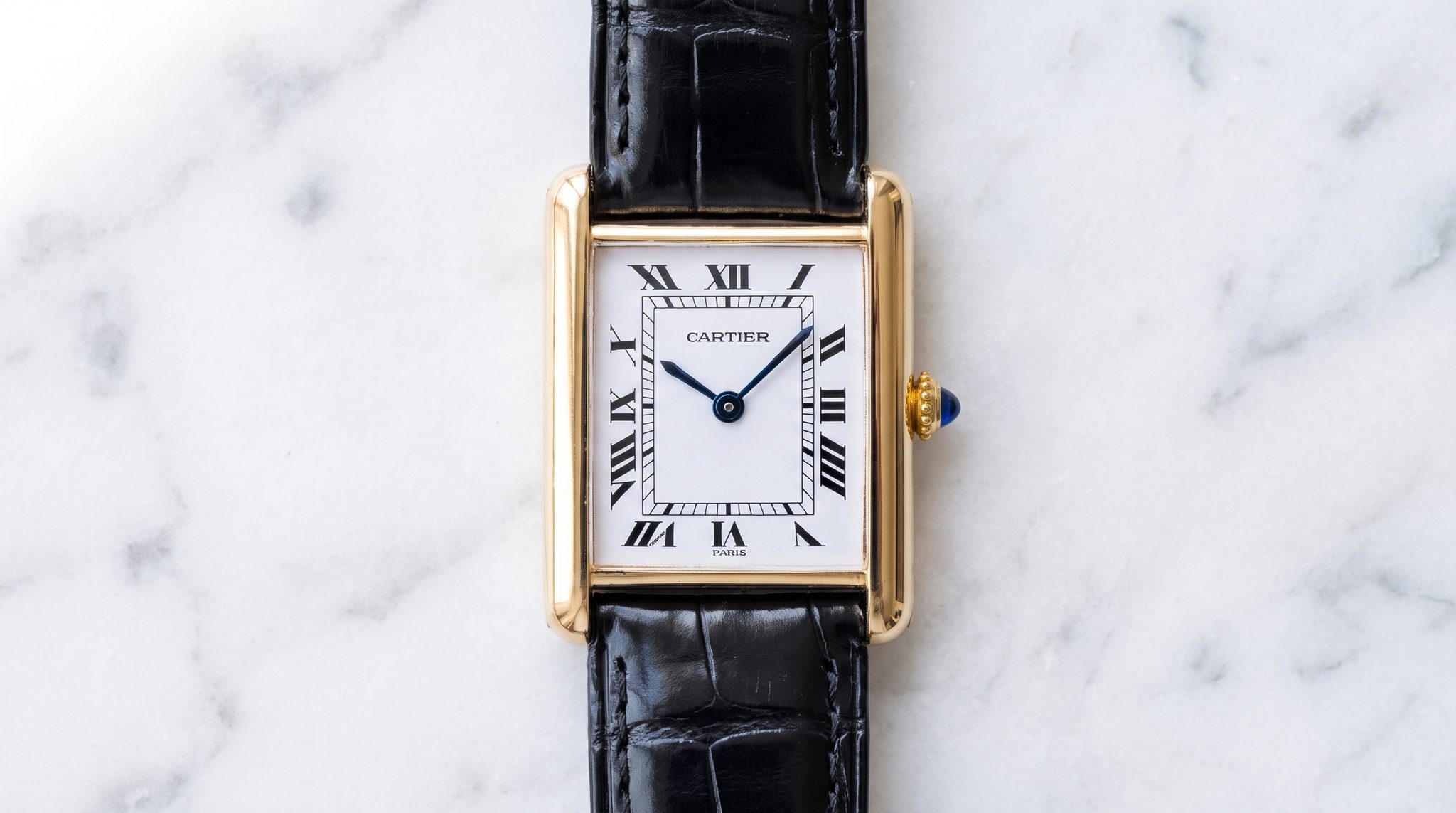
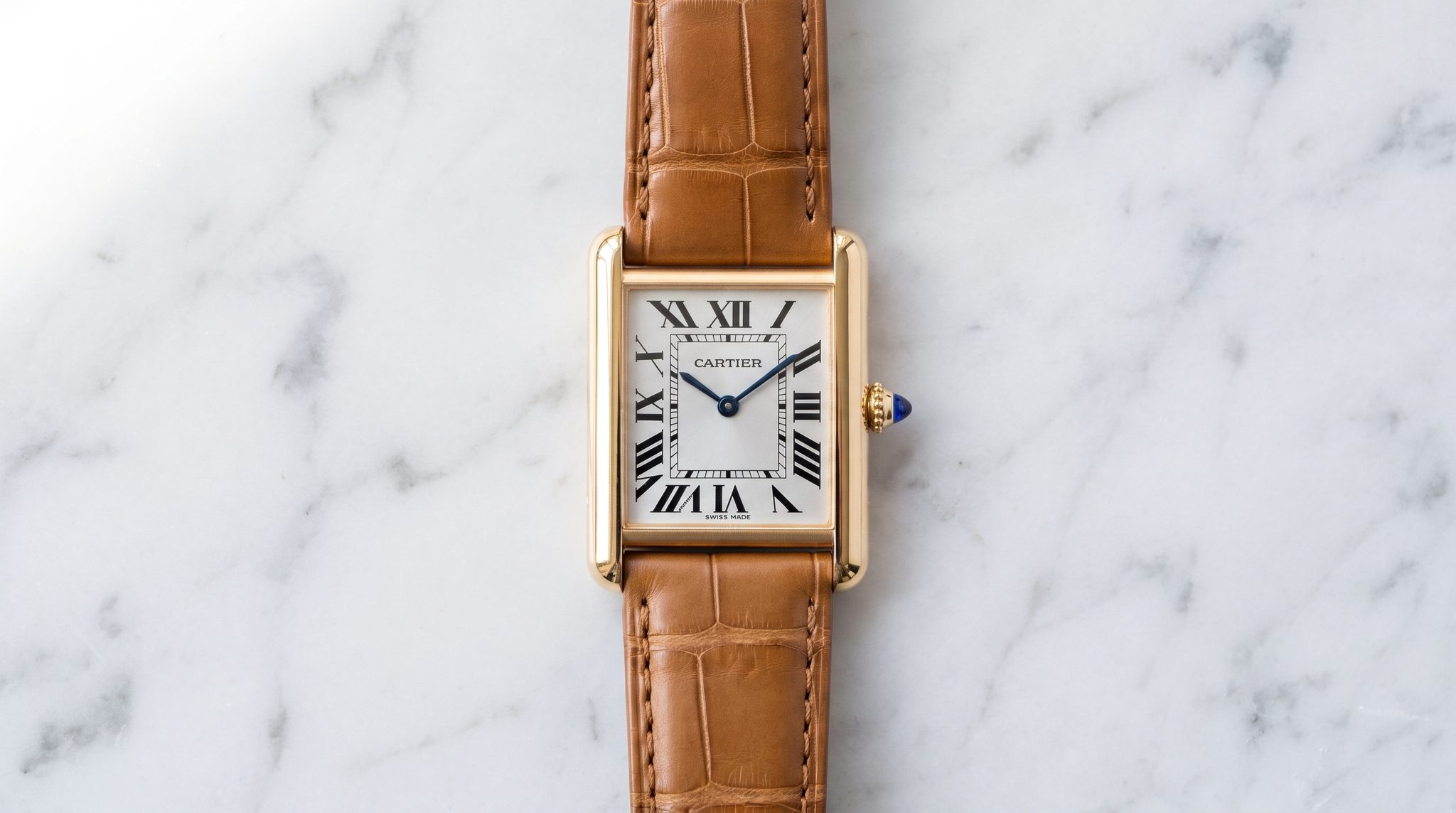
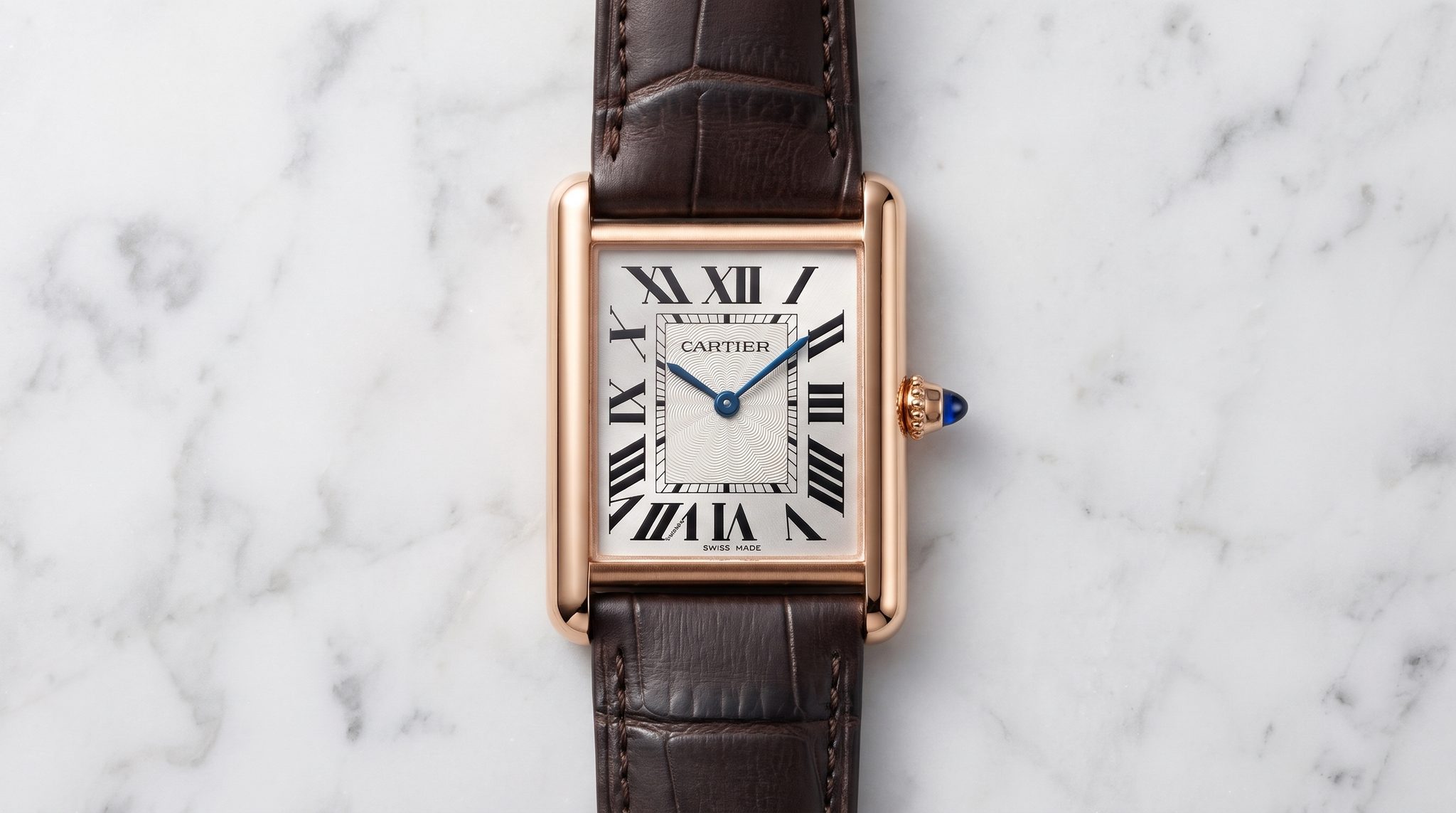
The Louis Cartier is the branch that has stayed in the catalogue. Its 1921–22 case, with softened corners and brancards that flow into the lugs, was revived in the 1970s as a solid-gold, hand-wound dress watch on a leather strap, the Tank in its original idiom (one history dates the relaunch to 1973), and the large 78086 belongs to that revival. The Louis Cartier has stayed the precious-metal end of the family into the current range, now in modern sizes with quartz and hand-wound movements: the small yellow-gold quartz W1529856 and the large rose-gold hand-wound WGTA0011, which Cartier still lists.
Must de Cartier
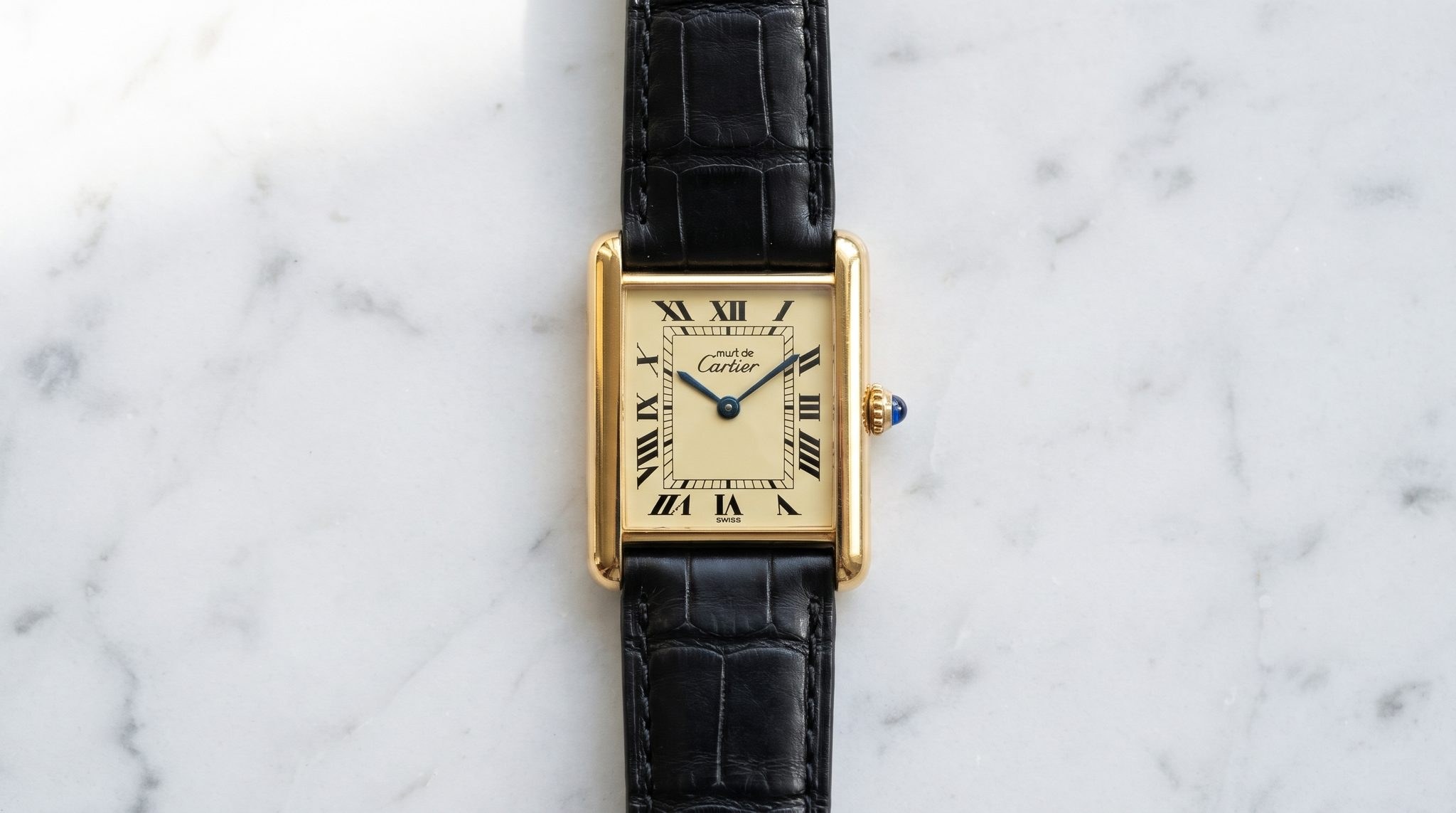
The Must de Cartier Tank of 1977 took the Louis Cartier outline and made it in vermeil, gold-plated silver, so that Cartier could sell a lower-priced watch through jewellers worldwide rather than only in its own boutiques. It was Cartier's first watch in a non-precious metal and the first it made at that scale, and Alain-Dominique Perrin credited the Les Must line as a whole with putting the house back on track. Its dials broke with the classic cream presentation as often as they kept it, and quartz came to dominate the line, which is where the 590005 sits. The generation ended by decision rather than by successor: from 1997, for Cartier's 150th anniversary, the Must lines were progressively stopped to bring production back under the Cartier name.
Tank Américaine
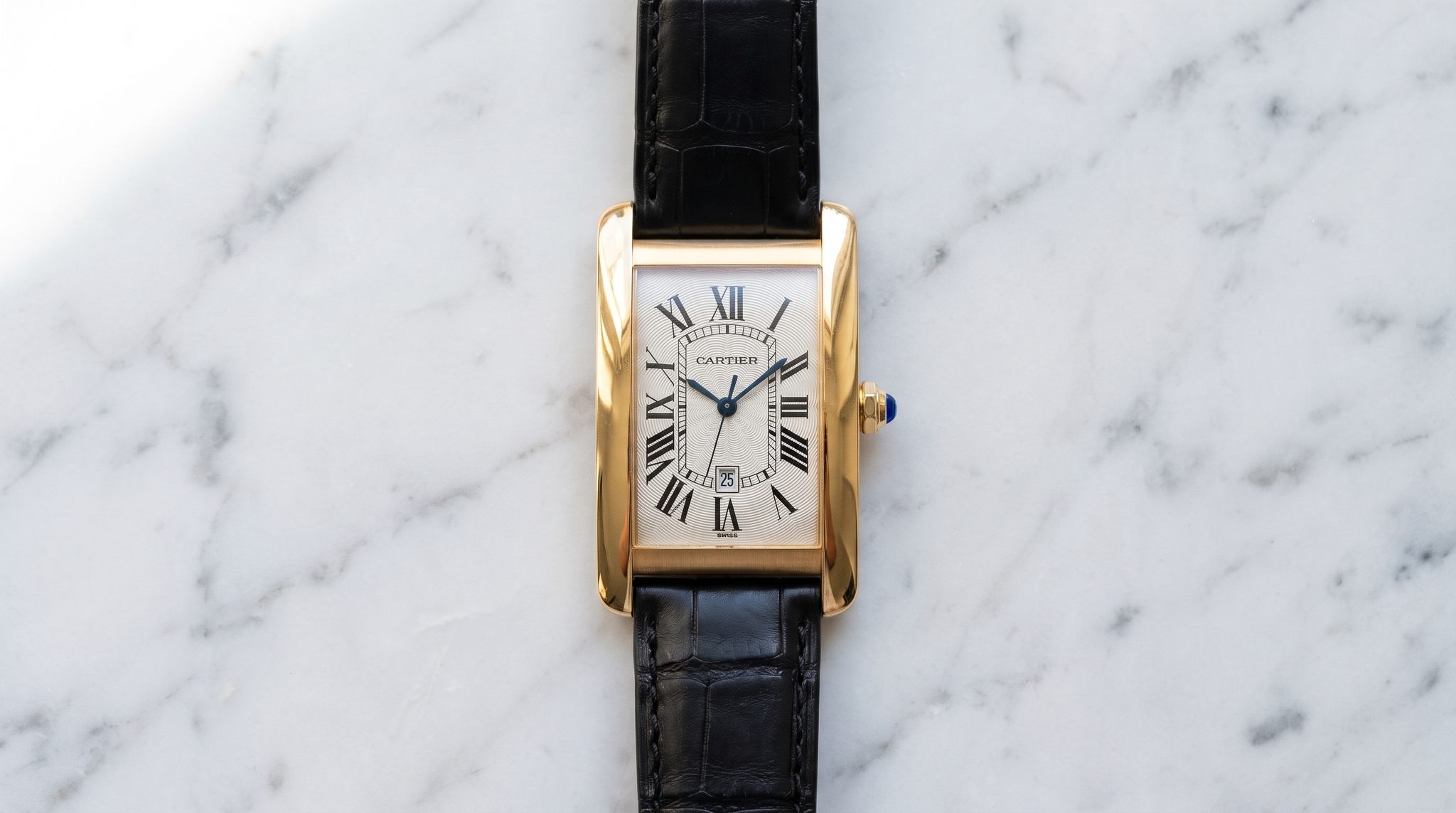
Cartier dates the Américaine to 1988 and other histories to 1989. Its stated purpose was to reinterpret the elongated, curved Cintrée of 1921 in a larger, more contemporary and water-resistant form, its case curving around the wrist. The medium 18k yellow-gold automatic 1725, with a date at six, is one of its 1990s references. The line is still made: Cartier reintroduced it in steel in 2017.
Tank Française
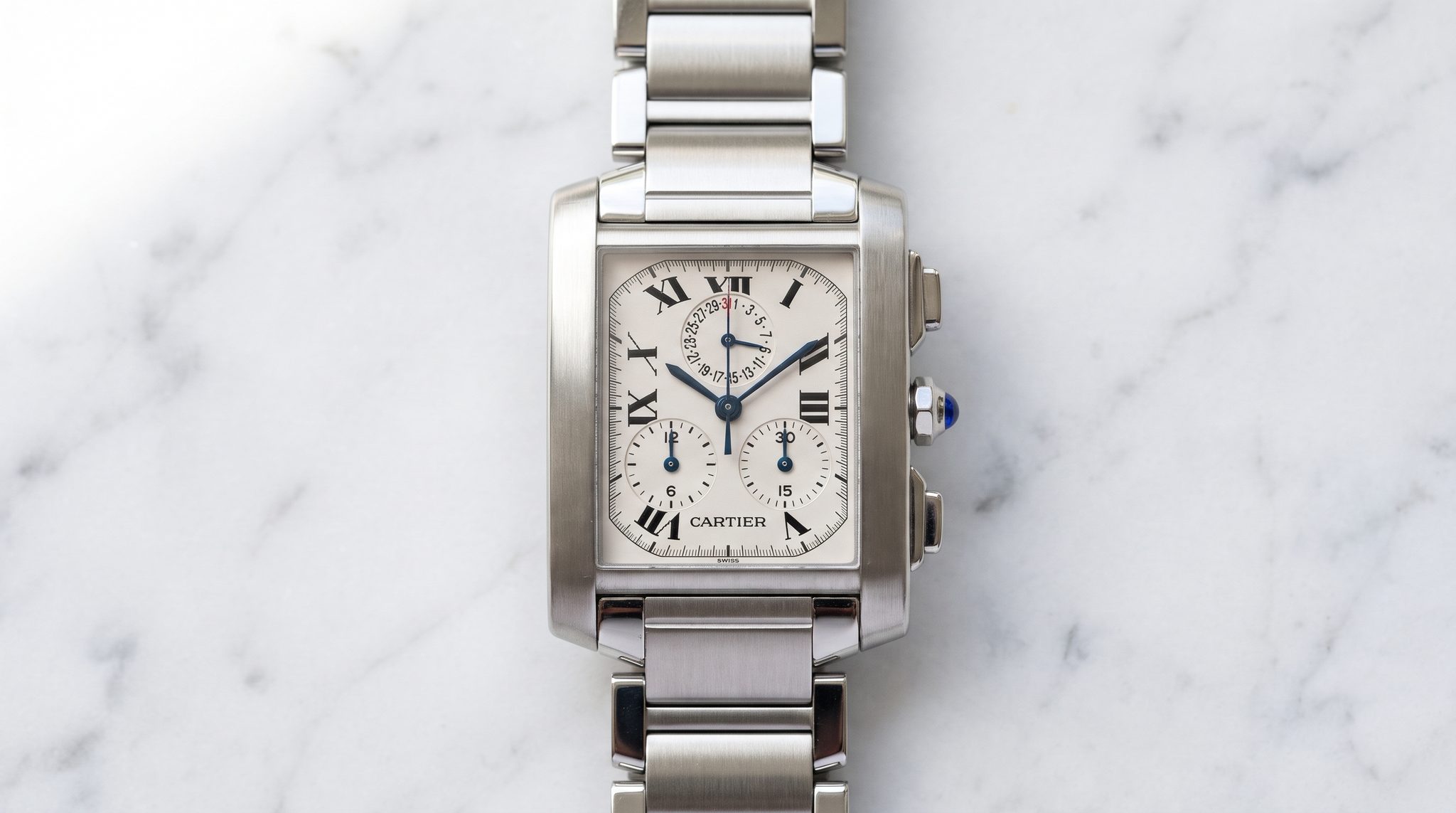
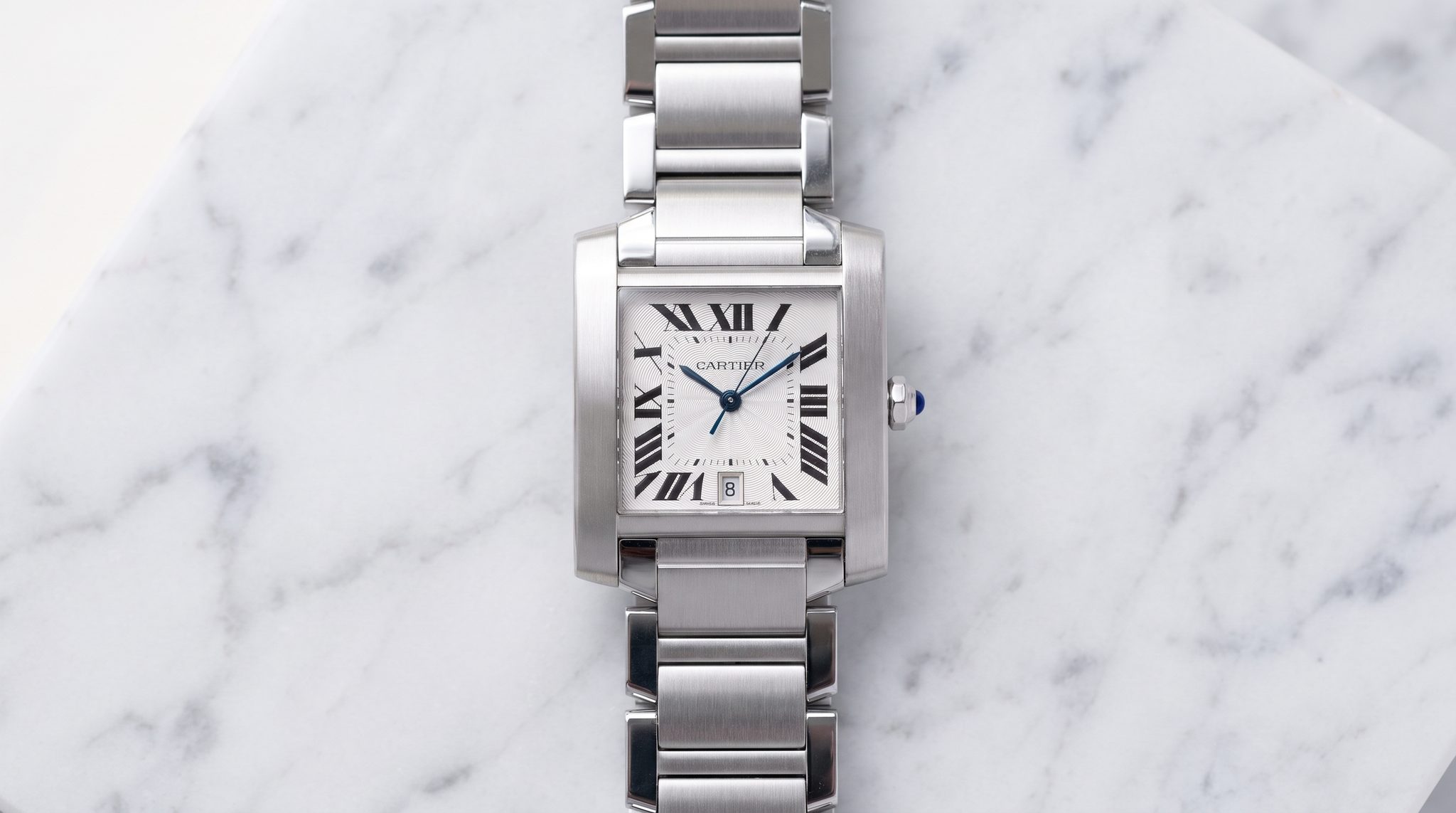
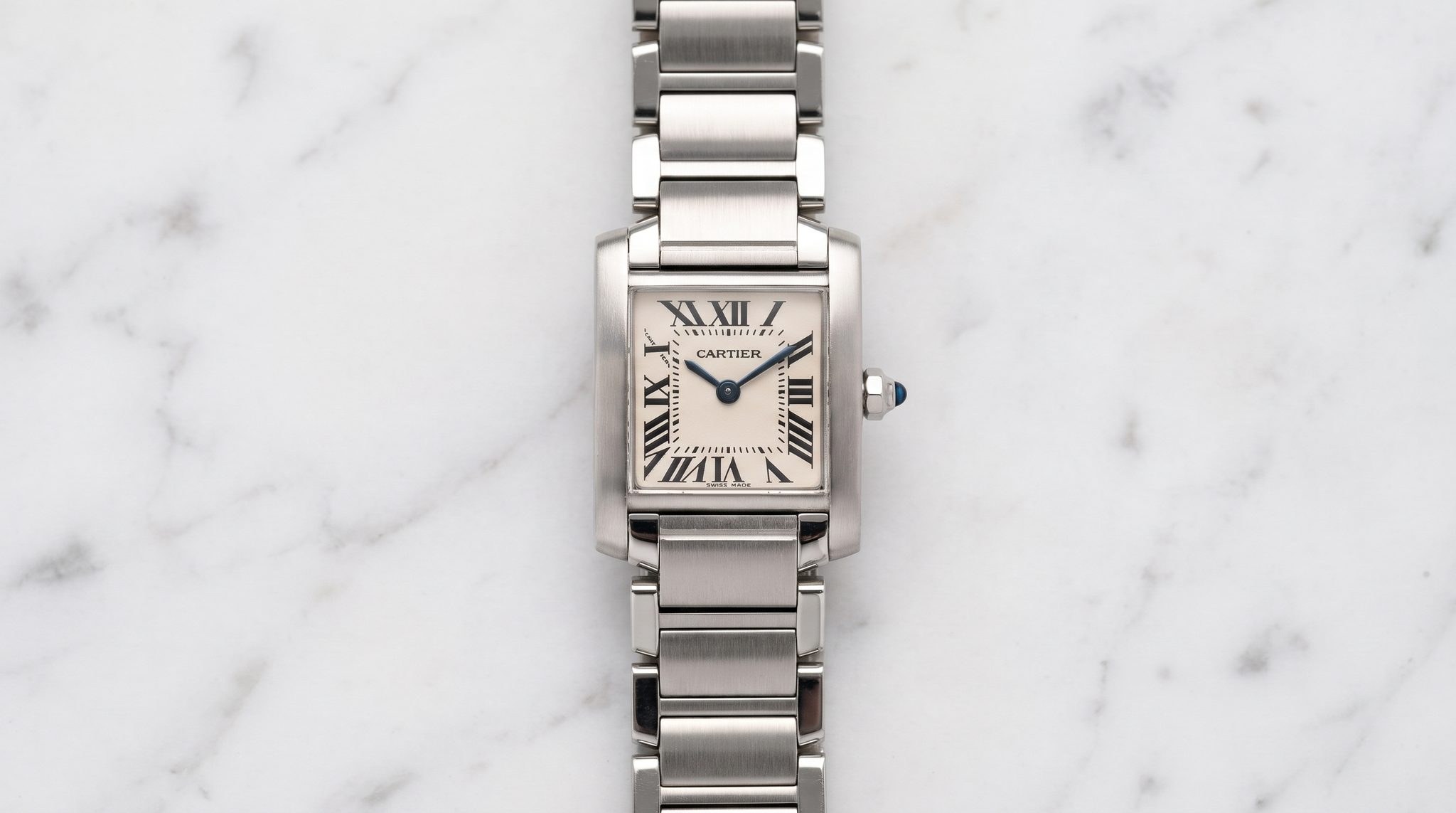
Cartier states that the 1996 Française inaugurated a metal bracelet in perfect continuity with the case, and that is the whole idea of the generation: a squarer, more architectural Tank whose bracelet is part of the design rather than an accessory. It became the contemporary everyday Tank, made in steel, gold and two-tone, mostly quartz with an automatic in the large size, and it came in sizes rather than versions: the small quartz 2384, the midsize quartz 2301, the large automatic 2302 and the quartz chronograph 2303. It arrived a year before the Must lines began to be phased out, and it is still current: the original series ran into the 2010s, and Cartier redesigned the line in 2023.
Steel Tank: Solo and Tank Must
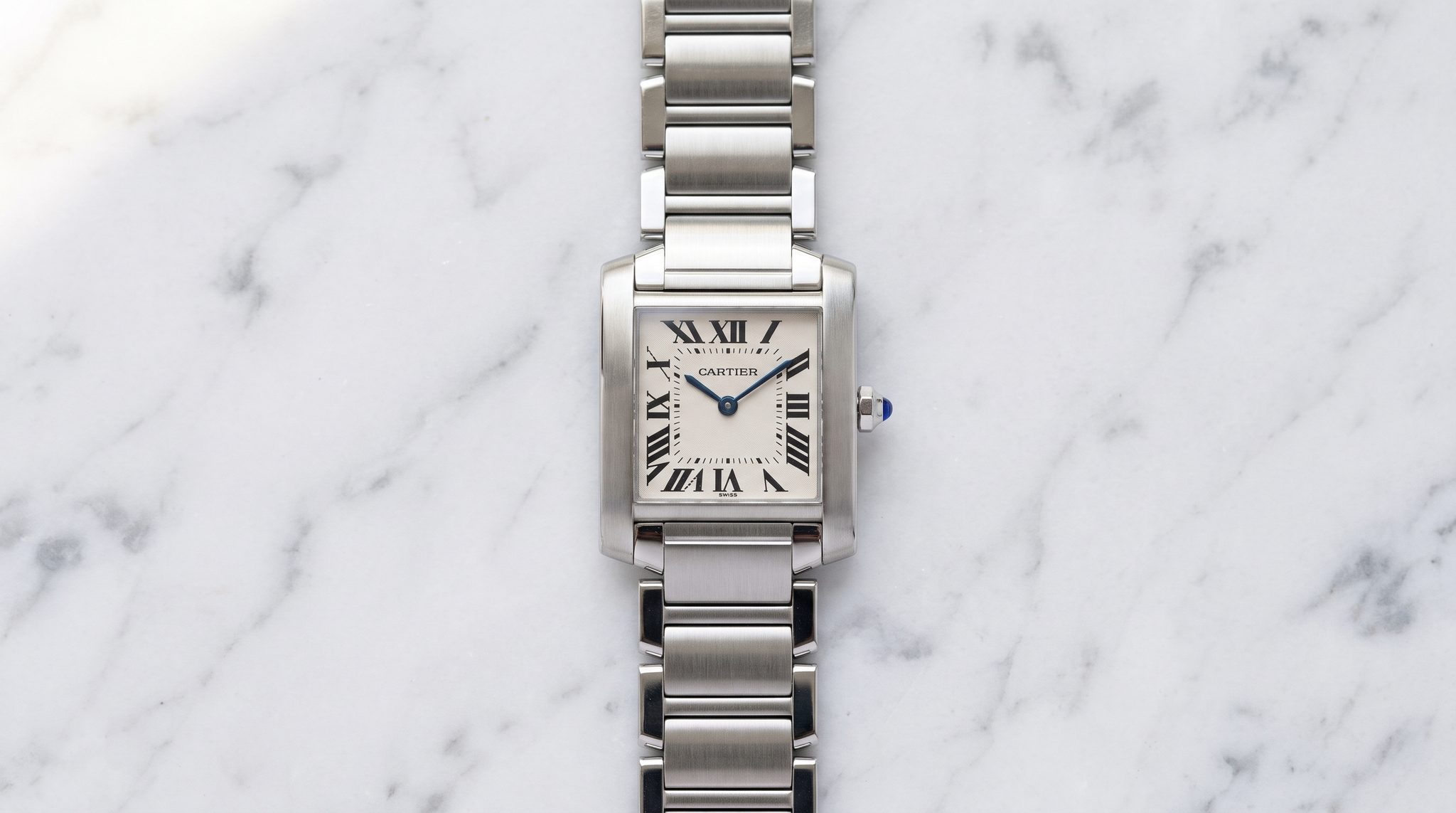
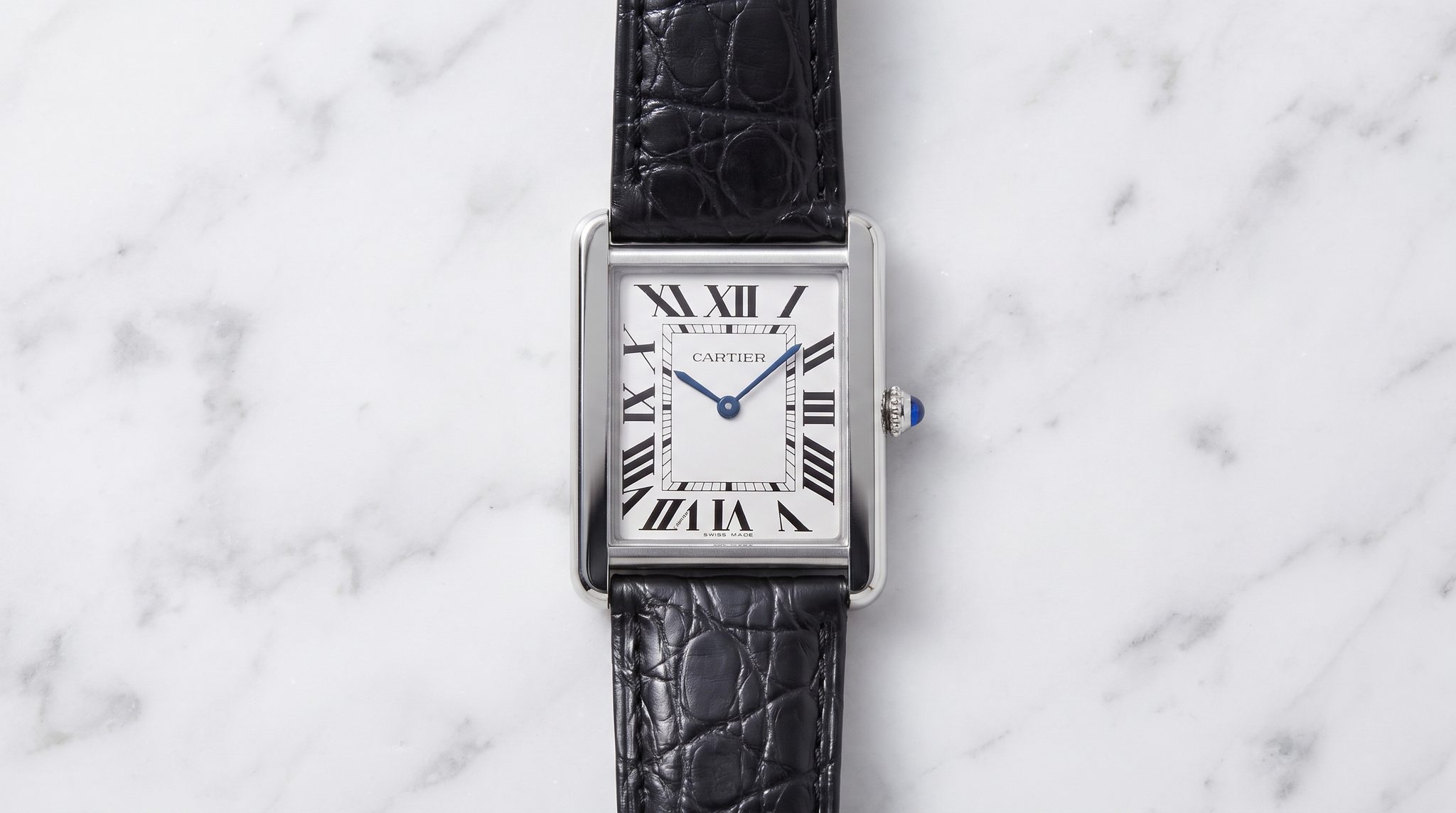
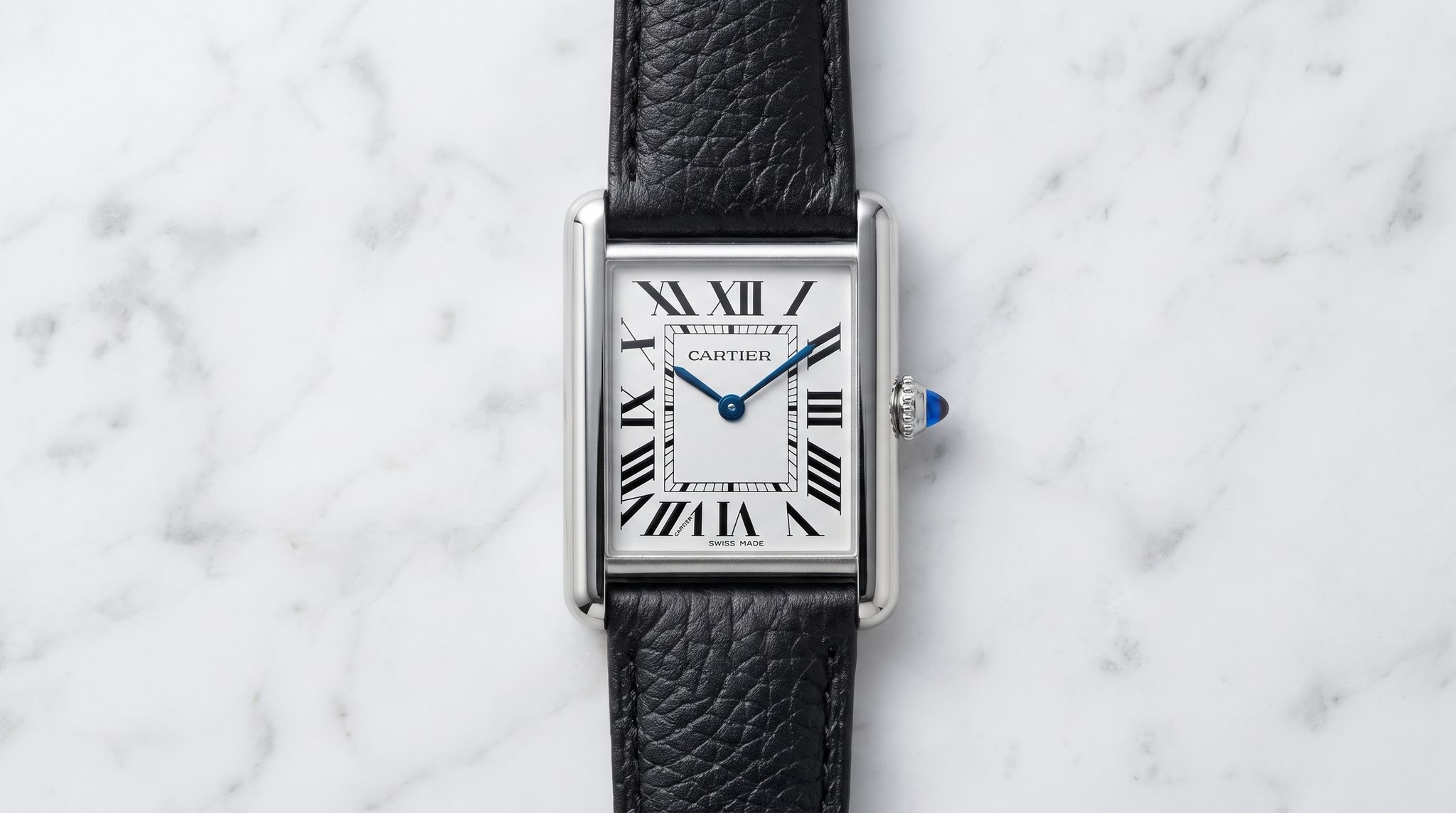
Since 2004 the family has had a steel entry Tank, and it has carried two names. The Tank Solo came first, a flatter, plainer reading of the Louis Cartier outline with the Roman numerals, railway track and cabochon crown kept and the precious metal taken away, made in steel and gold with quartz and mechanical versions; the large steel quartz 3169 is one of them. In 2021 Cartier replaced the Solo with a revived Tank Must. The name came back from 1977, but the material did not: the new Must is steel rather than vermeil, and the WSTA0041 is a quartz model from that relaunch. The line is current.
Which Tank to buy
For daily wear, the steel branch is the natural home: the 2021 Tank Must WSTA0041 is its current form, steel and quartz, and the Solo 3169 is the same idea from the generation before.
For a Tank on a bracelet, the Française is the branch, and its sizes run from the small quartz 2384 through the midsize 2301 to the automatic 2302, with the 2303 chronograph beside them.
For a first vintage piece, the family's documented entry point is the Must, whose vermeil case and frequent quartz movement kept it accessible; the 590005 is a quartz example.
The archetype is the gold Louis Cartier: the hand-wound 78086 from the 1970s revival, or the rose-gold hand-wound WGTA0011 for the same idea new from Cartier, with the small yellow-gold W1529856 as its quartz form.
The family's reference-collector target lies beyond these pages. It is the vintage Cintrée, which Hodinkee describes as the most desirable variant (a market judgment rather than a fixed fact), and it is the Tank that most rewards patience: by Hodinkee's count, Cartier made fewer than 2,000 Tanks of all kinds between 1920 and 1960.
What to check on any Tank
Buying across the Tank family means buying very different constructions that share one vocabulary, so a correct watch is defined by internal consistency rather than by any single marker. For several vintage references the available record gives no exact production years, which leaves dealer and auction dates as estimates and puts the burden of proof on the watch itself. GQ's verdict on surviving 1970s Must Tanks, plating usually worn and quartz movements often exhausted, is the family's buying problem in miniature: the outline survives far more often than the watch inside it.
Common questions about the Tank
Louis Cartier designed the Tank in 1917, and a prototype was presented to General Pershing, generally dated to 1918. The first commercial sales are usually placed in 1919, when period inventory research records six watches entering Cartier's stock between November and December, and some histories count the first sales in 1920.
- How Cartier Stopped Being Cartierlorologiese.com
- The Essential Guide to the Cartier Tanksothebys.com
- Collecting the Cartier Tank: A Guide to the Most Important Modelssothebys.com
Show 12 more
- FHH | Cartier Tank: Timeless Luxury Watch Designhautehorlogerie.org
- FHH | The Resilience of Indestructible Cartierhautehorlogerie.org
- Our Style - Cartiercartier.com
- The Origins of the Cartier Tankworldtempus.com
- What This Vintage Cartier Tank Cintrée Tells Us About The Future Of Restorationhodinkee.com
- Watch I Love: The Must de Cartierrevolutionwatch.com
- Cartier revives its secret icon, the Tank Mustgq-magazine.co.uk
- Cartier Tank | THE ICONStimeandtidewatches.com
- Cartier Tank Buying Guide: Every Reference Explaineddialist.com
- The Cartier Tank Buying Guidegq.com
- FHH | L'impérissable génie de Cartierhautehorlogerie.org
- Collector's guide to Cartier Paris, London and New Yorksothebys.com