

Rolex Yacht-Master 16622
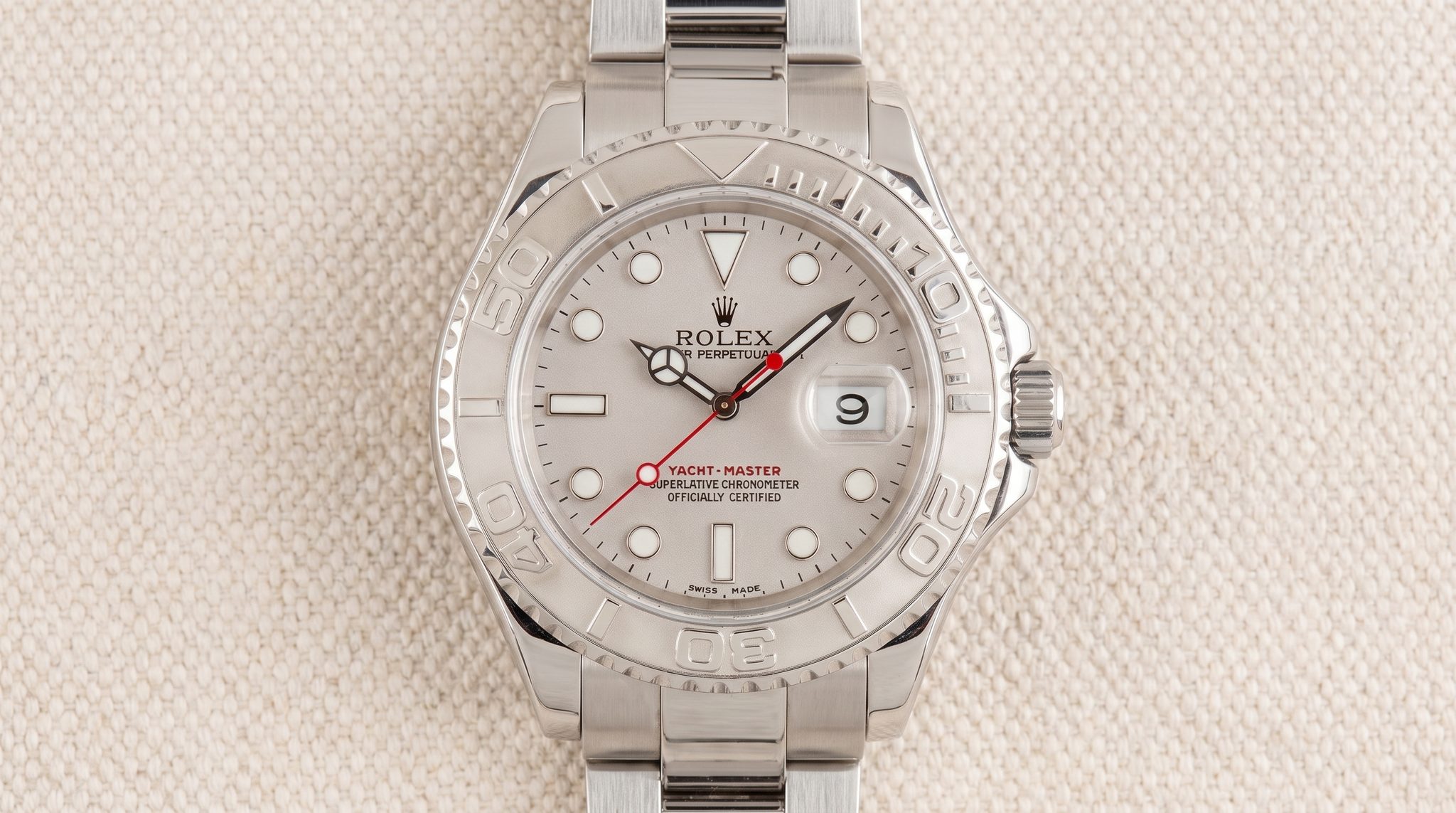
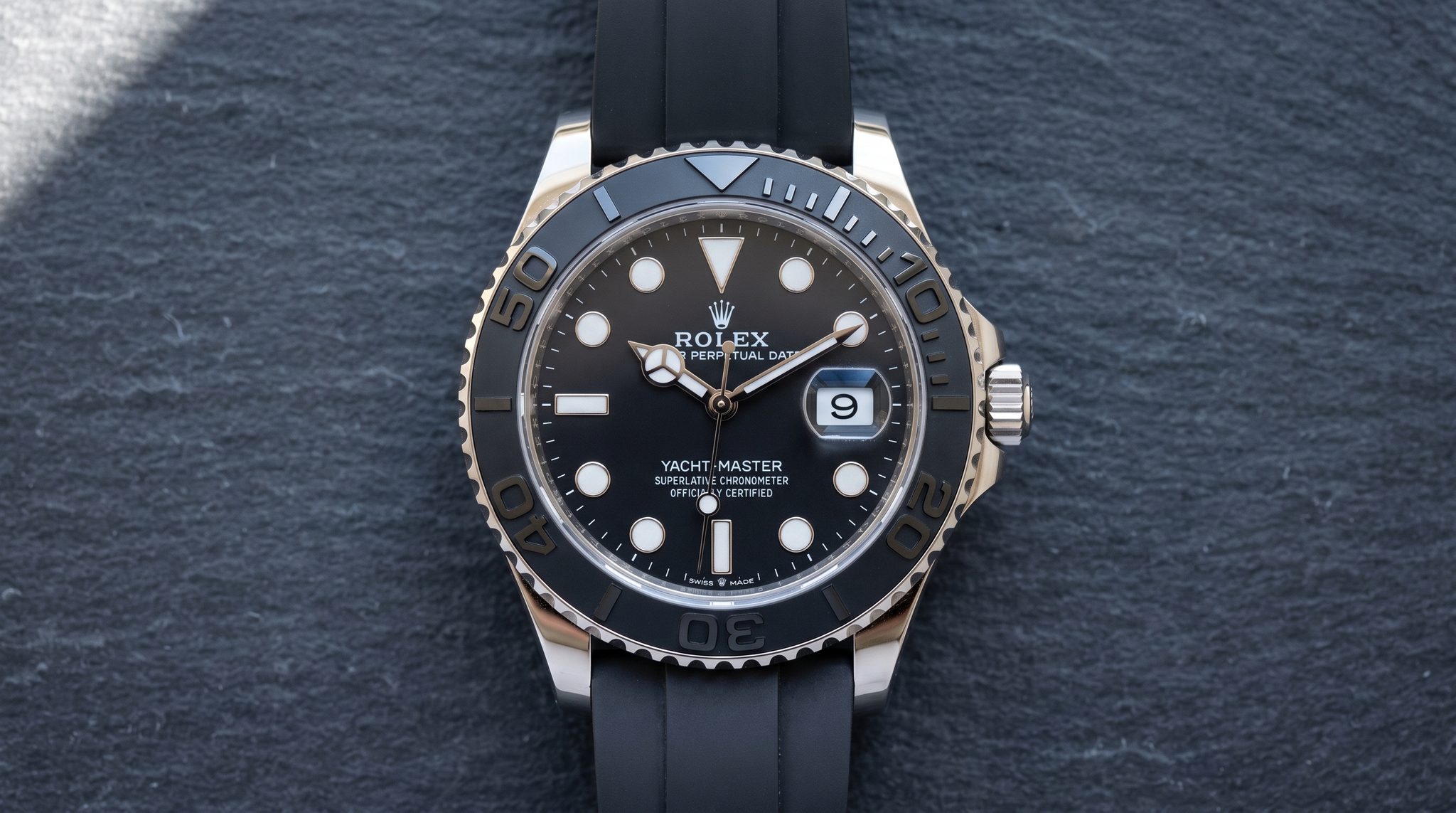
The Rolex Yacht-Master 16622 is the Rolesium Yacht-Master at its most distinctive, the era when Rolex put a solid platinum dial and a sandblasted platinum bezel on a steel sports case and then quietly refined the details without changing the reference.
- Production
- 1999–c. 2012
- Case
- 904L steel
- Diameter
- 40 mm
- Lug-to-lug
- ~47.3 mm
- Thickness
- ~11.8 mm
- Bezel
- 950 platinum, 60-min
- Crystal
- Sapphire
- Water res.
- 100 m
- Dial
- 950 platinum
- Movement
- Cal. 3135
- Chronometer
- Yes (COSC)
- Lume
- Tritium → Super-LumiNova
The Rolex Yacht-Master 16622 was produced from 1999 to about 2012.
- Production years
- 1999–c. 2012
- Replaced by
- 116622
- Movement
- Cal. 3135
The Rolex Yacht-Master 16622 is proof that a Rolex sports watch can be defined by finish, not function: it is the 40 mm Yacht-Master where the headline material is not the case at all, but a solid platinum dial paired with a sandblasted platinum bezel whose raised numerals flash like polished relief. Introduced at Basel in 1999 as the stainless steel and platinum Rolesium model, it established the Yacht-Master’s cooler, more luxurious identity in the catalog while keeping the practical Rolex template, a 100 m Oyster case with a Triplock crown and the chronometer-certified caliber 3135.
Collectors tend to care about the 16622 for a reason that only becomes obvious on the wrist. Rolex did not keep this reference frozen; it quietly reworked the way the platinum dial surface looks, the way the inner rehaut is finished, and (by broader period practice) the luminous material printed at six o’clock. Those changes are subtle enough that the watch always reads as “a 16622,” yet specific enough that two examples from different years can feel like different moods of the same design, from the early, visibly sparkly grain to the later, more restrained fine texture. Replaced by the 116622 around 2012, the 16622 remains the Rolesium generation most associated with a platinum dial as standard equipment rather than an option.
“A Yacht-Master that wears like steel, but announces itself in platinum: the 16622’s story is written in texture, not in a new reference number.”
Rolex Yacht-Master 16622 production years: 1999–c. 2012
The 16622 arrives in 1999 as the steel and platinum answer to the original full-gold Yacht-Master idea that began with the 16628. Its identity is material contrast: a steel Oyster case and bracelet, then a bezel insert in 950 platinum with a matte, sandblasted background and raised numerals polished to a mirror, and a matching platinum dial whose surface is textured rather than glossy.
What changes next is not a redesign but a sequence of production-era tells that collectors use because Rolex did not announce them as new models. The lume era is one: early Rolex sports watches in this period transitioned away from tritium to Super-LumiNova, and on the 16622 the most visible proof is the tiny signature at six o’clock, “T Swiss T<25” on tritium dials versus “Swiss Made” once Super-LumiNova becomes standard. Rolex never published an exact cutoff for the 16622, so the boundary is treated as approximate and best verified by the dial itself.
By the mid-2000s, Rolex also modernized case finishing and anti-counterfeiting cues across the line, and the 16622 follows suit. Earlier examples have a plain, smooth inner rehaut, while watches from roughly 2007/2008 onward show the repeated “ROLEX” engraving and the serial number relocated to the rehaut. Around the same period, the platinum dial’s surface treatment shifts from the earlier, coarser grain, which can look almost glittered in direct light, to a finer, calmer texture. The reason for the dial-finish change is not documented; what is documented is the split in surviving examples and the way owners describe the pre-2007 versus later look.
Seen all at once, the 16622 is a reminder that even in the era of five-digit references and the workhorse caliber 3135, Rolex was still actively tuning the feel of a watch that looks, at a glance, like it never changed. The differences are quiet, but they are the difference between a platinum dial that sparkles and one that whispers.
- 1999IntroducedPlatinum dial and platinum bezel
- c. 1999 – 2000Lume shift“T Swiss T<25” vs “Swiss Made”
- c. 2006Last blank rehautSmooth inner rehaut ring
- c. 2007Dial textureSparkly grain becomes smoother
- c. 2007/2008Rehaut engraved“ROLEX ROLEX ROLEX” inside
- c. 2012ReplacedNewer clasp and blue lume
16622 against its neighbours
The 16622 sits between two watches that clarify what it is. The earlier 16628 shows the Yacht-Master’s original premise in full gold, while the 116622 keeps the same Rolesium idea but updates the wearing hardware and lume, making the 16622 the sweet spot for buyers who want the platinum-dial era with the classic five-digit feel.
This reference 16622 Rolex · focal 1999–c. 2012 | |||
|---|---|---|---|
| Production | 1999–c. 2012 | c. 2012–2019 | 2019–present |
| Case | 904L steel | Steel + platinum | Oystersteel + platinum |
| Diameter | 40 mm | 40 mm | 40 mm |
| Bezel | 950 platinum, 60-min | 950 platinum | 950 platinum |
| Crystal | Sapphire | Sapphire, Cyclops | Sapphire, Cyclops |
| Water res. | 100 m | 100 m | 100 m |
| Dial | 950 platinum | Platinum or blue | Slate or blue |
| Movement | Cal. 3135 | Cal. 3135 | Cal. 3235 |
| Chronometer | Yes (COSC) | Yes (COSC) | Superlative Chronometer |
| Lume | Tritium → Super-LumiNova | Chromalight | Chromalight |
Five dial generations across the run
The rarest-looking tell on a 16622 is also the smallest: the lume signature at six o’clock. A tritium dial reads “T Swiss T<25,” tying the watch to Rolex’s last tritium era. Rolex did not document an exact transition year for the 16622, so the safest way to treat this variant is as an early-production possibility and to verify it by the printed dial text rather than by an assumed year alone. On the wrist, the appeal is subtle, a 1990s-style dial signature on a watch introduced at the turn of the millennium.
What to check before buying a 16622
Buying a Rolex Yacht-Master 16622 is less about chasing a single “best year” and more about confirming that the platinum surfaces and the watch’s era cues agree with each other. The dial texture and the rehaut engraving are the two tells most often used to place a watch in the run, and they are easy to misread if a watch has had parts replaced during service.
A 16622 lives or dies on condition in a way many steel Rolex sports models do not. The bezel is 950 platinum with raised polished numerals, so heavy impacts and aggressive refinishing can flatten the relief and soften the crisp contrast that defines Rolesium. The Yacht-Master case also has notably curved lugs and rounded crown guards, which can look overly melted after repeated polishing.
In practice, the best 16622 ownership experience comes from finding a coherent, well-preserved example, whether that means an early coarse-grain dial that sparkles or a late engraved-rehaut watch that feels more modern. The reference wears slim for a 40 mm sports Rolex, with a measured 47.3 mm lug-to-lug and about 11.8 mm thickness, and the caliber 3135 is a familiar, serviceable workhorse, which is why many buyers treat the 16622 as an everyday Rolex that happens to be dressed in platinum.
Rolex Yacht-Master 16622 price and value
A Rolex Yacht-Master 16622 sells for about $8,000 at the median, typically $7,400 to $8,600 across 148 comparable sales.
Rolex Yacht-Master 16622 for sale
Indicative figures from recent dealer, auction, and Grey Market sales (updated this week). Every watch is verified before it sells here.
Each point is a recent dealer or auction sale, banded to an indicative figure. The range shown is not a valuation.
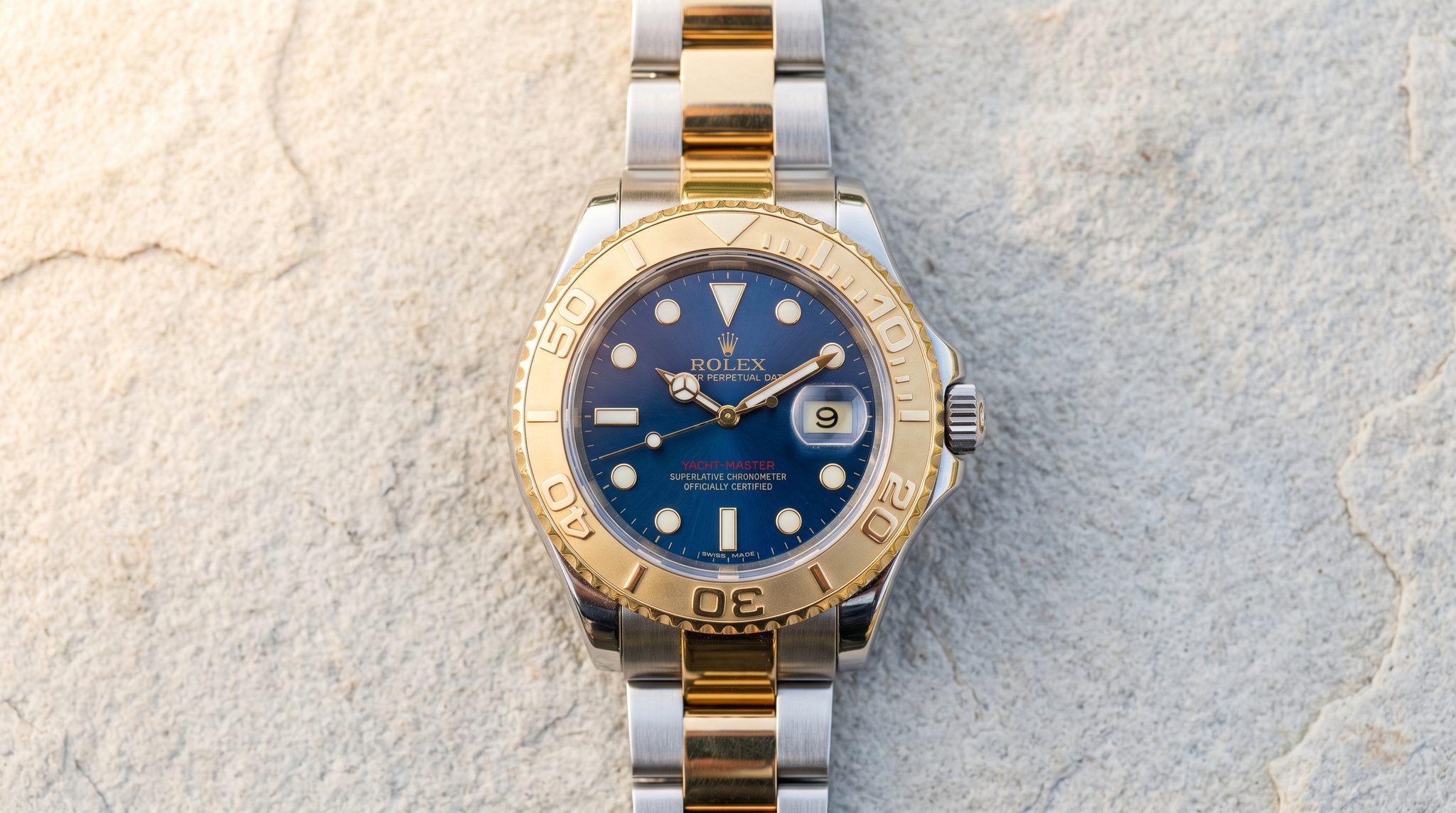
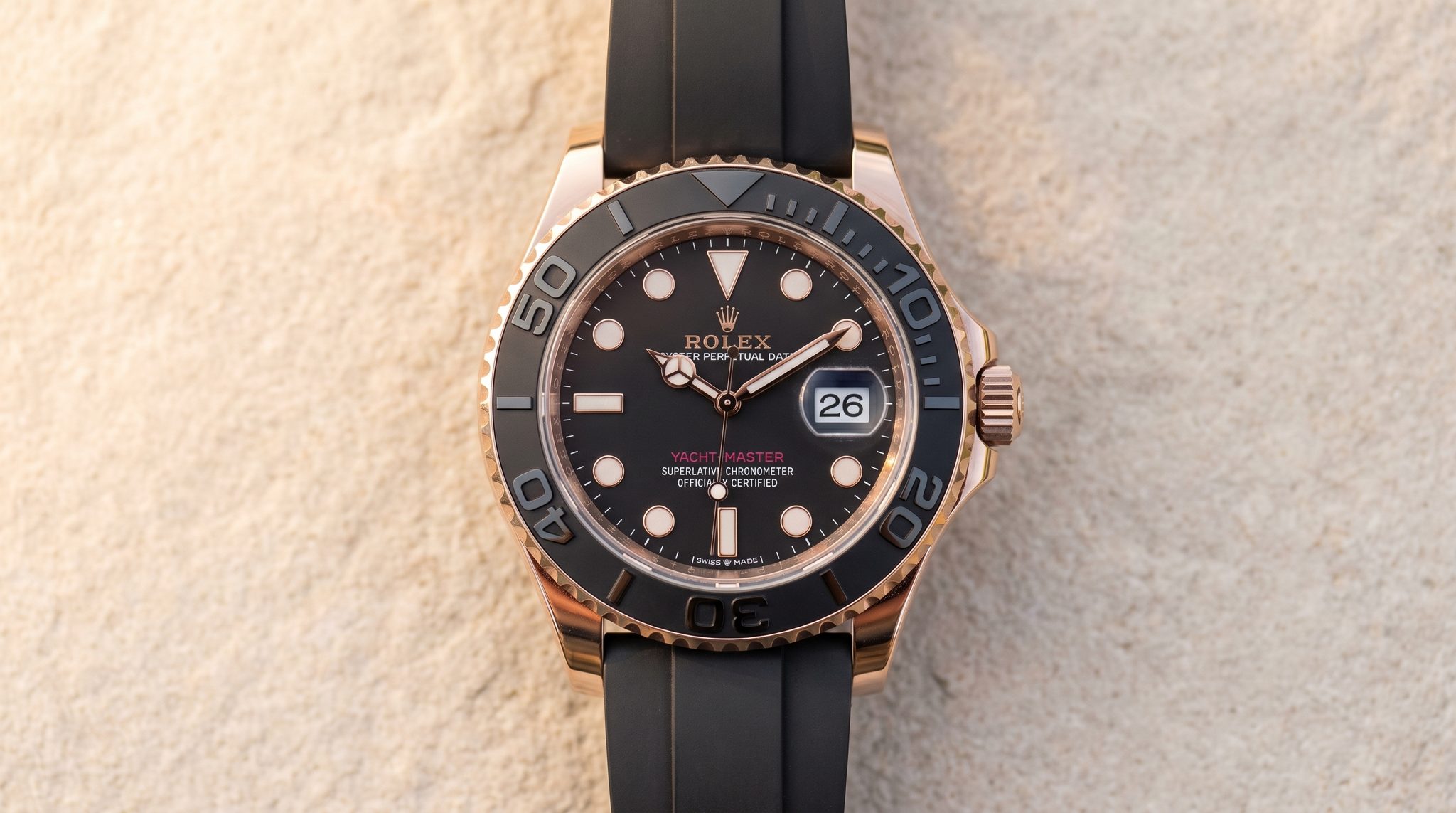
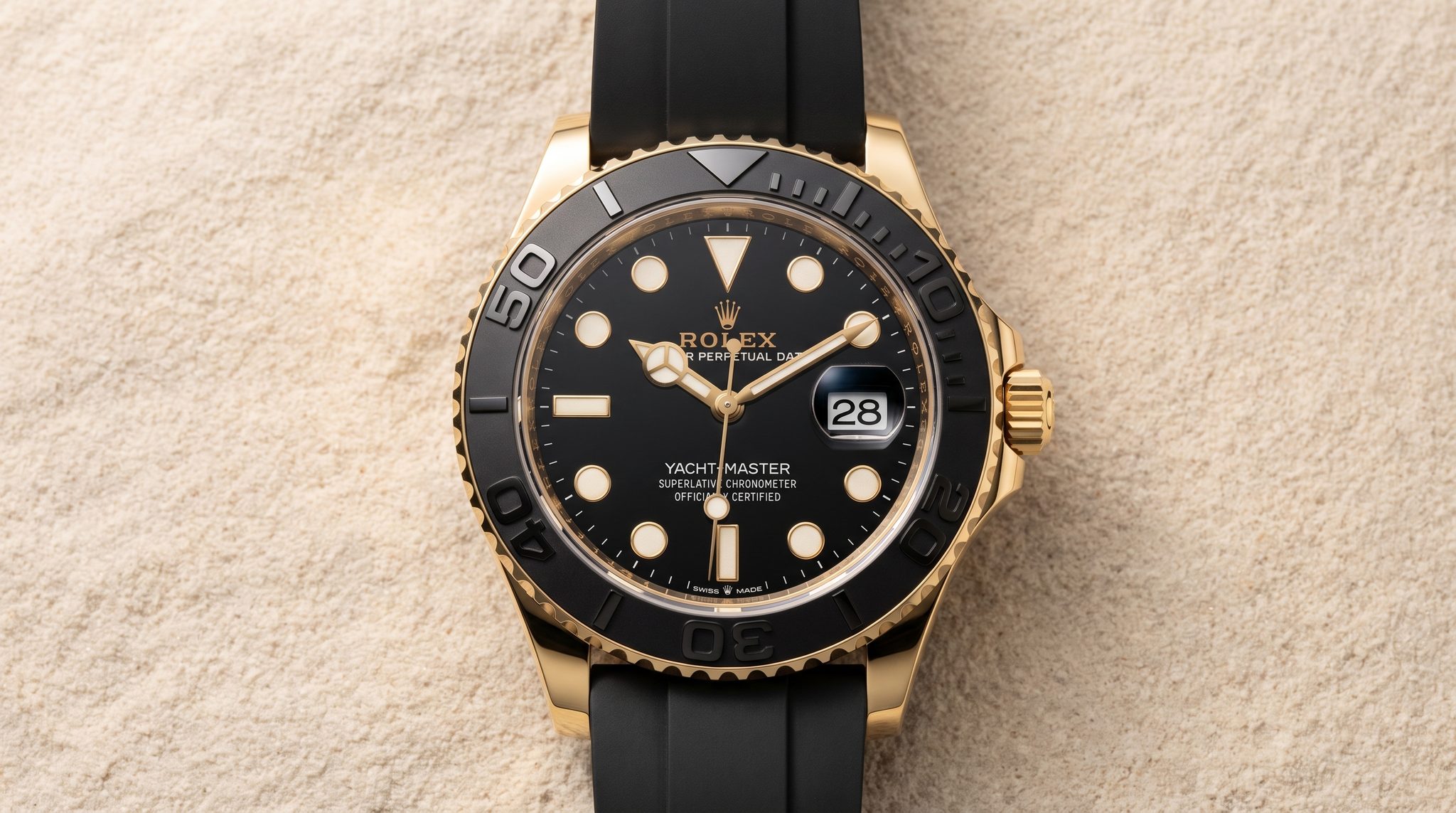
Adjacent in the Yacht-Master family
Common questions about the 16622
The Rolex Yacht-Master 16622 debuted in 1999 and was replaced by the Yacht-Master 116622 around 2012. Some retail and listing dates extend into 2012, which is consistent with end-of-run sales after production tapered.
- Why I Bought The Rolex Yacht-Master 16622 (Again)fratellowatches.com
- Rolex Yacht-Master (Reference 16622) A Platinum and Stainless Steel Automatic Wristwatch With Datesothebys.com
- History and Evolution of the Rolex Yacht-Mastergrayandsons.com