

Rolex Yacht-Master
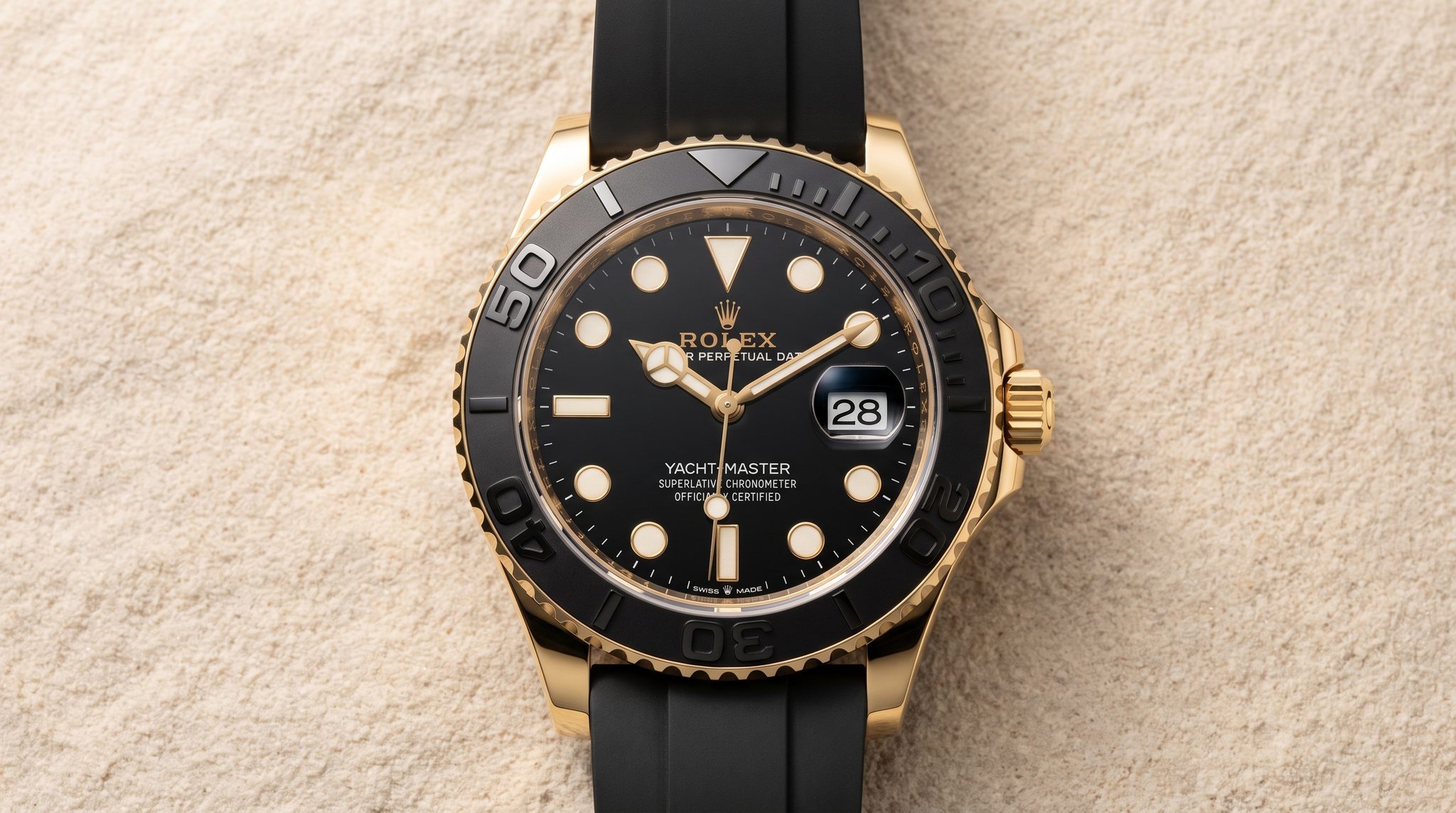
The Rolex Yacht-Master is the Rolex sports watch that treats maritime timing as a luxury surface, pairing a bidirectional bezel with precious materials from its very first reference.
The Rolex Yacht-Master is the Rolex sports line that put a sailor’s timing bezel into the luxury lane, not by adding complication, but by making materials and finish the headline. It begins in 1992 with ref. 16628, launched as a 40 mm watch made entirely in 18 ct yellow gold.
From the start, Rolex positioned the Yacht-Master as a nautical sports watch designed specifically for sailors, aimed at yachting culture rather than professional diving. That origin matters because it explains the family’s most consistent visual logic: elapsed-time timing stays in the foreground, while the watch signals status through metals and textures that read differently in light. Even when two Yacht-Masters share the same basic layout, they do not feel interchangeable, because the collection’s identity is carried by what the bezel and case are made of, and how they are worn.
The four eras of the classic time and date Yacht-Master references covered here show that strategy playing out. First comes the all-gold launch (16628). Then Rolex broadens the audience with a cooler steel and platinum Rolesium look (16622) and a dressier two-tone alternative (16623). Next, the family modernizes in-place around 2012, with an updated Rolesium reference (116622) and, in 2015, a sharper pivot into contemporary sport-luxury through Everose gold, black Cerachrom, and Oysterflex (116655). Finally, the current generation clarifies the lineup through movement modernization in the Rolesium 40 (126622), a bigger 42 mm white-gold Oysterflex flagship (226659), and a materially technical outlier in RLX titanium (226627).
Many dealer and editorial histories treat the Rolesium Yacht-Master 40 as the archetypal expression of the line, because it became the widely seen steel and platinum version after 1999 and remains the core “recipe” in today’s catalog. But the through-line across all these references is broader than Rolesium alone: Rolex repeatedly returns to the same idea, a yacht-timing bezel and an Oyster case, then changes the watch’s meaning by changing its material, its size, and whether it is worn on a metal bracelet or Oysterflex.
What each Yacht-Master reference trades for
Median and typical range of recent dealer, auction and Grey Market sales, banded. Indicative, not a valuation; each reference page carries the detail.
9 references across 4 eras
All-gold launch
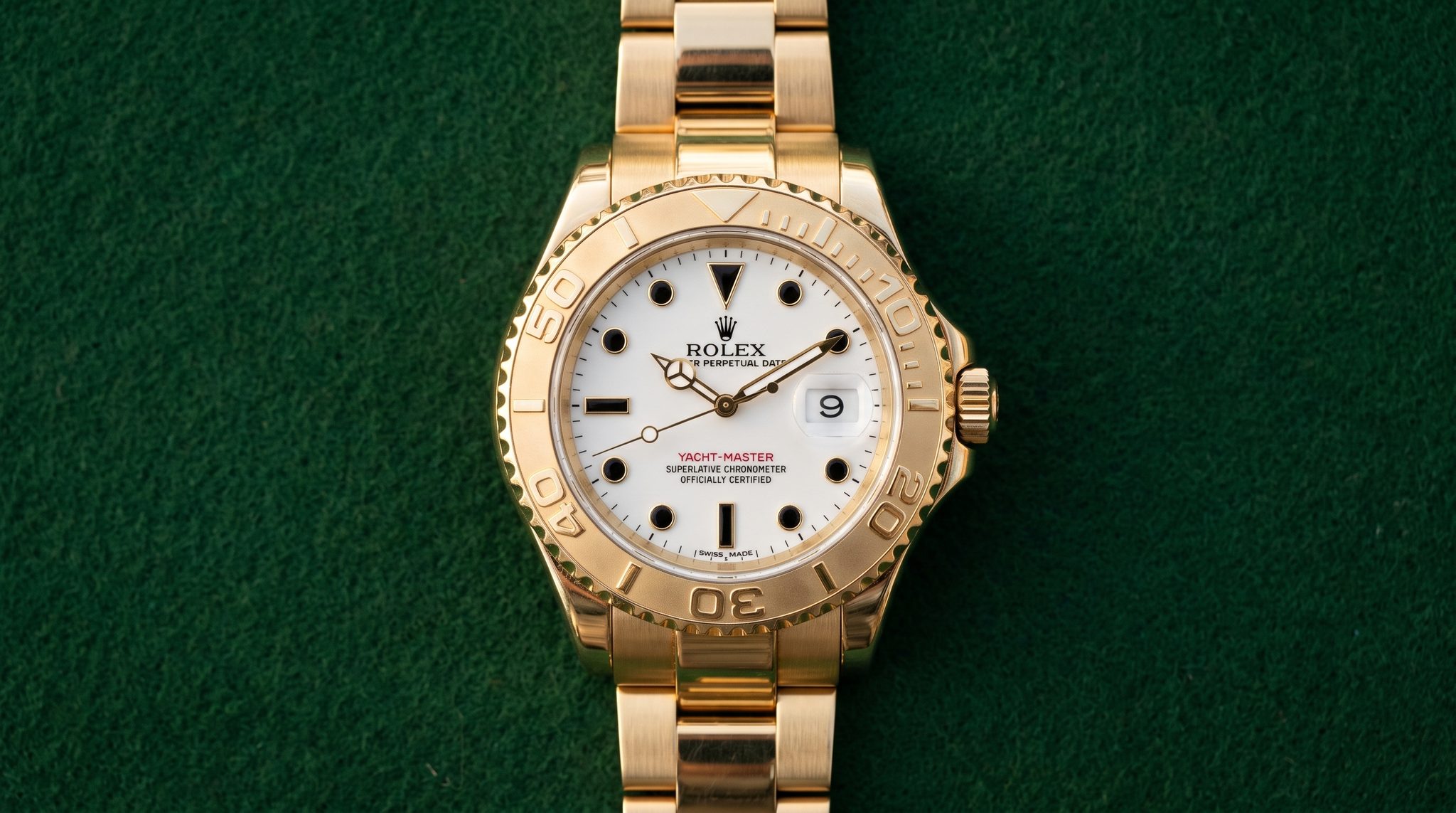
The Yacht-Master enters as a complete concept rather than an incremental offshoot. Ref. 16628 establishes the family’s premise in one move: a time and date Oyster watch that foregrounds a bidirectional 60-minute bezel, but does it in full 18 ct yellow gold. The effect is that the same action a sailor uses to time an interval is also the watch’s jewelry finish, because the raised bezel numerals and the metal itself do most of the visual work. This era ends not because a specific technical problem is documented, but because Rolex expands the line into more versatile steel and mixed-metal options that become the collection’s volume expressions.
Rolesium and Rolesor expansion
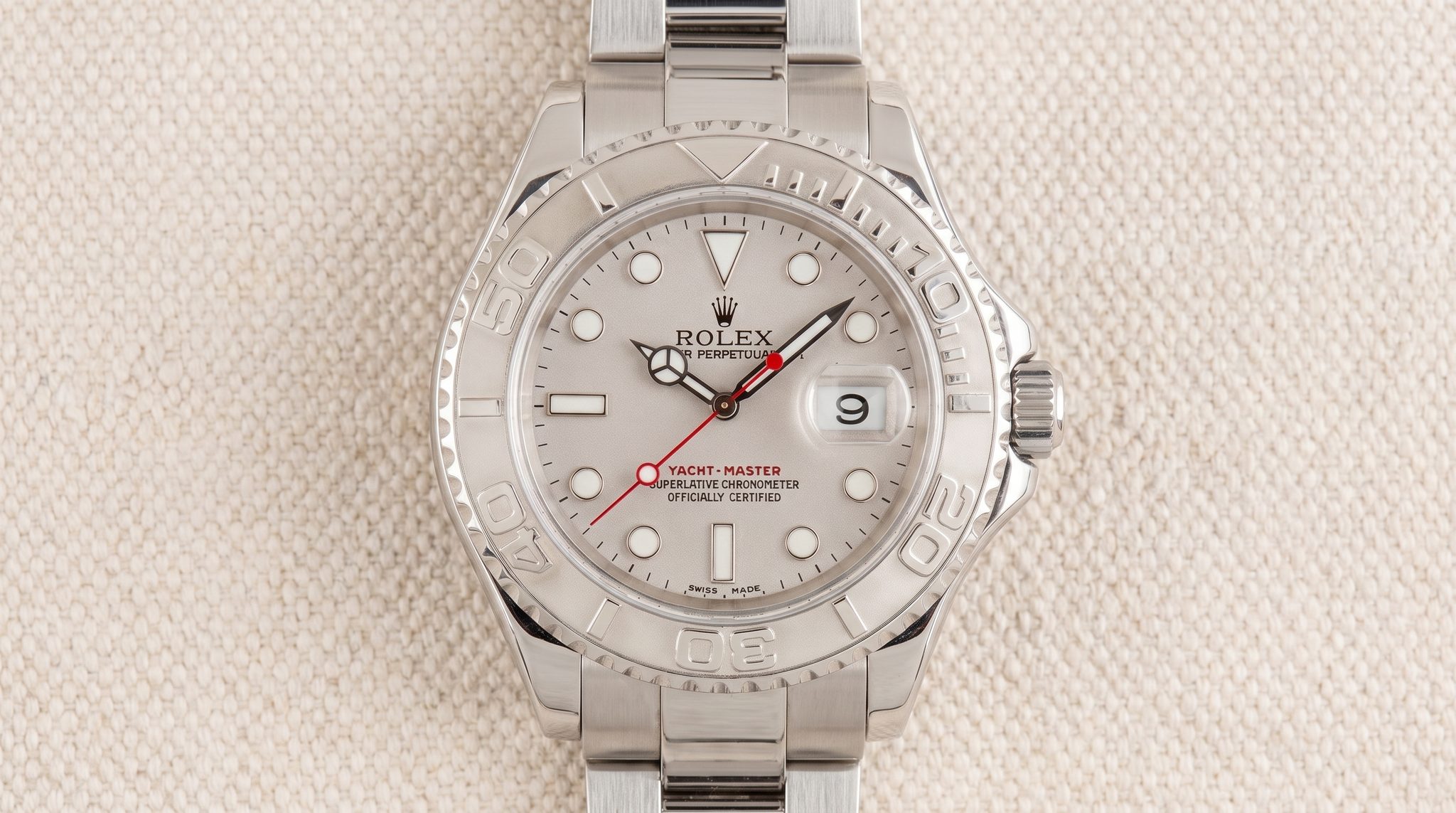
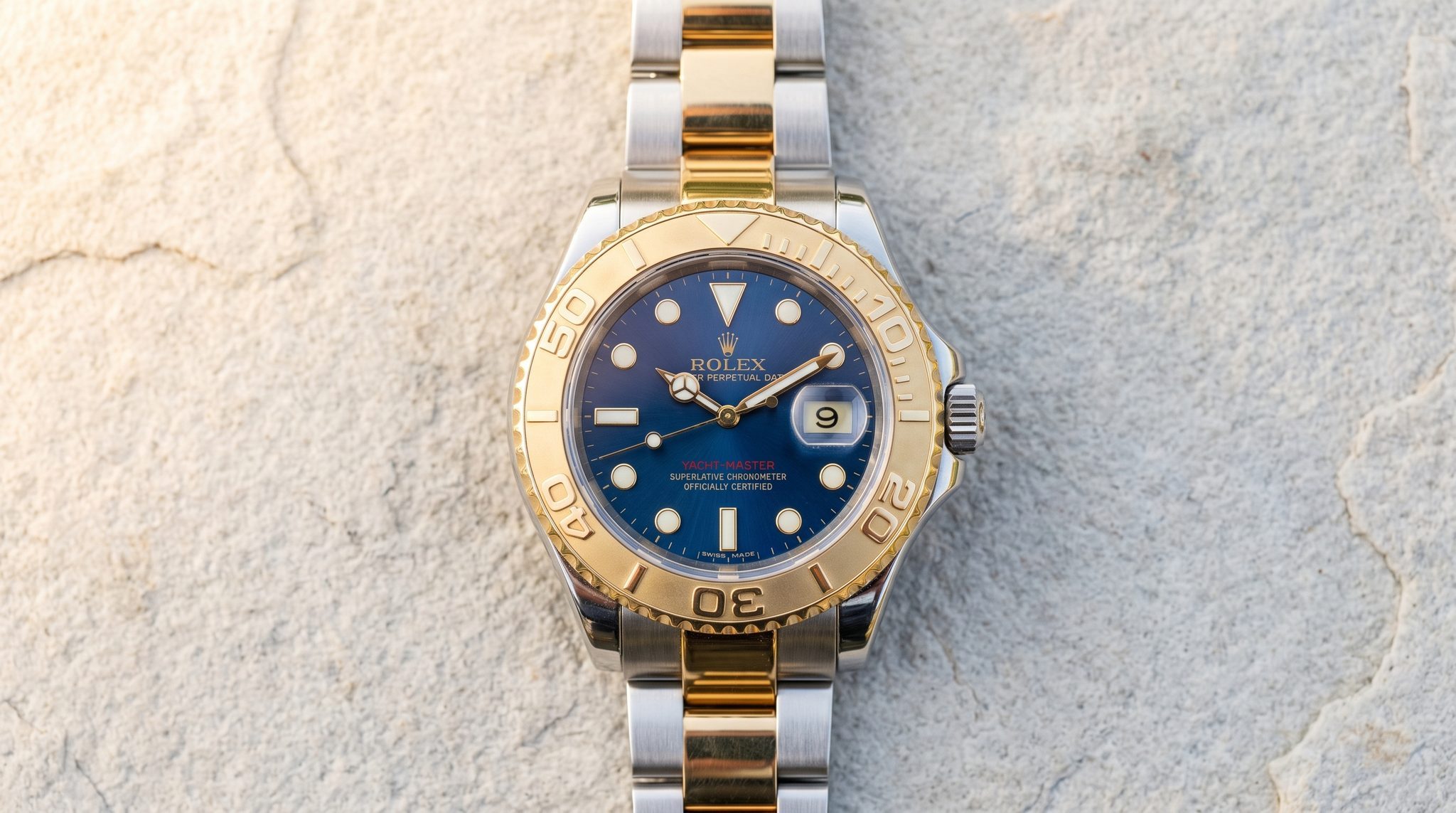
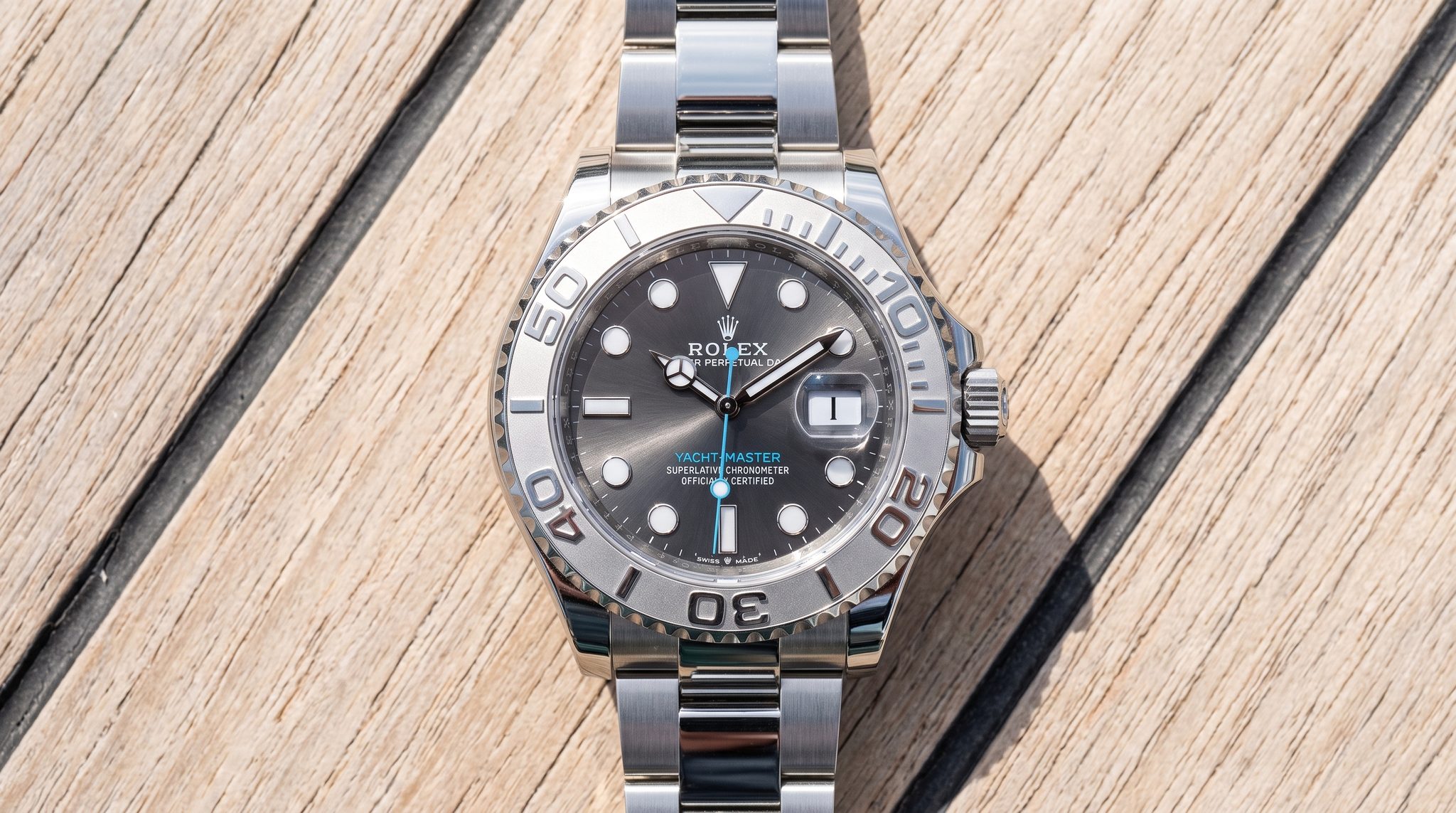
Rolex turns the Yacht-Master into a family by changing who it is for. Ref. 16622 introduces Rolesium, steel paired with platinum on the bezel and dial, creating a cooler, monochrome alternative to the original gold premise. Ref. 16623 extends the idea in another direction, bringing the Yacht-Master into a full-size two-tone steel and yellow-gold format with broad dial variety. Across both references, the change is best read as market positioning rather than documented regulation or supplier pressure: the Yacht-Master becomes easier to wear as a daily luxury sports watch without abandoning precious-metal cues. The era gives way around 2012 as Rolex refreshes the Rolesium 40 into the six-digit series.
Modernized 40 and Oysterflex pivot
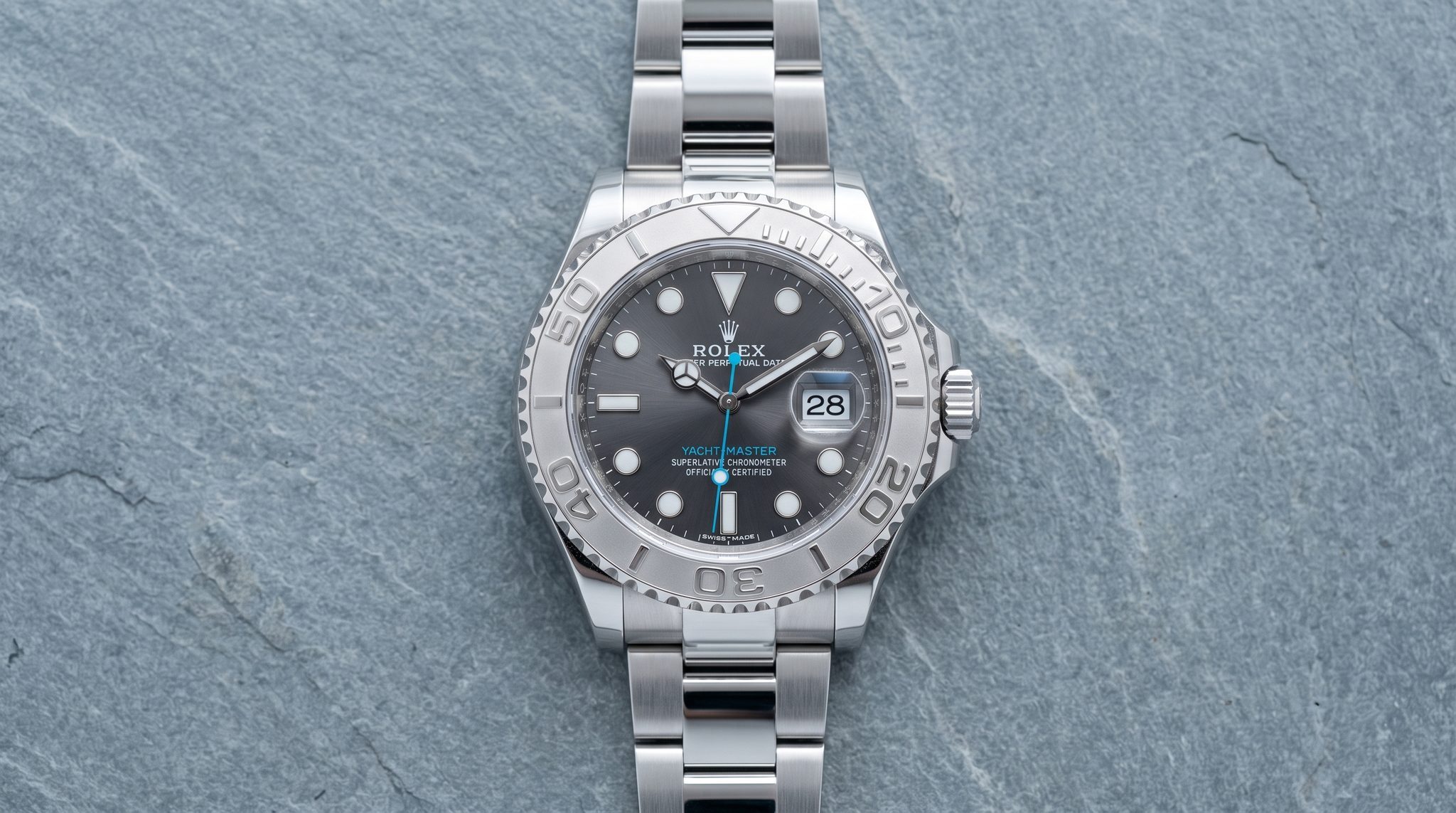
This generation splits the Yacht-Master’s modern identity into two parallel expressions. Ref. 116622 updates the Rolesium Yacht-Master 40 while keeping the same fundamental material formula, and concentrates its visible evolution in dial execution. Ref. 116655 is the sharper break: in 2015 Rolex pairs Everose gold with a matte black Cerachrom bezel and introduces Oysterflex to the Yacht-Master, creating a precious-metal sports watch that wears like a strap watch without abandoning Rolex’s engineered bracelet feel. The end point is 2019, when the line’s men’s references begin moving to the newer movement generation in the current catalog era.
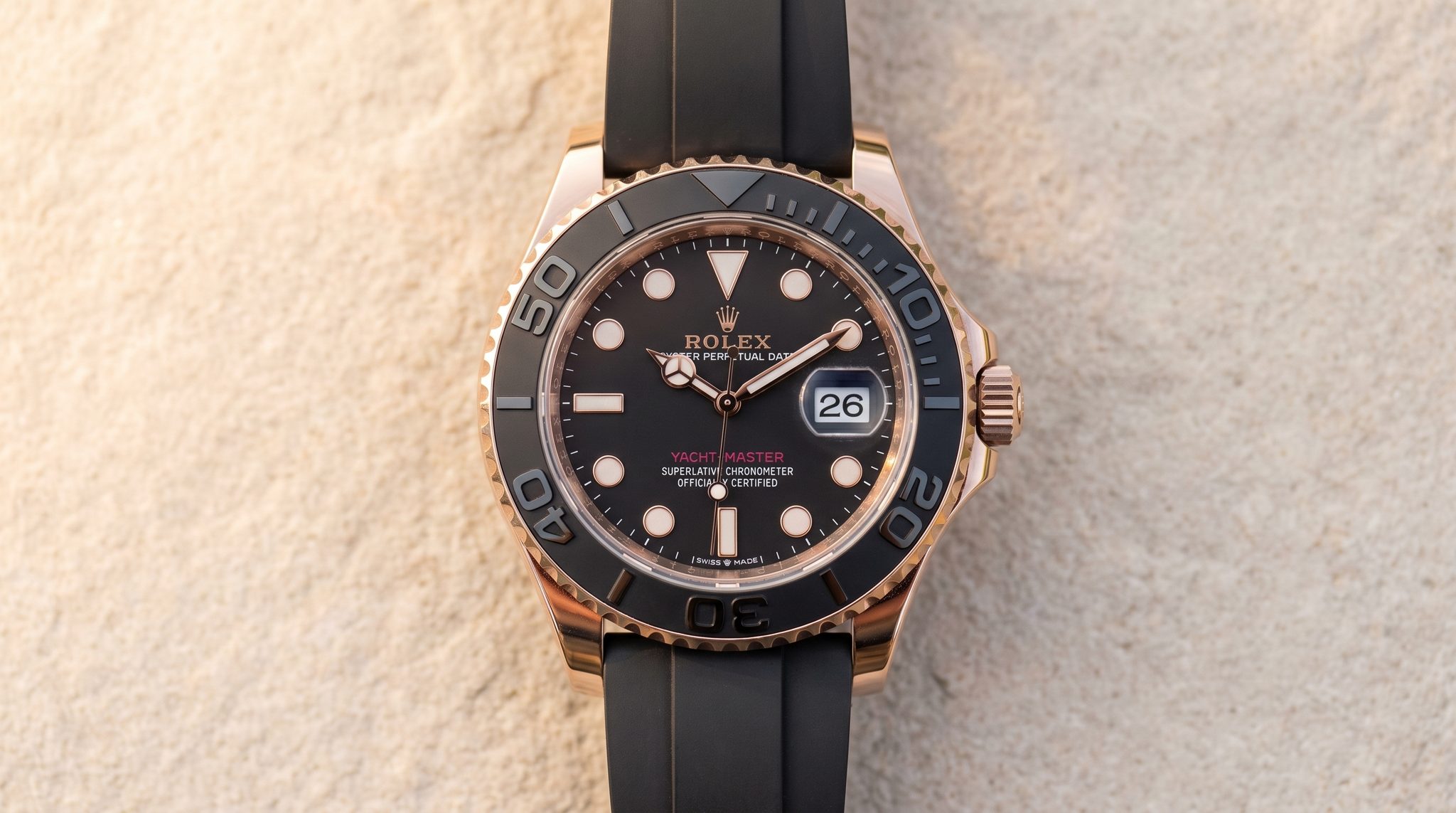
Current 32xx and 42 mm era
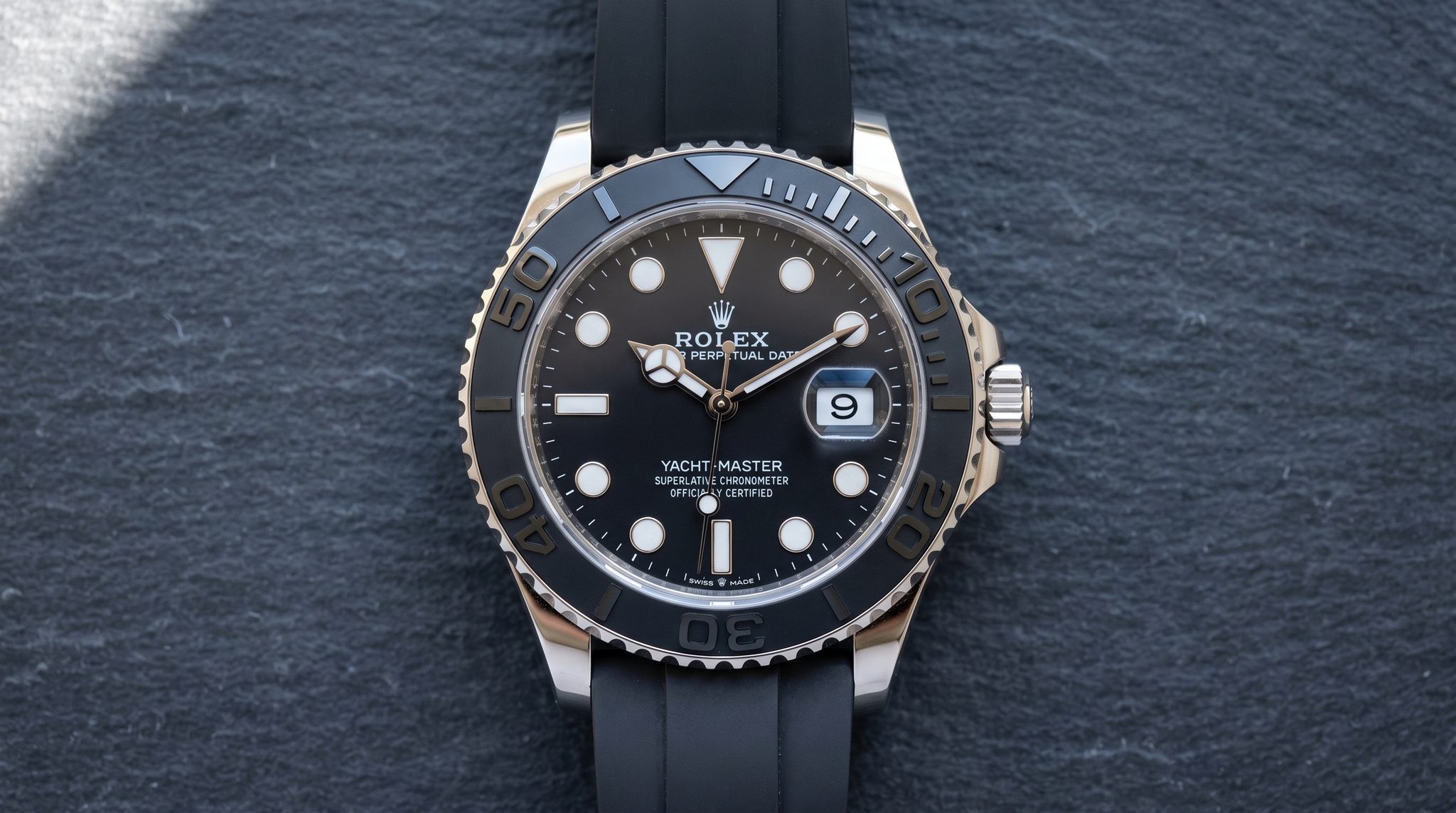
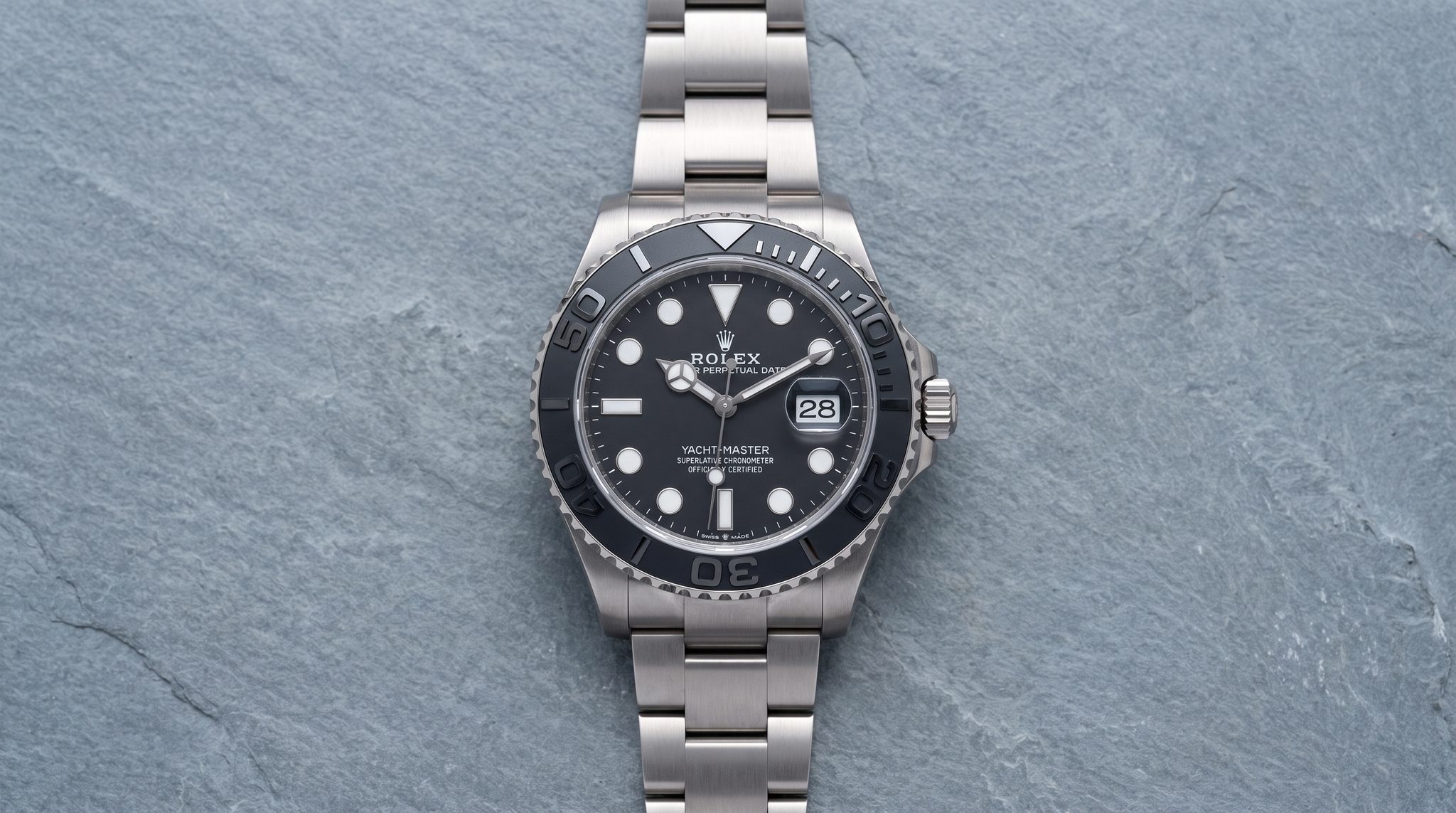
The present era is defined by clearer segmentation: movement modernization for the “standard” Rolesium 40, size expansion at the top, and a technical-material outlier. Ref. 126622 updates the Rolesium Yacht-Master 40 around 2019 with Cal. 3235, making the movement change the cleanest documented generational boundary in the line. Ref. 226659, also introduced in 2019, pushes the Yacht-Master to 42 mm in white gold on Oysterflex with black Cerachrom, and then stays notably stable in configuration. Ref. 226627 adds RLX titanium in 2023 as a lighter, more utilitarian-feeling Yacht-Master 42. No reviewed source documents a regulatory trigger for these shifts, which read primarily as deliberate catalog strategy. The 226658 of 2022 is the yellow-gold 42 in one fixed black-and-gold Oysterflex configuration, so condition rather than variant defines the choice.
Which Yacht-Master to buy
For daily wear, 126622 is the straightforward pick: it keeps the Rolesium look many guides treat as the Yacht-Master’s archetype, but anchors it in the current movement generation, so the “what am I buying” question is mostly dial choice and condition rather than era decoding.
For a first vintage Rolex Yacht-Master, 16622 is the clearest statement of early Rolesium, and it is also the reference where the model’s identity is easiest to understand in-hand, because the platinum dial and bezel finishing are the point.
For the reference-focused collector, 16628 is the target because it is the beginning of the family, and its appeal is structural: there is no earlier Yacht-Master to hide behind, so originality and documentation carry unusual weight.
For the one that rewards patience, 16623 is the hunt. The platform itself is stable, so the long-term satisfaction comes from waiting for the specific dial execution that actually matches the intent, whether conservative or visually loud.
What to check on any Yacht-Master
Buying across the Yacht-Master family is less about chasing tiny running changes and more about confirming that the watch’s defining surfaces are original and coherent. Rolex’s service procedure and warranty terms make clear that worn or damaged components can be replaced with genuine parts, and that non-genuine substitutions for items like dials and bezels void warranty coverage. The result is a family where condition, configuration proof, and part-correctness matter as much as the reference number.
Stories that discuss the Yacht-Master
Common questions about the Yacht-Master
Rolex introduced the Yacht-Master in 1992 as a luxury nautical sports watch designed specifically for sailors. It is positioned around maritime style and elapsed-time timing rather than as a professional dive tool.
- Yacht-Masterrolex.com
- Yacht-Master, Conquering the open seasrolex.com
- The Rolex Yacht-Master Modelsnewsroom.rolex.com
Show 7 more
- Servicing your Rolex, Our servicing procedurerolex.com
- Frequently Asked Questionsrolex.com
- Rolex Yacht-Master, History and Developmentwatchesbytimepiece.com
- Rolex Yacht-Master Ultimate Buying Guidebobswatches.com
- The Watch of the Open Seas, History of the Rolex Yacht-Masterbespokeunit.com
- Rolex Yacht-Master, All Referencesprestigewatchguide.com
- Rolex Yacht-Master, WatchCharts collection indexwatchcharts.com