

Rolex Yacht-Master 16623
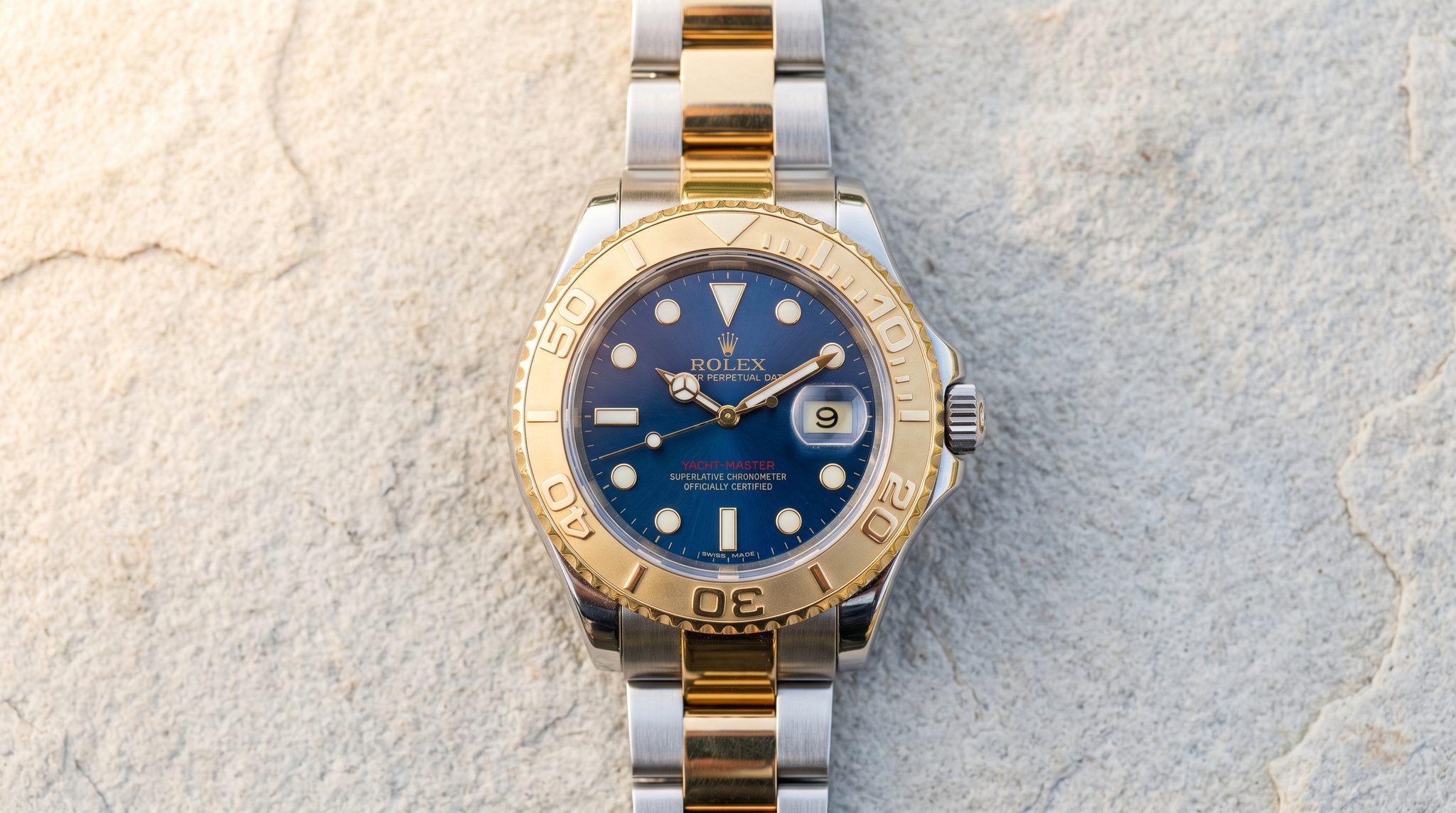
The Rolex Yacht‑Master 16623 is the rare modern Rolex reference whose collecting story is not a running spec evolution, but a fixed two‑tone platform expressed through a surprisingly wide dial palette.
- Production
- 2005–c. 2016
- Case
- Steel + yellow gold
- Diameter
- 40 mm
- Thickness
- c. 11.5–12.0 mm
- Lug width
- 20 mm
- Lug-to-lug
- c. 47–48 mm
- Bezel
- YG, bidir 60-min
- Crystal
- Sapphire, Cyclops
- Water res.
- 100 m
- Dial
- White, slate, blue, MOP
- Movement
- Cal. 3135
- Chronometer
- Yes (COSC)
The Yacht‑Master 16623 is Rolex’s modern two‑tone experiment that barely needed revising: introduced in 2005 as the first full‑size (40 mm) yellow Rolesor Yacht‑Master, it held to the same Cal. 3135, 100‑meter case and raised‑numeral gold bezel for its entire run, leaving most of its variation to the dial.
That stability is what makes the reference easy to understand and, paradoxically, easy to get wrong. With no well‑documented movement handoffs or neatly dated “Mark” dials, the meaningful differences between two 16623s are usually the ones you can see instantly in hand: the way a blue sunburst dial darkens at the edges, a slate dial flashes silver under direct light, or a mother‑of‑pearl surface shifts color as you tilt the watch. The production window is unusually clear at the start and less precise at the end, 2005 is consistently documented, while discontinuation is not published by Rolex and is most strongly placed around 2016 by dealer history.
In the Yacht‑Master line, the 16623 sits between the cool monochrome Rolesium idea and later six‑digit generations: a watch that reads like a sport Rolex in construction, but wears like a dressier one because so much of the surface is polished and the bezel is precious metal.
“A stable 40 mm Rolesor Yacht‑Master that tells its whole story through the dial: the 16623 changes less over time than it changes in color.”
16623 across 2005–c. 2016
Rolex introduced the Yacht‑Master as a more polished, more luxurious nautical alternative to the Submariner, and the 16623 is the moment that idea was translated into a full‑size two‑tone format. Specialist histories align on 2005 for its debut, and the watch’s hardware stays remarkably consistent after that: the familiar 40 mm Yacht‑Master case, 100 meters of water resistance, sapphire crystal with Cyclops, and the yellow‑gold bidirectional bezel whose raised numerals look machined and sculptural rather than printed.
The cause of that “quiet” timeline is simple and also not especially romantic: there is no documented technical problem to solve mid‑run. The 16623 uses Rolex’s caliber 3135 throughout, a chronometer‑rated automatic date movement running at 28,800 vph with 31 jewels, and the watch never picks up a new caliber designation during its production life. That pushes the reference’s identity into the most visible component, the dial, where Rolex offered multiple colors and materials at the same time rather than in a strict sequence.
Engraved rehauts are described on later examples (including watches sold as 2008), but the public record does not support a neat, reference‑specific “Mk1 then Mk2” scheme for the 16623. The end of production is similarly less exact than the start. Rolex does not publish an open discontinuation year by reference, while dealer histories most strongly place the 16623’s exit around 2016.
Seen as a whole, the 16623 is a reminder that not every Rolex reference is a puzzle box of incremental change. Some are closer to a single chassis offered in several finishes, and that is exactly why condition, dial correctness, and documentation matter more here than chasing a particular year.
- 2005IntroducedYG bezel, Rolesor Oyster
- 2005Core spec“Superlative Chronometer” text
- 2005 – c. 2016Dial optionsBlue, slate, champagne, MOP
- c. 2008Rehaut seenROLEX rehaut engraving
- c. 2016DiscontinuedSucceeding two-tone era begins
16623 against its neighbours
The 16623 makes the most sense when framed by the Yacht‑Master that came just before it in the same size, the Rolesium 16622, and the six‑digit yellow Rolesor 116623 that carries the same idea forward. A third reference, the full‑gold 16628, shows how much of the 16623’s character is created by materials rather than mechanics, since all three share the same basic 40 mm Yacht‑Master architecture and Cal. 3135 era.
This reference 16623 Rolex · focal 2005–c. 2016 | 116623 Successor (six-digit Rolesor) from c. 2010 | |||
|---|---|---|---|---|
| Production | 1992–c. 2000s/early 2010s | 1999–c. 2010 | 2005–c. 2016 | from c. 2010 |
| Case | 18 ct yellow gold | Steel + platinum | Steel + yellow gold | Steel + yellow gold |
| Diameter | 40 mm | 40 mm | 40 mm | 40 mm |
| Bezel | YG, bidir 60-min | Platinum, bidir 60-min | YG, bidir 60-min | YG, bidir 60-min |
| Crystal | Sapphire, Cyclops | Sapphire | Sapphire, Cyclops | Sapphire, Cyclops |
| Water res. | 100 m | 100 m | 100 m | 100 m |
| Movement | Cal. 3135 | Cal. 3135 | Cal. 3135 | Cal. 3135 |
| Chronometer | Yes (COSC) | Yes (COSC) | Yes (COSC) | Yes (COSC) |
Six dial generations across the run
A white‑dial 16623 is the clearest way to see the reference’s geometry. Against a bright ground, the applied hour markers read like small polished blocks set with luminous centers, and the gold bezel’s raised numerals stand out as a separate, sculpted ring around the dial. Sources show white among the documented factory options, but Rolex does not publish a start or stop year for any one dial color on this reference, so white is best understood as a parallel choice within the full production era.
What to check before buying a 16623
Buying a Rolex Yacht‑Master 16623 is less about finding the “right year” and more about ensuring the watch is coherent. The reference is defined by yellow Rolesor, so the first check is the obvious one: a correct 16623 should present as steel with a yellow‑gold bezel and yellow‑gold center links, not platinum‑tone Rolesium and not Everose.
After that, the purchase becomes a matter of dial correctness and condition. Because mother‑of‑pearl and other special dials tend to trade above standard colors, aftermarket dials are a real risk, and the safest confirmations are period paperwork or a Rolex Service Center record that specifies the configuration. Condition matters in an unusually literal way on this reference, since the Yacht‑Master’s polished surfaces and soft‑looking bezel numerals show over‑polishing and knocks quickly.
In day‑to‑day ownership the 16623 rewards people who want the Yacht‑Master’s slightly more curved, fully polished presence, but prefer it in a five‑digit, Cal. 3135 era package. The appeal is straightforward: a modern, robust Rolex sports case with a dial that can be conservative, loud, or genuinely unusual, without needing to learn a complicated variant chart to understand what is on the wrist.
Rolex Yacht-Master 16623 for sale
Indicative market value from recent dealer, auction, and Grey Market sales: median ≈ $9,800, with a typical $8,900–$11,500 range across 53 comparable sales (updated this week).
Each point is a recent dealer or auction sale, banded to an indicative figure. The range shown is not a valuation.
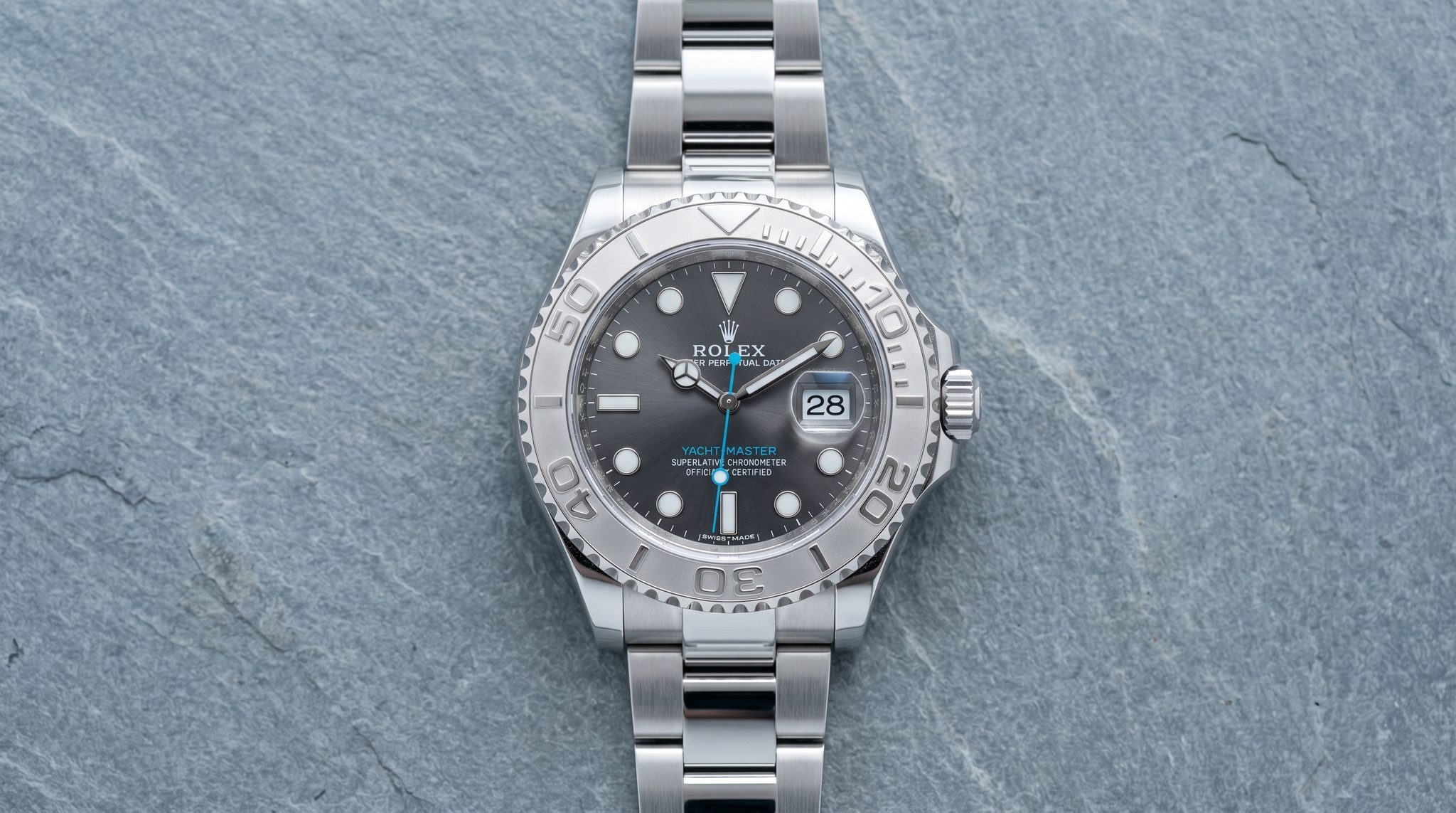
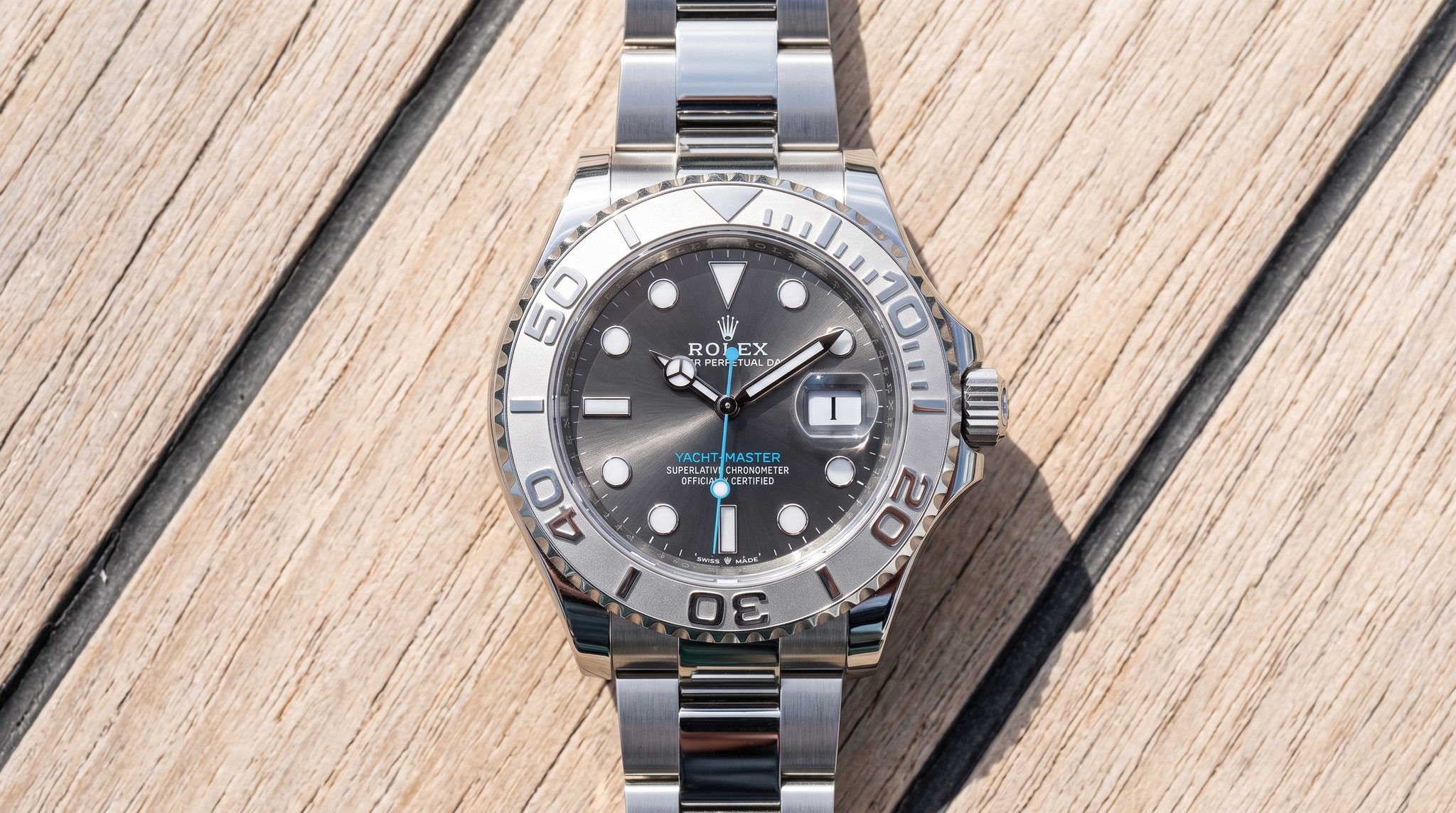
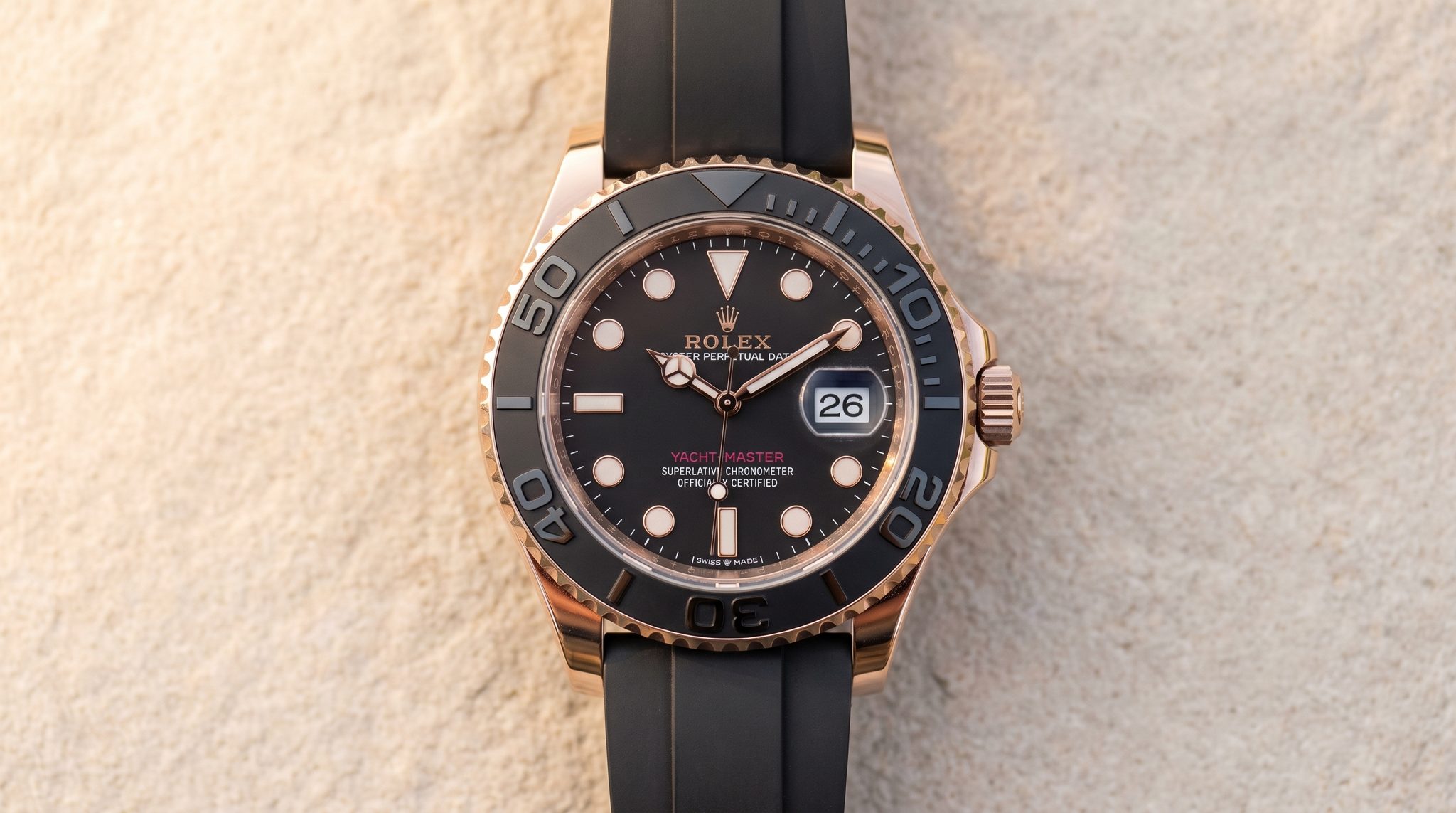
Adjacent in the Yacht-Master family
Common questions about the 16623
The Rolex Yacht‑Master 16623 is consistently documented as introduced in 2005. Rolex does not publish an open discontinuation year by reference, but dealer history most strongly places its discontinuation around 2016, so the production years are best stated as 2005–c. 2016.
- History and Evolution of the Rolex Yacht-Mastergrayandsons.com
- The Complete History Of The Rolex Yacht-Masterrolexmagazine.com
- Rolex 16623-0006: Yacht-Master 40 Rolesor Whitewatchbase.com
Show 7 more
- Rolex 16623-0009: Yacht-Master 40 Rolesor Champagnewatchbase.com
- Rolex Yacht-Master 40 Men's Watch 16623authenticwatches.com
- Rolex Yacht-Master 16623 Watch Reviewwatchintyme.com
- Rolex Watches Fit Guide Lug-to-Lug Measures & Wrist Fit Showcase (Part 1)watch.the1916company.com
- Rolex 16623 Overviewwatchcharts.com
- The Rolex Yacht-Master ref. 16623 (Bob's Watches)bobswatches.com
- Rolex Yacht-Master - Wikipediaen.wikipedia.org