

Tudor Prince Date-Day 94613
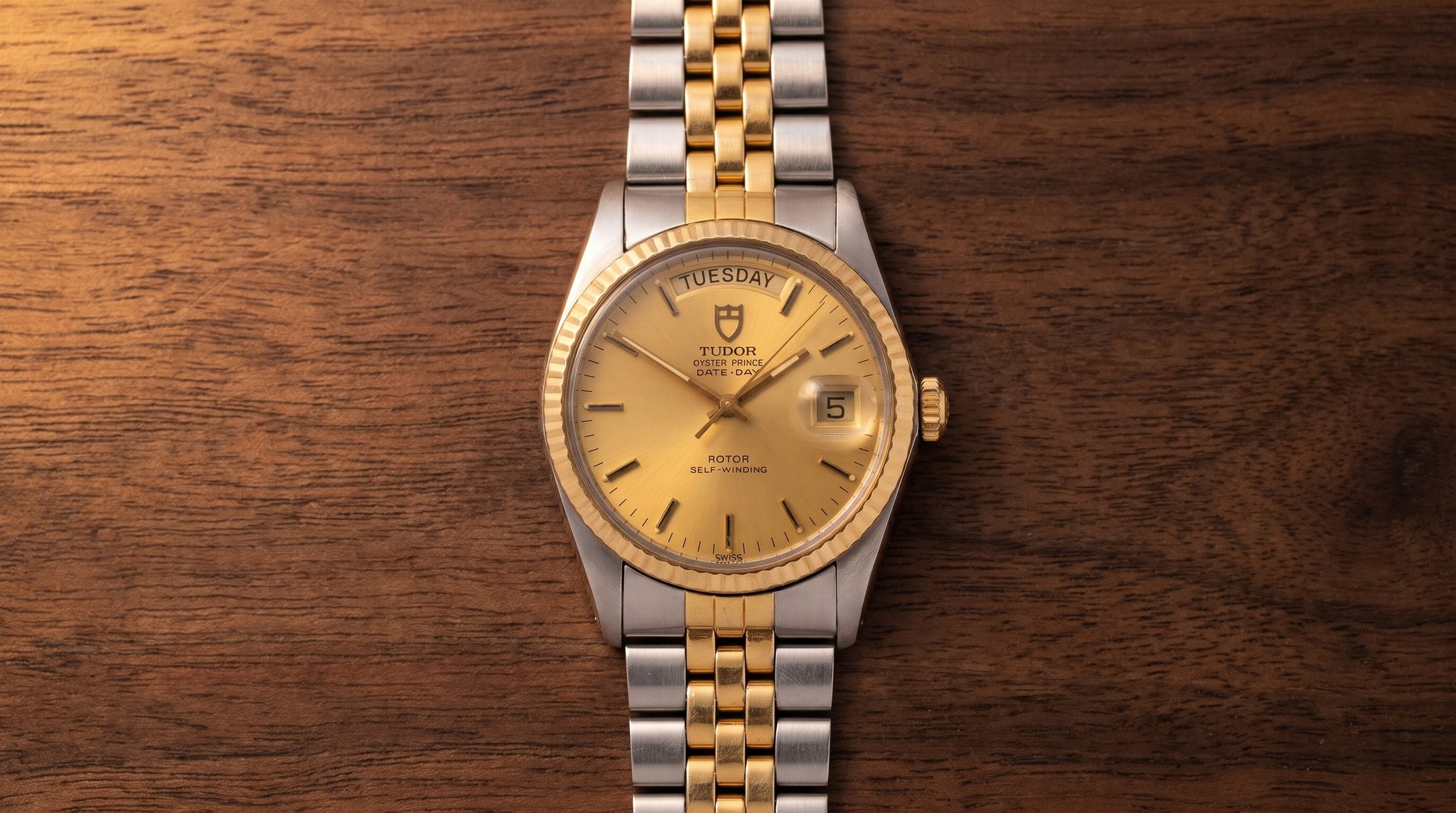
The Tudor Prince Date-Day 94613 is the two-tone Oyster-cased day-date whose design is consistent, but whose surviving evidence makes every production date provisional.
- Production
- c. 1983–c. 1993
- Case
- Steel and yellow gold, two-tone
- Diameter
- 36 mm
- Thickness
- Approx. 11–12 mm
- Lug width
- 20 mm
- Bezel
- Fluted, yellow-gold two-tone
- Dial
- Champagne, white, blue
- Display
- Day at 12, date at 3
- Movement
- ETA 2834-1 or 2834-2
- Winding
- Automatic
- Bracelet
- Two-tone Oyster-style or strap
The Tudor Prince Date-Day 94613 was produced from about 1983 to about 1993.
- Production years
- c. 1983–c. 1993
- Replaced by
- 76200
- Movement
- ETA 2834-1 or 2834-2
The commonly cited life of the Tudor Prince Date-Day 94613 ends around 1993, yet marketplace records include watches identified as 94613 and dated 1995 or later. That discrepancy is the point of the reference: the 94613 has a remarkably stable physical identity, but its chronology cannot be read from a catalog date alone. It is a two-tone, 36 mm Oyster-cased day-date, generally fitted with a fluted yellow-gold bezel and a day aperture at 12 o’clock, and its surviving examples are best understood through their individual case, dial, bracelet, and movement evidence.
The reference belongs to Tudor’s dress-oriented Prince Date-Day line rather than the sport-watch world where formal dial marks and lume eras often provide a tidy dating system. Examples are reported with champagne, white, blue, and other dial treatments, using either baton or Roman-numeral markers. Those choices establish configuration, not a secure sequence. A champagne baton dial can describe what is on the watch, but the available documentation does not establish that it belongs to one precise year or movement generation.
The movement creates a second independent dating question. Earlier documentation identifies ETA 2834-1, including a 1988/89 example and a 1992 auction-recorded watch, while later listings identify ETA 2834-2. No universal factory cutoff separates the two. The practical consequence is clear: a Tudor 94613 should be judged as an assembled historical object, not dated from one attractive feature. A later-dated example may reflect later manufacture, later sale, servicing, or uncertain listing practice. Its compact 36 mm case, 20 mm lugs, day-date display, and two-tone styling remain easy to recognize. Its exact place in time requires more care.
“The 94613 is easy to recognize and difficult to date, a stable two-tone design surrounded by an unstable paper trail.”
Tudor Prince Date-Day 94613 production years: c. 1983–c. 1993
The early date is an estimate rather than a Tudor archival release record. It is supported by catalog and dealer descriptions that place the reference in the early 1980s, while a documented 1988/89 example confirms that the two-tone 36 mm configuration was established by then. The case identity remains consistent: stainless steel and yellow gold, a fluted bezel, and the day-date layout. Some descriptions refer to 18-karat yellow gold, while collecting material also discusses plated bezel and center-link wear, so the exact metal treatment must be checked on the individual watch.
The movement evidence follows a different path. A 1988/89 example and a 1992 auction-recorded watch use ETA 2834-1. Later listings identify ETA 2834-2, but the record does not document when Tudor changed between them or whether every later example received the newer calibre. That makes the suffix a useful physical identifier, not a standalone date code. The reason for the apparent transition is not documented.
The commonly published endpoint of approximately 1993 is therefore narrower than the surviving listing record. Watches dated 1995 and later show that examples identified as 94613 existed after that point, but a sale date does not prove uninterrupted factory production. Taken together, the reference shows how much historical uncertainty can gather around a watch whose visible formula barely changed: one compact case, several independent dial choices, and two movement designations that cannot be forced into a simple timeline.
- c. 1983Introduction36 mm case, day at twelve o’clock
- c. 1984Core executionSteel and yellow-gold two-tone case
- 1988/892834-1 documentedAutomatic movement marked 2834-1
- 1992Auction example2834-1 with day-date display
- 1995Later examplesCase and movement require verification
- c. 19982834-2 reportedMovement marked 2834-2
- c. 1993Published endpointNo archival cutoff is documented
94613 against its neighbours
The 94613 sits between the earlier 38 mm Date-Day line and the later 762xx generation. The steel 76200 is the clearest later comparison: it frames what is distinctive about the two-tone 94613 without resolving the central dating problem, because the surrounding factory chronology remains incomplete.
This reference 94613 Tudor · focal c. 1983–c. 1993 | ||
|---|---|---|
| Production | c. 1983–c. 1993 | c. 1988–at least 2017 |
| Case | Steel and yellow gold, two-tone | Stainless steel |
| Bezel | Fluted, yellow-gold two-tone | Smooth, polished |
| Movement | ETA 2834-1 or 2834-2 | ETA 2834-2 automatic |
Five dial generations across the run
The defining 94613 configuration pairs a stainless-steel Oyster case with yellow-gold elements, including the fluted bezel and center bracelet links in commonly described examples. Some records describe 18-karat yellow gold, while condition reports discuss plating loss, so the exact treatment is not safely universal. The case, crown, bracelet, and bezel should be inspected rather than assumed from the reference number.
What to check before buying a 94613
Buying a Tudor Prince Date-Day 94613 means separating a genuine reference from a genuinely original example. The reference number alone does not settle the production date, movement suffix, dial originality, or whether the yellow-gold elements are solid or plated. Later-dated listings make the individual case, movement, and documentation more important than a tidy catalog range.
Tudor Prince Date-Day 94613 price and value
A Tudor Prince Date-Day 94613 sells for about $1,400 at the median, typically $1,000 to $3,000 across 8 comparable sales.
Tudor Prince Date-Day 94613 for sale
Indicative figures from recent dealer, auction, and Grey Market sales (updated this week). Every watch is verified before it sells here.
Each point is a recent dealer or auction sale, banded to an indicative figure. The range shown is not a valuation.
Grey Market runs watch auctions for vintage and neo-vintage pieces, every lot reviewed before it lists and verified before the seller is paid, and the Watch Exchange, where ID-verified users buy and sell at a fixed price. Selling one? See the ways to sell a Tudor, or check what it’s worth. For more vintage Tudor, see the Tudor reference guide.
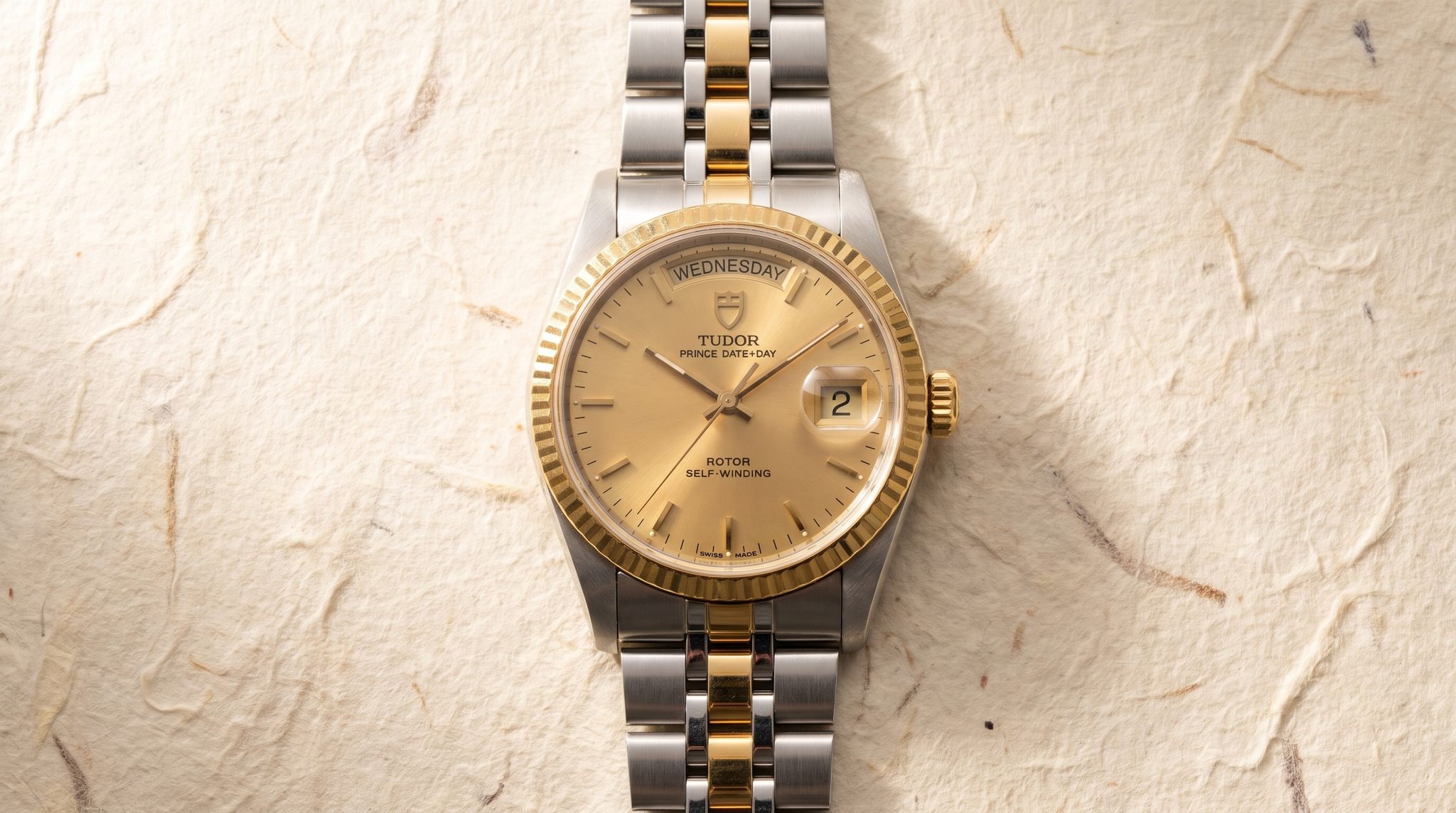
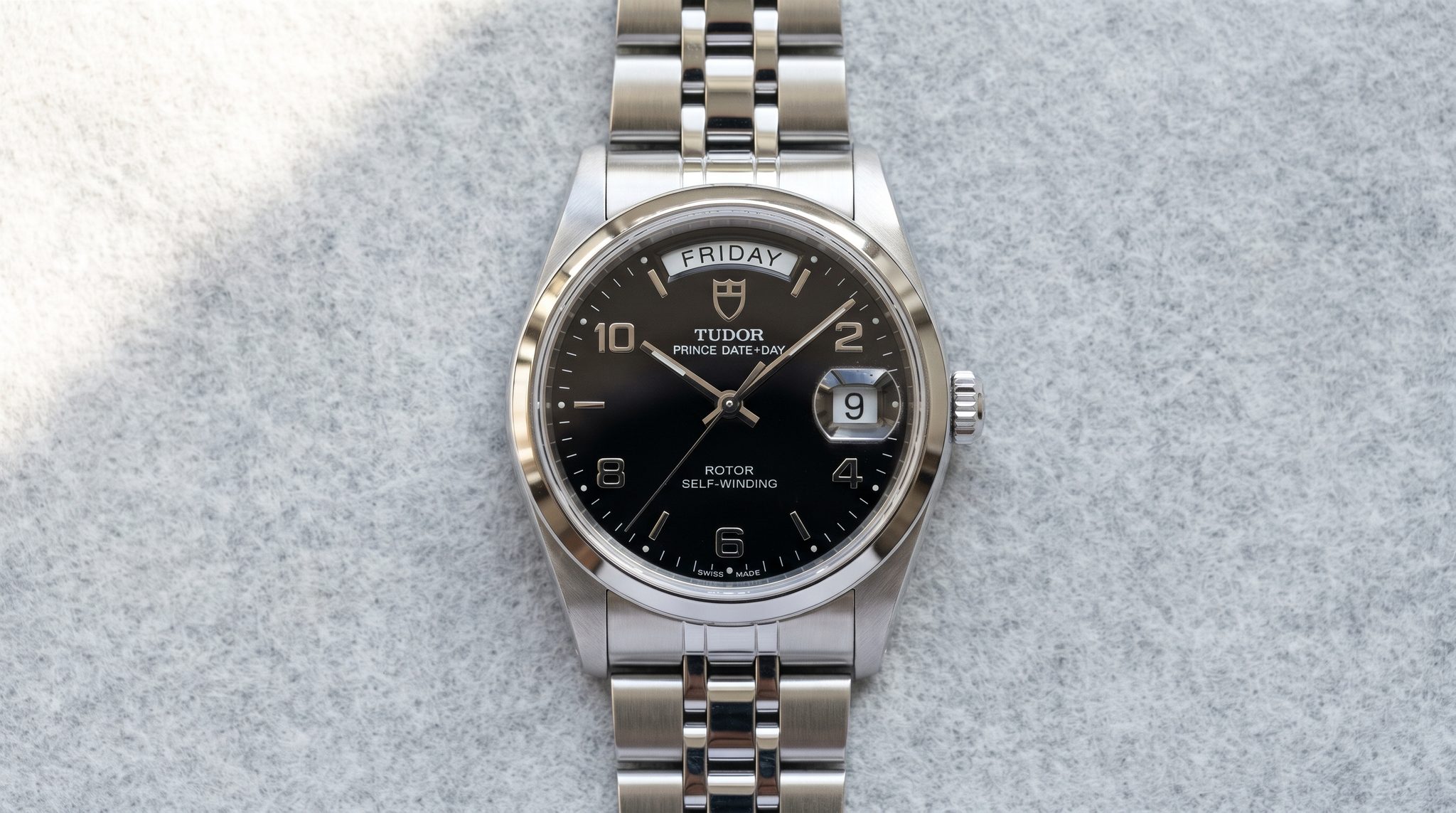
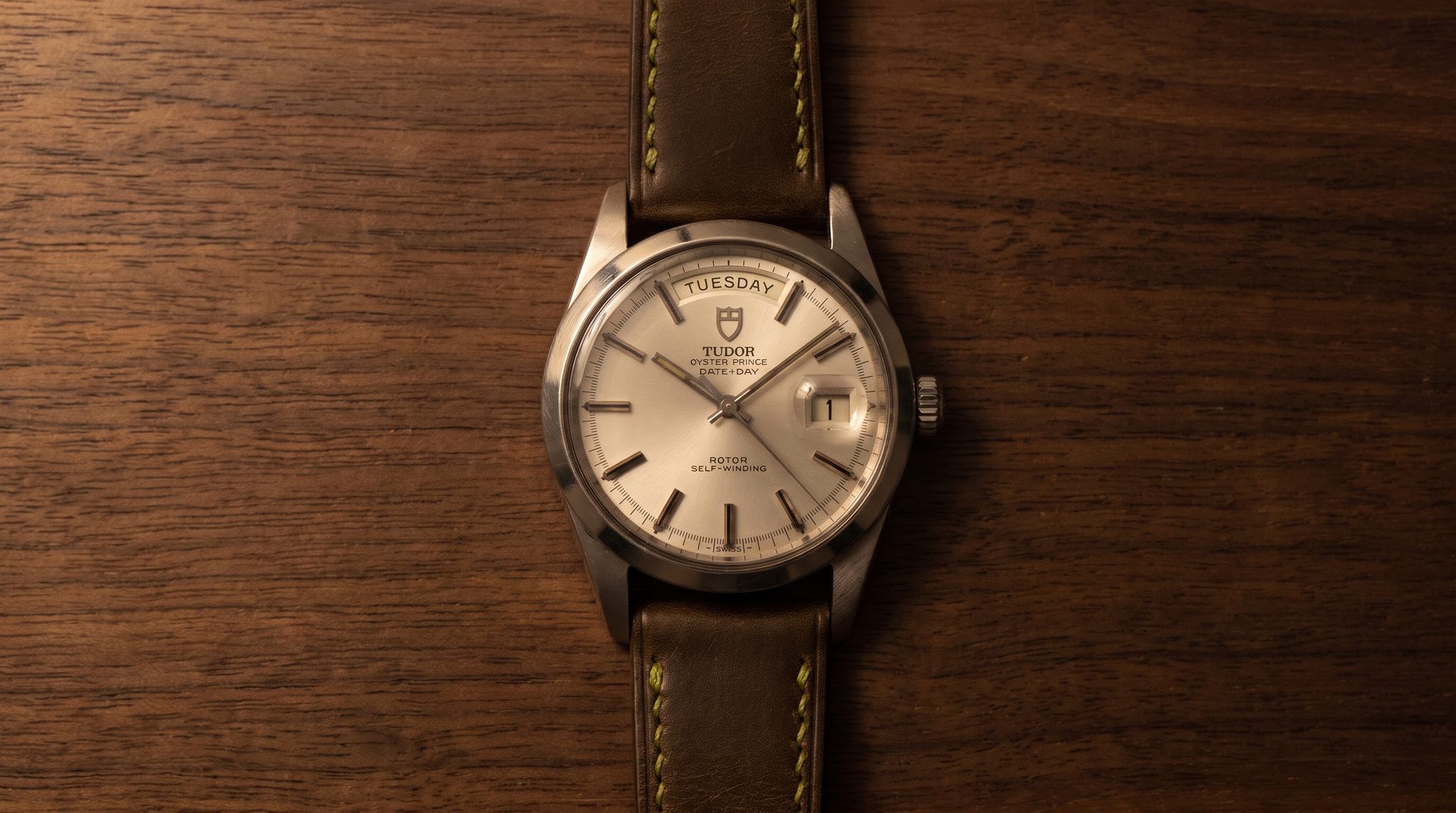
Adjacent in the Prince Date-Day family

Common questions about the 94613
The Tudor Prince Date-Day 94613 was produced from c. 1983 to c. 1993. Those are the commonly published dates, not a documented Tudor factory cutoff. Marketplace records include examples dated 1995 and later, so later watches require case, movement, and documentation checks.
- Tudor Vintage Reference 94613 Day-Datesothebys.com
- Tudor Vintage Date+Day Reference 94613sothebys.com
- Tudor Oyster Prince Date-Day 94613 (1988/1989)10-over-10.com
Show 7 more
- Tudor Oyster Prince Day-Date 94613righttime.com
- Tudor Prince Date Day, Ref. 94613chrono24.com
- Tudor Prince Date Day 94613chrono24.com
- Tudor Oyster Prince Date Day 94613chrono24.com
- Tudor Prince Date-Day 94613, White Roman Dialgetbezel.com
- Tudor Oyster Prince Date-Day 94613 from 1995chrono24.com
- Tudor Prince Date, 94613chrono24.com