

Patek Philippe Aquanaut
The Patek Philippe Aquanaut is the late-1990s Patek sports watch that made rubber and casual wear part of the brand’s core language.
The Aquanaut is the Patek Philippe sports watch that translated the brand’s finishing and restraint into something deliberately casual, without pretending to be a tool watch. It arrived in 1997, and it did so with a then-unusual signal for the marque, a rubber strap presented as part of the watch’s identity rather than an accessory.
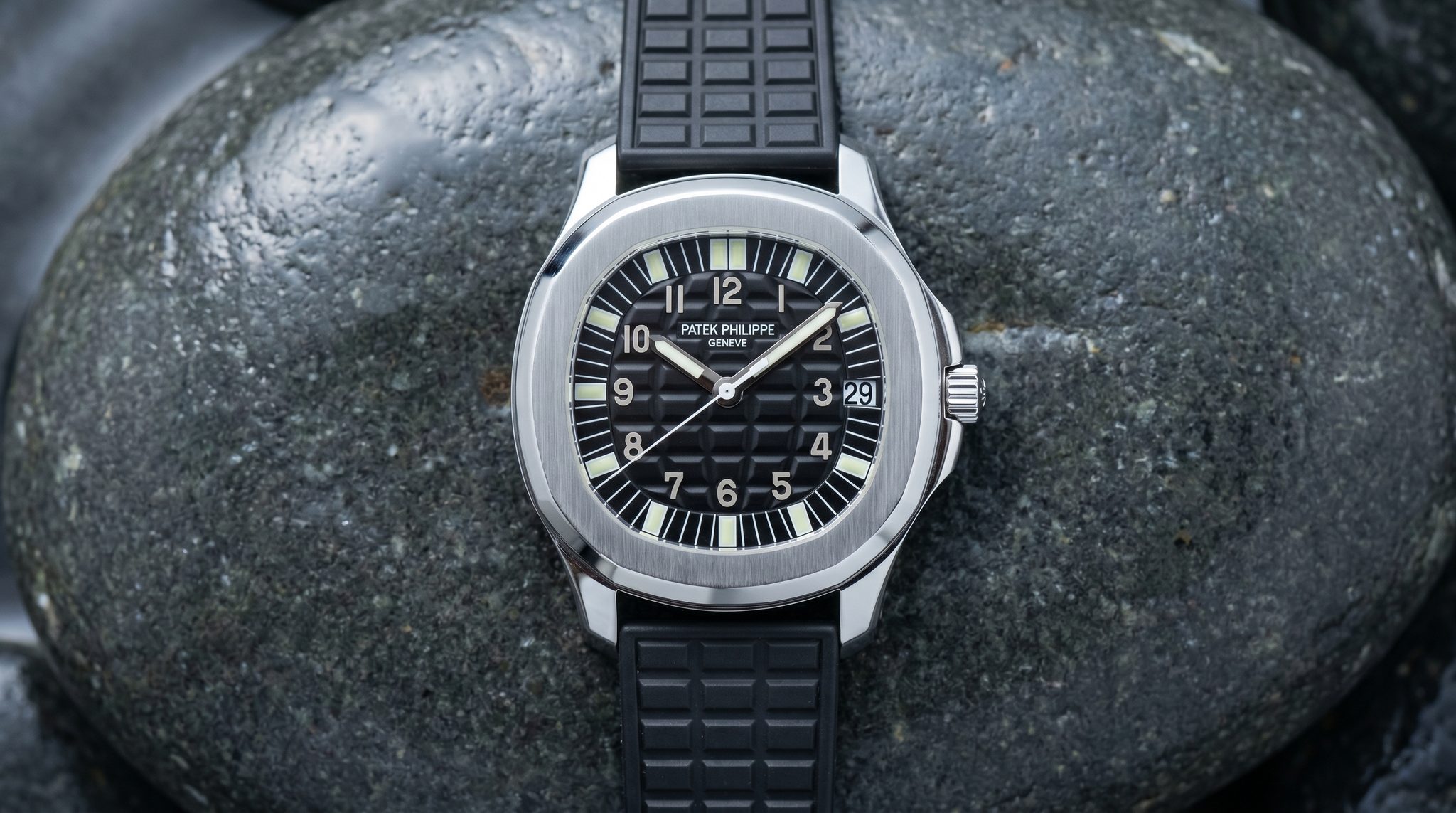
That origin matters because it explains why the Aquanaut’s most important differences are not decorative flourishes, but decisions about wearability and audience. Specialist accounts tie the line’s creation to late-1990s demand for a younger, more everyday luxury sports watch, positioned by Patek as “casual elegance” rather than a substitute for the Nautilus. The design language made the relationship legible while keeping separation: a rounded-octagonal bezel that nods to the Nautilus, an embossed “grenade” texture that reads like a pressed surface when light rakes across it, and a strap pattern that echoes the dial.
Across the published Aquanaut references here, the family’s arc is unusually clear. 5065A represents the first generation when the Aquanaut’s core formula was being established at a larger, more contemporary size, still close to the line’s late-1990s mood. 5167A is the 2007 redesign that standardized the modern Aquanaut look and kept it stable enough that many changes are better read through the caseback than the dial. 5168G is the 2017 expansion that turns the “Jumbo” idea into a modern, precious-metal statement explicitly tied to the collection’s 20th anniversary.
The through-line is that the Aquanaut evolves by tightening a template, not by endlessly revising it. When the line changes, it tends to be for reasons that can be named. The move from the first generation to the 2007 reset is documented as an anniversary-driven update of the collection, and the jump to 5168G is documented by Patek as a 20th-anniversary release. Where collectors argue most is not about whether the Aquanaut changed, but about how to assign meaning to changes that Patek does not date precisely, especially movement updates within long-running references. The family is therefore best understood as a watch whose identity is designed to be immediately wearable, while its specifics reward careful reading.
3 references across 3 eras
First-generation Jumbo
This era defines the Aquanaut’s original proposition as a younger, more casual Patek sports watch, anchored by the embossed “grenade” dial and the rubber strap concept that made the texture of the watch feel structural rather than ornamental. In the published set, 5065A is the large-format expression of that first generation, and it shows how the early Aquanaut is read today: by size and by period-correct details that Patek did not always date publicly, such as lume-era cues that can change the dial’s character. The era ends as Patek prepares a documented 10th-anniversary update, shifting the line into a more standardized modern template.
10th-anniversary redesign
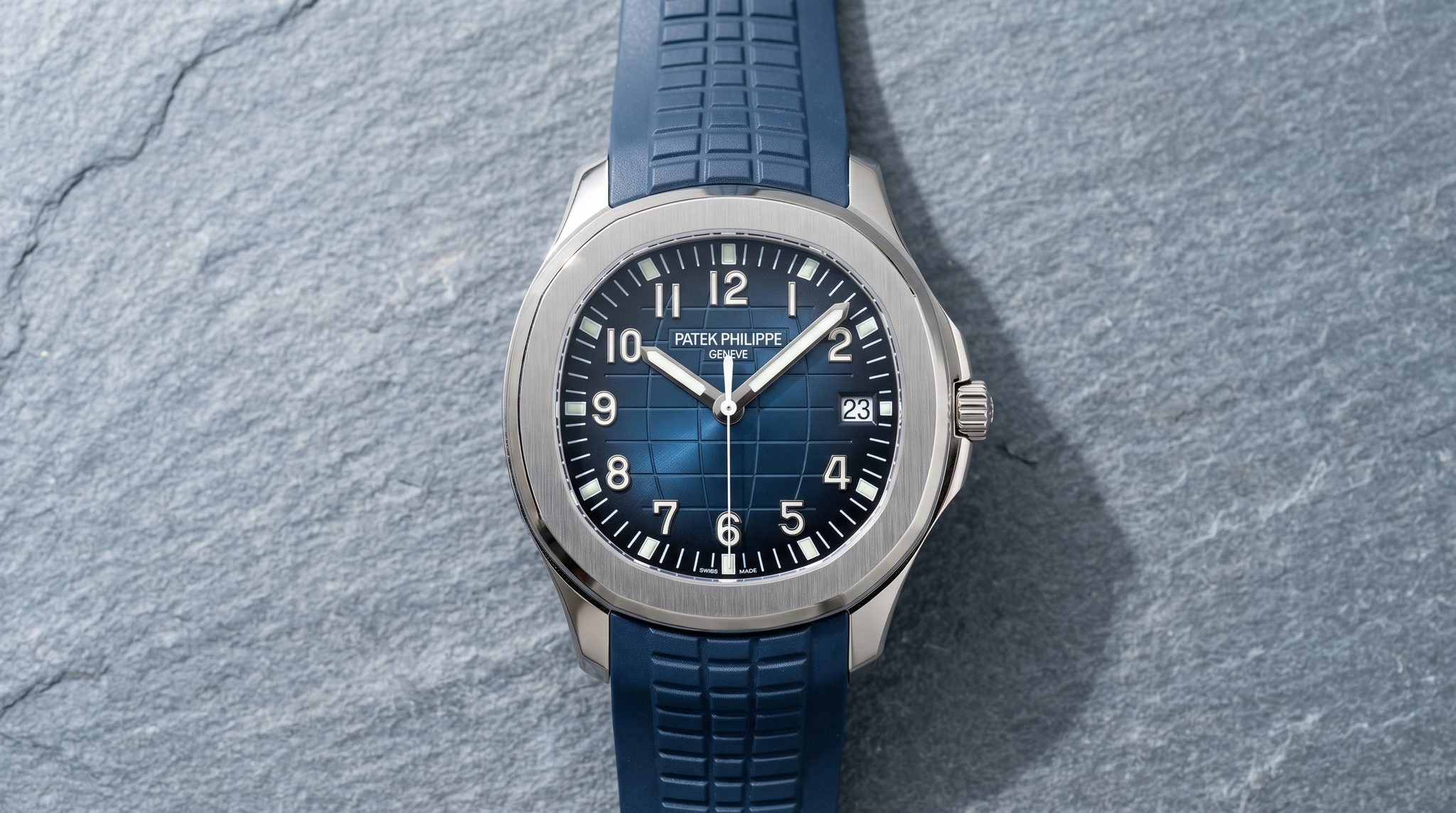
The second generation launches in 2007 as a reset tied in specialist histories to the Aquanaut’s 10th anniversary, with a sharper, more contemporary case profile and a design that stays visually consistent over a long run. 5167A becomes the core steel expression of this template, and its continuity is part of the point: changes are more likely to show up in movement specification than as obvious dial “marks.” This era does not end so much as it branches, because the same modern language supports both the long-running steel reference and later anniversary-driven expansions.
20th-anniversary Jumbo gold
This sub-era is the modern “Jumbo” concept made explicit and documented by Patek as commemorative. In 2017, the Aquanaut’s 20th anniversary brings 5168G, scaling the second-generation template up and moving it into white gold while keeping the family’s signature cues, the rounded-octagonal bezel, embossed dial, and rubber strap. The reason for the change is unusually clear at the family level because it is stated in Patek’s own anniversary communications. What is not dated precisely is the later movement update within the reference, a recurring Aquanaut pattern in which the outward design stays stable while the mechanics evolve quietly.
Which Aquanaut to buy
For a single, modern daily-wear Aquanaut, 5167A is the line’s stable center: it is the long-running 2007 template in steel on rubber, and its appeal is that the family’s signature look is present without the extra weight of precious metal or added commemorative framing.
For a first step into a vintage Patek Philippe Aquanaut, 5065A is the most direct way to experience the early design language at the larger first-generation size. It also forces the right collector habit, treating the Aquanaut as a watch where period-correct components and documented configuration matter, because service-era substitutions can change what the watch seems to be.
For the reference-collector’s target, 5168G is the cleanest “named moment” in the modern line. Patek explicitly ties it to the 20th anniversary, and it turns the Jumbo idea into a defined precious-metal flagship rather than a size nickname.
The reference that rewards patience is 5167A, not because it has loud variants, but because the watch’s long continuity means the best examples are separated by completeness, condition, and correctly understood movement specification rather than by a quick dial checklist.
What to check on any Aquanaut
Buying across the Patek Philippe Aquanaut family is less about chasing endless dial generations and more about verifying coherence, the right configuration for the era, and the consequences of service. Patek’s service guidance allows replacement of wear parts including hands, dials, bracelets, crystals, crowns, and related components, which makes originality and documentation particularly important on earlier references. The most persistent risk is mixed-originality construction, including watches assembled from correct-looking parts spanning different periods.
Common questions about the Aquanaut
Patek Philippe introduced the Aquanaut in 1997. Specialist accounts describe it as a response to demand for a more casual, youthful luxury sports watch, positioned by Patek around the idea of “casual elegance.”
- Aquanaut Collectionpatek.com
- Patek Philippe, Geneva Baselworld 2017 (press release PDF)static.patek.com
- Communiqué de presse Baselworld 2017 Aquanaut Ref. 5168G (PDF)static.patek.com
Show 9 more
- Patek Philippe | News | 20th Anniversary Aquanaut 5168Gpatek.com
- Auction Preview: Important And Rare Patek Philippe Aquanaut Modelsphillips.com
- Patek Philippe Aquanaut history (in-depth)monochrome-watches.com
- Patek Philippe Aquanaut Guide: History, Prices & Refswatchguys.com
- A Buyer’s Guide to the Patek Philippe Aquanauteuropeanwatch.com
- G.O.A.T: The Casual Elegance of the Patek Philippe Aquanautsothebys.com
- Extract from the Archives, Frequently Asked Questionspatek.com
- Patek Philippe service commitment (service policy overview)patek.com
- Counterfeit watch (Frankenwatch definition)wikipedia.org